
REVIEW · KARNAK & LUXOR TEMPLES ON THE EAST BANK
Luxor: Shared Full-Day Tour to Luxor West and East Banks
Luxor in one day, then you want more. This shared full-day tour brings an Egyptologist guide to the West Bank and East Bank, with guided temple walks that make the carvings mean something. I like how the guide explains as you go, and then gives you moments to look around and ask questions. The only drawback is the 8-hour pace, with lots of driving and warmer daytime conditions, so plan to start early and wear shoes that can handle uneven ground.
I also like the basic “no-fuss” setup: pickup and drop-off in Luxor (East Bank), plus lunch included, so you can focus on temples instead of logistics. If you want a guide-led day that hits the big Luxor icons without building your own route, this format is a strong fit.
A big part of the success here is the guide. I’ve seen standout names come up often in feedback, like Ahmed Bahaa and Alaa Hassan, praised for clear storytelling and for adjusting the day to keep things flowing smoothly.
In This Review
- Key highlights worth planning for
- Price and time: what you’re really paying for in 8 hours
- Meeting your Egyptologist guide in Luxor
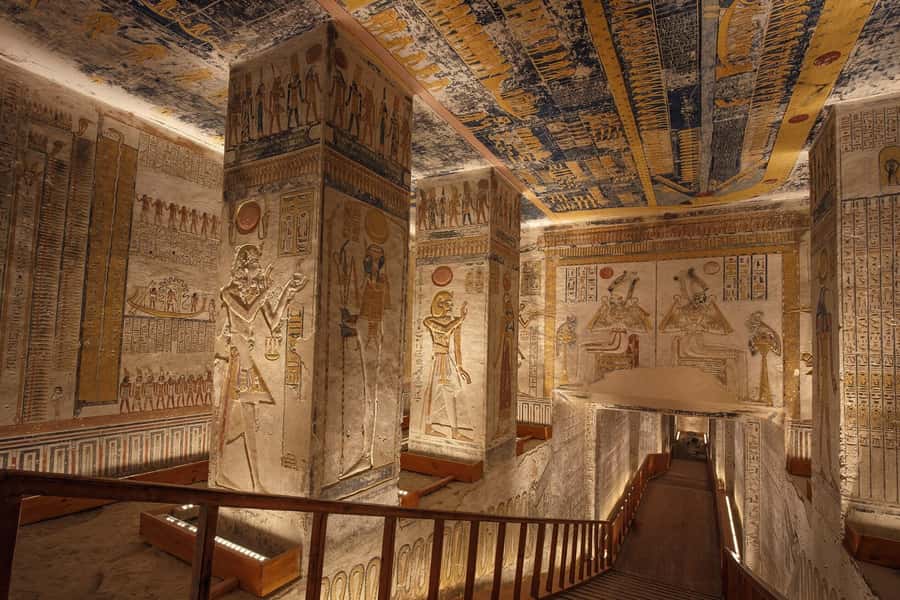
- West Bank first: Valley of the Kings, the Valley of Gates of the Kings
- Hatshepsut at Deir el-Bahari: terraces rising into the cliffs
- Colossi of Memnon: a short stop with big presence
- Lunch at a local restaurant: fuel for the Karnak stretch
- Karnak Temple: Amun, Mut, and Khonsu made real
- Luxor Temple: Amenhotep III, finished by Ramses II
- How to handle the pacing without feeling stressed
- Who should book this Luxor West and East Bank day tour
- Should you book this Luxor West and East Bank day tour?
- FAQ
- What sites does this full-day Luxor tour include?
- How long is the tour?
- Where does pickup happen, and where do you return?
- What language is the guide?
- Is lunch included?
- Are entrance fees included?
- What is the price per person?
- Is cancellation free?
- Can I reserve without paying right away?
- Is this a shared tour?
Key highlights worth planning for
- Two banks, one day: West Bank tomb sights, then East Bank temples, all in a single 8-hour loop.
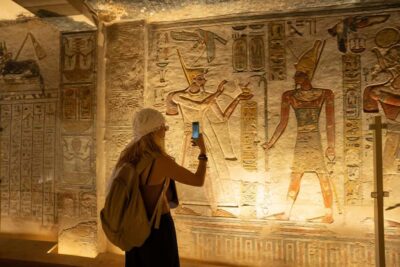
- Valley of the Kings, with context: You get guided orientation so tombs and symbols land faster.
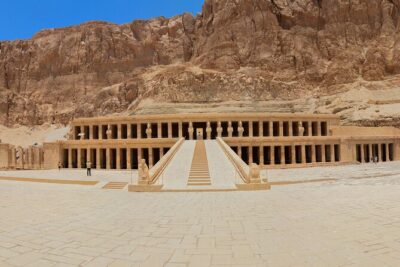
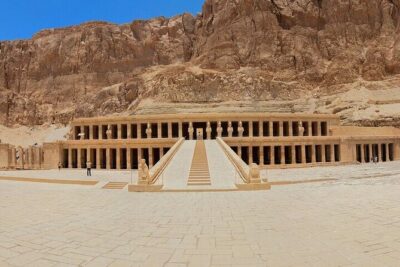
- Hatshepsut’s terraces at Deir el-Bahari: The temple’s “three levels into the cliffs” effect is the main visual payoff.
- Karnak explained like a system: The guide ties Amun, Mut, and Khonsu to what you’re seeing.
- Lunch on the route: A planned local restaurant stop means fewer decision headaches mid-day.
- A guiding personality matters: Many guests specifically mention guides like Bishoy, Gabriel, Omar, Mena Oweda, and Adam for pacing and explanations.
More columns on the east bank
- Hurghada: Luxor Tour with Valley of Kings, Karnak & Tut Tomb★ 4.6 · 1,082 reviews
- Luxor : Full Day Tour to Luxor West and East Banks & Lunch★ 5.0 · 870 reviews
- Luxor: Valley of Kings, Hatchepsut Temple ,Karnak & Luxor-DayTour★ 5.0 · 735 reviews
- Luxor: Karnak Temple and Luxor Temple Tour with Lunch★ 4.4 · 658 reviews
Price and time: what you’re really paying for in 8 hours
At about $90 per person for an 8-hour day, this tour is priced for people who want maximum Luxor for minimum hassle. You’re not just buying entrance tickets, you’re buying a guide who strings the story together across multiple sites, plus hotel pickup and drop-off and lunch.
The “value math” changes a bit depending on the entrance-fee option you select, since entrance fees are listed as included only if that option is chosen. If you’re the type who hates surprise costs later, check what you’re selecting before you go, because temples in Luxor can add up.
One more reality check: 8 hours in Luxor can feel long. You’re going to move between the West Bank and East Bank, and you’ll spend time walking inside temple areas. If you’re sensitive to heat or you hate being on a schedule, go slower on your feet and bring water and sun protection.
Meeting your Egyptologist guide in Luxor
This day runs with an English-speaking guide (other languages like French, German, or Spanish can be added). That matters because Luxor is all symbolism and stacked time. If you want the difference between a name on a wall and why that name was placed there, you need a guide who can connect the dots while you’re standing in front of the stone.
In feedback, several guide names show up again and again, including Beshoy/Bishoy, Ahmed Bahaa, Alaa Hassan, Gabriel, Omar, Mena Oweda, Prof. Mahmoud Hassan, and Adam. The common theme is not just facts, it’s delivery: clear explanations, patience with questions, and time carved out for photos and exploring after the key points.
You’ll also notice practical differences in how the day is run. Some guides are praised for helping the group avoid long delays and keeping everyone together, which is a big deal when you’re bouncing between major sites.
West Bank first: Valley of the Kings, the Valley of Gates of the Kings
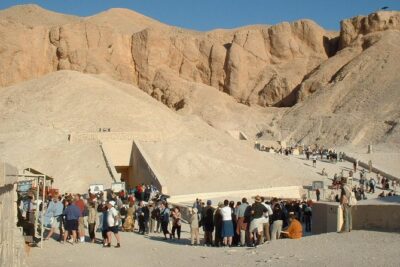
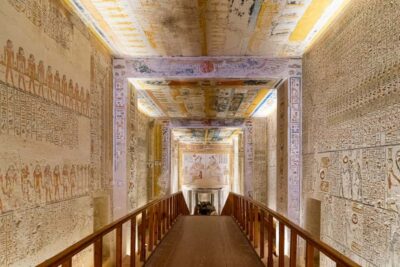
Starting on the West Bank is smart, because it’s the natural counterweight to the grand temple buildings on the East Bank. The Valley of the Kings is called the Valley of the Gates of the Kings for a reason: it feels like a walled passage into a world meant for the afterlife.
What you can expect here is a guided tour and sightseeing, not a quick drop-off-and-go. The guide’s job is to give you the map in your head: how tombs relate to royal power, and how the valley layout ties into ancient planning.
One practical tip from the experience people often mention: at the Valley of the Kings stop, you might have the chance to buy an additional ticket for a specific tomb, such as King Tut’s tomb. If you really care about one tomb, ask your guide when you’re there and decide on the spot based on time and your interests.
Also, be ready for uneven surfaces and standing around for instructions. This isn’t the place to rush through. You’ll enjoy it most when you slow down just enough to look at the rock shapes, not only the entrances.
Hatshepsut at Deir el-Bahari: terraces rising into the cliffs
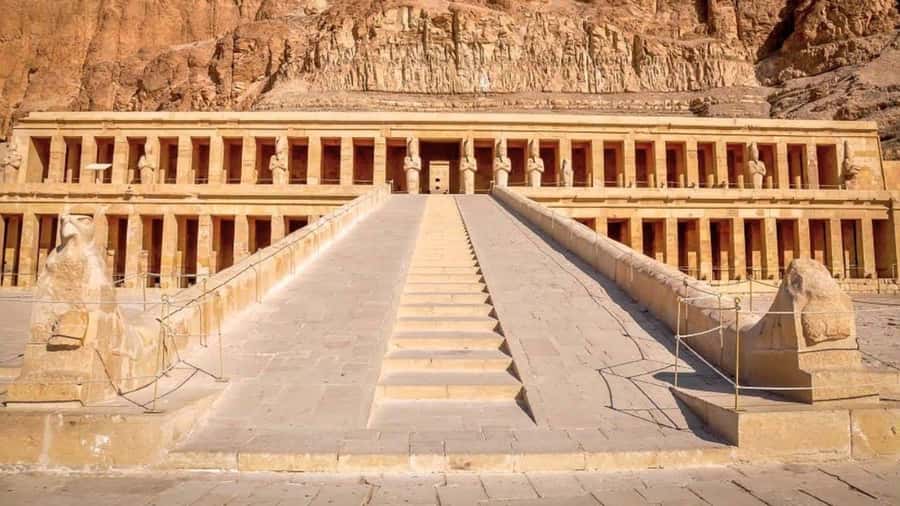
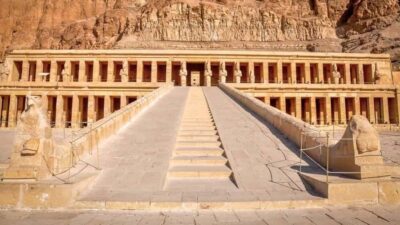
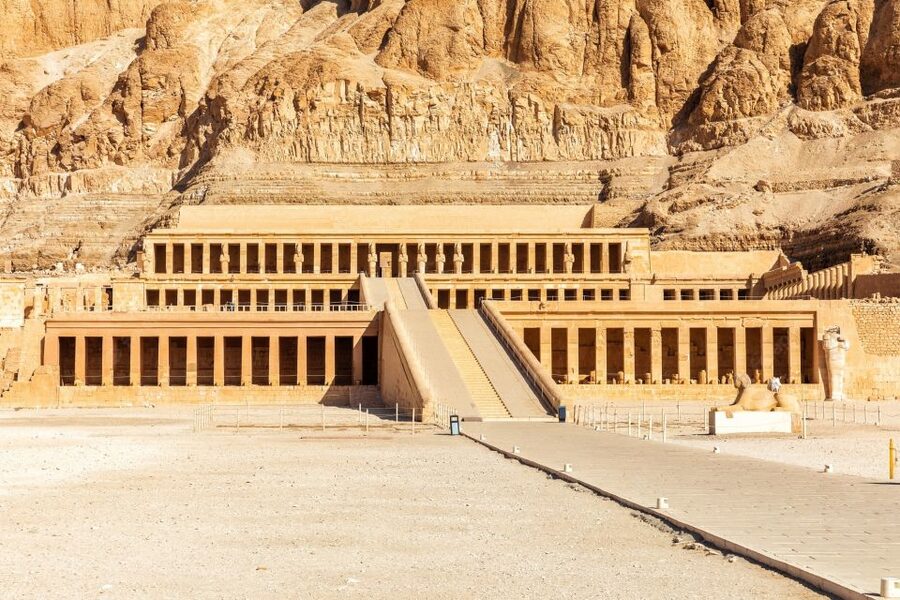
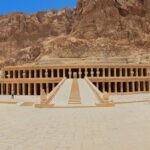
Next comes one of Luxor’s most dramatic sights: the Mortuary Temple of Queen Hatshepsut at Deir el-Bahari. This is a “wow” stop even before the guide starts talking, because those three massive terraces climb up into the cliffs like architecture made for theatre.
What makes this temple special is how the structure frames the landscape. From the lower terraces, your view is guided upward toward the cliff face. The guide should help you understand why this was built this way, and how Hatshepsut used monument design to broadcast power and legitimacy.
You’ll also get a clear, guided walkthrough instead of just wandering. The benefit of that is simple: Hatshepsut’s story can feel distant until someone explains the meaning behind the layout and the imagery.
If you’re the kind of person who likes photos, this is one of your best chances for angles that actually show scale. Take your time at each terrace level. Even if you feel tempted to move quickly, let the temple do its job visually.
More one-day runs to the temples
Colossi of Memnon: a short stop with big presence
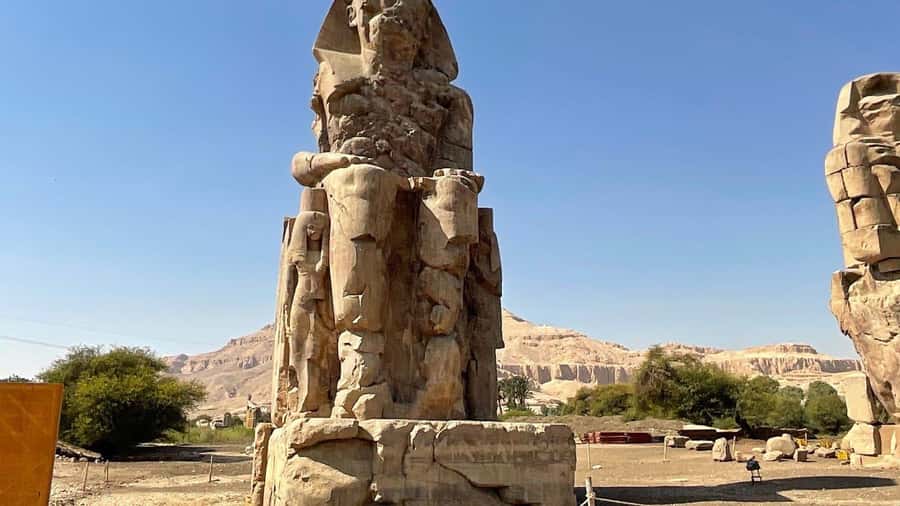
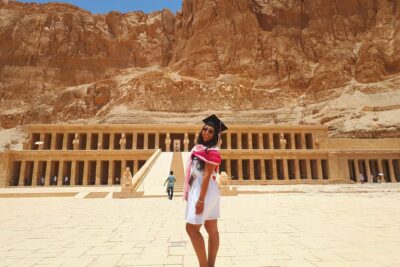
The Colossi of Memnon are easy to recognize, and that familiarity can trick you into thinking the stop is minor. It’s not. Standing next to these statues makes you understand scale in a way pictures can’t.
This part of the day includes a guided visit and sightseeing, plus context around the mortuary temple of Amenhotep III associated with the site. The statues work like a bridge between what you just saw at Deir el-Bahari and what you’ll see later at Karnak, because they’re also about memorial space and royal display.
Expect a guided explanation, not just a photo session. I like this stop for its pace: it’s shorter than some of the temples, but it adds weight to the whole day because you’re not only seeing buildings, you’re seeing how rulers left messages in stone.
If you’re tired, you’ll still feel re-energized here. It’s one of those places where you can stand still for a minute and feel the atmosphere without needing to cover more distance.
Lunch at a local restaurant: fuel for the Karnak stretch
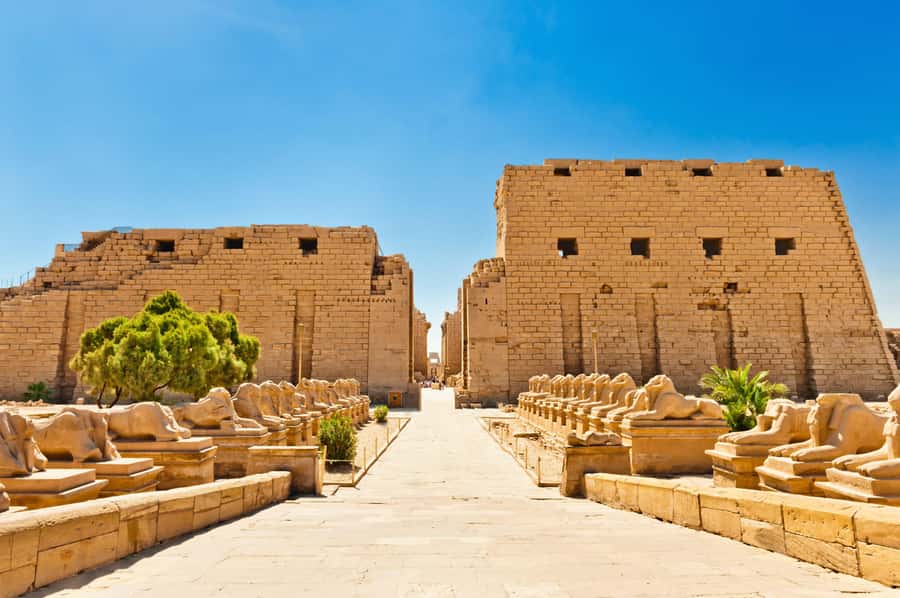
After the West Bank sights, you’ll head to a local restaurant for lunch. This is included, which is more valuable than it sounds. When you’re doing Luxor in one day, lunch is where budgets and schedules often fall apart, especially if you have to search while everyone else is hungry.
In practice, this break helps you reset before the East Bank temples, which are visually intense and best enjoyed with a clear head. Drink water, eat something that keeps you steady, and avoid going too heavy on anything that makes you sluggish in the afternoon.
Also, use the lunch moment to mentally switch gears. The West Bank felt like sacred geography and tomb tradition. The East Bank is where you start seeing worship infrastructure designed to last, with huge complexes and ritual spaces.
Karnak Temple: Amun, Mut, and Khonsu made real
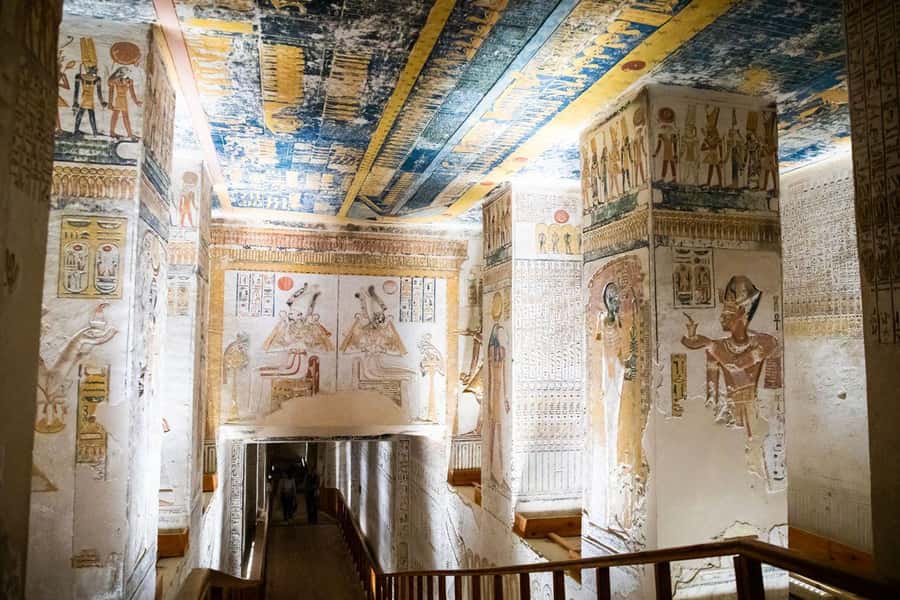
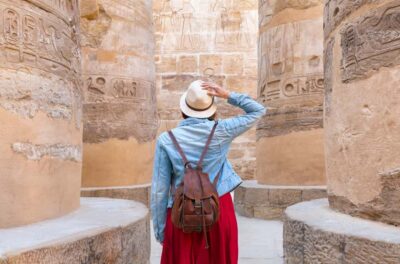
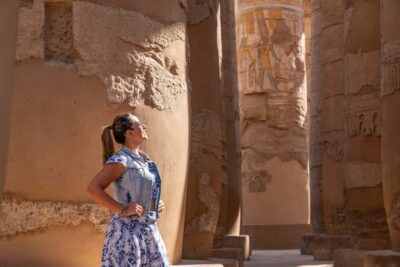
Then you reach the big one: Karnak Temple. If Luxor has a “main character temple,” Karnak is it. This site is described as one of the greatest examples of worship in history, and the guide should help you understand what that means beyond the visuals.
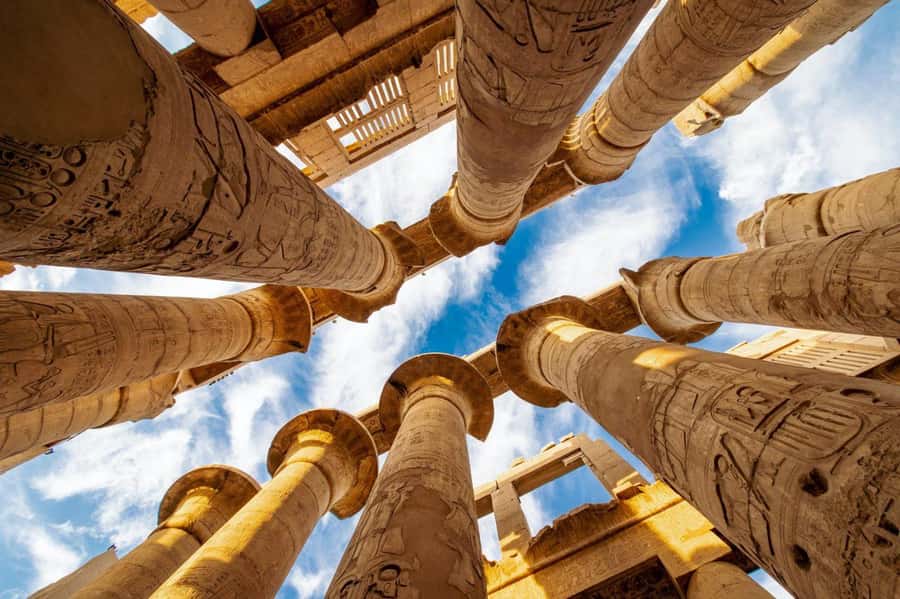
Karnak is dedicated to god Amun, his wife Mut, and their son Khonsu, often referred to as the Theban triad. This is the kind of detail that changes your experience, because suddenly you’re not just looking at columns and walls. You’re looking at a system of relationships between gods, royal authority, and ritual.
What I find most satisfying at Karnak is how the guide connects symbolism to the physical layout. The best guides also explain what you’re seeing in a way that makes it stick. In feedback, many guests praise guides for clear storytelling and for giving time to absorb details, not just rush through.
Go in with a realistic expectation: Karnak can feel overwhelming if you treat it like a checklist. When the guide leads you in the right order, and pauses for meaning, it becomes memorable.
If you want photos, ask your guide when the best times or angles are while you still have people moving. You don’t want to spend your best light waiting for everyone to regroup.
Luxor Temple: Amenhotep III, finished by Ramses II
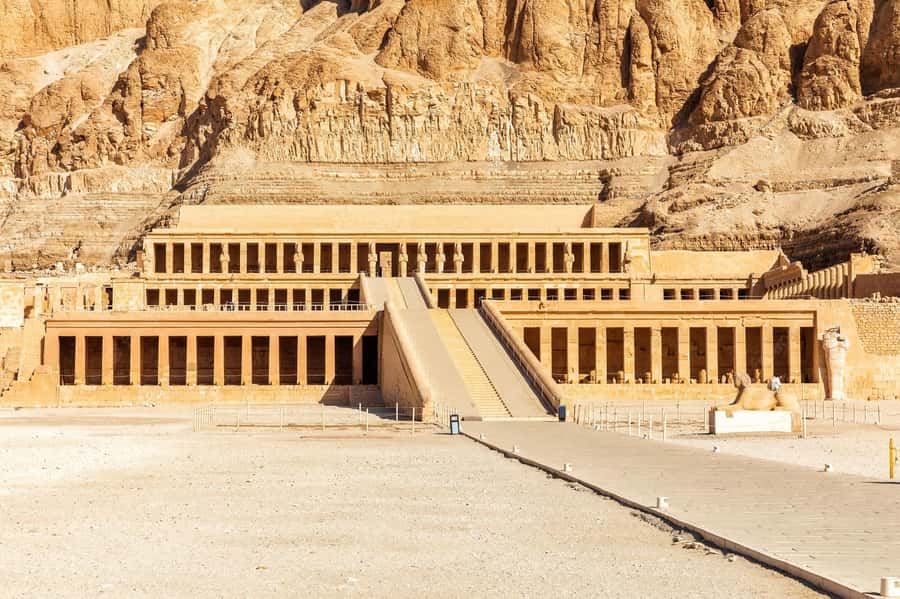
Later in the day you’ll visit the Luxor Temple, built by Amenhotep III in the 18th Dynasty, and completed by Ramses II. This is an important contrast to Karnak, because it reflects the layered nature of Luxor itself: different rulers using the same sacred ground to extend their message.
With a guide, it’s easier to spot what the structure is communicating. The guide can tie Amenhotep III’s building choices to what Ramses II added later, so you understand Luxor as a living monument, not a single instant frozen in time.
This temple often feels more approachable than Karnak. It’s still grand, but it’s less of a maze. You’re more likely to connect with the space and start imagining how people used it.
I like making Luxor Temple part of a full-day circuit because it gives you closure. After the scale of Karnak, Luxor Temple helps you see the “why it mattered” part of the story, not only the size.
How to handle the pacing without feeling stressed
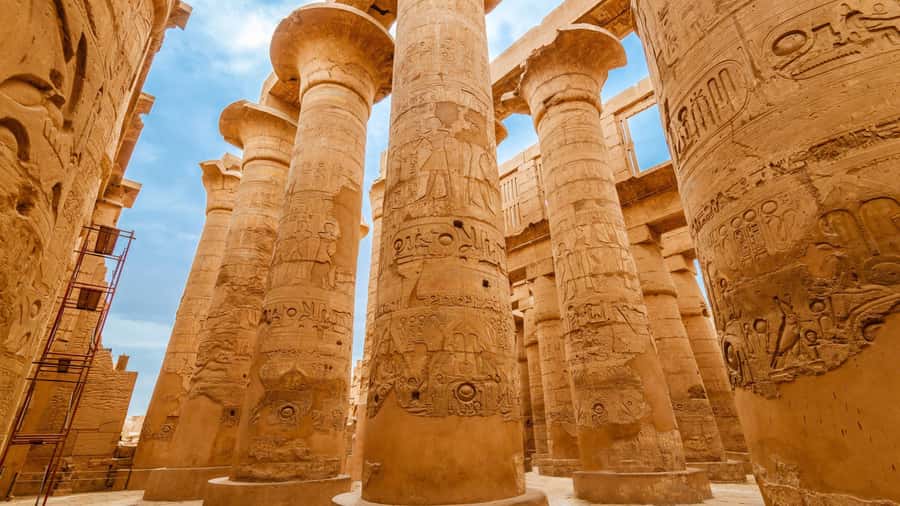
This is a long day. Even with good routing, you’ll be walking, waiting your turn for explanations, and moving between sites. That’s why the guide’s pacing really matters, and why many guests highlight guides who plan the day well and keep time efficient.
Here are the practical ways to enjoy it more:
- Start early if your pickup time allows it. Heat builds fast in Luxor, and it makes walking feel tougher.
- Wear shoes you trust. Temple floors can be uneven, and you’ll be on your feet for hours.
- Give yourself micro-breaks. After the guide explains a section, step back for a minute. It helps the information settle.
- Ask for photo stops. Some guides are especially good at pointing out the angles and best spots for pictures.
One more small note from real-life comfort: since it’s a shared tour, the vehicle can feel tight for some people. If you’re tall or travel with lots of gear, keep your bag compact and try to sit where you have enough leg room.
Who should book this Luxor West and East Bank day tour
This tour is a good match if you:
- Want major Luxor highlights in a single day.
- Prefer guided context over wandering alone through massive sites.
- Like history explanations with storytelling and time to ask questions.
- Are visiting Luxor with limited time and still want both West Bank and East Bank experiences.
It’s also a solid option if you appreciate a guide who can tailor the day when needed. Some guests mention guides adjusting plans so they don’t miss key tomb experiences, which is a big deal when schedules are tight.
I’d consider a different approach if you:
- Want a slower, deeper dive at only one bank.
- Know you will hate long driving and a packed timeline.
Should you book this Luxor West and East Bank day tour?
If you want the classic Luxor combo, this is an efficient way to do it. For many people, the standout value is the combination of an Egyptologist guide, big-name temples, and a lunch break that keeps the day workable. At $90, it can be a strong deal if the entrance fees you want are covered by the option you select.
I’d book it if you’re comfortable with an 8-hour schedule and you want your first Luxor day to be all about highlights plus meaning. I wouldn’t book it if you’re hoping for a leisurely pace or if you only want one site type and could spend the day there instead.
Either way, do yourself a favor: when you arrive, talk to your guide early. Ask what the best photos and must-remember points are for your interests. That’s where the day turns from sightseeing into understanding.
FAQ
What sites does this full-day Luxor tour include?
It includes visits to the Valley of the Kings, the Mortuary Temple of Queen Hatshepsut at Deir el-Bahari, the Colossi of Memnon, Karnak Temple, and Luxor Temple, plus a lunch stop.
How long is the tour?
The duration is 8 hours.
Where does pickup happen, and where do you return?
Pickup is from your hotel in Luxor, and the tour includes hotel drop-off in Luxor’s East Bank.
What language is the guide?
The tour includes an English-speaking guide. French, German, or Spanish-speaking guides are available as add-ons.
Is lunch included?
Yes, lunch is included.
Are entrance fees included?
Entrance fees are included if the entrance-fee option is selected.
What is the price per person?
The price is listed as $90 per person.
Is cancellation free?
Free cancellation is available up to 24 hours in advance for a full refund.
Can I reserve without paying right away?
Yes, the tour offers a reserve now & pay later option, so you can book your spot and pay nothing today.
Is this a shared tour?
The experience is described as a shared full-day tour.
Luxor Temples in a Day
Karnak and the East Bank

More of Luxor from our review pile
- Private Tour Nile Felucca Ride at Sunset in Luxor
★ 5.0 · 26 reviews - Private Full day East and West Bank, Luxor
★ 5.0 · 26 reviews - Luxor Day Tour: Kings Valley & Karnak & Luxor & Hatshepsut Temple
★ 5.0 · 26 reviews - Full-Day East and West Luxor Private Tour
★ 4.5 · 26 reviews - Day Trip to Edfu & Kom Ombo temples from Luxor and drop off in Aswan or Luxor
★ 5.0 · 26 reviews - 5 Days 4 Nights Nile Cruise Tour
★ 5.0 · 27 reviews
Karnak & Luxor Temples on the East Bank, compared.
 ★ 4.6Luxor Tour with Valley of Kings, Karnak & Tut TombFrom $1031,082 reviews
 ★ 5.0Full Day Tour to Luxor West and East Banks & LunchFrom $23870 reviews
 ★ 5.0Valley of Kings, Hatchepsut Temple ,Karnak & Luxor-DayTourFrom $95735 reviews
 ★ 4.4Karnak Temple and Luxor Temple Tour with LunchFrom $40658 reviews
 ★ 4.5West and East Banks All-Inclusive Tour & Balloon RideFrom $188415 reviews
 ★ 4.5Valley of Kings Hatshepsut & Karnak Luxor Day TripFrom $99375 reviews
 ★ 5.0All Inclusive Day Tour to Luxor West and East Banks with LunchFrom $70184 reviews
 ★ 4.6Valley of the Kings & Karnak Temples Luxor TourFrom $306177 reviews
The lists this one sits on