
REVIEW · LUXOR WEST BANK TEMPLES & TOMBS
Luxor Day Tour: Valley of Kings & Queens & Hatchepsut Temples
A West Bank day with serious story power. This private tour pulls together the tombs and temples you actually want in Luxor, with an Egyptologist guide and admission fees included so your day runs smoother. The main watch-out is that it is a long, hot, walking-heavy day, and some add-on shop stops can feel pushy if you are not firm.
I like the structure here: you get round-trip pickup in an air-conditioned vehicle, bottled water, and set time at each site, so you are not stuck guessing where to go next. On a private format, you also get personal attention, which matters on places like the Valley of the Kings where the details can vanish if you are just following crowds.
One more practical consideration: lunch is not included, and you may face optional tomb upgrades or extra shopping moments. If you prefer to stay focused on history only, go in with clear boundaries at the start of the day.
In This Review
- Key points to know before you go
- Luxor West Bank in one day: where the time actually goes
- Valley of the Kings: tombs, myths, and how to plan your “must-see”
- Hatshepsut at Deir el-Bahari: the temple that feels like a scene
- Colossi of Memnon: the fast stop that sets the mood
- Medinet Habu and the story after a reign
- Deir el-Medina: meet the people who made the tombs
- Valley of the Queens: Nefertari and the nobles’ afterlife world
- What the Egyptologist guide adds, and where shopping pressure can creep in
- Comfort, timing, and how to prep for heat and walking
- Price and logistics: is $89.24 good value
- Should you book this Luxor West Bank tour?
- FAQ
- How long is the Luxor day tour?
- Is pickup from my hotel or Nile Cruise included?
- Are entry fees included for the sites?
- Do I get an Egyptologist guide?
- Is lunch included?
- Is tipping included in the price?
- Does the tour include bottled water?
- Is this a private tour?
- Is the tour ticket mobile?
- Can I cancel for a refund?
Key points to know before you go
- Private, Egyptologist-led West Bank coverage in one long day, not a rushed “highlights only” loop
- Major sites plus the artisans village at Deir el-Medina, where the real tomb-making workforce comes into focus
- Included admission for the Valley of the Kings, Valley of the Queens, Hatshepsut, Medinet Habu, and Deir el-Medina
- Air-conditioned transport and water help a lot when Luxor heat hits
- Tomb upgrades are common once you are there, so expect optional costs beyond included tickets
- Some shopping stops can happen, so be ready to say no early and calmly
Other tomb tickets in the valley
- Hurghada: Luxor Valley of the Kings & Tutankhamun Tomb Trip★ 4.7 · 13,208 reviews
- Luxor Day Trip from Hurghada Small Group & Tutankhamun Tomb★ 4.8 · 5,366 reviews
- Luxor Day Tour: Valley of Kings & Queens & Hatchepsut Temples★ 5.0 · 1,496 reviews
- Luxor: Valley of the Kings and Hatshepsut Temple Day Tour★ 4.4 · 1,404 reviews
Luxor West Bank in one day: where the time actually goes
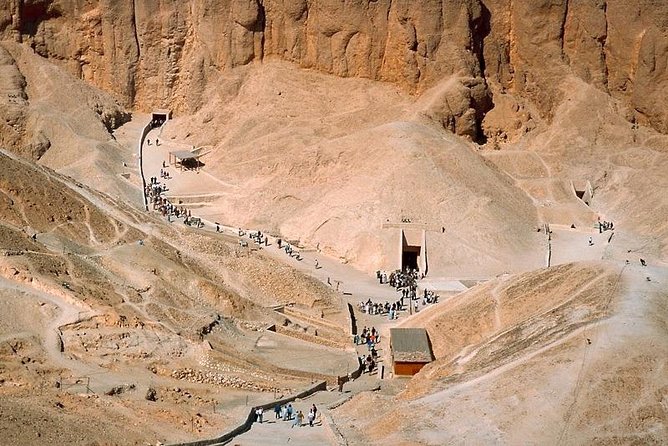
This is designed for people who want the West Bank big hitters without playing logistics roulette. The plan concentrates on the cluster of sites along Luxor’s west side: royal tomb country in the valleys, the big ceremonial temples, and Deir el-Medina, the workers’ village tied to the tomb art.
The day runs about 8 hours. That sounds long, but you should think of it as roughly 1 day worth of “temple plus tomb plus context.” The schedule gives you a longer block at the Valley of the Kings, then shorter, targeted stops at the other landmarks. That mix is smart because some sites reward slow looking, while others are more about orientation and key sights.
Transport is handled by a modern air-conditioned vehicle with pickup from your Luxor hotel or Nile Cruise. In practice, that means you can keep your energy for the walking rather than spending it on finding taxis or arguing about routes. One more small thing that adds up: bottled water is included, which helps you last through the midday heat without constant store stops.
Valley of the Kings: tombs, myths, and how to plan your “must-see”
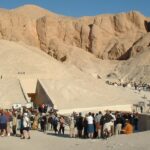
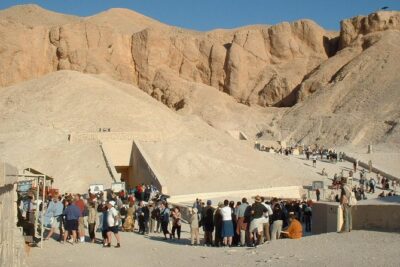
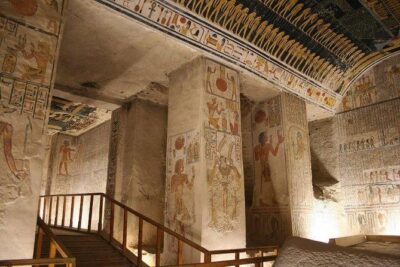
The Valley of the Kings is why most people come to Luxor, and you get real time there, about 3 hours. You are dealing with a place that has 63 tombs in total, so it is easy to feel overwhelmed. The value of an Egyptologist guide is that you do not just wander. You learn how the Egyptians imagined the afterlife, and why the royal tombs are packed with scenes tied to Egyptian mythology.
This matters because the “wow” factor is not only the famous names, it is the logic behind the decoration. A guide helps you connect the hieroglyphic themes to what the people believed they needed for the journey beyond death.
You will likely hear about King Tutankhamun and other famous rulers during this stop, since the valley is where so many legendary kings were laid to rest. If you want the most famous decorated tombs, expect that some may require an extra paid ticket on-site. The good news is that the time you spend in the valley is long enough to do at least one major tomb upgrade if you choose to.
A practical note for your comfort: the Valley of the Kings is not a stroll. You are going in and out of tomb entrances, walking between sites, and spending time standing in lines depending on the day. Wear supportive shoes, and give yourself a moment to hydrate early rather than waiting until you feel overheated.
Hatshepsut at Deir el-Bahari: the temple that feels like a scene
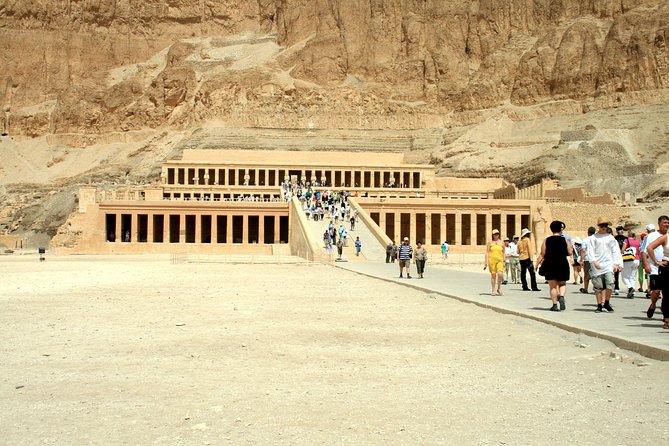
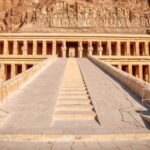
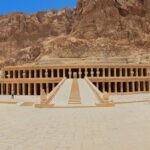
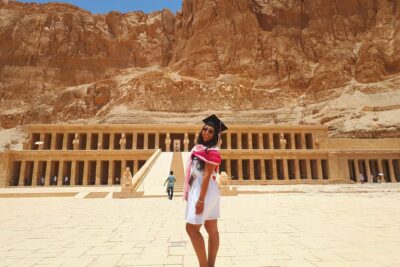
After the tombs, the day shifts to stone grandeur. The Temple of Hatshepsut at Deir el-Bahari is a highlight because it is not just “a temple,” it is a whole dramatic hillside setting. You get about 1 hour here, which is enough time to understand why this place is considered one of the West Bank’s most iconic views.
The guide attention is especially useful at this stop because Queen Hatshepsut is tied to big ideas about kingship and legitimacy. You will hear her epithet mentioned as Foremost of Noble Ladies, and you will get the context behind the stories linked to her reign, including references to early trade routes.
This is a good moment to reset. The tomb portion is often emotionally intense and physically demanding. At Deir el-Bahari, you can look out over the Nile-facing horizon, then return your focus to the temple carvings and layout. If you like architecture, you will feel it here.
The possible drawback is timing. If you arrive later in the day and you are already tired, the one-hour window can feel a bit tight to take in everything slowly. Still, it is a strong stop for first-timers because it teaches you how the Egyptians mixed ceremony, power, and landscape into one statement.
Colossi of Memnon: the fast stop that sets the mood
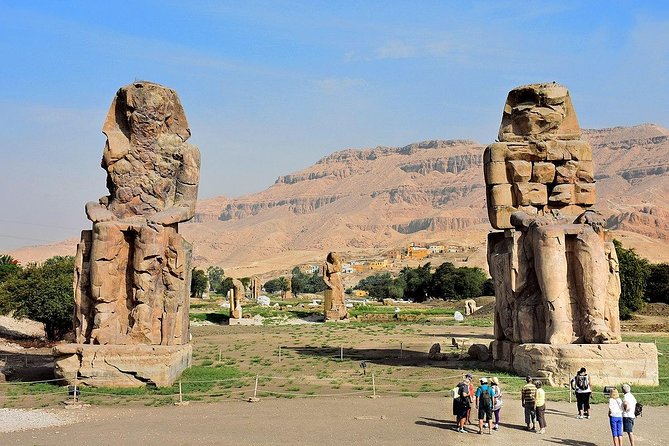
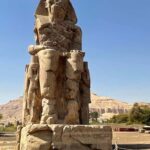
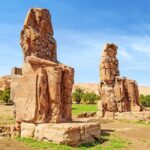
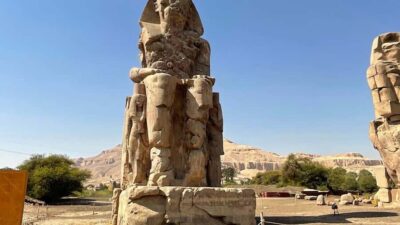
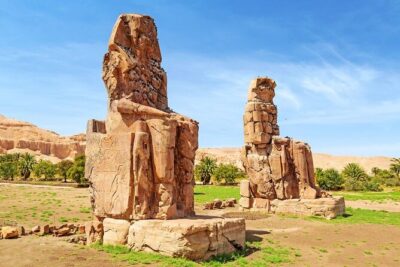
The Colossi of Memnon can look almost too simple on paper because the stop is only about 20 minutes. But that is the point. These are enormous twin statues, made from quartzite sandstone, and you do not need hours to grasp the scale.
If you are wondering why these statues matter, think of them as a gateway to the wider temple complex that once belonged to a much grander structure. Even when parts are gone, the surviving giants still teach you how monumental Egyptian building projects were.
This is also a good buffer in the schedule. When you feel your energy dip, this stop gives you a quick win. Snap a few photos if you want, take in the proportions, then move on. It is the kind of pause that helps you survive the rest of the day.
One thing to watch: because the time is short, you should be ready to step out and look, not to keep browsing every adjacent shop or side path. If your goal is history first, stay focused here.
West bank tombs, one by one
Medinet Habu and the story after a reign
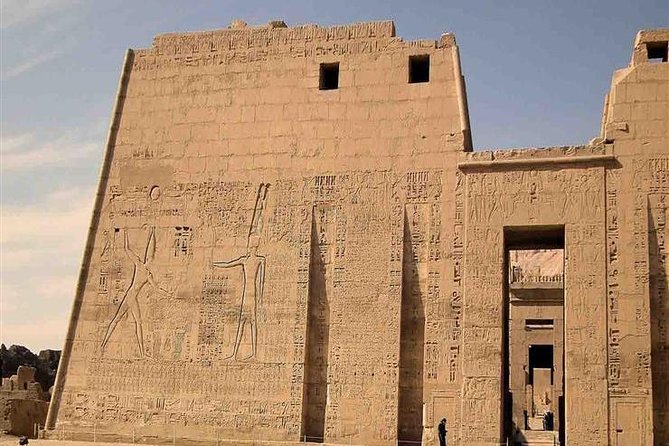
Medinet Habu is where the day adds a different flavor. Instead of tomb corridors and hillside terraces, you get a temple built to commemorate King Ramses III. The stop is about 1 hour.
The temple is important because it anchors the larger narrative of royal power after death, but in a more ceremonial, commemorative format than the valleys. You will see how the site speaks through its walls and layout, and a guide helps translate what you are seeing into what it meant.
This is also a solid lunch lead-in point. You will have time for lunch around this part of the day. Lunch is not included, so plan to eat either at the provided break area or at a nearby local spot arranged during the day. If you are picky about food, bring water and keep an eye on where you can sit comfortably in the shade.
The only drawback here is energy management. If you use all your stamina early in the Valley of the Kings, Medinet Habu may feel more like “keep moving” than “soak it in.” To avoid that, hydrate and slow your pace at the end of the kings’ valley portion.
Deir el-Medina: meet the people who made the tombs
This is the stop that many first-timers overlook, but it is one of the most meaningful. Deir el-Medina is the ancient workmen’s village, home for artists, craftsmen, and workers who built and ornamented the royal tombs.
You get about 1 hour there, and that time is valuable because it changes your perspective. In the Valley of the Kings, you see the final product, the royal tombs and the grand symbolism. At Deir el-Medina, you get the sense of who did the job. That human layer makes the carvings feel less like “random art” and more like the result of real labor, real planning, and real skill.
If you want to understand Egypt’s tomb art beyond the surface, this is a great place to ask questions. An Egyptologist guide can connect how artisans might have worked, how scenes were planned, and how the village supported the tomb-building economy.
The main practical downside is that this is not always as visually dramatic as the biggest temples. It can still feel fascinating, but you have to engage mentally. If you like learning how things were made, you will enjoy it a lot.
Valley of the Queens: Nefertari and the nobles’ afterlife world
The day ends with the Valley of the Queens, about 1 hour, including the tomb of the great queen Nefertari. This is a powerful contrast to the Valley of the Kings. You still get tomb space and afterlife beliefs, but the queens’ valley brings its own emotional and artistic focus.
Nefertari’s tomb is a key reason people come. Even if you do not pick every possible extra tomb upgrade, the guide framing makes it clear why her story carries weight.
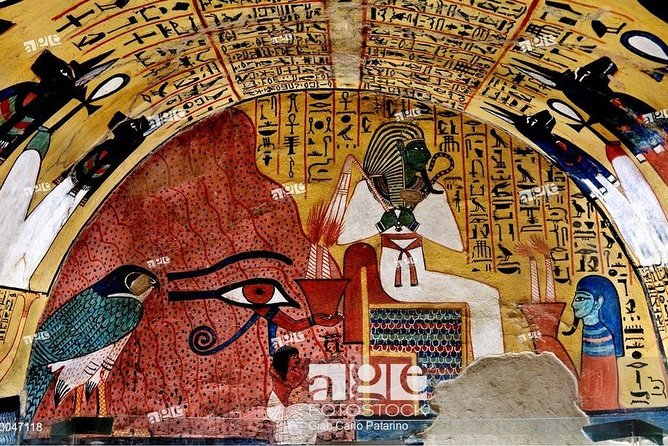
The tour also includes time for the Tombs of the Nobles, where there are more than 400 tombs belonging to nobles. These were decorated with cryptic passages from the Book of the Dead, meant to guide someone through the afterlife journey. That theme is a big deal, because it turns the valley from “a place with holes in rock” into a guided story about survival after death, expressed through text and imagery.
One tip for enjoying this segment: keep your expectations flexible. The valleys can be light on dramatic architecture and heavy on meaning. If you lean into what the guide explains, you will leave with more than photos.
What the Egyptologist guide adds, and where shopping pressure can creep in
The best versions of this tour are the ones where the guide helps you see. In the feedback tied to this experience, guides like Mohsen and Abdo Esmael come up again and again for strong explanations and smooth pacing. People also highlight guides such as Roshdy and Mohamed Awad for clear English and for pointing out details you would miss on your own.
That is the real value of an Egyptologist-led format: you are not just collecting stops, you are building understanding as you walk. The tomb paintings, temple carvings, and the village context start to connect in your head.
Now, the honest caution. Some parts of the day can include visits to shops tied to stonework or perfume, and one negative account described unwanted shopping pressure and aggressive upselling. Another reported issues with tipping demands and improper behavior, which is not something you should ignore if you are concerned about safety.
Here is how you keep control:
- Tell your guide early you want history only and you will skip any optional stops.
- If anyone suggests an extra ticket, ask for clear confirmation on what you are paying for, and check any upgrade details at the official ticket points on-site.
- Keep small cash for your own choices, since lunch is not included and some tomb upgrades may come up.
If you are traveling solo, be extra firm about boundaries. If something feels off, leave the situation and ask to be taken to a safer public area. Your time in Luxor is precious.
Comfort, timing, and how to prep for heat and walking
This day is a marathon, even when it is well organized. You will move between valleys and temples, walk uneven paths, and spend time inside tomb spaces that can feel stuffy. Luxor heat can hit hard, so start early when you can, and treat shade stops as part of the plan, not a detour.
Here is what you can do before you go:
- Wear shoes with grip. You will be on stone and dirt paths.
- Bring sun protection. A hat and sunscreen matter.
- Pack water beyond the included bottle, especially if you tend to get thirsty.
- Bring a light layer. Tomb interiors can feel cooler than outdoors, and you will want to adjust.
In terms of scheduling, the stop lengths are realistic: longer at the Valley of the Kings, then one-hour blocks where you can reset your focus. If your guide is running phone calls constantly or rushing you, bring it up calmly. A private format usually means you have at least some leverage to keep the day working for you.
Also keep your lunch expectations grounded. Lunch is not included, so you should budget time and plan what you will eat. Some guides may offer flexibility around where to eat, but you should still be ready with your own priorities.
Price and logistics: is $89.24 good value
At $89.24 per person, the standout value here is that key admission fees are included, not just the guide and transport. That includes entry to the Valley of the Kings, Hatshepsut temple, Habu temple, Deir el-Medina, and the Valley of the Queens.
In other words, you are not paying separately for every major site on the West Bank. That can make a noticeable difference on total cost, especially when you add transport, guide time, and the fact that you are covering multiple distinct areas in one day.
What can change the final price is not the base tour, it is what you decide on top:
- Optional tomb upgrades once you arrive
- Lunch, since it is not included
- Tipping, since it is not included
- Any add-on shop purchases, which you can skip
So yes, the price looks solid if you want a guided West Bank day with fewer surprise expenses. It is a less good deal if you prefer to travel completely independently, or if you know you will hate any commercial detours.
Should you book this Luxor West Bank tour?
If you want one day that covers the big royal tomb areas plus Hatshepsut, Medinet Habu, and Deir el-Medina, this tour fits the job. The mix of included admissions, Egyptologist context, and air-conditioned transfers makes it a practical way to see a lot without turning your day into a hunt for tickets and directions.
I would book it if you:
- Love learning meaning behind tomb art and temple symbolism
- Want a guide to point out details across multiple sites
- Are comfortable with a long day and some walking
I would be cautious if you:
- Hate shopping stops and want a strict history-only schedule
- Are very sensitive to safety and personal boundaries while traveling solo
If you do book, set your expectations at pickup, bring your own water plan, and keep an eye on any extra paid upgrades so you stay in control.
FAQ
How long is the Luxor day tour?
The tour runs about 8 hours.
Is pickup from my hotel or Nile Cruise included?
Yes. Pickup and return transfers from your Luxor hotel or Nile Cruise are included by air-conditioned vehicle.
Are entry fees included for the sites?
Yes. Admission is included for the Valley of the Kings, Hatshepsut Temple, Habu Temple, Deir el-Medina, and the Valley of the Queens.
Do I get an Egyptologist guide?
Yes. The tour includes Egyptologist guides who are qualified and fully licensed.
Is lunch included?
No. Lunch is not listed as included, though the schedule has time for lunch.
Is tipping included in the price?
No. Tipping is not included.
Does the tour include bottled water?
Yes. A bottle of water is included during the trip.
Is this a private tour?
Yes. It is private, so only your group participates.
Is the tour ticket mobile?
Yes. The tour includes a mobile ticket.
Can I cancel for a refund?
Yes. Free cancellation is available, and you can cancel up to 24 hours in advance for a full refund.
Luxor Temples in a Day

The West Bank, Tomb by Tomb
Down Into the Kings Valley
More of Luxor from our review pile
- Private Tour Nile Felucca Ride at Sunset in Luxor
★ 5.0 · 26 reviews - Private Full day East and West Bank, Luxor
★ 5.0 · 26 reviews - Luxor Day Tour: Kings Valley & Karnak & Luxor & Hatshepsut Temple
★ 5.0 · 26 reviews - Full-Day East and West Luxor Private Tour
★ 4.5 · 26 reviews - Day Trip to Edfu & Kom Ombo temples from Luxor and drop off in Aswan or Luxor
★ 5.0 · 26 reviews - 5 Days 4 Nights Nile Cruise Tour
★ 5.0 · 27 reviews
Luxor West Bank Temples & Tombs, compared.
 ★ 5.0Full Day Tour to East and West Banks of LuxorFrom $151,449 reviews
 ★ 4.4Valley of the Kings and Hatshepsut Temple Day TourFrom $501,404 reviews
 ★ 5.0Valley of Kings, Hatchepsut Temple ,Karnak & Luxor-DayTourFrom $95735 reviews
 ★ 5.0Full Day Tour of Luxor West Bank Temples and Tombs (Private)From $20722 reviews
 ★ 5.0Private Full-Day Luxor Highlights East and West BanksFrom $65663 reviews
 ★ 4.5Guided Tour to East or West Banks with LunchFrom $64604 reviews
 ★ 5.0Luxor Private Full-Day Tour: Discover the East and West Banks of the NileFrom $90545 reviews
 ★ 4.5Valley of Kings Hatshepsut & Karnak Luxor Day TripFrom $99375 reviews