
REVIEW · LUXOR WEST BANK TEMPLES & TOMBS
Private Full-Day Luxor Highlights East and West Banks
Luxor hits hard, fast, and in both worlds. This private full-day tour lets you see the East Bank and West Bank highlights with an Egyptologist guide who helps the sites make sense, not just look impressive. I like the clean structure here, because it keeps you moving through major monuments without feeling like you are sprinting.
The day includes lunch and a planned flow that works well if you have limited time in Luxor. Your biggest choice is whether you add the tomb of Tutankhamun, and that decision affects cost and time in the Valley. One possible drawback is that entrance fees are not included, so you need to budget extra on arrival, and you may also want to set boundaries about any optional shopping stops.
In This Review
- Key points to know before you go
- Price and Logistics: What $65 Buys in Luxor
- 8:00 am Pickup and the Smart Rhythm for a One-Day Luxor
- Valley of the Kings Tomb Strategy: Tutankhamun Optional, Ramses Main Event
- Deir el Bahari and the Colossi of Memnon: Hatshepsut and the West Bank Mood
- Karnak Temple Complex: The East Bank’s Must-Do Giant
- Luxor Temple and the Avenue of Sphinxes: Finish With the Near-Home Feel
- Lunch Break, Tickets, and Dealing With Sellers Without Losing Your Day
- What Makes the Private Guide Format Work (and Which Styles Fit You)
- Entrance Fees and Budgeting Beyond the $65
- Who This Tour Fits Best, and Who Should Skip It
- Should You Book This Private Full-Day East and West Banks Tour?
- FAQ
- What time does the tour start?
- How long is the tour?
- Is hotel pickup and drop-off included?
- Is lunch included?
- Are entrance fees included in the price?
- Is the tomb of Tutankhamun included?
- Is this a private tour?
- Can I add hot air ballooning?
Key points to know before you go
- Private Egyptologist guidance so you understand what you are looking at, especially in the Valley of the Kings
- A two-bank day that balances the West Bank necropolis with East Bank Karnak and Luxor Temples
- Lunch is included, which makes the long day feel manageable
- Optional Tutankhamun ticket (300 EGP) for a quick but famous face-to-face moment
- Plenty of time to breathe between tomb stops, with help on tickets and navigating sellers
West bank tombs, one by one
- Luxor Day Tour: Valley of Kings & Queens & Hatchepsut Temples★ 5.0 · 1,496 reviews
- Full Day Tour to East and West Banks of Luxor★ 5.0 · 1,449 reviews
- Luxor: Valley of the Kings and Hatshepsut Temple Day Tour★ 4.4 · 1,404 reviews
- Luxor: Valley of Kings, Hatchepsut Temple ,Karnak & Luxor-DayTour★ 5.0 · 735 reviews
Price and Logistics: What $65 Buys in Luxor
At $65 per person for an about 8-hour private day, this is priced like a straightforward, practical Luxor “highlights” option. You get hotel pickup and drop-off in Luxor, travel in a comfortable air-conditioned vehicle, a qualified Egyptologist guide, and lunch. Entrance fees are on your own, which is common for Egypt, but it is the one part you cannot ignore when budgeting.
One detail I really appreciate is the private format. You are not sharing a cramped experience with strangers or dealing with a laggy pace from the slowest person in the group. It also helps you ask questions in real time, which is what turns monuments from background scenery into something you can actually follow.
With an average booking window of about 37 days in advance, I would not wait until the last minute either. Luxor guides and cars get booked up, and you want to lock in the schedule that works for your trip.
8:00 am Pickup and the Smart Rhythm for a One-Day Luxor
The tour starts at 8:00 am, which matters more than it sounds. Early starts usually mean fewer crowds at major sites and more time before the hottest parts of the day. After pickup, you ride with your guide in an air-conditioned vehicle while the plan moves from the West Bank to the East Bank.
This is a true highlights day. The West Bank stops are timed around the Valley of the Kings experience, then you transition to Deir el Bahari and the Colossi of Memnon. After that, the East Bank focuses on Karnak first, then Luxor Temple and a short segment of the Avenue of Sphinxes. In other words, the day is built to reduce decision fatigue. You show up, and the route makes sense.
Valley of the Kings Tomb Strategy: Tutankhamun Optional, Ramses Main Event
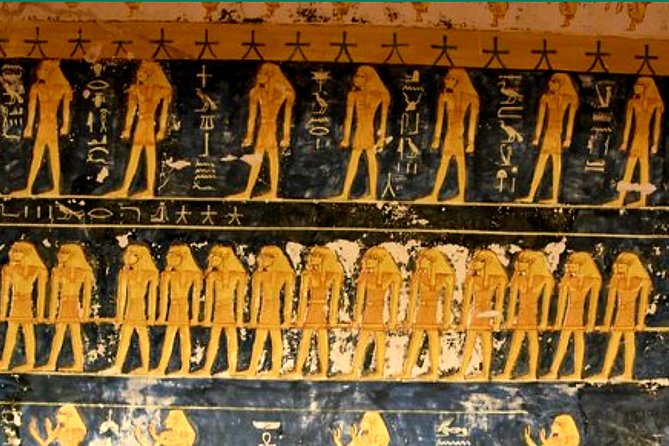
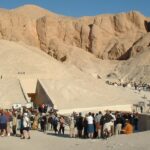
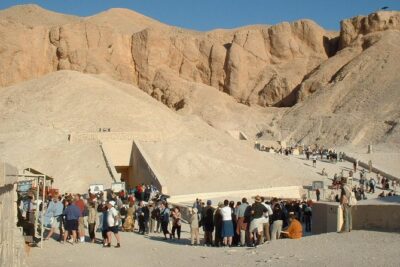
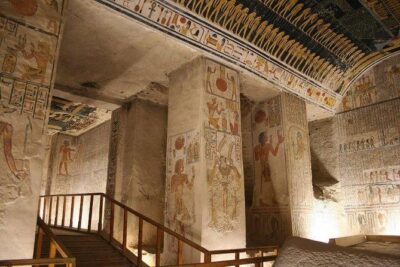
Your West Bank experience starts at the Valley of the Kings, the main stage for royal tombs of Egypt’s New Kingdom. This is where a good guide earns their keep. With the right explanations, you stop seeing tombs as random chambers and start recognizing themes, texts, and royal iconography.
In your time here, you visit four royal tombs, and then you can optionally add the tomb of Tutankhamun. The stops are not long, but they are meaningful. The goal is exposure to multiple royal burial contexts, so you see variety in decoration and layout instead of only one tomb in depth.
Here is what to expect at the key tombs:
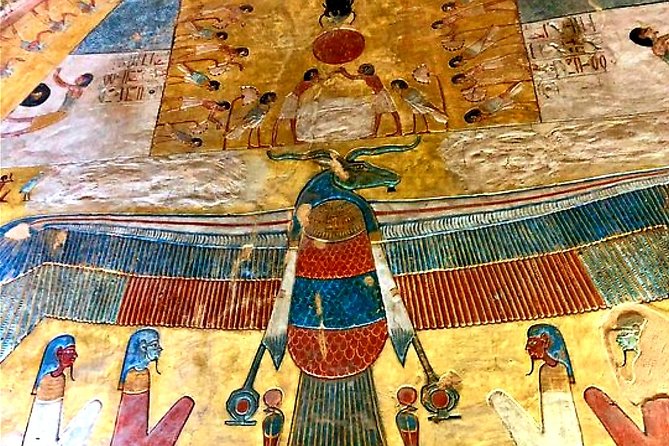
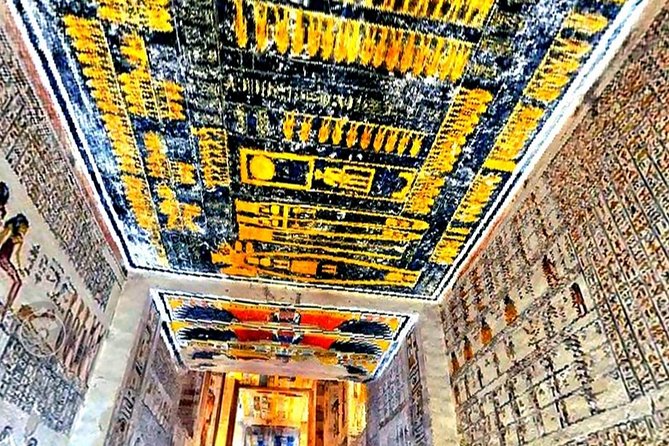
- Tomb of Ramses IV (KV 2) is the big art stop in this loop. You spend more time than most other tombs here, and the ceiling and wall texts are the kind of thing you will miss if you rush.
- Tomb of Tutankhamun is optional, with a ticket listed at 300 EGP. It is only a short visit, but it is the fastest way to get the famous face-to-face moment everyone talks about.
- Tomb of Ramses III is known for colorful painted reliefs with ritual texts and also unusual side-room scenes, including references to foreign tribute and the alternative name connected to harpists.
- Tomb of Merenptah offers a different tomb character and decoration focus, with practical value in learning how royal burial patterns evolved over time.
A practical tip: tomb interiors are dim and crowded with details. If you want photos, take your time right after you enter, then let your guide talk while you look. Trying to do both at once can turn the visit into a blur.
If you are deciding on Tutankhamun, think about your priorities. If your goal is a single must-see icon, add it. If you prefer more breathing room in the Valley, you might skip it and use the time for the other tombs on your list.
Deir el Bahari and the Colossi of Memnon: Hatshepsut and the West Bank Mood
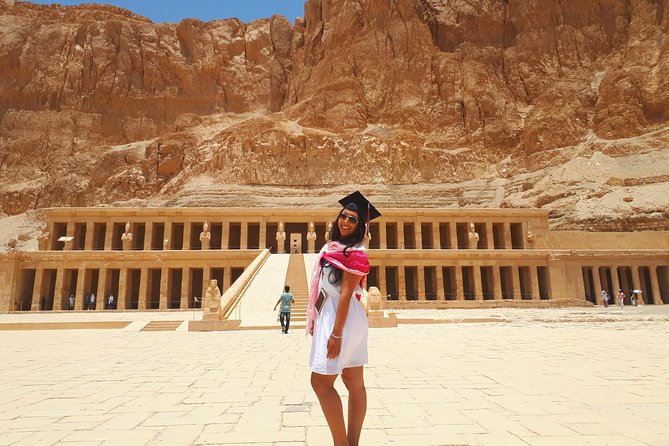
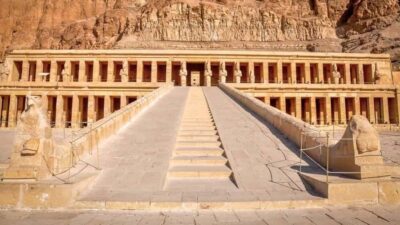
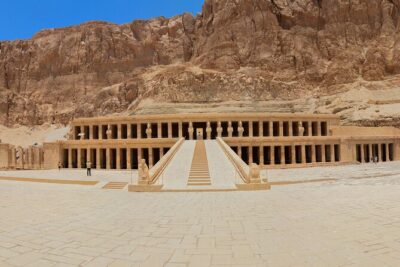
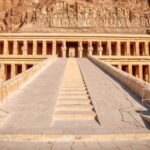
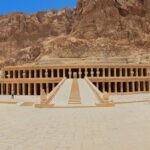
After the Valley, you head to Deir el Bahari to visit the Temple of Hatshepsut, the only woman known to have reigned as pharaoh. This is one of those stops where timing helps you. You start with the enclosed tomb world, then you step into an open, dramatic setting, and the day feels like it has shape.
The tour gives you about an hour here, which is enough time to follow the overall plan rather than just walk past walls. Hatshepsut’s temple is also tied to the Tut era through dynastic connections, which makes it a smart companion to the optional Tutankhamun decision. If you do Tut, this temple gives the bigger context. If you skip Tut, Hatshepsut still anchors your understanding of the West Bank.
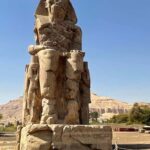
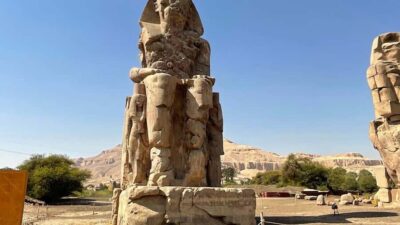
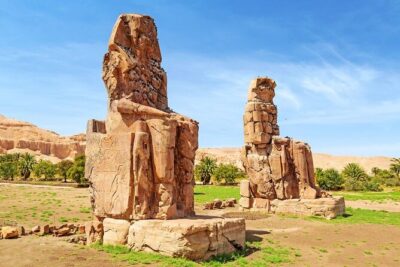
Next are the Colossi of Memnon, two massive statues from the era of Amenhotep III. Your stop is short, about 10 minutes, but you are not here to linger. You are here to see scale, take a few photos, and move on with your day.
If you want to make the most of the quick Colossi stop, look back at them from different angles. The statues are impressive from the front, but the surroundings and perspective help your brain understand just how large they are.
More one-day runs to the temples
Karnak Temple Complex: The East Bank’s Must-Do Giant
Karnak Temple is where most first-time Luxor days either land perfectly or feel chaotic. The difference is time with a guide who can point out what matters and in what order.
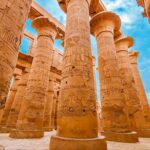
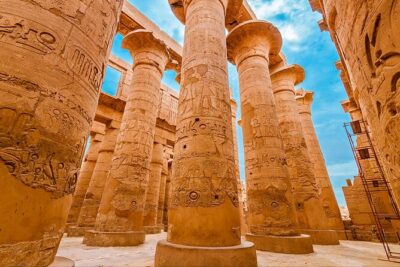
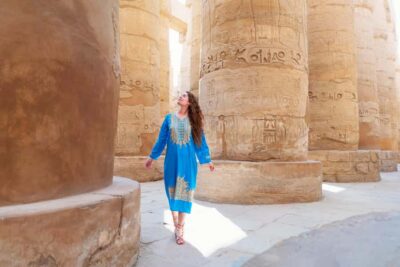
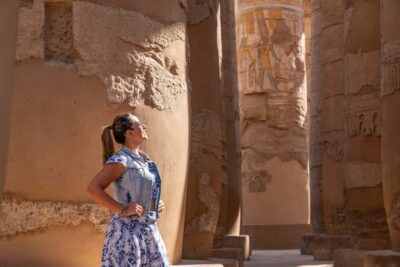
You get a substantial visit here, with time allocated for the main areas of the Karnak Temples complex. Expect major highlights such as the Hypostyle Hall with its 134 columns, the Avenue of Sphinxes, and obelisks connected to Queen Hatshepsut and Thutmose I. You also see elements of the Temple of Amun, with lotus and papyrus-style decoration themes, plus the Sacred Lake.
The guide-led approach is the key. In Karnak, there is a lot to see, and it is easy to wander without a framework. You will do better if you use your time for structure: the hall, the obelisks, then the spaces that connect to the central religious layout.
One more thing I like in a Karnak-heavy day: you are not trapped. You get breaks where you can wander and take pictures, so you can reset your eyes before the next cluster of details.
Luxor Temple and the Avenue of Sphinxes: Finish With the Near-Home Feel
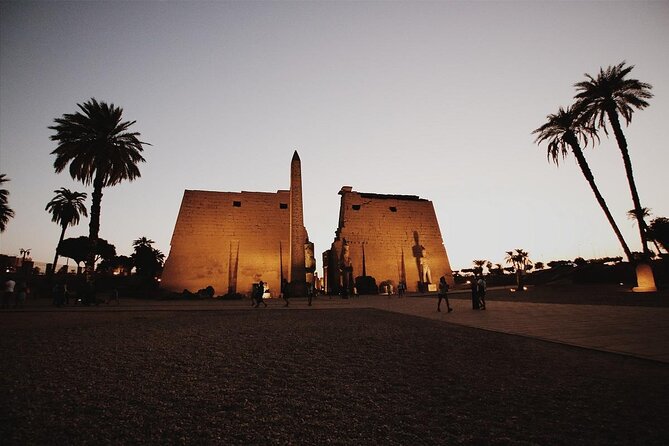
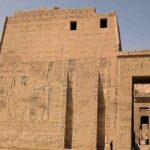
After Karnak, the tour shifts to Luxor Temple, dedicated to the Theban Triad: Amun-Ra, Mut, and Khonsu. You get about an hour here, plus short added stops in the same East Bank zone.
Luxor Temple is less of a maze than Karnak, and that is a good thing near the end of a long day. You can focus on major elements and let your mind consolidate the East Bank story you just built.
The itinerary also includes a walk segment of the Avenue of Sphinxes. Even though it is only a few hundred meters now, it used to connect Karnak and Luxor Temple. This short stretch is a nice visual bridge between two temple worlds, and it is a good final photo stop.
If you feel your brain turning into museum mode, Luxor Temple is the place to slow down. It is a good wrap-up because it feels more coherent and easier to take in than the biggest halls at Karnak.
Lunch Break, Tickets, and Dealing With Sellers Without Losing Your Day
This tour includes lunch, which is more valuable than it sounds on an 8-hour day. Food keeps momentum up. When you do not have to hunt for a meal or negotiate with multiple stops, the monuments are less stressful.
Your guide also helps with practical issues like getting entry tickets since entrance fees are not included in the tour price. That matters because you want to spend time at monuments, not stuck in the wrong line.
Now, a balanced caution. One account from a guide experience described an early stop at a stone-figure shop where it felt expected that purchases were part of the plan. That does not automatically mean every run includes this, but it is a real enough possibility that you should handle it up front. If you prefer not to stop at shops, say so clearly when you start. If someone asks what you want, ask for the fastest route to the next site.
Also, at many Egyptian monuments you will meet sellers and ticket help people. Several guide-focused comments highlighted advice on handling tactics. I suggest you listen, be polite, but do not feel pressured. Your day is already packed. Your job is to decide what is worth your attention and what is not.
What Makes the Private Guide Format Work (and Which Styles Fit You)
Private guides can vary in pacing and teaching style, and the best ones read your energy. The names that come up in solid experiences include Mahamoud, Ameen, Ragab, Hassan, Abdul, Hamdee, and Khalid, with drivers like Allam and Said also credited for smooth transport and clear communication.
The common theme across the positive stories is that the guide explains before you wander. You get a sense of what you are seeing at each stop, then you have time to look on your own. That structure is especially helpful in tombs, where the details are not obvious at first glance.
Another useful pattern is calm, respectful pacing. One person appreciated that the day felt quiet and not rushed, which is exactly what you want when you are moving between multiple major sites. If you travel with kids or someone who gets tired quickly, this matters even more. Abdul was specifically mentioned in that context, with a friendly approach for families.
If you want more playful energy, Hassan was described as witty. If you prefer a steadier, considerate tone, Hamdee was praised for matching the group’s pace. In practice, any Egyptologist on a private tour should be able to explain, but your enjoyment rises when the guide’s style matches your mood.
Entrance Fees and Budgeting Beyond the $65
Here is the math you should plan for. The tour price includes the guide, lunch, transportation, and hotel pickup and drop-off. Entrance fees are not included. That means you should budget extra for each site you enter.
Tutankhamun is specifically listed as optional, with a ticket cost of 300 EGP. If you choose it, it is an additional expense, but it is also the one optional ticket that many people feel is worth it for the fame factor.
Also plan for gratuities. The tour data says gratuities are recommended, so you should carry some cash for that. If you like to keep spending under control, decide your gratuity amount before the day starts, then move on with confidence.
Who This Tour Fits Best, and Who Should Skip It
This is a strong pick if:
- you are on a first Luxor visit and want both East and West Banks in one day
- you like a guided structure so you understand tombs and temple layouts
- you value a private car and private guide for a smoother pace
- you want lunch included so the day feels manageable
It may be less ideal if:
- you dislike any shopping stops or side detours and need a strict no-shop policy
- you prefer fewer stops and longer time inside fewer monuments
- you are very sensitive to comfort issues like air-conditioning, since one experience mentioned a lack of AC in the vehicle while the overall tour description says air-conditioned transport
Should You Book This Private Full-Day East and West Banks Tour?
My take: book it if you want maximum Luxor impact in a single day without planning your own route. The combination of the Valley of the Kings plus Karnak plus Luxor Temple is the kind of highlights loop that most people would struggle to assemble cleanly on their own, especially if you want an Egyptologist to connect the dots.
Choose it with eyes open on two points. First, entrance fees are extra, and Tutankhamun is optional at 300 EGP. Second, if you do not want shopping stops, say it early and politely but clearly.
If your goal is a guided day that helps you understand why Ramses and Hatshepsut matter, then this tour has the right bones: private pacing, a structured route, and plenty of time to look, not just pass by.
FAQ
What time does the tour start?
It starts at 8:00 am.
How long is the tour?
The duration is about 8 hours.
Is hotel pickup and drop-off included?
Yes. Pickup and drop-off at Luxor hotels are included.
Is lunch included?
Yes, lunch is included.
Are entrance fees included in the price?
No. Entrance fees are not included, and entrance costs are paid at your own expense.
Is the tomb of Tutankhamun included?
It is optional. The entrance fee for the tomb of Tutankhamun is listed as 300 EGP.
Is this a private tour?
Yes. It is a private tour/activity, so only your group participates.
Can I add hot air ballooning?
Hot air ballooning is mentioned as an optional activity you can do before the tour.
Luxor Temples in a Day

The West Bank, Tomb by Tomb
More of Luxor from our review pile
- Private Tour Nile Felucca Ride at Sunset in Luxor
★ 5.0 · 26 reviews - Private Full day East and West Bank, Luxor
★ 5.0 · 26 reviews - Luxor Day Tour: Kings Valley & Karnak & Luxor & Hatshepsut Temple
★ 5.0 · 26 reviews - Full-Day East and West Luxor Private Tour
★ 4.5 · 26 reviews - Day Trip to Edfu & Kom Ombo temples from Luxor and drop off in Aswan or Luxor
★ 5.0 · 26 reviews - 5 Days 4 Nights Nile Cruise Tour
★ 5.0 · 27 reviews
Luxor West Bank Temples & Tombs, compared.
 ★ 5.0Luxor Day Tour: Valley of Kings & Queens & Hatchepsut TemplesFrom $891,496 reviews
 ★ 5.0Full Day Tour to East and West Banks of LuxorFrom $151,449 reviews
 ★ 4.4Valley of the Kings and Hatshepsut Temple Day TourFrom $501,404 reviews
 ★ 5.0Valley of Kings, Hatchepsut Temple ,Karnak & Luxor-DayTourFrom $95735 reviews
 ★ 5.0Full Day Tour of Luxor West Bank Temples and Tombs (Private)From $20722 reviews
 ★ 4.5Guided Tour to East or West Banks with LunchFrom $64604 reviews
 ★ 5.0Luxor Private Full-Day Tour: Discover the East and West Banks of the NileFrom $90545 reviews
 ★ 4.5Valley of Kings Hatshepsut & Karnak Luxor Day TripFrom $99375 reviews
The lists this one sits on