
REVIEW · 5-DAY EXPERIENCES
Princess Sarah Cruise 5 days 4 nights from Luxor to Aswan
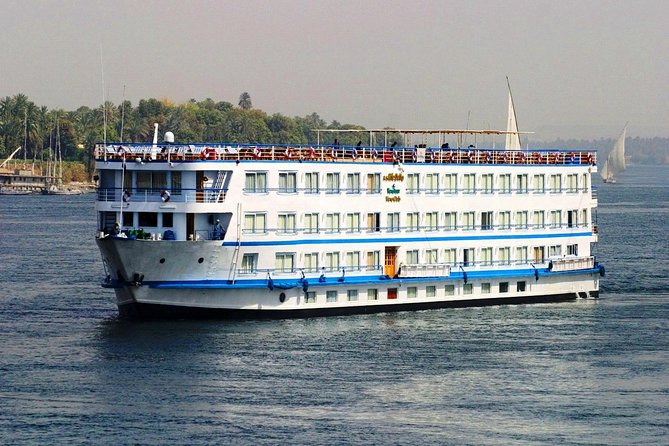
That first Nile view hits fast. This Luxor to Aswan cruise packages the big sights with an Egyptologist guide and saves you the hassle of hotel-hopping. I like that you get four nights onboard Royal Ruby plus round-trip private transfers, so your sightseeing days stay focused instead of logistically messy. The main caution is that experiences with ship condition and onboard service can vary, so you should go in expecting a comfortable, not ultra-luxury, river-boat setup.
You’ll tour major temples and tombs across Luxor, Edfu, Kom Ombo, and Aswan, with admission tickets included for each stop. I also like that the itinerary is built around time on the Nile, not just rushing from one photo stop to the next. One possible drawback: if your cabin lands in a less-than-ideal spot, noise or cleanliness can become an issue, based on firsthand accounts shared by past passengers.
In This Review
- Key things I’d plan around before you go
- Why a Luxor to Aswan cruise beats hotel hopping
- Royal Ruby cabins and ship reality check
- The Egyptologist guide: the difference between seeing and understanding
- Day 1 in Luxor: Karnak first, Luxor Temple second
- Day 2: Valley of the Kings and how to keep it from feeling rushed
- Day 3: Edfu’s Temple of Horus and the double temple of Kom Ombo
- Day 4: Philae island temples and the Aswan High Dam short stop
- Day 5: leaving Aswan, then onward by airport, train, or hotel
- Meals, bottled water, and what “included” really means
- Price and value: is $780 per person a fair deal?
- The “watch-outs” that can make or break your trip
- Who this cruise suits best
- Should you book Princess Sarah Cruise on Royal Ruby?
- FAQ
- What is the duration of the Princess Sarah Cruise from Luxor to Aswan?
- Where do you meet, and how does the trip end?
- What time does the tour start?
- What’s included in the tour price?
- Are tips included?
- How long are the sightseeing stops on each day?
- What is the cancellation window for a full refund?
- What if weather is poor?
Key things I’d plan around before you go
- Private Egyptologist guide means you get explanations for what you’re seeing, not just a bus drop-and-point routine.
- Four nights onboard Royal Ruby keeps travel time down and gives you actual relaxing hours on the water.
- Major “must-see” stops are included, from Karnak and Luxor Temple to Valley of the Kings, Edfu, Kom Ombo, and Philae.
- Private A/C transfers handle the port and pickup flow, which is a big deal in busy cities.
- Meal package is substantial, with 4 breakfasts, 5 lunches, and 4 dinners included.
- Cabin quality can vary, so it pays to stay alert once you’re assigned your room.
Trying to choose? These Luxor trips kept surfacing in our notes.
- Hurghada: Luxor Valley of the Kings & Tutankhamun Tomb Trip★ 4.7 · 13,208 reviews
- Luxor Day Trip from Hurghada Small Group & Tutankhamun Tomb★ 4.8 · 5,366 reviews
- Hot Air Balloon Ride in Luxor Egypt with Transfers Included★ 5.0 · 4,319 reviews
- Luxor: Shared Full-Day Tour to Luxor West and East Banks★ 4.5 · 1,812 reviews
Why a Luxor to Aswan cruise beats hotel hopping
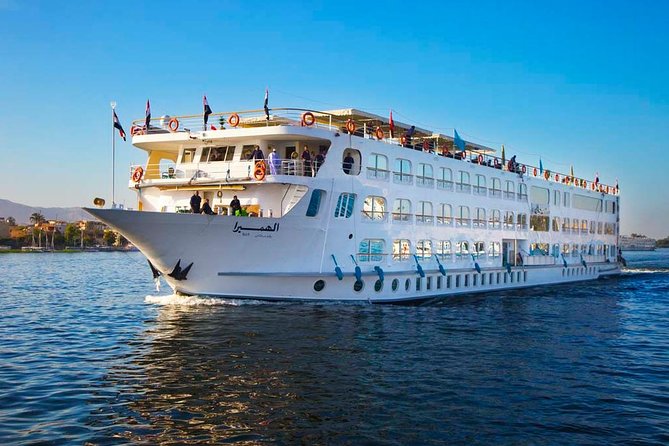
Doing Egypt’s Nile route by land usually means packing and unpacking, changing hotels, and trying to coordinate transport every day. On this cruise format, your “base” moves with you, so your sightseeing time stays concentrated. You still get plenty of organized temple time, but you also get the quiet rhythm of cruising between stops.
This kind of trip is also the best way to absorb how the Nile shaped everything. You’ll see how the ancient sites are grouped, and you’ll notice that the route has a natural flow from Upper Egypt’s temple centers down toward Aswan.
Royal Ruby cabins and ship reality check
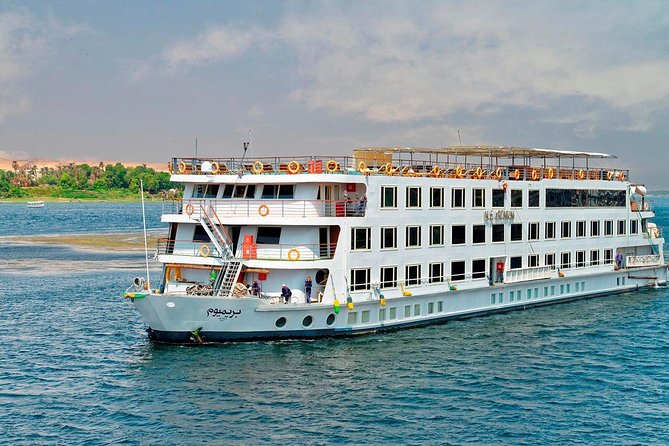
Your accommodation is onboard the Royal Ruby for four nights, so you’ll live on the boat between excursions. Many people love the spacious-feeling cabins and the convenience of having your luggage handled once. Some accounts describe larger cabins than expected, with practical items like a safe, fridge, and daily cleaning.
At the same time, the ship is described as older and in need of updates in some areas. That showed up in comments about dark décor, working issues with fridge or TV, and general maintenance. One downside that matters: a few people described a specific cabin assignment as a problem, with noise and odors coming from near the ship’s machinery area.
My practical take: pack like you’re on a moving hotel, not a brand-new resort. Bring basic wipes, expect some variability, and be ready to report issues quickly once you settle in. If anything feels off, you’ll get much farther by staying calm and direct than by waiting until the next day.
The Egyptologist guide: the difference between seeing and understanding
Temple walls can look like carved wallpaper if you don’t know what you’re looking at. The biggest strength here is the private Egyptologist guide, who helps connect the symbols, religious themes, and timeline behind what you see.
The guide also makes the stops feel less like a checklist. For example, at Karnak and Luxor Temple, you’re not just moving through halls, you’re learning why the Egyptians built complex worship spaces and how dynasties layered new additions over older structures.
If you get a guide like Saladino, described in one account as brilliant, knowledgeable, and passionate, you’re in for a smoother, more meaningful day. Even without that exact name, you can use the same strategy: ask one or two “why” questions, then watch how your understanding changes what you notice.
Day 1 in Luxor: Karnak first, Luxor Temple second
Day 1 starts with Karnak Temple Complex, and it’s the right move. Karnak is enormous, built over long periods, and full of pylons, chapels, and temple structures from different eras. With a dedicated stop of about 2 hours and admission included, you can actually follow the main story instead of sprinting.
Then you head to Luxor Temple for about 3 hours, also with admission included. This temple is tied to the east bank setting of ancient Thebes, and it’s known as ipet resyt, the southern sanctuary. The pacing matters here. After Karnak’s scale, Luxor Temple feels more readable, like a focused home base for royal and religious power.
Practical note for your body: this is a warm-weather day for most months, and you’ll walk through open-air spaces. Wear good shoes, plan for water, and use your shade breaks like they matter, because they do.
Day 2: Valley of the Kings and how to keep it from feeling rushed
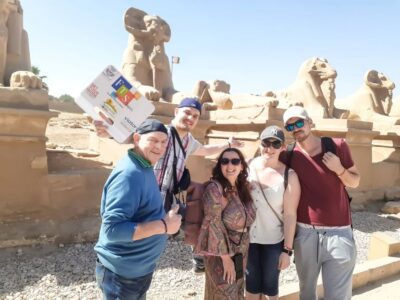
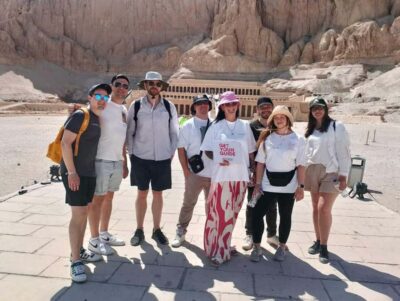
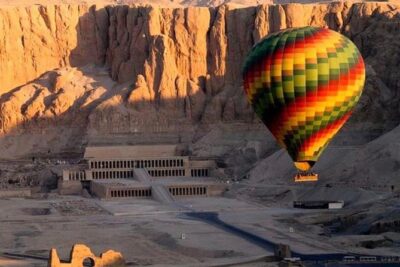
The Valley of the Kings is on the west bank opposite Luxor, and it’s where royal tombs and powerful private tombs were carved into the rock. The stop is about 3 hours with admission included, which is enough time to see how the valley works and to pick up the main ideas behind the tomb layout.
Here’s how I’d approach it if you want the site to stick with you: don’t focus only on which tomb is open, focus on the setting. Notice the difference between the east and west bank symbolism, then connect it to why burial life and afterlife beliefs drove architecture and art.
Drawback to consider: tomb interiors can be cooler than outside, but they’re still enclosed. If you feel claustrophobic, go slowly and bring a calm pace into the spaces.
Day 3: Edfu’s Temple of Horus and the double temple of Kom Ombo
Your Day 3 shifts from Luxor region into the route’s next temple-heavy day. First up is the Temple of Horus in Edfu, with a stop of about 3 hours and admission included. Edfu’s temple is associated with Horus, a major god tied to kingship and protection, and it’s also known through historical names linked to Apollo in later periods.
This is one of the best days for people who love structure and symmetry, because many of Edfu’s scenes and carvings are easier to follow once you’ve learned a few core themes earlier in the trip.
Then you go to Kom Ombo, where you’ll see the unusual double temple built in the Ptolemaic era, around 180 to 47 BC, with later Roman additions. The stop is about 3 hours with admission included.
This temple can feel like two temples under one roof. That makes it a great learning site, because you can compare how different deities were honored and how the architecture supports the religious messaging.
Day 4: Philae island temples and the Aswan High Dam short stop
Day 4 mixes ancient religious architecture with modern infrastructure, and that contrast is part of the point. You’ll visit Philae, a former temple island location that was moved to Agilkia Island during the UNESCO Nubia campaign. Your stop is about 3 hours with admission included.
If you love seeing how archaeology connects to real-world geography, Philae is a strong choice. The temple complex was dismantled and moved to protect it before the completion of the Aswan High Dam project altered water patterns downstream.
Then you’ll have a shorter visit, about 30 minutes, to the Aswan High Dam. It’s a quick one, but it gives you context for why places like Philae had to be saved and relocated.
A heads-up: the dam stop is short, so don’t treat it like a museum deep dive. Go in knowing it’s more of a landmark orientation, then use the longer time at Philae to soak up the temple scale and meaning.
Day 5: leaving Aswan, then onward by airport, train, or hotel
On your final day, the tour focuses on getting you to your next step. You’ll have a 30-minute transfer to Aswan airport, train station, or a hotel in Aswan. The activity ends back at the meeting point, so you’ll be set up for whatever connection you’re taking next.
This ending works well for travelers who already have a plan for Cairo, the Red Sea, or a flight home. It also makes Day 5 feel less stressful, because you’re not adding another long temple circuit right before departure.
Meals, bottled water, and what “included” really means
This package includes bottle water, plus meals for the full trip window: 4 breakfasts, 5 lunches, and 4 dinners. That level of coverage matters because it reduces the daily decision fatigue of where to eat, and it helps keep your excursion days on schedule.
Onboard food experiences are mixed in the real world. Some accounts praise food variety and say staff were friendly and accommodating. Others describe food as mediocre, not varied enough, or just not hitting the mark for taste and quality.
My advice: treat the meals as part of the cruise rhythm, not as the highlight. If you have dietary needs, ask about options as early as possible once you’re onboard. If you’re a picky eater, bring small backup snacks you can keep in your room.
Price and value: is $780 per person a fair deal?
At $780 per person, you’re paying for a bundle: the Royal Ruby cabin for 4 nights, guided temple visits, admissions included at each stop, and private transfers in an A/C vehicle. You’re also getting included lunches, dinners, and breakfasts, plus water.
That price is often where the real question is not the cost, it’s the mix of value components. If you were to book a similar set of temples with private guiding and separate transport, you’d usually spend far more time coordinating, plus face ticket and transfer costs on top.
Where value can get shaky is the onboard experience itself. If your priority is a high-end hotel style ship, you may find the cabin condition and service quality uneven. If your priority is a guided, efficient route through Egypt’s key Nile highlights, this package can feel like a practical bargain.
The “watch-outs” that can make or break your trip
Based on firsthand accounts, the biggest issues tend to fall into three buckets.
First is service and hospitality consistency. Some people describe welcoming, attentive staff and good overall treatment. Others report poor cleanliness, weak food, or pushy behavior around money.
Second is cabin placement and maintenance. A few comments describe cabins that were spacious and clean, while others describe a specific cabin as noisy or smelly due to proximity to machinery. If your room feels wrong after you arrive, speak up right away so changes can happen sooner.
Third is extra-cost add-ons. One account criticized overpriced experiences sold onboard and advised comparing alternatives. Even if you never buy add-ons, this is a good reminder: ask the full price up front, get details on what’s included, and don’t feel pressured.
Who this cruise suits best
This cruise works best for:
- People who want the Luxor to Aswan core sites handled efficiently, with an expert guide doing the explaining
- Travelers who value not changing hotels every day
- Couples and small groups who like a private-feeling setup, since the activity is private for your group
It may not suit you as well if:
- You need a brand-new luxury cabin with faultless service
- You’re very sensitive to noise, odors, or inconsistent cleanliness
- You expect food to be consistently restaurant-level every day
Should you book Princess Sarah Cruise on Royal Ruby?
I’d say book it if you’re buying the route plus the guided sights, not the ship itself. The big temples, Valley of the Kings, and Philae are exactly the kind of experience that pays off when someone helps you connect the dots.
But I’d also plan with eyes open. When accommodations and onboard service can be uneven, your best strategy is simple: be polite but firm, report issues early, and keep your expectations realistic about a working river boat.
If your priority list is archaeology, temple context, and smooth logistics from Luxor to Aswan, this is a strong choice. If your priority list is five-star comfort and spotless modern rooms, you may want to compare ship categories carefully before you commit.
FAQ
What is the duration of the Princess Sarah Cruise from Luxor to Aswan?
It runs for 5 days, with 4 nights onboard the Royal Ruby.
Where do you meet, and how does the trip end?
The tour starts at a Luxor meeting point (listed as 7GQJMMQ5+238MMQ5+238 Luxor, Egypt) and ends back at the meeting point.
What time does the tour start?
Start time is 9:00 am.
What’s included in the tour price?
Included are a tour guide, hotel pickup and drop-off, all transfers by private A/C vehicle, bottled water, private tour, private tour guide, lunch and dinner (4 each), and breakfast (4). Admission tickets are included for the temple and site visits listed.
Are tips included?
No, tipping is not included.
How long are the sightseeing stops on each day?
Most stops are a few hours: Karnak about 2 hours, Luxor Temple about 3 hours, Valley of the Kings about 3 hours, Edfu about 3 hours, Kom Ombo about 3 hours, Philae about 3 hours, and the Aswan High Dam about 30 minutes. Day 5 includes a 30-minute transfer.
What is the cancellation window for a full refund?
You can cancel up to 6 days in advance for a full refund.
What if weather is poor?
This experience requires good weather. If it is canceled due to poor weather, you are offered a different date or a full refund.
More of Luxor from our review pile
- Hot Air Balloon Ride and Tour to Valley of Kings Luxor- Special Offer
★ 5.0 · 15 reviews - 4-Hours tour West Luxor bank :Hatshepsut Temple & Valley of the King with Lunch
★ 5.0 · 15 reviews - Tour From Luxor to Aswan Edfu, Kom Ombo, Philae and High Dam
★ 5.0 · 15 reviews - Private Half-day Dendera Temple
★ 5.0 · 15 reviews - Luxor Airport Departure: Convenient Private Hotel Transfer
★ 5.0 · 15 reviews - Dahabiya Nile Cruise From Luxor To Aswan 4 Nights 5 Days
★ 4.5 · 15 reviews
5-Day Experiences, compared.
 ★ 4.05-Day Egypt Highlights Private Tour with FlightsFrom $1,900338 reviews
 ★ 4.1Private 5-Day Tour, Nile Cruise, Flights & BalloonFrom $1,400248 reviews
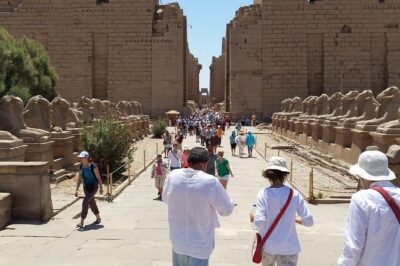 ★ 5.05 Days Private Guided Nile River Cruise Tour from Luxor to AswanFrom $881229 reviews
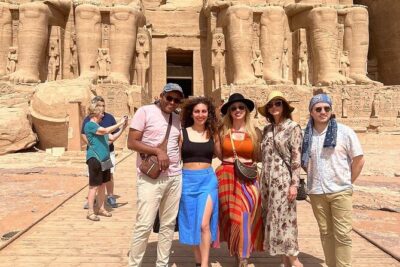 ★ 5.0Our Exceptional 5 days Cairo, Luxor and Abu Simbel Tour PackageFrom $1,438212 reviews
 ★ 4.25-Day Nile Cruise to Aswan with Balloon RideFrom $1,200168 reviews
 ★ 4.55-Day Tour in Cairo with Pick UpFrom $895114 reviews
 ★ 5.0Luxury 5 Days Nile River Cruise from Luxor to Aswan with Private Tour GuideFrom $1,900114 reviews
 ★ 4.55 Days 4 Nights Nile Cruise to AswanFrom $1,000108 reviews
The lists this one sits on