
REVIEW · NILE CRUISES BETWEEN LUXOR AND ASWAN
5 Days Private Guided Nile River Cruise Tour from Luxor to Aswan
Nile time, Cairo-free, and history in full scale. I love that this is a private cruise with a dedicated Egyptologist guide, and that you get transfers plus onboard meals and bottled water, so you can stay focused on the monuments. One key consideration: there’s a fair amount of walking, and you’ll still want to budget for tipping.
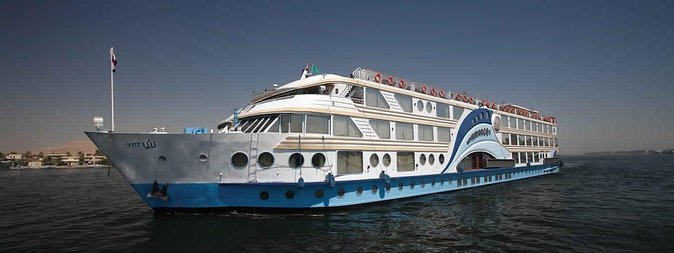
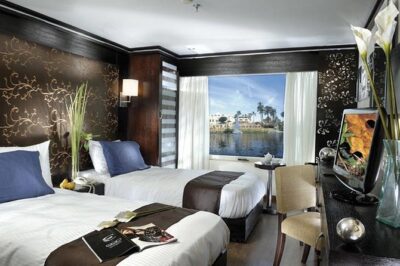
From your arrival in Luxor to your flight connection out of Aswan, the logistics are handled for you, with a Luxor airport transfer and an Aswan airport drop-off. You sleep on board for 4 nights in a 5-star standard cruise, enjoy full-board meals, daily bottled water, and the package includes onboard Internet.
In This Review
- Key highlights to know before you go
- Why this Luxor to Aswan cruise feels efficient
- What you pay and what you actually get for $881.95
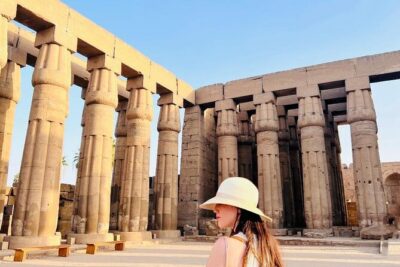
- Luxor first stop: Karnak Temples Complex and Luxor Temple
- Valley of the Kings, Hatshepsut’s temple, and the Colossi of Memnon
- Edfu and Kom Ombo: two temples that make the Nile route worth it
- Aswan highlights: High Dam, Philae by motor boat, and the Unfinished Obelisk
- Onboard life: meals, water, and downtime on the Nile
- The private guide effect: how Omar makes Egyptology click
- Tips to make the most of temples, boats, and long days
- Should you book this private Nile cruise?
- FAQ
- What does the tour include for the $881.95 price?
- Is this a private tour?
- What are the main places you visit?
- Are airport transfers included?
- Does the cruise include meals and water?
- Is there an Egyptology guide included?
- Do I need to arrange a vegetarian meal?
- Is Abu Simbel included?
- Are admission tickets included for the listed sights?
- How far in advance can I cancel for a full refund?
- What passport documents do I need?
Key highlights to know before you go
- Private Egyptology guide: English-speaking guidance that helps the temples make sense, not just look impressive
- Luxor to Aswan, not just Luxor: you also see Edfu and Kom Ombo on the Nile route
- Temple sequence that flows well: big-name sites in Luxor, then Edfu and Kom Ombo, then Aswan highlights
- Aswan beyond sightseeing: the High Dam, Philae, and the Unfinished Obelisk add a modern and behind-the-scenes edge
- Optional Abu Simbel: you can add it if your schedule allows and you want one more major wow moment
More boats sailing the same stretch
- From Luxor: 3-Night Nile Cruise to Aswan and Hot Air Balloon★ 3.7 · 297 reviews
- 5 Days Private Guided Nile River Cruise Tour from Luxor to Aswan★ 5.0 · 229 reviews
- Historia Hotel Nile Cruise, Mon. from Luxor 4 nts inc. Excursions★ 5.0 · 185 reviews
- From Luxor: 5-Day Nile Cruise to Aswan with Balloon Ride★ 4.2 · 168 reviews
Why this Luxor to Aswan cruise feels efficient
If you’ve got limited time in Egypt, this route is a smart use of it. Instead of bouncing between cities and arranging day-by-day transport, you move along the Nile while guides and transfers handle the heavy lifting. That means your energy goes to seeing the temples, not managing the logistics.
The private format also matters. You’re not trying to hear over a crowd while someone waves you toward the next photo spot. With a dedicated guide, you can ask questions, go at a comfortable pace, and actually connect details you’d otherwise miss.
You will still need a practical mindset. Temple visits take time, and you should expect stairs, uneven surfaces in places, and long days under the sun. If you have moderate physical limitations, plan for slower movement and comfortable footwear from the start.
What you pay and what you actually get for $881.95
At $881.95 per person for about 5 days, the big value is what’s packaged in. This isn’t just a room on a boat. You’re getting 4 nights on board, meals (breakfast, lunch, dinner), bottled water daily, and meet-and-assist by English-speaking representatives. Transfers are included too, using A-C vehicles with qualified drivers.
The tour also includes a private Egyptology English-speaking guide, which is often where costs climb on DIY trips. On top of that, the program notes admission tickets as free for the included temple stops, so you’re not nickel-and-dimed at every gate.
One thing you should keep in mind: tipping is not included. That’s common in Egypt, but it still means an extra budget line for your guide, driver, and cruise staff. It’s not a deal-breaker, but it’s worth planning so the final costs feel transparent.
Finally, the tour is priced for a specific route and schedule, which is why it’s often booked ahead (the average booking window is about 82 days). If you like having a clear plan, this format delivers it.
Luxor first stop: Karnak Temples Complex and Luxor Temple
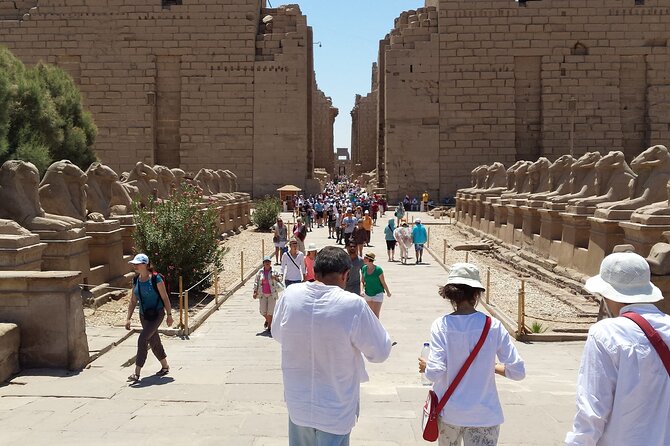
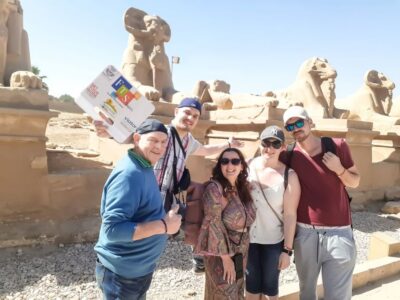
Your first afternoon in Luxor focuses on the East Bank, and it’s a strong way to start. Karnak is the kind of site that can make you lose track of time, because it’s not just one building. It’s a massive complex, highlighted by the principal building dedicated to god Amun Ra.
What I like about starting here is the scale. Once you see Karnak’s layout and its focus on Amun, you’ll notice how later temples keep echoing the same religious storylines. It turns the trip from a list of ruins into a connected place.
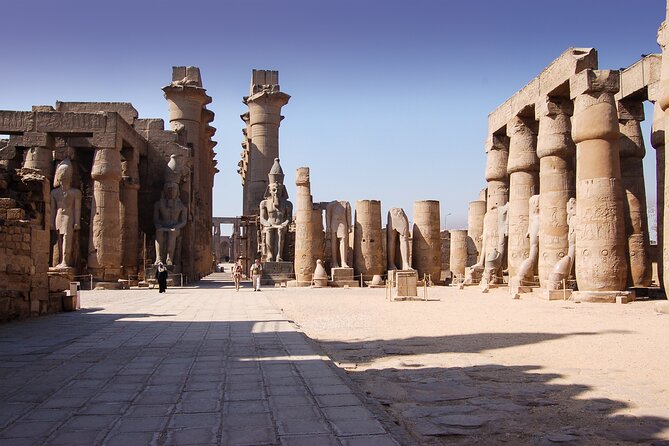
Then you move to the Temple of Luxor, built by a 12th Dynasty king and completed by Ramses II. The temple was dedicated to Amun Re, and it sits in the heart of ancient Thebes. Even if you don’t catch every inscription, your guide can point out the big ideas and help you understand why this site was politically and spiritually important.
Practical note: plan for several hours that feel like a concentrated museum day. If you’re arriving from travel, drink water, wear a hat, and keep your pace steady. This is not the time to try for a marathon of photos every 30 seconds.
Valley of the Kings, Hatshepsut’s temple, and the Colossi of Memnon
After breakfast onboard, the focus shifts to the Thebes area and the royal story of Egypt. The Valley of the Kings is often described as a royal cemetery, and that’s exactly what it is. It’s the burial place for Theban kings and rulers, and it’s where you feel the weight of royal power expressed through architecture and burial traditions.
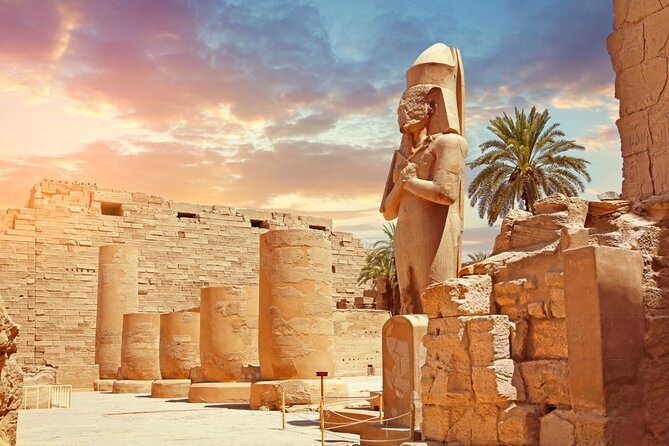
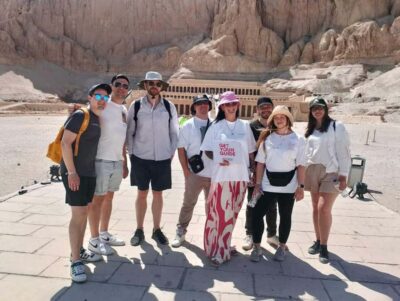
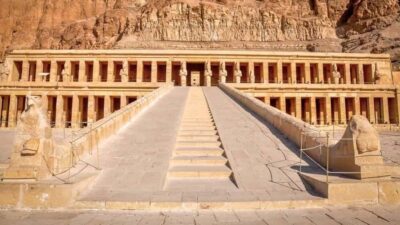
Next comes the Temple of Queen Hatshepsut at Deir El Bahari. The standout detail here is that it was carved inside the mountain. That single feature helps you understand the Egyptians’ approach to monument-making, using cliffs and rock itself to shape sacred space. It’s also visually memorable, which makes it a great anchor point for the history your guide is explaining.
Then you finish with the Colossi of Memnon, associated with king Amenhotep III. These statues are a classic “only in Egypt” moment. Even if you’ve seen photos before, seeing their scale in person is what makes them stick in your memory.
Potential drawback on this day: it’s active. You’re outdoors, moving between sites, and the walking adds up. If you’re sensitive to heat or fatigue, plan to take breaks without feeling rushed. Your guide can usually help you find a calmer rhythm.
Edfu and Kom Ombo: two temples that make the Nile route worth it
A lot of Nile cruises focus on the big names and rush the rest. What I like here is that the itinerary doesn’t leave you with only Luxor and Aswan. You get an important stop at Edfu, plus the distinctive pairing at Kom Ombo.
In Edfu, you visit the Temple of Horus. The program calls it one of the best-preserved temples in Egypt, and you can feel why once you’re inside. Your guide can connect the temple’s symbolism to the broader Egyptian worldview, so the carvings aren’t just decoration. They’re part of a religious system you’re learning to read.
After that, you sail toward Kom Ombo. Lunch is served on board during the sailing, and the timing is helpful because it lets you reset between temple days. Later, you explore the Temple of Kom Ombo, known for its association with two gods, Sobek and Haroeris. That dual focus is part of what makes Kom Ombo interesting, because it gives you a different kind of temple layout compared with the more single-focus sites.
You return to the ship afterward and get time on the sun deck to watch the Nile. The river itself becomes part of the experience, because you see how the towns and history line up along the water. It’s a good payoff after concentrated sightseeing.
Aswan highlights: High Dam, Philae by motor boat, and the Unfinished Obelisk
Aswan is where the trip widens beyond ancient temples. Yes, you get major sites, but you also learn how modern Egypt shaped the river.
You start with the High Dam, erected in 1960 AD under President Gamal Abdel Nasser to protect Egypt from Nile flooding. Even if you’re more focused on ancient Egypt, this detail is useful. It changes how you think about the river’s role, because it reminds you that Egypt’s relationship with the Nile has always been a mix of opportunity, risk, and engineering.
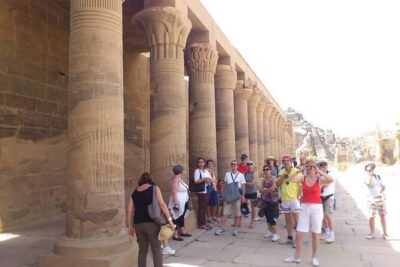
Then you take a motor boat ride to Agilika Island for the Temple of Philae. This temple was built during the Greco-Roman period and dedicated to goddess Isis. That matters because it shows continuity. Egypt’s religious life didn’t stop, it transformed through different eras, and Philae captures that shift in a single stop.
You also visit the Unfinished Obelisk, made of red granite and dedicated to Amun Ra. The name alone tells you it’s not polished and complete, which makes it fascinating in a different way. It gives a glimpse of what happened before the final monument was ready, which is something you don’t always get at major temple sites.
This is also one of the more time-efficient days because key sights are grouped in a logical flow. You’re not constantly changing plans, which helps keep the pace enjoyable.
Onboard life: meals, water, and downtime on the Nile
The cruise portion is more than transportation. It’s where you recover after temple days. The package is full-board, with breakfast, lunch, and dinner included across the cruise nights. That means you’re not hunting for meals between tours, and you can keep your schedule intact.
You also receive one bottle of water per day per person, and the included list mentions bottled water as part of the service. It’s a small detail that makes a big difference when you’re walking in warm weather.
There’s time to enjoy the river from the ship too. After temple stops like Kom Ombo, you can watch the Nile from the sun deck. That little window of quiet is important. It lets the day’s information settle, and it gives you a break before the next guide-led segment.
Internet is included as well, so you can stay connected without paying extra at a kiosk. Just don’t expect it to replace real downtime, but it’s still a comfort for planning photos, messages, and your next step.
The private guide effect: how Omar makes Egyptology click
A big reason this cruise scores so well is the guide component. The program includes a private Egyptology guide in English, and one name that stands out in the feedback is Omar. The praise is consistent around how he explains Egypt and history in a way that feels clear and useful.
That kind of guiding matters most when you’re staring at stone that looks similar to everything else. Once your guide connects what you’re seeing to the story of Thebes, royal power, and religious symbolism, the monuments stop being random. They become a narrative you can follow.
I also like that the tours are designed around guided time blocks. Each day’s main sightseeing is grouped into manageable chunks, so you’re not stuck in a constant state of rushing. It’s easier to remember what you learned when the schedule has rhythm.
If you want value, don’t ignore this part. On a trip like this, your guide is what turns a checklist into understanding.
Tips to make the most of temples, boats, and long days
First, pack for active sightseeing, not just sightseeing in theory. Even with guided tours, your feet do the work. Bring comfortable walking shoes, and consider something protective for sun.
Second, stay hydrated even when water is included. The Nile cruise includes bottled water, but you still need to drink consistently, especially after walking around major temple complexes.
Third, plan your photos with breaks in mind. Karnak and the Valley of the Kings can bring you into long visual stretches. Instead of trying to capture everything, pick a few spots per site where you pause long enough to understand what you’re seeing. Your guide can usually point you to the best views and the most meaningful details.
Finally, if you’re interested in Abu Simbel, ask about the timing for the optional excursion. It’s listed as an optional add-on, meaning it depends on your choices. If you’re short on energy, it might be better to prioritize what’s already included.
Should you book this private Nile cruise?
You should strongly consider booking if you want a clean, guided route with minimal hassle. This is a good fit for first-timers to Egypt who want Luxor, Edfu, Kom Ombo, and Aswan without spending extra time coordinating transport, tickets, and day-by-day scheduling.
It’s also a smart pick if you value an Egyptology explanation. A private English-speaking guide, like Omar when available, can make a huge difference in how much you take away from each stop.
You might rethink it if you’re very sensitive to walking and outdoor time. The sites are spread across major temple visits, plus a boat ride in Aswan, and that can be tiring if your mobility is limited.
If you want a classic Nile experience that stays organized, includes meals and water, and keeps the focus on the temples, this Luxor-to-Aswan private cruise is a solid choice.
FAQ
What does the tour include for the $881.95 price?
It includes 4 nights accommodation onboard a 5-star standard Nile cruise (on a full-board basis), meet and assist by English-speaking representatives, a private Egyptology English-speaking tour guide, breakfast, lunch, and dinner, bottled water (one bottle per day per person), local taxes and services, and all transfers by A-C vehicles.
Is this a private tour?
Yes. It’s listed as a private tour or activity, meaning only your group participates.
What are the main places you visit?
The tour covers Luxor, Edfu, Kom Ombo, and Aswan, with temple visits in each area.
Are airport transfers included?
Yes. There is a Luxor airport transfer at the start and an Aswan airport drop-off at the end for your flight to Cairo.
Does the cruise include meals and water?
Yes. Breakfast, lunch, and dinner are included during the cruise, and bottled water is provided per day per person.
Is there an Egyptology guide included?
Yes. A private Egyptology English-speaking tour guide is included for the sightseeing parts.
Do I need to arrange a vegetarian meal?
A vegetarian option is available. You should advise at the time of booking if you need it.
Is Abu Simbel included?
Abu Simbel is optional. The tour description notes an optional excursion to the Abu Simbel temple.
Are admission tickets included for the listed sights?
The sightseeing details in the plan show admission tickets as free for the included temple visits.
How far in advance can I cancel for a full refund?
You can cancel up to 6 days in advance for a full refund, meaning you must cancel at least 6 full days before the experience start time.
What passport documents do I need?
You need a current valid passport on the day of travel.
Sailing Luxor to Aswan



More of Luxor from our review pile
- Private Tour Nile Felucca Ride at Sunset in Luxor
★ 5.0 · 26 reviews - Private Full day East and West Bank, Luxor
★ 5.0 · 26 reviews - Luxor Day Tour: Kings Valley & Karnak & Luxor & Hatshepsut Temple
★ 5.0 · 26 reviews - Full-Day East and West Luxor Private Tour
★ 4.5 · 26 reviews - Day Trip to Edfu & Kom Ombo temples from Luxor and drop off in Aswan or Luxor
★ 5.0 · 26 reviews - 5 Days 4 Nights Nile Cruise Tour
★ 5.0 · 27 reviews
Nile Cruises Between Luxor and Aswan, compared.
 ★ 5.04-Days Nile Cruise From Aswan To Luxor including Abu Simbel and Hot Air BalloonFrom $3493,142 reviews
 ★ 4.54-Day 3-Night Nile Cruise from Aswan to Luxor including Abu Simbel, Air BalloonFrom $329612 reviews
 ★ 4.14-Day Nile Cruise from Aswan to Luxor with GuideFrom $830593 reviews
★ 4.54-Days Nile Cruise From Aswan To Luxor including Abu Simbel and Hot Air BalloonFrom $320509 reviews
★ 4.14-Day Nile Cruise from Aswan to Luxor with GuideFrom $830593 reviews
★ 4.54-Days Nile Cruise From Aswan To Luxor including Abu Simbel and Hot Air BalloonFrom $320509 reviews
 ★ 5.04-Day 3-Night Nile Cruise from Aswan to Luxor – Private TourFrom $504369 reviews
★ 4.54 Days Nile Cruise from Aswan to Luxor including Abu Simbel and Hot Air BalloonFrom $329356 reviews
★ 5.04-Day 3-Night Nile Cruise from Aswan to Luxor – Private TourFrom $504369 reviews
★ 4.54 Days Nile Cruise from Aswan to Luxor including Abu Simbel and Hot Air BalloonFrom $329356 reviews
 ★ 5.04-Day 3-Night Nile Cruise from Aswan to Luxor With Balloon and Abu SimbelFrom $311327 reviews
 ★ 5.04-Days Nile Cruise Aswan&Luxor,Hot Air Balloon&Abu Simbel.Hot dealFrom $524322 reviews
The lists this one sits on