
REVIEW · LUXOR WEST BANK TEMPLES & TOMBS
Luxor East and West Bank: Valley of the kings, Habu Temple,Karnak&Luxor Temples
Luxor can feel like two different worlds in one morning. This private full-day route links the West Bank royal tombs with the East Bank temples, all handled with a qualified Egyptologist guide and a comfortable, air-conditioned car. I like the mix of big-name sights plus time to actually look, and I like that you get an expert who can answer your why questions, not just point at walls.
The main drawback to plan for is practical, not historical: several major temple and tomb tickets are not included, and the day runs about 8 hours starting at 7:00 am.
In This Review
- Key things that make this tour worth your time
- How this Luxor route fits together, East Bank plus West Bank
- Pickup, air-conditioned comfort, and a guide who can answer your questions
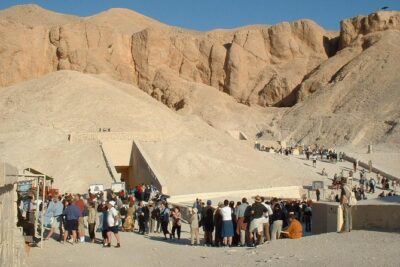
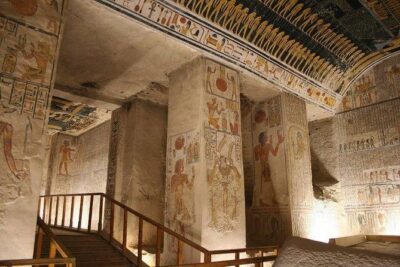
- Valley of the Kings: the tombs you see, and the approach you should expect
- Medinat Habu (Temple of Medinat Habu): Ramesses III, labor strike history, and a strong-looking enclosure
- Colossi of Memnon: a short break that still hits hard
- Karnak Temple: 2,000 years of building, and why the size can trick your brain
- Luxor Temple: the obelisk, Amonhotep III and Ramesses II, plus layered eras
- Heat, timing, and comfort tips for an 8-hour day
- Price and what you still need to budget
- Who this Luxor East and West Bank tour is best for
- Should you book this Luxor East and West Bank day?
- FAQ
- What time does the tour start?
- Is hotel or Nile cruise pickup included?
- Is the tour private?
- Are entrance fees included for the main sites?
- How long is the tour?
- What transport will I use during the tour?
- Is lunch included?
- Does the tour include water or drinks?
- What is the cancellation policy?
Key things that make this tour worth your time
- East and West Bank in one day, so you do not have to choose between “tombs day” and “temples day”
- Qualified Egyptologist guide who explains symbolism and context (and keeps the day flowing)
- Air-conditioned private vehicle plus hotel or Nile cruise pickup and return
- Outside guidance at the Valley of the Kings, then you explore the selected tombs
- Major temple hits on the East Bank, including Karnak and Luxor Temple
- Photo stop at the Colossi of Memnon, quick break with iconic 17-meter statues
Other tomb tickets in the valley
- Hurghada: Luxor Valley of the Kings & Tutankhamun Tomb Trip★ 4.7 · 13,208 reviews
- Luxor Day Trip from Hurghada Small Group & Tutankhamun Tomb★ 4.8 · 5,366 reviews
- Luxor Day Tour: Valley of Kings & Queens & Hatchepsut Temples★ 5.0 · 1,496 reviews
- Luxor: Valley of the Kings and Hatshepsut Temple Day Tour★ 4.4 · 1,404 reviews
How this Luxor route fits together, East Bank plus West Bank
Luxor is often sold as one big temple complex. In real life, the city is more like two neighborhoods with different vibes. The West Bank is where you go for the New Kingdom royal afterlife, the Valley of the Kings and nearby mortuary sites. The East Bank is where the living showed devotion, power, and belief through enormous temples that were built and rebuilt for centuries.
What I like about this itinerary is that it respects that split. You start on the West Bank side with the dramatic tomb landscape, then you return to the East Bank for Karnak and Luxor Temple. By the time you reach the temples on the East Bank, you can better understand what you are seeing because you have already gotten the afterlife context from the Valley.
It also helps that this is scheduled as a full-day experience. If you try to compress Luxor into a rushed half-day, Karnak especially can feel like you only touched the surface. Here, the time blocks are long enough that you can actually slow down, take pictures, and not feel like you are sprinting between gates.
Pickup, air-conditioned comfort, and a guide who can answer your questions
The tour includes pickup from your Luxor hotel or your Nile cruise, with return transfers afterward. You start at 7:00 am, which is a smart move in Luxor because mornings tend to feel more manageable than later in the day.
You ride in a private, air-conditioned vehicle. That sounds basic, but in practice it matters. Luxor traffic and distances between West Bank and East Bank can add stress when you are tired. Having a dedicated car means fewer moving parts and less time figuring out logistics.
The guide piece is the real value engine here. A qualified Egyptologist can do two useful things for you:
- Turn stone carvings into stories you can remember
- Give you context for why each site looks the way it does
You may be guided by people who are repeatedly praised for clear English and patience, including names like Salma, Laila, Bassam, Ester, Taha, and Nagwan. Some guides also go beyond pure sightseeing into practical travel support, like helping you navigate local vendors so you can spot better-quality souvenirs without feeling pressured.
And yes, you get water during the tour. It is not a luxury upgrade. It is the small thing that helps you stay human when the heat is doing its best impression of a sauna.
Valley of the Kings: the tombs you see, and the approach you should expect
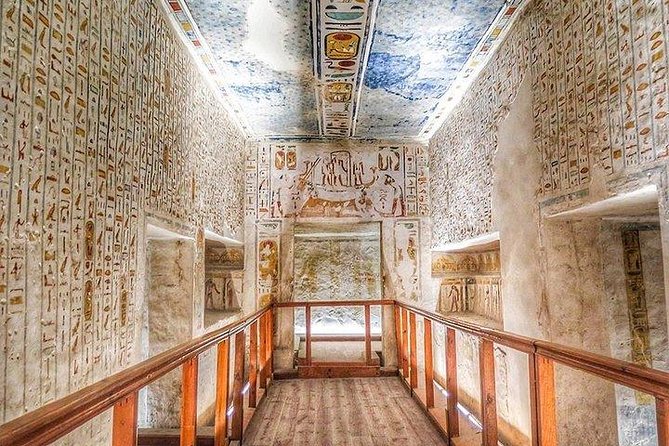
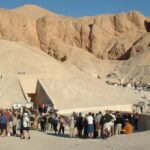
The Valley of the Kings is the main event on the West Bank. The pharaohs of the New Kingdom carved tombs into the mountains, aiming to hide treasures and protect mummies. This is where Luxor earns its reputation, because the scale and the idea of secrecy hit you fast.
Timing is about 2 hours here. The important detail: your guide explains the tombs from the outside, and then you explore the best 3 selected tombs from the ones that are open. That structure is worth understanding before you go in.
Why it works:
- Outside explanations let you build a mental map quickly.
- Inside, you can move at your own pace without feeling crowded by a running commentary.
- You still get expert context for what you are about to see.
One point that can make this stop extra memorable is the tomb selection. Guides may include major names among the open options, and you might even see something like Seti I’s tomb if it is among the selected choices and open on that day. Even if it is not Seti I specifically, the value is the same: you are looking into royal afterlife art and architecture, with time to actually absorb details.
What to watch for practically:
- The interiors can feel darker than you expect, so keep your phone brightness ready.
- Wear comfortable shoes. Floors and steps do not care that you are on vacation.
- Bring patience. Tomb exploration is not a quick drive-by. It is part concentration, part wonder.
Medinat Habu (Temple of Medinat Habu): Ramesses III, labor strike history, and a strong-looking enclosure
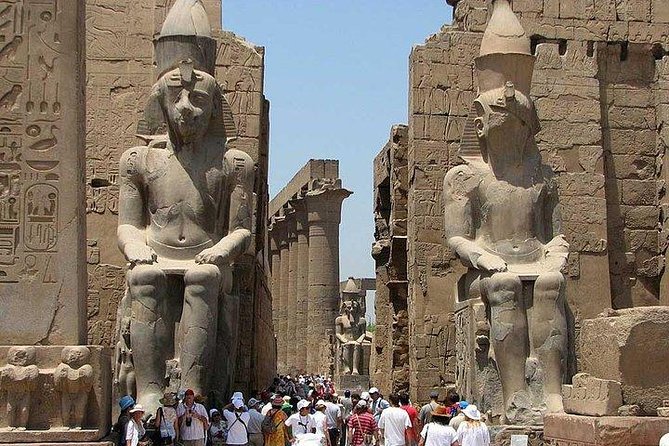
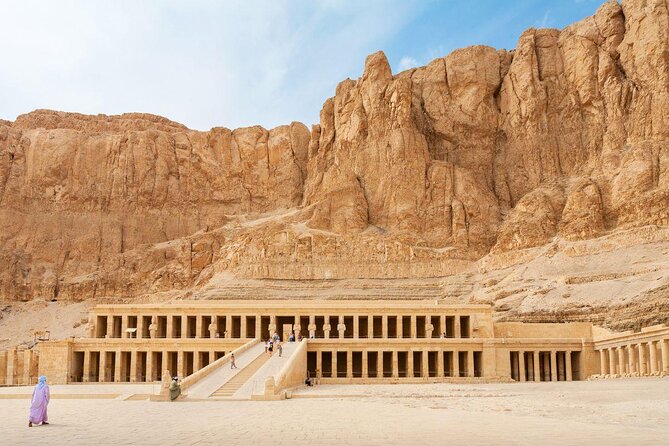
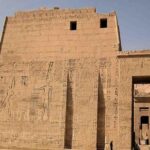
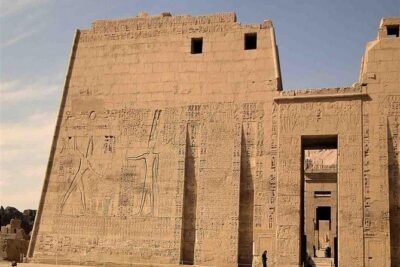
After the Valley, you head to Medinat Habu, located on the southern end of the Theban Necropolis. This site is tied to Ramesses III. The tour framing highlights something unusual for a temple visit: it references the first labor strike in history against their king, launched here.
The temple itself is described as one of the best-preserved temples in Egypt, and it sits inside a massive mud-brick enclosure wall. That wall matters because it helps you picture the temple as part fortress and part sacred space, not just an open-air ruin.
You get about 1 hour 30 minutes, which is a healthy amount for Medinat Habu. It is a stop where you can slow down and look at how the outer structure supports the inner religious purpose.
A good way to enjoy this part of the day is to pay attention to the geometry and the survival of the materials. Mud-brick can weather fast in the wrong conditions, so preserved sections stand out. If your Egyptologist is doing their job well, you will not just see a temple. You will start seeing how the builders expected it to last and to guard meaning over time.
Tickets for Medinat Habu are not included, so expect to budget for entry on-site.
West bank tombs, one by one
Colossi of Memnon: a short break that still hits hard
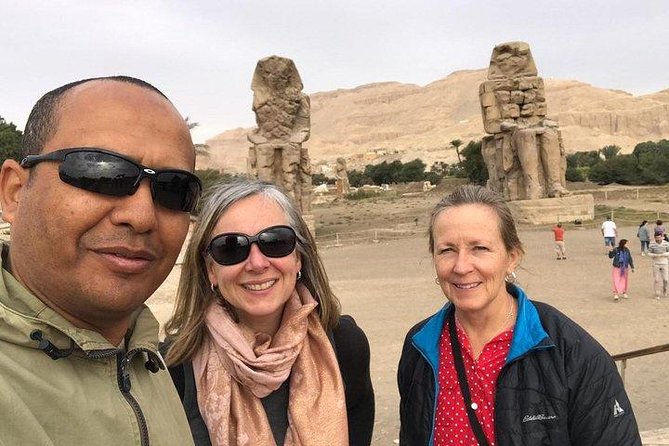
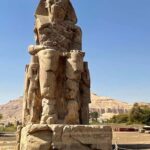
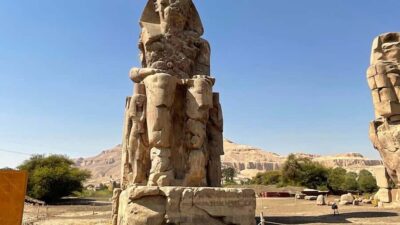
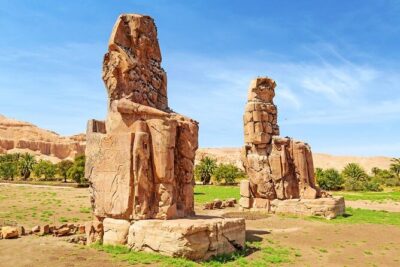
The Colossi of Memnon are not a long stop, but they are a great “reset button” in the West Bank portion of the day. You have around 10 minutes for a photo stop in front of the massive statues, described as about 17 meters tall.
These are the kind of things that look unreal at first because the scale is hard to calibrate. Even if you do not linger, you get the classic Luxor photo moment, and you also get a quick break before the day shifts back toward the East Bank temples.
Practically, treat this as a moment for:
- Photos while the light is still decent
- Water and a quick wipe of sweat
- A mental transition from tomb mood to temple mood
Karnak Temple: 2,000 years of building, and why the size can trick your brain
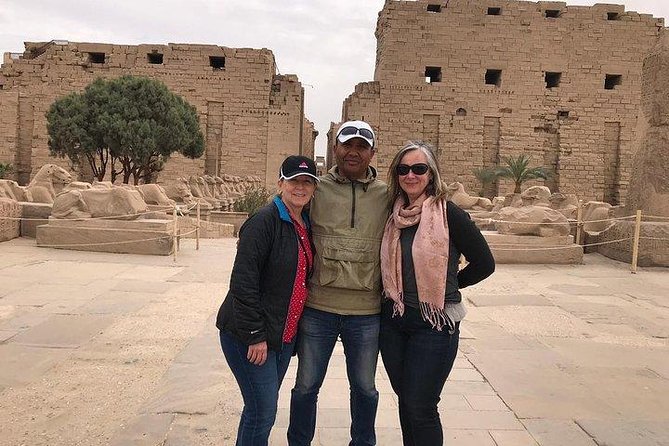
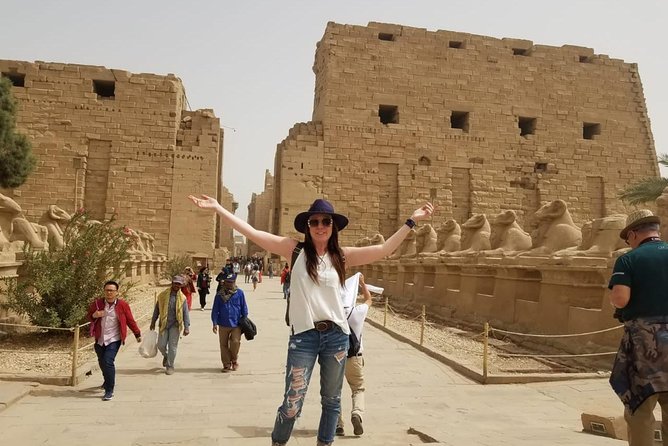
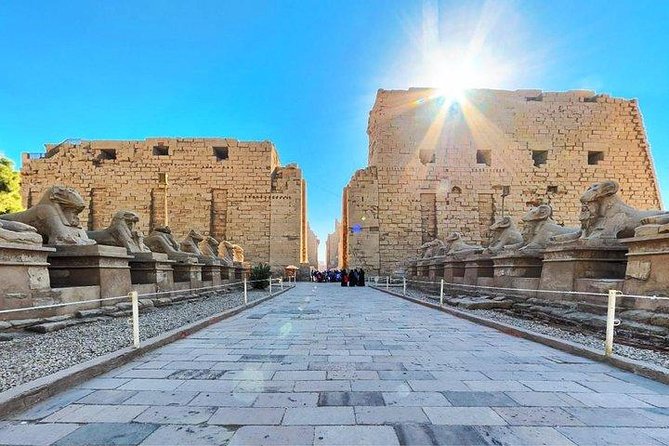
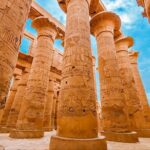
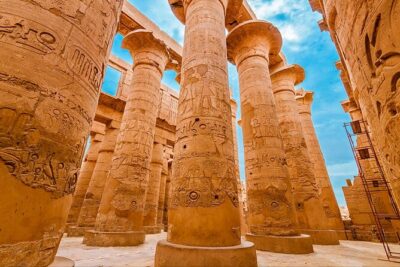
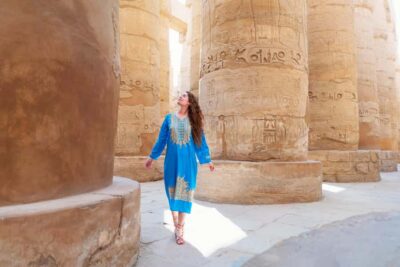
Karnak is the largest temple complex in the area, built over about 2,000 years and covering around 63 acres. Your visit is about 1 hour 30 minutes, and tickets are not included.
If you have never seen Karnak before, here is the trick: the size can make you feel like you need to see everything at once. You do not. You need to see enough to understand what kind of place it is.
The tour focus is on the stories and legends of ancient Egyptian gods among its halls and pillars. That is exactly what you want at Karnak. The columns and pylons are impressive, but the real payoff is connecting what you see to the purpose of the space, like where rituals happened and how the temple acted as a symbol of power and devotion.
Here is how to make the time work:
- Let your Egyptologist point out the big themes, then follow their cues for where to look.
- Take photos, but also step back. Karnak photographs well, yet the best moments often come when you are looking up without framing.
- If you start feeling overwhelmed, ask a question. A good guide can redirect your attention fast.
Expect this stop to feel like a slow-motion walk through a cathedral-like maze, but you still have enough time to keep it enjoyable instead of exhausting.
Luxor Temple: the obelisk, Amonhotep III and Ramesses II, plus layered eras
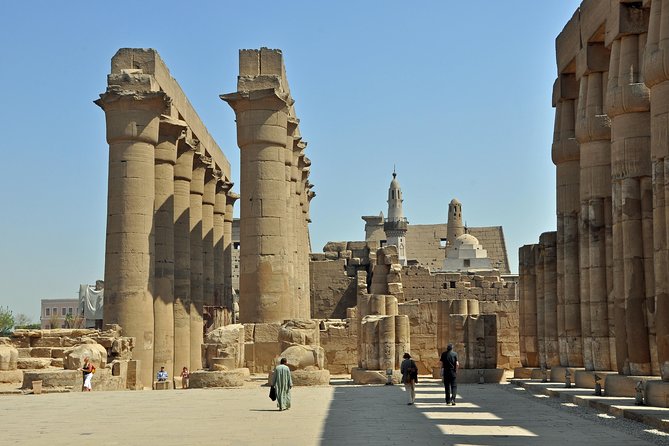
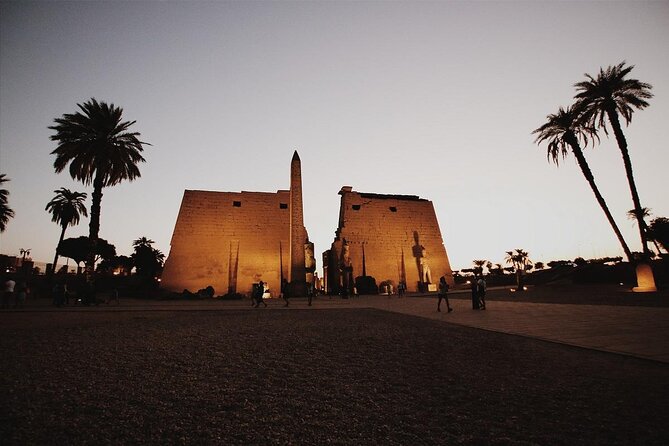
Back on the East Bank, you end with Luxor Temple. You have about 1 hour 30 minutes here, and entry tickets are not included.
Luxor Temple is special because it is described as having features from multiple eras. The tour notes highlight:
- An obelisk and statues first by Amonhotep III (18th dynasty)
- Completion by Ramesses II (19th dynasty)
- Ancient Egyptian, Christian, and Islamic features shown within the site
That mix is one of the most practical reasons this stop is worth your time. You are not only learning about ancient Egypt. You are also seeing how later communities reused space, reinterpreted meaning, and built on top of earlier worlds.
If your guide is doing the job well, they will help you read the temple like a timeline. If they do not, you can still do it yourself by watching for stylistic changes in carvings, placements, and structural elements.
The “why” questions are where Luxor Temple usually shines. It is not just pretty. It explains how sacred space can last through change.
Heat, timing, and comfort tips for an 8-hour day
This tour runs about 8 hours, starting at 7:00 am. In Luxor, timing is not a detail. It is part of your comfort.
One practical tip that shows up in guide advice is that summer can get intense. So plan for sweat, not just sunshine. Even with air-conditioned driving, you will be walking and standing at open-air sites.
I recommend packing like this:
- Sun protection: hat or cap and sunscreen
- Comfortable shoes with grip for stone steps
- A small towel or wipes
- Your phone fully charged for photos
- Light layers, so you can adjust as you move between shade and sun
Also, remember the Valley of the Kings stop has an inside exploration element. Dark tomb interiors and stone floors mean you should slow down. You do not need to race. The whole point is to look.
Lunch is optional at a local restaurant. Some people find it a good break inside the day, especially if you have energy left after the tombs and Karnak. If you skip lunch, make sure you have water and snacks, since the itinerary does not list drinks as included.
Price and what you still need to budget
The tour price is listed at $112 per person for the day. For that amount, you get:
- Private, air-conditioned vehicle transfers
- Hotel or Nile cruise pickup and return
- Water during the tour
- A qualified Egyptologist guide
That is where the value sits. Entrance fees are not included for several key stops, including the Valley of the Kings, Medinat Habu, Karnak, and Luxor Temple. So your all-in cost will be higher than the base price once you add tickets.
Also note that drinks and tipping are not included. Tipping is common in guided experiences, and you should budget a bit for it if you feel your guide earned it.
If you want a quick decision rule: this tour is a good value if you care about expert explanations and want a private, organized day with transport handled. If your priority is only the cheapest entry tickets and you are okay figuring more on your own, you might compare alternatives. But if you want the day to feel smooth and understandable, this setup tends to be worth the price.
Who this Luxor East and West Bank tour is best for
This is a private tour, meaning only your group participates. That matters if you want to set a comfortable pace, ask questions without feeling rushed, and avoid the chaos of swapping between different strangers’ schedules.
It also suits:
- First-time Luxor visitors who want the biggest East Bank and West Bank highlights in one go
- People who enjoy learning symbolism and context, not only taking photos
- Travelers who appreciate guides who can adapt, such as being patient with the group and timing photo opportunities well
The itinerary’s structure also works well for mixed groups because you are not just standing still. You have multiple stops with different styles, tombs, temples, and iconic statues, so the day does not become one long sameness.
Should you book this Luxor East and West Bank day?
I would book it if you want a well-structured Luxor day that covers the essential sights on both banks, with a guide who can explain what you are seeing and keep things moving on time. The private vehicle plus hotel or cruise pickup reduces stress, and the stop order makes thematic sense, tomb context first, then temple context.
Skip or rethink it if you are trying to travel ultra-budget and you hate paying additional entrance fees at multiple sites. In that case, the base price can feel cheaper than the final bill.
If you do book, go in with the right expectations:
- Expect extra ticket costs at the major tomb and temple sites.
- Expect heat on open-air portions, especially in summer.
- Bring comfy shoes and treat the Valley of the Kings as a slower, more thoughtful experience.
FAQ
What time does the tour start?
The start time is 7:00 am.
Is hotel or Nile cruise pickup included?
Yes. Pickup and return transfers from your Luxor hotel or Nile cruise are included.
Is the tour private?
Yes. This is a private tour/activity, and only your group participates.
Are entrance fees included for the main sites?
No. Entrance tickets are not included for the Valley of the Kings, Temple of Medinat Habu, Temple of Karnak, and Luxor Temple. The Colossi of Memnon stop is marked as admission ticket included.
How long is the tour?
The duration is about 8 hours.
What transport will I use during the tour?
You travel in an air-conditioned private vehicle.
Is lunch included?
Lunch in a local restaurant is optional.
Does the tour include water or drinks?
Bottled water is included during the tour. Drinks are not included.
What is the cancellation policy?
Free cancellation is available up to 24 hours in advance for a full refund. If you cancel less than 24 hours before the start time, you will not receive a refund.
Karnak and the East Bank
The West Bank, Tomb by Tomb
Down Into the Kings Valley

More of Luxor from our review pile
- Hot Air Balloon Ride and Tour to Valley of Kings Luxor- Special Offer
★ 5.0 · 15 reviews - 4-Hours tour West Luxor bank :Hatshepsut Temple & Valley of the King with Lunch
★ 5.0 · 15 reviews - Tour From Luxor to Aswan Edfu, Kom Ombo, Philae and High Dam
★ 5.0 · 15 reviews - Private Half-day Dendera Temple
★ 5.0 · 15 reviews - Luxor Airport Departure: Convenient Private Hotel Transfer
★ 5.0 · 15 reviews - Dahabiya Nile Cruise From Luxor To Aswan 4 Nights 5 Days
★ 4.5 · 15 reviews
Luxor West Bank Temples & Tombs, compared.
 ★ 5.0Luxor Day Tour: Valley of Kings & Queens & Hatchepsut TemplesFrom $891,496 reviews
 ★ 5.0Full Day Tour to East and West Banks of LuxorFrom $151,449 reviews
 ★ 4.4Valley of the Kings and Hatshepsut Temple Day TourFrom $501,404 reviews
 ★ 5.0Valley of Kings, Hatchepsut Temple ,Karnak & Luxor-DayTourFrom $95735 reviews
 ★ 5.0Full Day Tour of Luxor West Bank Temples and Tombs (Private)From $20722 reviews
 ★ 5.0Private Full-Day Luxor Highlights East and West BanksFrom $65663 reviews
 ★ 4.5Guided Tour to East or West Banks with LunchFrom $64604 reviews
 ★ 5.0Luxor Private Full-Day Tour: Discover the East and West Banks of the NileFrom $90545 reviews