
REVIEW · LUXOR WEST BANK TEMPLES & TOMBS
Luxor East and West Bank: Valley of the kings, Habu Temple,Karnak&Luxor Temples
Luxor hits hard, even in one day. This private guided East and West Bank tour strings together Luxor’s top sights with a qualified English-speaking Egyptologist and hotel or Nile cruise pickup, starting at 7:00 am.
What I like most is the way the guide makes the sites feel logical instead of random. I also love that guides like Laila and Mohamed Noor often keep things moving by having tickets ready, so you spend less time standing around. The main catch is cost, since entrance fees are not included and the day is long, so plan for walking, heat, and extra spending for tomb tickets.
In This Review
- Key points before you go
- Starting at 7:00 am, Luxor to the West Bank and Back
- Valley of the Kings: the Gates of the Pharaohs
- Deir el Bahari and the Temple of Hatshepsut
- Colossi of Memnon: two giant reminders of Amenhotep III
- Karnak Temple Complex: Amun, Mut and Khonsu in stone
- Luxor Temple: the East Bank’s grand ritual center
- Medinat Habu and Ramses III, plus the idea of an early labor strike
- Value and price: what $85 really covers
- What the guides do right, and why it matters
- Tips to make the day easier on your feet
- Who should book this Luxor East and West Bank tour
- Final call: should you book?
- FAQ
- What time does the tour start?
- How long is the tour?
- Are entrance fees included?
- Is pickup included?
- Is this tour private or group-based?
- What is included with the price?
- Does the tour run in any weather?
Key points before you go
- Private air-conditioned transfers with pickup and return to your hotel or Nile cruise
- Qualified English-speaking Egyptologist guide who links the temples and tombs into one story
- Efficient routing across both banks, so you see more without feeling totally rushed
- Colossi of Memnon is free, and you still get a perfect photo stop
- Tickets are not included for most stops, so budget ahead to avoid sticker shock
Other tomb tickets in the valley
Starting at 7:00 am, Luxor to the West Bank and Back
This is an 8-hour, full-sightseeing day, and it starts early at 7:00 am. That matters in Luxor, because the light gets sharper as the hours go by, and the West Bank heat can build fast.
You are picked up from your hotel or your Nile cruise and carried in a private air-conditioned vehicle. That comfort piece is not flashy, but it helps when you are chaining together multiple major sites back to back, especially if you want energy left for photos and questions.
You also get one bottle of water during the tour. It is a nice touch, but it is still a good idea to plan your own snacks and breaks, since this day includes a lot of walking between monuments.
Valley of the Kings: the Gates of the Pharaohs
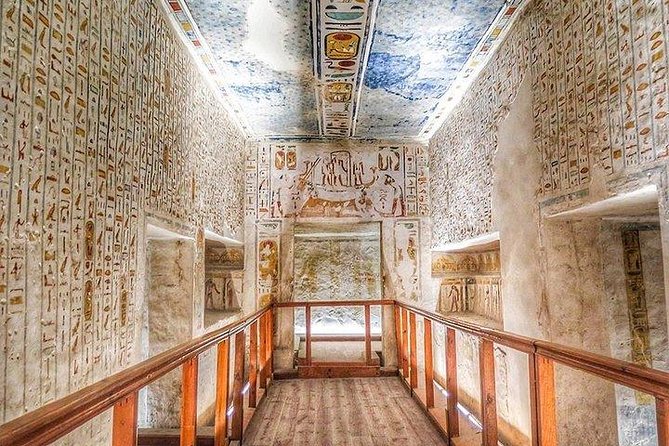
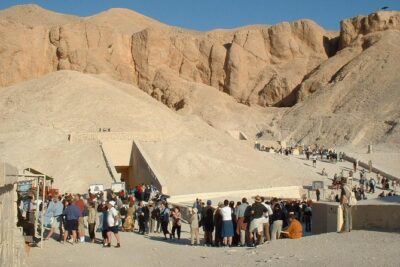
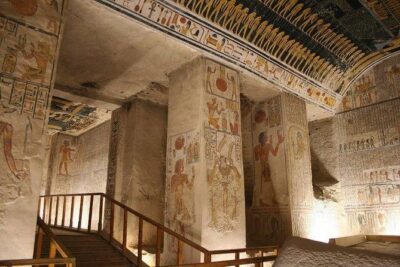
The day’s West Bank anchor is the Valley of the Kings, often called the Valley of the Gates of the Kings. This is where the Theban Necropolis becomes personal, because you are not just looking at buildings, you are stepping into the setting for royal tombs.
The valley sits on the west bank opposite Thebes, and it is made up of two main parts, East Valley and West Valley. Your guide’s job here is to help you understand why the geography mattered, and how the tombs fit into the bigger idea of the Theban afterlife world.
Two practical thoughts. First, this is the stop where tomb entrance costs can add up quickly, since the tour notes that admission is not included. Second, decide what you want before you reach the ticket point, because once you are inside, time and options can feel limited.
If you are hoping for a major-tomb lineup, I like the way guides often focus on famous royal burials such as tombs of Ramses III, Ramses IV, and Ramses IX. Your Egyptologist can steer you based on what is open and what you want to prioritize.
Deir el Bahari and the Temple of Hatshepsut
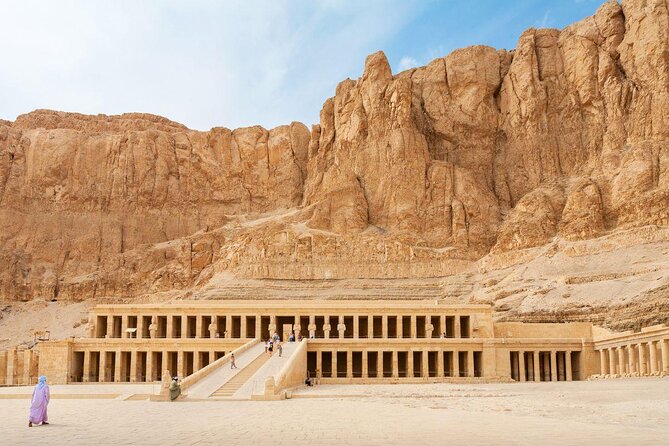
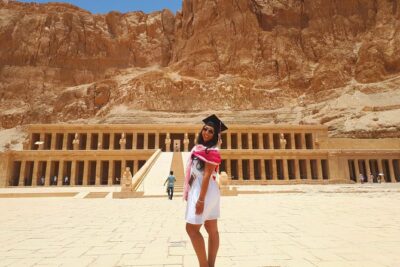
Next comes Deir el Bahari and the Temple of Hatshepsut. This is one of those stops where the architecture makes you slow down, because the temple’s terraces and placement were designed to impress from a distance.
Hatshepsut is a central figure, famous as a powerful queen in Egypt’s 18th Dynasty. The temple story is closely tied to Amun, and you even learn the meaning behind her name: concubine of Amun. That detail helps the site feel less like a name on a list and more like a real person with political weight.
Your time here is about 1 hour 30 minutes. That is a decent window to see the main features without turning it into a blur. Since admission is not included, you will also want to have your budget ready for this one, because it is usually one of the first places that makes the day feel more expensive.
Colossi of Memnon: two giant reminders of Amenhotep III
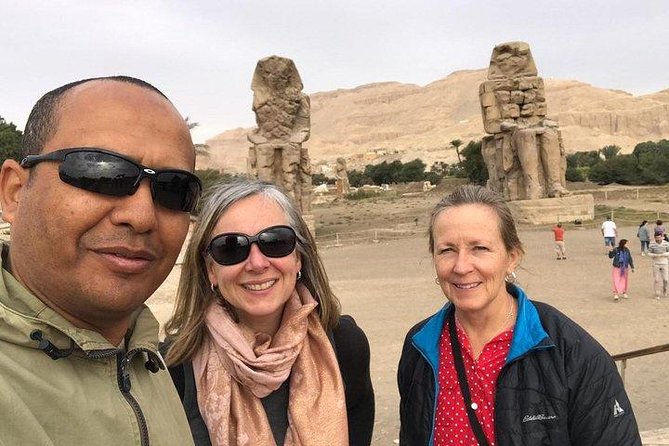
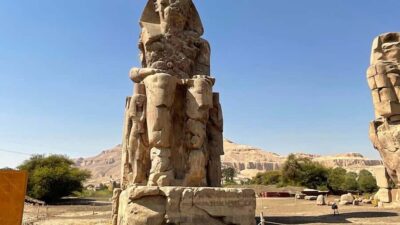
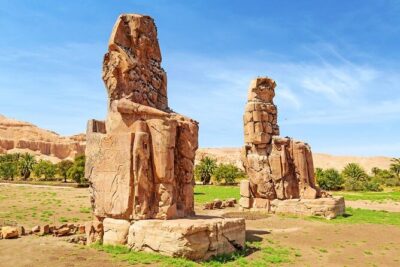
After the bigger temple stop, the Colossi of Memnon feel like a breather, even though the statues themselves are enormous. You get about 30 minutes here, and it is one of the few listed sights with free admission.
These are two huge statues built around 1350 BC, and they are what is left of a temple built in memory of Pharaoh Amenhotep III. The figures show Amenhotep III seated with hands spread on his knees, facing toward the river. The description notes that the orientation is toward the south-east according to more recent trends, which is exactly the kind of detail an Egyptologist can explain in plain language.
This stop is small on paper, but it is big for your sense of scale. When you stand in front of these, you get why ancient Egypt loved monumental statements. It is also one of the easiest places to grab a clean photo without fighting the chaos of a long lineup.
West bank tombs, one by one
Karnak Temple Complex: Amun, Mut and Khonsu in stone
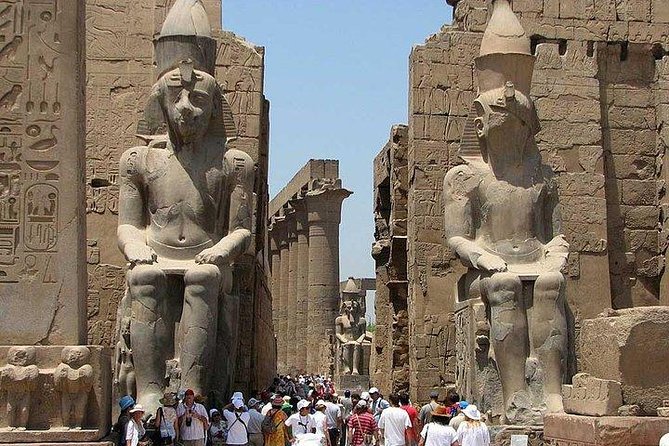
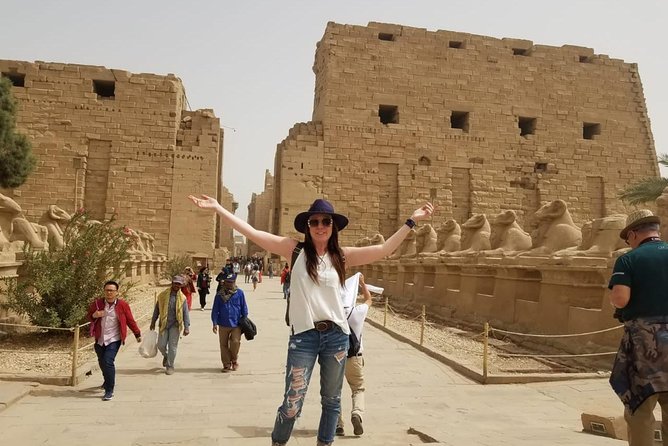
Karnak Temple Complex is next, and it is a full 2 hours. If Luxor is the world’s best course in ancient power, Karnak is the syllabus.
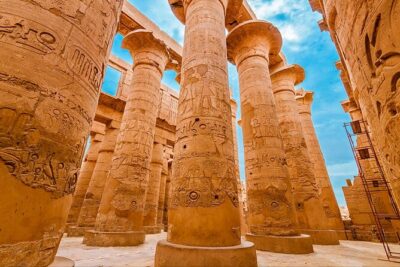
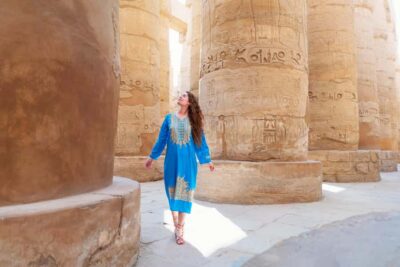
Karnak is not just one temple. It is a whole complex built and expanded across many eras, including work from Middle Kingdom kings all the way into Roman times. The temples are tied to the divine triad: Amun, Mut, and their son Khonsu.
Your guide’s value shows up here. Without a human explanation, Karnak can turn into endless walls and columns. With a guide, you start noticing patterns, dedications, and how different sections connect to the religious story.
Admission is not included, so budget separately. Also, because this is one of the biggest sites, it can involve more walking than you expect. Wear comfortable shoes and pace yourself. A slower Karnak visit is often the best Karnak visit.
Luxor Temple: the East Bank’s grand ritual center
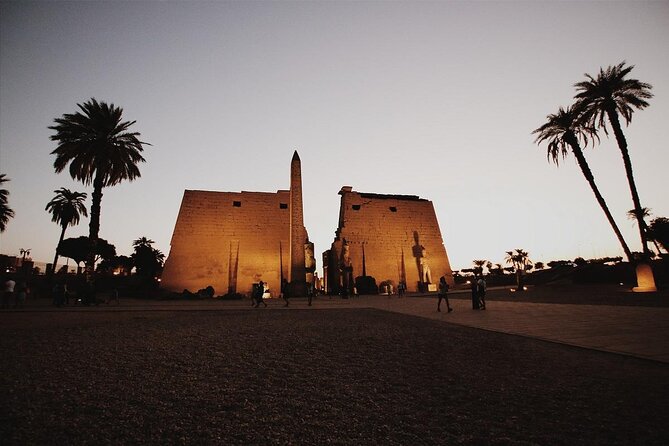
Then you head to Luxor Temple on the east bank. This one is about 1 hour 30 minutes, and it is another place where the triad matters: Amun-Ra, Mut, and Khonsu.
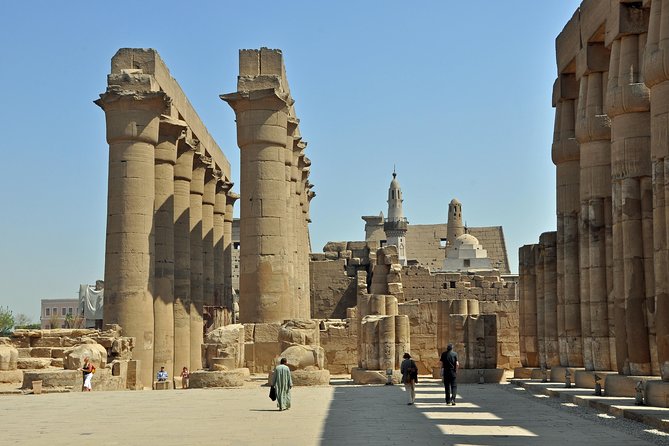
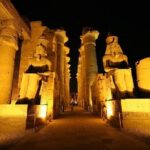
Luxor Temple was founded around 1400 BC, and it was built during reigns of the 18th and 19th Dynasties. The main buildings include work by Amenhotep III and additions by Ramses II, including features like an open courtyard, edifice, and obelisks. Thutmose III is also mentioned as having resided there, which gives the temple a sense of use, not just static ruins.
What I like about pairing Karnak and Luxor Temple in one day is the contrast. Karnak feels like a huge religious machine. Luxor Temple feels like a clearer, more focused ceremonial complex on the east side of the river.
Again, admission is not included. If you are trying to control costs, this is one of the places where you want to ask your Egyptologist what you should prioritize based on what you already bought.
Medinat Habu and Ramses III, plus the idea of an early labor strike
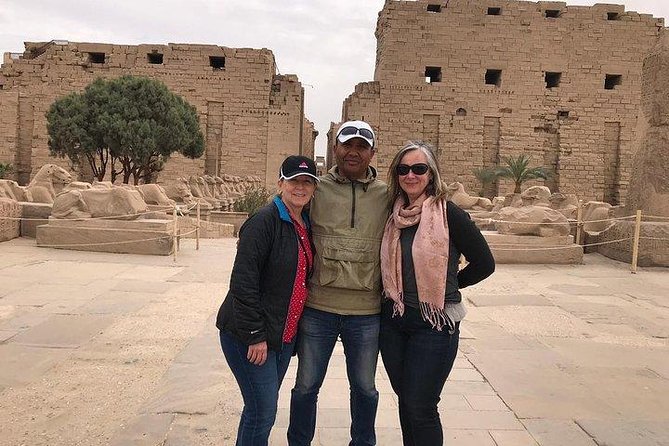
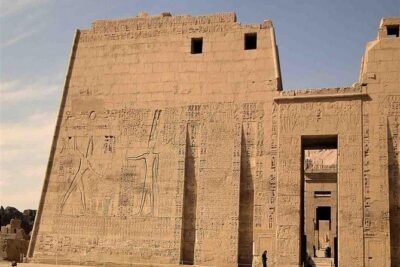
Your final major stop is Temple of Medinat Habu, also spelled Medinet Habu in some places. It is at the southern end of the Theban Necropolis, and it is known as one of Egypt’s best-preserved memorial temples.
This is the temple tied to Ramses III, and it has a detail that hits you because it sounds so modern: the site is linked to the first labor strike in history against Ramesses III. Even if you only remember one fact from the day, that one tends to stick.
You have about 1 hour 30 minutes here. The temple is surrounded by a massive mud-brick enclosure wall, which may have been fortified, and that defensive feel adds a layer beyond the usual temple look.
Admission is not included, so your final expenses will likely land here too. The upside is that Medinat Habu can feel less crowded than the top headline sites, which makes it easier to take your time and absorb what you are seeing.
Value and price: what $85 really covers
At $85 per person, the headline price sounds straightforward, but the real value depends on what is and is not included. This tour includes:
- Private air-conditioned vehicle transfers
- Pickup and return from your hotel or Nile cruise
- Qualified English-speaking Egyptologist guide
- One bottle of water
- Mobile ticket and group discounts (when applicable)
What is not included is the big one: entrance fees. That means your total day cost depends on which tombs and temple tickets you buy. In other words, the base price is for the guide and the logistics, not for the entry fees to each stop.
So is it worth it? For me, it makes sense if you want an Egyptologist guiding you through multiple sites in one day and you care about context, not just photos. If you prefer to DIY and you are comfortable managing tickets and routing on your own, a cheaper option might exist. But for many people, paying for the guide is what turns Luxor from a list into a story.
What the guides do right, and why it matters
Even with the same monuments, the difference is usually the guide. The strongest reviews in this set share a clear pattern: guides such as Laila and Mohamed Noor are organized, speak excellent English, and help you avoid time loss at ticket points by having things ready.
I also like the human touch. There are comments about staying with a parent while someone else toured tombs, and about guides adapting when schedules got tight. That tells you the tour is meant to be flexible inside the fixed shape of the day.
One more point: this day can feel intense, so guide pacing matters. When the guide builds in short, practical breaks and keeps the group moving in the right order, you spend less energy on stress and more energy on the sites.
Tips to make the day easier on your feet
This is a full, early-to-afternoon type of day with a lot of major stops, so a little planning helps. The tour notes that most travelers can participate, but participation still depends on your comfort with stairs, walking, and heat.
Bring a snack. One practical review note specifically calls out that the tour is long and you will want food for the day. You can keep it simple, like a small sandwich, fruit, or something you can eat quickly between stops.
Also, plan your priorities ahead. With admission tickets not included for several stops, you will have to decide how much you want to spend on tombs versus temples. If you are traveling with a single must-see, tell your guide early in the day.
Finally, dress for sun and dust. Luxor is brighter and drier than most people expect, and temples are not gentle on the eyes after long periods in direct light.
Who should book this Luxor East and West Bank tour
This tour fits you best if you want:
- A private format and a guide who can explain what you are seeing
- A single day covering both West Bank tomb country and East Bank temples
- An organized plan that reduces time lost to figuring out where to go next
It may not fit you as well if you prefer slow travel, long museum-style pacing, or you hate paying layered ticket costs. Also, if you have very limited mobility, you should think carefully about the amount of walking across multiple sites and how you handle uneven ground.
Final call: should you book?
If your goal is to see Luxor’s headline monuments with a real Egyptologist guiding the meaning, I think this is a solid choice. You get private transfers, an English-speaking guide, and a tight route that hits the Valley of the Kings, Hatshepsut at Deir el Bahari, Karnak, Luxor Temple, and Medinat Habu.
Just go in with two expectations set. First, you will pay extra for entrance fees for several stops. Second, it is a long day, so bring snacks, wear good shoes, and let the guide set the pace.
If that sounds like your kind of Luxor day, book it. If you want a lighter, more flexible schedule, you might prefer a shorter East Bank only or West Bank only day.
FAQ
What time does the tour start?
The tour start time is 7:00 am.
How long is the tour?
It is listed as approximately 8 hours.
Are entrance fees included?
No. Entrance fees are not included for several stops in the itinerary.
Is pickup included?
Yes. Pickup service is included from your hotel or your Nile cruise, and you are returned there at the end.
Is this tour private or group-based?
It is private. Only your group will participate.
What is included with the price?
The price includes private air-conditioned transfers, one bottle of water during the tour, and a qualified English-speaking Egyptologist guide. Mobile tickets are used.
Does the tour run in any weather?
The experience requires good weather. If it is canceled due to poor weather, you will be offered a different date or a full refund.
The West Bank, Tomb by Tomb
Down Into the Kings Valley
More of Cairo from our review pile
- Cairo: Djoser Pyramid & Memphis Private tour with transfers.
★ 4.0 · 14 reviews - White Desert Overnight Camping Sharing Tour in Egypt
★ 5.0 · 15 reviews - Cairo Best 2Days tour Pyramids, Saqqara & Old Cairo
★ 5.0 · 15 reviews - Monastery St Simon with Cave Church and Garbage City Private Tour
★ 5.0 · 15 reviews - Full-Day Tour to Giza Pyramids, Egyptian Museum & Khan Al-Khalili
★ 5.0 · 15 reviews - Private Walking Tour in ElMoez Street & Khan Elkhalili Market
★ 5.0 · 15 reviews
Luxor West Bank Temples & Tombs, compared.
 ★ 5.0Luxor Day Tour: Valley of Kings & Queens & Hatchepsut TemplesFrom $891,496 reviews
 ★ 5.0Full Day Tour to East and West Banks of LuxorFrom $151,449 reviews
 ★ 4.4Valley of the Kings and Hatshepsut Temple Day TourFrom $501,404 reviews
 ★ 5.0Valley of Kings, Hatchepsut Temple ,Karnak & Luxor-DayTourFrom $95735 reviews
 ★ 5.0Full Day Tour of Luxor West Bank Temples and Tombs (Private)From $20722 reviews
 ★ 5.0Private Full-Day Luxor Highlights East and West BanksFrom $65663 reviews
 ★ 4.5Guided Tour to East or West Banks with LunchFrom $64604 reviews
 ★ 5.0Luxor Private Full-Day Tour: Discover the East and West Banks of the NileFrom $90545 reviews