
REVIEW · LUXOR WEST BANK TEMPLES & TOMBS
Luxor Day Tour: Kings Valley & Karnak & Luxor & Hatshepsut Temple
Luxor’s temples can feel endless. This one-day route strings together the West Bank and East Bank in a way that keeps the day moving. I especially love getting my bearings fast with the Valley of the Kings, then finishing with the scale and detail of Karnak Temple. The trip is priced accessibly too, and the private AC ride makes the long day feel manageable.
You’ll also like how the highlights are spaced for real breaks: big stops, short stops, and a lunch option if you want it. The company uses licensed guiding and I’ve seen how the experience can really click with guides like Abdullah and Waleed, who focus on making the sites understandable rather than just reciting dates.
One possible drawback is simple: it is a long day, about 7 to 9 hours, with several stops and plenty of walking in Egypt’s heat. If you’re sensitive to pace or sun, plan for slower moments on purpose.
In This Review
- Key highlights worth packing for
- Why this West and East Luxor day tour works
- Getting started: pickup, AC comfort, and the pace of a 7 to 9 hour day
- Valley of the Kings: tombs, names, and why the place hits hard
- The Tutankhamun option, KV62, and what it means for your schedule
- Hatshepsut at Deir el Bahari: the cliffside temple that feels like theater
- Colossi of Memnon: fast, famous, and brutally massive
- Karnak Temple: Amun worship on a scale that changes your sense of time
- Luxor Temple: Divine Birth scenes and a temple built over generations
- How the Tutankhamun tomb choice affects your day
- Price and value: what $35 buys you, and what to double-check
- Who should book this tour, and who should think twice
- Should you book this Luxor Day Tour?
Key highlights worth packing for
- West Bank and East Bank in one day so you don’t have to choose between tombs and temples
- Hatshepsut at Deir el Bahari with that dramatic cliffside setting and classic architecture vibe
- Colossi of Memnon for instant scale, two giant statues facing the Nile
- Karnak Temple complex tied to Amun, Mut, and Khonsu, plus UNESCO context
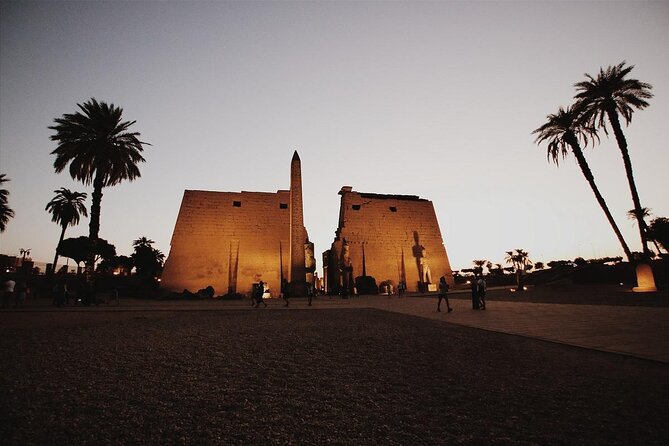
- Luxor Temple and the Divine Birth scenes on the east bank, completed across reigns
Other tomb tickets in the valley
- Hurghada: Luxor Valley of the Kings & Tutankhamun Tomb Trip★ 4.7 · 13,208 reviews
- Luxor Day Trip from Hurghada Small Group & Tutankhamun Tomb★ 4.8 · 5,366 reviews
- Luxor Day Tour: Valley of Kings & Queens & Hatchepsut Temples★ 5.0 · 1,496 reviews
- Luxor: Valley of the Kings and Hatshepsut Temple Day Tour★ 4.4 · 1,404 reviews
Why this West and East Luxor day tour works
This tour is built for travelers with limited time in Luxor. In one day you get the West Bank burial world, then you cross back to the East Bank for the great temple complexes. That means you experience both sides of ancient Thebes, not just one mood.
You start with hotel or Nile cruise pickup in Luxor, and you can even be picked up from Luxor airport. Then you ride in a private A/C vehicle, which matters because the day stretches out and heat is real. Bottled water is included, and the overall flow keeps you from losing time to taxis and negotiating.
The tour’s “feel” is also private. Even with group discounts mentioned, the day is described as only your group participating, so you’re less likely to feel like you’re herding through crowds with strangers. If you want your questions answered while you stand in front of massive ruins, that private setup helps.
Getting started: pickup, AC comfort, and the pace of a 7 to 9 hour day
The day runs long enough that logistics matter. Pickup is offered from your hotel or Nile cruise in Luxor, and the tour can start from Luxor airport as well. That flexibility is great if your arrival or departure timing is tight.
Transportation is private and air-conditioned, which is a big value add in summer months and between-site travel time. The itinerary is designed as a back-to-back sequence: you move from Valley of the Kings to Hatshepsut, then to Colossi of Memnon, and finally to Karnak and Luxor Temple.
Expect a pace that is active but not nonstop. Some stops are quick and some are longer, so you’re not stuck at every site for hours. You do have walking time between points, and you’ll likely spend time standing outdoors for photos and viewpoints.
Valley of the Kings: tombs, names, and why the place hits hard
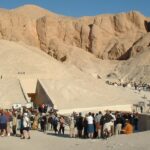
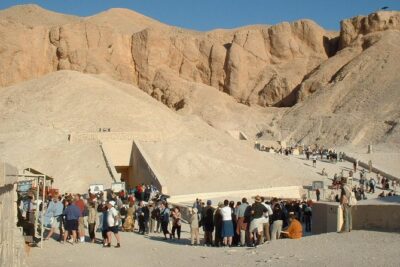
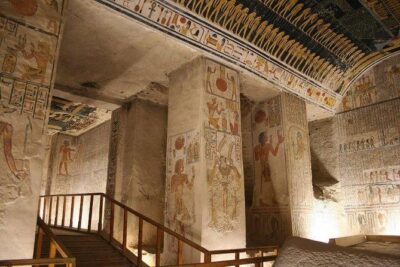
The Valley of the Kings is where Luxor turns from scenery into story. This royal burial ground served pharaohs from about the 16th century BC through the 11th century BC, and it contains over 60 tombs in a small area. The catch is that only a handful are open to the public at any given time, so what you see may depend on access and conditions.
Here you’re focusing on the major names connected to the site, including Tutmosis I, Tutmosis III, Tutankhamun, Ramesses VI, Merenptah, and Amenhotep II. Even without stepping into every tomb, just understanding that these were designed as carefully prepared final resting places changes how you look at the valley walls.
If you want to maximize value, I suggest you think of the valley as a “museum of scale.” You don’t just watch a ruin, you imagine corridors, chambers, and decorations meant to protect a ruler after death. A guide can help a lot here, because the differences between tombs are part of the point.
The Tutankhamun option, KV62, and what it means for your schedule
The itinerary includes an optional stop connected to Tutankhamun, tomb KV62. This matters because the stop is described as optional and requires an additional ticket purchased on the spot. That means your day can change slightly depending on whether you choose to add it.
KV62 is described as smaller and less extensively decorated than other royal tombs of its time. It includes an entrance staircase and corridor and then four chambers. The tomb is associated with Tutankhamun, who reigned in the early 14th century BC.
If you’re a “must see” type of person for one single tomb, this option is likely worth it. If you’re more interested in overall time efficiency and avoiding extra costs, you can skip the Tutankhamun tomb and still get the core West Bank experience.
West bank tombs, one by one
Hatshepsut at Deir el Bahari: the cliffside temple that feels like theater
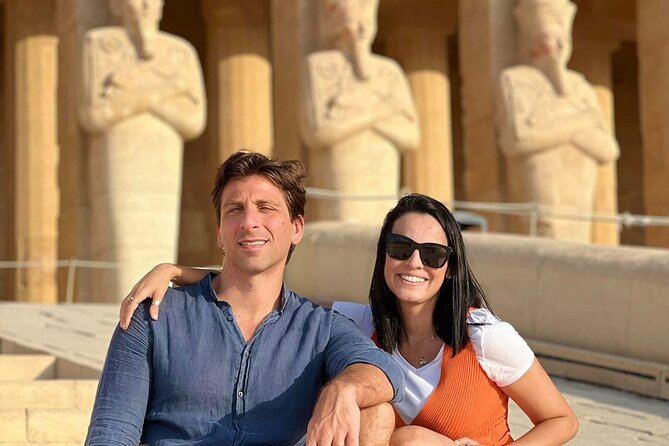
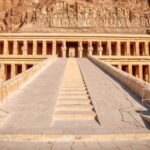
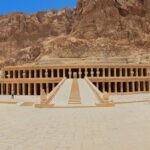
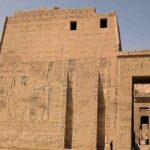
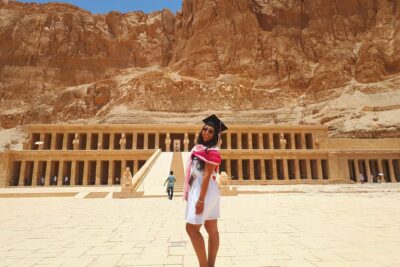
After the burial valley, Deir el Bahari shifts the mood. The Temple of Queen Hatshepsut, often associated with El Dir el Bahari, is a memorial temple built for Hatshepsut, the only pharaonic woman named in this timeline. She reigned for about 20 years in the 18th Dynasty, with dates given around 1490 to 1469 BC.
This is one of those places where the setting is part of the “architecture lesson.” The temple sits on the west bank, opposite modern Luxor, and it is built into a half-circle of cliffs. The layout gives you a sense of procession, with levels that draw your eyes upward and forward.
The design is credited to Senenmut, who is described as Hatshepsut’s steward and architect. That detail helps you connect the temple to the people behind it, not just the ruler.
If you go here without context, it can still look impressive. But with a guide, you’ll probably understand more of the symbolism and how the temple fits into the Theban Necropolis. Also, the stop is listed for about two hours, which is just enough time to slow down without feeling rushed.
Colossi of Memnon: fast, famous, and brutally massive
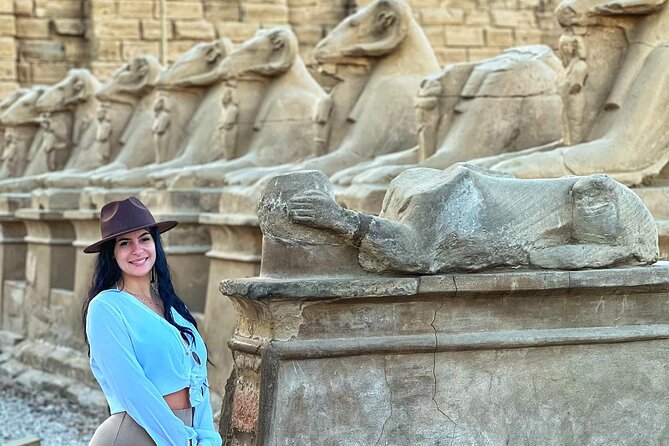
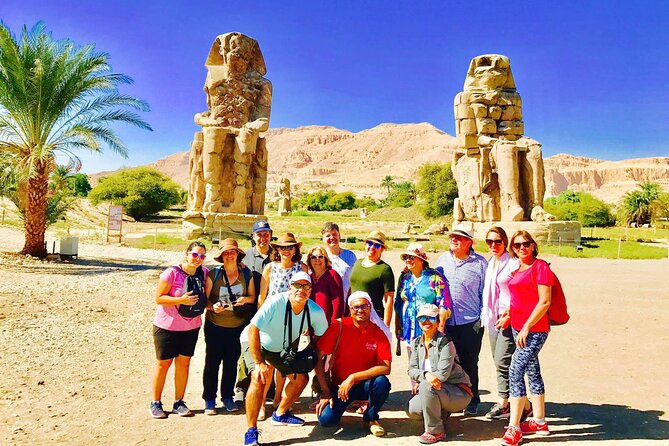
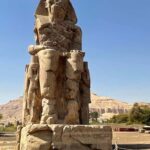
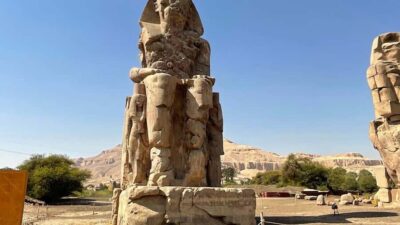
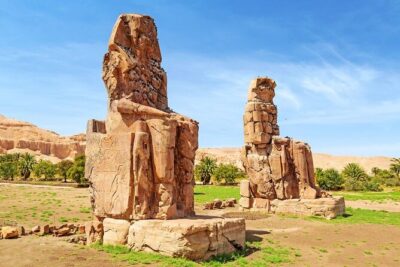
Then you hit a different kind of wow. The Colossi of Memnon are two monumental statues representing Amenhotep III. They face east toward the Nile River and rise to about 60 feet, which is roughly 18 meters. Each statue is described as carved from a single block of sandstone and weighing around 720 tons.
This stop is short, about 30 minutes, and that’s okay. Sometimes the best photos are the ones where you don’t overstay. Stand with your back to the statues and look at how they dominate the space. The scale becomes the story.
What I like about this stop is that it’s visually immediate. You don’t need a long explanation to feel the size. A good guide will add meaning though, including that these are linked to Amenhotep III’s mortuary temple tradition and that the statues include imagery of his mother, his wife, and the god Hapy.
It’s also a good “breather” between major temple sites, especially if you’re conserving energy for Karnak later in the day.
Karnak Temple: Amun worship on a scale that changes your sense of time
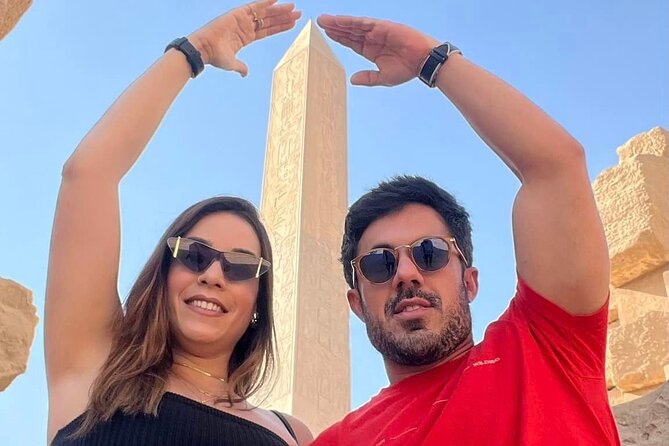
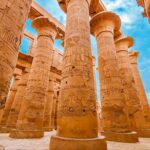
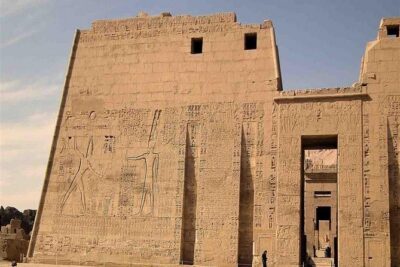
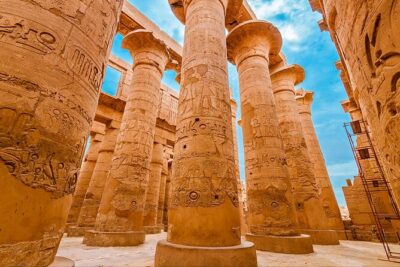
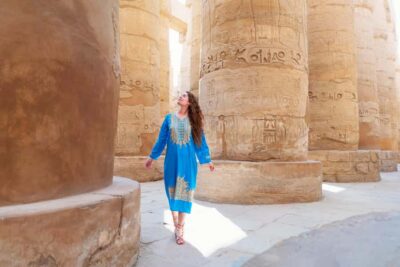
Karnak is the big one on the East Bank. The complex is dedicated to Amun, along with Mut and Khonsu, and the itinerary frames Karnak as the greatest example of worship in the history. Construction began during the reign of Senusret I in the Middle Kingdom and continued into the Ptolemaic Kingdom. Most of the buildings you see today are from the New Kingdom.
Karnak is part of ancient Ipet-isut, the main place of worship in the 18th Dynasty Theban Triad, with Amun as the head. The scale can be disorienting if you arrive with no plan. That’s where a guide helps you “name the parts” so you can make sense of pylons, temples, and chapels.
One practical reason Karnak is worth including: you get context. The site is also UNESCO World Heritage, listed along with the rest of the city. Even if UNESCO does not feel exciting, it signals that this is not a random collection of stones. It’s a major, protected archaeological landscape.
The tour allocates about two hours here. That’s enough to see major sections, look for the religious themes, and still keep your energy for Luxor Temple right after.
Luxor Temple: Divine Birth scenes and a temple built over generations
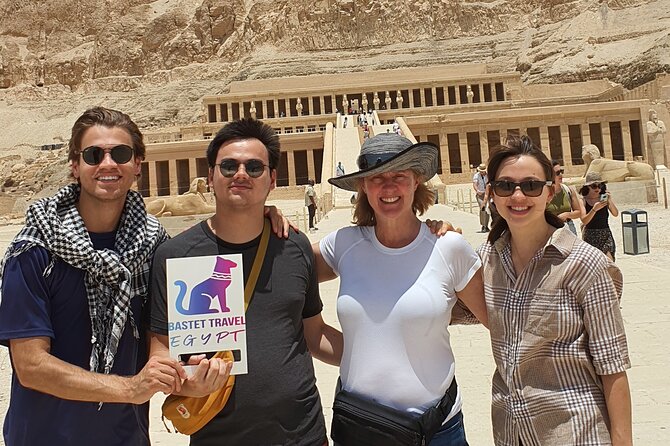
Finishing the day at Luxor Temple brings the story closer to the river city. This temple complex is located on the east bank and connected to the city known today as Luxor, with ancient Thebes in the background.
The itinerary says Luxor Temple was built by Amunhotep III in the 18th Dynasty, then completed by Ramses II during the 19th Dynasty. The site is described as founded around 1400 BC, and it has an Egyptian name, ipet resyt, meaning the southern sanctuary.
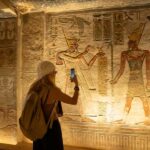
One interior highlight mentioned is a set of scenes called the Divine Birth. The story is described as the king’s true father being Amun-Ra disguised as Thutmose IV. These details are exactly why a guide earns their keep. Without names and explanations, you can end up seeing carved walls as just decoration.
The stop is listed for about two hours and that timing works well. You can pace yourself, absorb the bigger temple layout, and then end the day with fewer “rushed” photo moments.
How the Tutankhamun tomb choice affects your day
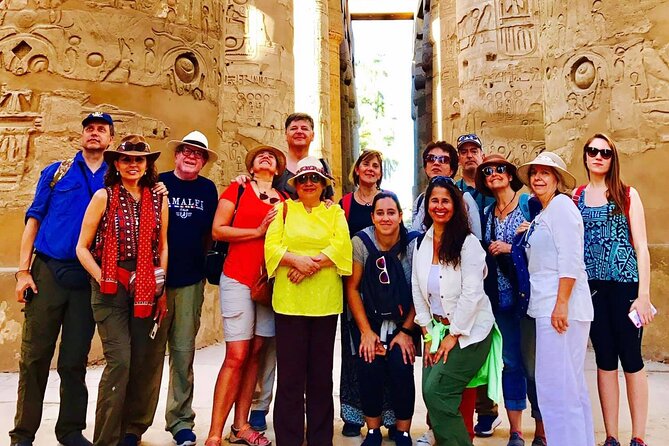
This tour includes an optional visit to the tomb of Tutankhamun, KV62. Because it requires an additional ticket, it’s the one part where the final cost can change based on what you choose.
The time allocation is short, about 20 minutes, so you won’t lose half your day. But that 20 minutes does come out of your overall West Bank window. If you’re doing the Tut tomb option, I’d treat it as your “one inside stop” moment on the West Bank side.
If you skip it, you still get the valley setting and the other major West Bank stops. In that case, you might use your extra time to linger longer at Hatshepsut, where the cliffside composition makes slow looking worth it.
Price and value: what $35 buys you, and what to double-check
At $35 per person, this is positioned as a value-heavy way to see a lot of Luxor. That price is low enough that you should think like a savvy shopper: confirm what is actually included and where you might pay extra.
From the tour details, you get:
- hotel or Nile cruise pickup and drop-off (and even airport pickup can apply)
- private transportation in an A/C vehicle
- bottled water
- a professional Egyptologist guide marked as optional
- entry fees marked as optional
- lunch marked as optional
- mobile ticket mentioned
The key here is the “optional” labels. The itinerary lists most stops with admission ticket free wording, but entry fees are also listed as optional in the included section. That overlap can happen in real tour operations. In practice, you should ask the operator before departure what you will pay on the day, especially if you want the optional Tutankhamun tomb visit.
Where the price feels especially fair is the time savings. A full East and West Bank circuit is hard to assemble yourself without turning the day into a taxi hunt. Here, the route is set up, the transport is arranged, and you’re not trying to coordinate between multiple sites alone.
Who should book this tour, and who should think twice
This is a strong fit for first-time Luxor visitors who want the biggest hits without splitting your day across multiple trips. If you’re short on time and want both the West Bank and East Bank, this route is a logical pick.
It also suits travelers who like a guide’s explanations, since the tour can include a professional Egyptologist and the sites are packed with names and symbolism. In the experience with guides like Abdullah and Waleed, the vibe seems to be patient teaching, not rushed storytelling.
Think twice if you hate long days or you get cranky in heat. Even with AC driving, you still have outdoor viewing time and walking between sites. If you’re a slow walker, I’d plan on moving at your own pace whenever you can, and don’t feel guilty taking breaks.
Should you book this Luxor Day Tour?
Yes, if your goal is to cover Luxor’s most famous ancient sights in one day, and you want a guided path that connects the sites into a bigger story. The combination of Valley of the Kings, Hatshepsut at Deir el Bahari, Karnak Temple, and Luxor Temple is exactly the kind of “see it all” day that makes a short Luxor stay feel complete.
Book it with one mindset: you’ll be busy, so choose the parts that matter most to you. If the optional KV62 visit is important, budget for the extra ticket you may need. If you’d rather keep the day smoother, you can still have a full, meaningful West Bank experience without it.
Karnak and the East Bank
The West Bank, Tomb by Tomb
Down Into the Kings Valley

More of Luxor from our review pile
- Private Tour Nile Felucca Ride at Sunset in Luxor
★ 5.0 · 26 reviews - Private Full day East and West Bank, Luxor
★ 5.0 · 26 reviews - Luxor Day Tour: Kings Valley & Karnak & Luxor & Hatshepsut Temple
★ 5.0 · 26 reviews - Full-Day East and West Luxor Private Tour
★ 4.5 · 26 reviews - Day Trip to Edfu & Kom Ombo temples from Luxor and drop off in Aswan or Luxor
★ 5.0 · 26 reviews - 5 Days 4 Nights Nile Cruise Tour
★ 5.0 · 27 reviews
Luxor West Bank Temples & Tombs, compared.
 ★ 5.0Luxor Day Tour: Valley of Kings & Queens & Hatchepsut TemplesFrom $891,496 reviews
 ★ 5.0Full Day Tour to East and West Banks of LuxorFrom $151,449 reviews
 ★ 4.4Valley of the Kings and Hatshepsut Temple Day TourFrom $501,404 reviews
 ★ 5.0Valley of Kings, Hatchepsut Temple ,Karnak & Luxor-DayTourFrom $95735 reviews
 ★ 5.0Full Day Tour of Luxor West Bank Temples and Tombs (Private)From $20722 reviews
 ★ 5.0Private Full-Day Luxor Highlights East and West BanksFrom $65663 reviews
 ★ 4.5Guided Tour to East or West Banks with LunchFrom $64604 reviews
 ★ 5.0Luxor Private Full-Day Tour: Discover the East and West Banks of the NileFrom $90545 reviews