

REVIEW · LUXOR WEST BANK TEMPLES & TOMBS
Full Day Tour to the West Bank & East Bank
Luxor in one day can feel like a blur, yet this tour keeps things organized while you focus on the landmarks that matter. I like that you get an Egyptologist guide to connect the stories behind the sites, and you ride in a comfortable air-conditioned private vehicle instead of squeezing into crowded buses.
Two things I truly liked: the convenience of round-trip pickup, and the flexibility of a private setup where your guide can set the pace. One thing to consider is that most entrance tickets are not included, so you’ll want to budget separately for admission while enjoying the stops that do not require it.
In This Review
- Key highlights to plan around
- East and West Banks, without the stress of hopping alone
- Price and logistics: what you’re paying for (and what’s extra)
- Stop 1: Valley of the Kings, the New Kingdom tombs you’ll recognize
- Stop 2: Hatshepsut’s mortuary temple, where architecture tells a political story
- Stop 3: Colossi of Memnon, a short stop with big scale
- Stop 4: Luxor Temple, where festivals and later buildings overlap
- Stop 5: Karnak Temple Complex, the world’s second-largest ancient religious site feeling
- How the day flows: timing, comfort, and walking reality
- What makes the guide matter, especially at tombs and temples
- Who this tour fits best (and who should think twice)
- Should you book this West Bank and East Bank day tour?
- FAQ
- What places does this tour include in Luxor?
- How long is the full day tour?
- What is included in the price?
- Are entrance fees included?
- Does the tour include pickup?
- Is the tour affected by weather?
Key highlights to plan around
- Private Egyptologist guidance that helps you make sense of tombs, temples, and what you’re seeing
- Hotel or Nile Cruise pickup plus an air-conditioned ride, which matters a lot in Luxor heat
- West Bank sequence that starts at the Valley of the Kings and moves through Hatshepsut before you cross back
- Temple stops that mix eras, including Luxor Temple with sections attributed to Amenhotep III and Ramses II
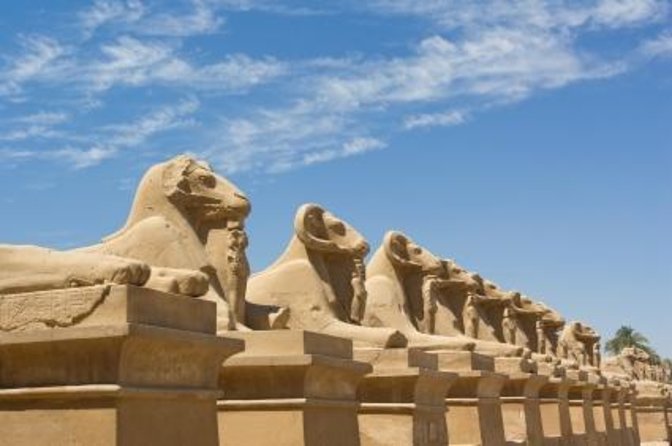
- Karnak Temple Complex as a true open-air religious site with long timelines from Middle Kingdom into Ptolemaic times
- One quick free stop at the Colossi of Memnon, so not everything costs extra
West bank tombs, one by one
- Luxor Day Tour: Valley of Kings & Queens & Hatchepsut Temples★ 5.0 · 1,496 reviews
- Full Day Tour to East and West Banks of Luxor★ 5.0 · 1,449 reviews
- Luxor: Valley of the Kings and Hatshepsut Temple Day Tour★ 4.4 · 1,404 reviews
- Luxor: Valley of Kings, Hatchepsut Temple ,Karnak & Luxor-DayTour★ 5.0 · 735 reviews
East and West Banks, without the stress of hopping alone
This is the kind of day tour that works when you want the big hits but you do not want to fight logistics. You get a private guide who explains what you’re looking at, and you travel in an air-conditioned vehicle just for your group. That combination matters in Luxor because the day is long, the sites are spread out, and outdoor walking adds up fast.
The tour also leans into a smart theme: West Bank tombs and mortuary sites first, then East Bank living temples after. That order helps you switch gears as the day goes on. You’ll spend your morning with royal afterlife imagery, then move into the spaces Egyptians built for gods, festivals, and worship.
If you’re booking with the name Ra Egypt Tour Guide, you may meet a guide like Ali, who came through strongly in a review as being personal and attentive. Even if your guide is someone else, the role is the same, an Egyptologist who can translate the scenes, names, and symbolism into something you can actually follow.
Price and logistics: what you’re paying for (and what’s extra)
At $52.27 per person, the value depends on how you think about admissions. The tour price includes the Egyptologist tour guide, an air-conditioned private vehicle, tourism police permission, and tax. Those are the items that usually cost real money when you book privately.
What’s not included is just as important: entrance fees (tickets), meals or beverages, and tipping. In this itinerary, you’ll also notice that some stops explicitly say admission tickets are not included. The Colossi of Memnon is listed as free, which helps a bit with budgeting.
So here’s the practical takeaway: you’re not just buying transport. You’re buying interpretation plus a smooth day. If you would otherwise hire a guide for the Valley of the Kings or Karnak, this format can feel like a bargain. If you hate paying separate tickets on top, then you should check admission costs before you commit.
Timing is listed as about 6 to 9 hours. That range is realistic for Luxor. It depends on how much time you spend at each site and how fast you move through tickets and entry lines.
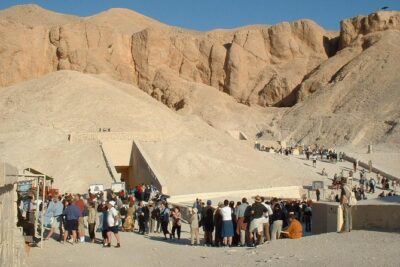
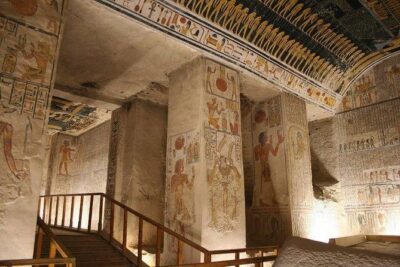
Stop 1: Valley of the Kings, the New Kingdom tombs you’ll recognize
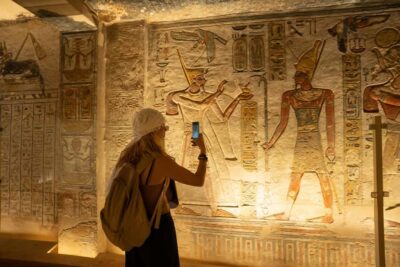
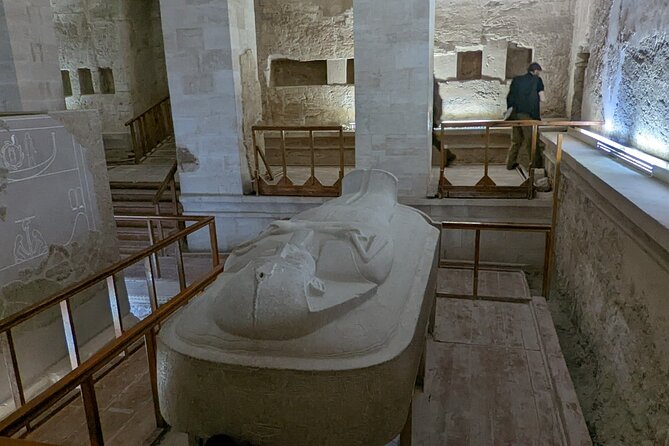
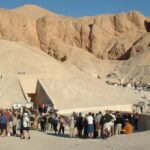
The day starts on the West Bank at the Valley of the Kings. This is where the royal tombs of Egypt’s New Kingdom are, from about 1500 BC onward. Even if you’re a first-timer, you’ll hear names that pop up in pop culture and textbooks, and your guide helps connect the dots.
You’re looking at a set of preserved tombs belonging to kings. The tour mentions several specific ones you might see, including the tombs associated with Ramses II, Sety I, and the child King Tut Ankh Amon, plus other royal tombs. That lineup is useful because it gives you anchors. You’re not just wandering corridors, you’re learning who each ruler was and why their burial place mattered.
The main drawback to consider is pacing. The Valley of the Kings can be a slow, detail-based experience if you let it. If your group likes fast sightseeing, you’ll still need patience for entry and the time spent inside tombs. If your group likes to understand the art and history, plan to let the guide lead you and resist the urge to rush.
Also note the ticket detail: admission tickets are not included. Your guide can help you figure out what you need on the day, but you should still treat this as an extra cost category.
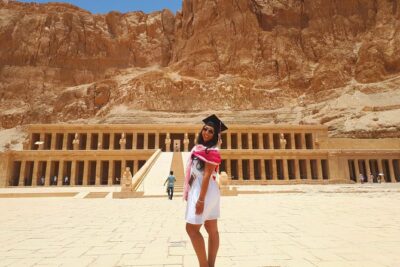
Stop 2: Hatshepsut’s mortuary temple, where architecture tells a political story
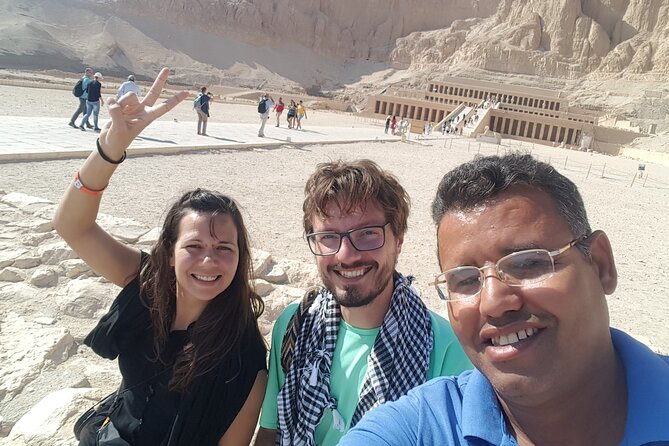
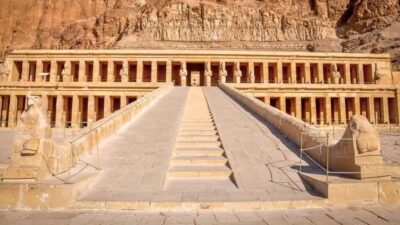
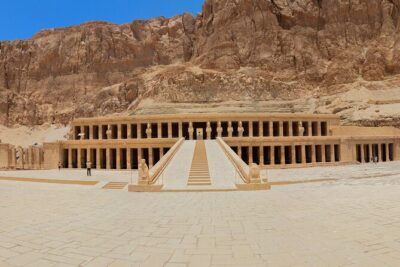
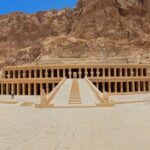
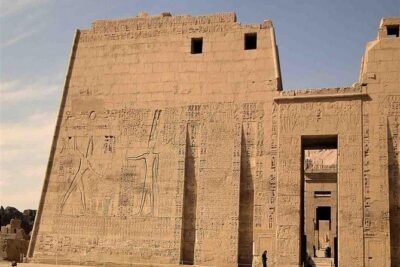
Next comes the Temple of Hatshepsut, the Mortuary Temple of Queen Hatshepsut. The itinerary frames it as the Holy of Holies, and the site’s reputation in Egypt comes from more than scale. It’s the design and the way the temple’s terraces and ramps guide you through scenes.
The tour highlights that this temple is one of the best architectural buildings built by the engineer Sennmut. You’ll see three levels connected by ramps, and the walls include major narrative scenes. One focuses on the divine birth of the queen. Another shows her commercial expedition to Punt Land. These details matter because they’re not random decoration. They’re a message, tying royal legitimacy and prosperity to the reign.
Your guide should connect those scenes to the temple’s religious purpose. This temple is mainly dedicated to worship the supreme god Amon-Ra. When you can connect the artwork to the meaning, you stop seeing the place as just “a big temple” and start seeing it as a statement of power.
The ticket note applies again: admission tickets are not included. Still, as a stop, it’s a strong mid-day anchor because it gives you variety. You’re outside, you’re walking through terrace spaces, and you’re getting clear visual cues from the architecture.
More columns on the east bank
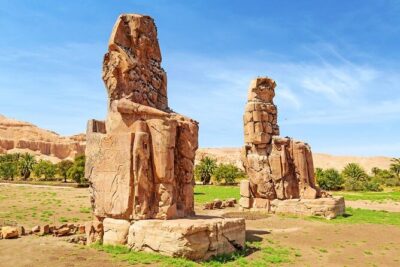
Stop 3: Colossi of Memnon, a short stop with big scale
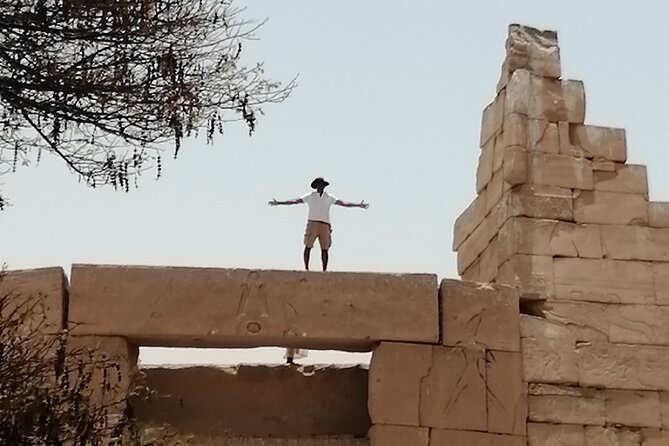
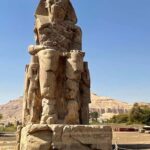
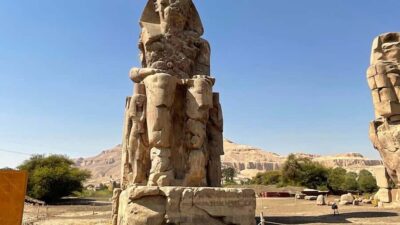
After Hatshepsut, you’ll visit the Colossi of Memnon. This is a fast one, about 15 minutes, but it’s worth it for the scale. The two massive statues represent King Amenhotep III in a seated position, and the tour notes they include figures tied to his mother and wife.
Even if your time is tight, this stop gives you a quick visual reset. You’re no longer surrounded by temple walls and carved narratives. Instead, you’re looking at monumental stone figures that are easy to understand at a glance.
Admission is listed as free for this stop. That is a simple win for your budget and also a nice break in the day when you do not need to manage ticket costs for one of the stops.
Stop 4: Luxor Temple, where festivals and later buildings overlap
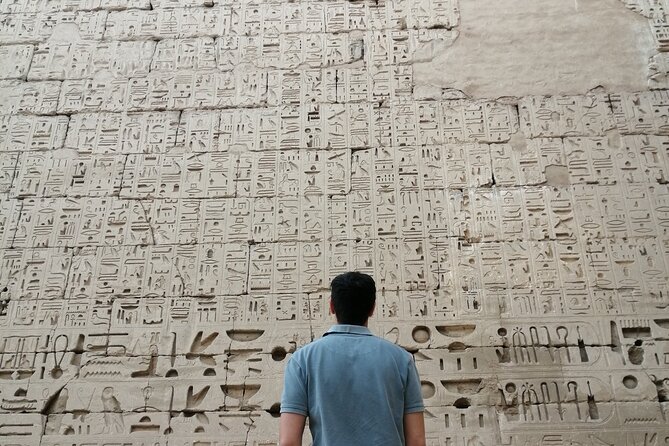
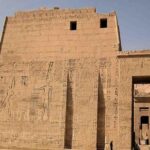
Luxor Temple is another key East Bank stop. The tour describes it as connected to ancient Egyptian festivals, with different scenes on the walls representing celebrations (the itinerary includes text referencing festival scenes). What you’ll love here is the layer-cake feeling. Luxor Temple did not stay frozen in one era.
The tour notes that the inner parts were built by King Amenhotep III, while the outer parts were built by King Ramses II. That split helps you appreciate why the temple feels like it has multiple voices. It’s not just “a temple,” it’s a timeline.
Then comes one of the more interesting practical details: inside the temple area, there is a mosque called Abu Al-Haggag. The itinerary explains it was built on the ruins of a church that were built on the ruins within the temple. It’s a reminder that sacred spaces can change identities over time, but people keep using the same ground because it has meaning and location.
The tour also mentions chapels built by Amenhotep III and Alexander the Great to the rear. When your guide connects those names to what you’re seeing, Luxor Temple turns into a crash course in how history piles up.
Again, admission tickets are not included. Plan time for entry and take water if your day is heating up.
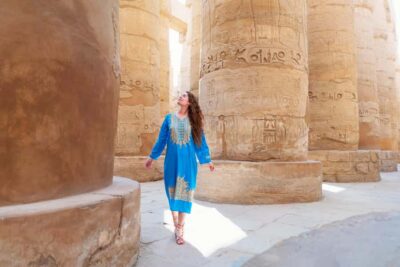
Stop 5: Karnak Temple Complex, the world’s second-largest ancient religious site feeling
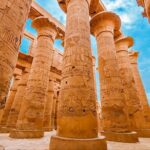
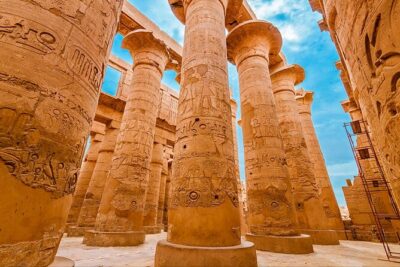
Karnak is where the day can really stick with you. This is the Massive temples of Karnak Temples Complex, described as a vast open-air museum and the second-largest ancient religious site in the world.
You’re not seeing just one building. You’re walking through a complex made of temples, chapels, pylons, obelisks, and other structures. The tour also gives you a timeline: construction began during the reign of Senusret I in the Middle Kingdom, and it continued into the Ptolemaic Period. That helps you understand why the complex feels both huge and unfinished in the best way. It spans centuries, with different rulers adding their stamp.
The religious focus is the Theban triad: Amon, his consort Mut, and their son Khunso. When you understand that, you start noticing patterns in the layout and the themes behind the carvings and monuments.
This stop is about 1 hour 30 minutes on the schedule, and that’s enough time to get a feel for the scale without rushing every corner. If you’re the type who wants to take photos nonstop, you might eat into the learning time. I’d follow your guide’s lead here, because Karnak is one of those places where context makes the difference between seeing columns and understanding a worldview.
Tickets are not included in the itinerary for this stop either, so plan for that cost.
How the day flows: timing, comfort, and walking reality
The tour duration is listed as 6 to 9 hours. In practice, that’s a full-day plan, but the schedule also has natural breaks. You have longer stops where you enter tombs or move through temple spaces, plus shorter moments like the Colossi of Memnon.
Because the tour includes pickup from your hotel or Nile Cruise, you’re not spending early hours coordinating transportation. That convenience is worth something in Luxor, especially if you’re also managing check-in, check-out, or a tight travel schedule.
Physical fitness is labeled as moderate. That usually means you should expect some walking on uneven ground, stairs in temple areas, and time outdoors in the sun. Bring a hat, use sun protection, and wear comfortable shoes. If you’re prone to fatigue in heat, treat the air-conditioned vehicle as part of your strategy, get in it often, drink water, and pace yourself at the sites.
Also, the tour is private for your group. That matters for comfort. You can ask questions at your own speed, and your guide can adjust the flow when the day feels crowded or when someone needs a break.
What makes the guide matter, especially at tombs and temples
An Egyptologist guide is the main reason this tour becomes more than a checklist. At the Valley of the Kings, names can blur together fast. With good guidance, Ramses II, Sety I, and King Tut Ankh Amon become not just famous names, but rulers with burial choices you can understand.
At Hatshepsut’s temple, your guide can point out why the ramps and terraces matter, and how the divine birth scenes and Punt Land expedition scenes connect to Amon-Ra worship and royal legitimacy.
At Luxor Temple and Karnak, the guide helps you connect architecture to time periods. Amenhotep III and Ramses II aren’t just names. They’re part of why the temple feels like it evolved. At Karnak, knowing the triad Amon, Mut, and Khunso gives your brain a map.
In one review, Ali stood out for being personalized and attentive, and the team even offered airport pickup to make better use of a traveler’s time. That kind of flexibility is exactly what you want in a private day. Even if airport pickup is not part of every booking, it’s a sign to ask about schedule options early.
Who this tour fits best (and who should think twice)
This tour is a smart fit if you want a guided day covering both banks with minimal hassle. You’ll likely enjoy it if you:
- Want East Bank temples plus West Bank tombs in one day
- Prefer a private setting over joining a larger group
- Like explanations that translate carvings and names into something you can remember
It may not be ideal if:
- You hate planning for separate entrance fees. Tickets are not included for most major stops.
- You need a very short, easy outing. It is listed as 6 to 9 hours and includes multiple sites.
- You’re traveling only for quick photo stops. This day works best when you slow down just a bit and let the guide steer.
If your group includes different interests, the guide can often balance storytelling and photo time, which is one of the hidden benefits of a private vehicle and a private Egyptologist.
Should you book this West Bank and East Bank day tour?
I think this is a good booking when you want high value from your limited Luxor time. For roughly $52.27 per person, you get the big structure of a full-day experience: an Egyptologist guide, round-trip pickup, and air-conditioned transport in a private setup. That’s the kind of combination that reduces stress and boosts understanding.
The main reason to pause is cost of entrance tickets on top. If you budget for that and you’re okay with a 6 to 9 hour day that includes walking and outdoor heat, this tour is a solid way to see Valley of the Kings, Hatshepsut’s temple, Luxor Temple, and Karnak without juggling multiple taxis and guide appointments.
My advice: budget for admission fees, wear comfortable shoes, and ask your guide what to prioritize if you have specific favorites like Ramses II or King Tut Ankh Amon. With that approach, the day feels coordinated and meaningful instead of rushed.
FAQ
What places does this tour include in Luxor?
It includes the Valley of the Kings, the Temple of Hatshepsut, the Colossi of Memnon, Luxor Temple, and the Temple of Karnak.
How long is the full day tour?
The tour runs approximately 6 to 9 hours.
What is included in the price?
Included features are an Egyptologist tour guide, an air-conditioned private vehicle, tourism police permission, and tax.
Are entrance fees included?
No. Entrance fees (tickets) are not included, and the itinerary lists admission tickets as not included for multiple stops. Colossi of Memnon is listed as free.
Does the tour include pickup?
Yes. Pickup is offered from your hotel or Nile Cruise, and the tour includes round-trip transportation.
Is the tour affected by weather?
Yes. The experience requires good weather. If it is canceled due to poor weather, you’ll be offered a different date or a full refund.
Karnak and the East Bank
The West Bank, Tomb by Tomb
More of Luxor from our review pile
- Hot Air Balloon Ride and Tour to Valley of Kings Luxor- Special Offer
★ 5.0 · 15 reviews - 4-Hours tour West Luxor bank :Hatshepsut Temple & Valley of the King with Lunch
★ 5.0 · 15 reviews - Tour From Luxor to Aswan Edfu, Kom Ombo, Philae and High Dam
★ 5.0 · 15 reviews - Private Half-day Dendera Temple
★ 5.0 · 15 reviews - Luxor Airport Departure: Convenient Private Hotel Transfer
★ 5.0 · 15 reviews - Dahabiya Nile Cruise From Luxor To Aswan 4 Nights 5 Days
★ 4.5 · 15 reviews
Luxor West Bank Temples & Tombs, compared.
 ★ 5.0Luxor Day Tour: Valley of Kings & Queens & Hatchepsut TemplesFrom $891,496 reviews
 ★ 5.0Full Day Tour to East and West Banks of LuxorFrom $151,449 reviews
 ★ 4.4Valley of the Kings and Hatshepsut Temple Day TourFrom $501,404 reviews
 ★ 5.0Valley of Kings, Hatchepsut Temple ,Karnak & Luxor-DayTourFrom $95735 reviews
 ★ 5.0Full Day Tour of Luxor West Bank Temples and Tombs (Private)From $20722 reviews
 ★ 5.0Private Full-Day Luxor Highlights East and West BanksFrom $65663 reviews
 ★ 4.5Guided Tour to East or West Banks with LunchFrom $64604 reviews
 ★ 5.0Luxor Private Full-Day Tour: Discover the East and West Banks of the NileFrom $90545 reviews
The lists this one sits on