
REVIEW · LUXOR WEST BANK TEMPLES & TOMBS
Full Day Tour :Kings valley &Karnak &Luxor and Hatshepsut Temples
Ancient Luxor in one full day. This tour is interesting because it lines up two Nile banks and a tight set of must-see sites, from royal tombs to big temple complexes. I especially like that the Valley of the Kings entry is included and you get real time inside the tomb area, and I also like that Karnak and Luxor Temples both make the cut without wasting your day. One drawback to keep in mind: the day is packed, so you will want to protect your energy for walking and sun.
A lot of the value comes from how the pieces fit together. You see the dramatic range between intimate tomb artwork and monumental temple architecture, with an English Egyptologist guide and air-conditioned transport to keep the long stretches manageable. For me, the biggest consideration is simply pacing: if you want lots of optional add-ons or very slow museum-style browsing, this itinerary can feel like it moves fast.
In This Review
- Key Highlights at a Glance
- A full day that hits both sides of Luxor
- Price and value: $18 with most essentials handled
- Getting to the sites: pickup, private group, and transport comfort
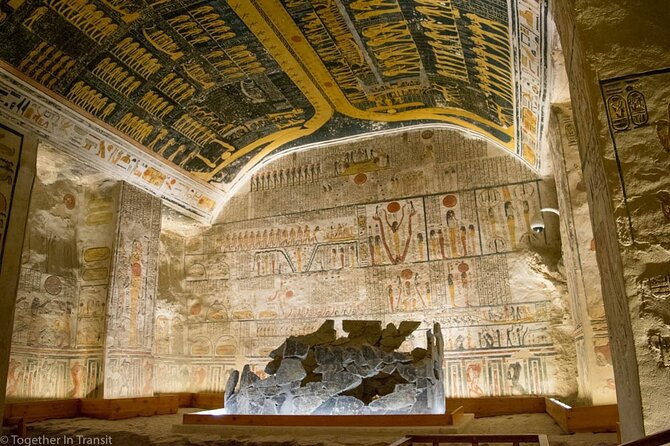
- Valley of the Kings: tomb time, light, and how to get more out of it
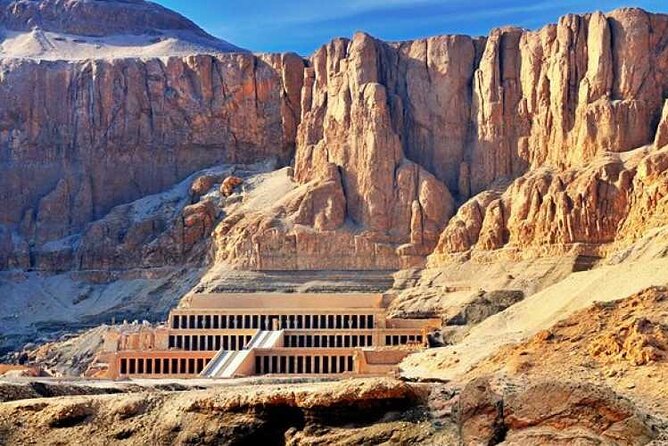
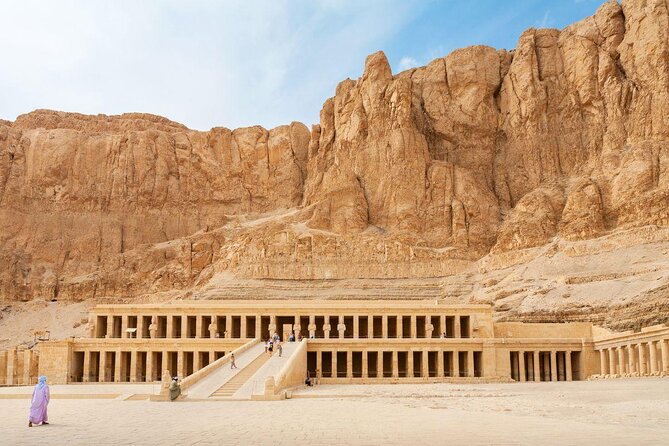
- Deir el-Bahari and Hatshepsut: terraces, power, and a beard made for politics
- Karnak Temple: Amun-Ra, Mut, and Khonsu, plus 2,000 years of additions
- Colossi of Memnon: the short stop that gives you scale
- Luxor Temple on the east bank: why Greek, Roman, Christian, and Islamic layers matter
- Lunch, water, and pacing that actually works
- Who should book this Luxor day tour
- Optional add-ons you might be able to arrange
- Should you book this tour or keep looking?
- FAQ
- What is the duration of the Luxor full day tour?
- What sites are included in this day tour?
- Are entrance fees included?
- Is lunch and water included?
- Where does the tour start?
- Is the tour private?
- Is there free cancellation?
Key Highlights at a Glance
- Valley of the Kings time built in (about 2 hours) for tomb viewing without rushing
- Deir el-Bahari and Hatshepsut (about 1 hour 30 minutes) with strong context on her reign and imagery
- Karnak Temple scale (about 2 hours), including the Theban triad Amun-Ra, Mut, Khonsu
- Amenhotep III’s Colossi of Memnon stop is short (about 20 minutes) but worth the quick look
- Luxor Temple on the east bank (about 1 hour), including layers from Greek, Roman, Christian, and Islamic periods
- Tickets, lunch, water, and entry fees included so you are not scrambling mid-day
Other tomb tickets in the valley
- Hurghada: Luxor Valley of the Kings & Tutankhamun Tomb Trip★ 4.7 · 13,208 reviews
- Luxor Day Trip from Hurghada Small Group & Tutankhamun Tomb★ 4.8 · 5,366 reviews
- Luxor Day Tour: Valley of Kings & Queens & Hatchepsut Temples★ 5.0 · 1,496 reviews
- Luxor: Valley of the Kings and Hatshepsut Temple Day Tour★ 4.4 · 1,404 reviews
A full day that hits both sides of Luxor
This Luxor tour is built for travelers who want a high-impact day without living on a bus. You cover the West Bank tomb culture (Valley of the Kings and Hatshepsut at Deir el-Bahari) and then finish on the East Bank with two heavyweight temple stops, Karnak and Luxor Temple.
What I like about this structure is that it gives you context. The West Bank sites help you understand Egyptian beliefs about kingship and the afterlife, while Karnak and Luxor Temple show how ritual power was practiced daily, for centuries. You also get a nice “visual contrast,” from carved tomb walls to sprawling temple hypostyles and ceremonial courtyards.
The total day clocks in at about 6 to 8 hours, and the schedule is tight but not crazy. It is the sort of day where you will see a lot, take plenty of photos, and still have time to ask questions and look around.
Price and value: $18 with most essentials handled
At $18 per person, this tour is priced like a budget-friendly way to get the main Luxor sights in one go. The key value move is that entry fees to Valley of the Kings, Hatshepsut Temple, Karnak Temple, and Luxor Temple are included, plus lunch and bottled water.
That matters because ticketing costs can add up quickly in Egypt, and it is usually the entry fees that create the “surprise” in your daily spending. Here, you at least know the big-ticket admissions are covered.
You might notice one exception by design: the Colossi of Memnon stop is listed as admission free (about 20 minutes). That keeps the schedule lean at that point, which makes sense because it is more of a quick iconic stop than a long “sit and study” visit.
One extra cost possibility to watch for: you can opt for a 15 Euro multi-language Egyptologist (French + Spanish + German). If you are traveling solo or in a small group, this can be worth it if English is not your comfort zone.
Getting to the sites: pickup, private group, and transport comfort
This is a private tour for your group, which usually means you are not stuck with strangers deciding the pace. The meeting point is at Sofitel Winter Palace Luxor, 17 Cornish El Nile Street.
Pickup is offered, but the meeting point listed is that Sofitel location, so I recommend confirming pickup details in advance so you know whether you are starting directly from your hotel or walking to the meeting point.
Transport is included, and it is air-conditioned with private transportation. In the summer heat, that is not a luxury. It is what keeps the day from turning into a grind between monuments. The tour also uses a mobile ticket, which is handy if you prefer having everything on your phone.
From past traveler feedback patterns, the guides and drivers associated with this kind of operation tend to be practical and punctual. Names that have shown up include Mo, Abdul, Mahmoud, Abo, Mu, and Abu. If you are lucky enough to get one of these team members, the vibe tends to be patient, with time to answer questions and snap photos.
Valley of the Kings: tomb time, light, and how to get more out of it
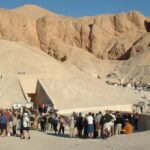
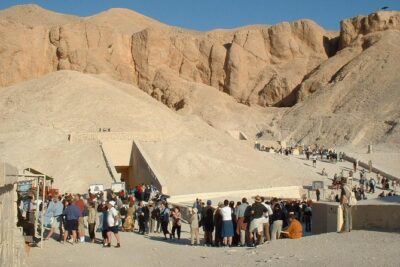
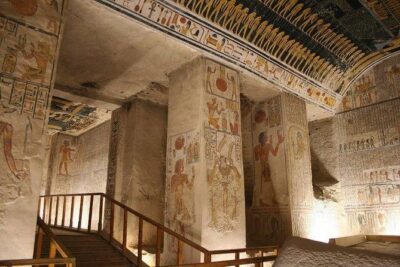
The day’s Western highlight begins at the Valley of the Kings, the royal burial ground for pharaohs. You get about 2 hours here, and the admission ticket is included.
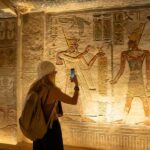
This stop is all about tombs and wall art. The key thing to understand before you go in is that conditions inside are usually tight and dim, so your comfort matters. Wear shoes you can walk in easily, and if you want photos, plan to keep your camera ready but be mindful that space can feel constrained.
Why this stop is worth time on a first Luxor trip:
- You see royal tombs with intricate carvings and afterlife-focused scenes.
- You get a framework for understanding the rest of the West Bank sites, especially Hatshepsut at Deir el-Bahari.
- It is one of the most famous places in Egypt, and the scale of what the site represents hits fast once you are there.
A practical tip: use your guide early. Ask what to look for in the tomb imagery so you can “read” what you are seeing instead of just scrolling through corridors with your phone.
West bank tombs, one by one
Deir el-Bahari and Hatshepsut: terraces, power, and a beard made for politics
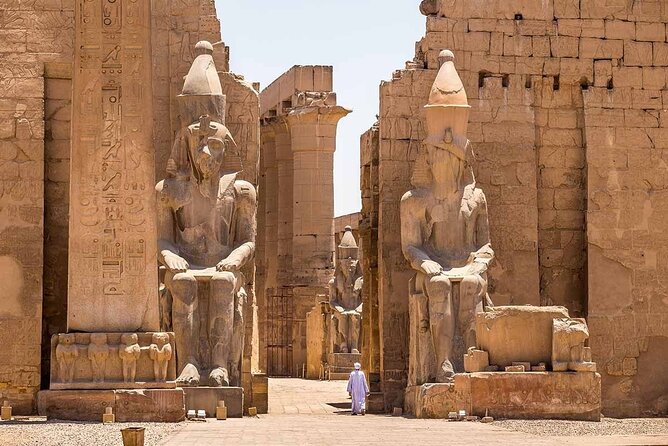
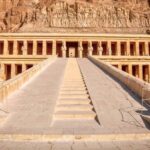
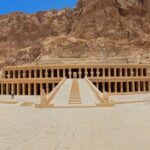
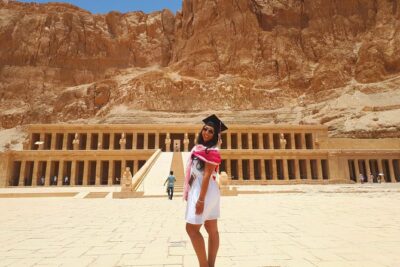
Next up is Temple of Hatshepsut at Deir el-Bahari, near the Valley of the Kings. You get about 1 hour 30 minutes, with admission included.
This is one of those places where the architecture helps you tell the story. The terraced layout makes the temple feel like a staged setting for ceremony and authority. It also matches the way Hatshepsut ruled.
Here’s the context your guide will likely emphasize:
- Hatshepsut ruled around 1507 to 1458 BCE as the fifth pharaoh of Egypt’s Eighteenth Dynasty.
- She was one of the few female pharaohs in recorded Egyptian history.
- She often portrayed herself in a traditionally male role, including wearing male clothing and a false beard to solidify authority in a male-dominated system.
- After her death, Thutmose III tried to erase her legacy, likely because her rule was nontraditional.
That background changes how you look at the temple. Instead of seeing carvings as decoration only, you start seeing them as political messages, built into stone.
A consideration: terraces mean steps. If you have knee issues, plan your pace and take breaks when you need them. The good news is that the visit length is long enough to slow down a bit.
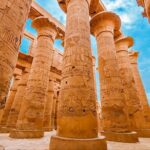
Karnak Temple: Amun-Ra, Mut, and Khonsu, plus 2,000 years of additions
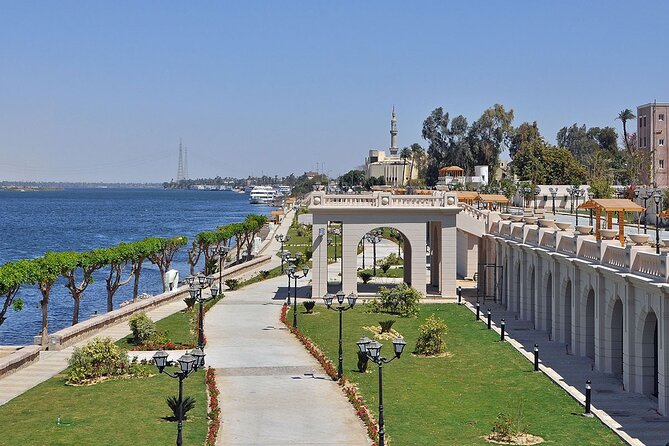
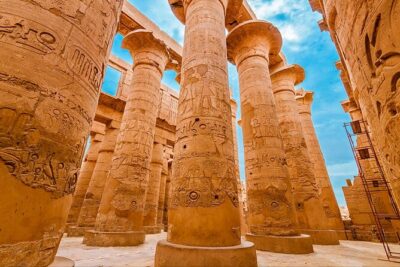
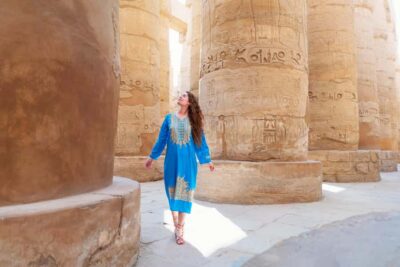
Then it is off to Karnak Temple, one of the largest religious complexes in ancient Egypt. Your time here is about 2 hours, with admission included.
Karnak is dedicated to the Theban triad:
- Amun-Ra
- Mut
- Khonsu
One detail that matters for your expectations: Karnak was built and expanded over roughly 2,000 years, starting around the Middle Kingdom period (about 2000 BCE) and continuing into the Ptolemaic period. Each pharaoh added something, so the complex feels like layers of ambition stacked over centuries.
Karnak’s “big” fact is also a useful planning tool: it is about 80 hectares (around 200 acres). That size is why time is precious. You will not see every corner in one day, so you want a guide who can point you to the most meaningful areas first.
In practice, the best way to enjoy Karnak is to pick a couple of “anchors” and let the guide fill in the rest. Ask about the triad, the idea of a temple complex as a living religious center, and why additions by different rulers still fit together as one system.
Colossi of Memnon: the short stop that gives you scale
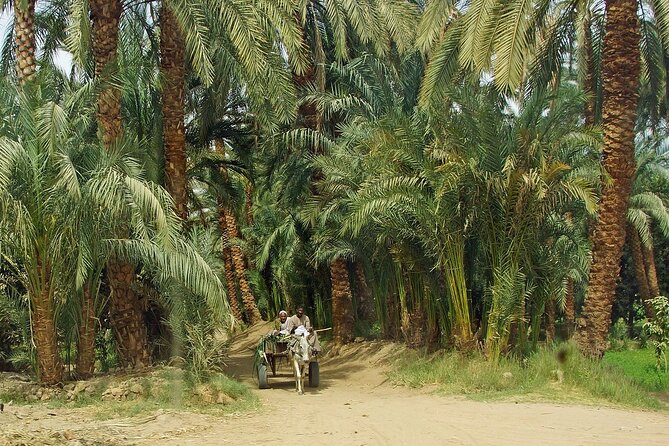
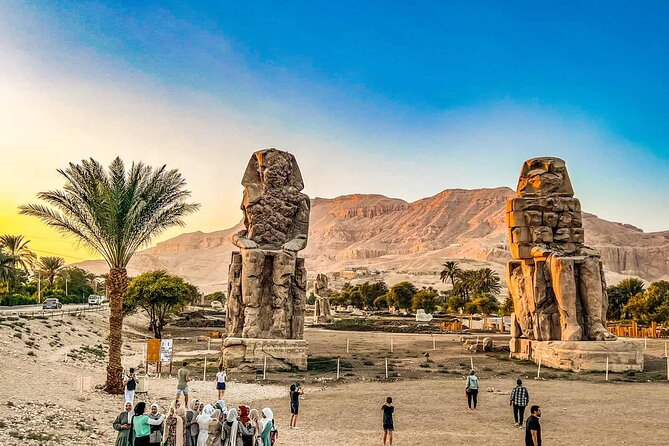
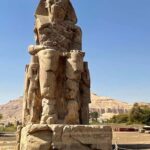
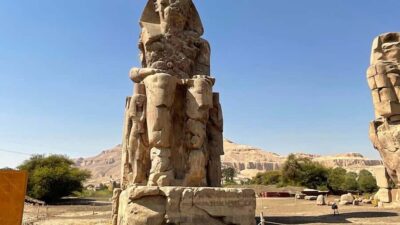
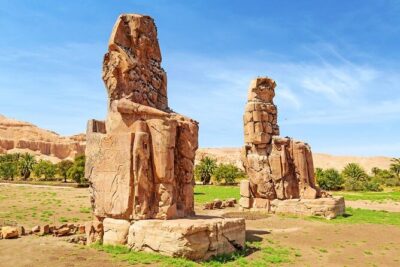
The Colossi of Memnon are a quick hit, about 20 minutes, and admission is free. These are two colossal stone statues that once guarded the entrance to the mortuary temple of Amenhotep III.
Even in a short visit, the statues do a good job of reminding you how big royal projects were. They are not “busy” like some other stops, so you can take your time with photos and with the sheer scale.
Because the stop is short, I treat it like a palate cleanser. You go from massive tomb symbolism to a quick look at monumental stone, then you move on to Luxor Temple to wrap the day on the East Bank.
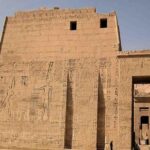
Luxor Temple on the east bank: why Greek, Roman, Christian, and Islamic layers matter
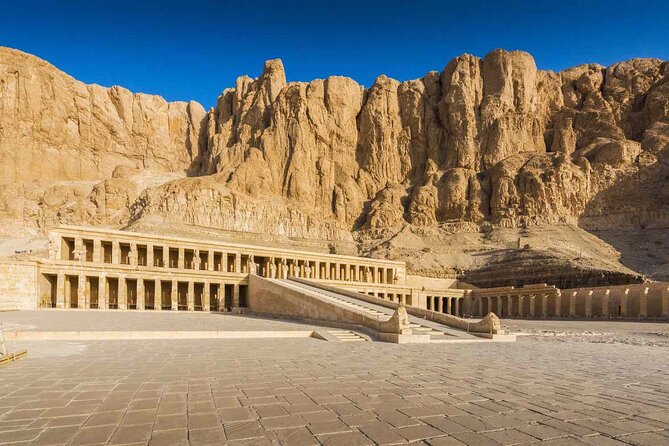
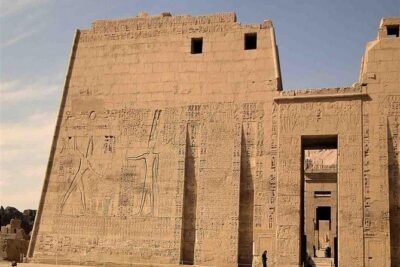
You finish at Luxor Temple on the East Bank, about 1 hour, with admission included.
Luxor Temple is known as one of the most well-preserved temples of ancient Egypt, but here is what makes it especially interesting: it was used and modified during Greek, Roman, Christian, and Islamic periods. That means the site is not just ancient. It is a place that stayed meaningful across long eras.
This is why the final stop can feel more human than expected. You are still surrounded by towering Egyptian stone, but you are also seeing evidence of changing cultures reusing a sacred space. It helps you understand that “heritage” is not frozen in time.
If you want a simple approach for your last hour: ask your guide what parts are most clearly tied to the ancient Egyptian phases, and then what evidence suggests later reuse. That way, you are not just looking at a beautiful temple, you are tracking how people kept returning to it.
Lunch, water, and pacing that actually works
This tour includes lunch and bottled water, which is a big deal on a 6 to 8 hour schedule in Luxor. It reduces the most common risk on temple days, which is turning hungry and cranky while you are trying to keep up with the group.
The air-conditioned vehicle also helps with pacing. Even with short walks between sites, heat and sun can drain your energy fast. A good guide will also help you plan photo breaks so you are not standing around waiting, but it is still smart to bring sunscreen and a hat.
One more small but useful mindset: treat each stop like a chapter, not a checklist. Valley of the Kings is about kings and afterlife beliefs. Deir el-Bahari is about a ruler projecting authority. Karnak is about state religion over centuries. Luxor Temple is about continuity, reuse, and layered meaning.
Who should book this Luxor day tour
This is a strong fit if:
- You want the key Luxor icons in one day without complex planning
- You like guided context, not just walking in silence
- You appreciate both West Bank tomb culture and East Bank temple complexes
- You value a tour that keeps tickets, lunch, and entry fees in the package
It may be less ideal if:
- You need lots of unstructured time to roam independently at each site
- You struggle with steps and extended walking during hot weather
- You are the type who wants deep museum-level reading at multiple stops in a single day
If you are the photo-and-questions type, you are likely to enjoy it. Past feedback patterns emphasize that guides like Mo, Mahmoud, and others tend to take time to explain and answer questions patiently, and that there is room for pictures.
Optional add-ons you might be able to arrange
The core schedule is focused on major monuments, but some guides have been known to help with small nearby requests when time allows, like a spice experience, a jewelry stop, or a museum visit. That is not guaranteed as a fixed part of every day, so keep it as a “ask and see” idea rather than an expectation.
Should you book this tour or keep looking?
If your goal is to hit Luxor’s biggest highlights efficiently, I think this tour is a very reasonable choice. The value case is simple: you get multiple major sites, you get entry fees included, and you get lunch and water while someone else handles transport.
I would book it if you like structure and want a guide’s storytelling, especially for Hatshepsut and Karnak, where context makes the stone come alive. I would also choose it if you are working with limited time in Luxor and still want the full West Bank and East Bank sweep.
If you are the type who wants a slow, detailed day with lots of optional detours, you might consider a longer, more site-by-site plan. But for a first Luxor taste with solid value, this one is hard to beat.
FAQ
What is the duration of the Luxor full day tour?
The tour runs about 6 to 8 hours.
What sites are included in this day tour?
You will visit the Valley of the Kings, Temple of Hatshepsut (Deir el-Bahari), Karnak Temple, the Colossi of Memnon, and Luxor Temple.
Are entrance fees included?
Yes. Entry fees to the Valley of the Kings, Hatshepsut Temple, Karnak Temple, and Luxor Temple are included. The Colossi of Memnon stop is listed as admission free.
Is lunch and water included?
Yes. Lunch and bottled water are included.
Where does the tour start?
The meeting point listed is Sofitel Winter Palace Luxor, 17 Cornish El Nile Street, Luxor.
Is the tour private?
Yes. It is described as a private tour/activity, meaning only your group participates.
Is there free cancellation?
Yes. You can cancel up to 24 hours in advance for a full refund, based on the experience local time.
Karnak and the East Bank
The West Bank, Tomb by Tomb
Down Into the Kings Valley

More of Luxor from our review pile
- Hot Air Balloon Ride and Tour to Valley of Kings Luxor- Special Offer
★ 5.0 · 15 reviews - 4-Hours tour West Luxor bank :Hatshepsut Temple & Valley of the King with Lunch
★ 5.0 · 15 reviews - Tour From Luxor to Aswan Edfu, Kom Ombo, Philae and High Dam
★ 5.0 · 15 reviews - Private Half-day Dendera Temple
★ 5.0 · 15 reviews - Luxor Airport Departure: Convenient Private Hotel Transfer
★ 5.0 · 15 reviews - Dahabiya Nile Cruise From Luxor To Aswan 4 Nights 5 Days
★ 4.5 · 15 reviews
Luxor West Bank Temples & Tombs, compared.
 ★ 5.0Luxor Day Tour: Valley of Kings & Queens & Hatchepsut TemplesFrom $891,496 reviews
 ★ 5.0Full Day Tour to East and West Banks of LuxorFrom $151,449 reviews
 ★ 4.4Valley of the Kings and Hatshepsut Temple Day TourFrom $501,404 reviews
 ★ 5.0Valley of Kings, Hatchepsut Temple ,Karnak & Luxor-DayTourFrom $95735 reviews
 ★ 5.0Full Day Tour of Luxor West Bank Temples and Tombs (Private)From $20722 reviews
 ★ 5.0Private Full-Day Luxor Highlights East and West BanksFrom $65663 reviews
 ★ 4.5Guided Tour to East or West Banks with LunchFrom $64604 reviews
 ★ 5.0Luxor Private Full-Day Tour: Discover the East and West Banks of the NileFrom $90545 reviews