
REVIEW · CAMEL & HORSE RIDES AT THE PYRAMIDS
First impression of Luxor-Explore secrets of Luxor by horse carriage
Horse wheels, ancient sights, and zero bargaining. In Luxor, this half-day ride uses a horse carriage plus an Egyptologist guide so you focus on seeing, not negotiating, while you learn what the latest archaeology is telling us about ancient Thebes. I especially like how the guide keeps each stop tied to real, visible details.
My favorite part is the way the route builds in great photo moments as you move along the Nile, then lands you right inside the big monuments people come to Luxor for. Karnak’s scale and Luxor Temple’s famous colonnade land hard in person, even when you only have a few hours. One caution: Karnak and Luxor Temple entrance tickets cost extra, and since the transport is horses, you’ll want to stay alert about animal welfare and comfort on hot days.
In This Review
- Key things to know before you go
- Price and logistics: what $30 really covers
- Meeting at Luxor Museum and getting set for the East Bank
- Karnak Temple with an Egyptologist eye
- Luxor Temple and the “First Occasion” Amun rebirth theme
- Avenue of Sphinxes: the road that resurfaced in modern times
- Abu Haggag Mosque inside an ancient temple
- The horse carriage ride: comfort, heat, and photo momentum
- Who this tour suits best
- Should you book this horse carriage Luxor day?
- FAQ
- How long is Luxor Explore secrets of Luxor by horse carriage?
- Where is the meeting point?
- What is included in the $30 per person price?
- Are Karnak and Luxor Temple entrance tickets included?
- Which sites are visited during the tour?
- Is there a horse carriage for transportation during the tour?
- Do I get a mobile ticket and confirmation?
- Can I cancel for a full refund?
Key things to know before you go
- Horse carriage, not street haggling: You get transport by carriage and an arranged pace with your guide.
- Egyptologist-led stops, not just sightseeing: Your guide shares context, including recent archaeological finds.
- Temples plus a lesser-known finale: You pair the big temples with the Abu Haggag Mosque and the Avenue of Sphinxes.
- Entrance fees are separate: Karnak and Luxor Temple tickets are not included (listed as 200 EGP, about $12 total).
- A planned photo route: Travel along the Nile gives frequent chances for shots without racing across town.
- Small-group feel within a larger cap: The tour lists a maximum of 50 people.
Trying to choose? These Luxor trips kept surfacing in our notes.
- Hurghada: Luxor Valley of the Kings & Tutankhamun Tomb Trip★ 4.7 · 13,208 reviews
- Luxor Day Trip from Hurghada Small Group & Tutankhamun Tomb★ 4.8 · 5,366 reviews
- Hot Air Balloon Ride in Luxor Egypt with Transfers Included★ 5.0 · 4,319 reviews
- Luxor: Shared Full-Day Tour to Luxor West and East Banks★ 4.5 · 1,812 reviews
Price and logistics: what $30 really covers
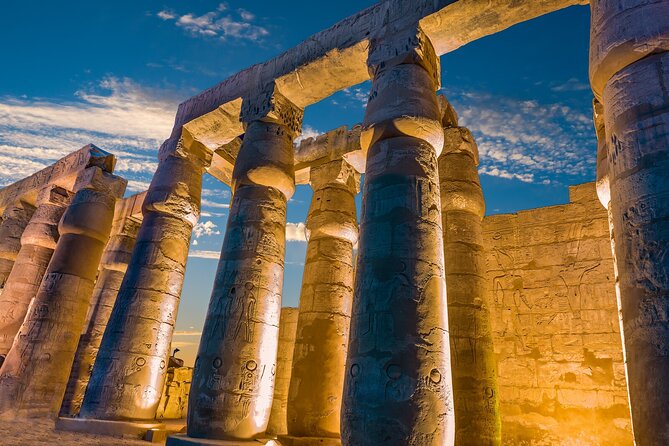
This experience runs for about 4 hours on Luxor’s East Bank, starting at Luxor Museum on the Kornish Al Nile. The meeting point is in front of the museum, where the tour leader holds a red flag, which is genuinely helpful in a place where signage can be confusing.
The price is $30 per person, and what you get for that is the core value: an Egyptologist guide plus transport by horse carriage. You are also getting a mobile ticket, which can save time when you’re joining a group.
Two costs matter for your budget. First, Karnak and Luxor Temple entrance tickets are not included. The listed total is 200 EGP (about $12 total). Second, while the tour visits multiple sites, only Karnak and Luxor require paid entry tickets based on what’s specified. The Avenue of Sphinxes and the Abu Haggag Mosque stops are free on the tour plan.
One more practical thing: this is a group format with a maximum size of 50. That can be a sweet spot in Luxor, where you want structure but still want room to move and take photos. If you hate crowds, go in expecting a group rhythm, not a private pace.
Meeting at Luxor Museum and getting set for the East Bank
The day starts with a quick meet-up in front of Luxor Museum, right on the Nile promenade. The plan is simple: you gather, you match the red-flag tour leader, then you hop into the horse carriage for the ride to the first major site.
Stop one is listed as a short moment at the museum area, around 10 minutes. That’s not enough time to do much beyond meeting your group and getting oriented, so treat it as a starting line, not a sightseeing block.
What I like about this structure is that it keeps the day from feeling like you’re standing around. Once you roll toward the temples, the pace stays focused.
Karnak Temple with an Egyptologist eye
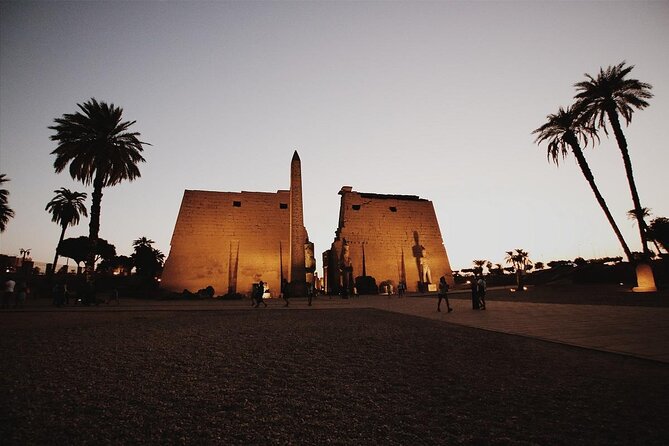
Karnak is the kind of place that makes your brain work differently. Construction at the complex started around 4,000 years ago and continued until the Romans controlled Egypt about 2,000 years ago, so you’re not just looking at one era. You’re seeing layers of rulers leaving their marks.
Your guide’s role here is key. With Karnak, it’s easy to get lost in walls, columns, and names. A good Egyptologist guide helps you connect what you see to what it meant, including the idea that Karnak was the largest and most important religious complex in ancient Egypt at its peak.
Here are the big anchors you’ll hear about:
- Temple of Amun-Ra: described as the most significant structure, associated with Amun and his family (Mut and Khonsu).
- Hypostyle Hall: famous for the vast hall built during the reign of Seti I.
You also get the “why it mattered” story. After Memphis became the new dynastic capital, Luxor’s temples became less important, which helps explain why different parts of the site rose and changed over time.
The stop length is about 1 hour, and that’s a fair amount if you’re prioritizing the main areas. If you want to spend longer or go deep into every doorway and inscription, this won’t replace a longer Karnak plan. But for a first-time day, it gives you the big picture fast.
One drawback to keep in mind: Karnak entrance tickets are not included, so you’ll want to budget that extra fee and plan for the time it takes to handle entry.
Luxor Temple and the “First Occasion” Amun rebirth theme

After Karnak, the day moves to Luxor Temple, where construction happened over hundreds of years. The pharaohs named in your tour plan include Amenhotep III, Ramses II, Tutankhamun, and others, which tells you this is not a single-build monument. It’s a palimpsest of royal priorities.
Luxor Temple is described as the largest and most significant religious center in ancient Egypt, tied to a concept called the First Occasion. In this story, Amun experienced a kind of rebirth during an annually reenacted coronation ceremony. Even if you don’t remember every ancient term, the point lands: this place wasn’t just impressive, it was ceremonial theater in stone.
Expect to focus on major surviving parts:
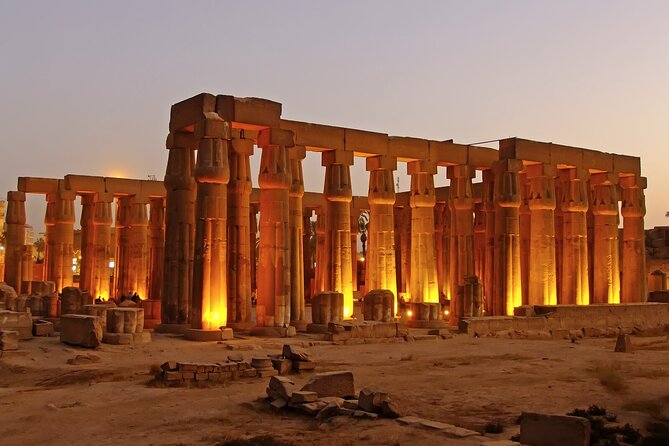
- The Great Colonnade Hall, about 61 meters long, with 28 columns that are around 21 feet high.
- Decoration associated with Tutankhamun around 1330 B.C.
- Many sidewalls were torn down later and recycled for building materials, which is a useful reminder that ancient sites were not frozen in time.
This stop is also about 1 hour, and it works well after Karnak. Karnak can feel like a cathedral of detail. Luxor Temple feels more walkable and more aligned to the human scale, especially around the colonnade area.
Like Karnak, Luxor Temple entrance is not included, so this is another spot where your “$30 tour” becomes “$30 plus tickets.” Still, if you’re okay with that added line item, it’s a good value for a structured half-day.
Avenue of Sphinxes: the road that resurfaced in modern times
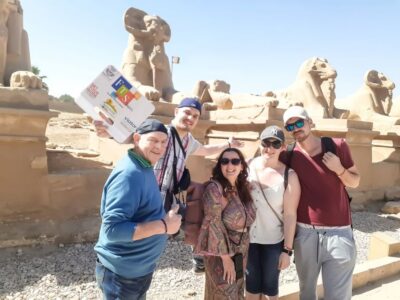
One of the smartest parts of this itinerary is that it gives you a non-obvious add-on: the Avenue of Sphinxes. It’s a covered-up, sand-buried story that stretches into modern reopening.
The avenue connects to the Luxor Temple area, with construction beginning in the New Kingdom era and later completion during the 30th Dynasty under Nectanebo I (380 to 362 B.C.). Over centuries, the road was buried under layers of sand.
Then comes the discovery timeline, which your guide will likely frame clearly:
- In 1949, Egyptian archaeologist Mohammed Zakaria Ghoneim discovered eight statues near Luxor Temple.
- Later finds include 17 more figures uncovered from 1958 to 1961.
- And 55 unearthed from 1961 to 1964, within a 250 meter perimeter.
The avenue reopened in a major way on 25 November 2021. That matters because you’re not seeing a forgotten, chopped-off segment. You’re seeing a reinstated approach to how this road once guided processions.
You get about 30 minutes here, which is enough time to take photos and walk the key section without turning it into a long detour.
Abu Haggag Mosque inside an ancient temple
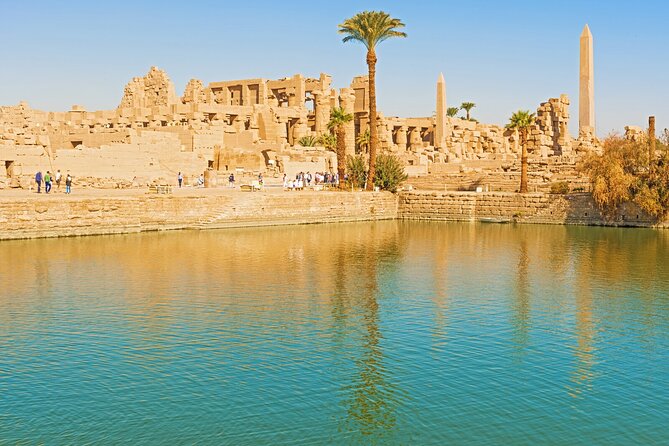
The last stop is Abu Haggag Mosque, integrated into the structure of Luxor Temple. This is one of those places where the everyday and the ancient overlap in a way that feels real, not staged.
The tour plan notes that it’s one of the oldest continuously used temple-mosque sites in the world, dating back to the reign of Pharaoh Amenhotep III in the 14th century B.C. That’s a wild fact, and it’s exactly why I think this stop belongs at the end of a tour like this. You finish with a site that still has living use.
The stop is short, around 10 minutes, so don’t expect a deep, slow exploration. Instead, treat it like a visual punctuation mark, a chance to see how the temple space changed roles while keeping a connection to place.
The horse carriage ride: comfort, heat, and photo momentum
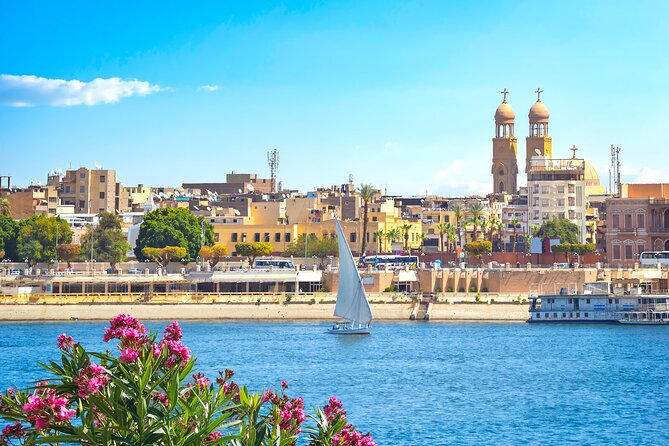
This tour is built around the idea that horse carriage travel is more atmospheric than walking, and that’s true in Luxor. You get a moving viewpoint, and the Nile route creates natural pauses for photos without the stress of bargaining with drivers.
But let’s talk honestly about comfort. The itinerary is around 4 hours total, and Luxor heat can be real. If you go during a hot part of the day, plan for it. Wear breathable clothes, bring sun protection if you have it, and take your cues from your guide if they seem to slow or pause.
There’s also the issue of animal welfare. One concern that has been raised is about the condition of a horse on a hot day, including an incident where the horse could not get up on its own. The provider did respond saying they would investigate and that animal welfare matters. Because you’re trusting animals with your transport, this is worth taking seriously. If you notice something off when you arrive, speak up calmly and let your guide handle it, or reconsider whether the carriage part is for you.
Who this tour suits best
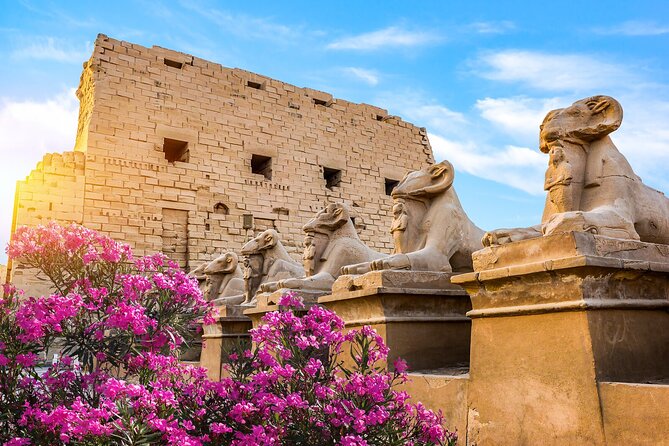
This is a good fit if:
- You want a structured introduction to the East Bank in one half-day.
- You like history explained in plain language by an Egyptologist guide.
- You want a budget-friendly way to see Karnak and Luxor Temple without building a complex DIY route.
- You enjoy photo-friendly travel moments along the Nile.
If you want a slower pace, extra time inside museums, or a go-anywhere approach with lots of free wandering, you might find this a bit tight. The temple stops are about 1 hour each, which is great for highlights, not deep study.
If animal welfare concerns are a deal-breaker for you, treat the carriage element as the deciding factor.
Should you book this horse carriage Luxor day?
I’d book it if you’re aiming for a first Luxor day that gives you the big hits, plus a couple of smart add-ons, and you’re okay paying the temple entrance tickets separately. The value comes from the combination of guide expertise and organized transport for a tight timeline.
You should think twice if:
- You’re sensitive to heat and want more resting time.
- You strongly prefer not to ride in animal-powered transport.
- You don’t want any additional on-the-spot costs, since Karnak and Luxor entry are not included.
If you’re the type who likes getting your bearings fast, this tour can do that. And if you end up with Ababoub as your host, one excellent example of how the day can feel well-run is exactly the kind of difference a standout guide makes.
FAQ
How long is Luxor Explore secrets of Luxor by horse carriage?
It runs for about 4 hours.
Where is the meeting point?
You meet in front of Luxor Museum on the Kornish Al Nile in Luxor City.
What is included in the $30 per person price?
The tour includes an Egyptologist tour guide and transportation by horse carriage.
Are Karnak and Luxor Temple entrance tickets included?
No. Karnak and Luxor Temple entrance tickets cost extra, listed as 200 EGP (about $12 total).
Which sites are visited during the tour?
You’ll visit Karnak Temple, Luxor Temple, the Avenue of Sphinxes, and Abu Haggag Mosque.
Is there a horse carriage for transportation during the tour?
Yes, transportation is by horse carriage.
Do I get a mobile ticket and confirmation?
Yes, it includes a mobile ticket, and confirmation is received at the time of booking.
Can I cancel for a full refund?
Yes. Free cancellation is available up to 24 hours before the experience start time for a full refund. If you cancel less than 24 hours before, it is not refunded.
More of Luxor from our review pile
- Private Tour Nile Felucca Ride at Sunset in Luxor
★ 5.0 · 26 reviews - Private Full day East and West Bank, Luxor
★ 5.0 · 26 reviews - Luxor Day Tour: Kings Valley & Karnak & Luxor & Hatshepsut Temple
★ 5.0 · 26 reviews - Full-Day East and West Luxor Private Tour
★ 4.5 · 26 reviews - Day Trip to Edfu & Kom Ombo temples from Luxor and drop off in Aswan or Luxor
★ 5.0 · 26 reviews - 5 Days 4 Nights Nile Cruise Tour
★ 5.0 · 27 reviews
Camel & Horse Rides at the Pyramids, compared.
 ★ 4.8Half Day Pyramids Tour by Camel or Horse CarriageFrom $72168 reviews
 ★ 5.0Day Trip to Nubian Village with Camel Tour from AswanFrom $2080 reviews
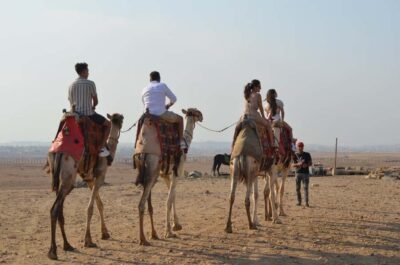 ★ 4.0Camel Ride Around The Pyramids with Hotel PickupFrom $4073 reviews
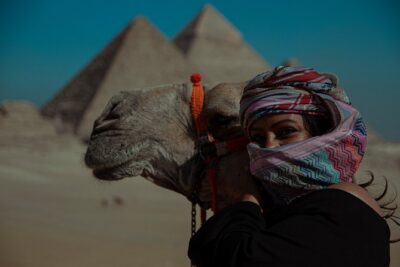 ★ 5.0Private Half-Day Tour: Giza Pyramids and Sphinx by CamelFrom $870 reviews
 ★ 5.0Top Attractions Tour in Giza Pyramids And Horse carriage With panoramic viewFrom $5554 reviews
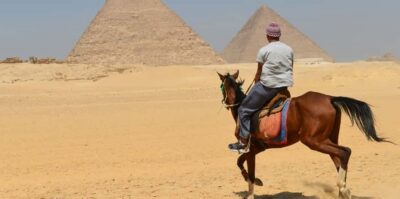 ★ 3.9Arabian Horse Tour Around the Giza PyramidsFrom $2053 reviews
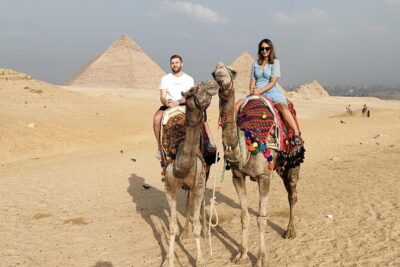 ★ 4.5Camel Ride around Giza Pyramids Sunset or Sunrise or any timeFrom $1038 reviews
 ★ 5.0Unusual Desert Safari Tour Around Giza Pyramids During Sunset With Barbecue.From $10031 reviews
The lists this one sits on