
REVIEW · GIZA PYRAMIDS & SPHINX TOURS
Private Half-Day Tour: Giza Pyramids and Sphinx by Camel
Pyramids, sphinx, camel, in one clean run. This private half-day tour is built for seeing the main monuments without the hassle of arranging transport, plus you get free hotel pickup and drop-off. I also like that a camel ride at Giza is included, so you can focus on the views and not hunt for extra add-ons right away.
The one thing to watch is the retail side of the day. You’ll visit Paradise Perfumes Palace & Spa, and the tour info also mentions papyrus and a flower cotton store, so set a spending limit before you arrive, and expect tipping is not included.
If you get a guide like Ms. Heeba or Hazad, the storytelling can be strong, and you’ll likely be steered toward good photo moments and the key details at each stop.
In This Review
- Key points before you go
- Why this private half-day format fits Giza
- Pickup, water, and the practical logistics that make a difference
- Camel ride at Giza, and how to time it for photos
- Pyramids of Giza Necropolis, where the “main act” begins
- Great Pyramid of Cheops (Khufu): what the valley temple tells you
- Khafre’s Pyramid: the Sphinx connection becomes real
- Menkaure’s Pyramid: the smaller one that still deserves attention
- Great Sphinx: your face-to-face moment, planned for time
- Panoramic view and the wider desert picture
- Paradise Perfume Palace & Spa and the shop pressure reality check
- Entry fees: what’s included, what can vary
- Price and value: how $8 can still make sense
- Guides and the small moments that make photos better
- Who this tour is best for
- Should you book this Giza Pyramids and Sphinx camel tour?
- FAQ
- How long is the tour?
- Does the tour include a camel ride?
- What’s included in the price?
- What is not included?
- Where do you stop besides the pyramids and Sphinx?
- Is cancellation free?
Key points before you go
- Free hotel pickup and drop-off in Cairo or Giza, which saves real time in a busy city
- Camel ride is included for about 30 minutes around Giza
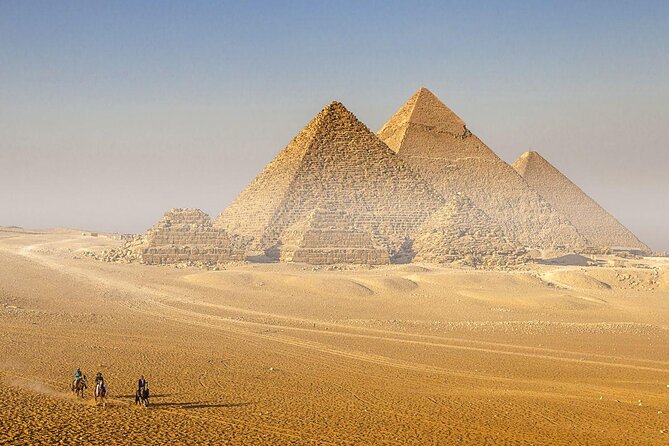
- Sphinx plus all three main pyramids in a tight half-day plan, including a panoramic viewpoints stop
- Admission tickets are included for the main basic areas, but entry coverage can vary by chosen option
- There is a perfumes stop (Paradise Perfumes Palace & Spa), plus other shop mentions like papyrus
- Private means your group only, so you control the pace more than on big group buses
Ways onto the Giza plateau, compared
- Cairo: Pyramids & Great Sphinx Private Tour with Camel Ride★ 4.9 · 6,335 reviews
- Tour to Giza Pyramids and The Egyptian Museum★ 5.0 · 6,016 reviews
- VIP All inclusive Best of the best Giza Pyramids,Sakkara,Memphis★ 5.0 · 3,164 reviews
- From Cairo: Pyramids of Giza, Sphinx, Saqqara & Memphis Tour★ 4.7 · 3,110 reviews
Why this private half-day format fits Giza
Giza is one of those places where time matters. You can spend a full day here and still feel rushed. This tour tries to solve that by keeping everything tight: pickup, a circuit through the best-known monuments, and then drop-off back to your hotel.
The duration is listed as about 4 to 5 hours. That’s long enough to see the pyramids close up and still sit in the shade, catch sweeping desert views, and take photos without running on empty. It’s also short enough for first-timers who are trying to fit Egypt landmarks around museum visits and long Cairo transit days.
Because it’s private, the guide can also react to your needs. If you want extra time at the Great Pyramid area or you want to move on quickly when it gets crowded, you’re not stuck with the slowest group on the planet.
Pickup, water, and the practical logistics that make a difference
You start with convenient hotel pickup and drop-off, and the tour includes a bottle of water. Those small items matter in Cairo. Heat and traffic make “simple” plans turn into long days fast.
You’ll also have a mobile ticket, which helps reduce paperwork. And the tour notes confirmation at booking, so you should have the essentials sorted before you head out.
One more practical point: this tour operates from Cairo or Giza pickup areas. That’s useful because Cairo hotels vary wildly in distance, and being picked up where you actually sleep can make or break your schedule.
Camel ride at Giza, and how to time it for photos
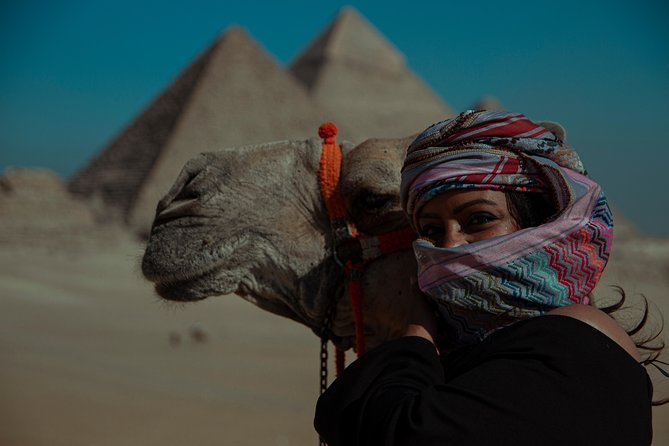
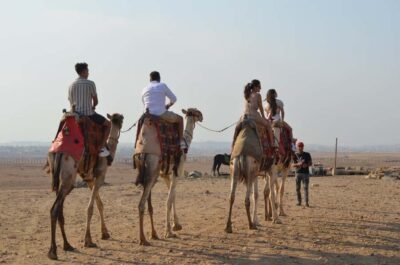
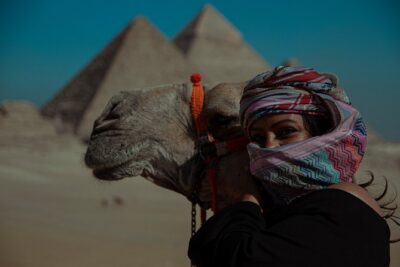
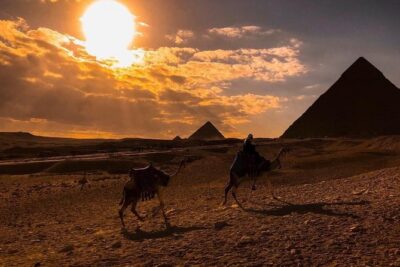
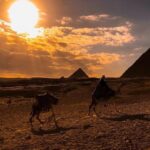
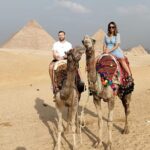
The tour includes a camel ride at Giza and says it is about 30 minutes. That’s a real chunk of time, not a quick hop on and off for a souvenir snapshot.
When you ride, plan your camera workflow. Pyramids and the Sphinx area offer big sightlines, but your focus will be split between balance, the view, and photos. I’d treat it like a photo session with a ride inside it, not the other way around. If you want clean shots, bring your phone or camera straps in a way that won’t tangle.
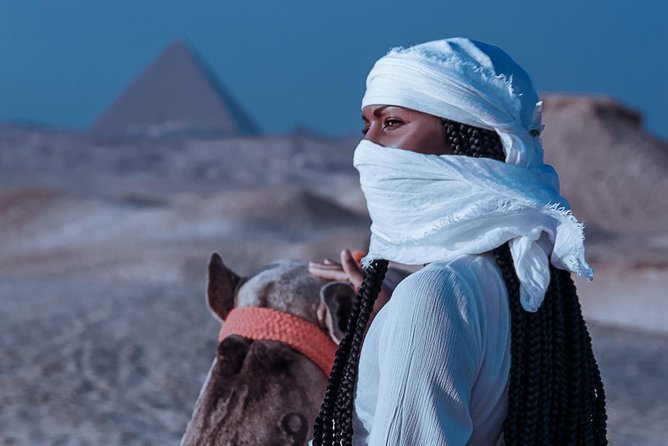
Also, dress for the sun and dust. You’ll be outdoors for most of the day, walking between monuments, and the desert air can get dry. If you’re sensitive to heat, a light cover for your shoulders can help, even if you’re tempted to go minimal.
Pyramids of Giza Necropolis, where the “main act” begins
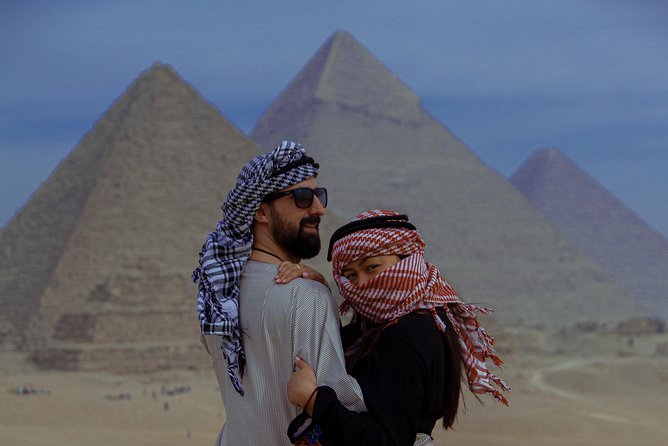
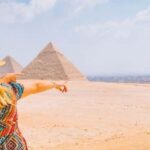
Your first real stop is the Pyramids of Giza complex, often called the Giza Necropolis. The tour puts a full 1 hour 30 minutes here, and that time is important because this is where you get oriented.
This plateau is part of the UNESCO World Heritage area tied to Memphis and its Necropolis. It’s also part of the Western Desert edge of the Nile Valley, and the plateau sits about 60 meters above sea level. Translation: it can feel exposed in midday sun, even though the stone is cool.
What to look for during your time here:
- The layout of the three main pyramids and how they dominate their surroundings
- How the Great Pyramid of Giza is positioned compared with the others
- The way the site feels like a planned landscape, not a random pile of monuments
This is also where guides can connect the dots between the Fourth Dynasty and what you’re seeing now. The monument story is partly in the stone and partly in the symbolism, and a good guide will keep it clear without turning it into a lecture that kills your legs.
Saddle time at the pyramids, other operators
Great Pyramid of Cheops (Khufu): what the valley temple tells you
Next comes a stop centered on the Great Pyramid of Cheops, also called Khufu. You get about 30 minutes here.
One detail included in the tour description is the valley temple, which is now buried under the village of Nazlet el-Samman. That’s a useful reminder of something you can easily miss: ancient sites didn’t freeze in time. People built on top of them, and archaeology often has to work through layers.
Even if you can’t see everything that once existed, you can still stand near the pyramid and understand why Khufu’s complex mattered. The tour’s focus is on getting you face-to-face with the landmark while grounding you with context you can actually use.
If you’re visiting from Cairo and you’ve been looking at pyramids in photos for years, this is the moment where your brain finally has to recalibrate. Up close, the scale is the point. Any “I know this already” feeling usually disappears in the first few minutes.
Khafre’s Pyramid: the Sphinx connection becomes real
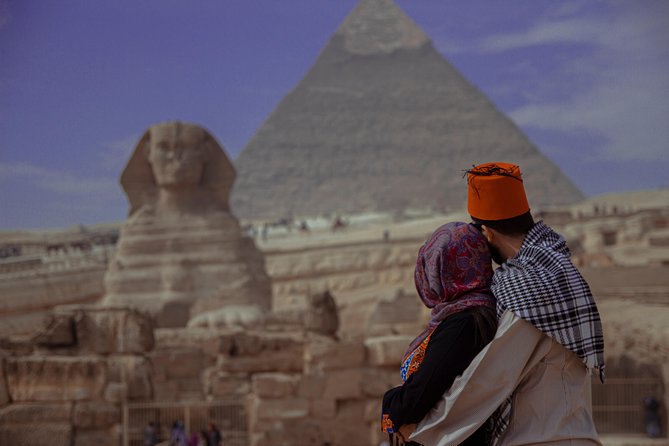
You then move to Khafre’s Pyramid area, again about 30 minutes. This is where the tour’s logic starts to click.
The description highlights that Khafre’s complex includes a valley temple, a mortuary temple, and the causeway linking structures. It also mentions statues found in a well in the temple area during Mariette’s work back in 1860.
That might sound like distant academic trivia, but it matters because it signals something: you’re not looking at one monument in isolation. You’re looking at a connected system, where the king, the temples, and the movement between spaces all belong together.
And importantly for your day, Khafre’s Pyramid is tied to the Great Sphinx. The tour notes that the common Egyptology consensus is that the Sphinx’s head is that of Khafre. When you later face the Sphinx, you can connect the story rather than treating it like a separate stop.
Menkaure’s Pyramid: the smaller one that still deserves attention
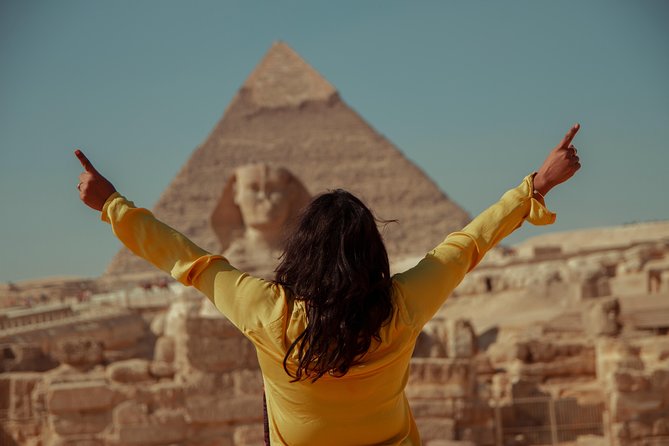
Menkaure’s Pyramid gets a 30-minute stop. The description focuses on its complex components, like the valley temple, causeway, mortuary temple, and the king’s pyramid.
Menkaure’s area can feel like the “third stop, moving along” part of the day. But that’s exactly where you should slow down for a few minutes if your legs allow it. In many first-time experiences, people rush the third pyramid because they’ve already seen two giants. The Menkaure stop is a chance to notice differences in the complex and how each ruler shaped their monument planning.
If your guide is good, this is when you’ll get small comparisons that make your photos more meaningful. You’ll be able to label what you’re seeing, even when the angles are unfamiliar.
Great Sphinx: your face-to-face moment, planned for time
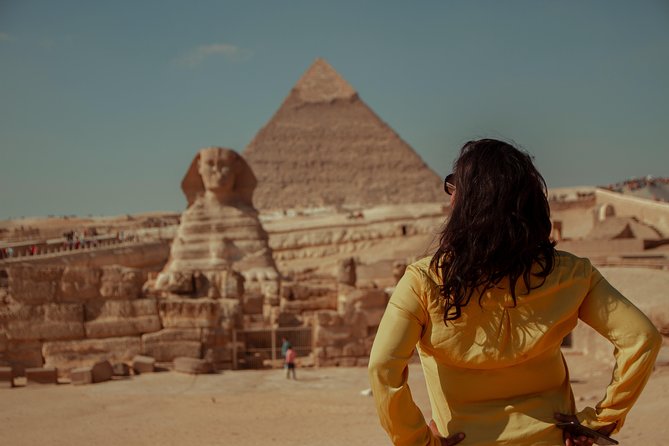
Then you reach the Great Sphinx, with about 30 minutes. This is the emotional centerpiece for most people.
The tour’s notes include the prevailing view that the head belongs to Khafre. So when you stand there, you’re not just staring at a famous face, you’re placing it in a broader political and architectural context.
What I find most useful is to treat the Sphinx like a viewpoint too. The body, the surrounding elements, and the way people move around it all affect your photos. If it’s crowded, aim for a steady window rather than grabbing the first angle. Your best shots often come when you wait for the crowd rhythm to shift.
This stop also benefits from being private. You’re less likely to feel like you’re being herded like luggage.
Panoramic view and the wider desert picture
After you’ve seen the key monuments, the tour includes a panoramic view stop for about 30 minutes. The highlight description specifically mentions sweeping views toward Abusir and the Sakkara necropolis.
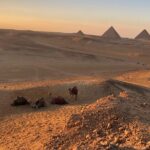
This is the moment to take a breath and switch from “wow up close” to “wow because it’s all connected.” From a viewpoint, you can grasp why the pyramids sit where they do and how the desert horizon frames the monuments.
If you only visited the pyramids from ground level, you’d miss a big part of the experience, which is the geography. This stop helps your photos look more than just “big rocks.” It gives you the sense of place.
Paradise Perfume Palace & Spa and the shop pressure reality check
The day ends with Paradise Perfumes Palace & Spa, about 20 minutes. The tour info says admission is free for this stop.
This is where you need to manage expectations. You came for pyramids and the Sphinx, not a shopping showroom. But a short stop like this can be a brief pause if you treat it as optional in your mind, not as part of the core monument experience.
The additional info also mentions Key of Life Papyrus and a flower cotton store. Since those are retail items, they can become a cost center if you feel pressured to buy. I’d recommend you decide in advance what you’re willing to spend, if anything, and keep your wallet closed until you’re ready.
A practical strategy: take a quick look, ask any questions you genuinely care about, then leave when your curiosity is satisfied. Don’t let the “just one more” feeling creep in.
Entry fees: what’s included, what can vary
The tour description says includes free admission to top local attractions, and the stops list admission ticket included for multiple monuments.
At the same time, the additional info adds an important nuance: entry fees include basic area only, and entrance fees may depend on the tour options you choose.
So what should you do? If you want every ticket covered, ask your booking confirmation what exactly is included for the main sites and whether any extra areas require additional payment. If you’re only focused on seeing the main monuments from the standard areas, you’ll likely be fine with what’s included.
This is one of those situations where paying attention to details saves money later. And with something this iconic, the last thing you want is a surprise at the ticket gate.
Price and value: how $8 can still make sense
The price is listed at $8.00 per person. That is low compared to many private sightseeing experiences, especially in a place like Giza where the competition for tourist dollars is intense.
So where does the value come from? From efficiency. You get hotel pickup and drop-off, a private group arrangement, water, and a camel ride included. The monuments themselves are the main cost drivers, and the tour info says admission tickets are included for the listed basic areas.
The trade-off is that the day includes a perfume shop stop and mentions papyrus and flower cotton retail. That often correlates with how low the headline price stays. You should go in knowing you might encounter sales talk, and you should protect your budget.
If you hate any shopping add-ons, this tour might feel like a compromise. If you’re comfortable with a short retail stop, this can be a smart way to see the classics without paying a premium for logistics.
Guides and the small moments that make photos better
One of the most praised parts of this experience is the guide. Names mentioned include Ms. Heeba and Hazad, and people liked how clearly they explained what they were seeing and how they kept the visit moving at the right speed.
Here’s how to benefit from a good guide, even if your communication style is simple:
- Ask one question at each major stop, not five. You’ll remember the answer more.
- Tell them what you care about most: the Sphinx story, the pyramid layout, or the best photo angles.
- If you want a relaxed pace, say it early. Private touring makes it easier to adjust, but you have to set the tone.
A calm guide also matters for your time. This tour has set stop lengths, so the better the guide, the more you get out of every 30 minutes.
Who this tour is best for
This works well if:
- You want the Giza highlights in one half-day, without planning transport around Cairo traffic
- You like a private structure but still want a clear path through the main sites
- You’re comfortable with short stops that may include shopping elements
It might be less ideal if you:
- Want only monument time with zero retail stops
- Expect every possible entrance area or extended access beyond the basic areas included
If you’re traveling solo, it can also be a good way to avoid the group scramble at the Sphinx. If you’re traveling with family, the half-day format helps you avoid a full-day burnout.
Should you book this Giza Pyramids and Sphinx camel tour?
I’d book it if your goal is straightforward: see the Great Sphinx and the three big pyramids on a sensible schedule, with free pickup and a camel ride included. The private pacing, plus the chance to get clear explanations from guides like Ms. Heeba or Hazad (if assigned), makes it feel more intentional than a basic drop-off tour.
I’d think twice if shopping stops would annoy you, or if you’re the type who hates the idea of tipping on top of a low listed price. In that case, look for a version that clearly limits retail time, or be ready to keep a firm boundary.
If you do book, go in with a simple plan: bring sunscreen, decide what you’ll spend before the perfume stop, and ask your guide for the best photo angles early. Then you’ll get the core payoff, the up-close pyramids and the face-to-face Sphinx moment, without the day dragging on.
FAQ
How long is the tour?
The tour runs about 4 to 5 hours.
Does the tour include a camel ride?
Yes. A camel ride at Giza is always included, and the time listed is about 30 minutes.
What’s included in the price?
The tour includes a bottle of water, hotel pick-up and drop-off, the private tour arrangement, and the camel ride. Admission tickets are listed for the main basic areas, but exact entrance coverage can depend on the chosen tour options.
What is not included?
Tipping is not included. Lunch at a local restaurant is optional. The guide is also marked optional, and any additional entrance fees beyond the basic included areas are not guaranteed.
Where do you stop besides the pyramids and Sphinx?
You’ll visit Paradise Perfumes Palace & Spa for about 20 minutes. The tour information also mentions additional retail items like Key of Life Papyrus and a flower cotton store.
Is cancellation free?
Yes. You can cancel up to 24 hours in advance for a full refund. If you cancel less than 24 hours before the start time, the amount paid is not refunded.
On a Camel at the Pyramids
Giza, A Few More Ways In

More of Cairo from our review pile
- Cairo Layover Tour to Giza Pyramids Egyptian Museum and Khan Khalili Bazaar
★ 5.0 · 25 reviews - Private Luxor Day tour from Cairo by Flight
★ 5.0 · 25 reviews - Private full day tour to Giza Pyramids, Sphinx, Sakkara and Dahshour with guided
★ 5.0 · 25 reviews - Nile Dinner Cruise in Cairo With Belly Dancing and Transfer
★ 5.0 · 25 reviews - Private Giza Pyramids,Sphinx,camel,lunch, 2 tombs,Great Pyramid
★ 5.0 · 25 reviews - All inclusive Giza Pyramids ,Sphinx ,Lunch ,Camel&Inside pyramid
★ 5.0 · 25 reviews
Giza Pyramids & Sphinx Tours, compared.
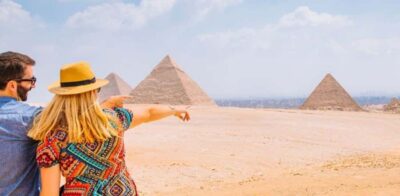 ★ 4.9Pyramids & Great Sphinx Private Tour with Camel RideFrom $486,335 reviews
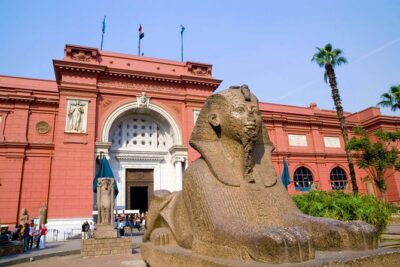 ★ 5.0Tour to Giza Pyramids and The Egyptian MuseumFrom $1556,016 reviews
 ★ 4.7Pyramids of Giza, Sphinx, Saqqara & Memphis TourFrom $903,110 reviews
 ★ 4.6Half-Day Tour to Pyramids of Giza and the SphinxFrom $502,891 reviews
 ★ 4.6Pyramids, Sakkara & Memphis Tour with LunchFrom $602,493 reviews
 ★ 5.0Private ViP all-inclusive Giza Pyramids,Sphinx,Inside PyramidFrom $142,448 reviews
 ★ 4.7Grand Egyptian Museum, Pyramids, Sphinx Tour & LunchFrom $892,282 reviews
 ★ 4.7Cairo Pyramids, Sphinx & Egyptian Museum Day TripFrom $932,271 reviews
The lists this one sits on