
REVIEW · LUXOR WEST BANK TEMPLES & TOMBS
Enjoy Day Tour to East and West banks of luxor Highlights From Luxor
Luxor, east and west, in one day. This tour is interesting because it strings together the big-hitting Valley of the Kings sites on the West Bank and the must-see temples on the East Bank, with an Egyptologist guide adding the how-and-why. I like the simple logistics, especially hotel pickup and drop-off, and I like that you get private attention from your guide in a small group setting (about 6 to 8).
One thing to consider: entrance tickets are not included. Several stops list admission as extra, and you should also plan for tipping if you want to reward excellent guiding. It is a long, hot day when you’re moving between banks, so wear your most practical walking shoes.
In This Review
- Key things I’d zero in on before you go
- Why this Luxor day tour works: East and West without the hassle
- The Egyptologist guide, and what you gain from small-group attention
- West Bank hits: Valley of the Kings, Hatshepsut, and Colossi of Memnon
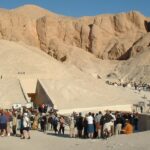
- Valley of the Kings: how to plan your time and ticket
- Temple of Hatshepsut at Deir el Bahari: the terraces you can actually spot
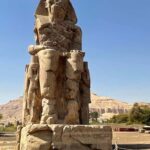
- Colossi of Memnon: a short stop that still makes sense
- East Bank hits: Karnak Temple complex and Luxor Temple
- Karnak Temple complex: seeing how a temple grew over time
- Luxor Temple: where Amenhotep and Ramses show up in the details
- Transfers, lunch, and the reality of an 8-hour day
- Price and value: what $40 buys you, plus the cost you should expect
- Who this tour is best for (and who should rethink it)
- Should you book this Luxor East and West day tour
- FAQ
- How long is the Luxor East and West banks day tour?
- What sites are included in the itinerary?
- Is lunch included?
- Are entrance fees included?
- Do you offer hotel or airport pickup and drop-off?
- How large is the group for the Egyptologist guide?
- Is free cancellation available?
Key things I’d zero in on before you go
- West and East banks, one continuous day plan so you don’t have to coordinate separate tours
- Egyptologist guide with real context for the stories behind each monument
- Focused time blocks at Valley of the Kings, Hatshepsut, Karnak, and Luxor Temple
- Private air-conditioned transfers to keep the day moving smoothly
- Lunch included, which helps when you’re packing a lot into 8 hours
West bank tombs, one by one
- Luxor Day Tour: Valley of Kings & Queens & Hatchepsut Temples★ 5.0 · 1,496 reviews
- Full Day Tour to East and West Banks of Luxor★ 5.0 · 1,449 reviews
- Luxor: Valley of the Kings and Hatshepsut Temple Day Tour★ 4.4 · 1,404 reviews
- Luxor: Valley of Kings, Hatchepsut Temple ,Karnak & Luxor-DayTour★ 5.0 · 735 reviews
Why this Luxor day tour works: East and West without the hassle
If you’re squeezing Luxor into a short trip, this is the kind of day plan that makes sense. Instead of piecing together transport, tickets, and guide time, you get a pre-set route that covers the iconic West Bank funerary sites and the East Bank temple complexes. It is an efficient way to see the full “ancient Thebes” picture.
The biggest practical win is the movement. You’re picked up from your Luxor hotel or airport, then transferred in a private air-conditioned vehicle between sites. That matters in Luxor, because the distances are not huge, but the sun and crowds can make any delay feel bigger than it is.
And because it’s run for a small group with your guide, the day feels more useful than a fast bus tour. You can ask questions when something doesn’t click, like why the West Bank looks so different from the East Bank, or what you’re actually meant to notice at Karnak.
The Egyptologist guide, and what you gain from small-group attention
This tour is built around an Egyptologist guide, and that is the real upgrade over “see the monuments” sightseeing. The itinerary hits famous names, but an Egyptologist helps you connect the dots: royal funerary traditions on the West Bank, and temple worship on the East Bank.
I also like that the format is small group focused. Your guide is described as shared with a small group of 6 to 8, which is close enough for conversation, not just passive listening. On top of that, a guide named Shaaban has been praised for explaining things well, answering follow-up questions competently, and even adjusting the ride to match your wishes. That kind of flexibility is exactly what turns a checklist day into a day you actually understand.
West Bank hits: Valley of the Kings, Hatshepsut, and Colossi of Memnon
Luxor’s West Bank can feel like an entirely different world. The Valley of the Kings and nearby temples are about the afterlife, built into the landscape like secrets you’re meant to uncover. Then you swing back toward the East Bank, where temples are designed for daily ritual and grand processions.
This tour keeps the West Bank portion tight and purposeful, with set time allowances:
- Valley of the Kings (about 2 hours)
- Temple of Hatshepsut at Deir el Bahari (about 1 hour 30 minutes)
- Colossi of Memnon (about 30 minutes)
Admission is not included for the Valley of the Kings and Hatshepsut. Colossi of Memnon is listed as free, so it’s a nice low-cost moment built into the route.
Valley of the Kings: how to plan your time and ticket
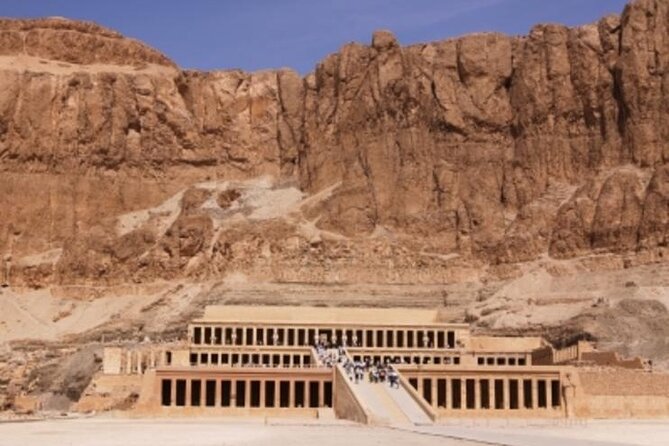
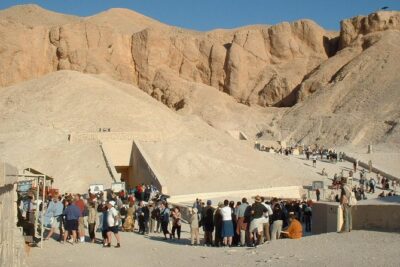
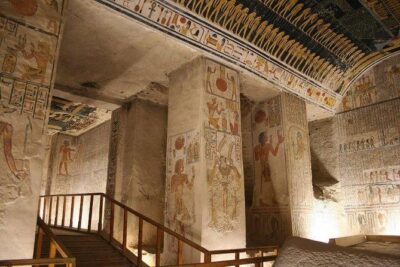
The Valley of the Kings, also called the Valley of Biban Kings, is the core West Bank stop. It was used over hundreds of years, and royal tombs are spread through two main valleys, with most of the royal tombs located in the Eastern Valley. In plain terms, you’re not just looking at one tomb. You’re entering a carefully organized funerary landscape that evolved over time.
You’ll have about 2 hours here. That is enough to orient yourself, walk the main areas, and still absorb the scale of the place. It is also enough time for a guide to help you read what you’re seeing, like how royal burials were arranged and why the valley layout matters.
The only snag is entrance tickets. The itinerary lists admission as not included, so you’ll want to budget ahead. If you’re the type who hates surprise costs, plan for extra museum-style fees when you confirm your schedule.
More one-day runs to the temples
Temple of Hatshepsut at Deir el Bahari: the terraces you can actually spot
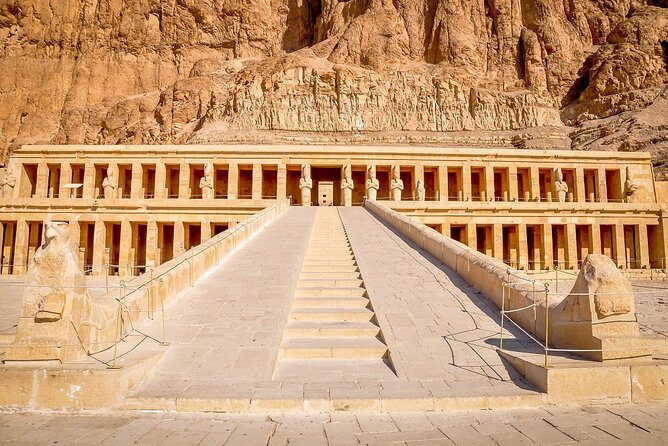
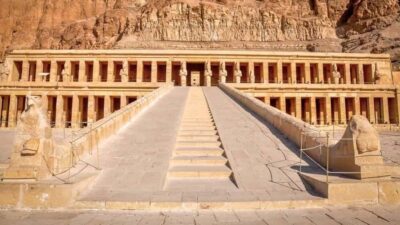
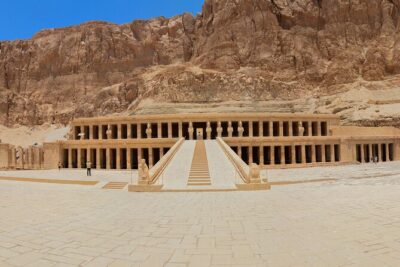
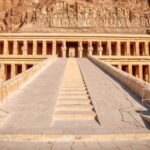
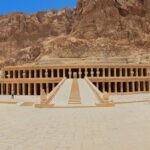
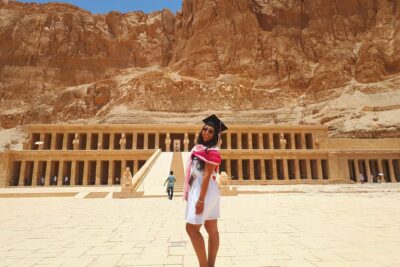
Next comes Deir el Bahari and the Temple of Hatshepsut. This is one of those stops where the architecture does the explaining. Hatshepsut’s temple is known for its distinctive design, built with three successive floors on open terraces. Even if you’re not a technical art person, you can see how the terraces step upward and how the temple’s layout guides your eyes.
The tour’s description highlights that Hatshepsut built it on the West Bank, opposite Luxor’s modern-day location and in line with the ancient Thebes axis. It also notes key religious and symbolic elements, like the involvement of Osiris and statues associated with Queen Hatshepsut, originally colored, placed prominently in front of the pillars of the second floor.
Time is about 1 hour 30 minutes, which is a good chunk. You can take in the terraces, pause for photos, and still have time to understand the symbolism rather than rushing through it.
Again, entrance is not included, so your day budget should include site fees for this stop too.
Colossi of Memnon: a short stop that still makes sense
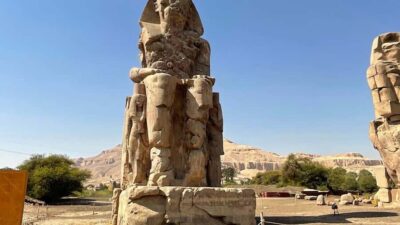
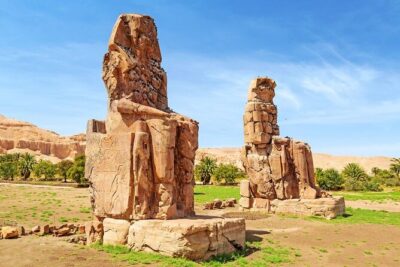
The Colossi of Memnon are two huge statues, linked with Amenhotep III. They stand about 19 meters tall, and they’re all that remains of a larger temple complex built in his memory. The Greek legend attached to Memnon, including the idea of a sound when one statue cracked, is part of the famous story around these figures.
Why is this a worthwhile stop even though it’s only 30 minutes? Because it gives you a scale reference. These statues are giant, blunt, and memorable. They also help you transition mentally between the carved, temple-like experience at Deir el Bahari and the dense, column-heavy feel you’ll get later at Karnak.
The itinerary lists admission as free for this stop, so it’s a clean win if you’re trying to balance costs.
East Bank hits: Karnak Temple complex and Luxor Temple
After lunch, or after the middle of the day depending on the flow, you’ll shift to the East Bank. This is where Luxor Temple and Karnak bring you into the world of ongoing worship and monumental temple building.
You have two major temple blocks:
- Temple of Karnak (about 1 hour 30 minutes)
- Luxor Temple (about 1 hour)
Both stops list admission as not included, so keep that in mind as you move toward the big East Bank sites.
Karnak Temple complex: seeing how a temple grew over time
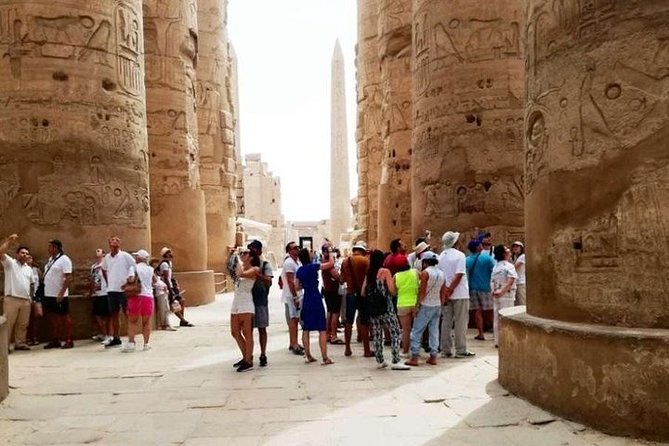
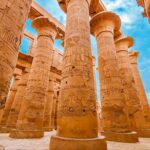
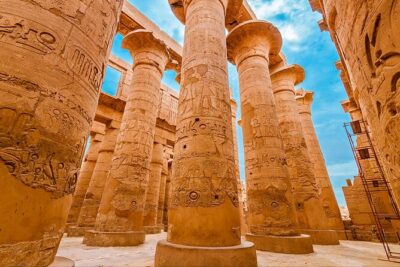
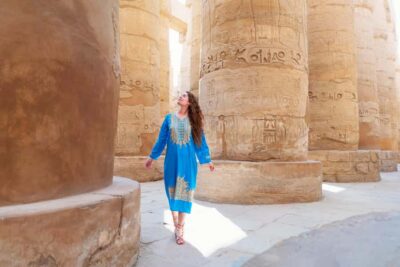
Karnak isn’t one single building. It’s a complex of temples and structures, expanded over long eras. The tour description points out that construction and expansion continued from the Middle Kingdom kings all the way into the Roman era. It was built for the divine Trinity of Amun, Mut, and Khonsu, and the complex includes temples dedicated to each.
What I like about having a guide here is that Karnak can feel like visual overload. You see columns, courtyards, and monuments, and without context, it’s easy to just take photos and move on.
With an Egyptologist, you’re more likely to understand what you’re looking at, like why the complex feels so layered, and how the religious center functioned across time. You also get the benefit of having a guided route instead of wandering endlessly.
The time given is 1 hour 30 minutes, which is enough to hit the major highlights without burning out. If you try to do Karnak alone, it’s easy to spend hours and still feel like you didn’t understand much. This format keeps it readable.
Luxor Temple: where Amenhotep and Ramses show up in the details
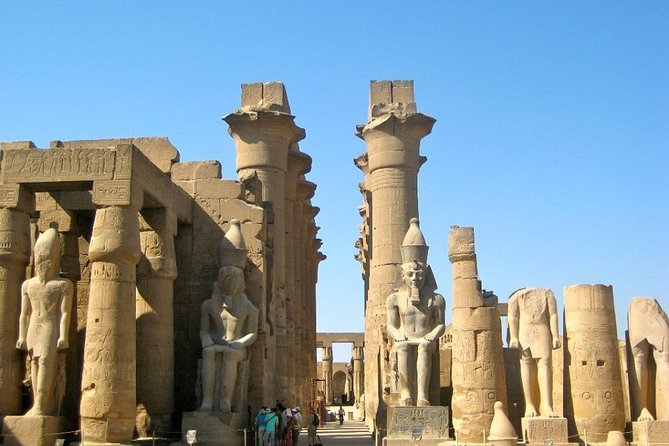
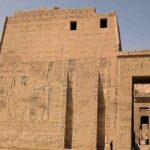
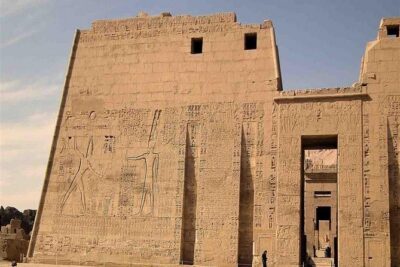
Luxor Temple is the other East Bank anchor. The tour description frames it as a large temple complex founded around 1400 BC, connected to the worship of Amun Ra, Mut, and Khonsu, sometimes referred to as the Theban Triad.
You’ll learn that important existing buildings were built by Amenhotep III and Ramses II, with Ramses adding elements like the open courtyard, the pylon, and two obelisks. It also notes the role of Thutmose III in establishing parts of the temple. So you’re not just looking at one era. You’re seeing how major pharaohs left their fingerprints on the site.
Expect about 1 hour here. That’s a good time slice, especially after you’ve already done Karnak. The temple gives you a different feel, more focused than the sprawling Karnak complex, and it’s a nice closing act for a big day.
Again, admission is not included, so budget for East Bank ticket fees too.
Transfers, lunch, and the reality of an 8-hour day
The day runs about 8 hours. That sounds straightforward until you factor in that you’re visiting multiple sites and crossing between the West and East banks. It helps that the tour includes private air-conditioned vehicle transfers and pick-up and return from your hotel or airport.
Lunch is included. That seems small, but it matters. When you have a full-day temple plan, getting fed on time keeps you from spending energy hunting for food or cutting your visit short because you’re exhausted.
Also, the tour includes service charges and taxes, which reduces the number of moving parts you need to manage. You still need to handle entrance fees and tipping, but the core logistics are taken care of.
One more practical note: the experience is listed as a private tour/activity, but the guide is described as shared with a small group of 6 to 8. That’s still a workable balance. It’s private in the sense that your group is the one doing the itinerary, not a random mixing-and-matching.
Price and value: what $40 buys you, plus the cost you should expect
At $40 per person, the value depends on what you compare it to. If you were to book separate transport, a guide, and do the East and West sites piecemeal, this package can look like a bargain. You’re getting:
- hotel or airport pickup and drop-off
- private air-conditioned transfers
- an English-speaking Egyptologist guide
- lunch
- a structured route covering all listed stops
What is not included is the part that can change your total: entrance fees. Several sites explicitly say admission tickets are not included. In one example of a full-day West and East Bank plan, entrance charges were described as around 35 euros per person, and the guide experience was considered worth it.
I’d plan on a “base price plus tickets” mindset. If you budget entrance fees up front, this tour feels like a smooth way to get your money’s worth, especially because you have a guide explaining the monuments rather than you reading signs alone.
Who this tour is best for (and who should rethink it)
This tour is a strong fit if:
- you want to see both West Bank and East Bank Luxor highlights in one day
- you like having an Egyptologist guide to add context
- you prefer fewer logistics and more time spent actually looking at sites
- you’re traveling with a group that appreciates a shared small-group guide format
It may be less ideal if you:
- want to linger much longer inside tombs or temples than the set time blocks
- are very price-sensitive, because you will still need to pay entrance fees on your own
- don’t like long hot days, since it’s a full-day loop and you will be outside for much of it
Most travelers can participate, and the tour is near public transportation, but it’s still a day built around walking and sun exposure.
Should you book this Luxor East and West day tour
I think this is a great booking choice if you want a high-impact Luxor day with minimal friction. The route makes sense, the stops hit the key classics, and the Egyptologist guide helps you turn those classics into something you can actually explain afterward.
Book it if you’re the type who wants to understand the story behind the Valley of the Kings, the terrace design of the Temple of Hatshepsut, and why Karnak feels like it grew in layers. Skip it or adjust expectations if you’re hoping for a low-cost day with all-in pricing, because admission tickets are an extra.
If you want Luxor in one go, with a guide who can handle questions and keep things moving, this is the kind of tour that delivers.
FAQ
How long is the Luxor East and West banks day tour?
The tour duration is about 8 hours.
What sites are included in the itinerary?
The itinerary includes the Valley of the Kings, Temple of Hatshepsut at Deir el Bahari, Colossi of Memnon, Temple of Karnak, and Luxor Temple.
Is lunch included?
Yes. Lunch is included.
Are entrance fees included?
No. Entrance fees are not included. Some stops list admission as not included, while Colossi of Memnon is listed as free.
Do you offer hotel or airport pickup and drop-off?
Yes. Pickup is offered from your Luxor hotel or airport, and you return afterward.
How large is the group for the Egyptologist guide?
The Egyptologist guide is shared with a small group of about 6 to 8 people.
Is free cancellation available?
Yes, free cancellation is available. You can cancel up to 24 hours in advance for a full refund.
Luxor Temples in a Day

The West Bank, Tomb by Tomb
More of Luxor from our review pile
- Private Tour Nile Felucca Ride at Sunset in Luxor
★ 5.0 · 26 reviews - Private Full day East and West Bank, Luxor
★ 5.0 · 26 reviews - Luxor Day Tour: Kings Valley & Karnak & Luxor & Hatshepsut Temple
★ 5.0 · 26 reviews - Full-Day East and West Luxor Private Tour
★ 4.5 · 26 reviews - Day Trip to Edfu & Kom Ombo temples from Luxor and drop off in Aswan or Luxor
★ 5.0 · 26 reviews - 5 Days 4 Nights Nile Cruise Tour
★ 5.0 · 27 reviews
Luxor West Bank Temples & Tombs, compared.
 ★ 5.0Luxor Day Tour: Valley of Kings & Queens & Hatchepsut TemplesFrom $891,496 reviews
 ★ 5.0Full Day Tour to East and West Banks of LuxorFrom $151,449 reviews
 ★ 4.4Valley of the Kings and Hatshepsut Temple Day TourFrom $501,404 reviews
 ★ 5.0Valley of Kings, Hatchepsut Temple ,Karnak & Luxor-DayTourFrom $95735 reviews
 ★ 5.0Full Day Tour of Luxor West Bank Temples and Tombs (Private)From $20722 reviews
 ★ 5.0Private Full-Day Luxor Highlights East and West BanksFrom $65663 reviews
 ★ 4.5Guided Tour to East or West Banks with LunchFrom $64604 reviews
 ★ 5.0Luxor Private Full-Day Tour: Discover the East and West Banks of the NileFrom $90545 reviews
The lists this one sits on