
REVIEW · LUXOR WEST BANK TEMPLES & TOMBS
Visit Valley of Kings ,Karnak & Hatshepsut Temples from Hurghada
Ancient Luxor starts before sunrise. This day trip from Hurghada strings together the big three East Bank and West Bank sights, with a professional Egyptologist and a tight route that helps you see more without feeling rushed. I like that it’s built around guided context, not just wandering, and I also like the small-group cap (up to 8) that keeps the plan manageable. One thing to think about, though, is the long travel day, since you are looking at about 16 hours total.
You’ll be picked up from your hotel, then driven to Luxor in an air-conditioned vehicle. Once you’re in town, the schedule balances temple time with real breaks, including a lunch stop with mineral water and a chance to ride a horse carriage for a short city tour. The big payoff is that you go from the massive Karnak complex to the quieter, dramatic West Bank setting in the same outing.
In This Review
- Key Highlights Worth Knowing
- Hurghada to Luxor: a 16-hour day with a 5:00 am start
- Karnak Temple: Amun’s world on the East Bank
- Deir el-Bahari and Hatshepsut’s terraces: why this temple feels different
- Valley of the Kings: tomb time, not just scenery
- Colossi of Memnon: the West Bank finale
- Horse carriage city tour, lunch, and the alabaster factory stop
- Price and logistics: what $32.30 covers, and what it does not
- Who this tour suits best (and who should rethink it)
- Should you book Valley of Kings, Karnak, and Hatshepsut from Hurghada?
- FAQ
- What time does the tour start?
- How long is the experience?
- Is pickup from Hurghada hotels included?
- What entrance tickets are included?
- What’s included in the tour price?
- Is there a mobile ticket?
- Is this a private tour?
- What is the cancellation policy?
Key Highlights Worth Knowing
- Small group van (max 8), so you can stay together when the sites get busy and confusing
- Egyptologist guide who frames what you’re looking at, instead of leaving you to guess
- East Bank to West Bank in one day: Karnak, Hatshepsut, Valley of the Kings, then Colossi of Memnon
- Horse carriage city tour plus lunch to break up the long sightseeing stretch
- Alabaster factory visit included, adding a hands-on cultural stop beyond temples
- Ticket planning matters: Karnak, Hatshepsut, and Valley tickets are not included (Colossi ticket is)
Other tomb tickets in the valley
- Small group Hurghada to Luxor, Valley of the Kings by Van★ 4.5 · 2,470 reviews
- Hurghada: Small-Group Luxor Highlights & Tut Tomb Day Tour★ 4.6 · 928 reviews
- Hurghada: Luxor Highlights & King Tut Tomb Tour with Lunch★ 4.7 · 902 reviews
- Small Group Excursion to Luxor Valley of the Kings from Hurghada★ 5.0 · 637 reviews
Hurghada to Luxor: a 16-hour day with a 5:00 am start
This trip starts early, 5:00 am, because Luxor is far enough from Hurghada that you need a head start to fit everything in. Expect a full day schedule rather than a relaxed half-day. The good news is that you’re traveling in an air-conditioned vehicle and you’re not doing the logistics yourself.
Value-wise, this matters. If you’ve ever tried to piece together Luxor day trips on your own, you know how quickly the planning turns into stress. Here, the route is already structured: Karnak first, then Deir el-Bahari, then Valley of the Kings, then Colossi of Memnon, with lunch and the alabaster factory worked in.
The main drawback is comfort and patience. Even with air-conditioning, a long ride can feel tiring, and one common complaint with this kind of itinerary is that seats during the drive may not be the most comfortable. Pack for a long day, and plan to be patient with timing.
Karnak Temple: Amun’s world on the East Bank
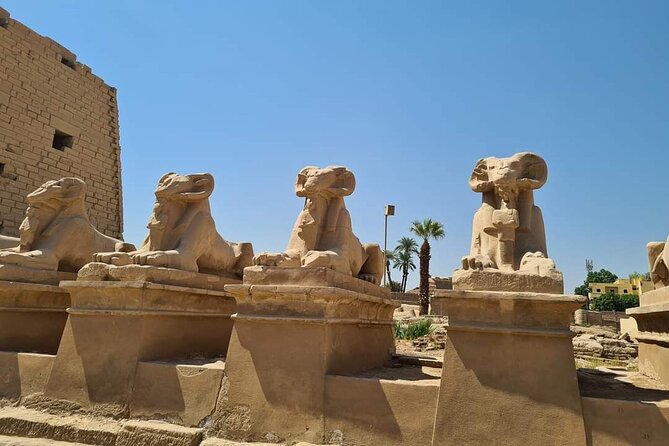
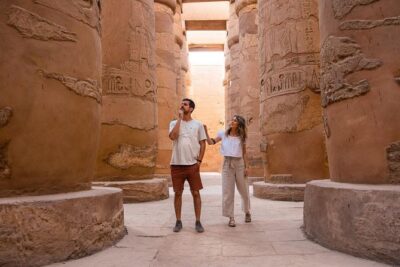
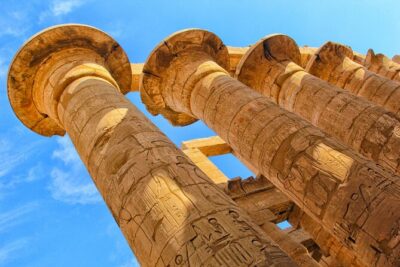
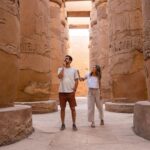
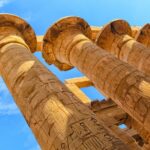
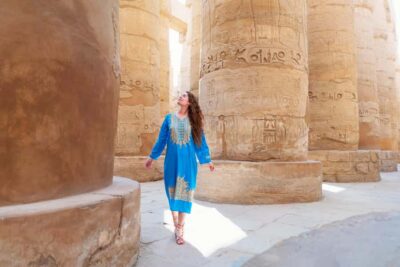
Karnak Temple is where you really feel the scale of ancient Egypt’s religious power. You’ll spend about 1 hour here, and it’s not an exaggeration to call it the biggest religious building ever constructed for religious purposes. The complex is dedicated to gods like Amun, Mut, and Khonsu, so even if you only catch fragments of scenes and columns, the guide helps you read the place as a living religious center.
What makes Karnak special on a guided day is orientation. The temple is huge, and many areas look similar at first glance. Having an Egyptologist keep you on the right paths helps you avoid the classic problem: walking around for a while and still not knowing what part you’re looking at.
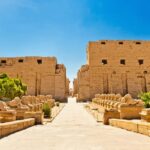
Practical note: Karnak’s layout can be a little maze-like. If you’re the type who likes to linger or stop for photos every few minutes, you may need a gentle balance so you don’t fall behind the group. The small-group setup helps because your guide can keep track more easily, and the pacing stays realistic for the time you have.
Deir el-Bahari and Hatshepsut’s terraces: why this temple feels different
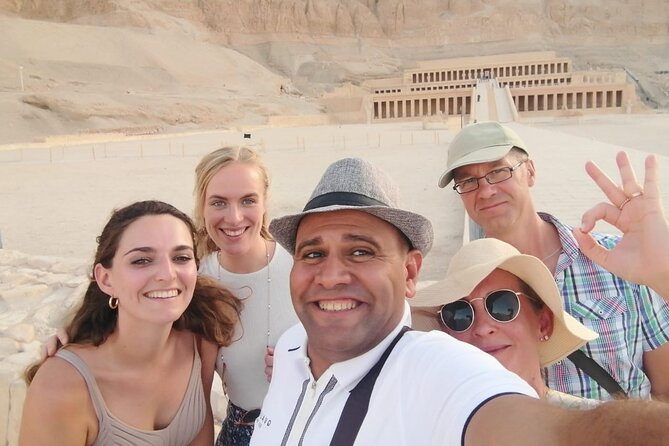
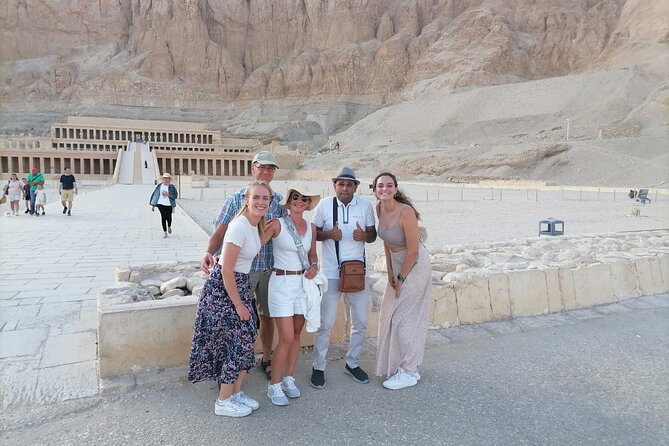
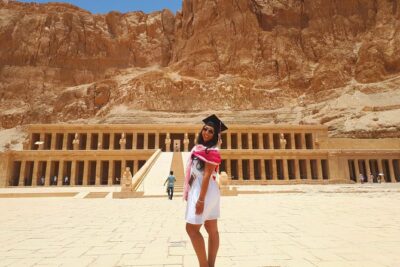
After Karnak, you head to the West Bank side highlight of Deir el-Bahari, home to the Temple of Hatshepsut. Your time here is about 1 hour, and it’s designed to look like it belongs to the cliffs, not the other way around. The temple is built into a towering cliff face and arranged in three terraces, connected by ramps, with rows of columns that create that stark, monumental rhythm.
Hatshepsut is a key reason this stop hits hard. She was one of the few female pharaohs of ancient Egypt, and her reign is tied to some of the structures and major building activity you see today. The important detail is that the site is not only about her. Parts of the construction connect back to earlier rulers, so you’ll see layers of time rather than one single moment frozen in stone.
Here’s what I like about this stop in the flow of the day. Deir el-Bahari gives you a visual break after the dense complexity of Karnak. It’s still grand, but the setting is more dramatic, and the terrace design gives you a cleaner sense of how ancient planners thought in levels and perspective.
Ticket reality: entrance tickets for Hatshepsut are not included, so make sure you factor that into your total budget. (More on pricing later.)
Valley of the Kings: tomb time, not just scenery
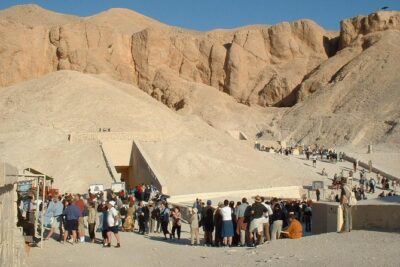
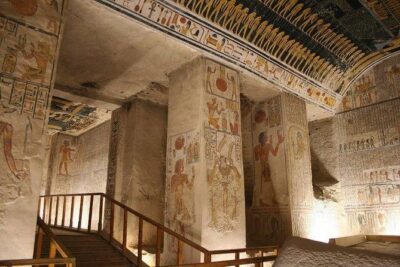
The Valley of the Kings is where the day shifts from temple grandeur to the quiet intensity of royal burial ground. You’ll have about 2 hours here. This is the royal cemetery area for pharaohs from the 18th, 19th, and 20th dynasties of the New Kingdom, which is why the names people recognize can feel like they belong to this exact place.
Some of the famous rulers tied to this area include Tutankhamun, Ramses II, Tuthmosis III, and Seti I, plus other nobles and family members connected to royal power. On a guided day, this matters because the guide can help you understand why these tombs are grouped and how to make sense of what’s visible, even when you’re only there for a limited window.
Two practical thoughts for you here. First, tomb interiors can be cool compared to the outside, but the walk between points can still be tiring. Second, the ticket situation matters: entry tickets for the Valley are not included, so if you’re budgeting tightly, that extra cost should be in your plan from the start.
Also, don’t expect this stop to feel like a stroll through a park. This is a burial landscape, so the mood is more subdued. If you like details and you enjoy learning what you’re looking at, you’ll get more out of the time you have.
West bank tombs, one by one

Colossi of Memnon: the West Bank finale
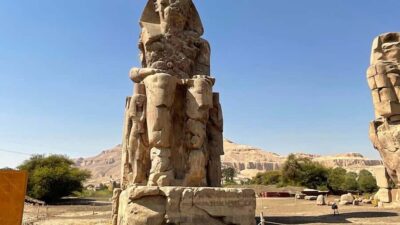
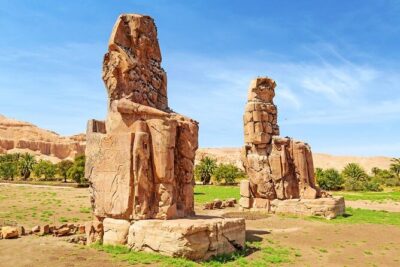
The West Bank ends with the Colossi of Memnon, also known by the modern Arabic name Kom el-Hatan. You’ll spend about 1 hour, and the ticket for this stop is included.
These two massive statues are iconic, and the guide can connect them to the broader idea of remembrance. They are called Colossi of Memnon, tied to the ancient figure of Memnon and the idea of the famous dawn cry that made the statues legendary in later storytelling. Even if you don’t follow every legend, you’ll still enjoy the scale and the sense of place.
What makes this a good finale is pacing. After several temple-focused hours, the statues give you a clear, focused visual moment. It’s easier to take in, easier to photograph, and it gives you closure to the West Bank portion of the day.
Horse carriage city tour, lunch, and the alabaster factory stop
Between temples, this tour inserts some real-life breaks so you can survive a long day without running on empty. After the Karnak visit, you take a horse carriage for a short city tour. It’s a change of pace, and it can also help you get your bearings in Luxor, since you’re moving between major zones and you don’t want to feel totally lost.
Then comes lunch. The tour includes lunch at a restaurant, with mineral water. I like that this is built into the schedule rather than being left as an optional hunt for food. When you start at 5:00 am, you want your meal timed for the sightseeing rhythm, not after you’re already hungry and cranky.
The other included side stop is the alabaster factory. This can be a smart add-on if you like understanding what you’re seeing beyond temples. You’ll get a look at the material and how it’s used, and it adds context for something you’ll likely encounter in Egypt through souvenirs and local crafts.
If you dislike shopping stops, treat this as a short cultural stop, not a shopping mission. The time is included, so you can decide how much you want to engage.
Price and logistics: what $32.30 covers, and what it does not
On paper, the price is $32.30 per person, which is easy to feel good about. But you should plan your total cost with the entry fees in mind.
Included basics are solid for the price: air-conditioned vehicle, a qualified Egyptologist guide, lunch with mineral water, the Colossi of Memnon ticket, the alabaster factory visit, and a small group by van (up to 8 people).
Not included are entrance tickets for Karnak Temple, Temple of Hatshepsut, and the Valley of the Kings, which are listed together as $35. That means your budget should treat tickets as a separate line item even though the tour is already discounted.
Then there are hotel transfer extras depending on where you’re staying. If you’re in Makadi or Sahl Hasheesh, the transfer extra is $5 per person. If you’re in Soma Bay, Safaga, or El Gouna, the transfer extra is $10 per person.
So is it good value? For me, yes, if you want a guided, organized Luxor day without dealing with ticket chaos. The Egyptologist and the small group matter, because they reduce wasted time. But if you know you hate long travel days or you’re sensitive to uncomfortable seating, you might prefer a different format with a shorter drive or more flexible pacing.
Who this tour suits best (and who should rethink it)
This is a strong fit if you:
- Want to see Karnak, Hatshepsut, and the Valley of the Kings in one go
- Like having an Egyptologist explain what you’re looking at
- Prefer a small group over a large bus crowd
- Don’t mind an early start and a full day schedule
It may be less ideal if you:
- Get tired easily from long rides, since the day runs about 16 hours
- Need lots of downtime between sites
- Want fully included entrance tickets, since Karnak, Hatshepsut, and the Valley require an extra $35
Also, the tour notes moderate physical fitness is recommended. That makes sense, given the walking involved at temples and around the tomb area.
Should you book Valley of Kings, Karnak, and Hatshepsut from Hurghada?
I’d book this tour if your goal is a high-value Luxor snapshot with guidance that helps you make sense of the big monuments. The route is logical: start with Karnak, shift to Deir el-Bahari, tackle the Valley, finish with Colossi of Memnon. Add in lunch, a short carriage tour, and the alabaster factory, and you get more than just a list of names.
I’d skip it if you’re expecting a casual day or if you really need comfort over speed and structure. This is a full-day plan with early pickup, so you should treat it like a commitment.
If you go, arrive ready for a long day, keep an eye on the entrance tickets budget, and let the guide handle the navigation. That’s how you turn a tight schedule into a meaningful, well-seen Luxor day.
FAQ
What time does the tour start?
The start time is 5:00 am.
How long is the experience?
The duration is listed as 16 hours (approx.).
Is pickup from Hurghada hotels included?
Pickup is offered, and there are extra transfer charges depending on your hotel area (Makadi/Sahl Hasheesh is $5 per person, Soma Bay/Safaga/ElGouna is $10 per person).
What entrance tickets are included?
The Colossi of Memnon ticket is included. Entrance tickets for Karnak Temple, Temple of Hatshepsut, and Valley of the Kings are not included (listed together as $35).
What’s included in the tour price?
Included items are: air-conditioned vehicle, qualified Egyptologist guide, lunch (with mineral water), Colossi of Memnon ticket, alabaster factory, and a small group by van (max 8 people).
Is there a mobile ticket?
Yes, the tour includes mobile ticket.
Is this a private tour?
It’s described as a private tour/activity, meaning only your group participates.
What is the cancellation policy?
You can cancel for free up to 24 hours in advance for a full refund. If you cancel less than 24 hours before the start time, it is not refundable. The experience also requires good weather.
Karnak and the East Bank
The West Bank, Tomb by Tomb

Down Into the Kings Valley


More of Hurghada from our review pile
- Orange Bay to Love 3 Reasons Snorkeling Crystal Waters Escape
★ 5.0 · 15 reviews - Trip on a glass bottom boat from Hurghada
★ 4.5 · 15 reviews - Hurghada :Day trip to Luxor:Balloon&West and East&Felucca& Dinner
★ 4.5 · 15 reviews - Orange Bay Island By Private Speedboat & snorkeling & Water Sport – Hurghada
★ 5.0 · 15 reviews - Private ALL INC Trip To Cairo From Hurghada with Camel Ride,( ATV ) & Felucca
★ 5.0 · 15 reviews - Full Day Snorkeling in Hurghada Dolphin House
★ 5.0 · 15 reviews
Luxor West Bank Temples & Tombs, compared.
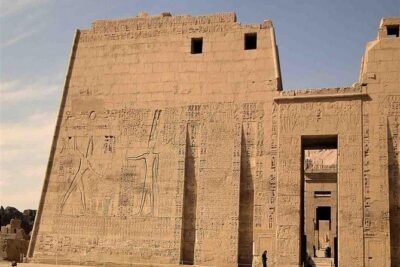 ★ 5.0Luxor Day Tour: Valley of Kings & Queens & Hatchepsut TemplesFrom $891,496 reviews
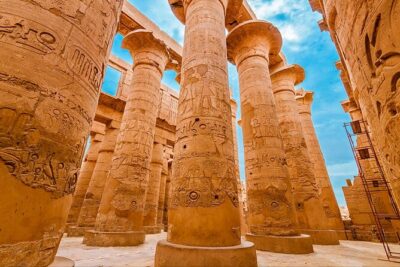 ★ 5.0Full Day Tour to East and West Banks of LuxorFrom $151,449 reviews
 ★ 4.4Valley of the Kings and Hatshepsut Temple Day TourFrom $501,404 reviews
 ★ 5.0Valley of Kings, Hatchepsut Temple ,Karnak & Luxor-DayTourFrom $95735 reviews
 ★ 5.0Full Day Tour of Luxor West Bank Temples and Tombs (Private)From $20722 reviews
 ★ 5.0Private Full-Day Luxor Highlights East and West BanksFrom $65663 reviews
 ★ 4.5Guided Tour to East or West Banks with LunchFrom $64604 reviews
 ★ 5.0Luxor Private Full-Day Tour: Discover the East and West Banks of the NileFrom $90545 reviews