
REVIEW · NILE CRUISES BETWEEN LUXOR AND ASWAN
Standard Nile Cruise 5 days 4 nights from Luxor to Aswan
Five days on the Nile beats the hotel shuffle. This Luxor to Aswan cruise is interesting because you get big-name temples plus the comfort of staying on one boat while the scenery changes. Two things I really like about this style of trip are the private Egyptologist guide (so you are not just looking, you are learning) and the fact that you tackle Luxor and Aswan without constant hotel transfers.
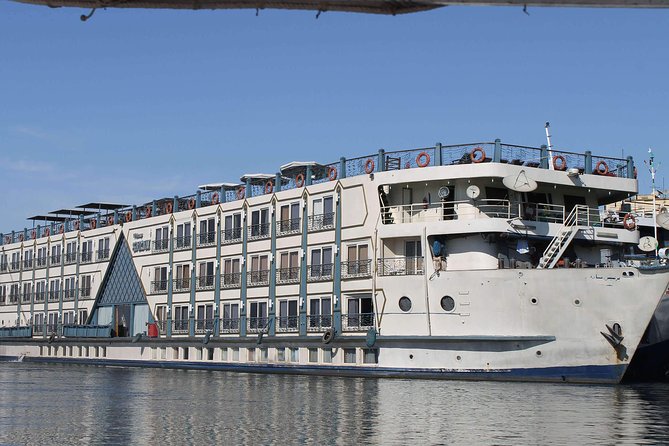
One consideration: the ship is not consistent in luxury level. Some people find the Princess Sarah dated, with maintenance and cleanliness issues, plus occasional diesel exhaust smell when boats are docked close together.
In This Review
- Key things that make this cruise work (and for whom)
- Luxor to Aswan in 5 days, the right kind of fast
- Day 1: Karnak and Luxor Temple, where scale hits you first
- Day 2: The West Bank, Valley of the Kings plus Hatshepsut at Deir el-Bahari
- Day 3: Edfu’s Horus and Kom Ombo’s two-god temple
- Day 4: Aswan, High Dam and Philae, plus a felucca sail
- Day 5: Abu Simbel, the long stop that’s worth planning for
- Princess Sarah onboard: what you should expect from the ship
- Egyptologist guide time is the real upgrade
- Price and value: is $780 fair for what you get?
- Tips that help this cruise feel smoother
- Who this itinerary fits best
- Should you book this Nile cruise?
- FAQ
- What is the duration of this Luxor to Aswan Nile cruise?
- Where does the cruise start and end?
- Is pickup and drop-off included?
- Is there a guide included?
- What meals are included during the cruise?
- What temples and sights are included in the itinerary?
- Is Abu Simbel admission included?
- Is tipping included in the price?
- How far in advance can you cancel for a full refund?
Key things that make this cruise work (and for whom)
- Private Egyptologist guide included, which makes Karnak, the Valley of the Kings, and Abu Simbel far more meaningful.
- No hotel changes across Luxor, Edfu, Kom Ombo, and Aswan, so your days focus on sightseeing, not packing.
- Round-trip transfers included, so you do not have to wrestle taxis in the first hours.
- Temples are scheduled in smart clusters: Luxor plus Karnak (Day 1), West Bank powerhouses (Day 2), Edfu and Kom Ombo (Day 3), Aswan plus Philae (Day 4), then Abu Simbel (Day 5).
- Onboard parties and sail time break up the long day excursions, with tea breaks, a disco night, and a galabya night.
More boats sailing the same stretch
- From Luxor: 3-Night Nile Cruise to Aswan and Hot Air Balloon★ 3.7 · 297 reviews
- 5 Days Private Guided Nile River Cruise Tour from Luxor to Aswan★ 5.0 · 229 reviews
- Historia Hotel Nile Cruise, Mon. from Luxor 4 nts inc. Excursions★ 5.0 · 185 reviews
- From Luxor: 5-Day Nile Cruise to Aswan with Balloon Ride★ 4.2 · 168 reviews
Luxor to Aswan in 5 days, the right kind of fast
A Nile cruise is basically a trade: you trade some free roaming for a built-in route and scheduled access to the sites people actually travel for. The payoff is big. You see Luxor and the Upper Nile without sleeping in a different hotel every night, and you still get guided tours at each stop.
This specific itinerary is paced around Egypt’s “greatest hits.” You start with the dense temple drama of Luxor and Karnak, move into the West Bank’s tomb and mortuary world, then hit Edfu and Kom Ombo. By Day 4 you are in Aswan mode, with Philae and the area around the High Dam. Finally, Day 5 goes for Abu Simbel, the long day most people remember.
Day 1: Karnak and Luxor Temple, where scale hits you first
Your day starts with meeting and assistance in Luxor, then transfer to the cruise. Boarding is before lunch, so you are not stuck waiting around all morning. After lunch onboard, the sightseeing kicks off with Luxor Temple and Karnak Temple.
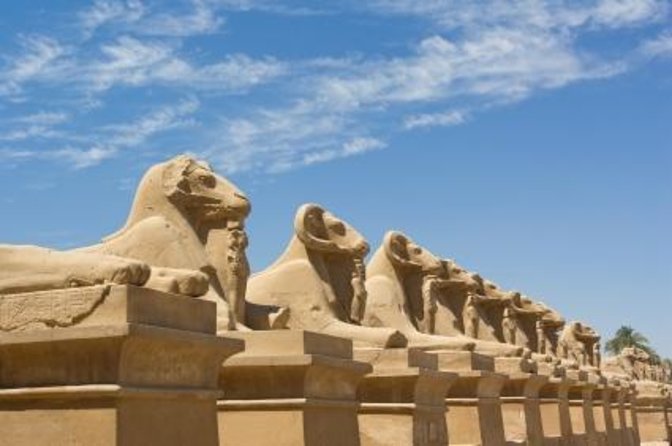
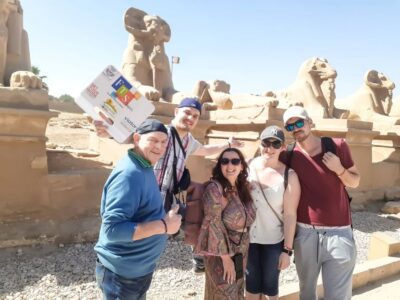
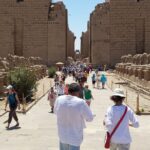
Karnak is the kind of place where you keep looking up and still not catching it all. With a guide, it is easier to connect the dots across the different reigns and additions through the centuries. Expect a classic walk along the Avenue of Sphinxes, then stops that commonly include:
- the Unfinished Propylon
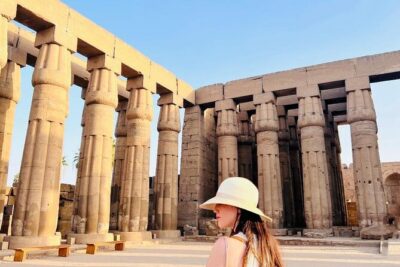
- the Hypostyle Hall with its many massive columns
- obelisks linked to major royal figures
- temple spaces decorated with lotus and papyrus motifs tied to the god Amon
Luxor Temple is more intimate than Karnak but still impressive, and it is easier to appreciate in the late daylight if you manage your pace and take a breath between photo stops. You also get time to settle in after the tour, with the cruise handling the travel leg rather than you.
Practical note: you will do a lot of walking. Wear shoes you trust, and keep water handy because these areas can feel hot even when the air looks mild.
Day 2: The West Bank, Valley of the Kings plus Hatshepsut at Deir el-Bahari
Breakfast is onboard, then you head to the West Bank for the big archaeology hits: the Valley of the Kings, the Colossi of Memnon, and Queen Hatshepsut’s temple at El Deir el-Bahari.
This day has a clear structure that helps you not feel lost:
- Valley of the Kings: you tour tombs connected to different dynasties. A good guide matters here because tomb art can feel like random walls unless you understand the symbols and the logic behind the scenes.
- Colossi of Memnon: two giant standing statues facing the Nile. They are the kind of landmark that turns photos into a real sense of place.
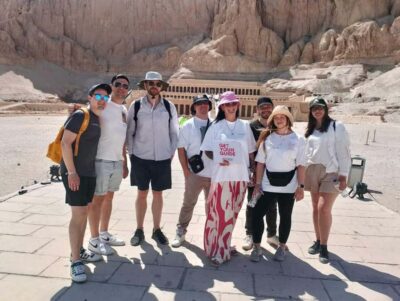
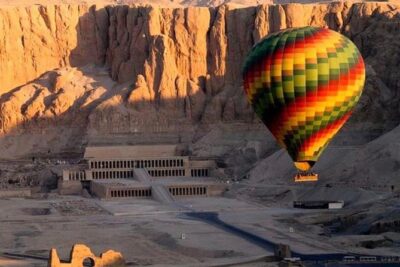
- Deir el-Bahari: Hatshepsut’s temple is the emotional centerpiece for many people. It sits against the cliffs in a way that makes the architecture feel dramatic, not just old.
After lunch onboard, you sail toward Esna, with tea time, then an evening that can include music and a disco party onboard. You sleep onboard in Edfu.
A smart way to enjoy this day is to pick one tomb and go deeper, instead of trying to catch everything. With a private Egyptologist guide, you can ask questions on the spot and slow down where it counts.
Day 3: Edfu’s Horus and Kom Ombo’s two-god temple
Day 3 starts with breakfast on board, then your focus shifts to Edfu. You will visit the Temple of Horus, one of the best-preserved major temples you can see on the river route.
From a visitor standpoint, Edfu is often a “wow, that is intact” temple. From a meaning standpoint, it is the kind of place where carvings and layout start to feel logical once you have your guide’s explanations.
Then you sail to Kom Ombo for lunch onboard and a second temple stop: the Temple shared by two gods, Sobek and Haroeris. This is a neat contrast to Edfu because you can see how the temple design supports the worship of different deities within the same sacred complex.
Afternoons include tea breaks, and in the evening you will have dinner onboard, with a galabya party also part of the schedule. You overnight onboard in Kom Ombo.
Heads-up for comfort: onboard days can get warm, and daylight tours take more out of you than you expect. Plan to rest your feet, not just your mind.
Day 4: Aswan, High Dam and Philae, plus a felucca sail
Breakfast onboard is followed by arrival and touring in Aswan. You will see the High Dam, plus the Granite Quarries, then visit Philae Temple.
Philae is a favorite for many because it is strongly tied to the river world. With a guide, you get more than a walk-through. You start recognizing how the temple relates to the myths, the environment, and the political story of the region.
After lunch onboard, you get a scenic sail by felucca around Kitchener’s Island and the Agha Khan Mausoleum. This part is valuable for two reasons:
- it gives your legs a break after temple time
- it shows Aswan from the water level, where the river and the islands make more sense
Then you enjoy tea and dinner onboard, and you overnight in Aswan.
If you are sensitive to heat or crowded spaces, this is a good day to pace yourself. You are still sightseeing, but the river sail gives you a different tempo.
Day 5: Abu Simbel, the long stop that’s worth planning for
Abu Simbel is the day trip people talk about. You start from Aswan for a visit to the temples of Abu Simbel, built by Ramses II, and a smaller temple associated with Nefertari and the goddess Hathor.
The most useful thing your guide can do here is connect the site to its story. These temples were carved into a sandstone cliff, and they were later saved from inundation. That kind of context turns Abu Simbel from a distant icon into an engineering and cultural survival story.
The temples themselves are built around grand royal and divine symbolism, and you see that immediately on arrival because the façade is made for dramatic impact. You do not need to be an expert to feel what the builders were going for, but learning the meaning makes the experience stick.
Princess Sarah onboard: what you should expect from the ship
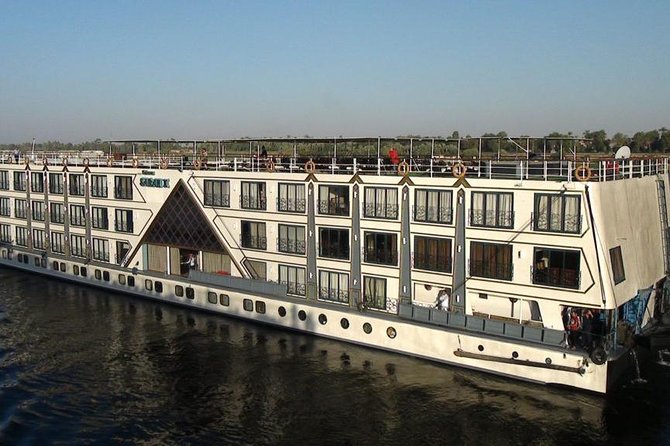
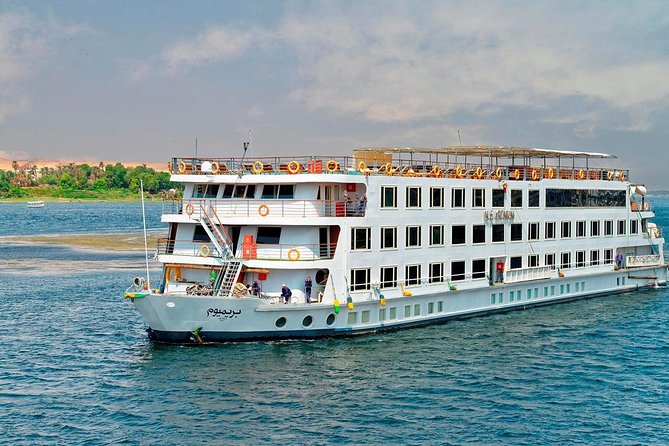
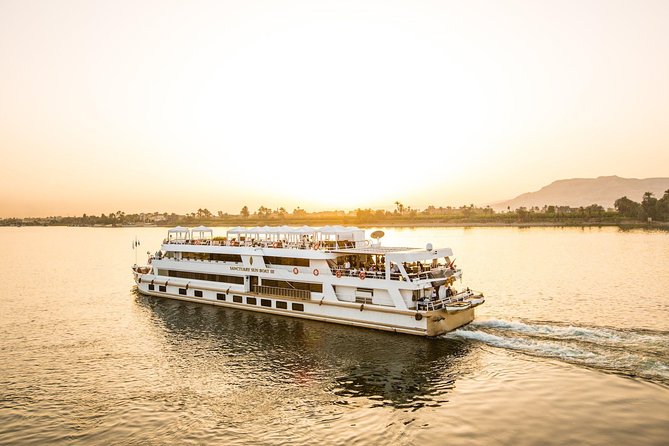
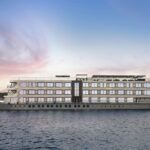
The cruise includes four nights onboard the Princess Sarah, plus snacks and meals. On paper, that is the foundation of the value. In real life, the biggest variable is ship condition and comfort.
Here is what seems most consistent from recent feedback:
- The ship is typical for this region, not a new floating resort.
- Cabins can feel dated, with upkeep and cleaning sometimes described as inconsistent.
- Some rooms have twin beds, and some people found the layout less comfortable than expected.
- Docking can reduce the river view, especially if the ship is moored close to other boats.
- Diesel exhaust smell on the deck can be an issue if you are near lower levels or during times when engines are running near the dock.
Food, though, gets mixed but often lands on the positive side. Many people like that you get Western-style buffet variety for lunch and dinner, and that the staff is attentive. Still, a few find specific meals below what they hoped for, especially breakfast choices.
Practical move: when you book, try to request a cabin location that avoids the most complained-about smell areas. If the operator lets you choose, you might prefer a higher level. Also, pack a light layer for air-conditioned indoor spaces, since temperature swings happen daily.
Egyptologist guide time is the real upgrade
This tour includes a private Egyptologist guide, which is the difference between seeing monuments and understanding them. With a guide, Karnak stops being a confusing pile of columns and becomes a map of who built what and why. The Valley of the Kings becomes a guided walk through religious ideas, symbols, and royal priorities.
It also changes your pacing. A private guide can adjust to what you care about, whether that is Egyptian gods, architecture, tomb history, or just how to spot key details in carvings.
If you want the best results, come with two or three questions in mind. Examples:
- Which tombs are most important and why?
- How does Hatshepsut’s program connect to legitimacy and power?
- What should I focus on at Abu Simbel to understand the façade?
Price and value: is $780 fair for what you get?
At $780 per person, this package can feel like a solid value because several major costs are bundled in. You are paying for:
- four nights of accommodation onboard
- guided sightseeing across multiple days
- private guide service
- transfers to and from the cruise
- multiple included meals (breakfast, lunch, dinner) and snacks
- admission tickets included for the main temple days in the itinerary
Where value can drop is comfort expectations. If you are expecting a spotless, modern, luxury-standard ship, you may feel shortchanged when the vessel is older or less polished. But if you treat the ship as a base for sleep, shower, and meals between guided tours, the route value becomes easier to justify.
So I would frame it like this: it is a great value if your priority is archaeology and temple time, and you are flexible on ship finish.
Tips that help this cruise feel smoother
- Bring lightweight sun protection and comfortable walking shoes. Temple days rack up steps.
- Plan for heat management. You have long guided blocks, then meals and sails. Use the tea breaks to reset.
- If you care about cabin comfort, ask about cabin location before you settle on a room.
- Keep cash ready for tipping, since tipping is not included.
- For photography, aim to shoot temples during the guided stops rather than constantly hunting angles. A guide can point you to the best sightlines fast.
Who this itinerary fits best
This is a good fit if you:
- want a guided Luxor to Aswan route without changing hotels
- love major monuments and can handle daily sightseeing schedules
- prefer private explanations over loose touring
- want a cruise structure that includes downtime too (tea breaks, parties, and a felucca ride)
It may not be the best fit if you:
- demand modern luxury cabins and flawless cleanliness every day
- are very sensitive to smell from diesel exhaust near docks
- want a big on-board pool experience (the sundeck pool is described as small)
Should you book this Nile cruise?
I would book it if you know what you are buying: a guided, temple-heavy Nile route with onboard meals and a stable base. At this price point, the private Egyptologist guide, major temple list, and bundled transfers make it easier to justify.
If ship comfort is your top priority, go in with eyes open. Ask questions about cabin location and maintenance expectations. If you do that, you can get a trip that feels efficient, educational, and genuinely memorable, without pretending it is a five-star floating hotel.
FAQ
What is the duration of this Luxor to Aswan Nile cruise?
It runs for about 5 days, with 4 nights of accommodation onboard the cruise.
Where does the cruise start and end?
It starts in Luxor and ends back at the meeting point after the final activity in Aswan.
Is pickup and drop-off included?
Yes. Pickup and drop-off are included, with meeting assistance offered at your hotel in Luxor or from Luxor airport.
Is there a guide included?
Yes. The tour includes an Egyptologist guide, described as private.
What meals are included during the cruise?
Snacks are included, and meals include breakfast (4), lunch (5), and dinner (4).
What temples and sights are included in the itinerary?
The itinerary includes Karnak and Luxor Temple, the Valley of the Kings, Hatshepsut’s temple, Edfu Temple, Kom Ombo Temple, the High Dam, Granite Quarries, Philae Temple, and Abu Simbel.
Is Abu Simbel admission included?
The itinerary notes Abu Simbel admission as free.
Is tipping included in the price?
No. Tipping is listed as not included.
How far in advance can you cancel for a full refund?
You can cancel up to 6 days in advance for a full refund.
Sailing Luxor to Aswan

More of Luxor from our review pile
- Hot Air Balloon Ride and Tour to Valley of Kings Luxor- Special Offer
★ 5.0 · 15 reviews - 4-Hours tour West Luxor bank :Hatshepsut Temple & Valley of the King with Lunch
★ 5.0 · 15 reviews - Tour From Luxor to Aswan Edfu, Kom Ombo, Philae and High Dam
★ 5.0 · 15 reviews - Private Half-day Dendera Temple
★ 5.0 · 15 reviews - Luxor Airport Departure: Convenient Private Hotel Transfer
★ 5.0 · 15 reviews - Dahabiya Nile Cruise From Luxor To Aswan 4 Nights 5 Days
★ 4.5 · 15 reviews
Nile Cruises Between Luxor and Aswan, compared.
 ★ 5.04-Days Nile Cruise From Aswan To Luxor including Abu Simbel and Hot Air BalloonFrom $3493,142 reviews
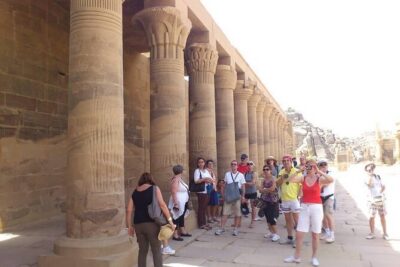 ★ 4.54-Day 3-Night Nile Cruise from Aswan to Luxor including Abu Simbel, Air BalloonFrom $329612 reviews
 ★ 4.14-Day Nile Cruise from Aswan to Luxor with GuideFrom $830593 reviews
★ 4.54-Days Nile Cruise From Aswan To Luxor including Abu Simbel and Hot Air BalloonFrom $320509 reviews
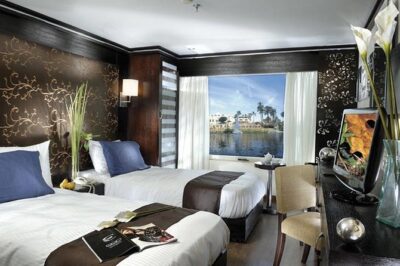 ★ 5.04-Day 3-Night Nile Cruise from Aswan to Luxor – Private TourFrom $504369 reviews
★ 4.54 Days Nile Cruise from Aswan to Luxor including Abu Simbel and Hot Air BalloonFrom $329356 reviews
 ★ 5.04-Day 3-Night Nile Cruise from Aswan to Luxor With Balloon and Abu SimbelFrom $311327 reviews
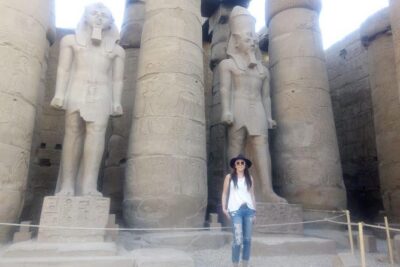 ★ 5.04-Days Nile Cruise Aswan&Luxor,Hot Air Balloon&Abu Simbel.Hot dealFrom $524322 reviews
The lists this one sits on