
REVIEW · NILE CRUISES BETWEEN LUXOR AND ASWAN
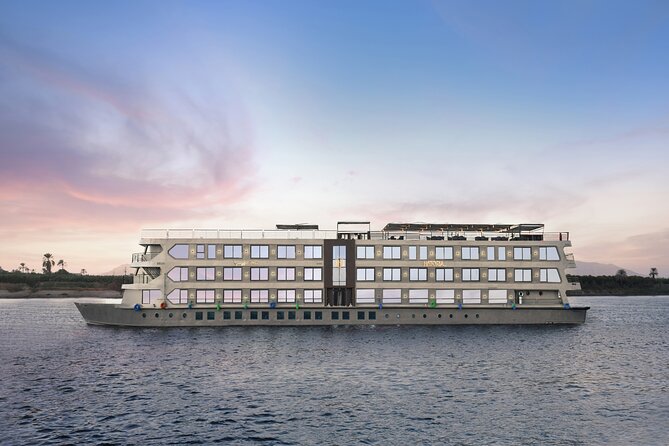
Historia Hotel Nile Cruise, Mon. from Luxor 4 nts inc. Excursions
One Nile cruise can feel like a moving hotel. This one feels like a well-run luxury program with temple days that actually make sense. I especially liked the modern, clean ship vibe and the way the food and service are treated like a real priority, not an afterthought. One thing to plan around: onboard internet can be unreliable, so don’t build your whole trip around WhatsApp.
What surprised me most is how much guided attention you get across the whole week. You visit the big names on both banks, from Karnak and Luxor Temple to Edfu’s Horus Temple and Aswan landmarks, with enough structure that you spend less time guessing and more time looking closely. If you want total freedom and zero schedules, the shared-flow itinerary may feel less flexible than you hoped.
In This Review
- Key highlights worth your attention
- Historia Nile Cruise, Luxor to Aswan: The experience in plain terms
- Day 1 Karnak and Luxor Temple: East Bank icons, efficiently planned
- Day 2 Valley of the Kings and Hatshepsut: Royal scale on the West Bank
- Day 3 Kom Ombo and Edfu Horus Temple: Two gods, one striking design
- Day 4 Philae and the Unfinished Obelisk: Sacred island space and a giant stopped mid-sentence
- Day 5 Aswan views and a final easy landing
- What the ship life feels like: rooms, top deck time, and Chef Mahmoud’s meals
- Price and value: Is $3,498 per person worth it?
- Who this cruise suits best (and who should think twice)
- Should you book Historia Hotel Nile Cruise for Luxor to Aswan?
- FAQ
- How long is the Historia Nile Cruise from Luxor to Aswan?
- What cities does this itinerary cover?
- What meals are included?
- Are temple entrance fees included?
- Does the price include sightseeing and transfers?
- Are pickup and mobile tickets part of the experience?
- Is there a limit on group size?
- Is this cruise refundable if you cancel?
- Does weather affect the trip?
Key highlights worth your attention
- Executive chef focus on quality: multiple people praised Chef Mahmoud and the consistently strong meals
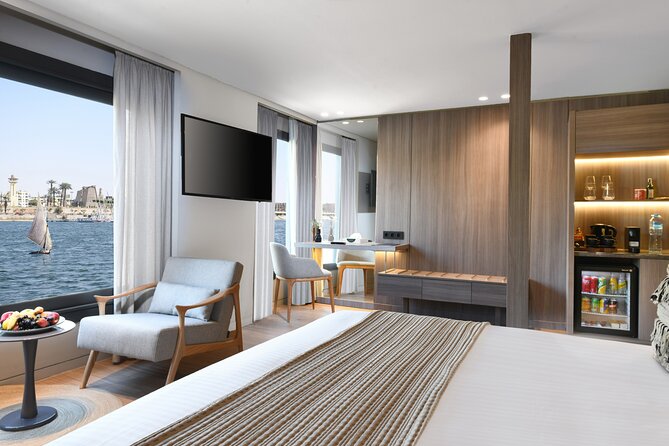
- Modern boutique comfort: clean, spacious rooms with views and a calm top-deck feel
- Temple order that tracks the story: East Bank power first, then royal west bank, then Ptolemaic highlights
- Guides can raise the whole day: people named Egyptologists like Mohammed for clear explanations
- Personal feel despite group pacing: the operator states a maximum of 2 travelers
- Watch for weak connectivity: at least one review flagged internet and WhatsApp reliability
More boats sailing the same stretch
- From Luxor: 3-Night Nile Cruise to Aswan and Hot Air Balloon★ 3.7 · 297 reviews
- 5 Days Private Guided Nile River Cruise Tour from Luxor to Aswan★ 5.0 · 229 reviews
- Historia Hotel Nile Cruise, Mon. from Luxor 4 nts inc. Excursions★ 5.0 · 185 reviews
- From Luxor: 5-Day Nile Cruise to Aswan with Balloon Ride★ 4.2 · 168 reviews
Historia Nile Cruise, Luxor to Aswan: The experience in plain terms
This is a Luxor-to-Aswan Nile cruise built around guided sightseeing and full-board comfort. The schedule runs about 5 days, and the stated start is 12:00 pm at Luxor Airport, with the cruise ending in Aswan at the Nile Cornish Street port.
A key value point is what’s included. Your price lists all fees and taxes, accommodation on a full board basis, and sightseeing fees for the visits in the itinerary. You also get transfers by a modern, air-conditioned deluxe vehicle, plus assistance from personnel during your stay and excursions. Practically, that means fewer separate tickets and fewer “wait, who is responsible for this?” moments during a trip where time and logistics already feel intense.
Also, pay attention to the tour pacing. The itinerary is described as sharing Nile cruise group excursions, but the operator states a maximum of 2 travelers. In real life, that often translates to you feeling more personal than the typical mass-tour vibe, as long as the guide and driver are doing their job and not herding you through sites at breakneck speed.
One more practical note: the listing is mobile ticket and mentions pickup offered. Still, your transport from and to Historia Nile Cruise is listed as not included, so you’ll want to confirm what your exact transfer coverage covers in your booking details.
Day 1 Karnak and Luxor Temple: East Bank icons, efficiently planned
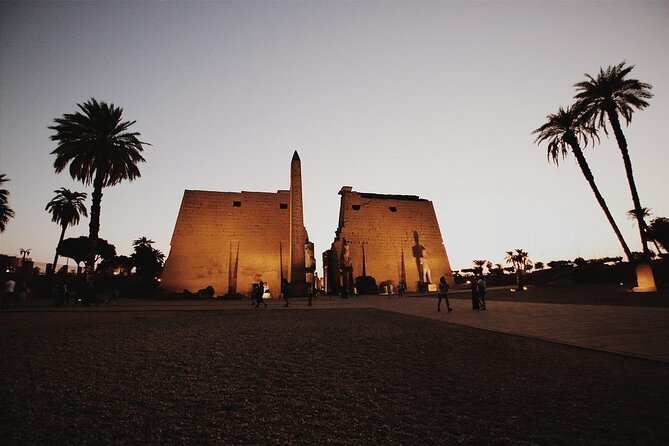
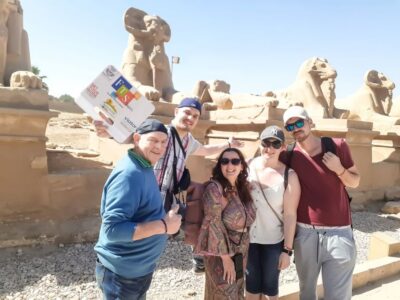
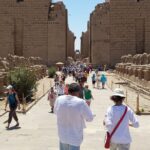
Day 1 sets the tone with the two biggest East Bank names: Temple of Karnak and Luxor Temple.
At Karnak, you’re stepping into the largest religious building ever constructed around 2000 BC, dedicated to Amun, Nut, and Khonsu. The site mixes decayed temples, pylons, chapels, and other structures near Luxor. One interesting detail that matters for how you experience it: in ancient times, this area was called Ipet-isut, meaning The Most Selected Places. That name hints at why Karnak feels like more than one temple, it feels like a religious district that kept growing.
You get about 2 hours, plus the ticket is included. The main drawback with Karnak is also the main reason it’s worth it: it’s huge. Two hours can feel short if you stop to read every inscription, but with a guide you can focus on the most meaningful parts without getting stuck.
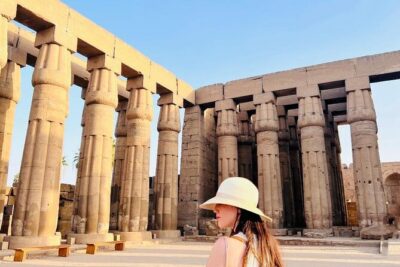
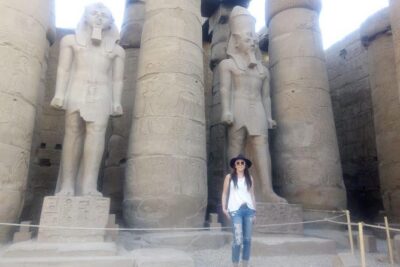
Then comes Luxor Temple, built around 1400 BC on the East Bank. Unlike many temples tied directly to a god or a king, it’s described as dedicated to the rejuvenation of kingship. Historians even link it to coronation tradition, including claims connected to Alexander the Great. You’ll get another 2 hours here, again with admission included.
If you like your history with clear takeaways, this pairing works. Karnak teaches you the scale and the religious logic, while Luxor Temple gives you a more human sense of ceremonial space and power.
Day 2 Valley of the Kings and Hatshepsut: Royal scale on the West Bank
Day 2 switches to the West Bank with two heavy hitters: the Valley of the Kings and the Temple of Hatshepsut.
The Valley of the Kings is a burial ground where, to date, 63 tombs have been unearthed. The rooms range from simpler spaces to elaborate layouts. The itinerary description specifically points to corridors with many chambers and notable pharaoh names such as Ramses II, Tutankhamen, and Seti I. It also notes that the valley became a UNESCO World Heritage Site in 1979.
Two hours with this kind of site is a reality check. You won’t see everything, and that’s not a failure. Instead, use the guide to pick what matters most and learn how tomb design reflects rank, time, and belief. If you try to treat it like a museum checklist, it can feel overwhelming. If you treat it like a guided lesson in how power and belief were built into stone, it clicks.
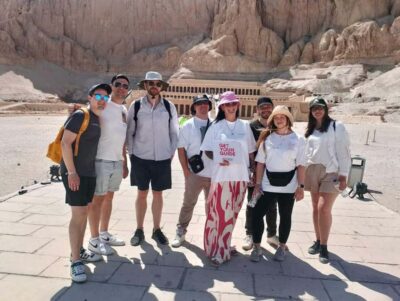
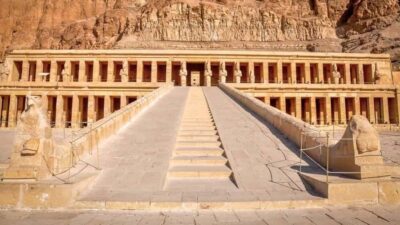
Next is Temple of Hatshepsut at Deir el-Bahari, also known as Djeser-Djeseru, beneath the cliffs. Hatshepsut is famous because of the message in the reliefs. The description says the temple recites the story of the divine birth of a first-of-its-kind female pharaoh. It’s built in dedication to Hatshepsut and Amun, and it sits next to the Mortuary Temple of Mentuhotep.
You get 2 hours again, with admission included. The biggest “consideration” here is heat and time on your feet. West Bank days can feel more physically demanding than East Bank ones, so wear good walking shoes and plan to pace yourself.
Day 3 Kom Ombo and Edfu Horus Temple: Two gods, one striking design
Day 3 is built around the Ptolemaic-era temple experience, starting with Kom Ombo and finishing with Edfu’s Horus Temple.
Temple of Kom Ombo is special because it’s a double temple, constructed in Aswan during the Ptolemaic dynasty. The key feature is duplication, with halls, rooms, courts, and sanctuaries designed for two gods. One half is dedicated to Sobek, the crocodile god, and the other to Horoeris (Horus the elder). The itinerary description emphasizes symmetry along an axis, and when you stand there, that symmetry becomes the whole point of the visit.
Again, you get about 2 hours including admission. The advantage of choosing Kom Ombo here is that it gives you a break from the same-feeling temple layout you get at other sites. It’s a “look at the structure” visit as much as a “read the story” one.
Then it’s Temple of Horus in Edfu. Edfu is described as a historical town on the west bank of the Nile between Esna and Aswan. The Horus Temple was built from sandstone blocks between 237 BC and 57 BC, and it’s noted as one of the best-preserved temple ruins. The walls have inscriptions that reveal insights into myth, religion, and language in ancient Egypt.
You get 2 hours here with admission included. This is the temple day that tends to satisfy people who want “more than photos.” When you have a guide doing translation-level interpretation without drowning you in jargon, Horus Temple can feel like a controlled deep read.
Day 4 Philae and the Unfinished Obelisk: Sacred island space and a giant stopped mid-sentence
Day 4 brings you to Aswan area temples and stonework drama, with Temple of Philae and the Unfinished Obelisk of Queen Hatshepsut.
Temple of Philae is paired with details in the itinerary that point to the surrounding area: Elephantine Island, downstream of the First Cataract, described as on the southern border of Upper Egypt with Lower Nubia. Elephantine is said to mean both elephant and ivory, tied to the island’s role in trading ivory. The description also gives size details for the Philae area, noting it measures about 1200 meters from north to south and about 400 meters at its widest point.
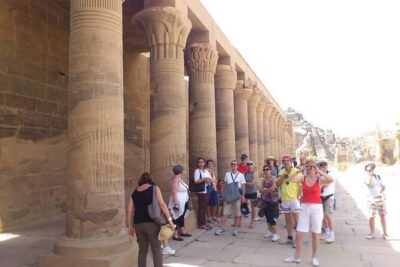
Two hours is enough to get the core idea: Philae is a living-feeling sacred site. It’s not just “ancient stones,” it’s a temple complex positioned in a place people have long relied on for crossing, trade, and power.
Then you move to the Unfinished Obelisk, carved in an Aswan quarry and abandoned thousands of years ago. It’s described as over 3,500 years old, and nearly one-third bigger than any ancient Egyptian obelisk would have been. If completed, it would have weighed around 1,090 tons and been about 42 meters high. Here’s the human moment: carving was abandoned when cracks appeared in the granite after the creators began to carve it out of bedrock.
This stop is valuable for one big reason: it shows you the process, not just the result. Most monuments hide the struggle. This one documents how and why it stopped.
Day 5 Aswan views and a final easy landing
Day 5 is intentionally light. The itinerary lists Aswan as a “just enjoying the spectacular views” moment before checking out.
You’ll get about 2 hours, and the admission is free because this part is about timing and scenery rather than tickets. For me, this last day is smart because it gives your body a break after several temple days and helps the trip feel less like nonstop sprinting.
Aswan is a fitting finish because it connects the journey of the Nile to the sense of “where things widen and slow down.” You leave with fewer “what did I just see?” moments and more “I remember the view” memories.
What the ship life feels like: rooms, top deck time, and Chef Mahmoud’s meals
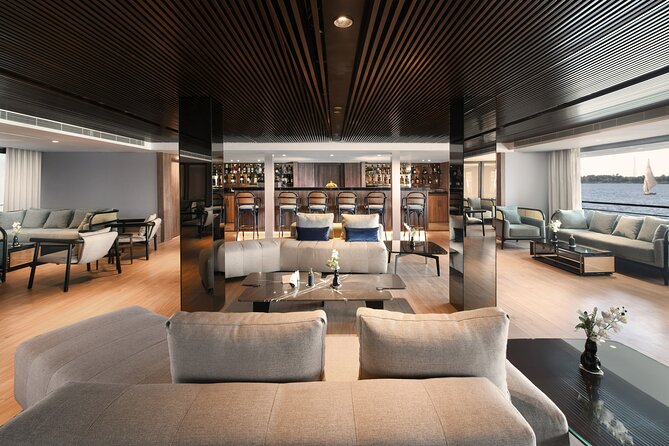
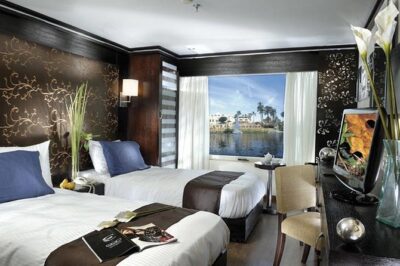
The Historia is marketed as a boutique hotel Nile cruise, and the most repeated compliments are about condition and comfort. People describe the ship as clean and modern, with spacious rooms and good Nile views. One recurring theme is the sense that the staff is organized and responsive.
Food is where this cruise earns its reputation. Multiple reviews highlight that dining is fresh, flavorful, and presented with real care. Several people called out Executive Chef Mahmoud, and one review specifically mentioned how the kitchen accommodated multiple food restrictions without making people feel singled out or forced to compromise.
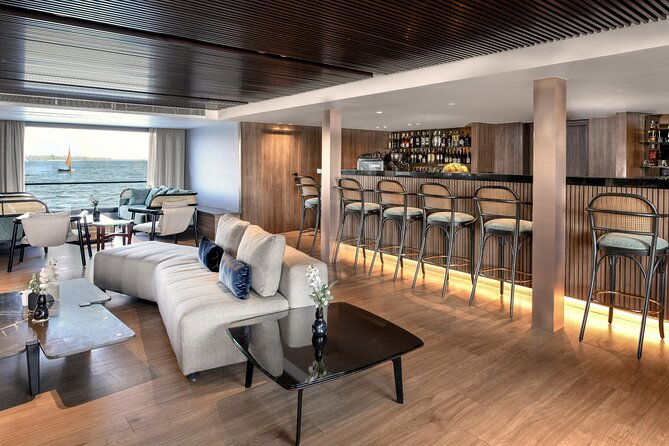
Onboard, you’re also in the zone for lingering. Reviews mention a top deck, and at least one person described dining on the deck as the sun set over the Nile. That matters because the Nile cruise part is not only transportation. It’s time to slow down, digest what you saw, and let the day’s history “settle” before the next outing.
Entertainment is another detail that pops up. At least one review mentioned nightly entertainment, and another highlighted an Egyptian buffet night. That’s not a guarantee that every night will be equally special, but it suggests you won’t be staring at a wall after dinner.
What about the spa? The experience overview mentions Seneb spa and pampering. The included list doesn’t spell it out, so treat it as something to check when you book, rather than something you can assume is part of the base price.
One caution from real feedback: internet. At least one review said the internet needed updating and that contacting the boat by WhatsApp could be frustrating, plus a warning about WhatsApp security. If you rely on consistent connectivity, plan to operate with an offline mindset.
Price and value: Is $3,498 per person worth it?
Let’s talk money without pretending it’s cheap. $3,498 per person is premium pricing. The “value case” here comes from how the package is built.
First, you get full board: breakfast (4), lunch (4), and dinner (4). Second, your price lists all fees and taxes plus sightseeing fees for the included stops. Third, you’re covered for transfers by an air-conditioned vehicle and you get personnel assistance during your stay and excursions.
So what you’re buying is not just a room on a boat. You’re buying less friction: fewer separate tickets, fewer separate negotiations, and a guided structure that helps you see major sites in a logical order.
The other value multiplier is personal attention signals. The operator states a maximum of 2 travelers, which can matter on tours where crowds can otherwise steamroll your experience. Add in the repeated praise for staff attentiveness and the fact that named guides like Mohammed were described as attentive and even Spanish-speaking, and the package starts to look like “pay once, get guided.”
Not included is important too: transport from and to Historia Nile Cruise is listed as not included. That means your final “true cost” depends on how you handle airport and meeting-point transfers outside the package.
If you’re the kind of traveler who would normally pay for a driver, a guide, and well-run logistics separately, this price can start to feel less extreme.
Who this cruise suits best (and who should think twice)
This is a great fit if you want Egypt history with structure, plus the comfort of a modern ship. I’d especially recommend it to:
- Couples who want temple days paired with calm river evenings
- People who care about food and service, since the chef and dining experience show up again and again in feedback
- Families, since at least one review mentioned special attention for kids
- Anyone who wants a guide’s explanation, not only photos, and who appreciates clear narration from people like Mohammed
I’d think twice if your trip depends on stable online connectivity, because at least one review flagged problems with internet and WhatsApp.
Also, this is not a DIY route. You can see it as a strength or a limitation depending on your style.
Should you book Historia Hotel Nile Cruise for Luxor to Aswan?
I think this cruise is a solid booking choice if you’re aiming for premium comfort, excellent meals, and guided temple days that don’t leave you scrambling for context. The strongest reasons to say yes are the modern ship comfort, the repeated praise for Chef Mahmoud and service, and the way the itinerary covers major sites like Karnak, the Valley of the Kings, Hatshepsut, Kom Ombo, Edfu, and Aswan highlights.
Book it if:
- You want guided visits with an Egyptologist-style explanation
- You care about dining and clean, comfortable rooms
- You prefer paying for a package rather than building the logistics yourself
Check before you commit if:
- You need reliable internet for work or constant messaging
- You want maximum flexibility and fewer scheduled sightseeing blocks
- You want to confirm what your exact airport-to-ship and ship-to-airport movement includes, since some transport fees are listed as not included
If you want a Nile cruise where the days are well-managed and the evenings actually feel like a break, Historia is built for that.
FAQ
How long is the Historia Nile Cruise from Luxor to Aswan?
The duration is listed as approximately 5 days.
What cities does this itinerary cover?
It starts in Luxor and ends in Aswan.
What meals are included?
Breakfast is listed as 4, lunch as 4, and dinner as 4, with accommodation on a full board basis.
Are temple entrance fees included?
Yes. The itinerary indicates admission tickets are included for the stops listed.
Does the price include sightseeing and transfers?
The included section says sightseeing fees are covered and that transfers are provided by a modern air-conditioned deluxe vehicle. Transport fees from and to Historia Nile Cruise are listed as not included.
Are pickup and mobile tickets part of the experience?
Pickup is offered, and the tour/activity includes mobile ticket.
Is there a limit on group size?
The experience lists a maximum of 2 travelers.
Is this cruise refundable if you cancel?
No. The experience is non-refundable and cannot be changed for any reason, based on the cancellation policy provided.
Does weather affect the trip?
Yes. The experience requires good weather, and if it is canceled due to poor weather, you are offered a different date or a full refund.
Sailing Luxor to Aswan



More of Luxor from our review pile
- Private Tour Nile Felucca Ride at Sunset in Luxor
★ 5.0 · 26 reviews - Private Full day East and West Bank, Luxor
★ 5.0 · 26 reviews - Luxor Day Tour: Kings Valley & Karnak & Luxor & Hatshepsut Temple
★ 5.0 · 26 reviews - Full-Day East and West Luxor Private Tour
★ 4.5 · 26 reviews - Day Trip to Edfu & Kom Ombo temples from Luxor and drop off in Aswan or Luxor
★ 5.0 · 26 reviews - 5 Days 4 Nights Nile Cruise Tour
★ 5.0 · 27 reviews
Nile Cruises Between Luxor and Aswan, compared.
 ★ 5.04-Days Nile Cruise From Aswan To Luxor including Abu Simbel and Hot Air BalloonFrom $3493,142 reviews
 ★ 4.54-Day 3-Night Nile Cruise from Aswan to Luxor including Abu Simbel, Air BalloonFrom $329612 reviews
 ★ 4.14-Day Nile Cruise from Aswan to Luxor with GuideFrom $830593 reviews
★ 4.54-Days Nile Cruise From Aswan To Luxor including Abu Simbel and Hot Air BalloonFrom $320509 reviews
★ 4.14-Day Nile Cruise from Aswan to Luxor with GuideFrom $830593 reviews
★ 4.54-Days Nile Cruise From Aswan To Luxor including Abu Simbel and Hot Air BalloonFrom $320509 reviews
 ★ 5.04-Day 3-Night Nile Cruise from Aswan to Luxor – Private TourFrom $504369 reviews
★ 4.54 Days Nile Cruise from Aswan to Luxor including Abu Simbel and Hot Air BalloonFrom $329356 reviews
★ 5.04-Day 3-Night Nile Cruise from Aswan to Luxor – Private TourFrom $504369 reviews
★ 4.54 Days Nile Cruise from Aswan to Luxor including Abu Simbel and Hot Air BalloonFrom $329356 reviews
 ★ 5.04-Day 3-Night Nile Cruise from Aswan to Luxor With Balloon and Abu SimbelFrom $311327 reviews
 ★ 5.04-Days Nile Cruise Aswan&Luxor,Hot Air Balloon&Abu Simbel.Hot dealFrom $524322 reviews
The lists this one sits on