
REVIEW · LUXOR WEST BANK TEMPLES & TOMBS
Private Tour Valley of the Kings and Queens and Hatshepsut Temple
Luxor goes full-on ancient fast, and this private tour is built for first-timers. You’ll cover the big monuments on the west bank, with a personal Egyptologist guide and an air-conditioned private car. I like the time-efficient route and the way the guide turns tomb art into real stories, from foreign tributes in Ramses III to the royal women of the Queens. One thing to plan for: entrance fees for specific tombs are optional and add up, and a few tombs may be closed depending on day-to-day site operations.
This is also one of those tours where comfort matters. Hotel pickup, fewer logistics headaches, and clear stop-by-stop sequencing means you spend more time looking up at carved walls and less time figuring out where to go next. The only potential drawback is pacing: the schedule is tight, so if you hate rushing, you may want to choose fewer tombs or bring a calm attitude for quick, focused visits.
In This Review
- Key Things You’ll Notice on This Private Luxor Kings and Queens Tour
- Price and Logistics: What $60 Per Person Really Buys
- Stop by Stop: Valley of the Kings with Meaning, Not Just Names
- Tomb of Ramses III (KV 11): Sunken Reliefs and Foreign Tributes
- The Valley of the Kings Core: Four Royal Tombs Plus Tutankhamun
- Tomb Highlights You’ll Feel: Ramses IX and Merenptah’s Wall Logic
- Tomb of Ramesses IX: Goddess Nut Over the Sarcophagi
- Tomb of Merenptah: How Protection Themes Show Up
- King Tutankhamun: The Short Visit That Gets Big Credit
- Deir el Bahari and Hatshepsut: Why the Setting Feels Like Part of the Story
- Valley of the Queens (Wadi El Malakat): Where the Royal Lives Show Up
- Tomb of Queen Titi: A Quick, Focused Stop
- Queen Nefertari’s Tomb: The Optional Splurge That Many People Don’t Regret
- Colossi of Memnon: A Visual Payoff Before You Head Back
- Gift Shops, Pushy Sales, and How to Stay in Control
- Who This Tour Best Fits
- Should You Book This Private Luxor Kings and Queens Tour?
- FAQ
- What time does the tour start?
- How long is the private tour?
- Is pickup included?
- Is this tour private?
- Do I need to pay entrance fees?
- What are the optional entrance fees for King Tutankhamun and Queen Nefertari?
- What tombs and temple stops are included?
- What is the cancellation policy?
Key Things You’ll Notice on This Private Luxor Kings and Queens Tour
- Egyptologist guide at your side, so explanations actually match what you’re standing in front of
- Valley of the Kings set up for contrast, with major tombs plus the world-famous Tut experience
- Valley of the Queens beyond the obvious, with Wadi El Malakat and the optional Tomb of Nefertari
- Deir el Bahari and Hatshepsut, where the setting and the symbolism work together
- Private, climate-controlled transfers, which is a big deal in Luxor’s heat
- Gift shop pressure is real, so go in prepared with a firm no and sunglasses
Other tomb tickets in the valley
- Hurghada: Luxor Valley of the Kings & Tutankhamun Tomb Trip★ 4.7 · 13,208 reviews
- Luxor Day Trip from Hurghada Small Group & Tutankhamun Tomb★ 4.8 · 5,366 reviews
- Luxor Day Tour: Valley of Kings & Queens & Hatchepsut Temples★ 5.0 · 1,496 reviews
- Luxor: Valley of the Kings and Hatshepsut Temple Day Tour★ 4.4 · 1,404 reviews
Price and Logistics: What $60 Per Person Really Buys
At $60 per person for a roughly 5 hour 35 minute private tour, you’re paying for three main things: a qualified Egyptologist guide, hotel pickup and drop-off, and transport in a private air-conditioned vehicle. That part is what makes this good value. If you try to piece it together yourself, the coordination and transport time can eat the day.
The tricky bit is entrances. The details you have here clearly say entrance fees are not included overall, with specific optional tomb fees listed in Egyptian pounds for King Tutankhamun and Queen Nefertari. At the same time, one description line mentions entrance fees being included. Because the information is mixed, I’d treat it as: entrance fees are likely extra, and you should confirm exactly what’s included for your ticket set before you go.
Also note the timing. The tour starts at 8:00 am, and the itinerary stacks major sites back-to-back. That early start matters because you want cooler temperatures for the west bank valleys, and you want your best light for photos.
Stop by Stop: Valley of the Kings with Meaning, Not Just Names
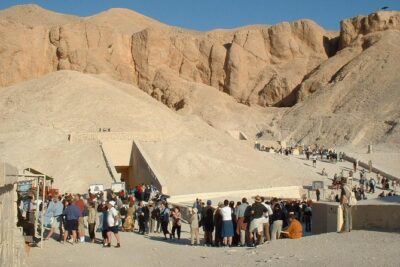
This tour’s first half is all about the Valley of the Kings area, where the architecture is built to impress, and the wall scenes are built to protect the dead.
Tomb of Ramses III (KV 11): Sunken Reliefs and Foreign Tributes
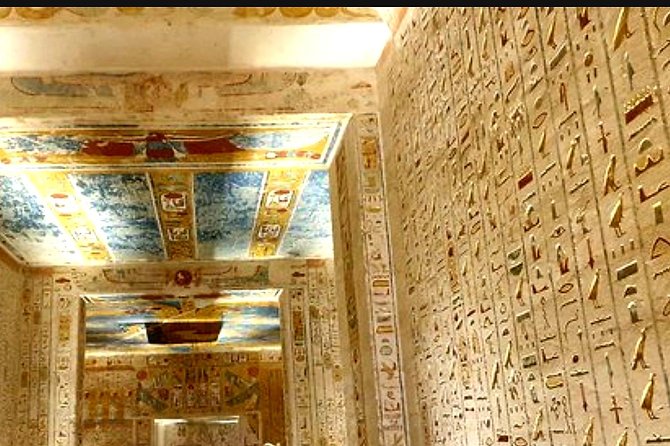
You start at the Tomb of Ramses III in the Valley of the Kings, KV 11. This tomb is known for its complex layout and colourful painted sunken reliefs, including ritual texts like the Litany of Ra and the Book of Gates. What I love about this stop is the way it shifts from the religious to the oddly human.
In the side rooms near the entrance corridor, you get secular scenes. These include foreign tributes: detailed pottery imported from the Aegean, royal armoury items, and boats. There’s even a chamber tied to blind harpists, which gave the tomb an alternate name, the Tomb of the Harpers.
This is a great first stop because it sets expectations. You’re not just looking at burial chambers. You’re seeing a whole worldview, including how Egypt positioned itself in a wider world of people and goods.
Practical tip: tombs like this reward patience. Even a short visit feels longer when you’re looking for the same themes your guide points out.
The Valley of the Kings Core: Four Royal Tombs Plus Tutankhamun
After Ramses III, you move into the Valley of the Kings for a run through four royal tombs. The stops listed include the Tomb of Ramses, the Tomb of Horemheb, the Tomb of Merenptah, and the Tomb of King Tutankhamun.
King Tutankhamun’s tomb is the one that was discovered nearly intact in 1922 by Howard Carter. In this tour format, you’re given the chance to see the royal mummy in the tomb, not just rely on photos from afar. If you’re the kind of person who gets goosebumps from history in your face, this is the part.
Also, the guide role matters here. Tut is famous worldwide, but the other tombs are how you understand the system. You’ll get a bigger picture of how the Valley functioned as a royal burial network.
Watch the pace: the listed time for each tomb is short. If you want to linger, you’ll need to communicate that early, because the schedule is designed to cover multiple sites.
West bank tombs, one by one
Tomb Highlights You’ll Feel: Ramses IX and Merenptah’s Wall Logic
Tomb of Ramesses IX: Goddess Nut Over the Sarcophagi
Next comes the Tomb of Ramesses IX. This pharaoh was originally named Amonhirkhopshef, and the tour description places him as crown prince after his father’s reign progressed, following the early deaths of his elder brothers. You’re not expected to memorize genealogy. You’re expected to understand that royal succession shaped these burial decisions.
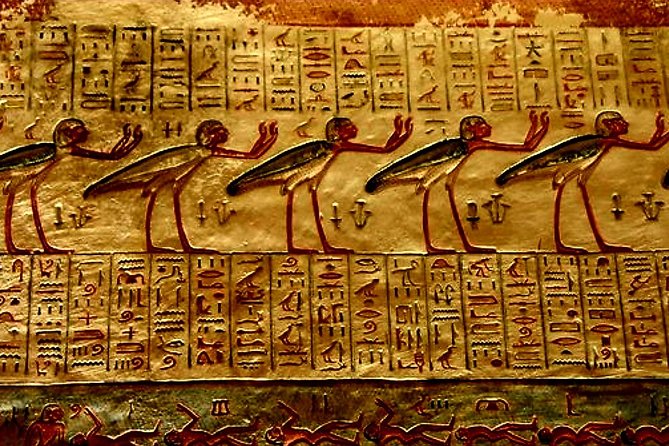
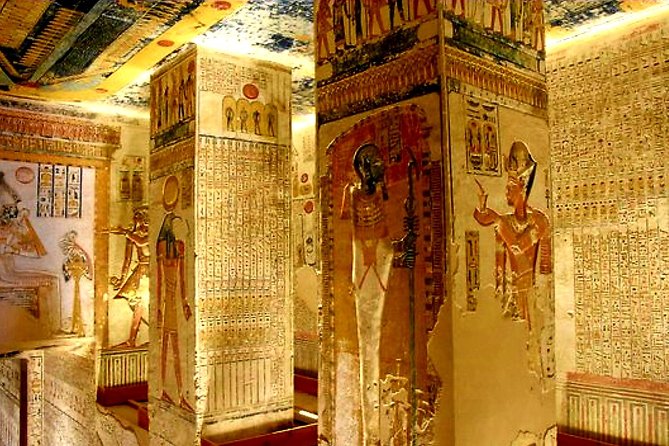
Visually, this stop sounds like a wall-painting lover’s dream. There’s a ceiling above the sarcophagi with the goddess Nut stretching across the space. The sarcophagus is described as one of the largest in the valley, even though some paintings have deteriorated. Even with wear over time, the sheer decoration is the point.
If your eyes tend to glaze over when you see a lot of symbols, ask your guide to point to the same elements twice. It helps you build pattern recognition instead of random sightseeing.
Tomb of Merenptah: How Protection Themes Show Up
Then you visit the Tomb of Merenptah. The description ties this to Egyptian mythology and the idea of protective divinities placed to accompany the dead. It mentions Ptah, including the falcon form connected to deities that support the journey.
It also notes Howard Carter discovered Tomb 8 in 1903. Another detail worth paying attention to is the shift in design. The write-up you have says there’s a decrease in lateral rooms, and a dramatic increase in the height of corridors and rooms. That’s not trivia. It means the architecture changes how you experience the space, and it affects how scenes are framed when you’re walking inside.
This is a good stop if you want to see how tomb design evolves, not just how art looks.
King Tutankhamun: The Short Visit That Gets Big Credit
You’ll get time at the Tomb of King Tutankhamun, with the chance to see the royal mummy in his tomb. Your information includes an optional entrance fee of 300 EGP.
This matters for two reasons. First, the tomb is the one most people already know by name, so it can anchor the day. Second, it’s one of the most powerful moments because your brain connects the artwork to a real body, at least through what’s displayed.
Be realistic about time. The itinerary sets aside a short window. If you’re prone to stopping for every detail, you might want to focus on a few things and let the rest be part of the atmosphere.
One more practical note, from hard-earned travel experience: this area also draws more tout activity nearby. Keep moving with your group. If shop sellers get pushy, sunglasses and a firm no help you stay calm and avoid getting pulled into bargaining mode.
Deir el Bahari and Hatshepsut: Why the Setting Feels Like Part of the Story
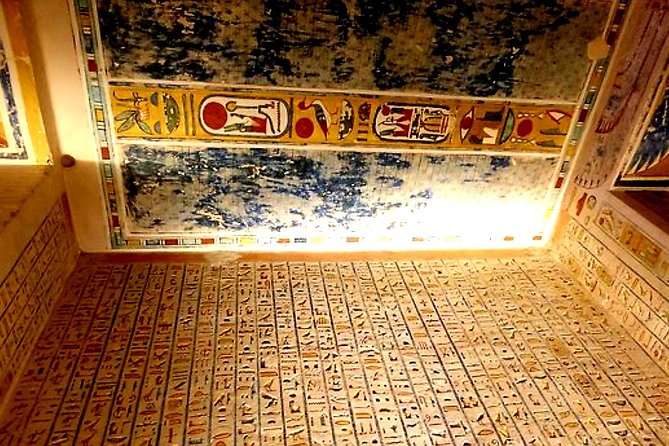
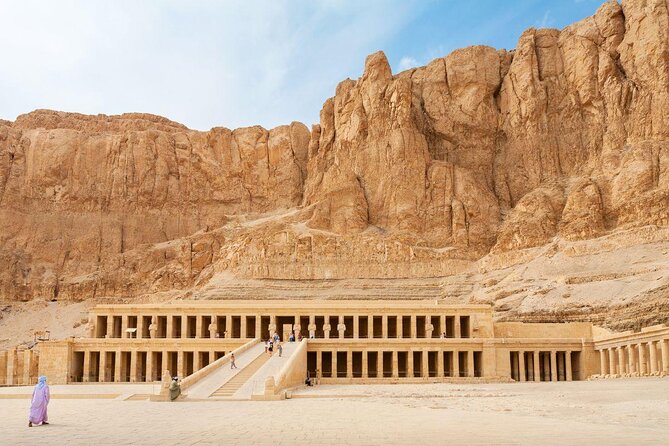
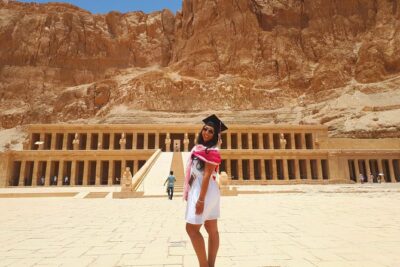
After the Valley of the Kings stops, you head to the Temple of Queen Hatshepsut at Deir el Bahari. The tour description emphasizes that she’s the only woman ever to reign over Egypt as Pharaoh, and it also frames her as an ancestor of Tutankhamun belonging to the same dynasty.
Here’s what makes this stop click for first-timers. You don’t just stand in front of isolated ruins. You’re in a dramatic setting that matches the symbolism. The temple’s scale and terrace design make it feel like power you can walk through, and the guide commentary gives you the political and religious why.
This is also where your day starts to breathe. You’re moving from tight tomb corridors to open architectural space, and it’s a nice reset.
If you want great photos, aim to slow down near the main structures and let the lines of the terraces pull your eye. Your guide will likely point out details worth photographing, but you can also just enjoy the geometry.
Valley of the Queens (Wadi El Malakat): Where the Royal Lives Show Up
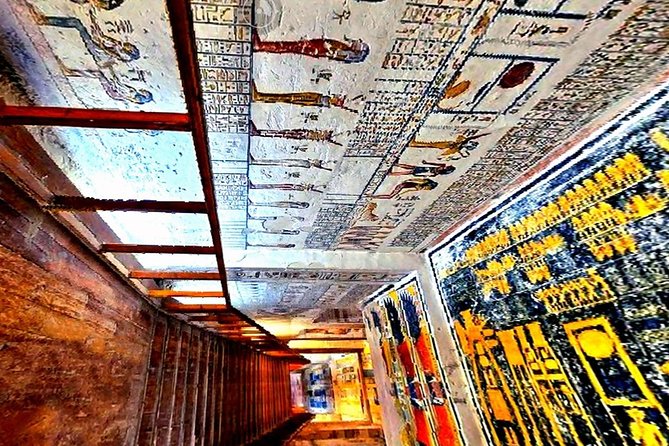
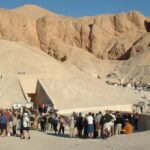
Next you go to the Valley of the Queens, also called Wadi El Malakat. The name you’re given is Ta Set Neferu in ancient times, which can mean the Place of Beauty, or Place of Royal Children and Wives. It was used in the New Kingdom for burials of royal wives, princesses, and princes.
This stop is listed as time for the valley itself, with rugged limestone cliffs and curving paths. Even with limited time, this is a powerful change from the Valley of the Kings. The Queens’ Valley feels more intimate, and the scenery makes it easier to imagine families living their roles within palace structures, not just kings disappearing into monumental tombs.
Tomb of Queen Titi: A Quick, Focused Stop
You also visit the Tomb of Queen Titi, with a brief time window listed. With shorter tomb visits, I like focusing on how the scenes are laid out and whether they look more decorative or more functional. Your guide can help you interpret those differences fast.
Queen Nefertari’s Tomb: The Optional Splurge That Many People Don’t Regret
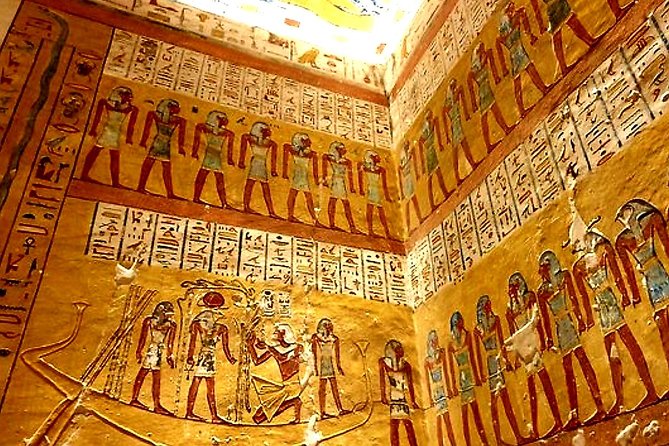
The tour includes an optional entrance fee for the Tomb of Queen Nefertari of 1400 EGP. That price is a clue: this is not a casual add-on.
Nefertari is described as one of the most famous queens in ancient times, equal with Nefertiti and Cleopatra, and she’s presented as the beloved wife of Ramses the Great. The tour description also says Ramses built her tomb to be among the most beautifully decorated and splendid in the Valley of the Queens.
Should you pay extra? If you have even a mild obsession with royal women in ancient Egypt, this is the kind of stop that can justify the cost. If you’re on a tight budget or you already feel tomb fatigued, you could skip it and keep your energy for the Hatshepsut and Memnon highlights.
Either way, ask your guide what changes about your day when you add Nefertari. The schedule is tight, so you want to know where you’ll lose time if you choose this option.
Colossi of Memnon: A Visual Payoff Before You Head Back
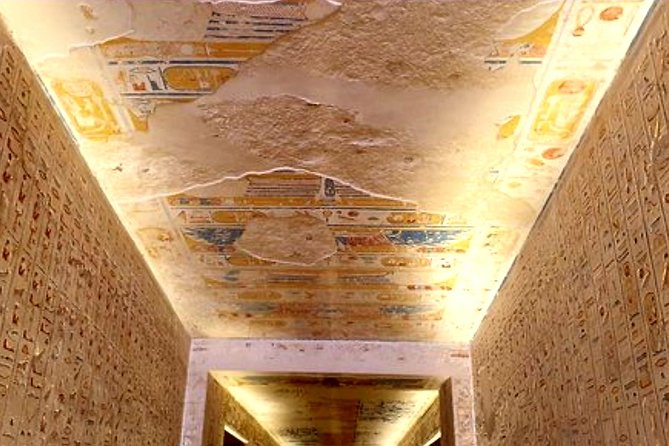
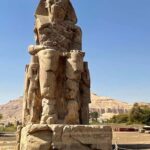
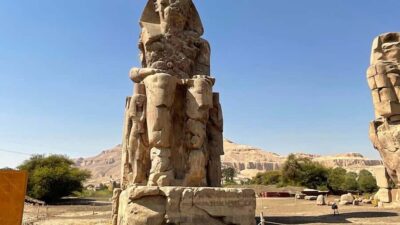
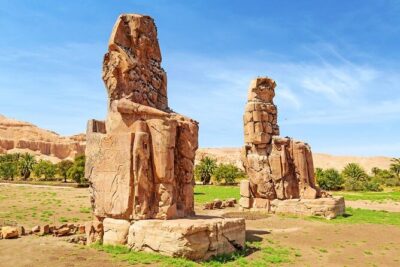
After the Queens’ Valley, you’ll see the Colossi of Memnon. The tour notes these are the two largest ancient statues in Egypt, dating to the era of King Amenhotep III. It also links Amenhotep III as the father of Akhenaten and grandfather of King Tutankhamun.
This is a classic Luxor moment for two reasons. One, it’s visible from a distance, so it’s less dependent on your ability to interpret wall art. Two, it ties the timelines together, because you can mentally connect it to Tut’s world without a lecture.
Your itinerary includes a transfer back to your hotel by air-conditioned vehicle after touring the sites, so you get a clean finish.
Gift Shops, Pushy Sales, and How to Stay in Control
One recurring real-world issue on west bank sites is the gift shop pressure. You’ll likely pass through areas where sellers talk loudly and try to pull you off your planned route.
Your best defense is simple:
- Wear dark sunglasses if the direct attention bothers you.
- Keep your answers short. A firm no works better than a long explanation.
- Stay with your guide and your group so you don’t get separated.
Also, this tour is private, which helps. You can keep your pace and your priorities without random interruptions from strangers.
Who This Tour Best Fits
This is best for you if:
- You’re a first-timer in Luxor and want a big hit list without dealing with transit math.
- You like guided context for tomb art and royal timelines.
- You’d rather sit in a climate-controlled car for the transfers than bake in the sun while searching for the next site.
It may not be ideal if:
- You want lots of slow wandering time in each tomb. The schedule is designed for coverage.
- You hate optional upsells like entrance fees for Tut and Nefertari. Those are part of the math.
Should You Book This Private Luxor Kings and Queens Tour?
I’d book it if you want a well-structured, Egyptologist-led overview of Luxor’s west bank, and you value a private car and pickup to protect your time. The biggest win is the way the route strings together tombs and temples so the day feels like a theme, not a random checklist.
Before you confirm, do one quick homework step: ask exactly what entrances are included versus optional, especially for King Tutankhamun and Queen Nefertari. Then decide if you want to pay for Nefertari as an extra highlight. If you handle that part, this is the kind of day that helps Luxor click fast.
FAQ
What time does the tour start?
The tour start time is 8:00 am.
How long is the private tour?
It runs for about 5 hours 35 minutes.
Is pickup included?
Yes. Hotel pickup and drop-off are included, and you travel in an air-conditioned private vehicle.
Is this tour private?
Yes. It is a private tour/activity, so only your group participates.
Do I need to pay entrance fees?
Entrance fees are listed as not included, and you should budget for them. The tour also lists optional entrance fees for specific tombs, including King Tutankhamun and Queen Nefertari.
What are the optional entrance fees for King Tutankhamun and Queen Nefertari?
The entrance fee for the tomb of King Tutankhamun is listed as 300 EGP (optional). The entrance fee for the Tomb of Queen Nefertari is listed as 1400 EGP (optional).
What tombs and temple stops are included?
The tour includes stops in the Valley of the Kings and the Valley of the Queens, plus the Temple of Hatshepsut at Deir el Bahari. The itinerary lists Tomb of Ramses III, Valley of the Kings tomb visits including Tutankhamun, Ramses IX, and Merenptah, plus Valley of the Queens (including Tomb of Queen Titi and the optional Tomb of Queen Nefertari). It also includes the Colossi of Memnon.
What is the cancellation policy?
You can cancel for a full refund if you cancel up to 24 hours in advance of the experience’s start time. If you cancel less than 24 hours before, the amount paid is not refunded.
The West Bank, Tomb by Tomb
Down Into the Kings Valley
More of Luxor from our review pile
- Hot Air Balloon Ride and Tour to Valley of Kings Luxor- Special Offer
★ 5.0 · 15 reviews - 4-Hours tour West Luxor bank :Hatshepsut Temple & Valley of the King with Lunch
★ 5.0 · 15 reviews - Tour From Luxor to Aswan Edfu, Kom Ombo, Philae and High Dam
★ 5.0 · 15 reviews - Private Half-day Dendera Temple
★ 5.0 · 15 reviews - Luxor Airport Departure: Convenient Private Hotel Transfer
★ 5.0 · 15 reviews - Dahabiya Nile Cruise From Luxor To Aswan 4 Nights 5 Days
★ 4.5 · 15 reviews
Luxor West Bank Temples & Tombs, compared.
 ★ 5.0Luxor Day Tour: Valley of Kings & Queens & Hatchepsut TemplesFrom $891,496 reviews
 ★ 5.0Full Day Tour to East and West Banks of LuxorFrom $151,449 reviews
 ★ 4.4Valley of the Kings and Hatshepsut Temple Day TourFrom $501,404 reviews
 ★ 5.0Valley of Kings, Hatchepsut Temple ,Karnak & Luxor-DayTourFrom $95735 reviews
 ★ 5.0Full Day Tour of Luxor West Bank Temples and Tombs (Private)From $20722 reviews
 ★ 5.0Private Full-Day Luxor Highlights East and West BanksFrom $65663 reviews
 ★ 4.5Guided Tour to East or West Banks with LunchFrom $64604 reviews
 ★ 5.0Luxor Private Full-Day Tour: Discover the East and West Banks of the NileFrom $90545 reviews
The lists this one sits on