
REVIEW · LUXOR WEST BANK TEMPLES & TOMBS
Private Tour to Valley of the Queens, Valley of the Artisans, and Habu Temple
Queens, workers, and war, all on one west-bank loop. This private route threads together the funerary world of royal women and princes at the Valley of the Queens, then shifts to the living and working scene behind the royal tombs at Deir el-Medina (the Valley of the Artisans). You also get time at Medinat Habu, where Ramses III’s walls are still vivid with battle scenes and festival imagery, and you can move at your own pace with a private Egyptologist guide in a private West Bank setup. I especially like that it includes the less-frequented sites, not just the headline ones at Luxor’s Valley-of-the-Kings area, and that you spend real time in tombs you might miss on faster tours.
One drawback to plan for: the whole day is built around a tight 5-hour flow, so if you want to linger on every carving and read every wall, you may wish you had a longer West Bank afternoon. Also, the heat and sun on the west bank can be tough, so you’ll want your hat and water strategy ready.
In This Review
- Key Highlights That Make This Tour Worth It
- Private West Bank Flow, Hotel Pickup, and a 5-Hour Game Plan
- Valley of the Queens, Ta-Set-Neferu Tomb Interiors You Do Not Just Walk Past
- Deir el-Medina, Set Maat, and the People Who Built the Royal Tombs
- Medinat Habu and Ramses III’s Most Visually Persuasive Walls
- Price and Logistics: What You Get for $57 Per Person
- When 3 Tomb Stops Feel Right, and When You Might Want More Time
- Should You Book This Private Queens, Artisans, and Medinat Habu Tour?
- FAQ
- What sites are included in this private tour?
- How long is the tour, and how much time is spent at each stop?
- Is pickup and drop-off included?
- Does the price include entrance fees and transport?
- Is the Queen Nefertari tomb included?
- Is this tour private or shared?
- What is the cancellation policy?
- Is bottled water provided during the tour?
Key Highlights That Make This Tour Worth It
- Valley of the Queens, Ta-Set-Neferu: royal women’s tombs with distinctive entry passage layouts and sarcophagus chambers.
- Three tomb visits in one stop: you do not just look from outside, you step into interiors on a planned route.
- Deir el-Medina, Set Maat: the worker village tied to building the royal tombs, plus a Ptolemaic temple.
- Hathor and Maat temple focus: the Ptolemaic-era cult space connects art and daily belief.
- Medinat Habu’s Ramses III drama: military scenes, rituals, and festivals on some of the best-preserved New Kingdom temple surfaces.
West bank tombs, one by one
- Luxor Day Tour: Valley of Kings & Queens & Hatchepsut Temples★ 5.0 · 1,496 reviews
- Full Day Tour to East and West Banks of Luxor★ 5.0 · 1,449 reviews
- Luxor: Valley of the Kings and Hatshepsut Temple Day Tour★ 4.4 · 1,404 reviews
- Luxor: Valley of Kings, Hatchepsut Temple ,Karnak & Luxor-DayTour★ 5.0 · 735 reviews
Private West Bank Flow, Hotel Pickup, and a 5-Hour Game Plan
This is a private tour on Luxor’s west bank, designed to hit three sites without wasting time. Pickup is from your Luxor hotel or Nile cruise, and you return there after the last temple. You ride in a private air-conditioned vehicle, and you also get bottled water during the tour, which matters when you are out in the open sun.
The schedule is built for focus: about 1 hour at each major stop. That can be a sweet spot. It keeps you from turning the day into a marathon, but it also means you should go in knowing what you want to see most. If you are a tomb-photo person, you might use the time aggressively. If you prefer slow reading and questions, you will still get value, but choose your battles.
The private guide piece is the real difference maker. On a good day, the Egyptologist helps you connect symbols to stories, and you get a sense of why these places mattered to the people who built them. In the real world, guide style can vary, so ask yourself what you want most: narrative storytelling, or lots of independent wandering. Either way, you control the pacing.
Valley of the Queens, Ta-Set-Neferu Tomb Interiors You Do Not Just Walk Past
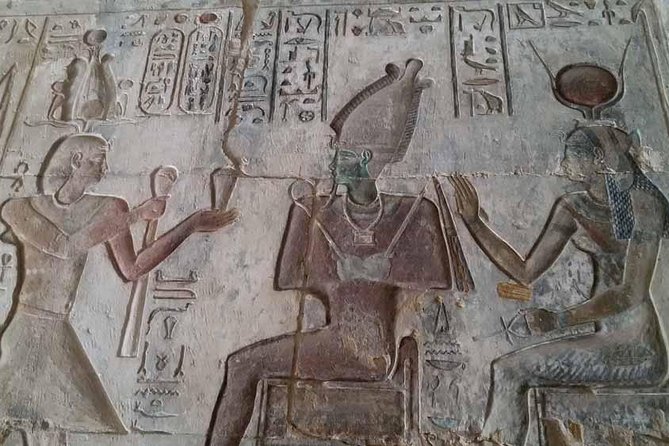
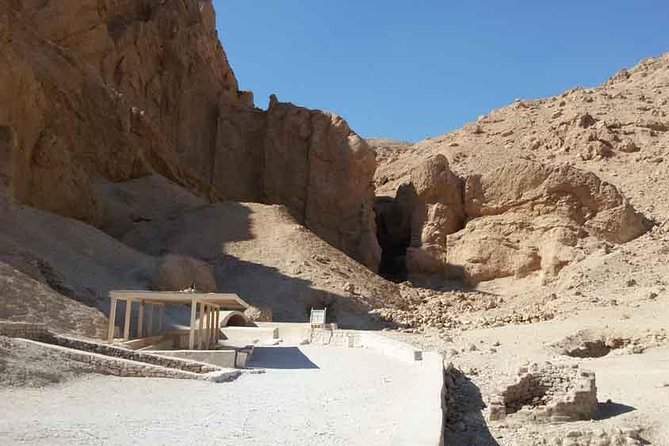
The Valley of the Queens is known in ancient times as Ta-Set-Neferu, meaning the place of beauty. It is tied to wives and sons of pharaohs, so the emotional tone is different from the kings’ valley tombs. Here, you are looking at a world where status, family ties, and royal identity all shaped the burial plan.
This tour starts here, and you visit three tombs. The basic pattern is usually an entrance passage, a few short halls, and then a sarcophagus chamber. That layout matters because your eyes learn how the space is meant to guide you, slowly, toward the burial focus. You also get a time advantage: you are not trying to figure out which tombs are best on your own after a long travel day.
The itinerary mentions the earliest tomb may be that of Sitre, wife of Ramses I. It also points to Ramessid-era tombs associated with royal figures and princes, including names such as Amun-her-khepeshef, Seth-her-khopsef, Khaemwaset, and other relatives from the same broad family orbit. Even if you are still building your Egyptian-history timeline, these names give you a way to anchor what you see.
A practical tip: take a moment before entering each tomb to look at the layout and light. Tombs can feel darker than you expect once you step inside, especially when you are switching between outdoor bright sun and interior shade. If you want photos, plan for quick, careful shots rather than long camera fiddling.
Possible consideration: tomb interiors can limit how much you can comfortably do. If you have mobility concerns, you may want to move slowly and ask your guide what is hardest to reach before you commit to every chamber.
Deir el-Medina, Set Maat, and the People Who Built the Royal Tombs
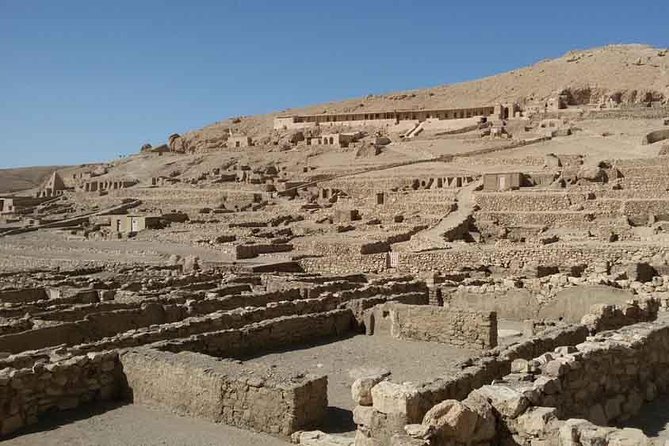
Next comes Deir el-Medina, also called the Valley of the Artisans, a place tied to the idea of Set Maat, the place of truth. This is where the story changes. You go from royal burials to the workers who made those burials real.
Deir el-Medina housed artisans and workmen responsible for constructing royal tombs in the New Kingdom period, during the 18th, 19th, and 20th dynasties, roughly 1550 to 1080 BC. That time window matters because it frames Deir el-Medina as a working community that lived, carved, and organized around royal projects. You are not just seeing artifacts. You are seeing the outline of a job site turned into a lived-in neighborhood.
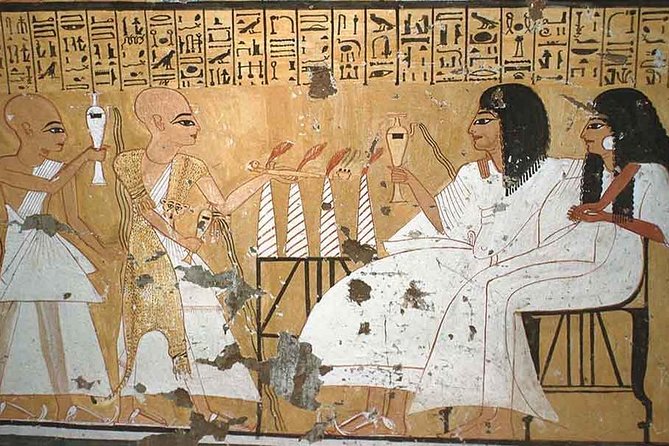
The tour includes three main layers here. First, you explore the ruins of the village settlement. Second, you visit a Ptolemaic temple dedicated to the goddesses Hathor and Maat. Third, you see two of the finest decorated tombs of Sennedjem and Inherkau.
That combo is a smart use of limited time. The village ruins help you imagine the daily routine behind the monumental tombs. Then the Ptolemaic temple shows how later periods kept using the space for worship, not just memory. Finally, the decorated tombs give you the artistic payoff, and you can compare the decorative style and themes against what you saw earlier in the Queens tombs.
What I like for you here is that Deir el-Medina often feels more human. The tombs of Sennedjem and Inherkau are not just names on a ticket. You get to see how someone outside the royal court still received meaningful burial decoration. It shifts your understanding of who mattered in ancient Thebes.
Practical consideration: this stop involves more outdoor walking among ruins. Use the bottled water, and plan for sun exposure. If you hate heat, try to time your photos and rest breaks tightly, rather than spreading them out.
Medinat Habu and Ramses III’s Most Visually Persuasive Walls
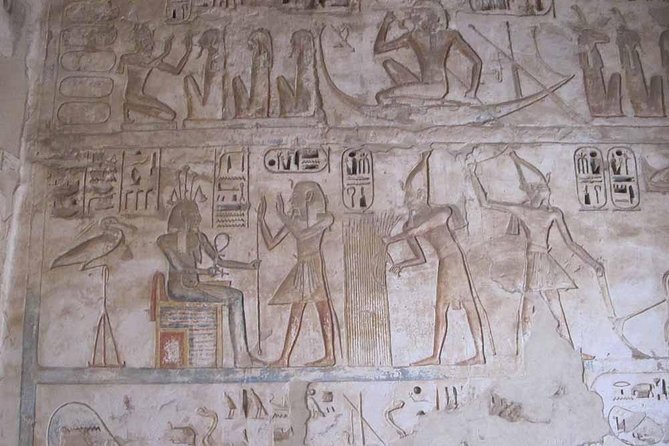
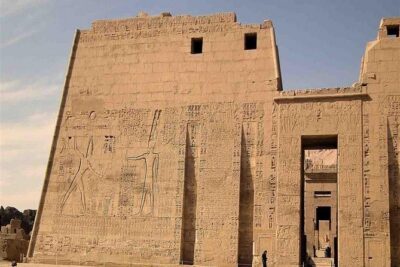
The final major stop is the Temple of Medinat Habu, dedicated to King Ramses III. The site is described as the last great warrior pharaoh of the New Kingdom, and the temple is noted as one of the best-preserved memorial temples from that era. When you arrive, you will feel the shift from funerary intimacy to public statement.
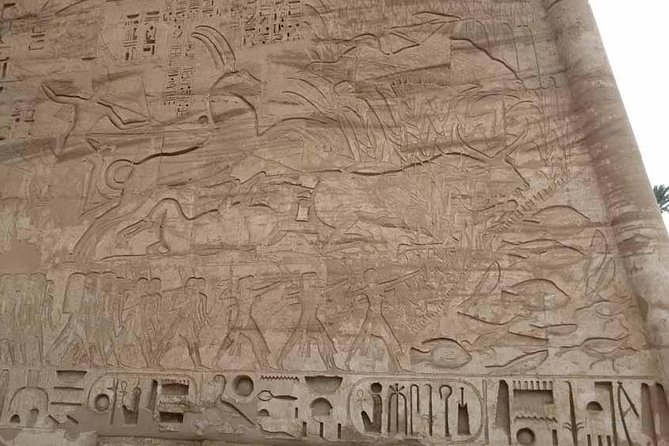
Medinat Habu is decorated with military scenes and texts about the king’s victories. There are also scenes and text tied to rituals and festivals. That matters because these carvings were not meant to be silent. They were tied to ceremony and belief, and the temple’s design supports that message.
The tour also notes the royal palace attached to the south side of the temple, plus priests’ dwellings and administrative units on either side. Even if you are only skimming the ground plan, this helps you understand the temple as a complex, not a single-room monument.
If you already visited Habu Temple before, this specific tour might feel redundant. Still, the structure can be useful because it connects your day with Deir el-Medina and the Valley of the Queens, which are the two big value plays on this West Bank loop.
A realistic note: some guides may spend more time on certain walls and less on others, depending on what you ask. If you want to understand specific scenes, bring your questions up early. A strong Egyptologist can turn a wall of figures into a clear story in minutes.
Price and Logistics: What You Get for $57 Per Person
At $57 per person for a private 5-hour outing, the price is mostly about what you do not have to manage yourself. This includes hotel or cruise pickup and drop-off, private air-conditioned transfers, all entrance fees to the mentioned sites, a qualified Egyptologist guide, and bottled water during the tour. Service charges and taxes are also included.
In practical terms, you are paying for three things:
1) access (entrance fees are covered),
2) transport (you are not arranging taxis between sites on the west bank),
3) interpretation (the Egyptologist helps you connect what you see to what it means).
Value wise, this tour works best if you want a guided route that hits Queens, Deir el-Medina, and Medinat Habu in one block. If you plan to rent a car or hire a driver without a guide, your costs can quickly rise once you add entrance fees and time loss.
One extra note for planning: the Queen Nefertari tomb can have an additional cost. In the tour details, it is listed as extra cost to be paid in EGP if open, and it is marked closed. If you are hoping for Nefertari, ask in advance how your guide will handle the change if access is available on your travel date.
Also keep an eye on heat and stamina. A 5-hour tour is a lot of sun unless you’re used to Luxor. The vehicle helps, but your main time is still spent outside.
When 3 Tomb Stops Feel Right, and When You Might Want More Time
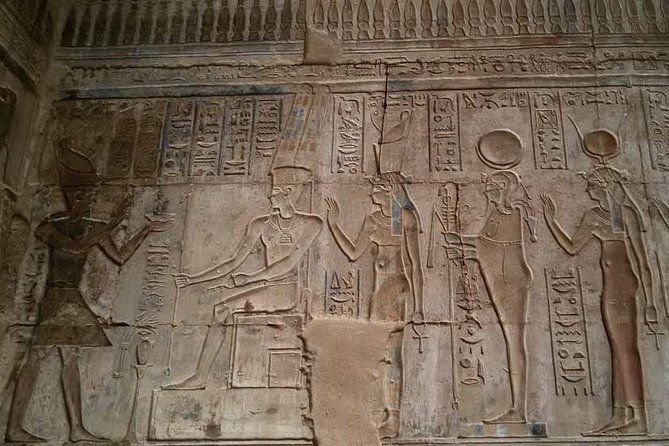
The day is structured with about 1 hour at each of the three stops: Valley of the Queens, Valley of the Artisans at Deir el-Medina, and Temple of Medinat Habu. That pacing is deliberate.
For many people, it is perfect. You see inside tombs, which is the most time-sensitive part, and you still get a full temple experience rather than a quick walk-by. You also avoid decision fatigue. You do not have to rank which site is worth it at the last second.
But if you are a slow reader, or you want to sketch, take lots of close-up photos, or ask deep questions about iconography, you may want more than 1 hour. The good news is that a private guide format can often adjust how you spend that hour. The less good news is that the overall schedule still keeps you moving, so you will want to focus.
Here is a simple strategy: in each location, pick one goal beyond photos. For example, in the Queens tombs, focus on layout and how the sarcophagus chamber changes your perspective. In Deir el-Medina, focus on how the village ruins connect to the temple and then to the decorated tombs of Sennedjem and Inherkau. At Medinat Habu, focus on identifying the difference between military and festival scenes.
That kind of focus makes the 5-hour format feel longer, even if the clock stays the same.
Should You Book This Private Queens, Artisans, and Medinat Habu Tour?
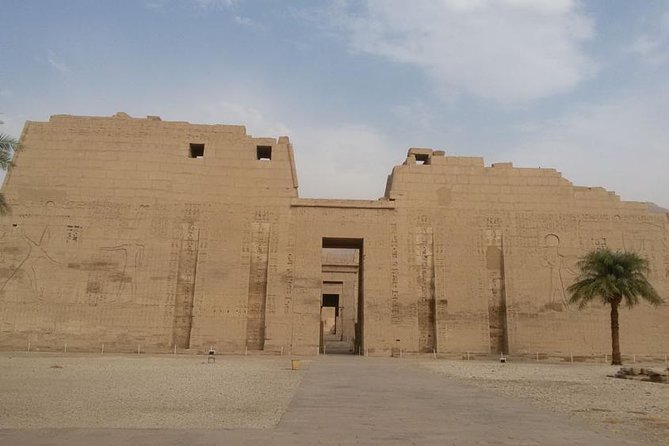
I recommend this tour if you want a West Bank day that mixes royal burials, worker history, and one of Luxor’s more striking temple sets, all without rushing between locations. The $57 price point makes sense when you compare what is included: entrances, private transfers, and a qualified Egyptologist guide.
Book it with extra confidence if you want the less obvious sites. The Valley of the Queens and Deir el-Medina tend to give you a different view than the busiest headline route. You also get a chance to understand ancient Thebes as a connected system, not just a series of isolated monuments.
Skip or adjust expectations if you are extremely heat-sensitive, or if you need long, unhurried time inside each tomb chamber. Also consider that guide explanation style can vary, and the difference usually shows up in how much help you get with what the carvings are saying.
Finally, think about your history level. Even if you are brand new, the route has a built-in logic. You start with royal identity, then move to the builders, then end with a warrior pharaoh’s public temple. It is a strong arc for a half-day.
If you have the time and energy for a focused west-bank loop, this is a smart, good-value way to see Luxor beyond the most obvious boxes.
FAQ
What sites are included in this private tour?
The tour covers the Valley of the Queens, the Valley of the Artisans at Deir el-Medina, and the Temple of Medinat Habu. Entrance fees to these sites are included.
How long is the tour, and how much time is spent at each stop?
The total duration is about 5 hours. The itinerary includes about 1 hour at the Valley of the Queens, about 1 hour at Deir el-Medina, and about 1 hour at Medinat Habu.
Is pickup and drop-off included?
Yes. Pickup and drop-off are included, either from your Luxor hotel or from your Nile cruise.
Does the price include entrance fees and transport?
Yes. The tour price includes all entrance fees for the mentioned sites, private air-conditioned vehicle transfers, and bottled water during the tour.
Is the Queen Nefertari tomb included?
It is not guaranteed. The Nefertari tomb has an extra cost to be paid directly in EGP if it is open, and it is listed as closed in the tour details.
Is this tour private or shared?
This is a private tour. Only your group participates.
What is the cancellation policy?
Free cancellation is available up to 24 hours in advance for a full refund. If you cancel less than 24 hours before the start time, the amount you paid is not refunded.
Is bottled water provided during the tour?
Yes. Bottled water is provided during the tour.
The West Bank, Tomb by Tomb
More of Luxor from our review pile
- Private Tour Nile Felucca Ride at Sunset in Luxor
★ 5.0 · 26 reviews - Private Full day East and West Bank, Luxor
★ 5.0 · 26 reviews - Luxor Day Tour: Kings Valley & Karnak & Luxor & Hatshepsut Temple
★ 5.0 · 26 reviews - Full-Day East and West Luxor Private Tour
★ 4.5 · 26 reviews - Day Trip to Edfu & Kom Ombo temples from Luxor and drop off in Aswan or Luxor
★ 5.0 · 26 reviews - 5 Days 4 Nights Nile Cruise Tour
★ 5.0 · 27 reviews
Luxor West Bank Temples & Tombs, compared.
 ★ 5.0Luxor Day Tour: Valley of Kings & Queens & Hatchepsut TemplesFrom $891,496 reviews
 ★ 5.0Full Day Tour to East and West Banks of LuxorFrom $151,449 reviews
 ★ 4.4Valley of the Kings and Hatshepsut Temple Day TourFrom $501,404 reviews
 ★ 5.0Valley of Kings, Hatchepsut Temple ,Karnak & Luxor-DayTourFrom $95735 reviews
 ★ 5.0Full Day Tour of Luxor West Bank Temples and Tombs (Private)From $20722 reviews
 ★ 5.0Private Full-Day Luxor Highlights East and West BanksFrom $65663 reviews
 ★ 4.5Guided Tour to East or West Banks with LunchFrom $64604 reviews
 ★ 5.0Luxor Private Full-Day Tour: Discover the East and West Banks of the NileFrom $90545 reviews
The lists this one sits on