
REVIEW · KARNAK & LUXOR TEMPLES ON THE EAST BANK
Private Tour: Luxor East Bank, Karnak and Luxor Temples
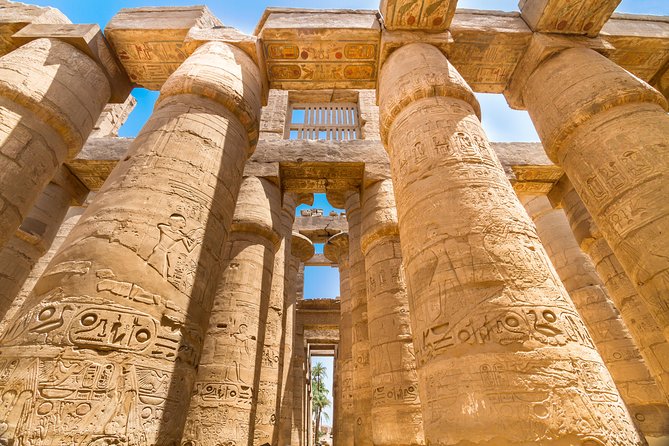
Two temples, one epic afternoon. I love the private Egyptologist guide approach here, because Karnak and Luxor are hard to enjoy without a translator for what you’re seeing. You also get the full sweep of the Avenue of the Sphinx and then the mind-blowing scale of Karnak’s Hypostyle Hall, with those 134 columns that make you feel tiny in the best way.
The other big plus is the smooth flow, with hotel pickup and drop-off plus air-conditioned minivan transport that keeps the focus on the temples instead of logistics. One possible drawback: the sites are huge, so even with a great guide, a half-day means you’ll need to be okay with seeing the major highlights more than exhausting every corner.
In This Review
- Key highlights worth your attention
- Why this Karnak plus Luxor Temple plan works
- Getting to Karnak from your hotel without wasting time
- Karnak’s Avenue of the Sphinx and the temple entrance story
- Inside Karnak: courts, sanctuaries, and the Hypostyle Hall moment
- The upside and limits of a one-hour Karnak stop
- Luxor Temple: Ramses II statues, Tutankhamun additions, and a Paris obelisk link
- How a private Egyptologist changes what you notice
- Price and value: what $107.88 per person really buys
- Practical planning tips for your afternoon start
- Who should book this private Luxor East Bank tour
- Should you book it? My decision guide
- FAQ
- How long is the private tour of Luxor East Bank, Karnak, and Luxor Temples?
- What time does the tour start?
- Is hotel pickup and drop-off included?
- Are admission tickets included?
- What languages are available for the Egyptologist guide?
- Is food or drinks included?
Key highlights worth your attention
- A private Egyptologist guide keeps Karnak and Luxor Temple from feeling like random ruins
- Avenue of the Sphinx walk at Karnak sets the tone before you enter the big courts
- Hypostyle Hall’s 134 columns and the sacred lake details turn scale into story
- Luxor Temple built around 1,400 BC, then reshaped by major pharaohs and Alexander the Great
- Admission tickets included for both temple stops, so you do less on arrival
- Hotel pickup and drop-off with an air-conditioned minivan keeps it stress-light
More columns on the east bank
- Hurghada: Luxor Tour with Valley of Kings, Karnak & Tut Tomb★ 4.6 · 1,082 reviews
- Luxor : Full Day Tour to Luxor West and East Banks & Lunch★ 5.0 · 870 reviews
- Luxor: Valley of Kings, Hatchepsut Temple ,Karnak & Luxor-DayTour★ 5.0 · 735 reviews
- Luxor: Karnak Temple and Luxor Temple Tour with Lunch★ 4.4 · 658 reviews
Why this Karnak plus Luxor Temple plan works
Luxor’s East Bank temples are the kind of places where you either feel wowed fast, or you feel lost quickly. Doing Karnak and Luxor Temple together is smart, because they share the same royal-city context: ancient Thebes, a site with about 4,000 years of significance behind it, where rulers added and rebuilt over centuries.
Karnak is the largest temple complex, developed by more than 30 pharaohs. Luxor Temple, built around 1,400 BC, sits right inside the modern city grid, parallel to the Nile, and was later embellished by names you’ll recognize from history. Putting them into one afternoon gives you a clear before-and-after feeling, from the massive, layered temple grounds at Karnak to the more intimate but still monumental spaces at Luxor Temple.
You’re also on an efficient time plan. This is about 3 hours 30 minutes total, with each main stop running about an hour. That’s not enough time to become a temple scholar, but it is a very workable window to hit the big architectural beats.
Getting to Karnak from your hotel without wasting time
This tour starts at 1:00 pm, departing from your central Luxor hotel or Luxor river port. You ride by air-conditioned minivan, which matters in Luxor because temple visits can turn into long days if transport is slow or crowded.
Your guide is an Egyptologist, and English is included in the pricing. French is also included, with a supplement of 1,000 L.E. applying to languages other than English. If you want the maximum chance of understanding everything you’re seeing, it’s worth choosing the language your guide speaks most comfortably.
Admission tickets are included for both Karnak and Luxor Temple. That’s a small detail, but it saves time and reduces the usual on-the-ground friction. You also get mobile tickets, which can make arrival and entry smoother.
Karnak’s Avenue of the Sphinx and the temple entrance story
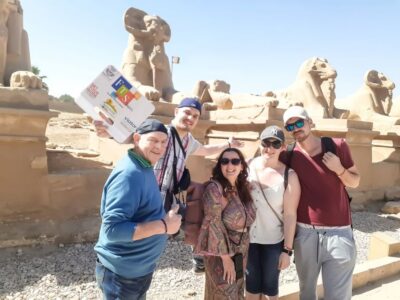
When you arrive at Karnak, you start with the walk along the Avenue of the Sphinxes. It’s not just a cute approach, it’s a transition. The avenue helps you shift from modern Luxor into the ancient axis of power and ritual.
As you walk toward the gateway, your guide explains the massive entrance facades and how the huge pylons at the entrance were constructed. Then you enter the complex and start seeing the way Karnak grew: you can spot how different pharaohs left their marks as the site expanded over time.
This is where a good guide becomes the difference between seeing ruins and actually understanding what you’re standing inside. Karnak wasn’t built in one shot. It’s a series of additions, renovations, and reinventions layered on top of each other. The guide helps you notice those changes as you move deeper into the complex.
Karnak also runs on visual scale. Even before you reach the famous hall, you feel the size of the courts and the way sanctuaries extend forward and back like chapters of the same story.
Inside Karnak: courts, sanctuaries, and the Hypostyle Hall moment
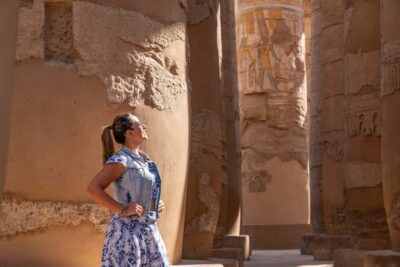
Karnak’s interior route builds toward the highlight. You go through the Great Court and into the Great Hypostyle Hall, where the architecture is the whole point. Your guide points out how the 134 massive columns tower overhead, crowding the space like an ancient forest.
The columns are so impressive that it can be tempting to just stare. The more satisfying approach is to let your guide explain how long-ago Egyptians raised them, because it turns the wow-factor into something you can actually picture. Even if you’re not into engineering, it gives you context for why these columns feel both artistic and practical.
From there, you move past other key features your guide connects to ritual and offerings. One detail that stands out is the sacred lake where pharaonic offerings were purified. It’s an unexpectedly human part of an enormous temple site. You’re watching the world of ancient ceremony unfold, not only the world of stone.
Then you get free time to stroll around the site at leisure. That break is important. Karnak is so large that a strictly guided-only experience can feel rushed. This free time lets you slow down for photos, eye-catching carvings, or just a moment of quiet under the columns.
The upside and limits of a one-hour Karnak stop
An hour at Karnak can sound short, and it is short compared with how big the complex feels when you’re actually there. But in practice, the time works because your guide is steering you toward the heart of the story: the sphinx approach, the entry gateway feel, the Great Court, and the Hypostyle Hall.
Here’s the trade-off you should accept in advance: you’ll likely see the main highlights and key architecture rather than every single shrine and off-route detail. If your goal is to photograph every wall relief or find the less famous corners, you might want extra time on a separate visit.
Still, for most people, this is a strong balance. You get the most iconic Karnak spaces without having to spend half a day just figuring out what matters.
Luxor Temple: Ramses II statues, Tutankhamun additions, and a Paris obelisk link
After Karnak, you head to Luxor Temple, a temple complex located in the center of Luxor on the East Bank, parallel to the Nile. The story of Luxor Temple is different from Karnak’s. Karnak feels like a kingdom within a kingdom. Luxor Temple feels like a statement placed into the city.
You start by seeing the two colossal statues of Ramses II at the entrance. They dominate the approach and quickly set the tone: this wasn’t a small local shrine. The guide also points out the granite gateway obelisk and explains its original counterpart now stands in Paris, at Place de la Concorde. That connection is a great reminder that Luxor’s treasures are not only historical, they are part of global museum history too.
Luxor Temple was built around 1,400 BC, then embellished over time by major figures including Tutankhamun and Ramses II, and even Alexander the Great. That last name is especially interesting because your visit includes a chapel dedicated to Alexander the Great, tied to how the room was rebuilt in his name.
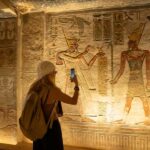
Inside, you move through richly carved inner sanctuaries, papyrus columns, and courts. Your guide helps you interpret the hieroglyphics on inner walls and columns, which is one of the best ways to make Luxor Temple feel more alive than just a backdrop for photos. Then you explore the atmospheric anterooms, including Alexander’s chapel.
Your Luxor Temple visit ends with a drop-off back at the start point.
How a private Egyptologist changes what you notice
A private format sounds like a perk, but it also changes the way you remember the temples. With one guide for your group, you can ask questions that actually match what you’re looking at right then, not what you read later in a book.
This tour is also built around pacing. You get structured highlights, but your guide also gives enough time to stroll and take photos. In feedback, guides like Adel, Michael, and Yolanda have been praised for being passionate, friendly, and on point with timing and explanations. I like that style, because it keeps the visit moving without turning it into a speedrun.
Also, since it’s private, you’re not stuck following a big group’s momentum. If you want to linger on papyrus-column carvings or ask for help reading hieroglyphs, the tour can bend to that reality more easily.
Price and value: what $107.88 per person really buys
At $107.88 per person, this is priced as a private, Egyptologist-led half-day with transport and included admission tickets. The value comes from what’s bundled:
- Egyptologist guide
- Hotel pickup and drop-off
- Private transportation by air-conditioned minivans
- Admission tickets included
- Mobile ticket support
- Group discounts are available
What you should budget for separately: food and drinks are not included unless specified. If you’re doing this after arriving in Luxor and you haven’t already eaten, plan for a meal before or after the tour window.
There’s also the language note. English is included, and French is included, while other languages require a supplement of 1,000 L.E. If language clarity matters a lot for you, that’s a detail worth confirming when you book.
Practical planning tips for your afternoon start
This is an afternoon start at 1:00 pm. That timing can be great if you’re doing other East Bank sights in the morning or you want a later day when your energy is higher.
Wear comfortable walking shoes. You’ll be moving through courtyards and halls, and Karnak especially is a lot of stone and steps. Bring sunglasses and a hat if you use them, plus a small bottle of water for your own comfort. The tour itself does not list food or drinks as included.
If you care about photos, use the free time at Karnak intentionally. Take the “must get” images first, then use the unhurried stroll for whatever catches your eye. That way you don’t feel like you’re chasing the schedule.
Who should book this private Luxor East Bank tour
This is a strong fit if you:
- Want a first-rate introduction to Karnak and Luxor Temple without figuring out routes on your own
- Prefer learning from a guide rather than reading in a guidebook while you’re standing in front of the stones
- Have limited time in Luxor and want the major highlights covered in one afternoon
- Like private tours for more direct explanations and easier photo pacing
It might be less ideal if you’re the type who wants hours and hours inside Karnak with no structure. Karnak deserves more time than an hour, but this tour gives you the best “core” spaces and a guide’s context, which is a smart compromise.
Should you book it? My decision guide
Book it if you want the clearest path through Luxor’s East Bank, with a guide who can connect architecture to names like Ramses II, Tutankhamun, and Alexander the Great, and with time set aside to actually look around.
Skip or consider a longer alternative if you feel you need slow, detailed wandering through every section of Karnak or you’re expecting more than the headline spaces at Luxor Temple.
If you’re aiming for an efficient, high-impact afternoon that turns big ruins into understandable stories, this private Karnak plus Luxor Temple setup is a very good bet.
FAQ
How long is the private tour of Luxor East Bank, Karnak, and Luxor Temples?
It runs about 3 hours 30 minutes.
What time does the tour start?
The start time is 1:00 pm.
Is hotel pickup and drop-off included?
Yes, hotel pickup and drop-off are included.
Are admission tickets included?
Yes, admission tickets are included for both Temple of Karnak and Luxor Temple.
What languages are available for the Egyptologist guide?
English and French are included. A supplement of 1,000 L.E. applies to all languages except English.
Is food or drinks included?
Food and drinks are not included unless specified.
Karnak and the East Bank
More of Luxor from our review pile
- Private Tour Nile Felucca Ride at Sunset in Luxor
★ 5.0 · 26 reviews - Private Full day East and West Bank, Luxor
★ 5.0 · 26 reviews - Luxor Day Tour: Kings Valley & Karnak & Luxor & Hatshepsut Temple
★ 5.0 · 26 reviews - Full-Day East and West Luxor Private Tour
★ 4.5 · 26 reviews - Day Trip to Edfu & Kom Ombo temples from Luxor and drop off in Aswan or Luxor
★ 5.0 · 26 reviews - 5 Days 4 Nights Nile Cruise Tour
★ 5.0 · 27 reviews
Karnak & Luxor Temples on the East Bank, compared.
 ★ 4.5Shared Full-Day Tour to Luxor West and East BanksFrom $901,812 reviews
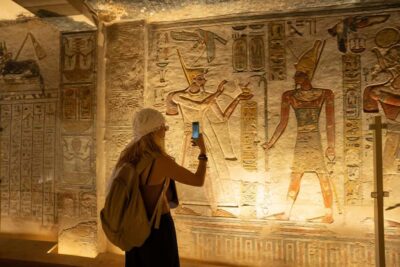 ★ 4.6Luxor Tour with Valley of Kings, Karnak & Tut TombFrom $1031,082 reviews
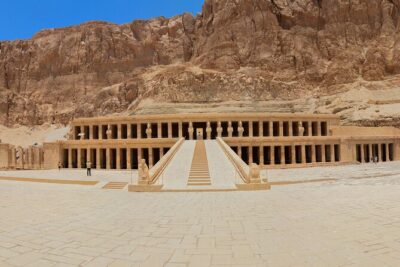 ★ 5.0Full Day Tour to Luxor West and East Banks & LunchFrom $23870 reviews
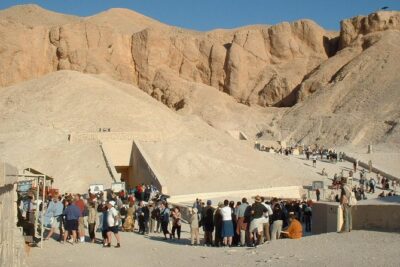 ★ 5.0Valley of Kings, Hatchepsut Temple ,Karnak & Luxor-DayTourFrom $95735 reviews
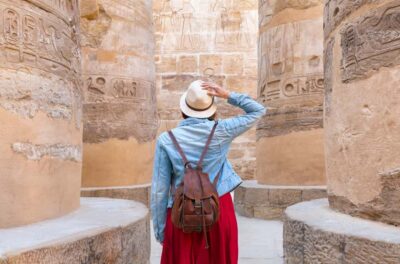 ★ 4.4Karnak Temple and Luxor Temple Tour with LunchFrom $40658 reviews
 ★ 4.5West and East Banks All-Inclusive Tour & Balloon RideFrom $188415 reviews
 ★ 4.5Valley of Kings Hatshepsut & Karnak Luxor Day TripFrom $99375 reviews
 ★ 5.0All Inclusive Day Tour to Luxor West and East Banks with LunchFrom $70184 reviews
The lists this one sits on