
REVIEW · LUXOR WEST BANK TEMPLES & TOMBS
Private Tour: King Tut’s Tombs, Valley of the Kings, Hatshepsut Temple
King Tut is the start, not the whole story. This private West Bank outing uses a qualified Egyptologist guide to connect the famous tombs to what was happening in everyday life across Thebes. You also get the Valley of the Artisans angle, where the workers who built royal monuments left behind their own world.
I particularly like how the route balances superstar burials with human details, so you are not just rushing from one royal name to the next. I also like that you get private pacing, which matters in the valleys where time can disappear fast. One drawback to plan for: entrance fees are not included in the base price, and the exact tomb mix depends on what your guide prioritizes during the day.
You will ride in a private air-conditioned vehicle with hotel pickup and drop-off, which makes the long West Bank day feel manageable. And if your guide is someone like Abdul, Khalid, Ragab, or Hamdy, the difference shows up fast, because the storytelling is specific and hands-on rather than generic.
In This Review
- Key highlights
- West Bank With a Private Egyptologist: why this tour feels like better value
- How the day runs (about 5 to 6 hours) and why pacing matters
- Stop 1: King Tutankhamun at KV62, and what you should focus on
- Tomb circuit after Tut: Ramses III, Merneptah, and Ramesses IX
- Ramses III (KV11): rituals, foreign tributes, and the harpers detail
- Merneptah (Tomb 8): corridors get higher, the design changes
- Ramesses IX: the dynasty story behind the name
- Other royal tombs that may appear in the day’s selection
- Valley of the Artisans at Deir el-Medina: the workers’ world inside the West Bank
- Valley of the Nobles: painted tombs of Menna and Nakht
- Colossi of Memnon: a quick stop with a family connection to Tut
- Temple of Hatshepsut at Deir el Bahari: why this temple changes your view of Tut
- What the Egyptologist guide brings to the day (Abdul, Khalid, Ragab, Hamdy, Ahmed)
- Price and Logistics: what you should budget, what is included, what is extra
- Should you book this private King Tut and West Bank day?
- FAQ
- How long is the tour?
- Does the tour include hotel pickup and drop-off?
- Is the tour private?
- What language is the guide?
- Are entrance fees included in the price?
- Which sites are included besides King Tut?
- Will I see the golden mask of Tutankhamun?
- Can I add hot air ballooning?
- What is the tour focusing on besides royal tombs?
- Is cancellation free?
Key highlights
- Private Egyptologist guide: personalized explanations tied to what you are seeing in each tomb and temple
- King Tutankhamun in context: KV62 is paired with other royal burials so you understand the system, not just one celebrity king
- Valley of the Artisans at Deir el-Medina: ruined homes, daily work, and belief details from the people behind the royal tombs
- Painted tombs of Menna and Nakht: scenes of daily life, not only court rituals
- Deir el Bahari and Hatshepsut: the only woman to reign as Pharaoh, placed in the same dynasty story as Tut
- Comfy transport: hotel pickup and drop-off in an air-conditioned private vehicle
Other tomb tickets in the valley
- Hurghada: Luxor Valley of the Kings & Tutankhamun Tomb Trip★ 4.7 · 13,208 reviews
- Luxor Day Trip from Hurghada Small Group & Tutankhamun Tomb★ 4.8 · 5,366 reviews
- Luxor Day Tour: Valley of Kings & Queens & Hatchepsut Temples★ 5.0 · 1,496 reviews
- Luxor: Valley of the Kings and Hatshepsut Temple Day Tour★ 4.4 · 1,404 reviews
West Bank With a Private Egyptologist: why this tour feels like better value
This is priced at $55 per person for a private, guided West Bank day, which is a surprisingly fair setup for Luxor. The private part matters because the West Bank sites can blur together if you go without a guide who can point out what is worth your attention first. Here, the guide role is not a bonus, it is the product.
You also get private air-conditioned transport plus hotel pickup and drop-off. That sounds basic, but on the West Bank it actually changes the day. Less time negotiating, fewer delays, more time spent where you can actually learn something.
One important caveat on value: entrance fees are not included and are listed as 1250 EGP per person. So the real all-in cost is the tour price plus that entrance fee line item. If you budget for it in advance, the math stays straightforward and you avoid last-minute surprises.
How the day runs (about 5 to 6 hours) and why pacing matters
The tour is listed around 5 hours, and the plan also references a fuller 6-hour guided trip depending on how the day flows. Either way, you are doing a classic West Bank rhythm: travel between sites, then limited time inside tombs and temples.
That time pressure is exactly why a good guide helps. In the valleys, it is easy to get tunnel vision on names, like Tut, and miss the bigger picture about funerary beliefs and how tomb decoration evolved. A strong guide keeps you moving through the day in a logical order so the sites build on each other instead of repeating the same lesson.
Also, the itinerary includes admission ticket notes for multiple stops, and it is clear that those tickets are handled separately from the tour price. So you should treat this as a guided program where the main logistics are included, while entry fees are an extra you pay on the ground.
Stop 1: King Tutankhamun at KV62, and what you should focus on
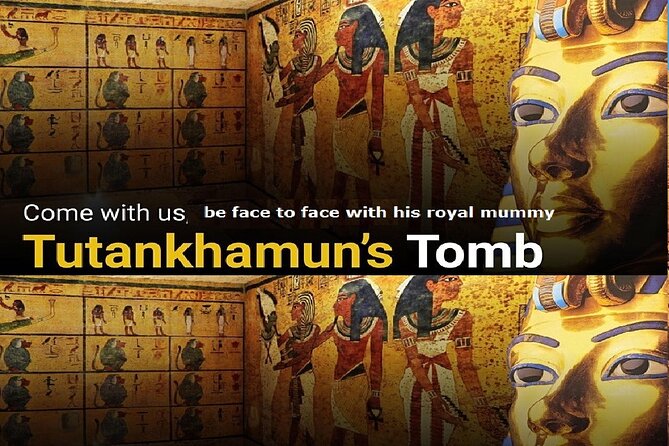
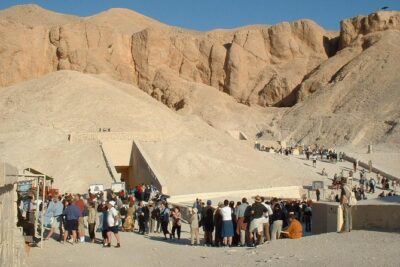
The day starts with the Tomb of King Tutankhamun in the Valley of the Kings. Tutankhamun is famous partly because his tomb was discovered nearly intact in 1922, credited to Howard Carter. That matters because intact discoveries are rare in Egyptology, and it is one reason his tomb became the world’s reference point for the Valley of the Kings.
You will have the chance to see the tomb itself, not a replica or a photo in a brochure. The tour description also makes a key point: Tut’s famous golden mask is displayed at the Egyptian Museum in Cairo, while the amazement here comes from the royal mummy site in the valley tomb setting.
Practical reality check: tomb visits are always physically and visually intense, because you are working with tight spaces and dim interiors. So instead of trying to take everything in at once, I suggest focusing on what the guide points out first. If your guide is the type who explains the scenes and layout clearly, you will get more out of each minute inside.
Tomb circuit after Tut: Ramses III, Merneptah, and Ramesses IX
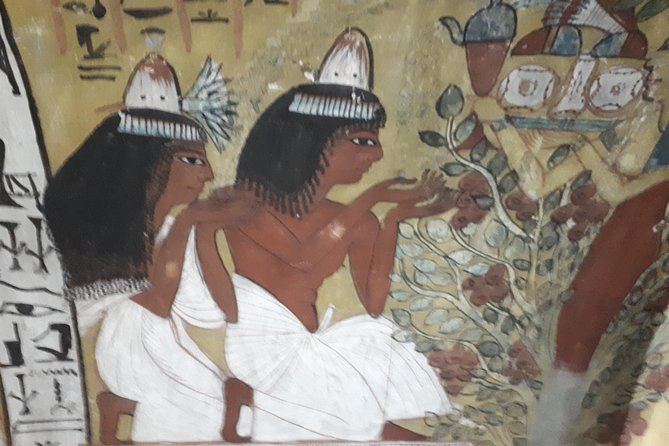
Tut is the headline, but the tour is built to show you how the Valley of the Kings works as a whole collection of royal burials.
West bank tombs, one by one
Ramses III (KV11): rituals, foreign tributes, and the harpers detail
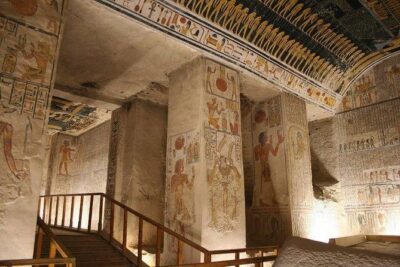
One of the stops highlights the Tomb of Ramses III (KV 11). This tomb is described as a complex system with colorful painted sunken reliefs and traditional ritual texts, including references like the Litany of Ra and the Book of Gates. That is already a useful shift in perspective, because it tells you these tombs were not only monuments to power, they were also instruction for the journey beyond.
This tomb also includes secular side scenes in smaller rooms near the entrance corridor. The description specifically calls out foreign tributes such as detailed pottery imported from the Aegean, a royal armoury, boats, and blind harpists. That last one is tied to the alternative name _Tomb of the Harpers_, which is a memorable hook if you like human stories embedded in stone.
If you care about “why these tombs look the way they do,” this is one of the best stops in the plan. The combination of ritual texts plus international items makes the valley feel larger than one dynasty.
Merneptah (Tomb 8): corridors get higher, the design changes
Another highlight is the Tomb of Merenptah in the Valley of the Kings, identified as Tomb 8. The description connects it to the god Ptah, with Ptah as the demiurge of Memphis and the god of craftsmen and architects, including the falcon form reference. Even if you are not chasing religious details, this framing helps you understand why artisans and builders mattered in the burial world.
The tour info notes that the tomb was discovered by Howard Carter in 1903, and that there is a design shift described as fewer lateral rooms but increased corridor and room height. That kind of comparison is exactly the sort of thing that makes a guided tomb circuit more than a sightseeing checklist.
Ramesses IX: the dynasty story behind the name
The plan also includes a stop at Tomb of Ramases IX. The description gives a clear timeline: he was the third pharaoh of the Twentieth Dynasty of the New Kingdom, and his name prior to taking the crown was Amonhirkhopshef. It also explains family context, including that he was the fifth son of Ramses III and that he was appointed crown prince when four elder brothers had died before his father’s later years.
That kind of background helps you recognize that tombs are not just art objects. They are family and political records, embedded in the burial plan.
Other royal tombs that may appear in the day’s selection
One version of the route says the West Bank circuit can include four royal tombs, with Tutankhamun plus tombs such as those of Ramses, Horemheb, and Merenptah. With private tours, the emphasis often lands on the best matches for your time that day, so treat the tomb list as a menu that your guide finalizes while keeping the narrative coherent.
Valley of the Artisans at Deir el-Medina: the workers’ world inside the West Bank
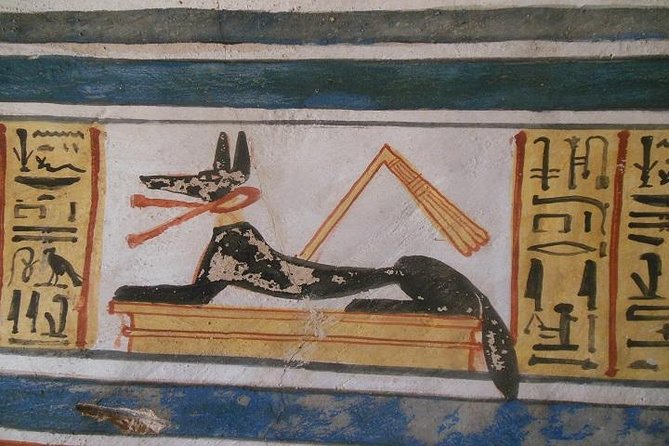
Even if you love royal tombs, the most emotionally satisfying part of this program for many people is the Valley of the Artisans at Deir el-Medina.
This is the part of the West Bank that shifts the spotlight from pharaohs to the craftsmen who made those royal tombs possible. The tour description calls out crumbled homes where the artisans lived and asks you to walk through a settlement layout, including ruined houses, streets, and a temple area.
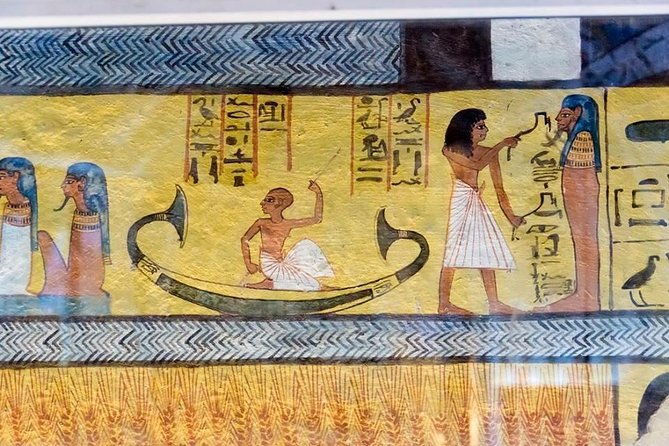
You will also hear details about their lives and beliefs, plus you will see the unique “final judgment” carvings inside the valley temple. That last point is important because it connects labor and religion, showing that workers were not outside the spiritual world of the kings.
If you are comparing the West Bank to other big Egypt sights, this is one of the best ways to avoid the “everything is only about royalty” feeling. You still get tomb-related symbolism, but it comes from people whose names are not usually on museum postcards.
Valley of the Nobles: painted tombs of Menna and Nakht
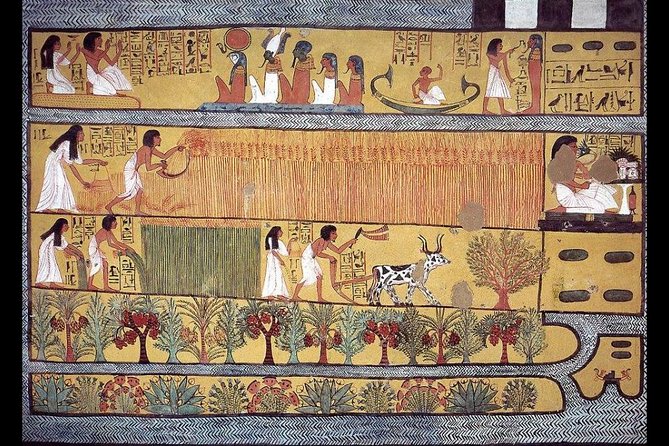
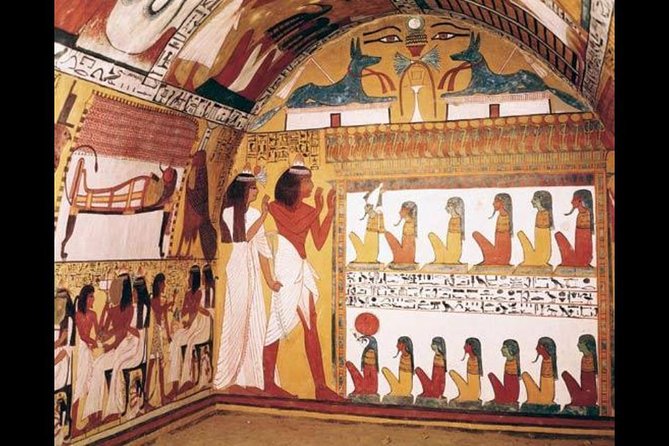
The program also includes the Valley of the Nobles, where you can see painted tombs tied to 18th-dynasty aristocrats. Two names are specifically mentioned: Menna and Nakht.
What I like about including this stop is the emphasis on daily life scenes. Royal tombs can sometimes feel like a sealed story about gods, kingdoms, and ceremonies. The Valley of the Nobles, with its painted daily-life moments, gives you a different texture of ancient Egypt, one that feels more lived-in.
In practical terms, having a guide helps you not just read the tomb like a wall of images, but see what the scenes are communicating. The guide’s explanations are often where you start noticing patterns, symbolism, and what counts as important in their world.
Colossi of Memnon: a quick stop with a family connection to Tut
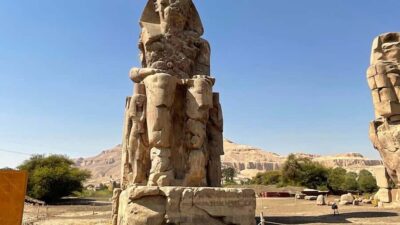
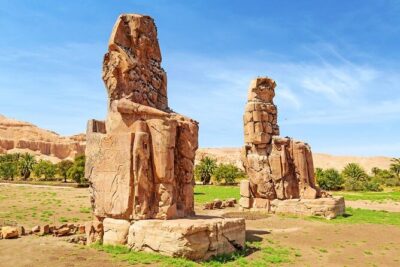
After the tomb circuit, you may stop at the Colossi of Memnon, described as the two largest ancient statues in Egypt. They date back to the era of King Amenhotep III, and the description links family history directly: Amenhotep III was the father of Akhenaten and the grandfather of Tut.
I like stops like this when they are done right, meaning short and purposeful. The value here is that it gives you a lineage map while your brain is already full of dynasties, tomb numbers, and names.
The stop is listed as about 15 minutes, and that makes it realistic within a half-day West Bank schedule.
Temple of Hatshepsut at Deir el Bahari: why this temple changes your view of Tut
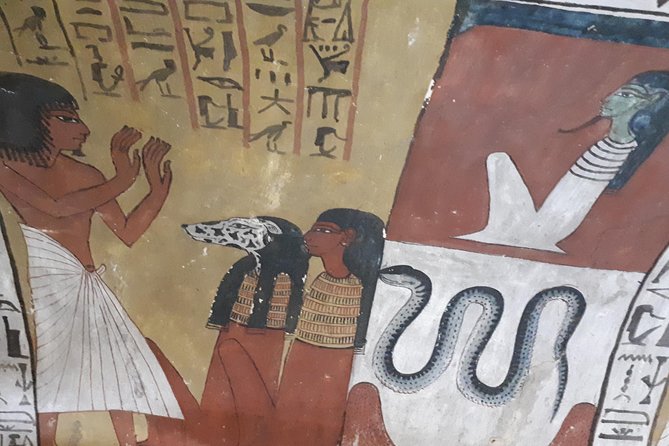
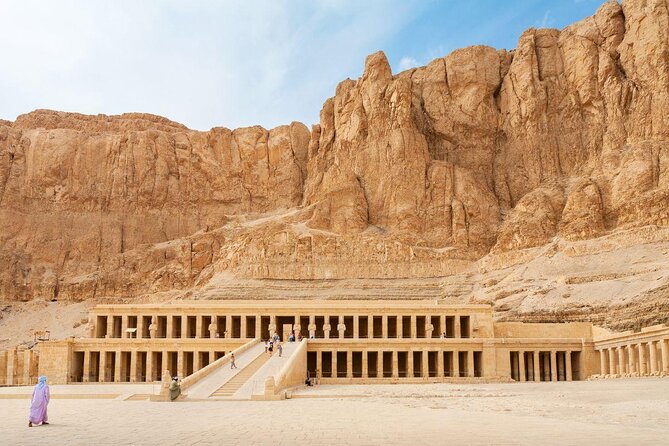
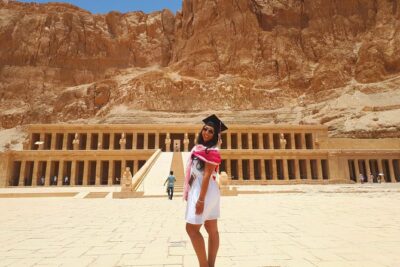
The tour finishes with Temple of Queen Hatshepsut at Deir el Bahari. This is described as the only woman to reign over Egypt as Pharaoh, and the text also states she was an ancestor of King Tutankhamun and belonged to the same dynasty.
That ancestry link is a big deal for how the day lands in your mind. If you walk out of Tut’s tomb feeling like you just toured one famous burial, Hatshepsut adds another layer. You are seeing political power and royal legitimacy expressed through architecture, not only through a tomb interior.
You have about 1 hour at Deir el Bahari in the plan, and that time is usually enough to get the main shapes and the guiding storyline if your guide keeps the focus tight.
What the Egyptologist guide brings to the day (Abdul, Khalid, Ragab, Hamdy, Ahmed)
This tour lives or dies by the guide, and the strongest praise in the provided info is consistent: guides are enthusiastic, detailed, and very good at translating what you are looking at into something you can actually grasp.
Abdul is repeatedly highlighted, including one description that says he is an Egyptologist specializing in hieroglyphics. That matters because hieroglyphs are not just decoration in tombs and temples. When a guide can connect them to meaning, the sites stop feeling like a scavenger hunt.
Khalid is also praised for being professional, accommodating, and for giving clear direction on what to see first in the Valley of the Kings. He is also mentioned for helping with photos and answering questions on the spot.
Ragab and Hamdy show up in the feedback as well. Ragab is described as telling the full story of the Valley of the Kings and Hatshepsut’s temple, and Hamdy is noted for being well spoken in English and for taking extra care to make solo travelers feel safe.
So when you book, you are not just buying access to tombs. You are buying a translator for ancient Egypt, and that can turn a short timeline into something that sticks.
Price and Logistics: what you should budget, what is included, what is extra
Here is the clean breakdown based on the tour info:
- Tour price: $55 per person
- Pickup: hotel pickup and drop-off are included
- Transport: private air-conditioned vehicle included
- Guide: qualified Egyptologist included
- Entrance fees: not included, listed as 1250 EGP per person
- Hot air ballooning: optional before the tour is mentioned
That entrance fee line is the main extra cost to plan for. I also recommend mentally separating the “tour experience” from the “ticketed sites.” Your guide and transport handle the hard parts of the day, while the entry tickets are a separate payment.
If you are budgeting for Luxor, treat this as a guided program plus site tickets. That framing keeps the cost realistic and helps you decide without second-guessing on the ground.
Should you book this private King Tut and West Bank day?
Book it if you want more than a one-tomb stop. This program gives you Tutankhamun in the Valley of the Kings, a circuit that can include tombs such as Ramses III, Merenptah, and Ramesses IX, and it adds Deir el-Medina so you see the West Bank from the workers’ side too. If you care about context, daily life scenes, and why the tomb world looked the way it did, this mix is a strong match.
Skip or adjust if your goal is strictly King Tut with minimal walking and minimal moving parts. The itinerary is built around a wider West Bank story, and that is not the same thing as a “just the famous one” visit.
If you do book, your best move is simple: ask your guide which tombs you will prioritize inside the Valley of the Kings that day, and then let that choice shape how you watch everything else. With private pacing and a good Egyptologist, you will get a day that feels connected, not random.
FAQ
How long is the tour?
The duration is listed as approximately 5 hours, and the plan also references a full guided trip of about 6 hours depending on the day.
Does the tour include hotel pickup and drop-off?
Yes. Hotel pick up and drop off are included.
Is the tour private?
Yes. It is a private tour/activity, meaning only your group participates.
What language is the guide?
The information provided says the tour includes a qualified Egyptologist guide. English is specifically mentioned in relation to Hamdy, who spoke well in English.
Are entrance fees included in the price?
No. All entrance fees are listed as an extra cost of 1250 EGP per person.
Which sites are included besides King Tut?
The plan includes visits connected to the Valley of the Kings and the Temple of Queen Hatshepsut at Deir el Bahari. It also references stops such as Ramses III and Merenptah tombs, plus the Colossi of Memnon.
Will I see the golden mask of Tutankhamun?
The tour description says Tut’s golden mask is displayed at the Egyptian Museum in Cairo, while the tomb visit focuses on seeing the royal mummy in the valley.
Can I add hot air ballooning?
Optional hot air ballooning is mentioned as something you can do before the tour.
What is the tour focusing on besides royal tombs?
The tour overview emphasizes the lives of ordinary Egyptians through the Valley of the Nobles and the Valley of the Artisans, including painted tomb scenes and the ruined artisan settlement at Deir el-Medina.
Is cancellation free?
Free cancellation is included, and you can cancel up to 24 hours in advance for a full refund.
The West Bank, Tomb by Tomb
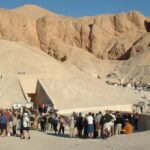
Down Into the Kings Valley
More of Luxor from our review pile
- Hot Air Balloon Ride and Tour to Valley of Kings Luxor- Special Offer
★ 5.0 · 15 reviews - 4-Hours tour West Luxor bank :Hatshepsut Temple & Valley of the King with Lunch
★ 5.0 · 15 reviews - Tour From Luxor to Aswan Edfu, Kom Ombo, Philae and High Dam
★ 5.0 · 15 reviews - Private Half-day Dendera Temple
★ 5.0 · 15 reviews - Luxor Airport Departure: Convenient Private Hotel Transfer
★ 5.0 · 15 reviews - Dahabiya Nile Cruise From Luxor To Aswan 4 Nights 5 Days
★ 4.5 · 15 reviews
Luxor West Bank Temples & Tombs, compared.
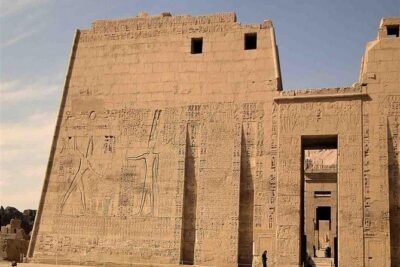 ★ 5.0Luxor Day Tour: Valley of Kings & Queens & Hatchepsut TemplesFrom $891,496 reviews
 ★ 5.0Full Day Tour to East and West Banks of LuxorFrom $151,449 reviews
 ★ 4.4Valley of the Kings and Hatshepsut Temple Day TourFrom $501,404 reviews
 ★ 5.0Valley of Kings, Hatchepsut Temple ,Karnak & Luxor-DayTourFrom $95735 reviews
 ★ 5.0Full Day Tour of Luxor West Bank Temples and Tombs (Private)From $20722 reviews
 ★ 5.0Private Full-Day Luxor Highlights East and West BanksFrom $65663 reviews
 ★ 4.5Guided Tour to East or West Banks with LunchFrom $64604 reviews
 ★ 5.0Luxor Private Full-Day Tour: Discover the East and West Banks of the NileFrom $90545 reviews
The lists this one sits on