
REVIEW · LUXOR WEST BANK TEMPLES & TOMBS
Private Habu Temple, Valley of the Artisans, Valley of the Queens from Luxor
Some places in Luxor feel like a storybook.
This private West Bank day links three ancient worlds in one smooth route: Ramesses III’s mortuary temple, the artisans village at Deir el-Medina, and the royal burials of the Valley of the Queens. It’s a smart way to see more than the headline sites, without spending your time figuring logistics.
I especially love how much context you get with a guide who can tie what you see to real life, burial beliefs, and the artwork’s meaning. I also like that you’re not stuck rushing, since it’s a private format where you can ask questions freely and keep your own pace.
One possible drawback is heat, especially if you’re out when temperatures climb. The tour starts early (around 7:00 am), but you’ll still be outdoors across several hours.
In This Review
- Key points to know before you go
- Why this Luxor West Bank circuit is a smart use of your time
- Medinat Habu: Ramesses III’s mortuary temple up close
- Deir el-Medina: the Valley of the Artisans and the people behind the tombs
- Valley of the Queens: Ta-Set-Neferu and how royal burials worked
- Price and logistics: what $55 buys you, and why it can be worth it
- What you should expect from the guide experience
- Who this private tour from Luxor fits best
- Should you book this private Habu, Artisans, and Queens tour?
- FAQ
- How long is the tour?
- Is pickup and drop-off included?
- Are entrance fees included?
- Does the tour include food or lunch?
- Is this a private tour?
- What if I need to cancel?
- Do I get a ticket on my phone?
Key points to know before you go
- Private guide, private pacing: You move through Habu, Deir el-Medina, and the Queens with room for questions.
- Medinat Habu is less crowded: You get time with the temple art instead of constant picture-taking traffic.
- Deir el-Medina changes how you see the Valley of the Kings: You learn about the workers who built those tombs.
- Valley of the Queens can be quieter: If the Tomb of Nefertari is closed for renovation, the valley may feel more peaceful.
- All entrance fees included: You are paying for the experience, not for tickets per site.
- Transport plus water and snacks: You avoid the day turning into a logistics scavenger hunt.
West bank tombs, one by one
- Luxor Day Tour: Valley of Kings & Queens & Hatchepsut Temples★ 5.0 · 1,496 reviews
- Full Day Tour to East and West Banks of Luxor★ 5.0 · 1,449 reviews
- Luxor: Valley of the Kings and Hatshepsut Temple Day Tour★ 4.4 · 1,404 reviews
- Luxor: Valley of Kings, Hatchepsut Temple ,Karnak & Luxor-DayTour★ 5.0 · 735 reviews
Why this Luxor West Bank circuit is a smart use of your time
Luxor’s West Bank can feel like it has a lot of moving parts. This tour keeps it simple: you start with a major temple, then shift to the people who made the tombs, and end with the place where royal women (and more) were buried.
What makes this route worth your time is the way it answers a full question, not just a single stop. At Medinat Habu, you’re reading powerful royal imagery in stone. At Deir el-Medina, you’re learning how skilled workers actually lived while building the tombs you may already be curious about. Then at the Valley of the Queens, you see how status, family, and afterlife beliefs played out in tomb design and rituals.
The private format matters here. A fixed group schedule can push you to “see everything,” but with a private guide, you can slow down at the spots you care about most. Many people also value this because the guide’s explanations can make the paintings and carvings feel less abstract and more understandable, especially when they point out the story behind scenes and symbols.
Medinat Habu: Ramesses III’s mortuary temple up close
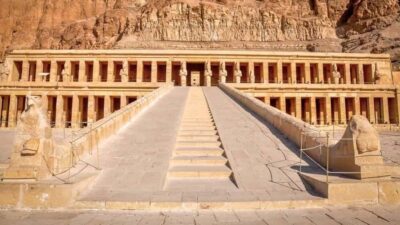
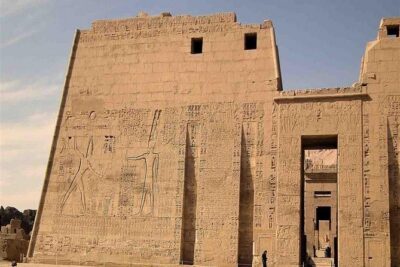
Your first stop is Temple of Medinat Habu, also known for its Mortuary Temple of Ramesses III. This site sits near the foot of the Theban Hills on the West Bank, across from modern Luxor. It’s not as famous as Karnak, so you often get a more relaxed experience where you can actually look.
The main structure here is about 150 meters long, and it follows an orthodox design that resembles the Mortuary Temple of Ramesses II (the Ramesseum). That means you’re not just seeing random ruins. You’re seeing a deliberate temple plan, and that helps you read what the builders wanted you to understand about kingship and the afterlife.
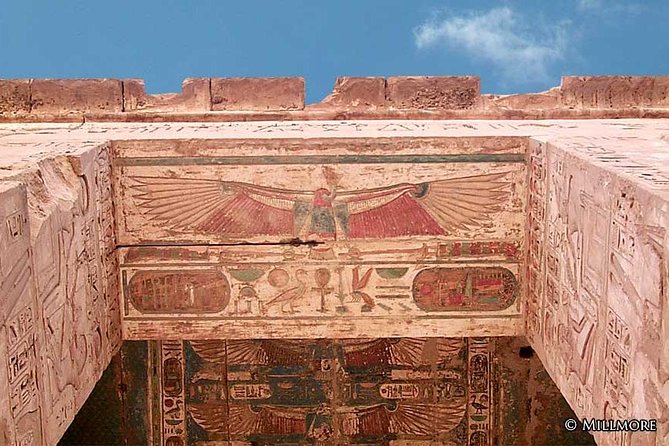
Why I think this stop is a standout on this itinerary: you’re walking through a place meant to preserve a king’s mortuary worship. The vivid imagery at Medinat Habu is tied to Theban religion and burial practice, so the guide’s job is more than translating labels. A good guide helps you connect what you see to the larger idea that Egyptian religion was about maintaining the right relationships between gods, the dead, and daily ritual.
Time on this stop is about 2 hours, which is enough to take in the scale and relief work without feeling like you’re constantly chasing the next doorway. If you’re the type who likes photos, you’ll also appreciate that the site is often calmer than the best-known Luxor temples.
One thing to watch for is guide style. Some guides explain history clearly and directly. Others may be less structured in their explanations, even if they clearly care about the subject. If you’re going for history depth and not just a walk-through, you’ll want to ask questions early, right after pickup, so you can steer the focus.
Deir el-Medina: the Valley of the Artisans and the people behind the tombs
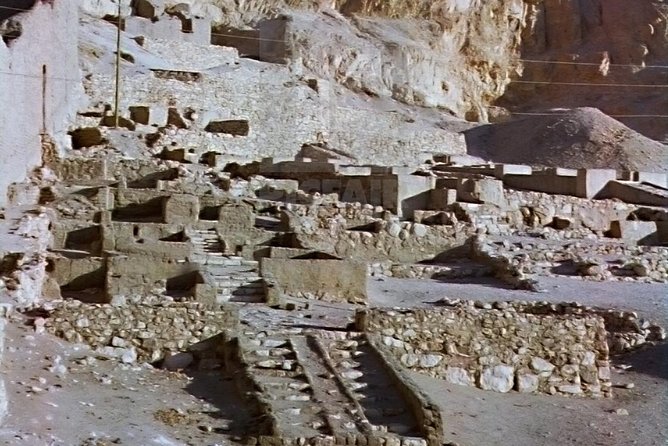
Next you head to Deir el-Medina, often called the Valley of the Artisans or the workers’ village. This is one of my favorite kinds of sites because it changes your perspective. Instead of only looking at the tombs, you get a sense of the community that made them possible.
Deir el-Medina was home to artisans who worked on the tombs in the Valley of the Kings during the 18th to 20th dynasties of the New Kingdom period, roughly 1550-1080 BC. That alone is useful, because it anchors what you see to a time window, not just “ancient Egypt somewhere.”
A practical detail that makes this stop feel real: the paintings can look surprisingly fresh. That doesn’t mean they look new, but when a site’s artwork is well preserved, you get a clearer sense of style and intention. With a guide, you can often understand how those images fit into daily life and work, not just ceremonial moments.
This stop is about 2 hours. For many people, that’s the right length, because you need time to connect the village layout and the artistic program to the idea of specialized work. Deir el-Medina is where you learn that building tombs wasn’t random labor. It was skilled work supported by a whole system of people, supervision, and sacred expectations.
It also helps you understand what you might see later in the Queens tombs. Royal burials were not only about elite status. They depended on the ongoing care of rituals and the people who performed those rituals. Deir el-Medina gives you a human bridge between the living and the dead.
Valley of the Queens: Ta-Set-Neferu and how royal burials worked
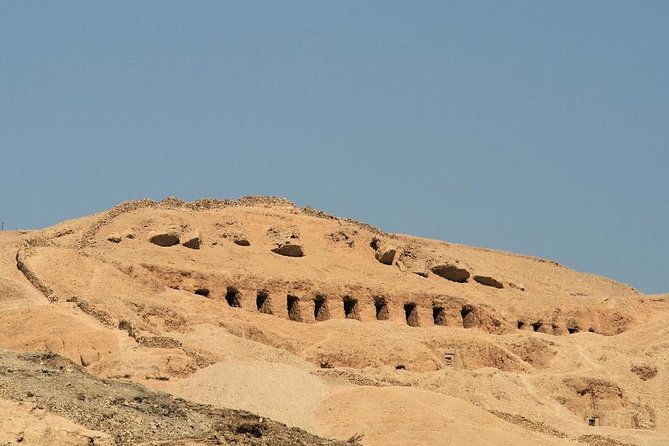
Your final major stop is the Valley of the Queens. In ancient times, it was known as Ta-Set-Neferu, meaning the place of the Children of the Pharaoh. That name matters, because it signals this valley was not only for wives of pharaohs. Many princes and princesses were buried here too, along with members of the nobility.
You’ll learn about how the tombs were maintained. In ancient times, mortuary priests performed daily rituals and provided offerings and prayers for the deceased. That’s a key point. The tomb wasn’t just a final resting space. It was part of a system meant to keep the afterlife cared for.
This stop is also about 2 hours, which gives you enough time to walk through the tomb area and focus on what makes each tomb significant. From a value standpoint, this is one of the best ways to see more royal variety than you get from just one location. It widens your view of how status, family, and ritual shaped burial choices.
A real-world consideration: sometimes the Tomb of Nefertari is closed for renovation. If that happens during your visit, the valley can feel quieter, and you may spend more time in the open tombs you do visit. It’s still worth it, because the Valley of the Queens has its own strong visual identity, and a good guide can help you appreciate what you are actually seeing, even if one famous tomb is not available.
Price and logistics: what $55 buys you, and why it can be worth it
At $55 per person, this tour is positioned as a straightforward way to cover three sites with minimal friction. The big value is what’s included: private A/C transport, hotel pickup and drop-off in Luxor, a tour guide, entrance fees, and bottled water plus snacks.
Here’s how that matters for your day. When you self-plan, you often end up paying for small extras you did not budget for. You also lose time figuring routes, ticketing, and best order. This tour packages that work into a single price, so your main job becomes deciding what questions to ask and where you want more time.
The duration is about 6 hours, and pickup is around 7:00 am. That timing is a practical advantage. Morning usually means less heat pressure and better comfort for walking and looking closely.
One more comfort note: even with a morning start, it can get very hot later. The best approach is to dress for sun and heat, and rely on the fact that you have water and snacks included. If you’re heat sensitive, tell your guide what you prefer early. A good guide will adjust pace, stops, and how long you linger in open areas.
What you should expect from the guide experience
This is one of those tours where the guide can make a huge difference. Many guides linked to this experience are described as friendly, patient, and very focused on answering questions. Names that come up include Aliaa, Soosan, Ahd, Sam, Ahmed, Osama, Reham, Shereen, and Adel. You might also encounter guides who can read hieroglyphs and explain scenes directly.
What I like about the strong guide experiences is the way they connect visible details to meaning. For example, some guides focus on preserved colors and relief work at Medinat Habu, while others shine at turning the artisans’ village into something you can picture like a real community. When that happens, you’re not just visiting sites, you’re translating them in your head as you walk.
At the same time, there can be inconsistency in explanation style. If the person leading you jokes instead of clarifying, you might need to push gently for a clearer answer. The upside of a private tour is that you can do that without feeling like you’re holding up a big group.
Who this private tour from Luxor fits best
This tour is a great match if you want the West Bank but you do not want a chaotic day of tickets, traffic, and random timing. It’s also a strong choice if you care about the human side of ancient Egypt, since Deir el-Medina connects the artistic output to the workers behind it.
You’ll probably enjoy this most if:
- You want three different types of sites in one day, temple, village, and royal burial valley.
- You like asking questions and staying longer where the guide’s explanations click.
- You want included entrance fees so your day runs on rails.
If you only want the most famous temples and do not care about labor and burial practices, you may find this a bit more “classroom-like” than a pure sight-seeing day. But if you enjoy understanding what you see, the structure of this itinerary does the heavy lifting.
Should you book this private Habu, Artisans, and Queens tour?
If your goal is to get a richer West Bank day without planning headaches, I think this is an easy yes to consider. For $55, the included entrance fees, private A/C transport, guide, and water and snacks add up quickly, especially when you’re covering three sites.
Book it if you want to see the Egyptian story in layers: royal ideology at Medinat Habu, everyday work at Deir el-Medina, and royal family burial traditions at the Valley of the Queens. You’ll likely leave with a clearer picture of how these sites relate.
Skip it or switch expectations if you mainly want the big-name showpieces and you prefer minimal explanation. Also, plan for heat and pace so the day stays enjoyable.
FAQ
How long is the tour?
The tour lasts about 6 hours.
Is pickup and drop-off included?
Yes. Hotel pickup and drop-off in Luxor is included.
Are entrance fees included?
Yes. Entry fees are included.
Does the tour include food or lunch?
Bottled water and snacks are included, but lunch is not included.
Is this a private tour?
Yes. It is private, meaning only your group participates.
What if I need to cancel?
You can cancel for a full refund up to 24 hours in advance. If you cancel less than 24 hours before the start time, the amount paid is not refunded.
Do I get a ticket on my phone?
Yes. A mobile ticket is provided. Confirmation is received at booking.
The West Bank, Tomb by Tomb
More of Luxor from our review pile
- Private Tour Nile Felucca Ride at Sunset in Luxor
★ 5.0 · 26 reviews - Private Full day East and West Bank, Luxor
★ 5.0 · 26 reviews - Luxor Day Tour: Kings Valley & Karnak & Luxor & Hatshepsut Temple
★ 5.0 · 26 reviews - Full-Day East and West Luxor Private Tour
★ 4.5 · 26 reviews - Day Trip to Edfu & Kom Ombo temples from Luxor and drop off in Aswan or Luxor
★ 5.0 · 26 reviews - 5 Days 4 Nights Nile Cruise Tour
★ 5.0 · 27 reviews
Luxor West Bank Temples & Tombs, compared.
 ★ 5.0Luxor Day Tour: Valley of Kings & Queens & Hatchepsut TemplesFrom $891,496 reviews
 ★ 5.0Full Day Tour to East and West Banks of LuxorFrom $151,449 reviews
 ★ 4.4Valley of the Kings and Hatshepsut Temple Day TourFrom $501,404 reviews
 ★ 5.0Valley of Kings, Hatchepsut Temple ,Karnak & Luxor-DayTourFrom $95735 reviews
 ★ 5.0Full Day Tour of Luxor West Bank Temples and Tombs (Private)From $20722 reviews
 ★ 5.0Private Full-Day Luxor Highlights East and West BanksFrom $65663 reviews
 ★ 4.5Guided Tour to East or West Banks with LunchFrom $64604 reviews
 ★ 5.0Luxor Private Full-Day Tour: Discover the East and West Banks of the NileFrom $90545 reviews
The lists this one sits on