
REVIEW · LUXOR WEST BANK TEMPLES & TOMBS
Private Full Day Tour: Valley of the Kings,Hatshepsut temple&more
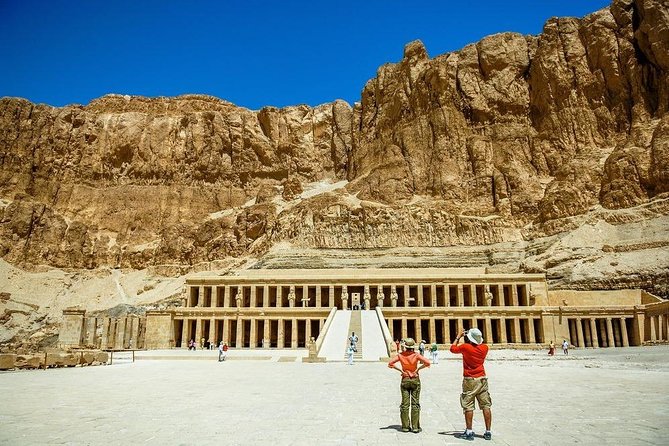
Egypt’s West Bank packs a lot in one day. This private tour connects the Valley of the Kings with Queen Hatshepsut’s temple at Deir el-Bahari, plus the quieter sites nearby, all with hotel pickup and an English-speaking guide. I especially like the focus on real burial sites, not just photos, and the way the stops fit together geographically on Luxor’s west bank.
Two highlights for me are the “wow” factor of the tomb entrances and the payoff of pairing royal monuments with the people who built them. The Valley of the Kings visit includes three tombs (with King Tutankhamun’s tomb excluded), and Deir el-Medina adds context by showing the craftsmen village linked to those tombs. The one consideration is time: with a 7 to 9 hour day and multiple sites, you’ll want to move with the schedule and plan for a long, full outing.
If you like a smooth plan, this is built for it, with a private air-conditioned vehicle, bottled water, and a guide who can explain what you’re looking at. I’d call it a smart value day when you want to see several west bank anchors without the hassle of figuring out transport hop-by-hop.
In This Review
- Key Points You’ll Appreciate on This Luxor Day
- A West Bank Day Built Around Royal Tombs
- Price and Tickets: What $11.28 Really Signals
- Valley of the Kings: Three Tombs, One Huge Atmosphere
- Hatshepsut at Deir el-Bahari: Why This Temple Feels Personal
- Valley of the Queens: The Burial World of Wives and Noble Women
- Deir el-Medina (Valley of the Artisans): Meeting the People Behind the Stone
- Medinet Habu: Mortuary Temple of Ramses III and the Afterlife Machine
- Colossi of Memnon: Quick Stop, Maximum Scale
- Private Pickup, Comfort, and Flexible Timing That Matter
- Who Should Book This Tour (and Who Might Want a Different Plan)
- Should You Book This Luxor West Bank Tour?
- FAQ
- How long is the tour?
- Is pickup from my hotel in Luxor included?
- Are admission tickets included?
- What tombs will we see in the Valley of the Kings?
- Is tipping included in the price?
- Can I cancel for a full refund?
Key Points You’ll Appreciate on This Luxor Day
- Private hotel pickup and return in an air-conditioned vehicle
- Valley of the Kings includes 3 tomb visits, excluding Tutankhamun
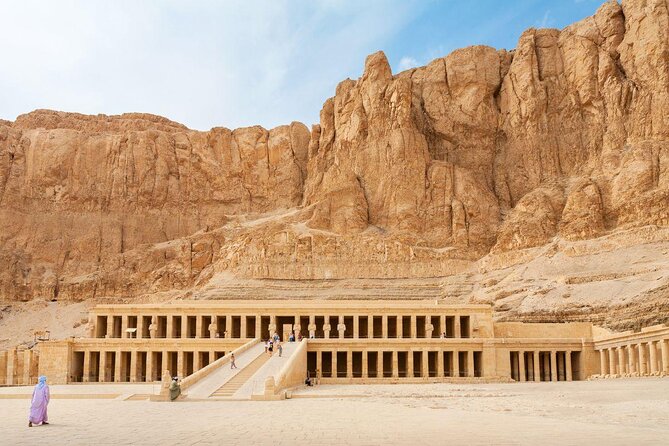
- Deir el-Bahari puts Hatshepsut’s temple at center stage
- Deir el-Medina (Valley of the Artisans) explains how the tombs got built
- Medinet Habu (Mortuary Temple of Ramses III) adds a temple-cult stop
- Colossi of Memnon is a quick but dramatic photo and scale moment
Other tomb tickets in the valley
- Hurghada: Luxor Valley of the Kings & Tutankhamun Tomb Trip★ 4.7 · 13,208 reviews
- Luxor Day Trip from Hurghada Small Group & Tutankhamun Tomb★ 4.8 · 5,366 reviews
- Luxor Day Tour: Valley of Kings & Queens & Hatchepsut Temples★ 5.0 · 1,496 reviews
- Luxor: Valley of the Kings and Hatshepsut Temple Day Tour★ 4.4 · 1,404 reviews
A West Bank Day Built Around Royal Tombs
Luxor’s west bank is where ancient Egypt goes from storybook to physical reality. Instead of treating it like one big museum stop, this tour strings together the major necropolis landmarks into a single day. That matters, because the sites make more sense when you see them in sequence: royal tombs first, then the queens’ burial ground, then the mortuary temple culture that supported the dead.
You’ll also get a practical rhythm. A representative picks you up from your hotel in Luxor, you get driven between sites, and you’re back at your hotel after the last stop. It’s not just convenience. It keeps your energy for looking closely at carving details, layout differences, and the way each site communicates power through stone.
The other key ingredient is that the tour is private, meaning it’s only your group. That tends to make the guide’s explanations feel more tailored, and it reduces the “stand and shuffle” feeling you get when you’re always syncing with a crowd.
Price and Tickets: What $11.28 Really Signals
The headline price is $11.28 per person, which immediately triggers a good question: how is that possible for a full day with transfers and admissions? The best answer here is that the value depends on what option you select for admissions.
The included info says admission tickets are included for the named stops if you choose the all-inclusive option. So, before you lock it in, confirm you’re selecting the option that matches your plan. If you are, the price can feel like a bargain, because you’re not paying separate gate fees for multiple west bank sites.
Also, tipping is not included. That’s a small line item, but it’s real. If you’re trying to keep the day as cost-effective as possible, I’d still budget a little for that, because you’re getting a guide and a driver involved in a long schedule.
Finally, keep in mind the duration: 7 to 9 hours. That length is part of why this can be such a value. You’re stacking multiple big sites into one day using a private vehicle and pickup that saves time you’d otherwise spend negotiating transport.
Valley of the Kings: Three Tombs, One Huge Atmosphere
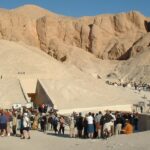
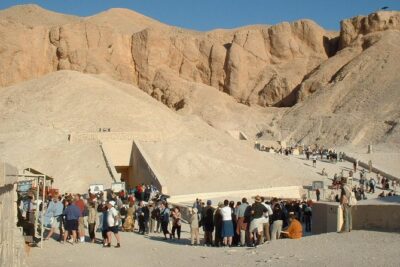
The Valley of the Kings is the headline stop for a reason. This is where the tombs of Egyptian pharaohs are, carved into the desert as monumental burial architecture. In this tour, you visit three tombs, and importantly, you skip the tomb of King Tutankhamun.
That exclusion can be a drawback if Tutankhamun is your single must-see. But if you’re more interested in comparing tomb styles, you might find the three-tomb plan satisfying, because it gives you time to actually notice differences in wall decoration and tomb design rather than racing through everything.
Each tomb visit takes about 2 hours total at this stop. That’s enough time to do two useful things:
- Listen to the guide’s explanation before you’re already moving on.
- Spend time inside without feeling like you have to treat every chamber as a 20-second stop.
A practical tip: go in with a simple mental goal. Pick one question like, What changes from one tomb to the next? Then let the guide help you connect those clues to the era and purpose of the burial site.
Hatshepsut at Deir el-Bahari: Why This Temple Feels Personal
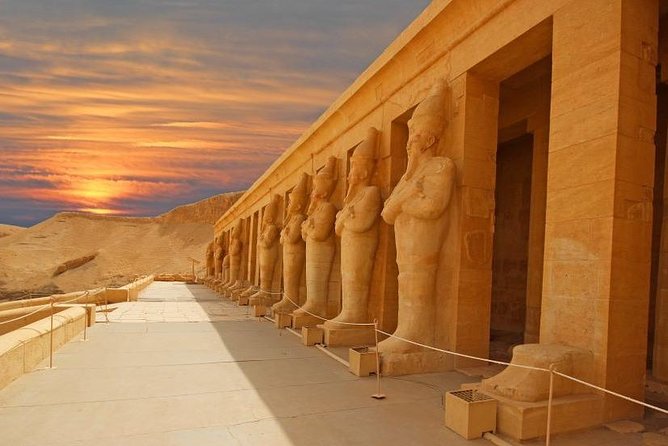
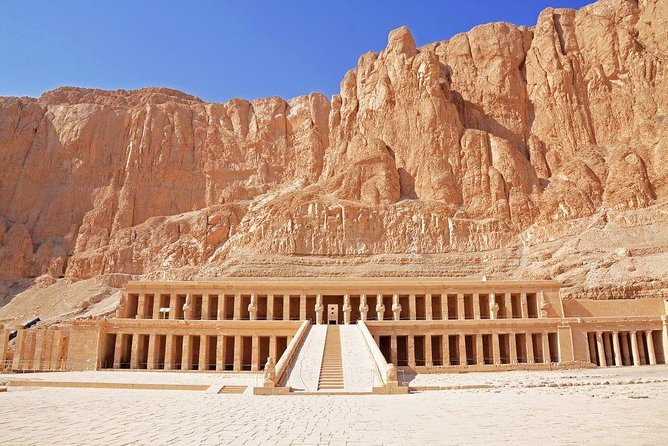
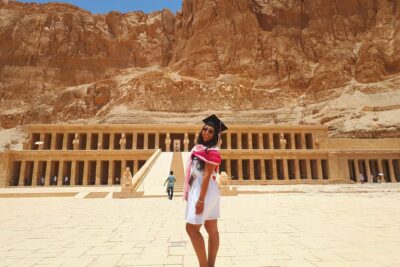
Next comes the Temple of Hatshepsut at Deir el-Bahari. This isn’t just a pretty ruin stop. It’s tied to one of ancient Egypt’s most fascinating rulers: Queen Hatshepsut, who ruled for about 20 years in the 18th Dynasty (approximately 1490 to 1469 B.C). In other words, this temple is not anonymous.
You’ll spend about 1 hour 30 minutes here, which is a good amount of time for a site with strong architectural impact. The layout at Deir el-Bahari helps you understand why it was designed the way it was. You get time to look at the setting, notice the scale, and hear how the temple functioned as a mortuary and ceremonial space.
What I like most about structuring the day this way is that it flips the mood. You go from narrow tomb chambers, focused on burial, to a larger temple space dedicated to a reigning woman and her legacy. It gives context to the broader west bank story, not just another entrance in the rock.
From the guide side, this stop can become the most memorable one. In past experiences with this operator, guides like Mobarak have been praised for explaining minute details and connecting what you see with the meaning of the site. That kind of interpretive help can turn Hatshepsut into more than “impressive architecture.”
West bank tombs, one by one
Valley of the Queens: The Burial World of Wives and Noble Women
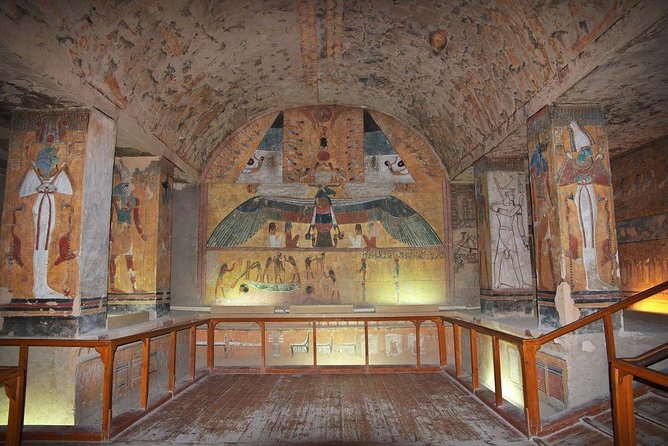
After the pharaohs’ tomb world, you move across to the Valley of the Queens. This site, also known as Biban el-Harim, is the burial place for queens and other royal family members during the New Kingdom period (approximately 1550 to 1070 BCE).
You’ll have about 45 minutes here. That short window can still work well because the Valley of the Queens is a place where you’re not just collecting facts. You’re training your eye to see how “royal burial” can be expressed differently depending on status and role. The ancient Egyptians called this area Ta-Set-Neferu, which translates to The Place of Beauty, a modern name that makes the whole valley feel gentler in concept, even though it was built for death and remembrance.
One practical consideration: with only 45 minutes, you’ll want your guide’s pacing to match your interests. If you tend to want to linger, say so early. A private format helps here because the driver can support timing and stops for comfort.
Deir el-Medina (Valley of the Artisans): Meeting the People Behind the Stone
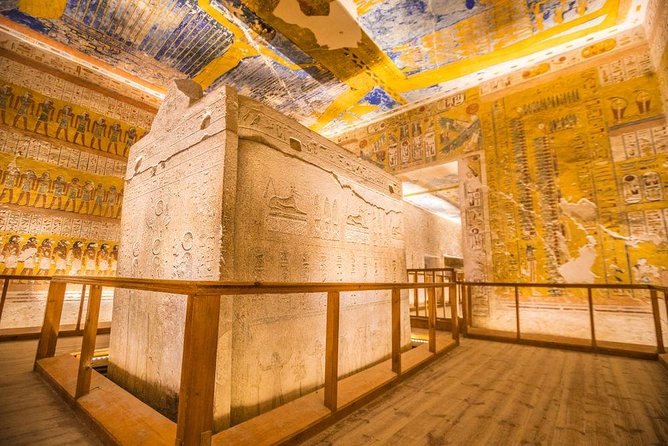
This is where the tour turns from monument to human story. You’ll visit the Valley of the Artisans, also called Deir el-Medina, for about 1 hour.
This site was an ancient village for the craftsmen and workers who built and decorated the royal tombs in the nearby valleys. The information you’re given here is specific and useful: Deir el-Medina was established during the New Kingdom period and inhabited from roughly the 15th century BCE to the 11th century BCE. That timeline matters because it helps you connect the living community to the era of tomb creation you saw earlier.
What I like about this stop is that it helps you stop thinking of tombs as magically appearing. You get a sense of the specialized labor involved in carving, painting, and sculpting. And even when you’re not seeing the workers in the flesh, the idea is clear: someone had to make this art under intense deadlines, in a system built to serve the tombs.
Medinet Habu: Mortuary Temple of Ramses III and the Afterlife Machine
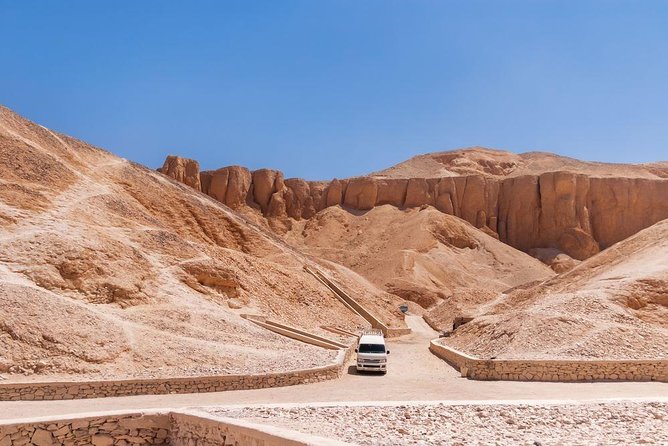
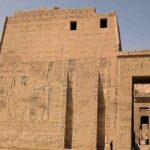
Next is the Mortuary Temple of Ramses III, also known as Medinet Habu. This is listed as about 1 hour.
Ramses III ruled from approximately 1186 to 1155 BCE, and the temple complex served as a funerary temple dedicated to him. It’s described as a site for ritual and offerings as part of the pharaoh’s mortuary cult. The details here are important. You’re not just looking at an artifact. You’re looking at architecture that was designed to keep worship active after death.
The temple complex is described as large, covering about 24,000 square meters. That size is why 1 hour is about right for a private day tour. It gives you time to take in the overall feel without expecting you to “finish” the entire site like a dedicated historian.
This stop also gives your day a different texture. The tomb valleys are intimate and linear, while Medinet Habu expands your sense of how royal power functioned, not only as burial but as ongoing religious practice.
Colossi of Memnon: Quick Stop, Maximum Scale
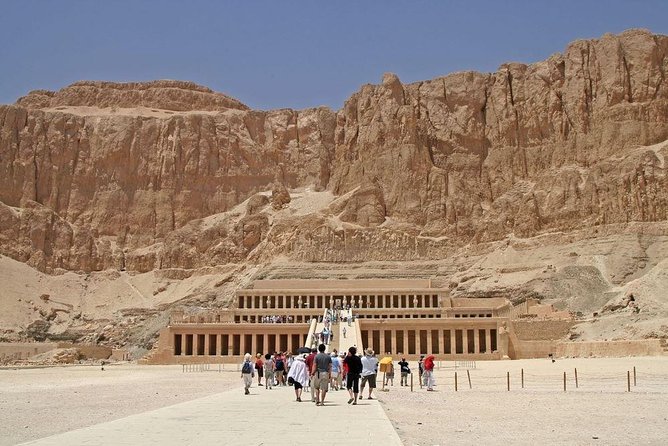
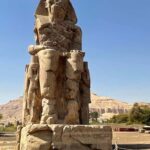
At the end of the day, you’ll visit the Colossi of Memnon, about 15 minutes. It’s a short time, but the site is famous for a reason.
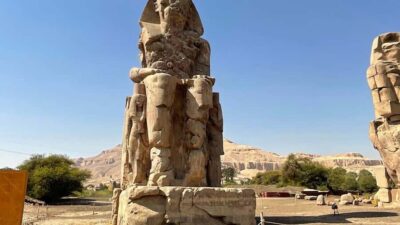
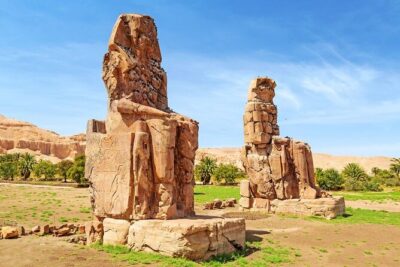
These are two massive stone statues that depict Pharaoh Amenhotep III. Each statue is about 18 meters tall and weighs around 720 tons. They originally stood at the entrance of Amenhotep III’s mortuary temple, most of which has since been destroyed. The statues are carved from quartzite sandstone, and the paint that once existed has faded over time.
Why this stop is worth it even at 15 minutes is simple: scale resets your brain. After time underground in tombs and inside temple spaces, stepping into the open and seeing something that enormous helps you appreciate the sheer physical effort behind ancient monuments. It’s also a nice break before you head back to your hotel.
Private Pickup, Comfort, and Flexible Timing That Matter
This tour includes all transfers by a private air-conditioned vehicle, with bottled water during the tour. You’re also picked up from your hotel in Luxor and returned there.
In a long day, those details stop being “nice to have.” Air-conditioning is a real comfort factor when you’re bouncing between sites. Bottled water helps you stay functional. And private transport means you’re not waiting around for other groups.
The driver experience can make or break the day. In the feedback for this operator, the driver Taha has been specifically praised for being flexible about where stops happened and for how long, and for going out of the way to make the day enjoyable. That kind of flexibility matters because it lets your guide’s explanation and your own pacing stay aligned.
Also, this is an all-private setup for your group only. That means you’re less likely to feel rushed by a crowd calendar.
Who Should Book This Tour (and Who Might Want a Different Plan)
This is a strong fit if you want:
- A focused west bank day that hits multiple major sites without needing to plan transport.
- A guide who can connect monuments to meaning, not just recite names.
- A schedule that’s realistic for a full day, with timed stops at each highlight.
It’s also a good choice if you like variety. You get tombs, a reigning queen’s temple, a queens’ burial valley, the workers’ village, and a mortuary temple. That mix keeps the day from feeling repetitive.
Who might want a different plan? If Tutankhamun is your one non-negotiable, you should know the Valley of the Kings portion is described as visiting three tombs excluding the tomb of King Tutankhamun. In that case, you’d need a different itinerary focused on that specific tomb.
Should You Book This Luxor West Bank Tour?
Yes, if you want one organized day that covers the west bank essentials with a private vehicle and an English-speaking guide, this tour is worth serious consideration. The value is strongest when you confirm the all-inclusive admission ticket option, because the tour otherwise could mean you still need to handle some gate fees yourself.
I’d say it’s especially appealing if you enjoy explanation as much as sightseeing. The guide style coming through in past feedback, including examples like Mobarak’s detailed explanations and scripture-related context, suggests you’ll get more from the sites than just exterior views.
If your travel style is slow and contemplative, just remember the day is packed. You’ll get a good amount of time at major stops like the Valley of the Kings and Hatshepsut, but smaller windows like the Valley of the Queens and Colossi are short by design. Plan to savor the big points, and let the rest be part of the rhythm.
FAQ
How long is the tour?
The tour runs about 7 to 9 hours.
Is pickup from my hotel in Luxor included?
Yes. Pickup is offered from your hotel in Luxor, and you’ll be returned to your hotel after the tour. Airport pickup is listed as an extra charge.
Are admission tickets included?
Admission tickets are included for the sites on the itinerary if you choose the all-inclusive option.
What tombs will we see in the Valley of the Kings?
You’ll visit three tombs in the Valley of the Kings, excluding the tomb of King Tutankhamun.
Is tipping included in the price?
No. Tipping is not included.
Can I cancel for a full refund?
Free cancellation is available up to 24 hours in advance of the experience’s start time for a full refund. If you cancel less than 24 hours before, the amount paid is not refunded.
The West Bank, Tomb by Tomb
Down Into the Kings Valley
More of Luxor from our review pile
- Private Tour Nile Felucca Ride at Sunset in Luxor
★ 5.0 · 26 reviews - Private Full day East and West Bank, Luxor
★ 5.0 · 26 reviews - Luxor Day Tour: Kings Valley & Karnak & Luxor & Hatshepsut Temple
★ 5.0 · 26 reviews - Full-Day East and West Luxor Private Tour
★ 4.5 · 26 reviews - Day Trip to Edfu & Kom Ombo temples from Luxor and drop off in Aswan or Luxor
★ 5.0 · 26 reviews - 5 Days 4 Nights Nile Cruise Tour
★ 5.0 · 27 reviews
Luxor West Bank Temples & Tombs, compared.
 ★ 5.0Luxor Day Tour: Valley of Kings & Queens & Hatchepsut TemplesFrom $891,496 reviews
 ★ 5.0Full Day Tour to East and West Banks of LuxorFrom $151,449 reviews
 ★ 4.4Valley of the Kings and Hatshepsut Temple Day TourFrom $501,404 reviews
 ★ 5.0Valley of Kings, Hatchepsut Temple ,Karnak & Luxor-DayTourFrom $95735 reviews
 ★ 5.0Full Day Tour of Luxor West Bank Temples and Tombs (Private)From $20722 reviews
 ★ 5.0Private Full-Day Luxor Highlights East and West BanksFrom $65663 reviews
 ★ 4.5Guided Tour to East or West Banks with LunchFrom $64604 reviews
 ★ 5.0Luxor Private Full-Day Tour: Discover the East and West Banks of the NileFrom $90545 reviews
The lists this one sits on