
REVIEW · LUXOR WEST BANK TEMPLES & TOMBS
Private Full-Day Luxor Tour to East and West Banks
Your day starts before sunrise. A private Luxor route like this strings together both banks in one smooth, air-conditioned day with an Egyptologist at your side. You get the wow factor of the big-name sites, plus the practical benefit of hotel pickup and drop-off.
I love the private format. It means your guide can pace the day for your group and you get small bursts of free time where you can wander without feeling rushed. I also like the East and West Bank mix, because it helps you understand Luxor as one ancient city split by the Nile.
One thing to consider is cost at the gate. Entrance fees are not included, and some tomb choices (like Tutankhamun) can add extra payment on the spot, so I’d budget for that before you go.
In This Review
- Key things I’d focus on
- A Private Luxor Day Across the Nile
- Price and Value, Plus What You Still Need to Pay
- Valley of the Kings: Royal Burials and the Reality of Tomb Rules
- Deir el Bahari and Hatshepsut: Where the Courtyards Feel Big
- Colossi of Memnon: Quick, Free, and Full of Presence
- Karnak Temple: Avenue of Sphinx to the Hypostyle Hall Forest
- Luxor Temple: Ramses II Power, Alexander’s Footprints, and an Obelisk Story
- Comfort, Timing, and Staying Cool Between Sites
- Souvenir Stops and How to Keep Your Day on Your Terms
- Should You Book This East and West Banks Luxor Tour?
- FAQ
- How long is the Private Full-Day Luxor Tour?
- Do I get hotel pickup and drop-off?
- Is the tour private?
- Are entrance fees included for the temples and sites?
- Are meals included?
- Can I visit the Tomb of Tutankhamun?
- Is there a stop at Colossi of Memnon?
- Is there free cancellation?
Key things I’d focus on
- Egyptologist guide to connect monuments to the people who built them
- Air-conditioned transport between hot, spread-out sites
- Valley of the Kings guidance even if tomb access is limited by rules
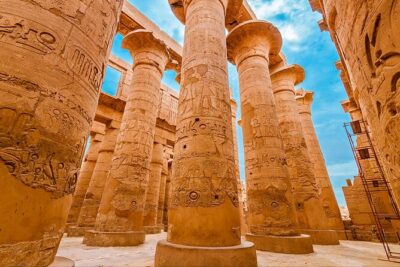
- Karnak’s layout and scale, including the Hypostyle Hall and 134 columns
- Real free time at Deir el Bahari and Karnak for slower sightseeing
- Private tour flexibility so your group sets the rhythm
West bank tombs, one by one
- Luxor Day Tour: Valley of Kings & Queens & Hatchepsut Temples★ 5.0 · 1,496 reviews
- Full Day Tour to East and West Banks of Luxor★ 5.0 · 1,449 reviews
- Luxor: Valley of the Kings and Hatshepsut Temple Day Tour★ 4.4 · 1,404 reviews
- Luxor: Valley of Kings, Hatchepsut Temple ,Karnak & Luxor-DayTour★ 5.0 · 735 reviews
A Private Luxor Day Across the Nile
If Luxor is your first real taste of ancient Egypt, this full-day tour is a smart way to get oriented fast. You cover the signature sites on the East Bank and West Bank, and your guide helps you read what you’re looking at instead of just snapping photos and moving on.
The best part is that it’s built for comfort and control. You start with hotel pickup and drop-off, then ride in a private, air-conditioned vehicle between stops. That matters because Luxor heat can turn a sightseeing day into a sprint, especially when you add walking through large temple complexes. Here, the breaks are built in, and you’re not trying to manage transport yourself.
Also, the tour is set up as one cohesive story: royal burials on the West Bank, mortuary temple brilliance at Deir el Bahari, and the East Bank’s power centers at Karnak and Luxor Temple. Even if you only remember a handful of details, the overall picture sticks.
Price and Value, Plus What You Still Need to Pay
The tour price is $40 per person, and for Luxor, that’s the kind of rate that often feels too good to be true. The value comes from the practical stuff that can cost you more if you do it alone: qualified Egyptologist guidance, private vehicle transport, and hotel pickup and drop-off.
But here’s the honest part you should plan around: entrance fees are not included. That means your total day cost depends on which tombs you choose and which tickets you buy at each site. The schedule also notes that visiting the Tomb of Tutankhamun has an additional cost payable directly.
If you want a clean budget, treat the $40 as the tour base price and then add entrance fees separately. For the Colossi of Memnon stop, the ticket is free, but Karnak and the Valley of the Kings are the places where your spending usually shows up.
Gratuities are also not included, and they’re generally recommended. If you’re tipping, I suggest doing it based on how helpful your guide is with explanations and pacing, not just because you’re on a tour.
Valley of the Kings: Royal Burials and the Reality of Tomb Rules
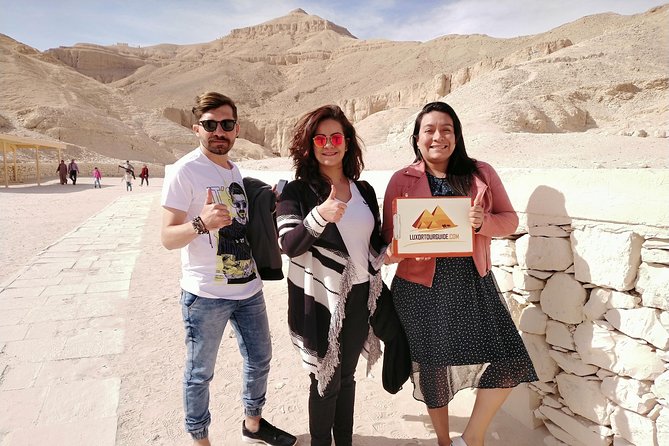
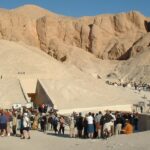
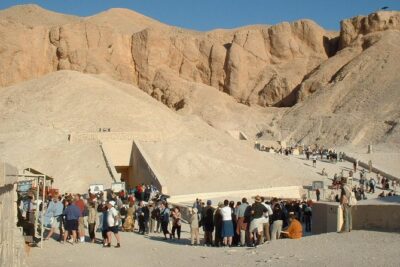
The day begins at the Valley of the Kings, the burial place of the kings of Thebes (ancient Luxor). You’ll have a brief stop at the visitors center first, which is useful because the valley can feel like a lineup of entrances without context. After that, your guide handles the key part: what to look for inside the tombs.
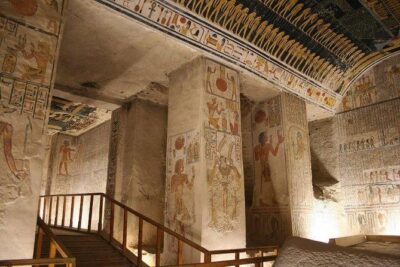
Important detail: guides are not permitted inside the tombs. That’s not a deal-breaker, but it changes how you should experience it. Your guide won’t be narrating word-for-word in the dark room. Instead, they set you up outside so you can spot the decorated rooms and key details when you’re inside on your own.
The tour is clear that if you want to visit the Tomb of Tutankhamun, there’s an extra charge you pay direct. If that’s your top priority, decide before you arrive so you don’t end up scrambling when time gets tight.
One other planning thought: the Valley of the Kings stop is scheduled for about 1 hour 30 minutes. That’s enough time to get oriented, choose your tomb option, and not feel like you’re racing the clock.
Deir el Bahari and Hatshepsut: Where the Courtyards Feel Big
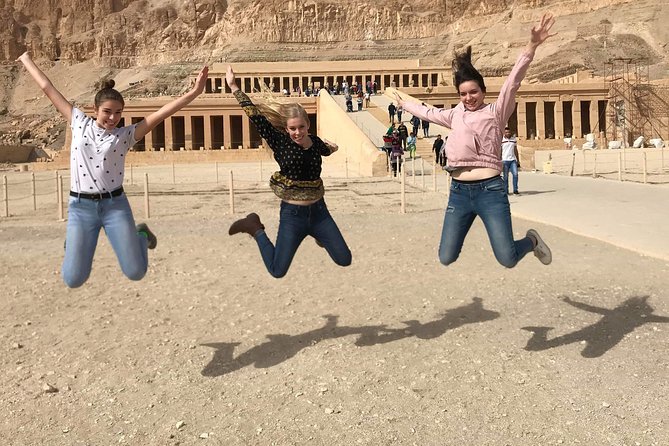
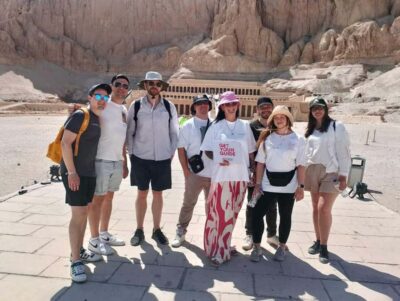
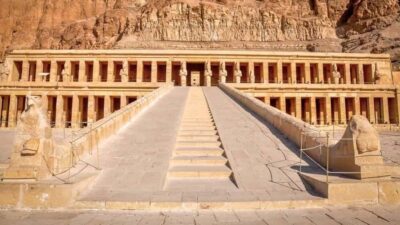
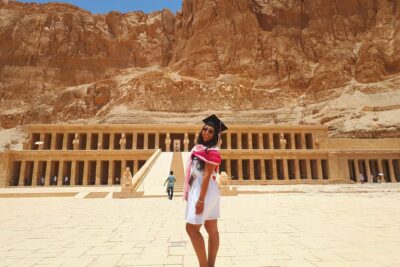
Next comes the Temple of Hatshepsut at Deir el Bahari, one of Luxor’s most striking monuments. This stop is worth it even if you only care about architecture, because the temple’s layout makes you move through space in a dramatic way as you go from courtyard to courtyard.
Your guide will explain the story of Queen Hatshepsut, including the fact that she famously posed as a male to gain the throne. Whether you remember every detail or not, that context changes how you view what’s carved into the walls. The hieroglyphs and scenes aren’t just decoration, they’re messaging.
You’ll also get free time to explore on your own for about an hour. That’s a big deal. It lets you slow down and look at inscriptions, check viewpoints, and soak up the setting without feeling like you’re constantly waiting for the next photo stop.
Possible drawback: if your group hates unguided wandering, this is the kind of stop where you’ll want to speak up. If you’d rather stay with your guide, ask questions early so you get the value out of that free time.
Colossi of Memnon: Quick, Free, and Full of Presence
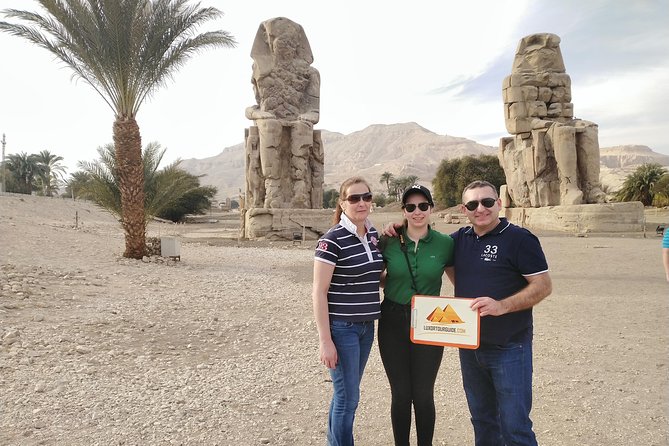
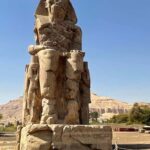
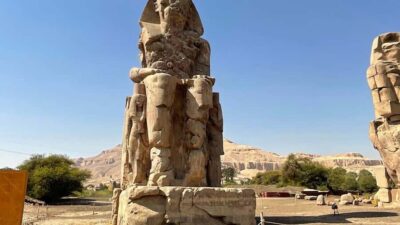
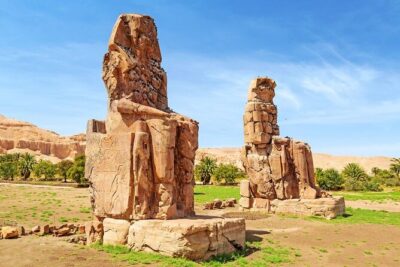
Then you’ll hit the Colossi of Memnon. These are the two giant statues marking the site of the funerary temple of Amenhotep III. Today, they’re basically the survivors of a much larger complex, which is part of the punch. You see what remains and your brain fills in the scale of what used to be there.
This stop is short, around 20 minutes, and the ticket is listed as free. That makes it a good breather between longer, heavier temple visits. It’s also a nice reset moment for your legs and your brain before Karnak.
Even in a brief visit, these statues tend to work on people. They’re tall, solid, and strangely emotional if you slow down and look at them from different angles.
Karnak Temple: Avenue of Sphinx to the Hypostyle Hall Forest
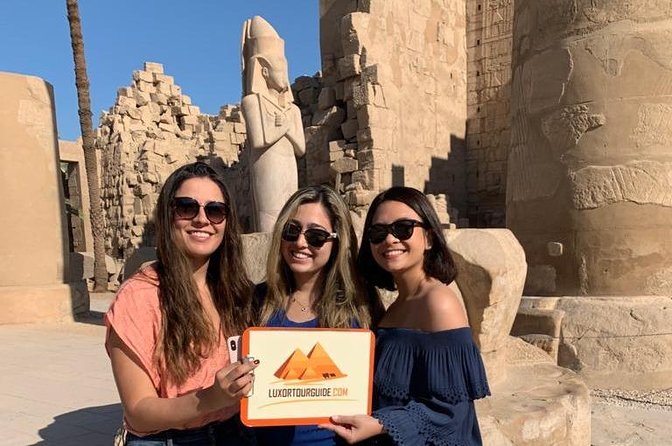
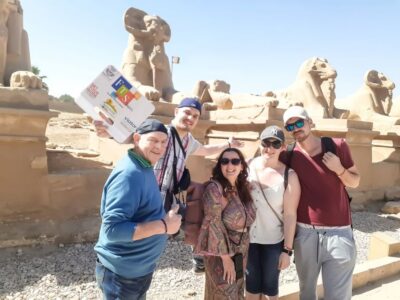
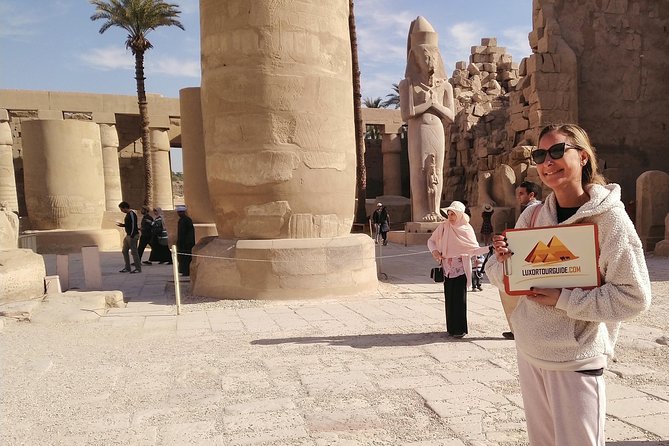
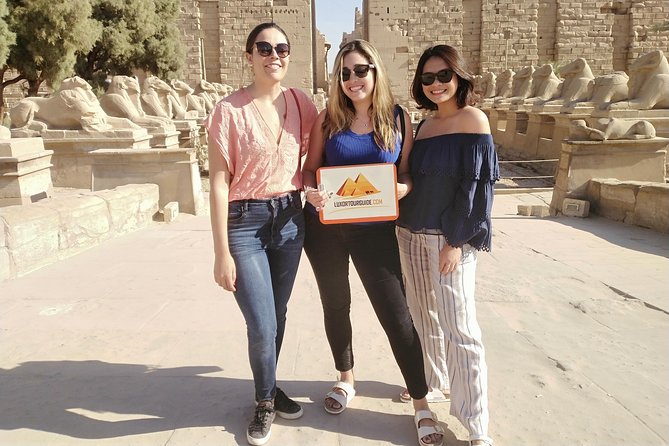
Karnak is the heavy hitter. You start by entering via the Avenue of Sphinx, and your guide explains how the massive facade was constructed. That helps because Karnak isn’t one temple you visit and finish, it’s a complex that grew over time with contributions from different pharaohs.
One of the most useful ways to think about Karnak is the tour’s own idea: the deeper you go, the farther back you travel. The schedule notes the oldest ruins date back over 3,000 years. That timeline is what makes the place feel like a layered book, and it gives you a structure for what you’re looking at.
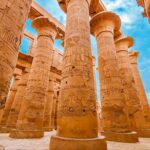
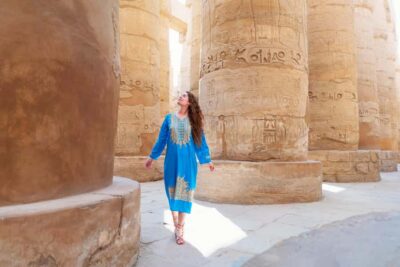
Your time inside includes the Great Court and the Great Hypostyle Hall, where you’ll see 134 columns towering overhead like an ancient forest. In a space like this, what you need is orientation, not just sight lines. Your guide’s job is to give you those reference points, so the hall doesn’t become an endless sea of pillars.
After the tour of the complex, you’ll have additional free time to explore at leisure. This is where you can chase details that catch your eye, like inscriptions or small areas that don’t fit into the main guide narrative.
Practical note: the Karnak stop is about 2 hours. If your group likes photos and slow walking, you’ll probably appreciate that extra free time. If you’re feeling rushed, ask your guide to point out the top few sections you should prioritize.
Luxor Temple: Ramses II Power, Alexander’s Footprints, and an Obelisk Story
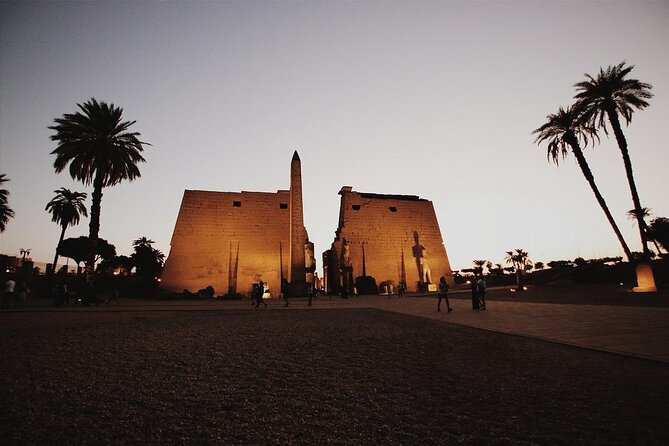
On the East Bank, the tour finishes with Luxor Temple. This temple was once linked to Karnak by a 2-kilometer-long Avenue of Sphinx. Even though you won’t walk the full stretch in this tour, knowing it existed gives you a sense of how planned this whole sacred landscape was.
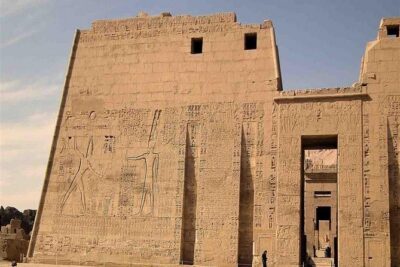
Luxor Temple is dominated by statues of the warrior pharaoh Ramses II. The tour also emphasizes why the monument still feels dramatic today, because it survived Nile floods, foreign invasion, and thousands of years exposed to the elements. That resilience changes how you view the remaining stone, it isn’t just preserved by luck, it’s endured.
Your guide will also point out Egyptian temple details and the hieroglyphic decoration on inner walls and columns, including guidance for deciphering. If you’ve ever stared at Egyptian writing and felt it was just symbols, this kind of help pays off. You start seeing patterns and themes.
Two other fascinating historical notes are included: Alexander the Great wrote himself into Luxor Temple’s history, and you can see one of the original pair of obelisks. The second obelisk now stands in Place de la Concorde in Paris, which gives you a link between Luxor and the modern world.
This stop is scheduled for about 1 hour. It’s enough time to absorb the big features and still leave you energized rather than drained.
Comfort, Timing, and Staying Cool Between Sites
A Luxor day can be long, and this one is roughly 6 to 8 hours. The exact timing can vary, but the idea is consistent: you’re covering far more than a single temple visit, so you need transport and pacing.
The air-conditioned vehicle is one of the quiet win factors here. You’re not just paying for comfort, you’re protecting your energy for the walks and indoor/outdoor viewing. When heat builds, concentration drops. Air-conditioned travel keeps you sharp enough to actually understand what the guide is telling you.
Pickup and drop-off also make a difference. You avoid the stress of hailing rides, negotiating directions, and figuring out where to meet. You show up, you go, you return.
One practical point: if you’re trying to pack in a lot of sightseeing, this is a day where you should keep your expectations realistic. You’ll get to see the top sites, but you won’t have time to treat each monument like a semester-long research project. The value is in seeing the connections across the day.
Souvenir Stops and How to Keep Your Day on Your Terms
Some tours in Egypt include shop stops, and that can sour the mood if you feel pushed. In at least one real interaction tied to this style of tour, the guide explained the difference between local souvenir shops and governmental stores, with no pressure to buy. The guide also communicated that returns might be possible for items you purchase, which is the kind of practical reassurance that helps you feel in control.
Even without shop stops built into the schedule you follow, you should still act like a smart customer. If you see a shop opportunity, ask your guide directly what the options are and whether you can skip. Decide on your own timeline.
My advice is simple: come with a small list of what you actually want, and treat the rest as window shopping. That way you leave with keepsakes you chose, not items you bought because the day started to blur.
Should You Book This East and West Banks Luxor Tour?
Book it if you want a focused, efficient day that covers Luxor’s headline sites on both banks with an Egyptologist and real built-in comfort. The private format and hotel pickup are big wins, and the combination of West Bank royal burials plus East Bank power centers helps you understand Luxor as more than separate attractions.
Skip or rethink it if you want guaranteed tomb access beyond what’s listed, or if you don’t want to deal with entrance fees at multiple stops. Entrance tickets are not included, and Tutankhamun adds extra cost, so your final budget depends on your choices.
If you like guided context, appreciate free time to wander, and you’re okay managing separate admission costs, this is a strong value at $40 per person for a full-day Luxor experience.
FAQ
How long is the Private Full-Day Luxor Tour?
The tour is listed as 6 to 8 hours approximately.
Do I get hotel pickup and drop-off?
Yes. Hotel pickup and drop-off are included.
Is the tour private?
Yes. It is a private tour, and only your group participates.
Are entrance fees included for the temples and sites?
No. Entrance fees to all sites are not included.
Are meals included?
Food and drinks are not included unless specified.
Can I visit the Tomb of Tutankhamun?
You can, but an additional cost is payable direct. The tour notes this specifically.
Is there a stop at Colossi of Memnon?
Yes. The Colossi of Memnon stop is included, and admission ticket is listed as free.
Is there free cancellation?
Yes. You can cancel up to 24 hours in advance for a full refund. If you cancel less than 24 hours before, the amount paid is not refunded.
The West Bank, Tomb by Tomb
More of Luxor from our review pile
- Private Tour Nile Felucca Ride at Sunset in Luxor
★ 5.0 · 26 reviews - Private Full day East and West Bank, Luxor
★ 5.0 · 26 reviews - Luxor Day Tour: Kings Valley & Karnak & Luxor & Hatshepsut Temple
★ 5.0 · 26 reviews - Full-Day East and West Luxor Private Tour
★ 4.5 · 26 reviews - Day Trip to Edfu & Kom Ombo temples from Luxor and drop off in Aswan or Luxor
★ 5.0 · 26 reviews - 5 Days 4 Nights Nile Cruise Tour
★ 5.0 · 27 reviews
Luxor West Bank Temples & Tombs, compared.
 ★ 5.0Luxor Day Tour: Valley of Kings & Queens & Hatchepsut TemplesFrom $891,496 reviews
 ★ 5.0Full Day Tour to East and West Banks of LuxorFrom $151,449 reviews
 ★ 4.4Valley of the Kings and Hatshepsut Temple Day TourFrom $501,404 reviews
 ★ 5.0Valley of Kings, Hatchepsut Temple ,Karnak & Luxor-DayTourFrom $95735 reviews
 ★ 5.0Full Day Tour of Luxor West Bank Temples and Tombs (Private)From $20722 reviews
 ★ 5.0Private Full-Day Luxor Highlights East and West BanksFrom $65663 reviews
 ★ 4.5Guided Tour to East or West Banks with LunchFrom $64604 reviews
 ★ 5.0Luxor Private Full-Day Tour: Discover the East and West Banks of the NileFrom $90545 reviews
The lists this one sits on