

REVIEW · LUXOR WEST BANK TEMPLES & TOMBS
Private Day Tour of Luxor East & West Bank Temples and Tombs
Luxor can feel like a time machine, and this private day tour is a fast, smart route through it. You get an Egyptologist guide plus focused stops like Valley of the Kings and Karnak, where the details matter. I also like the way pickup, in-car comfort, and good communication make the day run smoothly. One thing to plan for: entrance fees and taxes are not included, so your final bill will be higher than the base price.
This is built for people who want big ancient-Egypt hits in one day, without the stress of figuring out logistics on your own. Expect a 6 to 8 hour day in an air-conditioned vehicle, with bottled water and coffee or tea provided. If you are the type who wants to linger for hours in only one tomb, you might find the time at each site a bit tight.
In This Review
- Key things to know before you go
- A Private Day Linking Luxor’s East and West Banks
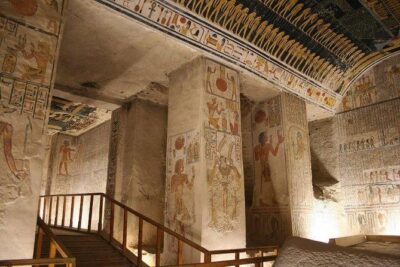
- Valley of the Kings, Where Royal Tombs Were Built to Last
- Tutankhamun’s tomb (KV62): the famous one, with clear context
- Tomb of Seti I (KV17): more architecture, strong preservation
- Colossi of Memnon: a quick stop with a big story
- Karnak Temple: the 1,000-Year Temple Complex Feeling
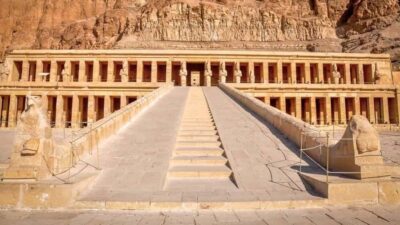
- Deir el Bahari and Hatshepsut: reading the temple walls
- Price and Logistics: what you really get for $19
- Getting picked up smoothly, with drivers you can trust
- Who this tour suits best
- Practical tips to make the day easier
- Should you book this East and West Bank tour?
- FAQ
- What sites does this day tour include?
- How long is the tour?
- Is pickup from my hotel included?
- Are admission tickets included?
- Is airport pickup or drop-off available?
- What is included in the price besides the tour?
- Is this a private tour?
- Does the tour depend on weather?
- What if I need to cancel?
Key things to know before you go
- A real Egyptologist guide: you will get context, not just name-and-date sightseeing.
- Tutankhamun time is short but focused: about 30 minutes at the tomb, with the most famous sights prioritized.
- Seti I gets a quick look: around 20 minutes at KV17, known for its complexity and good state of preservation.
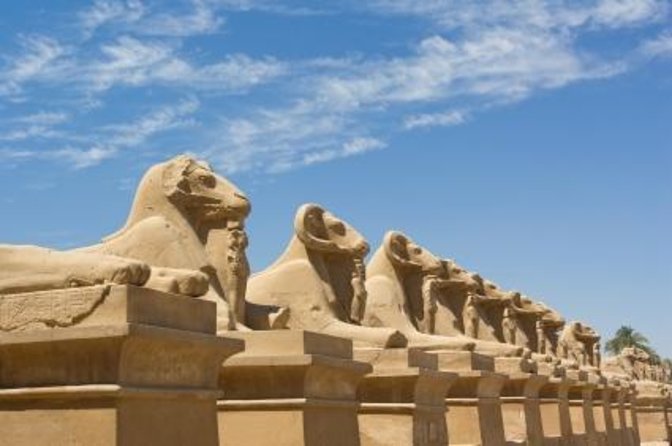
- Karnak runs long on purpose: roughly 2 hours to see how Amun-Re’s temple grew across centuries.
- Hatshepsut at Deir el Bahari takes about 2 hours: reliefs and hieroglyphics turn the story of her reign into something you can read.
- You’re not stuck paying for everything twice: coffee or tea, bottled water, and a/c transport are included, while site tickets are not.
West bank tombs, one by one
- Luxor Day Tour: Valley of Kings & Queens & Hatchepsut Temples★ 5.0 · 1,496 reviews
- Full Day Tour to East and West Banks of Luxor★ 5.0 · 1,449 reviews
- Luxor: Valley of the Kings and Hatshepsut Temple Day Tour★ 4.4 · 1,404 reviews
- Luxor: Valley of Kings, Hatchepsut Temple ,Karnak & Luxor-DayTour★ 5.0 · 735 reviews
A Private Day Linking Luxor’s East and West Banks
Luxor is split by the Nile into two very different worlds. On this tour, you cover both sides, so you see how the ancient Egyptians handled religion and kingship in two separate places.
You also travel as a private group, meaning your schedule is meant to work for your group size rather than a huge bus load. That matters in Luxor, where travel time, ticket lines, and the sun can turn a “short” day into a long one if you are not organized. An air-conditioned vehicle helps a lot, and the included bottled water is the kind of small detail that keeps the day pleasant.
The other value point is the guidance. A good Egyptologist guide helps you notice things that most people would miss, like why certain tombs look different, or how the centuries-long building at Karnak changes the feel of the place.
Valley of the Kings, Where Royal Tombs Were Built to Last
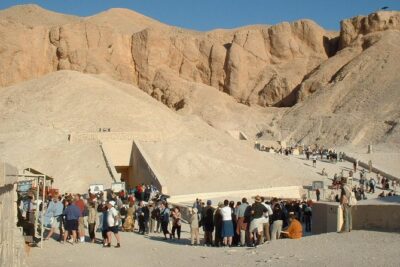
The day starts with the Valley of the Kings, and this is where Luxor earns its reputation. You get about 2 hours here, which is enough time to visit several open tombs and get a sense of the funerary approach used for pharaohs.
Valley of the Kings tombs are not all the same. Even when you are only seeing a few, you can start to notice differences in design and decoration, and you begin to understand that these were carefully planned works, not one-off digs. The Egyptologist framing helps you connect what you see on the walls to the bigger burial beliefs of ancient Egypt.
You will also want to pace yourself. Even with shade where you can find it, this area is outdoors and the time adds up. Wear comfortable shoes, keep your water handy, and plan to spend some energy just walking between tomb entrances.
Tutankhamun’s tomb (KV62): the famous one, with clear context
After you are oriented in the Valley, the tour focuses on Tutankhamun’s tomb (KV62) for about 30 minutes. This is a short visit by design, because the tomb is famous and the experience is more about what you notice than how long you stare.
The key details you should look for:
- Tutankhamun’s mummified remains are shown in a climate-controlled glass case, built to protect them from humidity and heavy tourist handling.
- The burial chamber includes vivid murals tied to major funerary concepts, including the Opening of the Mouth ceremony and scenes associated with the Book of the Amduat.
- The tomb itself is relatively small, and the tour guide will explain why that matters, especially in light of Tutankhamun’s unexpected death at a young age and the way the burial plans were adapted.
If you come in expecting a huge sprawling tomb, you may be surprised. But the power here is in the art and symbolism, plus the historical significance of the discovery in 1922 by Howard Carter.
Tomb of Seti I (KV17): more architecture, strong preservation
Next comes the Tomb of Seti I (KV17), with roughly 20 minutes allocated. Even in a quick stop, KV17 is worth your attention because it is known for its architectural complexity and extensive decoration, along with remarkable preservation.
This is a good counterbalance to KV62. Tutankhamun’s story is the headline, but Seti I helps you see how royal tombs could be engineered to impress from multiple angles. With the Egyptologist guide, you are less likely to treat the visit like a checklist and more likely to understand what you are seeing.
Colossi of Memnon: a quick stop with a big story
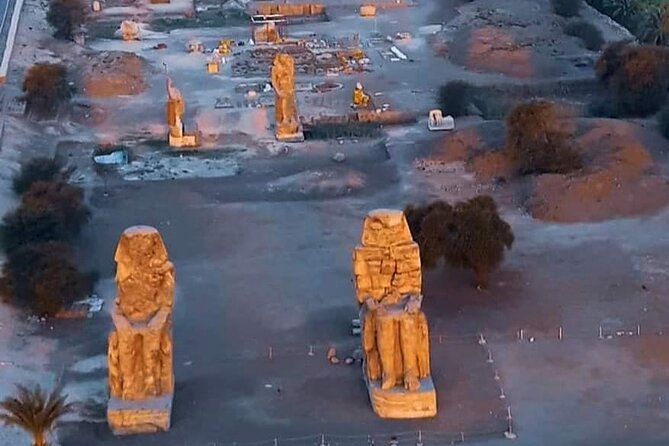
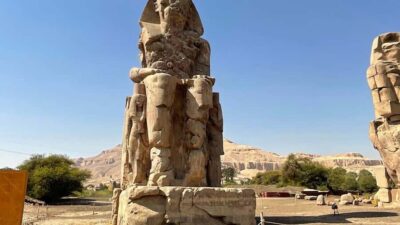
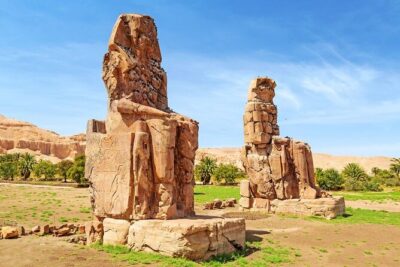
Between tomb time and the shift toward temples, you make a shorter photo and context stop at the Colossi of Memnon. Plan for about 15 minutes.
These are the two large statues people talk about because they mark the location connected to the funerary landscape of the area, and they sit near routes leading toward both the Valley of the Kings and the Valley of the Queens. Even if you do not spend a lot of time here, it helps you connect the dots between the sprawling temple sites and the “city of the dead” vibe.
At this stop, you will not pay admission since it is listed as free. Still, it is a smart moment to pause, adjust to the heat, and keep your energy up for the temple-heavy afternoon.
Karnak Temple: the 1,000-Year Temple Complex Feeling
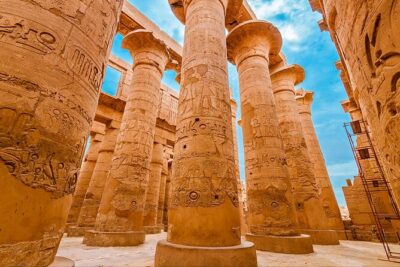
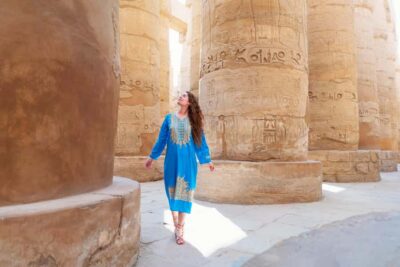
Karnak is one of those places where even if you know the broad outline, seeing it in person makes the scale hit differently. You have about 2 hours here, which is the right length for absorbing the main structures without feeling rushed.
Karnak was developed over more than 1,000 years, with major building work spanning primarily between the Twelfth and Twentieth Dynasties. That long timeline is not just trivia. You can feel it in how the complex changes in sections, and why there are so many layers of religious meaning attached to it.
The tour guide will likely anchor the story around Amun-Re, since the complex served as the principal religious center for him during the New Kingdom. Once you have that anchor in place, you are not just walking among ruins, you are mapping a sacred city built up across generations.
Tip for your visit: give yourself a few quiet minutes to scan and re-scan. Karnak rewards the kind of attention that is easy to skip when you are trying to keep up with a group. If your guide is good at pacing, ask them to slow down at the spots that matter most to you.
Deir el Bahari and Hatshepsut: reading the temple walls

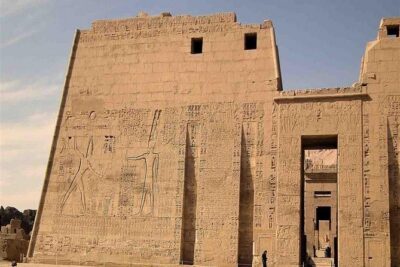
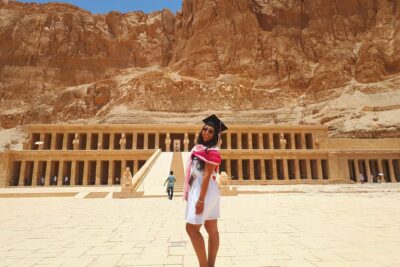
In the afternoon, you reach the Temple of Hatshepsut at Deir el Bahari for about 2 hours. This stop is where Luxor shifts from royal burial storytelling toward leadership storytelling.
The temple walls are decorated with intricate reliefs and hieroglyphics that tell key moments from Hatshepsut’s reign. The tour highlights include:
- Scenes of the Divine Birth, supporting her claim to legitimacy as pharaoh.
- The expedition to Punt, showing trade links and the reach of Egypt during her rule.
If you like when a place tells a story through art, you will appreciate this. It is not just “look at old stone,” it is structured scenes with meaning that your Egyptologist guide can explain.
You will also likely find that Deir el Bahari feels like a more human-scaled experience than Karnak. That can be a relief after tomb walking, and it makes sense as a day rhythm: tombs, then statues, then the grand temple machine, then a focused ruler’s portrait in stone.
Price and Logistics: what you really get for $19
The base price listed is $19 per person, which is remarkably budget-friendly for a private, guided full-day plan. Still, the important fine print is that “all fees and taxes” are not included. You should expect to budget for site admission tickets on top of the tour price.
Here is what the tour includes:
- Air-conditioned vehicle
- Coffee and/or tea
- Bottled water
- Pickup offered (and hotel drop-off is part of the flow)
And here is what is extra:
- Entrance tickets and any site fees
- Airport pickup or drop-off costs an extra $10
This is where value judgment helps. If you are already planning to see multiple major sites, the tour can save time and reduce headaches. If you are only trying to see one or two places, you might compare against a smaller route.
Duration is listed as 6 to 8 hours, which is long enough to feel like a full day, but not so long that you are guaranteed misery. The real variable is how quickly sites move and how much your group wants to linger.
Getting picked up smoothly, with drivers you can trust

One of the most praised parts of this experience is the smooth human side of it. Mr Ali is described as in close contact from pickup to drop-off, and that kind of communication is not a small thing when your day depends on timing.
Another name that shows up in the feedback is Mahmoud, the driver. The car is described as modern and clean, and the driving is called English-speaking and safe. On top of bottled water, a small snack and cooled water were also mentioned, which fits the reality of a warm day when you are moving between outdoor and indoor sights.
Your guide is also part of the story. The feedback highlights a guide who was kind, explained things clearly, and was willing to adjust the plan based on what you wanted. That is the difference between feeling dragged through a route and feeling like you are controlling your day with expert help.
Who this tour suits best
This tour fits best if:
- You are a first-time Luxor visitor who wants the major highlights on both sides of the Nile.
- You value an Egyptologist guide to explain what you see at Valley tombs and temple walls.
- You want private pacing, with pickup and drop-off handled for you.
- You like a structured day rather than building an itinerary from scratch.
It is also described as suitable for most travelers. That usually means the itinerary is manageable, but you should still keep in mind the walking and outdoor time at the tombs.
If you are the kind of traveler who likes to spend long hours studying one site, you might want to ask about adjusting your time allocation. The standard plan includes a mix of quick and longer stops, like 2 hours for Valley of the Kings and Karnak, but only 30 minutes for Tutankhamun’s tomb and 20 minutes for Seti I.
Practical tips to make the day easier
A few practical moves will help you enjoy the day more:
- Plan for heat and sun at outdoor stops, since most major tomb and temple areas are exposed.
- Wear comfortable shoes for uneven ground and long walking stretches.
- Bring cash or a payment method for admission tickets, since those are not included.
- If you are doing airport pickup, remember the $10 extra line item.
- Use the bottled water early. Do not wait until you feel thirsty.
If you want the best experience, treat the guide’s explanations like part of the attraction. Ask short questions. Your guide is there to help you connect the art and architecture to the people and beliefs behind it.
Should you book this East and West Bank tour?
I would book this if you want a guided, private, highlights-heavy Luxor day that covers Valley of the Kings, Karnak, and Hatshepsut in one go. The value is strong for the base price, especially with air-conditioned transport and basic refreshments included.
I would think twice if entrance tickets are a deal-breaker for you, because they are not included and can add cost. I would also consider your own pacing style. This itinerary balances several sites, so you are getting variety rather than spending all day in a single tomb.
If your goal is to leave Luxor with a clear picture of how royal burials and temple religion shaped the city on both sides of the Nile, this tour is a smart way to get there.
FAQ
What sites does this day tour include?
The tour includes the Valley of the Kings, the tomb of Tutankhamun, the tomb of Seti I, Karnak Temple, the Colossi of Memnon, and the Temple of Hatshepsut at Deir el Bahari.
How long is the tour?
It runs about 6 to 8 hours.
Is pickup from my hotel included?
Yes, pickup is offered, and the day ends with drop-off back at your hotel.
Are admission tickets included?
No. Admission tickets and all fees and taxes are not included.
Is airport pickup or drop-off available?
It is available for an additional $10.
What is included in the price besides the tour?
You get an air-conditioned vehicle, coffee and/or tea, and bottled water.
Is this a private tour?
Yes. It is a private tour, so only your group participates.
Does the tour depend on weather?
Yes. It requires good weather, and if it is canceled due to poor weather you will be offered a different date or a full refund.
What if I need to cancel?
Free cancellation is available up to 24 hours in advance for a full refund. If you cancel less than 24 hours before the start time, it is not refunded.
The West Bank, Tomb by Tomb
More of Luxor from our review pile
- Private Tour Nile Felucca Ride at Sunset in Luxor
★ 5.0 · 26 reviews - Private Full day East and West Bank, Luxor
★ 5.0 · 26 reviews - Luxor Day Tour: Kings Valley & Karnak & Luxor & Hatshepsut Temple
★ 5.0 · 26 reviews - Full-Day East and West Luxor Private Tour
★ 4.5 · 26 reviews - Day Trip to Edfu & Kom Ombo temples from Luxor and drop off in Aswan or Luxor
★ 5.0 · 26 reviews - 5 Days 4 Nights Nile Cruise Tour
★ 5.0 · 27 reviews
Luxor West Bank Temples & Tombs, compared.
 ★ 5.0Luxor Day Tour: Valley of Kings & Queens & Hatchepsut TemplesFrom $891,496 reviews
 ★ 5.0Full Day Tour to East and West Banks of LuxorFrom $151,449 reviews
 ★ 4.4Valley of the Kings and Hatshepsut Temple Day TourFrom $501,404 reviews
 ★ 5.0Valley of Kings, Hatchepsut Temple ,Karnak & Luxor-DayTourFrom $95735 reviews
 ★ 5.0Full Day Tour of Luxor West Bank Temples and Tombs (Private)From $20722 reviews
 ★ 5.0Private Full-Day Luxor Highlights East and West BanksFrom $65663 reviews
 ★ 4.5Guided Tour to East or West Banks with LunchFrom $64604 reviews
 ★ 5.0Luxor Private Full-Day Tour: Discover the East and West Banks of the NileFrom $90545 reviews
The lists this one sits on