
REVIEW · LUXOR DAY TRIPS FROM THE RED SEA RESORTS
Overnight Trip to Luxor Highlights from Hurghada
Luxor in two days feels like a time machine. This overnight trip from Hurghada strings together major temples and tombs with an Egyptologist guide, plus planned evening drama with a sound-and-light show. What I like most is the tight “highlights to highlights” flow, so you do not waste time guessing what is worth seeing.
I also like that the experience is built around real guidance. On this trip, the drive and the on-site explanations matter, and one guide named Abdul was singled out for being informative, while the driver, Mohammed, handled a tricky stretch between Qena and Luxor with real confidence.
The main drawback to consider is the packed schedule and the early start, plus a few famous tomb add-ons that cost extra if you want specific interiors. In other words, you will see a lot, but it is not a slow, relaxed stroll kind of outing.
In This Review
- Key things that make this Luxor overnight work
- A 3:00 am start and the Hurghada-to-Luxor drive reality
- Karnak Temple: where size and symbolism do the heavy lifting
- Luxor Temple and the Opet Festival setting
- Colossi of Memnon: a short stop with a big visual impression
- Day 1 pacing and your Luxor overnight plan
- Valley of the Kings: choosing what you see inside the tomb area
- Temple of Hatshepsut at Deir el Bahari: one hour that packs meaning
- Nile cruise, river-island dining, and the sound-and-light show
- Price of $428.58: what feels like value, what might cost extra
- Tips to make this Luxor overnight feel smooth, not rushed
- Who should book this Luxor highlights overnight
- Should you book this Luxor overnight from Hurghada?
- FAQ
- How long is the overnight trip?
- Where does the tour start?
- What time is the pickup?
- Is there an Egyptologist guide?
- Are entrance tickets included?
- Which tombs have extra entrance fees?
- What meals are included?
- How many people are in the group?
- Do I need a passport?
- Is the trip refundable?
Key things that make this Luxor overnight work
- A true overnight plan that lets you see Luxor day sights and an evening sound-and-light concept
- Karnak plus Luxor Temple in one day, so you can compare scale and purpose back-to-back
- Valley of the Kings with focused time on the 18th to 20th dynasty royal tomb area
- Hatshepsut at Deir el Bahari with a good chance for photos at one of Luxor’s best-preserved West Bank temples
- Strong guide and driver emphasis, including reports of excellent guidance from Abdul and careful driving by Mohammed
More one-day runs to the temples
- Small group Hurghada to Luxor, Valley of the Kings by Van★ 4.5 · 2,470 reviews
- VIP Luxor Day Tour from Hurghada, Small group the top operator★ 5.0 · 980 reviews
- Hurghada: Small-Group Luxor Highlights & Tut Tomb Day Tour★ 4.6 · 928 reviews
- Hurghada: Luxor Highlights & King Tut Tomb Tour with Lunch★ 4.7 · 902 reviews
A 3:00 am start and the Hurghada-to-Luxor drive reality
This trip is timed for efficiency, and that comes with an early morning vibe. The start time listed is 3:00 am, which means you should plan to be ready before the sun is up, with water and basics easily accessible.
The upside is that the drive gets you into Luxor while the day still feels manageable. You are also in a modern air-conditioned vehicle with transfers handled from your hotel in Hurghada, so you are not fighting taxis or figuring out where to go. One standout detail from a high rating experience is the driver Mohammed handling the road between Qena and Luxor, where there are hazards. That tells me the operator really does care about getting people safely to the sites on time.
One practical tip: pack for motion and for early light. Even if you are not a frequent motion-sickness person, early starts on long drives can still make your body grumpy. Bring something simple like water and a light snack (even though breakfast is included, you may want a little buffer before the first proper meal).
Karnak Temple: where size and symbolism do the heavy lifting
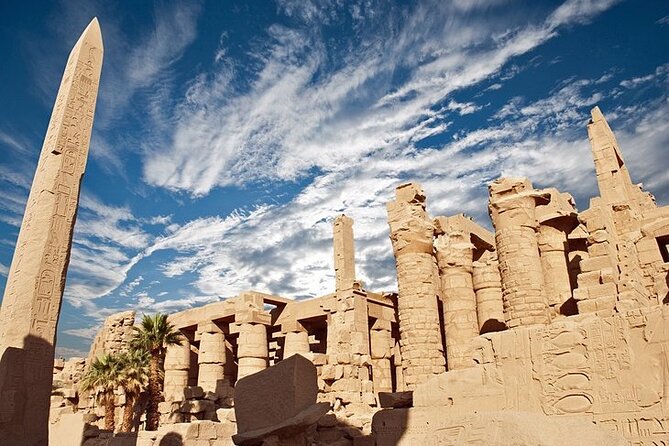
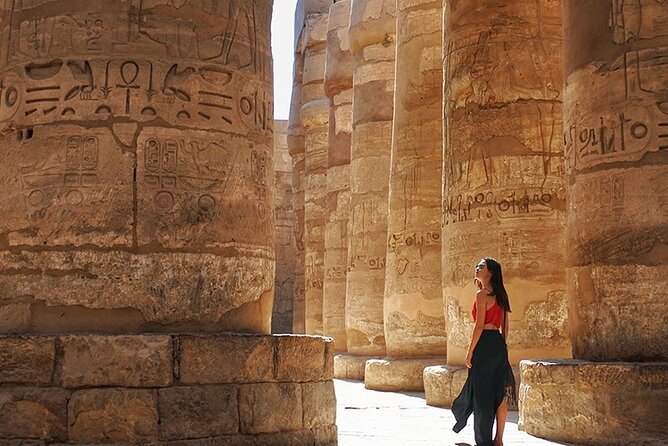
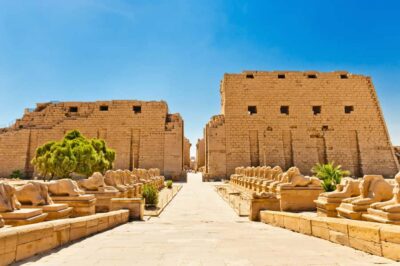
Karnak is the anchor stop, and it deserves that role. You get about 2 hours here, with admission included. The key idea is that Karnak is not just one temple you walk through. It is the largest temple complex ever built by man, covering 247 acres, created by many generations of ancient builders and Pharaohs.
This is why Karnak feels so different from a typical single-monument visit. You are walking through layers of effort across time, and the scale is part of the meaning. If you only have a short window in Luxor, Karnak is the best use of it because you get a sense of why Egyptian temple-building became a lifelong project for multiple rulers.
A practical approach: set your expectations that you cannot see everything in detail. Instead, aim to experience the overall layout and pick a few focal moments for photos and mental “this is what it looks like” anchors. With a guide, you can also understand what each section represents without trying to translate everything yourself.
Luxor Temple and the Opet Festival setting
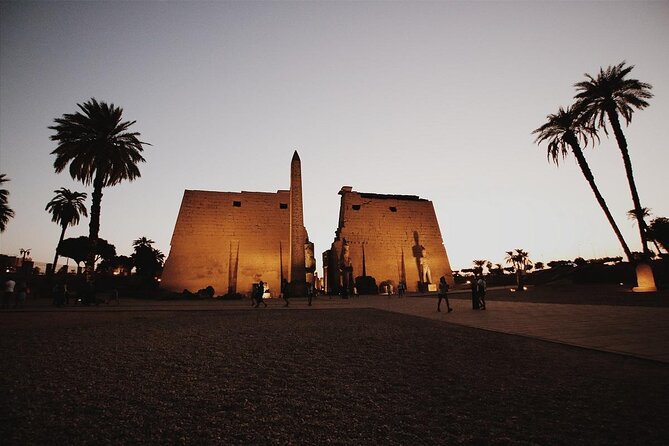
After Karnak, you move to the Temple of Luxor, also about 2 hours, with admission included. This stop has a specific historical purpose: Luxor Temple was the center of the most important festival called Opet.
What I like here is the way it turns temple architecture into something more functional, almost like a stage. The description emphasizes how the festival was meant to reconcile the human aspect of the ruler with the divine office. In plain terms, you are not just looking at stones, you are seeing a ritual setting built for a major political and religious event.
Because this is a highlights itinerary, you will not linger for a deep scholarly reading session. Still, having context from an Egyptologist guide helps you understand why Luxor Temple is arranged the way it is, and why it matters that it hosted Opet.
Colossi of Memnon: a short stop with a big visual impression
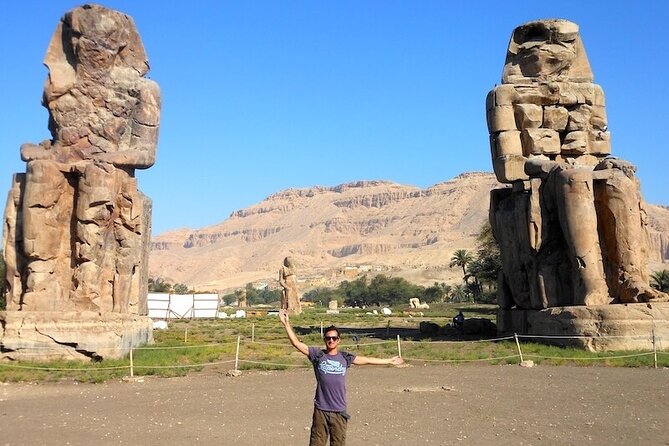
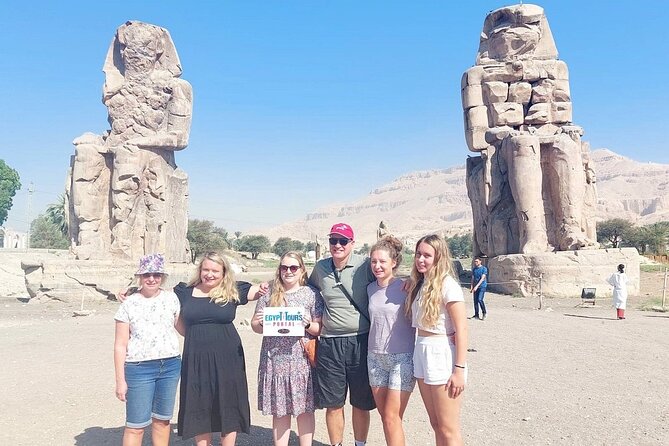
Then comes the Colossi of Memnon. Your time here is listed as about 15 minutes, and the admission is free. That sounds short, but the stop has a built-in “wow” factor because you are looking at massive remains of a mortuary temple, even though it is destroyed except for those statues.
This stop works well in a two-day itinerary because it gives you a change of pace. Karnak and Luxor Temple are about complex temple systems and ritual space. Memnon is more about the power of scale and the fact that something once larger now survives in fragments.
If you want photos, bring patience. Early in the day or around busy hours, the area can feel crowded. Your best move is to take one or two clean shots fast, then use the guide’s explanations to connect the statues to the larger mortuary temple idea.


Day 1 pacing and your Luxor overnight plan
Day 1 is built to cover major East Bank temple highlights and then pivot toward the West Bank-focused tomb day. After Luxor Temple, the plan is to return to your hotel for the overnight. In practice, the overall tour overview also points to evening entertainment such as a Nile cruise and a sound-and-light show, which may happen as part of the broader schedule depending on your departure timing.
So here is the balanced way to think about it: Day 1 is the temples day, then you sleep in Luxor. If the evening add-ons are part of your version, they should happen either before you settle in or on the same day depending on timing. Either way, you are positioned to see West Bank sites on Day 2 with better energy.
One caution worth noting from a low-rating experience: some departures did not include the dinner spectacle, the Nile promenade, or the river-island meal even when it was described as included. That does not mean it is always missing, but it is enough of a signal that you should confirm the exact evening inclusions with your operator or in your booking details before you go.
Valley of the Kings: choosing what you see inside the tomb area
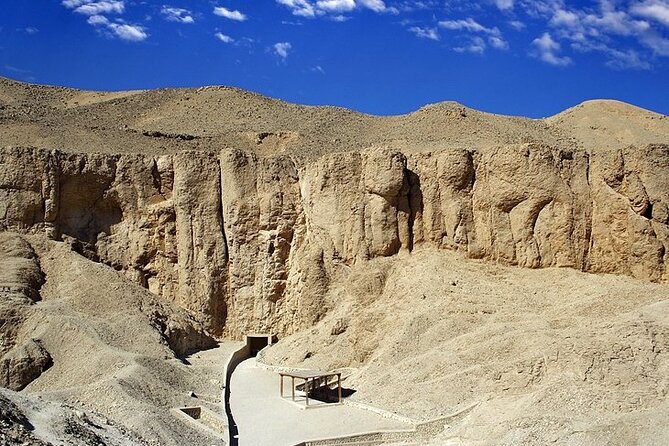
On Day 2, you head to the West Bank for the Valley of the Kings, with about 2 hours allocated. Admission is included here, and the focus is the final resting place of rulers from the 18th to 20th dynasty.
This is the kind of site where time is both your friend and your limitation. You can only do so much in a short visit, and tomb interiors vary based on what is open and what you choose to enter. The tour data also calls out that entrance fees to specific tombs are not included, including Tutankhamun’s tomb and also Ramsis VI and Seti I.
Practical advice: if you care about seeing the famous tomb interiors, budget for the extra entrance fees. The general Valley experience is included, but your access to the most sought-after interiors is an add-on. Plan for that financially, and you will feel less rushed when you arrive.
Another practical move: go in with a short list of priorities. Even with a guide, it is easy to lose time on decision-making when you are standing at openings. Tell your guide what you want most, then move.
Temple of Hatshepsut at Deir el Bahari: one hour that packs meaning
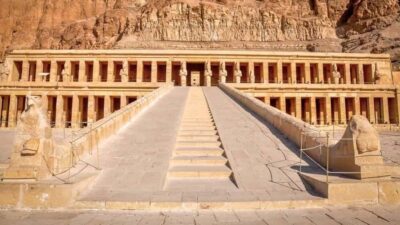
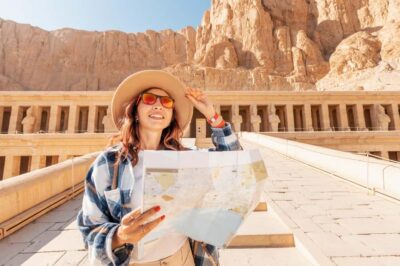
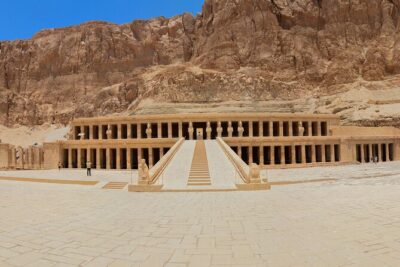
Next is the Temple of Hatshepsut at Deir el Bahari, about 1 hour, with admission included. The core story here is Hatshepsut herself. You see her temple in Luxor’s West Bank, and the description highlights that she was a queen who would-be king, loved by her people but surrounded in controversy.
That background matters because it changes how you look at the temple. You are not just thinking architecture. You are thinking about power, legitimacy, and what survives when political narratives get rewritten over time.
This is also one of the best-preserved temple experiences of its kind, based on the info you get for this stop. That makes it a good choice for a short itinerary. You get a strong visual payoff without needing an entire day of archaeology-level exploration.
Nile cruise, river-island dining, and the sound-and-light show
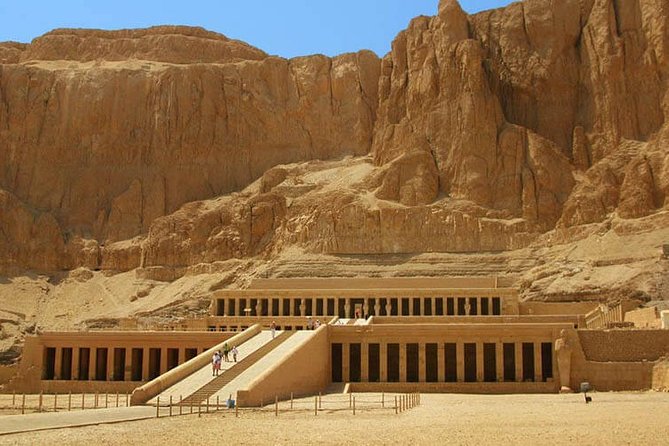
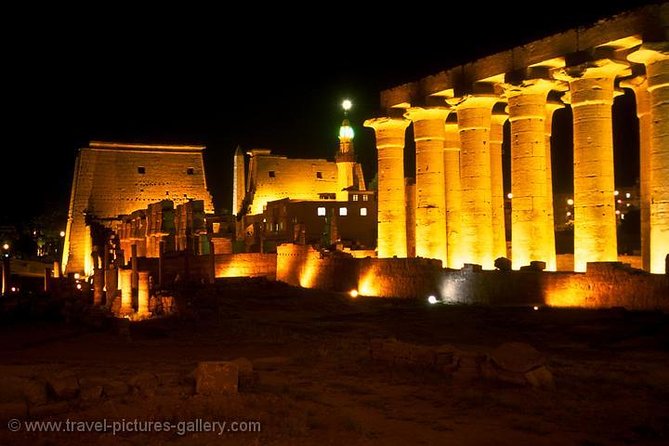
The tour overview describes more than daytime temples and tombs. It includes a Nile cruise and dining on a river island, and it also describes a nighttime sound-and-light show where the Temples of Karnak and Luxor come alive.
This is exactly the kind of add-on that can make an overnight feel worth the effort. Daytime ruins are dramatic, but nighttime storytelling helps you connect the sites as a unified experience, especially when Karnak and Luxor Temple are both part of the narrative.
Now, the important practical part: because at least one disappointing experience stated that the dinner spectacle, Nile promenade, and river-island meal were not provided even though they were described as included, I would treat these as “confirm before you count on them” components. If your booking materials spell out what is scheduled and where you are going for the evening, you will avoid unpleasant surprises.
If everything runs as planned, this is a high-value way to spend your second evening in Luxor. If parts are skipped, the good news is you still keep the core temple-and-tomb blocks, since Karnak, Luxor Temple, Valley of the Kings, and Hatshepsut remain the backbone of the trip.
Price of $428.58: what feels like value, what might cost extra
At $428.58 per person for an approximately two-day overnight, this is not a budget day trip. But it is also not just a “bus to ruins” price. Your inclusion list is meaningful: hotel pickup and return, breakfast, an Egyptologist guide, transfers by modern air-conditioned vehicle, service charges and taxes, plus lunch twice.
Those inclusions matter because they remove the biggest friction points. Long-distance travel from Hurghada is the hardest part logistically, and having it bundled into one plan saves time and stress. A guide is also the difference between looking at a site and understanding why it looks the way it does, especially for the festival setting at Luxor Temple and the royal tomb area at the Valley of the Kings.
What might raise the total: entrance fees to some tombs are not included, including Tutankhamun’s tomb, Ramsis VI, and Seti I. If those interiors are on your must-see list, your final cost will be higher than the base price.
So the value equation is simple:
- If you want the high-profile tombs inside the Valley, expect extra fees.
- If you are happy with the included access plus the guided explanations, the base price can feel fair for the time and organization.
Also note that group size is capped at a maximum of 20 travelers. Smaller groups tend to make the pacing easier, and the guide can manage timing better.
Tips to make this Luxor overnight feel smooth, not rushed
Start with the clock. With a listed 3:00 am start time, treat this as a real early morning commitment. Set your alarm carefully, and charge your phone the night before since you are using a mobile ticket.
Dress for comfort and temple rules. You will be in and out of sun, and you will spend time on stone and open paths around major monuments. Bring something light but covered enough for temples and a layer for early air-conditioned comfort.
Build in patience for transitions. This itinerary has multiple major sites across two days, so you will move quickly between them. That is normal for highlights trips. If you try to photograph every detail like it is a slow museum visit, you will feel behind schedule.
Finally, if evening inclusions like river-island dining and the sound-and-light show matter to you, confirm in writing what is actually scheduled. One partial mismatch was reported for a different departure, and you do not want to plan your expectations around something that might not happen for your exact run.
Who should book this Luxor highlights overnight
This tour makes the most sense if you:
- Want to see top Luxor highlights in two days without organizing transport or guides yourself
- Like learning context as you walk, thanks to an Egyptologist guide
- Are comfortable with early starts and a packed plan
- Prefer a small group format, up to 20 travelers
It is less ideal if you:
- Want a slow, flexible pace with long time at one site
- Are mainly interested in one single tomb interior, since add-on entrances are not included for a few of the most famous ones
- Plan your entire budget and expectations around the Nile cruise and river-island dinner without confirming the exact evening schedule
Should you book this Luxor overnight from Hurghada?
If your goal is maximum Luxor impact with guided temple and tomb time, I think this is a strong booking choice. The “core blocks” are solid: Karnak, Luxor Temple, Colossi of Memnon, Valley of the Kings, and Hatshepsut, with breakfast and two lunches built into the package. The drive and guidance also come through in the kind of feedback you want to hear, including careful driving by Mohammed and helpful explanations from Abdul.
I would book it if you can handle a very early morning start and you are prepared for possible extra tomb entrance fees if you want specific interiors. And I would confirm the evening inclusions tied to the Nile cruise, river-island dining, and the sound-and-light show, so your second evening matches what you think you’re paying for.
FAQ
How long is the overnight trip?
The duration is approximately 2 days.
Where does the tour start?
It starts in Hurghada, with pickup offered from your hotel.
What time is the pickup?
The start time is listed as 3:00 am. The tour also offers a choice of morning or afternoon departure.
Is there an Egyptologist guide?
Yes, the tour includes a qualified Egyptologist guide.
Are entrance tickets included?
Admission tickets are included for Karnak, Luxor Temple, Valley of the Kings, and Temple of Hatshepsut. The Colossi of Memnon stop is listed as admission free. Some entrance fees are not included, including specific tomb entrances.
Which tombs have extra entrance fees?
Entrance fees are not included for Tutankhamun’s tomb, Ramsis VI, and Seti I.
What meals are included?
Breakfast is included, and lunch is included twice (listed as lunch on Day 1 and lunch on Day 2).
How many people are in the group?
The maximum group size is 20 travelers.
Do I need a passport?
Yes, a current valid passport is required on the day of travel.
Is the trip refundable?
No. This experience is non-refundable and cannot be changed for any reason.
Luxor Temples in a Day


More of Hurghada from our review pile
- From Hurghada: El Gouna Quad and MX Bike Safari Tour
★ 4.5 · 25 reviews - Super Safari ( Jeep – Quad- Buggy car-folklore-BBQ dinner)
★ 5.0 · 26 reviews - Private Tour: shopping Tour In Hurghada
★ 5.0 · 26 reviews - Private Speedboat Tour From Hurghada
★ 5.0 · 26 reviews - Orange Bay Island By Speedboat
★ 5.0 · 26 reviews - Orange Bay Island Boat Trip and Parasailing with Lunch – Hurghada
★ 5.0 · 26 reviews
Luxor Day Trips from the Red Sea Resorts, compared.
 ★ 4.8Luxor Day Trip from Hurghada Small Group & Tutankhamun TombFrom $955,366 reviews
 ★ 4.5Small group Hurghada to Luxor, Valley of the Kings by VanFrom $352,470 reviews
 ★ 4.5Shared Full-Day Tour to Luxor West and East BanksFrom $901,812 reviews
 ★ 5.0Luxor Day Tour: Valley of Kings & Queens & Hatchepsut TemplesFrom $891,496 reviews
 ★ 5.0VIP Luxor Day Tour from Hurghada, Small group the top operatorFrom $130980 reviews
 ★ 4.6Small-Group Luxor Highlights & Tut Tomb Day TourFrom $105928 reviews
 ★ 4.7Luxor Highlights & King Tut Tomb Tour with LunchFrom $150902 reviews
 ★ 5.0Full Day Tour to Luxor West and East Banks & LunchFrom $23870 reviews
The lists this one sits on