
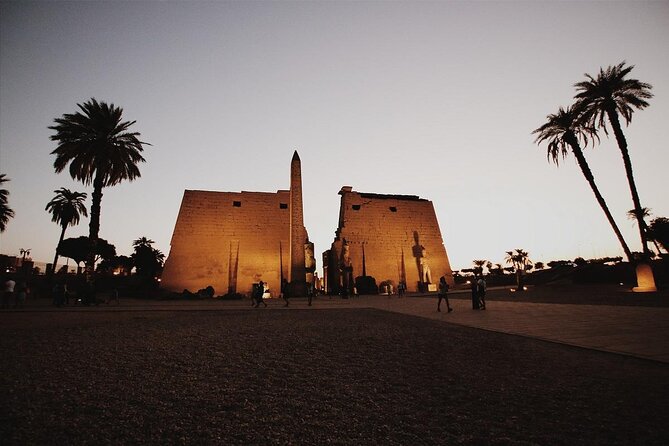
REVIEW · NILE CRUISES BETWEEN LUXOR AND ASWAN
Nile cruise from Luxor to Aswan
Nile temples, strong logistics, small-group pace. I love the Egyptologist guide explanations, and I love the included transfers that keep you from juggling taxis and timing. One catch to plan for is that entrance fees are not included, so you’ll want extra budget for tickets and tipping.
This Luxor to Aswan cruise is built around the biggest names you want in Egypt, split between the East Bank and West Bank in Luxor, then moving south to Kom Ombo and Aswan. You’ll also get a small-group setup, with a maximum of 10 travelers, plus private transportation, so the day feels organized instead of chaotic.
At $1,500 per person for about 5 days, the value comes from the full package: four nights on board and meals included, plus guided temple visits and the Abu Simbel add-on. If you prefer paying nothing extra at the door, this won’t be that kind of trip, but if you like a guided flow, it’s a strong deal.
In This Review
- Key Highlights Worth Noting
- Luxor to Aswan Nile Cruise, Built Around Egypt’s Main Temple Circuit
- Meeting Point at Sofitel Winter Palace and the Included Transfer Advantage
- Day 1 in Luxor: Karnak Temple and Luxor Temple on the East Bank
- Karnak Temple, the 17-hectare Amon Ra complex
- Luxor Temple, dedicated to Amon, Mut, and Khonsu
- Day 2 West Bank Luxor: Valley of the Kings, Hatshepsut, Medinat Habu, Memnon
- Valley of the Kings, the pharaoh cemetery of the New Kingdom
- Deir el Bahari and the Temple of Hatshepsut
- Medinat Habu, a temple that keeps its “wow”
- Colossi of Memnon, Amenhotep III in two massive statues
- Sailing After Lunch via the Esna Water Lock, and Why the Onboard Break Matters
- Day 3: Kom Ombo Temple, then Aswan Overnight
- Kom Ombo Temple, Sobek the crocodile and Horus the falcon
- Continuing to Aswan
- Day 4 in Aswan: High Dam, Philae Temple, and the 42-Meter Unfinished Obelisk
- Aswan High Dam, Al-Sadd al-ʿĀlī
- Temple of Philae and the cult of Isis
- The Unfinished Obelisk in the granite quarry
- Abu Simbel Included, the Big Detour You Don’t Have to Plan
- Egyptologist Guidance You Can Actually Use, With Humor in the Mix
- Price of $1,500 per Person, and How to Judge the Real Value
- Practical Tips for Making This Cruise Feel Easy
- Who Should Book This Luxor to Aswan Cruise (and Who Might Skip It)
- Should You Book This Nile Cruise?
- FAQ
- What is the duration of the Luxor to Aswan Nile cruise?
- What meals are included during the cruise?
- Are entrance fees to Karnak, Luxor Temple, and the other sights included?
- Is Abu Simbel included in this experience?
- How are transfers handled?
- How many travelers are in the group?
- What is the cancellation policy?
Key Highlights Worth Noting
- Egyptologist-led temple commentary at the core stops, so you’re not just looking, you’re understanding
- Private transportation with included transfers to and from the cruise
- Four nights on a luxury cruise plus breakfast, lunch, and dinner included each day
- Big temple sequence from Karnak and Luxor Temple to Kom Ombo, Philae, and more
- Abu Simbel included, which can be a separate expense on other itineraries
- Max 10 travelers, which usually means more attention from your guide
More boats sailing the same stretch
- From Luxor: 3-Night Nile Cruise to Aswan and Hot Air Balloon★ 3.7 · 297 reviews
- 5 Days Private Guided Nile River Cruise Tour from Luxor to Aswan★ 5.0 · 229 reviews
- Historia Hotel Nile Cruise, Mon. from Luxor 4 nts inc. Excursions★ 5.0 · 185 reviews
- From Luxor: 5-Day Nile Cruise to Aswan with Balloon Ride★ 4.2 · 168 reviews
Luxor to Aswan Nile Cruise, Built Around Egypt’s Main Temple Circuit
If you want a Nile trip that feels like a greatest-hits tour, this one does the job. It strings together major sites on the river corridor, with enough time for guided visits and enough sailing time to keep the pace from turning into a nonstop sprint.
On day one you start on the East Bank with Karnak Temple and then Luxor Temple. Karnak is huge, covering about 17 hectares and dedicated to Amon Ra, which sets the tone for how grand Egyptian religion and power were. Then the itinerary flips to the West Bank on day two, where you get the tomb setting of the Valley of the Kings plus major monuments tied to prominent rulers and queens.
As you move south, the trip turns from Luxor’s temple walls to Aswan’s river-world scale. You’ll visit Kom Ombo with its dual-god focus (Sobek and Horus), and later in Aswan you’ll see the High Dam and the Temple of Philae, which was a pilgrimage center for the cult of Isis. Finally, the Abu Simbel trip is included, giving you one of Egypt’s most famous detours without turning it into a separate booking.
Meeting Point at Sofitel Winter Palace and the Included Transfer Advantage
You meet at the Sofitel Winter Palace Luxor, at 17 Cornish El Nile Street. That’s a central, well-known spot, and the tour includes transfers both to and from the cruise, which matters more than people think.
With this setup, you’re not spending your first hours in Egypt hunting for the right driver or guessing about check-in timing. You also get private transportation, and the small group size (up to 10 travelers) helps keep the movement smooth, especially when you’re doing multiple stops in a day.
One of the best parts of a cruise like this is that you can trust the logistics. In practice, that means guides being ready when you reach each site, and you spending your time paying attention instead of reorganizing your day.
Day 1 in Luxor: Karnak Temple and Luxor Temple on the East Bank
Day one is the classic Luxor opener, with two major temples after lunch.
Karnak Temple, the 17-hectare Amon Ra complex
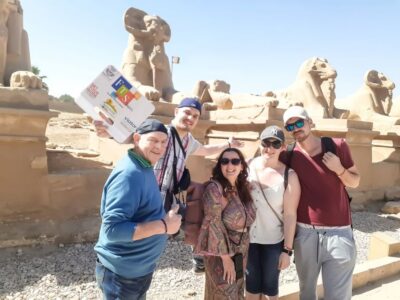
You get about two hours at Karnak Temple, and you’ll learn the basic religious logic behind what you’re seeing. The temple is dedicated to Amon Ra and covers roughly 17 hectares, so it’s not a quick “photo stop.” You’re walking through layers of Egyptian building ambition, with a guide helping you connect the purpose of the spaces to the gods and rulers that sponsored them.
A practical note: entrance tickets for Karnak are not included, so plan to pay on the day or follow your guide’s instructions for getting tickets quickly.
Luxor Temple, dedicated to Amon, Mut, and Khonsu
Then you head to Luxor Temple, with about one hour here. Luxor Temple was known as the southern House of god Amon, dedicated also to Mut and their son Khonsu.
This stop pairs well with Karnak because it gives you a more focused look. If Karnak can feel like Egypt’s big idea factory, Luxor Temple feels like the matching “home base” for the cult. Again, the admission fee is not included.
Day 2 West Bank Luxor: Valley of the Kings, Hatshepsut, Medinat Habu, Memnon
Day two is where Luxor turns emotional. You’re on the West Bank, and you can feel the shift from open temple courtyards to the monuments built around kings, queens, and afterlife beliefs.
Valley of the Kings, the pharaoh cemetery of the New Kingdom
First comes the Valley of the Kings. The visit is about two hours, and it’s tied to the New Kingdom in the 18th, 19th, and 20th dynasties.
The guide commentary is what makes this work. A cemetery sounds one-note until you understand why these tombs mattered, and how rulers wanted their legacy framed for eternity. Admission fees are not included, so budget for tickets.
Deir el Bahari and the Temple of Hatshepsut
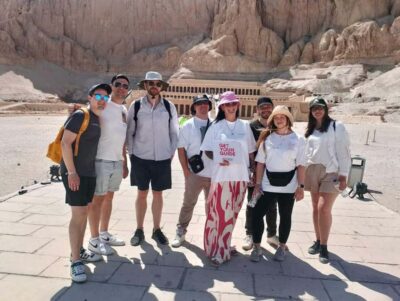
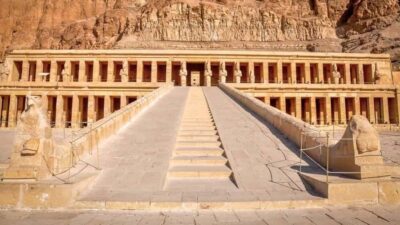
Next is the Temple of Hatshepsut at Deir el Bahari, with about one hour. Hatshepsut is described as one of Egypt’s great attractions, built by Queen Hatshepsut of the 18th dynasty.
Even if you don’t memorize names, you’ll understand the message: this is a monument built to legitimize power and memory. If you like seeing how individual leaders used architecture as messaging, you’ll get a lot out of this stop.
Medinat Habu, a temple that keeps its “wow”
Then you visit Temple of Medinat Habu for about one hour. It’s described as stunning, and it fits the day’s theme: these weren’t small religious structures. They were statements.
Again, entrance tickets are not included, and this is a stop where having a guide’s context helps you avoid wandering around without knowing what you’re looking at.
Colossi of Memnon, Amenhotep III in two massive statues
Finally you see the Colossi of Memnon, the two massive stone statues of Pharaoh Amenhotep III. This is a short stop on a long day, but it’s one of the most striking “big scale” moments.
After lunch, you sail onward, so day two has a built-in rhythm: guided stops, then a shift to the river experience.
Sailing After Lunch via the Esna Water Lock, and Why the Onboard Break Matters
After the West Bank visits, the day changes gears. You sail to Edfu via the water lock in Esna, and dinner is served on board.
That sailing segment is more than “transport.” It’s your reset. Instead of stacking another land tour after land tour, the itinerary gives you time to breathe, eat, and be carried downriver. If you’ve ever traveled in Egypt without a plan, you’ll know how quickly energy disappears when you’re constantly negotiating time and space.
On a cruise like this, those breaks keep the trip enjoyable. You’re still moving forward daily, but the pacing stays human.
Day 3: Kom Ombo Temple, then Aswan Overnight
Day three centers on Kom Ombo and then transitions fully into Aswan.
Kom Ombo Temple, Sobek the crocodile and Horus the falcon
Upon arrival, you visit Kom Ombo Temple for about two hours. The temple is dedicated to Sobek, the crocodile god, and Horus, the falcon-headed god.
This dual dedication is one of those details that makes the visit more interesting than a generic temple walk. With a guide explaining what each section represents, you start noticing how Egyptian religion could be both practical (river life) and symbolic (divine protection).
Before or during arrival, you have lunch and tea time on board. It’s a nice touch because it keeps you fed and comfortable while you move between activities.
Continuing to Aswan
After Kom Ombo, the cruise continues to Aswan, with an overnight stay in Aswan. This matters because it gives you time to enjoy Aswan at your own pace later, instead of arriving late and immediately heading out again.
Day 4 in Aswan: High Dam, Philae Temple, and the 42-Meter Unfinished Obelisk
Aswan day is where modern Egypt and ancient Egypt share the same river story. You’re not just visiting monuments, you’re seeing how people have shaped the Nile’s future.
Aswan High Dam, Al-Sadd al-ʿĀlī
First is the Aswan High Dam, described as the rockfill dam across the Nile River, also known as Arabic Al-Sadd al-ʿĀlī. The visit is about two hours.
Even if you’re not a policy person, it’s a useful perspective. It helps you understand why Aswan looks the way it does today and why control of water changes everything, including archaeology and farming.
Temple of Philae and the cult of Isis
Next comes Temple of Philae, also about two hours. This temple was an ancient pilgrimage center for the cult of Isis.
This stop pairs well with Kom Ombo because it gives you another view of divine purpose, this time tied to pilgrimage and devotion. With a guide explaining the role of Isis, you’ll get more out of the space instead of treating it like another pretty temple.
The Unfinished Obelisk in the granite quarry
Finally you visit the Unfinished Obelisk, a granite quarry site featuring an obelisk that was left incomplete, described as 42 meters high.
This one can be a quiet favorite. You’re seeing the physical process, not just the finished result. And when you stand in a place where stonework was planned but not completed, you get a sense of scale and ambition.
Abu Simbel Included, the Big Detour You Don’t Have to Plan
The cruise includes the Abu Simbel trip. It’s listed as two hours, which suggests you’ll have a focused slot rather than an endless drawn-out day.
Why include it? Because Abu Simbel can be the sort of add-on that people delay or skip due to planning hassles. Here, it’s built into the itinerary, so you’re not stuck figuring out timing, tickets, and transport from scratch when you’re tired of organizing logistics.
If you’re choosing between “a calm cruise” and “the main highlights,” Abu Simbel tilts you toward the second. In a good way. It gives you a story to bring home, plus one more anchor point for the Egypt you came to see.
Egyptologist Guidance You Can Actually Use, With Humor in the Mix
The heart of this trip is the professional Egyptologist guide. The itinerary is packed with famous names, but what makes it stick is context. A guide helps you connect Amon Ra to Karnak, Luxor Temple to Amon’s family (Mut and Khonsu), and Horus and Sobek to what you’re standing in front of.
From real-world experience with this kind of guided touring, the best guides are the ones who show up ready, move you at the right pace, and explain without talking down. The cruise’s reputation for friendly, professional guidance lines up with that idea. You’ll even hear about guides like David, praised for mixing history with humor, which makes a long day feel lighter.
My practical advice: when your guide starts talking about gods, dynasties, or ruler-building plans, don’t just let it pass. Ask one simple question in your own style, something like what the monument was trying to prove, or why that ruler chose that location. You’ll get more out of every stop.
Price of $1,500 per Person, and How to Judge the Real Value
Let’s talk straight about money.
You pay $1,500 per person, and you get:
- Four nights on a luxury cruise
- Breakfast, lunch, and dinner included for each of those days (4 of each listed)
- Transfers to and from the cruise
- Private transportation
- Guided visits with an Egyptologist
- Abu Simbel trip included
That’s a lot of built-in cost and planning. If you’ve priced Nile travel before, you know that separate tickets for guides, transport, and meals add up quickly, and they can turn into a patchwork.
What is not included:
- Entrance fees to the sights in the itinerary
- Tipping
- Beverages
- Personal expenses
So the value depends on your comfort level with budgeting extra on-site. If you treat those add-ons like part of the reality of visiting major Egyptian monuments, this price can feel fair. If you want an all-in price where nothing changes, you might feel boxed in by the extra entrance ticket costs.
Practical Tips for Making This Cruise Feel Easy
This is a structured, guided plan, so your job is mostly to show up ready.
A few practical moves help:
- Wear comfortable shoes for temple days, because you’ll be walking through multiple ancient sites in a short window.
- Keep a small daily stash for water and snacks, since drinks are not listed as included beyond meals.
- Bring patience for ticket lines and extra payments, because entrance fees are not included for the stops.
- Plan your photo strategy early. When you have one hour here and two hours there, you want to know what to capture without wasting time.
Also, think about the flow: you’ll do East Bank temples, then West Bank monuments, then shift into sailing and Aswan sites. That rhythm works when you accept that the days are full.
Who Should Book This Luxor to Aswan Cruise (and Who Might Skip It)
This cruise is a great fit if:
- You want a guided route through Luxor and Aswan without figuring out transport between stops.
- You like a small-group feel, max 10 travelers.
- You want a balanced mix of temples, royal monuments, and major religious sites.
- You care about having an Egyptologist explain what you’re seeing, not just letting you wander.
You might hesitate if:
- You dislike paying entrance fees separately. This trip clearly marks them as not included.
- You want lots of free time to roam independently. The itinerary is structured, so your schedule is guided.
Should You Book This Nile Cruise?
If you want a Luxor to Aswan experience that feels organized, includes the key stops, and doesn’t make you juggle details, this is worth serious consideration. The combination of four nights aboard, meals included, private transfers, and an Egyptologist guide helps you get a real understanding of the monuments without spending your vacation on logistics.
The only real downside is predictable: entrance fees and tipping are extra. If you can handle that and you’re excited about Karnak, the West Bank monuments, Kom Ombo, Philae, and the included Abu Simbel detour, booking now makes sense.
If you prefer flexibility or an all-in price, you’ll want to compare carefully. But for many first-time Egypt visitors, this itinerary hits the sweet spot between big sights and a smooth day-to-day flow.
FAQ
What is the duration of the Luxor to Aswan Nile cruise?
The tour is listed as 5 days (approx.), with four nights on the cruise included.
What meals are included during the cruise?
Meals included are breakfast (4), lunch (4), and dinner (4) served on board.
Are entrance fees to Karnak, Luxor Temple, and the other sights included?
No. Entrance fees to all sights mentioned are not included in the tour price.
Is Abu Simbel included in this experience?
Yes. The Abu Simbel trip is included, with a listed duration of 2 hours.
How are transfers handled?
Transfers to and from the cruise are included, using private transportation.
How many travelers are in the group?
The experience has a maximum of 10 travelers.
What is the cancellation policy?
You can cancel for free up to 24 hours in advance for a full refund. The tour may also be canceled due to poor weather, in which case you are offered a different date or a full refund.
Sailing Luxor to Aswan



More of Luxor from our review pile
- Private Tour Nile Felucca Ride at Sunset in Luxor
★ 5.0 · 26 reviews - Private Full day East and West Bank, Luxor
★ 5.0 · 26 reviews - Luxor Day Tour: Kings Valley & Karnak & Luxor & Hatshepsut Temple
★ 5.0 · 26 reviews - Full-Day East and West Luxor Private Tour
★ 4.5 · 26 reviews - Day Trip to Edfu & Kom Ombo temples from Luxor and drop off in Aswan or Luxor
★ 5.0 · 26 reviews - 5 Days 4 Nights Nile Cruise Tour
★ 5.0 · 27 reviews
Nile Cruises Between Luxor and Aswan, compared.
 ★ 5.04-Days Nile Cruise From Aswan To Luxor including Abu Simbel and Hot Air BalloonFrom $3493,142 reviews
 ★ 4.54-Day 3-Night Nile Cruise from Aswan to Luxor including Abu Simbel, Air BalloonFrom $329612 reviews
 ★ 4.14-Day Nile Cruise from Aswan to Luxor with GuideFrom $830593 reviews
★ 4.54-Days Nile Cruise From Aswan To Luxor including Abu Simbel and Hot Air BalloonFrom $320509 reviews
★ 4.14-Day Nile Cruise from Aswan to Luxor with GuideFrom $830593 reviews
★ 4.54-Days Nile Cruise From Aswan To Luxor including Abu Simbel and Hot Air BalloonFrom $320509 reviews
 ★ 5.04-Day 3-Night Nile Cruise from Aswan to Luxor – Private TourFrom $504369 reviews
★ 4.54 Days Nile Cruise from Aswan to Luxor including Abu Simbel and Hot Air BalloonFrom $329356 reviews
★ 5.04-Day 3-Night Nile Cruise from Aswan to Luxor – Private TourFrom $504369 reviews
★ 4.54 Days Nile Cruise from Aswan to Luxor including Abu Simbel and Hot Air BalloonFrom $329356 reviews
 ★ 5.04-Day 3-Night Nile Cruise from Aswan to Luxor With Balloon and Abu SimbelFrom $311327 reviews
 ★ 5.04-Days Nile Cruise Aswan&Luxor,Hot Air Balloon&Abu Simbel.Hot dealFrom $524322 reviews
The lists this one sits on