
REVIEW · NILE CRUISES BETWEEN LUXOR AND ASWAN
Nile cruise between Luxor and Aswan: Sail the best temples in Egypt
A boat on the Nile is the easiest way to wrap your head around Egypt. This Luxor to Aswan cruise balances big ancient sites with quieter moments on board, so you get both the wow and the time to breathe. I love the temple packed days with solid guided visits, and I also like the built-in downtime along the river after the heavy sightseeing. One thing to plan for, though, is that this is an active itinerary with early departures, and some optional excursions can add cost.
The standout for me is the way the day-to-day rhythm is set up: you hit the landmarks while you are fresh, then you slide back into slower Nile time. Plus, the guides behind this trip are often praised for making the sites make sense, not just look impressive, especially Mohamed Gaber, also called Moha.
In This Review
- Key details that make this Luxor to Aswan Nile cruise work
- Luxor to Aswan by boat, temples plus Nile downtime
- Day 1 in Luxor: arrival, settling in, then a free day
- Valley of the Kings and Hatshepsut: the kind of history you can actually follow
- Colossi of Memnon, Karnak, and Luxor Temple: big names, different moods
- Afternoon navigation on the Nile: use the quiet hours on purpose
- Edfu Temple and Kom Ombo: temples that feel different from Luxor
- Abu Simbel (optional) and Philae (included): day 4 is a choose-your-own level
- Nubian village optional time: a cultural side trip with extra cost
- Day 5 in Aswan: breakfast, checkout, and freedom to roam
- Price and logistics: what $625 includes, and what it does not
- Mohamed Gaber (Moha): the guide who turns temples into stories
- Who should book this cruise, and who might not
- Should you book this Luxor to Aswan Nile cruise?
- FAQ
- How long is the Nile cruise between Luxor and Aswan?
- Where do you pick me up in Luxor?
- Is there a transfer in Aswan at the end?
- What is included in the price?
- What is not included?
- What are the main temple stops on the itinerary?
- Are Abu Simbel and the Nubian village included?
- What is the cancellation policy?
Key details that make this Luxor to Aswan Nile cruise work
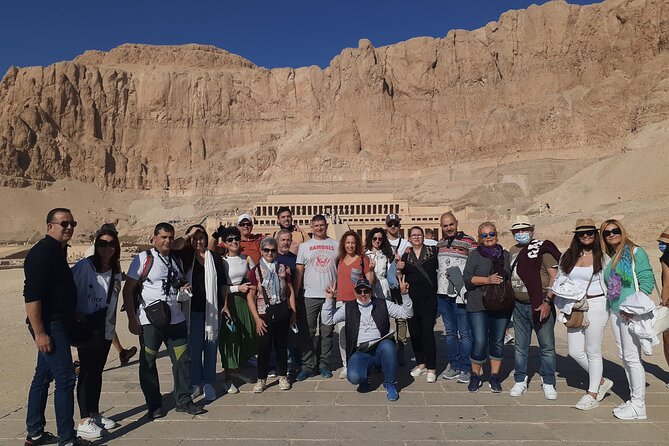
- Small group feel (max 30 travelers), which tends to make questions and pacing easier.
- A real mix of temples from Luxor’s power center to Edfu and Kom Ombo, then Philae in Aswan.
- Three tomb choices at the Valley of the Kings, so you can tailor the experience.
- Felucca ride included, a classic way to see everyday Egypt on the water.
- Optional add-ons like Abu Simbel and the Nubian village, so you can scale the trip up or down.
More boats sailing the same stretch
- From Luxor: 3-Night Nile Cruise to Aswan and Hot Air Balloon★ 3.7 · 297 reviews
- 5 Days Private Guided Nile River Cruise Tour from Luxor to Aswan★ 5.0 · 229 reviews
- Historia Hotel Nile Cruise, Mon. from Luxor 4 nts inc. Excursions★ 5.0 · 185 reviews
- From Luxor: 5-Day Nile Cruise to Aswan with Balloon Ride★ 4.2 · 168 reviews
Luxor to Aswan by boat, temples plus Nile downtime
This is the kind of cruise that makes sense if you want Egypt’s best-known monuments without feeling like you are sprinting from one stop to another all day. The itinerary is built around two modes: big, structured temple visits in the morning and early afternoon, then navigation and rest time when the boat is moving.
You also get the core “cruise advantage” right away. Sleeping on the water means you are not constantly changing hotels, and you are not doing daily long transfers by land. That matters in Egypt, where logistics can eat your energy.
Day 1 in Luxor: arrival, settling in, then a free day
On the first day, you get picked up in Luxor from where you tell them, like the airport, train station, or a hotel. You transfer to the boat, check in, and start meals based on the schedule.
Then comes the smart part: Day 1 is free time. This is where you can choose your pace. If you want a low-key start, you can rest by the pool. If you prefer to stretch your legs immediately, you can explore Luxor on your own.
Practical tip: if you arrive early or feel jet lagged, treat this day as your buffer. Having a full day to acclimate makes the later temple-heavy days much easier.
Valley of the Kings and Hatshepsut: the kind of history you can actually follow
Day 2 is where Egypt turns from “fascinating” into “I get it.” You start at the Valley of the Kings, a New Kingdom necropolis with tombs of major pharaohs. You can enter three tombs of your choice, and the visit lasts about two hours.
This is a good setup because the Valley can feel overwhelming if you try to absorb everything at once. Choosing three tombs helps you focus. You can pick tombs based on what grabs you most, then let the details land without running out of time.
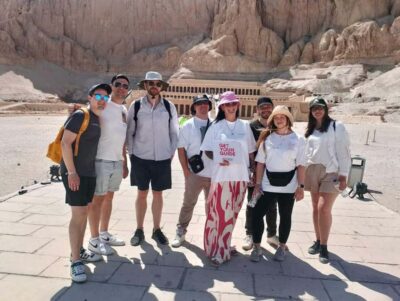
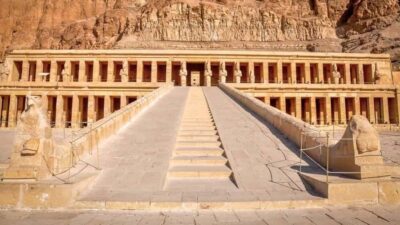
Next is the Temple of Hatshepsut at Deir el-Bahari. It is known for the scale and the drama of the setting, and it is a key reminder that Egypt’s story includes more than just kings. This stop lasts about one hour and is a big reason the itinerary feels balanced.
Colossi of Memnon, Karnak, and Luxor Temple: big names, different moods
After Hatshepsut, the trip shifts to three iconic sites in a day.
First, you see the Colossi of Memnon, two massive statues linked to Pharaoh Amenhotep III. The stop is short, about 15 minutes, but it works as a quick visual reset. You get the photo moment, and you are back in the flow quickly.
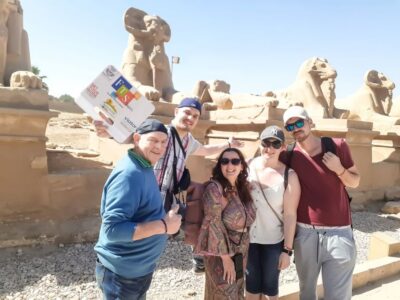
Then it is on to Karnak Temple, which takes about two hours. Karnak is a layered temple complex built over a very long stretch of time by different pharaohs. You will notice the famous avenue of sphinxes, the hall of columns, and the avenue of rams. The main value here is how the place feels like a living record of political power, religious belief, and changing eras.
Finally, you visit Luxor Temple in the late day window, about one hour. It connects to Amun Ra, and it is especially good for finishing the day because it pairs well with the evening cruise time that follows.
Afternoon navigation on the Nile: use the quiet hours on purpose
Day 2 includes afternoon navigation between Luxor and Edfu, with about three hours of sailing time. This is not “dead time.” It is part of the experience.
You can rest and sunbathe by the pool, watch the riverbanks slide by, and give your brain a break after temples. If you do not slow down here, you miss why the cruise format is worth it.
Edfu Temple and Kom Ombo: temples that feel different from Luxor
Day 3 brings two major temple stops.
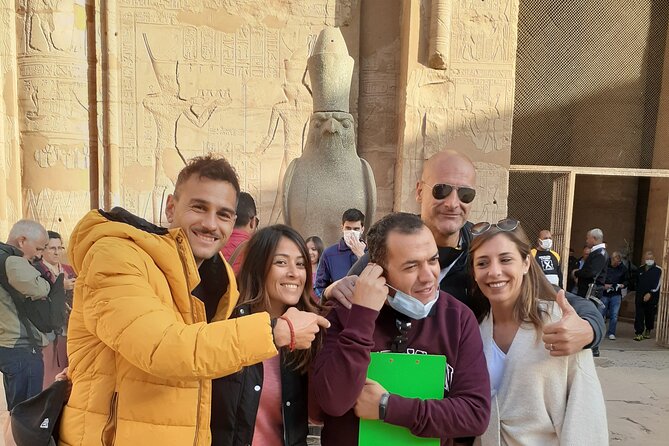
At Edfu Temple, you visit for about two hours. It is dedicated to Horus and is often described as one of the best preserved temples of Ancient Egypt. In practical terms, it is the kind of place where you can see the structure and details clearly, then connect them to what you learned earlier in the trip.
Then you move to Kom Ombo Temple, about one hour. This one has a special theme because it is built for two gods, Sobek and Haroeris. That gives you a different angle than the Luxor area, and it keeps the story from repeating itself.
A key point: these two stops are spaced so you can keep your attention. The day is not overloaded, which makes the sights feel more readable.
Abu Simbel (optional) and Philae (included): day 4 is a choose-your-own level
Day 4 is built around three included visits, plus optional extras.
You start with Abu Simbel, listed as optional. If you like big-ticket monuments, this is usually the kind of stop you do not want to miss. The temples were excavated in rock during Pharaoh Ramses II’s reign as a monument dedicated to Ramses II and his wife Nefertari. The stop is about two hours.
Then you visit Temple of Philae, about one hour. It sits on an island, so you arrive by boat, which makes the approach feel like part of the ceremony, not just transport.
After that, you get a felucca ride on the Nile for about one hour. This is included and it is the easiest way to see how Egypt looks from the water when you are not inside a temple hall.
Nubian village optional time: a cultural side trip with extra cost
Also on Day 4 is the optional Poblado Nubio excursion, about three hours, and it is not included in the price. It includes meeting Nubian villages and, in the itinerary description, the chance to bathe in the Nile if you dare.
This is the sort of add-on that can enrich a trip, but it is also the kind of time that can be hit-or-miss depending on what you enjoy. If you want deep cultural contact and you are okay with extra spending, it can be worthwhile. If you prefer the core temples and on-board rest, skip it and keep Day 4 focused.
Day 5 in Aswan: breakfast, checkout, and freedom to roam
Day 5 is structured for a soft landing. After breakfast and check-out, you get time to explore Aswan on your own.
You also get a transfer in Aswan. When you tell them what you need, like a hotel, airport, or train station, they take you there. The free time block is about 12 hours, so you can plan a relaxed morning, a museum stop if you want, or just a slow walk.
Price and logistics: what $625 includes, and what it does not
At $625 per person for a roughly five-day experience, the value comes from what is bundled in.
Included elements cover:
- Accommodation for 4 nights on the cruise
- Pickup in Luxor and transfer in Aswan
- All visit tickets for the places on the itinerary
- Meals: lunch for five days and dinner for four days
Not included:
- Drinks
- Tips
- Any costs tied to optional excursions like Abu Simbel and the Nubian village excursion, since they are marked optional and one is not included.
If you add up what it would cost to separately arrange a hotel plus daily guides plus temple tickets, the cruise format can feel like the more efficient route, especially with meals and transfers handled. The also-important detail is that you are not paying in time either, because the boat keeps moving while you rest.
Mohamed Gaber (Moha): the guide who turns temples into stories
A lot of the praise around this experience points to one factor that makes or breaks Egypt trips: the guide’s ability to explain what you are looking at.
Here, the name that keeps coming up is Mohamed Gaber, often called Moha. The feedback highlights that he is organized, attentive, and focused on Egyptian culture and history in a way that feels easy to follow. People also describe him as friendly and careful, and even fun, with approaches like interactive explanations and brief theatrical moments to make the sites more understandable.
That matters because Egypt sites can be visually stunning but mentally tricky. When someone can connect a temple feature to the larger story without overwhelming you, you end the day feeling like you learned something, not just survived a long agenda.
Who should book this cruise, and who might not
This itinerary fits well if:
- You want a Luxor to Aswan route without hotel changes every night
- You love the classic temple lineup: Valley of the Kings, Hatshepsut, Karnak, Luxor Temple, Edfu, Kom Ombo, Philae
- You like the idea of a guided day, then Nile quiet time to reset
You might look elsewhere if:
- You prefer totally flexible days with no set visit times
- You dislike early starts, since Day 1 begins with a listed 6:00 am start time
- You do not want any optional add-ons, because this schedule includes at least two that can change your total spend
Should you book this Luxor to Aswan Nile cruise?
I would book it if your goal is a well-structured, temple-focused Nile cruise that still leaves room for rest. The itinerary hits the most important stops in the corridor between Luxor and Aswan, and the included meals, tickets, and transfers reduce a lot of travel friction.
But make your decision based on your style. If you want to maximize temples and appreciate clear guidance, this is a strong match. If you want a totally slow, low-structure cruise with fewer scheduled visits, you will probably feel the pace here.
If you want, tell me your travel dates and whether you are considering Abu Simbel or the Nubian village, and I can help you decide how to keep the trip exciting without overstuffing your schedule.
FAQ
How long is the Nile cruise between Luxor and Aswan?
It runs for about 5 days, with accommodation for 4 nights on the cruise.
Where do you pick me up in Luxor?
You are picked up in Luxor at the time and place you indicate, such as the airport, train station, or your hotel.
Is there a transfer in Aswan at the end?
Yes. After breakfast and checkout, you have free time in Aswan and then you are transferred to where you need to go, like a hotel, airport, or train station.
What is included in the price?
Included items are the cruise accommodation for 4 nights, pick-up in Luxor and transfer in Aswan, all tickets for the listed visits, and meals (lunch for 5 days and dinner for 4 days). Mobile tickets are also mentioned.
What is not included?
Drinks and tips are not included. Also, some excursions are optional, and the Nubian village option is marked as not included.
What are the main temple stops on the itinerary?
The itinerary includes the Valley of the Kings, Temple of Hatshepsut at Deir el Bahari, Colossi of Memnon, Karnak Temple, Luxor Temple, Edfu Temple, Kom Ombo Temple, and Philae Temple.
Are Abu Simbel and the Nubian village included?
Abu Simbel is optional. The Nubian village excursion (Poblado Nubio) is also optional, and it is not included in the price.
What is the cancellation policy?
You can cancel up to 3 days in advance of the experience for a full refund. If you cancel less than 3 full days before the start time, the amount paid is not refunded.
Sailing Luxor to Aswan



More of Luxor from our review pile
- Private Tour Nile Felucca Ride at Sunset in Luxor
★ 5.0 · 26 reviews - Private Full day East and West Bank, Luxor
★ 5.0 · 26 reviews - Luxor Day Tour: Kings Valley & Karnak & Luxor & Hatshepsut Temple
★ 5.0 · 26 reviews - Full-Day East and West Luxor Private Tour
★ 4.5 · 26 reviews - Day Trip to Edfu & Kom Ombo temples from Luxor and drop off in Aswan or Luxor
★ 5.0 · 26 reviews - 5 Days 4 Nights Nile Cruise Tour
★ 5.0 · 27 reviews
Nile Cruises Between Luxor and Aswan, compared.
 ★ 5.04-Days Nile Cruise From Aswan To Luxor including Abu Simbel and Hot Air BalloonFrom $3493,142 reviews
 ★ 4.54-Day 3-Night Nile Cruise from Aswan to Luxor including Abu Simbel, Air BalloonFrom $329612 reviews
 ★ 4.14-Day Nile Cruise from Aswan to Luxor with GuideFrom $830593 reviews
★ 4.54-Days Nile Cruise From Aswan To Luxor including Abu Simbel and Hot Air BalloonFrom $320509 reviews
★ 4.14-Day Nile Cruise from Aswan to Luxor with GuideFrom $830593 reviews
★ 4.54-Days Nile Cruise From Aswan To Luxor including Abu Simbel and Hot Air BalloonFrom $320509 reviews
 ★ 5.04-Day 3-Night Nile Cruise from Aswan to Luxor – Private TourFrom $504369 reviews
★ 4.54 Days Nile Cruise from Aswan to Luxor including Abu Simbel and Hot Air BalloonFrom $329356 reviews
★ 5.04-Day 3-Night Nile Cruise from Aswan to Luxor – Private TourFrom $504369 reviews
★ 4.54 Days Nile Cruise from Aswan to Luxor including Abu Simbel and Hot Air BalloonFrom $329356 reviews
 ★ 5.04-Day 3-Night Nile Cruise from Aswan to Luxor With Balloon and Abu SimbelFrom $311327 reviews
 ★ 5.04-Days Nile Cruise Aswan&Luxor,Hot Air Balloon&Abu Simbel.Hot dealFrom $524322 reviews
The lists this one sits on