
REVIEW · LUXOR WEST BANK TEMPLES & TOMBS
Nefertari and King Tut’s Tombs, Hatshepsut and More in Luxor
Luxor’s tombs feel personal. This West Bank day is built around in-the-tomb time and key monuments, from Queen Nefertari and King Tut to multiple Valley of the Kings chambers and Deir el Bahari. I like that the schedule keeps you moving in a logical loop, with air-conditioned breaks in between.
Two things I’m especially fond of here are the focus on small, specific tomb visits (short stops that still get you inside) and the included hotel pickup plus transport so you are not fighting the logistics of getting across the Nile. One thing to watch carefully is that Nefertari access has been affected by closures recently, so you need to confirm entry expectations before you count on it.
If you’re the kind of traveler who wants more than photos, this tour can work well. Just be sure you get clear answers on which tombs you will actually enter on your date, and whether a guide is included for the time you’re inside.
In This Review
- Key takeaways before you book
- Luxor’s West Bank, planned like a tomb-lover’s day
- Price and what’s actually included for $50 per person
- Queen Nefertari’s Tomb: the highlight you must verify
- Tutankhamun’s tomb time, and how to handle the pressure
- Valley of the Kings tombs: Ramses III, Ramses VI, and Merenptah
- Ramses III stop, with ritual and daily-life scenes
- Ramses VI section, with a possible naming mix-up to clarify
- Merenptah, with myth and foreign-tribute themes
- Hatshepsut at Deir el Bahari and the Colossi of Memnon
- Temple of Hatshepsut: a full 2-hour block
- Colossi of Memnon: brief, free, and very real
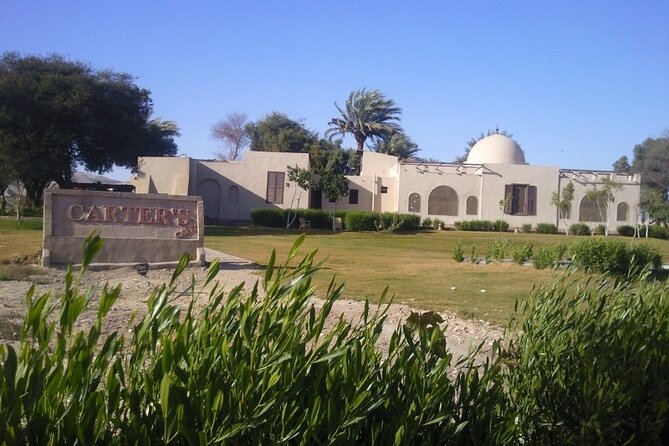
- Howard Carter House: the human side of Tut’s story
- Where this tour can frustrate you, and how to prevent it
- Nefertari access and replacement plans
- Being transported, then left without help
- Who this tour suits best
- Should you book this Luxor tomb tour?
- FAQ
- How long is the Luxor West Bank tomb tour?
- Is hotel pickup and drop-off included?
- Does the tour include entrance fees for tombs and temples?
- Is a guide included in the tour price?
- Is Tutankhamun’s tomb included?
- Is the Tomb of Queen Nefertari included?
- Is the Colossi of Memnon admission included?
- What is the cancellation policy?
Key takeaways before you book
- Tutankhamun priority: the itinerary is designed around getting you into Tut’s tomb.
- Queen Nefertari is time-sensitive: it is listed, but access can change.
- Several Valley of the Kings tombs: not just one quick chamber stop.
- Heat management matters: air-conditioned transport and a timed schedule help.
- Deir el Bahari gets its own chunk: Hatshepsut’s temple is allotted 2 hours.
Other tomb tickets in the valley
- Hurghada: Luxor Valley of the Kings & Tutankhamun Tomb Trip★ 4.7 · 13,208 reviews
- Luxor Day Trip from Hurghada Small Group & Tutankhamun Tomb★ 4.8 · 5,366 reviews
- Luxor Day Tour: Valley of Kings & Queens & Hatchepsut Temples★ 5.0 · 1,496 reviews
- Luxor: Valley of the Kings and Hatshepsut Temple Day Tour★ 4.4 · 1,404 reviews
Luxor’s West Bank, planned like a tomb-lover’s day
This is a West Bank day that aims for depth, not just checkboxes. The core idea is simple: you start in the Valley of the Queens, then shift to the Valley of the Kings, and end at Deir el Bahari, the Colossi of Memnon, and the Howard Carter House.
The West Bank works best when you respect two realities: tomb interiors are time-restricted, and the heat can be brutal outside. This tour’s structure, with short tomb visits and longer monument blocks, is built to help you get the most important sights without turning the day into an endurance test.
Because you are in Luxor, you also want to think about flow. The Nile is your divider, and moving in the right order can save time and stress. This schedule keeps you on the same side of the river for the big sites, which is exactly what you want for a 6 to 7 hour experience.
Price and what’s actually included for $50 per person
At $50 per person, the headline price is attractive. But the real value comes down to what you still need to pay.
What’s included:
- Hotel pickup and drop-off
- Air-conditioned vehicle
- Private tour
- Bottle of water during the tour
- Mobile ticket is included
What’s not included:
- Entrance fees (labeled optional)
- Guide (optional)
In other words, you are mostly paying for transportation, timing, and access coordination, not for museum-style admission packages. The way the itinerary is written, entrance tickets are not included at the tomb stops. So you should plan your budget with entrance fees on top of the $50.
That said, the included transport and pickup can be worth real money in Luxor, where sorting out rides and waiting times can eat up your day. And if you upgrade to a guide option, it can turn quick tomb stops into something you actually understand, instead of just seeing.
Queen Nefertari’s Tomb: the highlight you must verify
Queen Nefertari’s tomb is one of those “once in a lifetime” targets. In the tour plan, you get a dedicated stop in the Valley of the Queens, with a set visit time of about 20 minutes.
The reason this tomb matters is the status. Nefertari is portrayed as a queen ranked among the great names of Egyptian queenship, and as the beloved wife of Ramses the Great. The tomb is described as the most beautifully decorated and splendid in the Valley of the Queens, which is exactly the kind of detail that makes this stop more than a speed bump.
Here’s the practical drawback: access to Nefertari can be inconsistent. Some recent bookings have reported closure for months, and when that happens, the tour replacement may not match what you thought you bought. So do this homework before you go:
- Confirm Nefertari entry is guaranteed on your date.
- Ask what happens if it is not accessible.
- Make sure the replacement plan is also an actual tomb or monument you want, not a generic detour.
If you go in knowing it can be time-sensitive, you can avoid a lot of frustration. If you go in assuming it will definitely happen no matter what, you may be disappointed.
Tutankhamun’s tomb time, and how to handle the pressure
The itinerary is built to prioritize Tomb of King Tutankhamun, with an allotted visit time of about 20 minutes. Tut’s tomb is famous because it was discovered nearly intact in 1922 by Howard Carter, and because the gold mask is displayed in Cairo. What you get here is the chance to see the royal mummy in its original resting place.
That single sentence explains why many people care most about this tour. You are not chasing a poster image. You are seeing a real, original burial context, within the limits of how tomb sites are managed.
What matters for your experience is how you use those 20 minutes. This is not a slow museum walk. It’s a focused look inside a restricted space. To get real value:
- Go in with a short list of what you want to notice (painted scenes, inscriptions, burial arrangement).
- Don’t rely on reading every detail from the floor. Instead, look for what you can actually make out.
Another practical point: the tour also includes time in the Valley of the Kings that is described as exploring several royal tombs, including Tut. So even though Tut has its own stop, you should still confirm how the day’s tomb entries are sequenced. If your schedule includes multiple tomb interiors, the guide should explain what is next so you do not waste minutes figuring it out.
West bank tombs, one by one
Valley of the Kings tombs: Ramses III, Ramses VI, and Merenptah
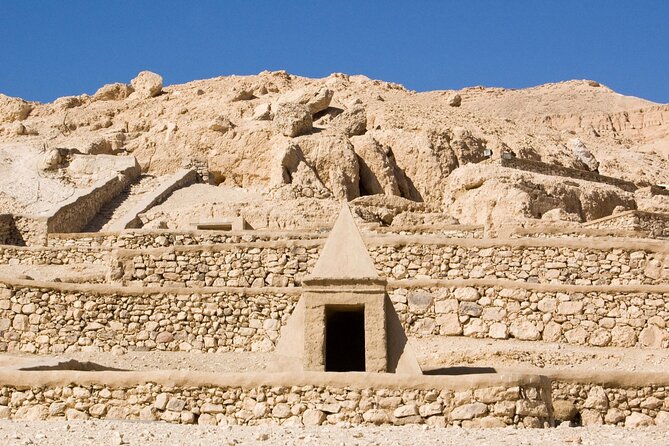
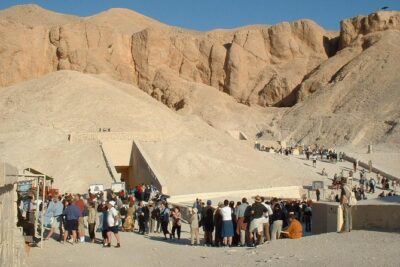
After Tut, this day shifts into the Valley of the Kings, where you’re set up to see several royal tombs. The time allocation is short for each interior stop, but the payoff is variety.
Ramses III stop, with ritual and daily-life scenes
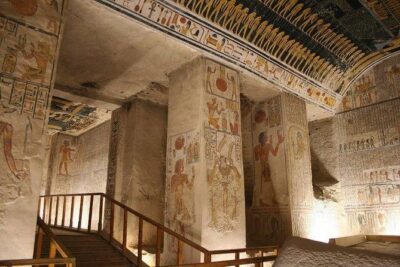
You get a stop focused on the Tomb of Ramses III, described as known for complex systems and vibrant decorations. The key detail here is what’s said to be inside: sunken reliefs with traditional ritual texts plus secular scenes, including depictions tied to foreign tributes and royal life.
That blend matters. A lot of tombs show only the religious side. Here, the promise is a mix, which can help you understand how Egyptians connected ceremony to the broader story of the kingdom.
Ramses VI section, with a possible naming mix-up to clarify
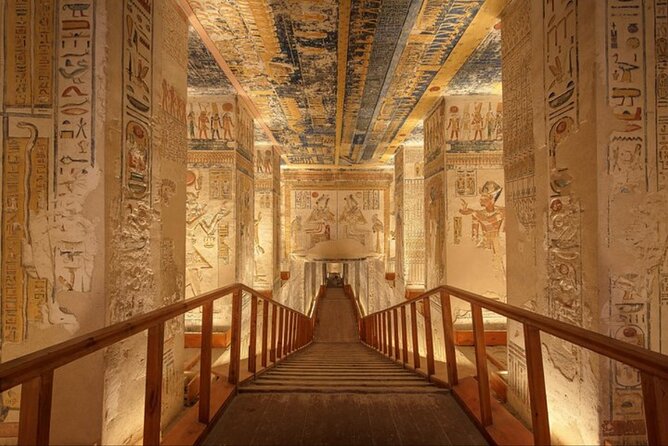
The next tomb stop is labeled “Tomb of Ramses VI,” but the notes describe Ramses IV and mention KV2. The description also mentions hieroglyphics and books of the afterlife, along with a rose-colored granite sarcophagus and a ceiling scene featuring the goddess Nut swallowing the sun.
This is an important consideration for you. When a tour title and its internal description don’t perfectly match, you can end up with confusion at the site. The best move is simple:
- Ask the provider to confirm which tomb chamber you will enter for this stop.
- If needed, check the tomb reference in advance.
Even with that naming confusion, the actual content described is the kind of thing you want in the Valley of the Kings: long-form religious texts, strong color remnants, and a ceiling theme that usually feels instantly recognizable once you’re inside.
Merenptah, with myth and foreign-tribute themes
The Tomb of Merenptah is described as a Howard Carter discovery in 1903 and as a place with intricate carvings tied to Egyptian mythology. The sunken reliefs highlighted in the description include ritual texts, depictions of foreign tributes, and scenes connected to the royal armory and boats.
If you care about storytelling in art, this is the kind of tomb stop that can make the day feel cohesive. You are not bouncing randomly. You are seeing recurring themes: ritual language, political messaging through foreign references, and royal power expressed through symbolic images like boats and tools.
One caution, based on the tour format: if your entry time is limited and you are in-and-out quickly, you’ll get much more from each tomb with a guide who can point out what you should be looking at. The guide is listed as optional, so consider whether you want to add it for better context inside the tombs.
Hatshepsut at Deir el Bahari and the Colossi of Memnon
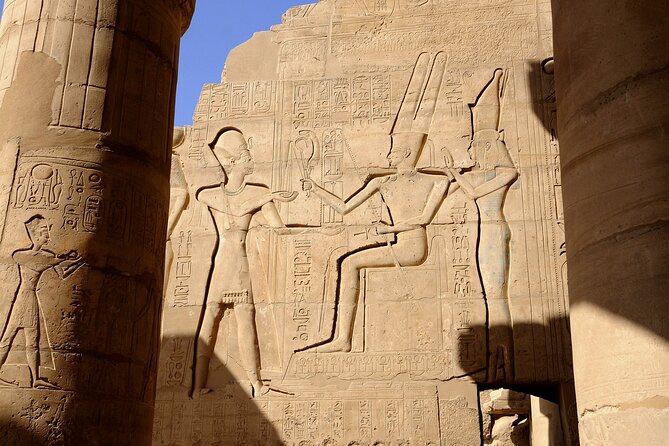
This is where the tour shifts from inside-tombs to monumental viewpoints and architecture.
Temple of Hatshepsut: a full 2-hour block
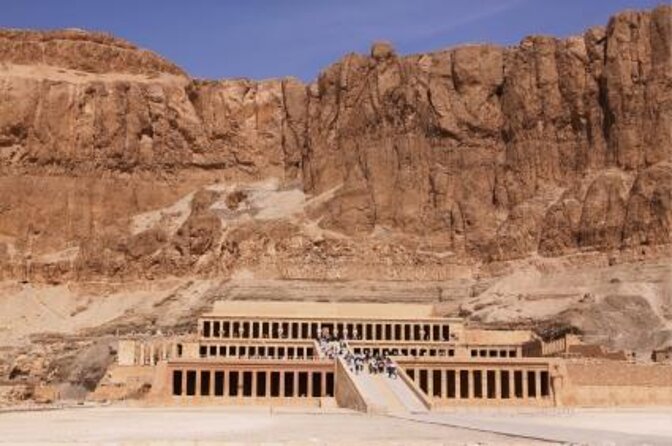
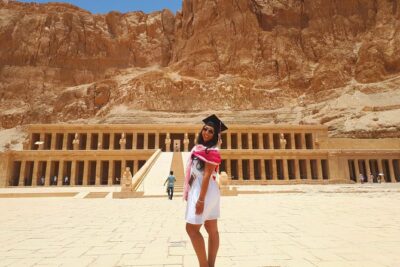
You get about 2 hours at the Temple of Hatshepsut at Deir el Bahari. The temple is described as the mortuary temple of Hatshepsut, who is noted as the only woman to rule Egypt as pharaoh.
This stop is valuable because it gives your brain a different kind of Egypt. Tombs are compressed stories in underground space. Deir el Bahari is architecture and staging, built into the limestone cliffs. You have time to walk, look back and forth, and let the place make sense.
If you love scale and symbolism, this is also a good pacing reset after several tomb entries. Your eyes can rest on open sight lines, and you can take in how rulers presented themselves at the end of their lives.
Colossi of Memnon: brief, free, and very real
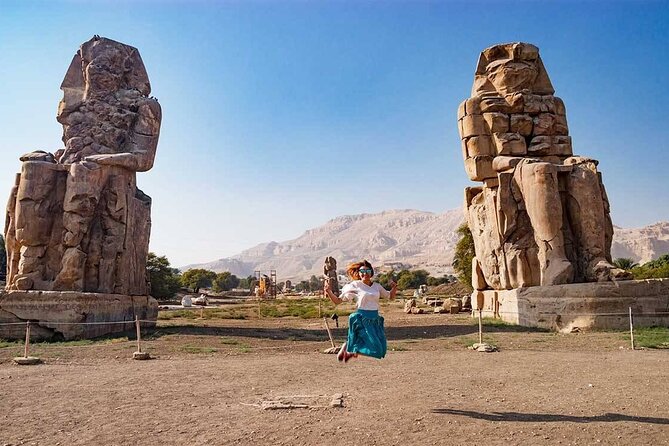
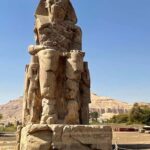
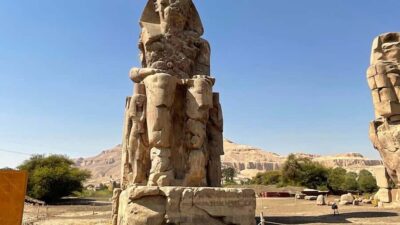
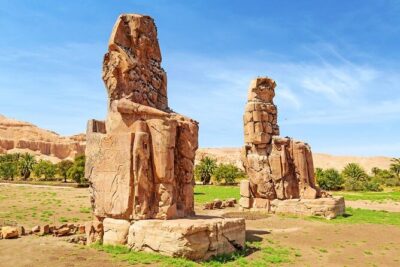
Next are the Colossi of Memnon, colossal statues of Amenhotep III. The tour assigns 30 minutes and lists admission as free.
These statues are often photographed, but you feel the size more when you stand near them. Think of this as your “outdoor anchor” for the West Bank day, a spot that tells you you are still in the same theme of royal power, just expressed on a massive, open-air scale.
Howard Carter House: the human side of Tut’s story
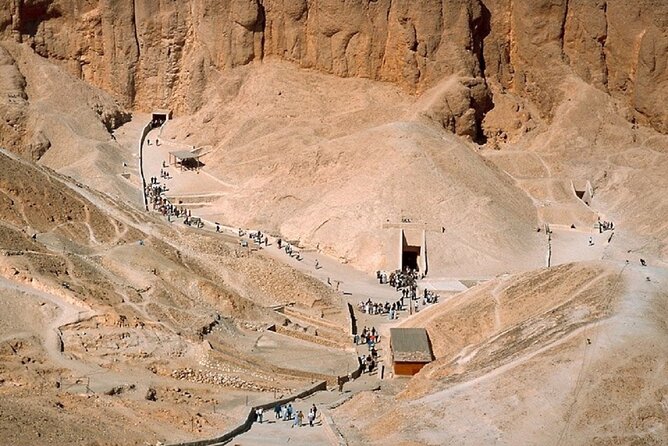
The day finishes with the Howard Carter House, a historic landmark on the West Bank linked to Howard Carter, who discovered Tutankhamun in 1922.
This is described as Carter’s modest home during his archaeological work, and the house preserves personal artifacts, tools, and a view into the excavation process. That’s useful if you ever wondered what it actually took to uncover a tomb like Tut’s. It turns the story from a dramatic headline into a working, human timeline.
You get about 30 minutes here, and admission is noted as not included. So if you like archaeology as much as monuments, this final stop can add texture and context that you might not get from tomb walls alone.
Where this tour can frustrate you, and how to prevent it
Most of the complaints tied to experiences like this tend to come from mismatch, not from Egypt itself. Two issues showed up strongly in the feedback you provided.
Nefertari access and replacement plans
If Nefertari’s tomb is closed, the tour title can become misleading. Some bookings reported that when the tomb was not accessible, the schedule shifted to something else, like an alabaster factory visit. That replacement might still be interesting to some people, but it is not the same as the tomb you hoped to see.
Your fix is to confirm in advance:
- Whether Nefertari entry is guaranteed on your exact date
- What the replacement is, and how long you would spend there
Being transported, then left without help
Another complaint described a situation where pickup happened and they were driven to the Valley of the Kings, then left without clear instructions or enough guidance.
In a private tour, the expectation should be that you are not just shuffled around. You should ask what the guide’s role includes, especially:
- Who meets you after pickup
- Whether the guide stays with you inside the tombs
- Who handles tickets, since entrance fees are not included
If the provider cannot answer clearly before you go, that’s your early warning sign.
Who this tour suits best
This works best for you if:
- You care most about seeing specific tomb interiors, especially Tutankhamun.
- You want a packed West Bank day without organizing transport yourself.
- You are comfortable with short time windows inside tombs.
You might want to choose a different option if:
- You are booking mainly for Queen Nefertari and cannot tolerate the risk of closure.
- You strongly prefer a longer, unhurried museum style experience.
- You will be unhappy if a guide is not included and you end up relying on your own understanding.
Should you book this Luxor tomb tour?
Book it if your top priority is the Tomb of Tutankhamun plus multiple Valley of the Kings interiors, and you’re okay budgeting for entrance fees. I also like that you get air-conditioned transport and enough time at Hatshepsut to balance the day.
Hold off or confirm hard before you pay if your must-see is Queen Nefertari. Ask the provider to confirm access on your date and clarify the replacement plan if entry is not possible. If you can get that clarity, this can be a really satisfying West Bank day built for tomb lovers, not just passing sightseeing.
FAQ
How long is the Luxor West Bank tomb tour?
The duration is about 6 to 7 hours.
Is hotel pickup and drop-off included?
Yes, hotel pickup and drop-off are included.
Does the tour include entrance fees for tombs and temples?
No, entrance fees are not included. Entrance fees are listed as optional.
Is a guide included in the tour price?
A guide is optional. The tour description lists guide as optional.
Is Tutankhamun’s tomb included?
Yes. The itinerary includes the Tomb of King Tutankhamun in the Valley of the Kings, with the admission ticket not included.
Is the Tomb of Queen Nefertari included?
The itinerary includes a stop at the Tomb of Queen Nefertari in the Valley of the Queens, with the admission ticket not included.
Is the Colossi of Memnon admission included?
The Colossi of Memnon stop is listed as free.
What is the cancellation policy?
Free cancellation is available. You can cancel up to 24 hours in advance for a full refund.
The West Bank, Tomb by Tomb
Down Into the Kings Valley

More of Luxor from our review pile
- Hot Air Balloon Ride and Tour to Valley of Kings Luxor- Special Offer
★ 5.0 · 15 reviews - 4-Hours tour West Luxor bank :Hatshepsut Temple & Valley of the King with Lunch
★ 5.0 · 15 reviews - Tour From Luxor to Aswan Edfu, Kom Ombo, Philae and High Dam
★ 5.0 · 15 reviews - Private Half-day Dendera Temple
★ 5.0 · 15 reviews - Luxor Airport Departure: Convenient Private Hotel Transfer
★ 5.0 · 15 reviews - Dahabiya Nile Cruise From Luxor To Aswan 4 Nights 5 Days
★ 4.5 · 15 reviews
Luxor West Bank Temples & Tombs, compared.
 ★ 5.0Luxor Day Tour: Valley of Kings & Queens & Hatchepsut TemplesFrom $891,496 reviews
 ★ 5.0Full Day Tour to East and West Banks of LuxorFrom $151,449 reviews
 ★ 4.4Valley of the Kings and Hatshepsut Temple Day TourFrom $501,404 reviews
 ★ 5.0Valley of Kings, Hatchepsut Temple ,Karnak & Luxor-DayTourFrom $95735 reviews
 ★ 5.0Full Day Tour of Luxor West Bank Temples and Tombs (Private)From $20722 reviews
 ★ 5.0Private Full-Day Luxor Highlights East and West BanksFrom $65663 reviews
 ★ 4.5Guided Tour to East or West Banks with LunchFrom $64604 reviews
 ★ 5.0Luxor Private Full-Day Tour: Discover the East and West Banks of the NileFrom $90545 reviews
The lists this one sits on