
REVIEW · LUXOR WEST BANK TEMPLES & TOMBS
Luxor’s East & West Bank Highlights Tour
Luxor feels like two different worlds. This East and West Banks highlights tour is a smart way to see the main ancient sites in one day with an Egyptologist guide and round-trip hotel transfer. I like that you get clear explanations without having to piece it together from a guidebook, and I also like that the route is built around big-name stops like the Valley of the Kings and Karnak.
The big thing to keep in mind is that you are cramming a lot into roughly 8 hours, so the day can feel fast, and timing matters. Also, one caution worth taking seriously is pickup reliability, since I’ve seen at least one report of a missed pickup when the schedule depended on it, and that can be painful when you only have one day in Luxor.
In This Review
- Key highlights to know before you go
- Why Luxor East and West Banks in One Day Works
- What the Egyptologist Guide Adds (and What It Prevents)
- Hotel Pickup, Private Vehicle, and the Pace You’ll Feel
- Valley of the Kings: The Royal Necropolis Route You’ll Actually Understand
- Hatshepsut at Deir el-Bahari: The Cliff View Meets the Story on the Walls
- Colossi of Memnon: Massive Statues, Earthquakes, and a Quick Lunch Reset
- Karnak Temple: The Theban Triad and the Opet Festival Link
- How Long the Day Feels, What to Bring, and Where to Slow Down
- Price Check: Is $107.70 Good Value for This Route?
- A Note on Reliability and Pickup Expectations
- Who This Tour Suits Best
- Should You Book Luxor’s East and West Bank Highlights Tour?
- FAQ
- How long is the Luxor East and West Bank Highlights Tour?
- Is hotel pickup and drop-off included?
- Is this tour private?
- Is there an Egyptologist guide?
- Which sites are visited during the day?
- Are entrance fees included?
- Is lunch included?
- Are bottled water and transport included?
- What’s the weather policy?
- How do I receive my ticket?
Key highlights to know before you go
- Egyptologist guidance: you get professional context as you walk, not after.
- Round-trip hotel pickup and drop-off: saves time and stress across the Nile.
- Valley of the Kings focus: the royal necropolis route is designed to hit the essentials.
- Hatshepsut at Deir el-Bahari: cliffside temple views and the story on the walls.
- Karnak Temple highlights: the Theban triad site plus the Opet Festival connection.
- Lunch included: a scheduled break so you’re not hunting food mid-tour.
West bank tombs, one by one
- Luxor Day Tour: Valley of Kings & Queens & Hatchepsut Temples★ 5.0 · 1,496 reviews
- Full Day Tour to East and West Banks of Luxor★ 5.0 · 1,449 reviews
- Luxor: Valley of the Kings and Hatshepsut Temple Day Tour★ 4.4 · 1,404 reviews
- Luxor: Valley of Kings, Hatchepsut Temple ,Karnak & Luxor-DayTour★ 5.0 · 735 reviews
Why Luxor East and West Banks in One Day Works
Luxor is famous for being an open-air museum, but the landmarks are scattered. Doing East and West Banks in the same day is how you actually get a sense of how the city functioned, spiritually and politically, with the Nile acting like the divider between worlds.
This tour’s biggest strength is that you’re not managing logistics yourself. You get pickup, transport by private vehicle, bottled water, and a guide who sets the pace. That matters because in Luxor, the time you lose figuring out where to go next can be the difference between enjoying the sites and feeling rushed.
You’ll also like the way the day is sequenced. It starts on the West Bank with the Valley of the Kings and Deir el-Bahari, then shifts to Karnak on the East Bank. That flow keeps the day coherent instead of bouncing around like a checklist.
What the Egyptologist Guide Adds (and What It Prevents)
The difference between reading about Luxor and understanding it is usually the human layer. A good Egyptologist guide helps you connect names, places, and symbols, so Karnak stops being a wall of columns and becomes a living piece of a religious system.
On this tour, you’re not just walking from one photo spot to another. You’ll get explanations that help you “read” what you’re seeing, like why the Valley of the Kings mattered after the building focus shifted away from Lower Egypt’s pyramids. You’ll also learn how temples and processions fit together, especially when you reach Karnak and its links beyond the site itself.
Practical benefit: when time gets tight, you still know what you’re looking at. That’s what private guidance is best at. You can ask questions, pause when something catches your eye, and adjust your pace without dragging everyone else through your personal interests.
Hotel Pickup, Private Vehicle, and the Pace You’ll Feel
This is a private tour, which means your group moves together with your guide and driver. That matters for two reasons. First, you avoid the stop-and-go of shared group tours. Second, your guide can help you manage arrival timing at sites where things can get crowded.
Transfers are described as approximate, depending on time of day and traffic. In real life, Luxor traffic and site entry lines can make a rough day feel even tighter if you’re not expecting it. If you’re the type who likes to linger, plan to accept that this is a highlights route, not a slow museum day.
You also get bottled water and lunch included. That sounds small, but it changes the mood of the day. You won’t be forced to cut a key stop short just to chase food or a drink.
Valley of the Kings: The Royal Necropolis Route You’ll Actually Understand
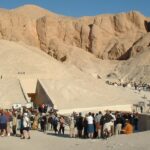
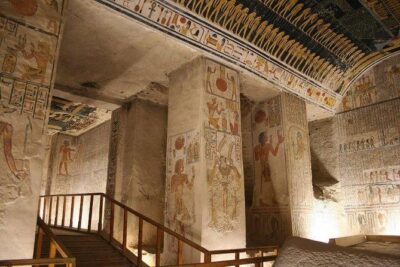
The day begins on the West Bank at the Valley of the Kings, which functioned as a royal necropolis. Your guide frames it as a symbol of pharaoh glory, chosen by the rulers after the pyramids era in Lower Egypt. That short setup helps once you start walking, because you understand the “why” behind the tomb focus.
The Valley of the Kings experience here is built to be efficient, with about two hours at the site and an admission ticket included for this stop. You won’t be touring every tomb in the valley, but you will get a guided route that helps you grasp the big picture: this was a place for burial and a landscape of power.
What I recommend you do during this stop is look for patterns, not just individual monuments. The point is how the valley served the same purpose for generations, and how the West Bank functioned as a spiritual counterpart to the East.
Potential drawback: if you’re expecting a long, uninterrupted wander time, two hours can feel short. But if you want the essentials with context, this is one of the strongest uses of your time.
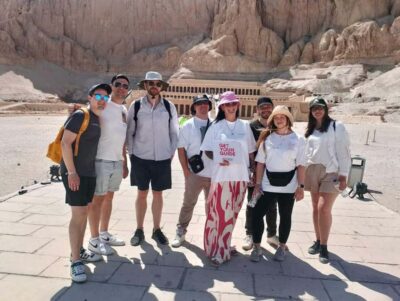
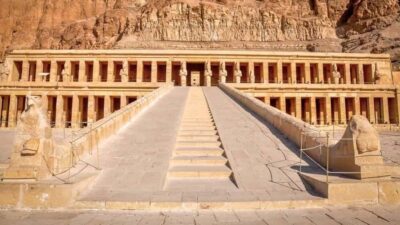
Hatshepsut at Deir el-Bahari: The Cliff View Meets the Story on the Walls
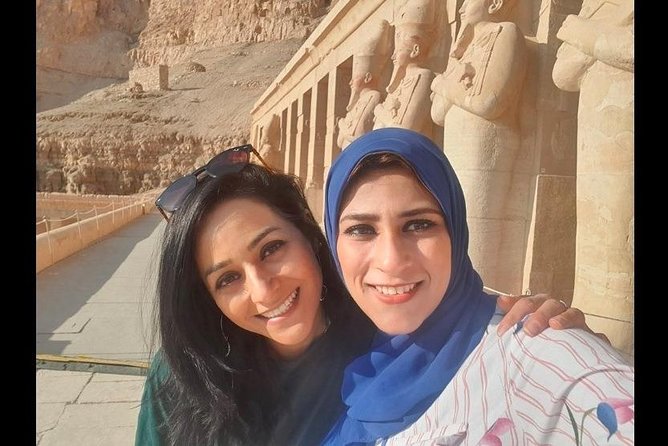
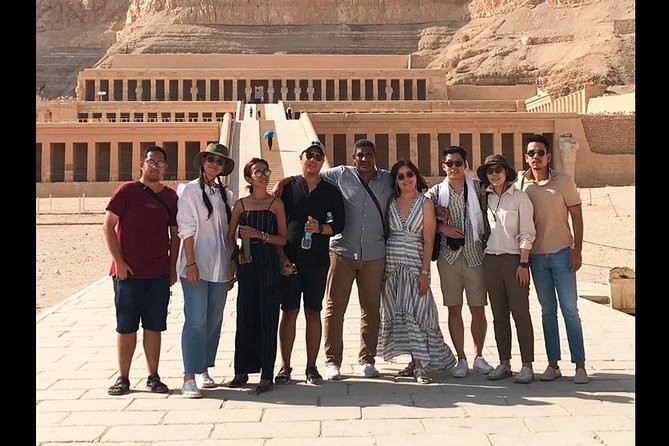
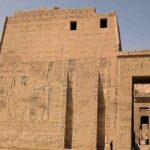
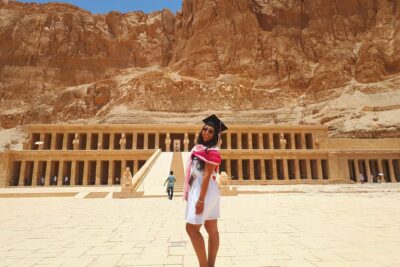
Next comes Temple of Hatshepsut at Deir el Bahari, a site that instantly feels different because it’s built into the dramatic cliffside landscape. Expect impressive scenery as you approach, then you’ll shift from the viewpoint to the details once you’re inside.
Your guide focuses on the memorial temple complex, and you’ll see why the building seems sculpted into the rock. That design choice is not a random aesthetic. It creates a relationship between architecture and the natural setting, and the guide helps you connect that to the messages the temple was meant to send.
Here’s one of the most memorable parts, and it’s something you might not get from a casual visit: the wall scenes that tell the story of the female pharaoh who strengthened and enriched Egypt during her reign. You’ll also hear about the damaged faces. Those represent Hatshepsut figures that Tutmosis III wanted removed. In other words, this is a temple where the politics of memory are still visible today.
Time is about one hour, with an admission ticket included. That’s enough to take in the major story beats without turning the visit into a marathon.
Tip for your enjoyment: keep an eye on how the guide points out visual details, because this is the kind of place where small changes in carvings and figures actually matter.
Colossi of Memnon: Massive Statues, Earthquakes, and a Quick Lunch Reset
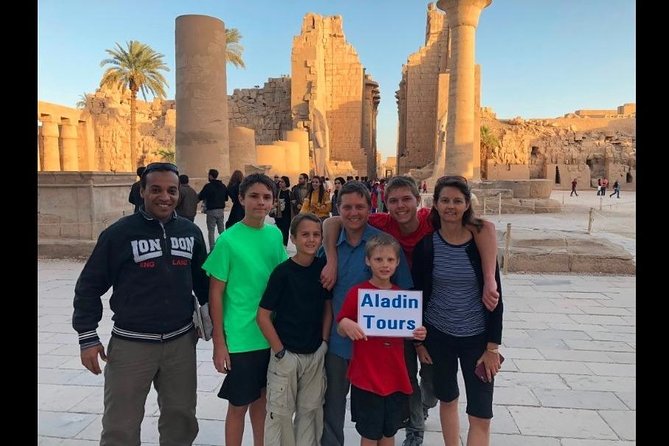
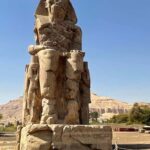
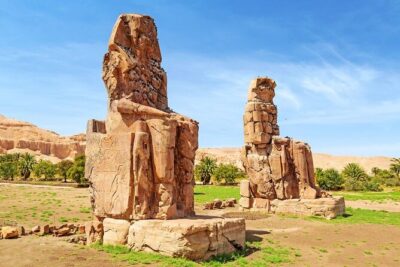
The final West Bank stop is the Colossi of Memnon. These are huge standing figures facing toward the Nile, presented as guardians of Amenhotep’s memorial temple. Even when you don’t know the backstory, the scale hits you fast. Then your guide gives you the story that makes them feel more alive.
You’ll hear about the legend of one colossus singing at sunrise after an earthquake in 27 BC. The sound disappeared after renovations, and the bigger theme here is how time, earthquakes, and floods reshaped the original temple area. Today, the site is a broad archaeological research zone, still guarded by the colossi you’re seeing.
The visit time is short, about 15 minutes, and admission here is listed as free. The practical reason for that short stop is that it works as a reset point before lunch and before crossing to the East Bank.
And lunch is included, served at a nice local restaurant. That little break is part of the value of the tour. It keeps you fueled for Karnak, which is visually dense and can make you feel slower if you’re hungry.
If you’re the kind of traveler who hates quick stops, this is the one place you might wish you had more time. But the tradeoff is that you’ll get the full East Bank highlight, which is where the day’s second half really packs in the scale.
Karnak Temple: The Theban Triad and the Opet Festival Link
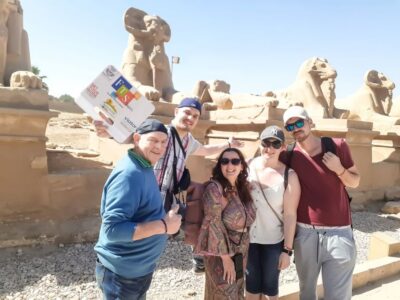
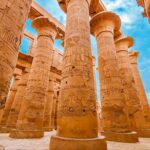
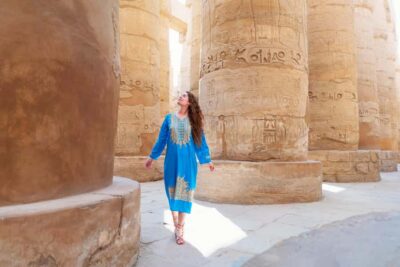
After lunch, you head to the East Bank for Temple of Karnak, one of the biggest ancient worship spaces in Luxor. Here, your guide sets the site in its religious context: Karnak was dedicated to the Theban triad Amun, Mut, and their son Khonsu.
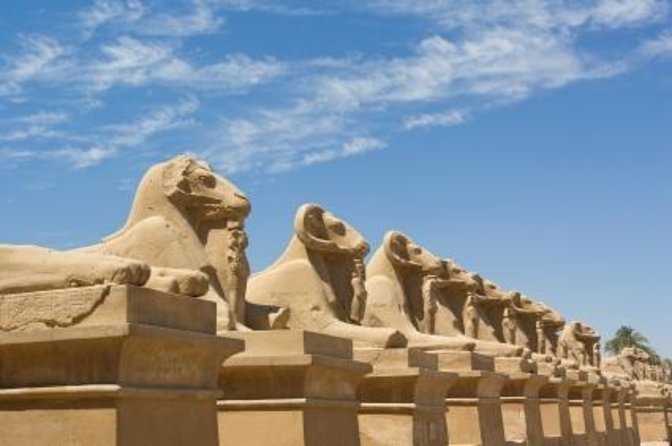
The tour focuses on Karnak as the vastest ancient temple connected to the Theban system. You’ll also learn a key detail that makes Karnak feel less like a standalone monument. It connects to Luxor Temple by an alley of sphinxes used during the Opet Festival. Statues were carried in procession so that Amun-Ra would meet Amun-Min.
That procession connection is the kind of information that changes how you experience the space. Instead of only thinking about buildings, you start thinking about movement, ritual, and how power was reinforced through ceremony.
The complex has three precincts, but the tour notes that only the Amun-Ra precinct is accessible to the public. Expect about two hours at Karnak, with an admission ticket included for this stop.
One practical consideration: Karnak is big. Even with a guide, your feet will get a workout. Wear comfortable shoes and expect to look up and around a lot.
How Long the Day Feels, What to Bring, and Where to Slow Down
This is an all-day highlights route, roughly eight hours total. The actual time can swing with traffic and site entry timing, since transfers are approximate. If you’re deciding whether this fits your schedule, think of it as a “best-of Luxor” day, not a slow, meandering one.
Here’s what you should plan for:
- Sun and heat management: bottled water is included, but you’ll still want to pace yourself.
- Comfortable footwear: you’ll walk through Valley of the Kings, Deir el-Bahari, and Karnak.
- Camera time: you’ll want photos at cliffside views and at Karnak’s main areas, but don’t let photos crowd out the guided explanations.
Where you might slow down is at the two-story of the day: Deir el-Bahari for the story on the walls, and Karnak for the religious connections. Those are the stops where you’ll get the most from listening while you look.
Where the day speeds up is at the Colossi of Memnon stop. It’s short on purpose, and then you’re back on schedule.
Price Check: Is $107.70 Good Value for This Route?
At $107.70 per person for an eight-hour private tour, the value comes down to what you get bundled. You’re not paying extra for guide time, transport, bottled water, hotel pickup and drop-off, and lunch. The guide is the big ticket item in your day, because it turns monuments into understanding.
Admissions are a mixed picture based on the tour details. The itinerary lists admission ticket included for Valley of the Kings, Hatshepsut, and Karnak, while the overall tour notes that entry tickets are not included. That means you should confirm what is covered when you book, so you’re not surprised at the sites.
Even with that potential confusion, you’re still likely to find this priced competitively compared with paying separately for a guide plus transport plus lunch. The real “value” angle is time saved. A day like this is exactly where a vehicle and pickup matter, because you’re switching between sides of the Nile and covering major sites without planning.
My advice: treat this as a pay-for-clarity experience. If you love history but want it explained in plain language while you stand in front of the stones, you’re paying for that benefit.
A Note on Reliability and Pickup Expectations
Because the tour includes hotel pickup and drop-off, you should treat pickup time seriously. One downside you might face is the rare logistics hiccup where a pickup doesn’t happen as expected, and with a one-day schedule it can feel disastrous.
To protect yourself, confirm your pickup details clearly before the tour and keep your contact info ready. If you’re arriving on a tight schedule or connecting travel, build in buffer time so a small delay does not wreck your day.
The good news is that the tour is otherwise structured for smooth flow: private transport, a guide waiting for you to reach the West Bank first, then the rest of the route.
Who This Tour Suits Best
This tour is a strong fit for:
- First-timers in Luxor who want East and West Banks highlights without planning every step
- Travelers who prefer private guidance and flexible pacing within a fixed itinerary
- People who want a guide to explain tomb logic, temple symbolism, and how Karnak fits into wider rituals
It may not be the best fit if:
- You want a very slow pace, with time to wander without structure
- You expect unlimited time at every site, because this is a curated highlights day
- You are sensitive to any scheduling pressure, since transfers and site lines can affect timing
Should You Book Luxor’s East and West Bank Highlights Tour?
I’d book this tour if your goal is to see the core Luxor landmarks in one day and leave with understanding, not just photos. The private guide approach plus hotel pickup and a scheduled lunch make it feel like someone actually built your day for you, which is what you want when you’re short on time.
I’d think twice if your schedule is razor-thin and you cannot handle any pickup delay risk. In that case, confirm details twice and keep a buffer.
If you do book, focus on listening as you walk. Valley of the Kings, Hatshepsut at Deir el-Bahari, Karnak, and the Colossi of Memnon are all strong stops on their own. The difference here is that the route helps you connect them into one story across the Nile.
FAQ
How long is the Luxor East and West Bank Highlights Tour?
It runs for about 8 hours (approx.), with transfer times marked as approximate and dependent on time of day and traffic.
Is hotel pickup and drop-off included?
Yes. The tour includes hotel pickup and drop-off, plus round-trip transportation by private vehicle.
Is this tour private?
Yes. It’s listed as a private tour or activity, and only your group participates.
Is there an Egyptologist guide?
Yes. The tour includes a professional Egyptologist guide.
Which sites are visited during the day?
The tour includes the Valley of the Kings, Temple of Hatshepsut at Deir el Bahari, the Colossi of Memnon, and Temple of Karnak.
Are entrance fees included?
The tour details are split. The itinerary notes admission tickets included for the Valley of the Kings, Temple of Hatshepsut, and Karnak, but the tour overview also states that entry tickets are not included. It’s best to confirm what your booking includes for each stop.
Is lunch included?
Yes. Lunch is included, and it is provided during the day (after the Colossi of Memnon stop).
Are bottled water and transport included?
Yes. You get bottled water and transport by private vehicle.
What’s the weather policy?
This experience requires good weather. If it’s canceled due to poor weather, you’re offered a different date or a full refund.
How do I receive my ticket?
The tour mentions a mobile ticket, and confirmation is received at the time of booking.
The West Bank, Tomb by Tomb
More of Luxor from our review pile
- Private Tour Nile Felucca Ride at Sunset in Luxor
★ 5.0 · 26 reviews - Private Full day East and West Bank, Luxor
★ 5.0 · 26 reviews - Luxor Day Tour: Kings Valley & Karnak & Luxor & Hatshepsut Temple
★ 5.0 · 26 reviews - Full-Day East and West Luxor Private Tour
★ 4.5 · 26 reviews - Day Trip to Edfu & Kom Ombo temples from Luxor and drop off in Aswan or Luxor
★ 5.0 · 26 reviews - 5 Days 4 Nights Nile Cruise Tour
★ 5.0 · 27 reviews
Luxor West Bank Temples & Tombs, compared.
 ★ 5.0Luxor Day Tour: Valley of Kings & Queens & Hatchepsut TemplesFrom $891,496 reviews
 ★ 5.0Full Day Tour to East and West Banks of LuxorFrom $151,449 reviews
 ★ 4.4Valley of the Kings and Hatshepsut Temple Day TourFrom $501,404 reviews
 ★ 5.0Valley of Kings, Hatchepsut Temple ,Karnak & Luxor-DayTourFrom $95735 reviews
 ★ 5.0Full Day Tour of Luxor West Bank Temples and Tombs (Private)From $20722 reviews
 ★ 5.0Private Full-Day Luxor Highlights East and West BanksFrom $65663 reviews
 ★ 4.5Guided Tour to East or West Banks with LunchFrom $64604 reviews
 ★ 5.0Luxor Private Full-Day Tour: Discover the East and West Banks of the NileFrom $90545 reviews
The lists this one sits on