
REVIEW · LUXOR WEST BANK TEMPLES & TOMBS
Luxor East and West Bank Tour with Egyptologist
One day, two banks, real explanations. This Luxor East and West Bank tour is built around licensed local guides and Egyptologist archaeologists, so you are not just looking at monuments, you are getting the stories behind them. I especially like the first-class air-conditioned car and the bottled water for a long day, and I also like how the guide connects each site to what came before and after. The main drawback to plan for is that entrance fees and lunch are not included, and the day can run up to about 12 hours.
You start at Luxor Railway Station and end back there, with pickup offered, and you stay with the same core guide approach all day. The plan is structured, but it still leaves room for questions, which matters in Luxor where every wall, carving, and layout has something to explain. If you are short on time or you want one solid orientation day, this is a strong value play for the price.
In This Review
- Key points at a glance
- East and West Bank in one day: what makes it work
- Ahmad Salah-eldin Zaki and the archaeologist guide style
- Deir el Bahari and Hatshepsut’s terraces: the Anubis and Hathor chapels
- A realistic expectation for Hatshepsut
- Valley of the Kings: 62 tombs and the “books” on the walls
- Consideration: entrance fees not included
- Colossi of Memnon: 16.6-meter statues you can’t ignore
- A practical note
- Medinat Habu (Temple of Medinet Habu) and Ramesses III scenes
- Karnak Open Air Museum: 134 columns and the sacred lake
- Entrance tickets not included again
- Luxor Temple: Ancient Egyptian, Greek, Roman, and Islamic layers
- Price and value: how $84 fits a full Luxor circuit
- Logistics, comfort, and pacing across an 8 to 12 hour day
- Should you book this Luxor East and West Bank tour?
- FAQ
- How long is the Luxor East and West Bank tour with an Egyptologist?
- Is pickup available?
- Where is the meeting point?
- Is this a private tour?
- What is included in the price?
- Are entrance fees included?
- Is lunch included?
- What is the cancellation policy?
Key points at a glance
- Licensed local guides who are also archaeologists: you get the context, not just the highlights.
- East and West Bank in one day: temples plus tombs, without the stress of planning.
- Stop-by-stop focus on key details: Hatshepsut’s chapels, tomb texts, Karnak’s 134 columns, Luxor Temple’s layers.
- Comfort for a long circuit: air-conditioned private transport, plus bottled water.
- Mobile ticket: less paperwork on your side, more time for the sights.
West bank tombs, one by one
- Luxor Day Tour: Valley of Kings & Queens & Hatchepsut Temples★ 5.0 · 1,496 reviews
- Full Day Tour to East and West Banks of Luxor★ 5.0 · 1,449 reviews
- Luxor: Valley of the Kings and Hatshepsut Temple Day Tour★ 4.4 · 1,404 reviews
- Luxor: Valley of Kings, Hatchepsut Temple ,Karnak & Luxor-DayTour★ 5.0 · 735 reviews
East and West Bank in one day: what makes it work
Luxor is famous for doing everything in chunks. East Bank temples are one kind of experience, while the West Bank is where you feel the weight of time. What I like about this format is that it puts both sides into a single arc, so your brain can connect the living-worship world of the temples with the royal-afterlife world of the tombs.
You should expect a long day. The tour is listed at about 8 to 12 hours, and that range matters because it affects how you dress, how you pace yourself, and how much you snack between sites. The upside is that you avoid the common problem of spending your time “catching up” on transportation and directions.
Ahmad Salah-eldin Zaki and the archaeologist guide style
This tour is led by Ahmad Salah-eldin Zaki, listed as the best English and Dutch Egyptologist guide in Egypt. The important part is not just the title. The description emphasizes that the guides are licensed and also archaeologists, which usually translates into a clear, careful way of explaining what you see.
In practice, that means the guide is likely to connect architecture to beliefs, and beliefs to the exact scene or inscription you are standing in front of. The tour’s structure also leans into questions, which is one reason this works so well for people who do not want generic explanations.
If you are traveling with kids or teens, the guide approach is described as friendly and respectful, with an emphasis on making the day feel understandable instead of like a long lecture. If you prefer quiet sightseeing, just know you may get pulled into conversation by design.
Deir el Bahari and Hatshepsut’s terraces: the Anubis and Hathor chapels
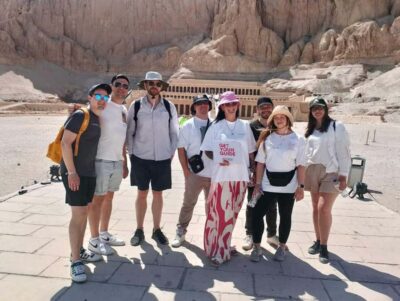
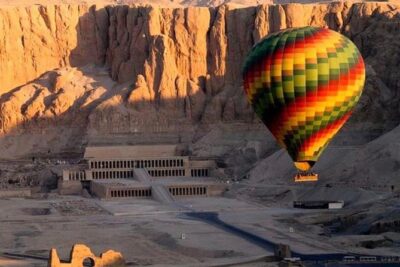
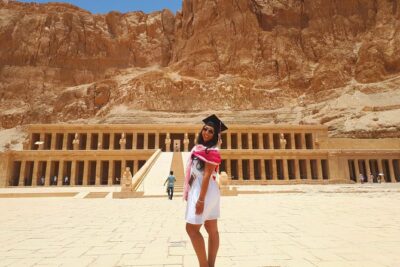
You start on the West Bank at the Temple of Hatshepsut in Deir el Bahari. This is a powerful opening because Hatshepsut ruled Egypt for more than 21 years, and the temple layout is meant to feel intentional and monumental from the first terrace onward.
The plan notes that the first terrace is closed for restoration, so your first big views and photo angles will likely start from the second terrace area. From there, you see two chapels. One is dedicated to Anubis, described with the jackal head and black face, tied to mummification. The other, on the left, is dedicated to Hathor, connected to beauty, childhood, motherhood, and music.
What I find useful here is that the tour points out specifics, like the chapel colors being original and lasting more than 3,000 years. You are not just hearing that the temple is old, you are learning where to look for the features people wrote history into, even at the level of pigments and icon details.
Then you move up to the upper terrace and sanctuary area, described as the most important part of the temple with many stories attached to it. This stop is set at about 2 hours, which gives you enough time to actually slow down, not just walk through.
A realistic expectation for Hatshepsut
The strong focus on chapels and terraces is great, but it also means you will spend time standing and looking upward. Comfortable shoes and sun protection are worth it here, since Deir el Bahari sits in exposed outdoor space.
Valley of the Kings: 62 tombs and the “books” on the walls
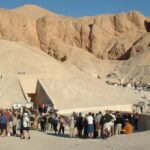
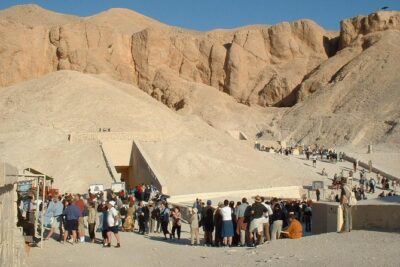
Next is the Valley of the Kings, framed as one of Egypt’s most important archaeological sites. The highlight is not only scale, it is what you can learn inside the tombs. The tour schedule targets about 2 hours here, which is a good window because tombs are not quick, and the inscriptions need explanation.
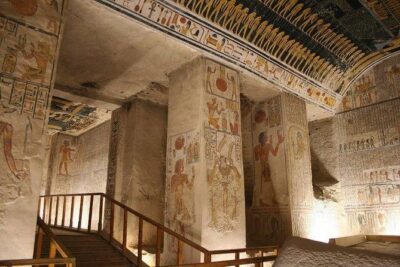
The plan states you can see royal tombs from different kings and queens, totaling 62. What makes this stop feel different from a basic “big valley” visit is the specific attention to the texts painted or carved on the walls. The tour mentions the Book of the Dead, the Book of the Caverns, the Book of the Gates, and the Book of the Earth.
That list is useful for you because it tells you what kind of imagery to look for when the guide is pointing out scenes. Instead of thinking the walls are just decoration, you start recognizing that each tomb’s program maps onto beliefs about passage, danger, and transformation.
Consideration: entrance fees not included
Entrance tickets are not included in the price for this stop. That is normal in Egypt, but it does matter for budgeting, especially if you want to do the tombs rather than view only from the open areas.
Colossi of Memnon: 16.6-meter statues you can’t ignore
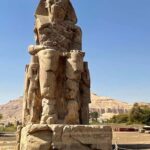
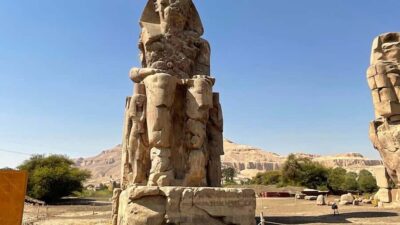
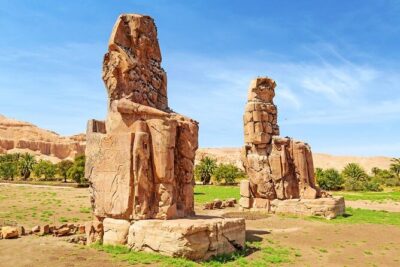
The next West Bank stop is the Colossi of Memnon. These are two enormous monolithic statues linked to Memnon, and the tour notes the name Memnon is Greek. Each statue is about 16.6 meters high, and the stone is red granite taken from a quarry in Cairo.
This stop is shorter, about 1 hour, and it works best when you let the scale hit you. Even when you think you have seen “big statues” before, these are different because the figures are not decorative. They are huge and tied to specific royal history, described here as originally belonging to King Amenophis III and his title The Magnificent.
Admission is listed as free for this stop, which helps your budget, and also means you can pause here without worrying about ticket decisions. The main question becomes how much you want to listen to the historical context versus how much you want to take photos and soak in the stillness of the area.
A practical note
Because this is a short stop, plan to ask any questions early while you are still near the guide. Once you move on, you might not circle back.
Medinat Habu (Temple of Medinet Habu) and Ramesses III scenes
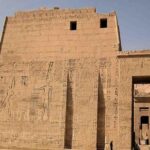
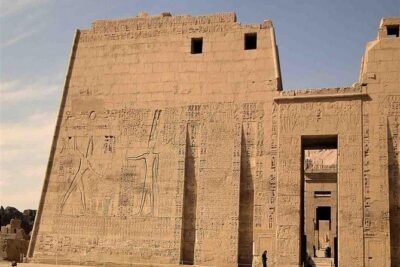
After the statues, you go to Temple of Medinat Habu, described as a masterpiece of Ancient Egyptian structure. The tour attributes the build to King Ramesses III, dedicated to Amun Ra, the sun god and a major deity in Ancient Egypt.
Inside, the tour specifically points to the Ritual Massacre and to cartouches containing the king’s name. It also explains the cartouche format as an oval circle used to hold the name, and it highlights the key idea that each king had two names, not one. The first is the birth name, and the second is the coronation name tied to ascending the throne and becoming lord of Upper and Lower Egypt.
What I like about this stop is that it gives you a framework for reading inscriptions. Even if you cannot translate everything, you can recognize the cartouche structure and understand why the king’s identity is recorded in two stages.
This stop is set at about 1 hour, and like most West Bank sites, the pace is about balance: enough time to see the carvings and learn what they represent, without turning it into a slow slog.
Karnak Open Air Museum: 134 columns and the sacred lake
Now you cross back to the East Bank for Karnak. The tour calls it the biggest temples in the whole world, and the stop is scheduled for about 2 hours.
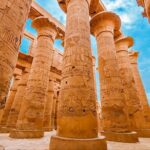
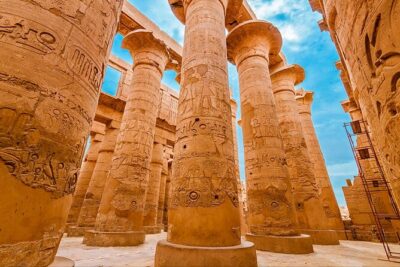
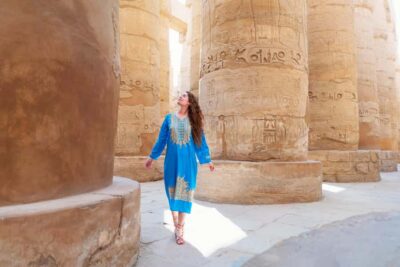
Karnak is a place where “big” turns into “how is this even possible?” The tour’s key visual target is the hall of columns with 134 columns. It even compares the size to the Cathedral of Notre Dame in France, using an estimate of about 5,000 square meters. You do not need to treat that as exact science to get the point. The scale is the story.
The tour also notes a sacred lake that was originally underground. This is a nice example of how Egypt’s temple systems worked, blending visible space and hidden function. If you pay attention, the guide is likely to show you where that sacred water idea fits into the wider religious plan.
It also mentions an amazing statue of King Ramesses inside Karnak. Even if you are not a statue person, Karnak is where one royal face helps you connect the whole complex to the people who funded and shaped it.
Entrance tickets not included again
Entrance fees are not included for Karnak. Budget for it, and if you want to see key parts, plan to buy the right ticket type your guide indicates on the day.
Luxor Temple: Ancient Egyptian, Greek, Roman, and Islamic layers
The final major temple stop is Luxor Temple, described as the temple of different civilizations. The tour dates its creation to King Amenophis III in 1974 BC and says it was achieved and completed by King Ramesses II.
Why Luxor Temple feels different is the layering. The tour states it includes Ancient Egyptian Civilization, Greek Civilization, Roman Civilization, and Islamic Civilization. It also mentions that inside the complex you will find a mosque and a church.
This is where Luxor can surprise you in a good way. You are looking at a monument that did not freeze in time. People kept using the space, adapting it, and leaving their marks on top of earlier ones.
The tour also highlights two obelisks. One is still in the temple, and the other was sent as a gift from Mohamed Ali Pasha to King Louis Philippe and is now in the square of Concord in Paris. That detail is helpful because it turns a local monument into a global story.
Luxor Temple stop time is about 1 hour. That sounds short, but it is often the right amount because the bigger you make the temples, the easier it is to get lost. With guidance, you can hit the key visual anchors and still leave time to reflect.
Price and value: how $84 fits a full Luxor circuit
The listed price is $84.00 per person, with duration about 8 to 12 hours. At that rate, what matters is what is included and what is not.
Included:
- Air-conditioned vehicle
- Private transportation
- Guiding services
- Gratuities
- Bottled water
Not included:
- Entrance fees for the sites
- Lunch
- Souvenirs
So you are mostly paying for guided interpretation and transportation comfort. For a day that spans multiple major sites, that is good value, especially if you like learning and do not want to wrestle with ticket lines and timing on your own. The fact that guides are described as licensed and also archaeologists helps you feel where your money is going, not just toward a vehicle.
My practical advice is to add a separate budget line for entrance fees and lunch. Since entrance fees are not included across the major temple and tomb stops, that extra cost can change the final total. Still, even with that, paying for a guide is often worth it here because the carvings and tomb texts are not self-explanatory.
Logistics, comfort, and pacing across an 8 to 12 hour day
You meet at Luxor Railway Station in Luxor City and return back to the meeting point. Pickup is offered, and you will receive a confirmation at booking time. The tour includes a mobile ticket, which is handy if you want fewer documents.
In a day like this, comfort is not a luxury, it is a survival tool. An air-conditioned car plus bottled water helps you reset between sites, and private transportation keeps you from being dragged by other groups.
Pacing is the real make-or-break. You have longer stops at Hatshepsut and the Valley of the Kings, then shorter ones at the Colossi, Medinat Habu, and Luxor Temple, with Karnak at about 2 hours. That means the middle of the day can feel like the core of the experience, so plan your energy accordingly. If you are prone to fatigue, eat something light before you start, and bring anything you personally need for comfort, since lunch is not included.
Should you book this Luxor East and West Bank tour?
Book it if you want a structured day that links the East and West Bank into one coherent narrative, with licensed guides who are also described as archaeologists. If you care about inscriptions, tomb texts, and why temples were built the way they were, this style of guiding is exactly what you want. The 134 columns at Karnak, Hatshepsut’s Anubis and Hathor chapels, the tomb texts like the Book of the Gates and Book of the Earth, and Luxor Temple’s mixed civilizational layers make for a strong day when you are not guessing.
Skip it or rethink it if you hate long days, or if you want a fully DIY experience with minimal guided talking. Also, take the budget seriously, because entrance fees and lunch are not included, and Luxor costs add up fast when you only plan for the headline price.
If your goal is one big Luxor day that actually teaches you what you are seeing, this is a solid choice.
FAQ
How long is the Luxor East and West Bank tour with an Egyptologist?
The tour runs about 8 to 12 hours (approx.).
Is pickup available?
Yes, pickup is offered.
Where is the meeting point?
You meet at Luxor Railway Station, Luxor City, Luxor, Luxor Governorate 1362367, Egypt, and the tour ends back at the meeting point.
Is this a private tour?
Yes. It is a private tour/activity, and only your group will participate.
What is included in the price?
The price includes an air-conditioned vehicle, private transportation, guiding services, gratuities, and bottled water.
Are entrance fees included?
No. Entrance fees are not included, and entrance tickets for the sites are listed as not included.
Is lunch included?
No. Lunch is not included in the price.
What is the cancellation policy?
Free cancellation is available. You can cancel up to 24 hours in advance for a full refund. If you cancel less than 24 hours before the start time, the amount paid will not be refunded.
The West Bank, Tomb by Tomb
More of Luxor from our review pile
- Hot Air Balloon Ride and Tour to Valley of Kings Luxor- Special Offer
★ 5.0 · 15 reviews - 4-Hours tour West Luxor bank :Hatshepsut Temple & Valley of the King with Lunch
★ 5.0 · 15 reviews - Tour From Luxor to Aswan Edfu, Kom Ombo, Philae and High Dam
★ 5.0 · 15 reviews - Private Half-day Dendera Temple
★ 5.0 · 15 reviews - Luxor Airport Departure: Convenient Private Hotel Transfer
★ 5.0 · 15 reviews - Dahabiya Nile Cruise From Luxor To Aswan 4 Nights 5 Days
★ 4.5 · 15 reviews
Luxor West Bank Temples & Tombs, compared.
 ★ 5.0Luxor Day Tour: Valley of Kings & Queens & Hatchepsut TemplesFrom $891,496 reviews
 ★ 5.0Full Day Tour to East and West Banks of LuxorFrom $151,449 reviews
 ★ 4.4Valley of the Kings and Hatshepsut Temple Day TourFrom $501,404 reviews
 ★ 5.0Valley of Kings, Hatchepsut Temple ,Karnak & Luxor-DayTourFrom $95735 reviews
 ★ 5.0Full Day Tour of Luxor West Bank Temples and Tombs (Private)From $20722 reviews
 ★ 5.0Private Full-Day Luxor Highlights East and West BanksFrom $65663 reviews
 ★ 4.5Guided Tour to East or West Banks with LunchFrom $64604 reviews
 ★ 5.0Luxor Private Full-Day Tour: Discover the East and West Banks of the NileFrom $90545 reviews
The lists this one sits on