
REVIEW · VALLEY OF THE KINGS & KING TUT TOMBS
Hurghada: Luxor, Karnak Temple & Valley of the Kings
Luxor’s temples hit different early in the day. This full-day trip packs Karnak Temple and the Valley of the Kings into a single, well-guided route with an Egyptologist explaining what you are actually looking at. I especially like how the day feels organized around the big, must-see spaces, not random stops.
One thing to consider: it is a long day in strong Egyptian heat, and some parts involve walking and stairs, so plan for comfort and pace.
Key moments you will care about
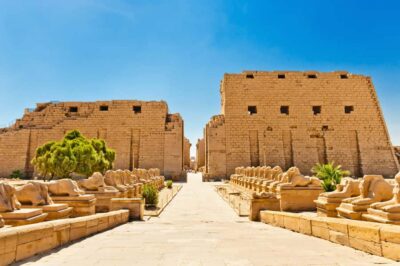
- Karnak’s Great Hypostyle Hall, with 134 giant columns and the Temple of Amun-Ra as your anchor point
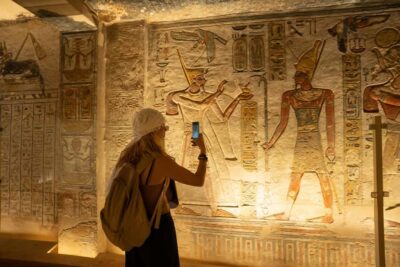
- Three Valley of the Kings tombs, decorated with hieroglyphs and afterlife scenes
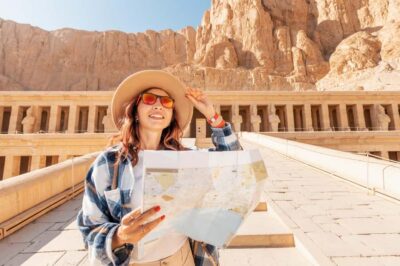
- Temple of Queen Hatshepsut at Deir el-Bahari, the iconic three-tier cliffside complex
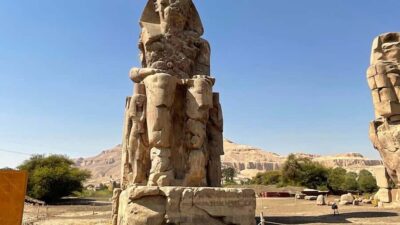
- Colossi of Memnon, two massive remnants that once guarded a larger temple entrance
- Strong guide support, with names like Shaban, Ahmed, Aziz, and others praised for clear explanations and keeping people comfortable
In This Review
- Why This Luxor Day Trip Feels Worth It
- Price and Value: What You’re Really Paying For
- Early Pickup From Hurghada: The Part You Should Plan For
- Karnak Temple: Walking Into Egypt’s Architectural Heavy Machinery
- Getting the Most Out of Karnak With a Real Guide
- Lunch by the Nile: Fuel for the Tomb Day
- Valley of the Kings: Three Tombs and the Afterlife Story
- Temple of Hatshepsut at Deir el-Bahari: The Cliffside Stand-Out
- Colossi of Memnon: Two Giants With a Bigger Backstory
- Optional Felucca Ride on the Nile: When You Need a Calmer Ending
- Guides Make or Break Luxor
- What to Bring (and What to Skip) for Maximum Comfort
- Who This Tour Suits, and Who Should Rethink It
- Should You Book This Luxor Classic From Hurghada?
- FAQ
- What sites does this day trip include?
- Is hotel pickup included from Hurghada?
- Do I need to arrange my own tickets for Karnak Temple?
- How many tombs will I visit in the Valley of the Kings?
- Is the Tutankhamun tomb visit included?
- Is there an optional Nile felucca ride?
- What language options are available on the tour?
- What should I bring for the tour?
- Are there any rules about luggage or leaving the group?
Why This Luxor Day Trip Feels Worth It
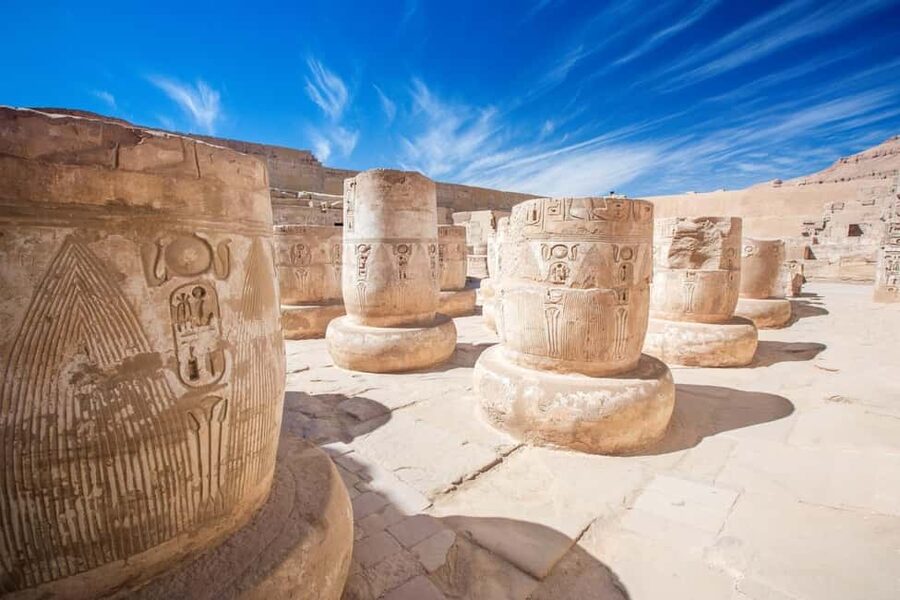
Luxor is where Egypt’s ancient power is easiest to understand in real space, not just in photos. From Hurghada, you trade beach time for a full day of temple scale, wall art, and tomb entrances that make ancient religion feel strangely close.
I like that the itinerary is built around the “big reads.” Karnak sets the stage with Amun-Ra and massive architecture, and then the day moves into royal burial, where the decoration is not decoration at all, it is a map of beliefs. If you want the highlights without turning the day into a chaotic scavenger hunt, this route is a strong fit.
Trying to choose? These Port Safaga trips kept surfacing in our notes.
- Hurghada: Luxor, Karnak Temple & Valley of the Kings★ 5.0 · 23 reviews
Price and Value: What You’re Really Paying For
At $85 per person, this is not cheap, but it is also not a bare-bones transfer. You get round-trip air-conditioned transportation, a professional guided tour, key entry tickets at Karnak, and a full schedule of major sites across Luxor.
You also get a buffet lunch in Luxor and refreshment support along the way, including snacks, cold drinks, and water for the return trip. There is even an optional Nile add-on in the mix, the kind of extra that can make the day feel less rushed on the way back.
If you are comparing options, the value test is simple: does your plan include a real guide plus entry into the central sites, or are you paying separately for everything? Here, the core pieces are bundled so you can focus on the sites instead of paperwork.
Early Pickup From Hurghada: The Part You Should Plan For
Your day starts with early pickup from your hotel in Hurghada. The drive heads through the desert with views along the Nile Valley, and you will feel the rhythm of travel right away: get ready early, then let the schedule carry you.
Before you go, ask your hotel reception for a breakfast box the evening before the trip. Since pickup is early, this simple step can save you from the hungry, cranky phase that ruins photos and patience.
Also, remember the practical rules: no smoking, and you are not meant to bring luggage or large bags. Bring a small day bag only. For the tomb days, closed, comfortable shoes matter because you will be on your feet.
Karnak Temple: Walking Into Egypt’s Architectural Heavy Machinery
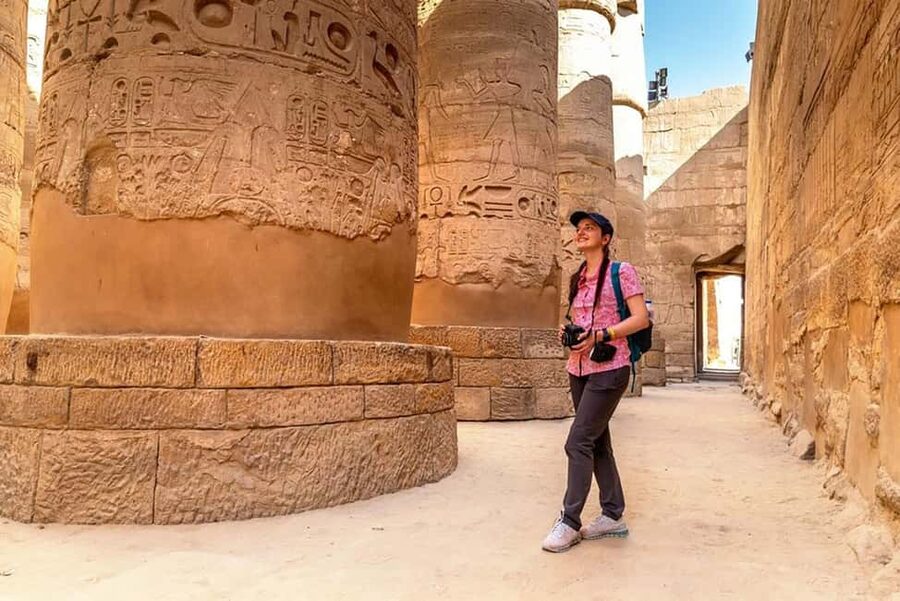
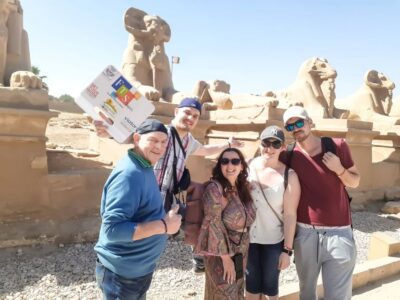
Karnak is the kind of place that turns your brain into scale goggles. You arrive and start with the Temple complex, with towering columns, massive statues, and sacred lakes that add a calm layer to the huge stone setting.
Your first big moment is the Great Hypostyle Hall, an architectural masterpiece with 134 giant columns. This space is often where the tour becomes memorable, because the columns are not just decoration. They create a forest of stone that frames the sacred focus of the Temple of Amun-Ra.
The guided format is a big deal here. Without guidance, Karnak can feel like “more columns.” With a good Egyptologist, you start connecting the dots between structure, worship, and how the Romans and later periods understood and reused older sacred spaces.
Getting the Most Out of Karnak With a Real Guide
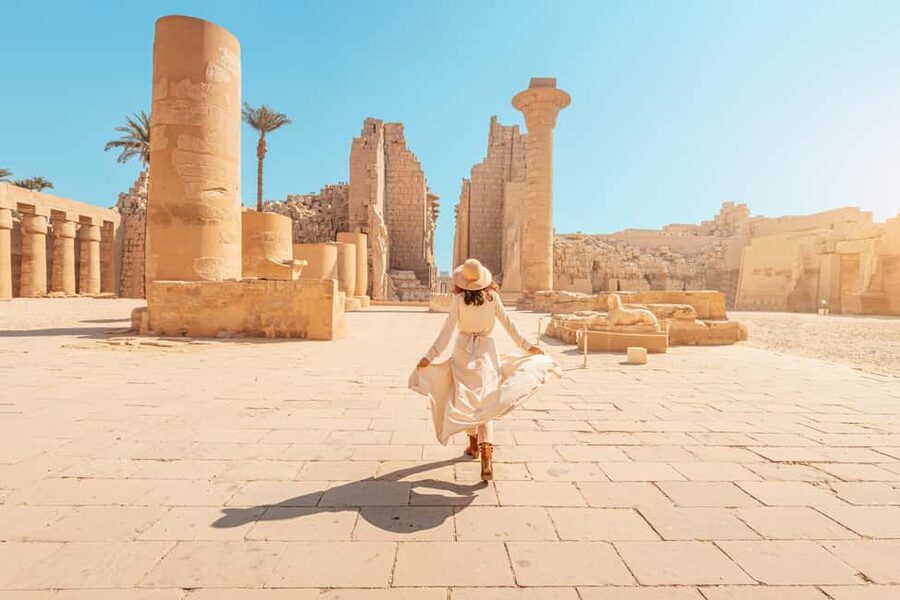
The best part of Karnak is learning how to look. A strong guide will point out the key layout choices and explain why certain areas matter more than others.
In the reviews, guides including Shaban and Ahmed are specifically praised for explanations that stay clear and engaging, and for handling extreme heat by keeping the group in the shade when possible. That matters in Karnak because you can lose half your energy simply standing in sun and waiting for the story to catch up.
If you care about details, go in ready to ask questions. The day runs on interpretation, not just sightseeing. When the guide connects what you see to what it meant, the scale stops being intimidating and becomes understandable.
Lunch by the Nile: Fuel for the Tomb Day
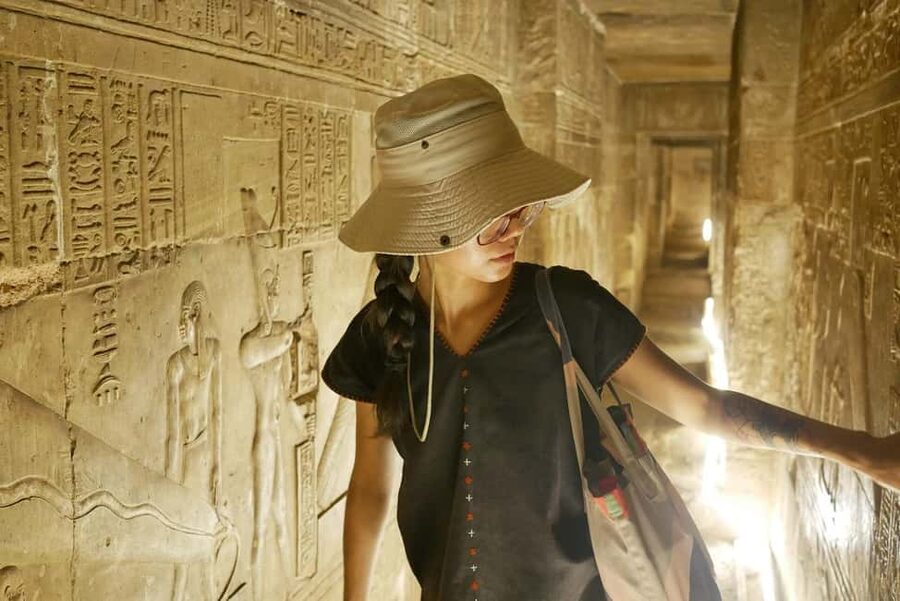
After Karnak, there is lunch at a local restaurant. The schedule gives you a real break before the Valley of the Kings, which helps because the next stop involves enclosed spaces and a lot of walking.
You will likely eat a buffet-style meal, and the food is positioned as authentic Egyptian cuisine along the Nile area. Even if you keep it simple, use lunch as your reset button.
One practical tip: drink water before you start the tomb section. You will be in warmer conditions through most of the day, and the tomb areas can make you forget to pace yourself until you feel it.
Valley of the Kings: Three Tombs and the Afterlife Story
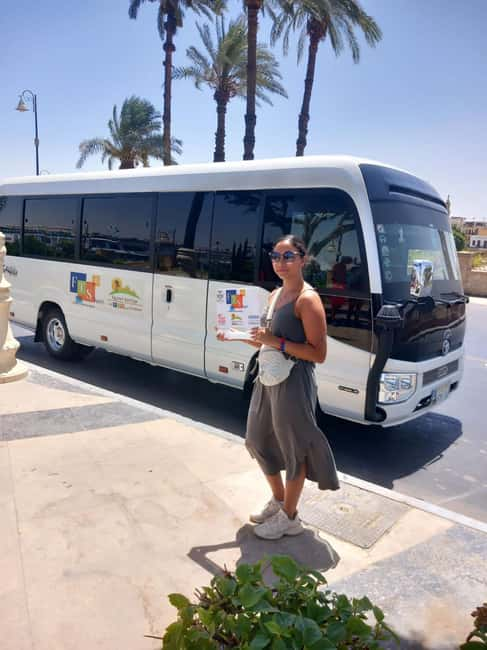
Next comes the Valley of the Kings, the famous royal burial ground. This is where the trip shifts from architecture to belief, from stone scale to painted scenes meant for the afterlife.
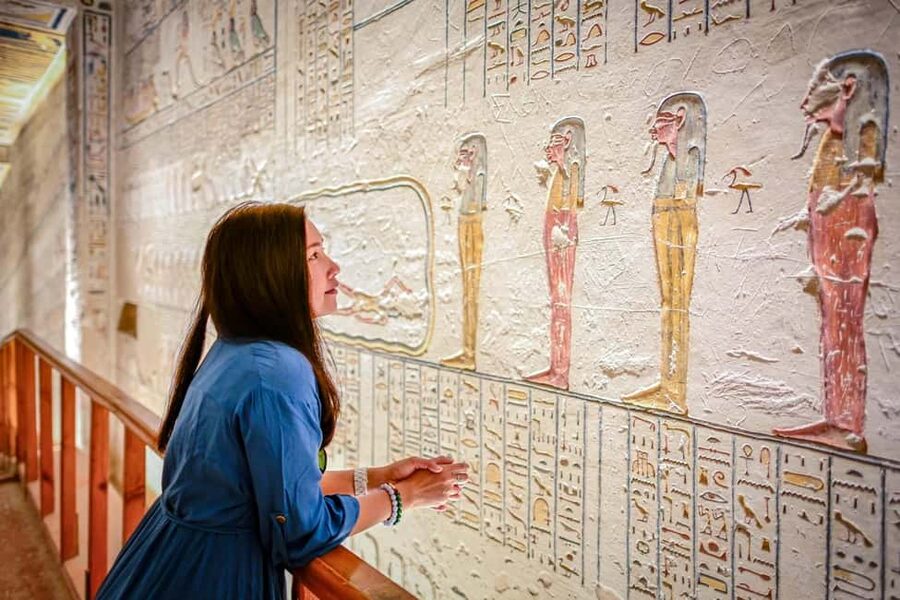
You visit three magnificent tombs, each with well-preserved hieroglyphs and paintings that explain the journey beyond death. Tutankhamun is often referenced as a key name associated with the valley, and Ramses II is also among the royal figures tied to the complex.
If you want the best experience here, think of the tombs as narrative rooms. You are not just looking for a “pretty wall,” you are tracking scenes and symbols that connect to Egyptian ideas about transformation and protection.
Temple of Hatshepsut at Deir el-Bahari: The Cliffside Stand-Out

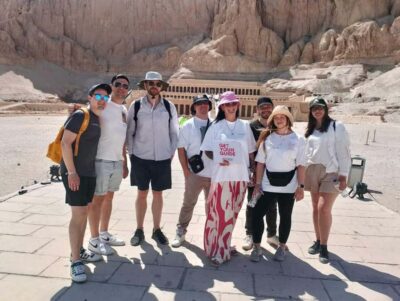
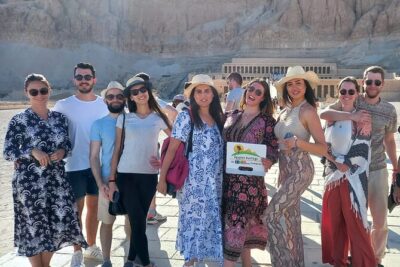
Then you head to the Temple of Queen Hatshepsut at Deir el-Bahari. This is one of the most striking stops on the day because it is carved into the cliffs and built as a three-tier structure that looks almost impossible from the approach.
Hatshepsut is a powerful female pharaoh, and the visit highlights that she ruled Egypt as a king. The tour framing matters: it is not only about the beauty of the temple, it is about what the temple communicates through its design and symbolism.
This is also a good moment to slow down a touch. The structure rewards steady looking, especially when the guide explains the context and you notice how the temple layers relate to the landscape.
Colossi of Memnon: Two Giants With a Bigger Backstory
Before heading back, you make a quick stop at the Colossi of Memnon. These are two gigantic statues that once guarded the entrance to a grand temple, and now they remain as dramatic reminders of what was once there.
Because the stop is shorter, treat it like a visual pause. Take a minute, get your photos, and let the scale sink in. The day moves on, but this is the kind of stop that helps you feel the “lost grandeur” idea that comes up repeatedly in Luxor.
Optional Felucca Ride on the Nile: When You Need a Calmer Ending
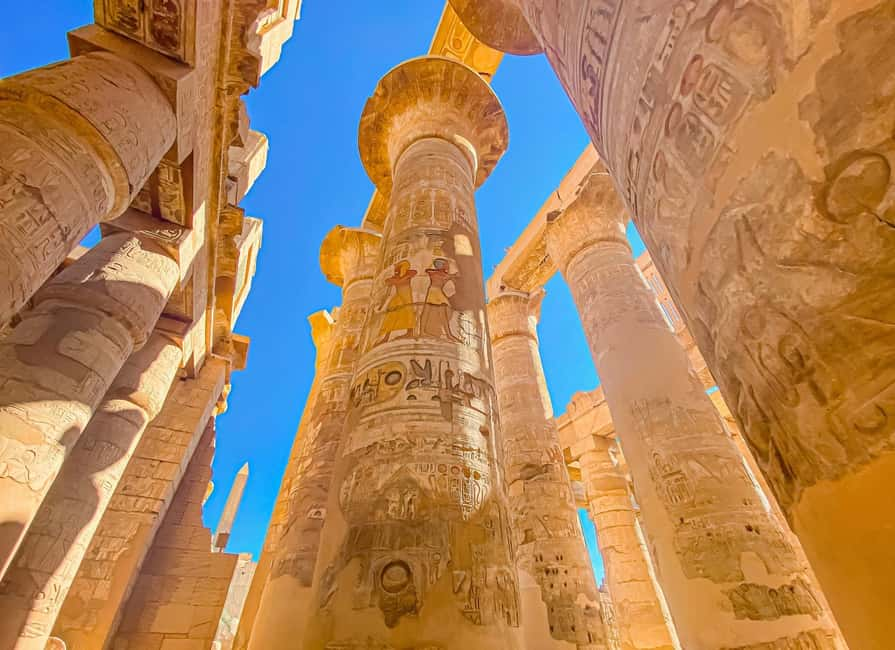
There is an optional Nile felucca ride available for an extra fee. If you add it, it offers a slower, more peaceful contrast to the tomb-and-temple pace of the day.
A practical way to decide: if you like downtime and want a gentle reset, the felucca can be a great add-on. If your priority is strictly maximizing sites, skip it and keep your energy for what you already have planned.
Even if you do not take the felucca ride, the itinerary includes a scenic boat crossing over the Nile River, so you still get some water time built in.
Guides Make or Break Luxor
This is the part I pay attention to, because Luxor is one of those places where the guide quality can turn the day from “cool sights” into “I get it.”
Multiple named guides show up in the praise, including Schaban, Shaban, Ahmed, and Aziz. They are highlighted for detailed explanations, good pacing, and looking after the group with water and snacks between visits. One review also points out a guide style that does not push for tips or try to sell you on unnecessary extras, which you will appreciate when you are already paying for a full day.
The day is long, and you want someone who can handle questions without losing the storyline. These guides get consistent credit for that kind of steady attention.
What to Bring (and What to Skip) for Maximum Comfort
Pack smart and you will enjoy the day more. Bring your passport or ID card, comfortable shoes, sunglasses, and a hat. Cash is also a good idea for small purchases.
If you are sensitive to heat, use the small comfort items. The tour provides snacks, cold drinks, and water on the return portion, but you can still feel the sun during the walking parts.
And follow the rules: no smoking, and no large bags or luggage. Also note the key group policy: you are not allowed to leave the group and stay in Luxor. Return to Hurghada with the group is mandatory.
Who This Tour Suits, and Who Should Rethink It
This is a full-day tour, and it is not for everyone. It is listed as not suitable for pregnant women, people with back problems, people with mobility impairments, and people with heart problems.
So who is it best for? It is ideal if you can handle long sits on the bus and walking at the temples and tomb entrances. It also works well if you want a guided day with an Egyptologist and you like structure, not randomness.
If you are traveling with limited stamina, consider whether you can handle stairs and uneven ground in tomb areas. This is one of those “plan for your legs” tours.
Should You Book This Luxor Classic From Hurghada?
I think this is a solid choice if you want a top Luxor highlights day, with transport, a guide, and the core sites lined up without you juggling tickets and directions. The emphasis on Karnak, multiple Valley of the Kings tombs, and the cliffside Hatshepsut temple gives you a full ancient-meaning arc in one trip.
Book it if you enjoy learning as you look, and if you can manage heat and walking. Skip it if your body cannot handle a long day and tomb walking, or if you need more accessible options than what is described here.
If you do book, do the one thing that makes the day smoother: request that breakfast box the evening before, then show up ready to move, sip, and enjoy the stories your guide is putting on the walls.
FAQ
What sites does this day trip include?
It includes Karnak Temple, the Valley of the Kings (with visits to three tombs), the Temple of Queen Hatshepsut, and the Colossi of Memnon. Lunch at a Luxor restaurant is also included.
Is hotel pickup included from Hurghada?
Yes, the trip includes hotel pick-up and drop-off from Hurghada.
Do I need to arrange my own tickets for Karnak Temple?
No. Karnak Temple entry ticket is included.
How many tombs will I visit in the Valley of the Kings?
You will visit three tombs.
Is the Tutankhamun tomb visit included?
Tutankhamun tomb is listed as included if an option or add-on is selected.
Is there an optional Nile felucca ride?
Yes. A felucca ride on the Nile is optional and available for an extra fee.
What language options are available on the tour?
German, English, and French are available, and other languages can be requested as an add-on. Arabic is also listed.
What should I bring for the tour?
Bring your passport or ID card, comfortable shoes, sunglasses, a hat, and cash.
Are there any rules about luggage or leaving the group?
Smoking is not allowed, and luggage or large bags are not allowed. You are not allowed to leave the group and stay in Luxor, and you must return with the group to Hurghada.
More of Port Safaga from our review pile
- Hurghada: Luxor, Karnak Temple & Valley of the Kings
★ 5.0 · 23 reviews
Valley of the Kings & King Tut Tombs, compared.
 ★ 4.7Luxor Valley of the Kings & Tutankhamun Tomb TripFrom $7613,208 reviews
 ★ 4.8Luxor Day Trip from Hurghada Small Group & Tutankhamun TombFrom $955,366 reviews
 ★ 4.5Small group Hurghada to Luxor, Valley of the Kings by VanFrom $352,470 reviews
 ★ 5.0Luxor Day Tour: Valley of Kings & Queens & Hatchepsut TemplesFrom $891,496 reviews
 ★ 4.4Valley of the Kings and Hatshepsut Temple Day TourFrom $501,404 reviews
 ★ 4.6Luxor Tour with Valley of Kings, Karnak & Tut TombFrom $1031,082 reviews
 ★ 4.6Small-Group Luxor Highlights & Tut Tomb Day TourFrom $105928 reviews
 ★ 4.7Luxor Highlights & King Tut Tomb Tour with LunchFrom $150902 reviews
The lists this one sits on