
REVIEW · LUXOR WEST BANK TEMPLES & TOMBS
Half Day Tour:Valley of Kings&Hatshepsut Temple&colossi Of Memnon
Ancient Egypt hits fast, and it hits hard. I like how this half-day West Bank route stacks the big names close together, starting with the Valley of the Kings and the chance to see Tutankhamun’s tomb, then moving to Hatshepsut’s temple at Deir el-Bahari. I also like the practical support: hotel pickup and drop-off plus a qualified English-speaking guide who can explain what you’re looking at. One thing to consider is timing and language details, because one account notes an unexpected issue with a Spanish guide at the last moment and an extra hour added when things ran late.
In about 5 hours 30 minutes, you’ll cover three classic sites without the hassle of planning a transfer puzzle. It’s not a marathon day, so it works well if you want the West Bank highlights while still leaving breathing room for Luxor’s streets and evening views.
In This Review
- Key Highlights Worth Planning Around
- What You’re Really Getting in This 5-Hour Luxor West Bank Route
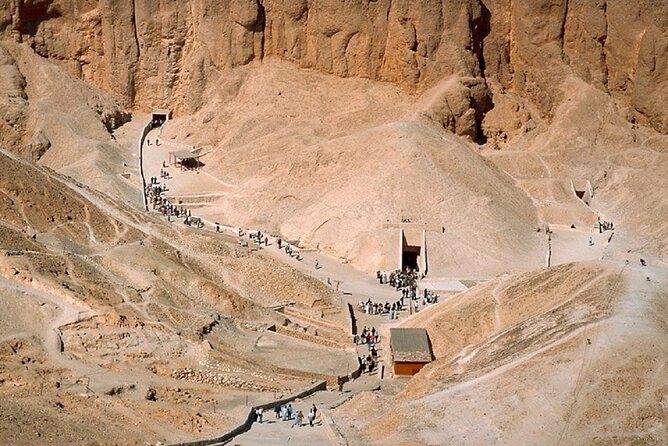
- Valley of the Kings: Tutankhamun and the Royal Tomb Mood
- Deir el-Bahari and Hatshepsut’s Temple: When Architecture Becomes a Story
- Colossi of Memnon: Big Statues, Real Mortuary Temple Context
- English-Speaking Guides, Licensed and In-the-Loop
- Price and Value: Why $10 Makes This Worth a Look
- Pickup, Timing, and How to Make This Day Feel Easier
- What This Tour Feels Like Day-to-Day in Luxor
- Who Should Book This Luxor Half-Day Tour
- Should You Book This Tour?
- FAQ
- How long is the half-day tour?
- What stops are included?
- Are entrance fees included?
- Do they pick you up from your hotel?
- Is the tour guide English-speaking?
- Is tipping included in the price?
- What is the cancellation policy?
Key Highlights Worth Planning Around
- Valley of the Kings with Tutankhamun’s tomb and other royal burials, focused on what’s inside the tombs
- Deir el-Bahari and Hatshepsut’s temple at the cliffs, where architecture tells part of the story
- Colossi of Memnon for a quick, memorable photo and a real sense of scale
- Hotel pickup and drop-off so you spend less time figuring out logistics
- Entrance fees included for the listed sites, which makes the low price feel unusually fair
- Water provided so you’re not scrambling in the heat
Other tomb tickets in the valley
- Hurghada: Luxor Valley of the Kings & Tutankhamun Tomb Trip★ 4.7 · 13,208 reviews
- Luxor Day Trip from Hurghada Small Group & Tutankhamun Tomb★ 4.8 · 5,366 reviews
- Luxor Day Tour: Valley of Kings & Queens & Hatchepsut Temples★ 5.0 · 1,496 reviews
- Luxor: Valley of the Kings and Hatshepsut Temple Day Tour★ 4.4 · 1,404 reviews
What You’re Really Getting in This 5-Hour Luxor West Bank Route
This tour is built for efficiency, but not in a rushed, checklist way. The structure is simple: you spend roughly two hours at the Valley of the Kings, two hours at the Hatshepsut Temple site, then about 30 minutes at the Colossi of Memnon. That gives you enough time to move at a human pace, absorb explanations, and actually look closely at details like hieroglyphics and tomb interiors.
The other advantage is that the tour is run as a private activity for your group. Even though you may see group-discount language, the core experience is your group with the guide. That matters in Egypt, where waiting can balloon when you’re stuck with too many people moving at different speeds.
And yes, the price is unusually low for what’s included. For $10 per person, you get a licensed English-speaking guide, pickup and drop-off, a bottle of water, and the entrance fees for the archaeological sites listed. That combination is what makes this feel like value instead of just a cheap ticket.
Valley of the Kings: Tutankhamun and the Royal Tomb Mood
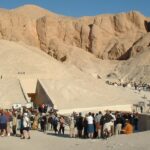
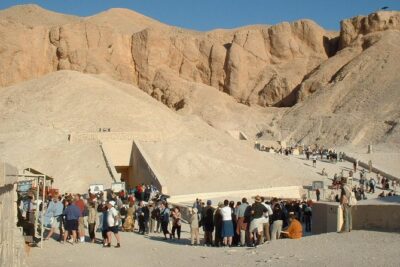
The Valley of the Kings is where Luxor’s West Bank mystique becomes real. This is the sacred burial ground of pharaohs, tucked into rocky hills. Walking into the tomb area, you understand why these burials were planned so carefully: the geography and the secrecy were part of the belief system.
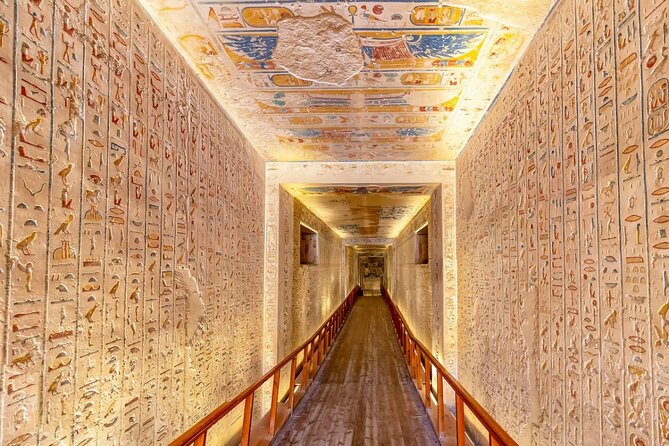
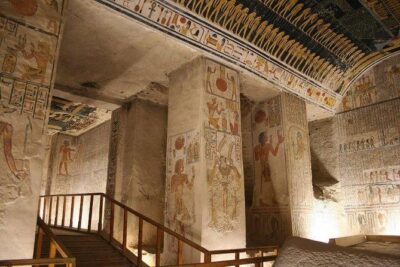
I like that the visit is structured around tomb time, not just exterior photos. You’ll explore the intricate tombs and see the kind of wall decoration that makes Egypt feel vivid even today, especially the preserved hieroglyphics and artifacts highlighted during the visit. Tutankhamun’s tomb is the headline, but the tour also includes other royal tombs, so it doesn’t feel like a one-stop photo moment.
Practical note: tomb interiors can vary in lighting and crowding, so your guide’s timing and pacing are important. With a guide leading you through what to look for, you’re less likely to spend your time only “passing through” and more likely to notice the inscriptions and the stories they imply.
Deir el-Bahari and Hatshepsut’s Temple: When Architecture Becomes a Story
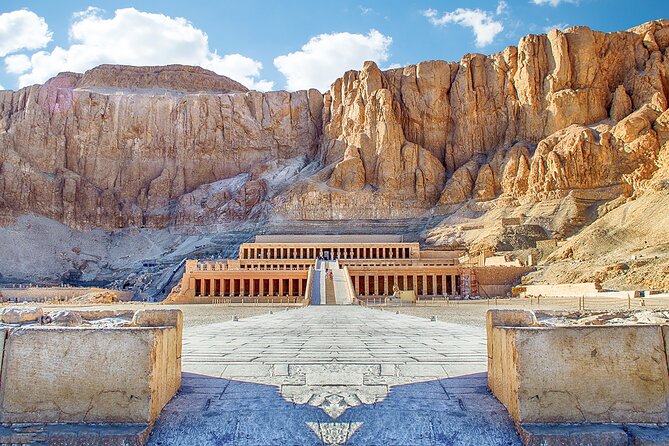
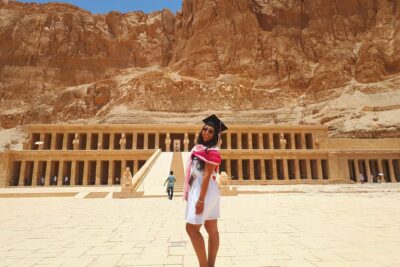
Next comes Deir el-Bahari, with the Temple of Hatshepsut rising against the cliffs. This is one of those places where the setting is part of the message. From the approach, you get a strong sense of scale and symmetry, and then the temple layout gives you something to study while your guide explains why it was built the way it was.
Hatshepsut matters because she was a female ruler in a world where most people’s mental picture of pharaohs is male. Your guide will share the history of this unique monument and focus on her accomplishments and reign. That historical framing is the difference between just seeing stone terraces and actually understanding what the temple was trying to project.
I also like the length: you get about two hours here. That’s long enough to take in the architecture, ask questions, and catch the details that show up only when you slow down. If you’ve done other temples in Egypt, you’ll recognize the pattern of symbolism, but this one feels especially compelling because it’s tied to a ruler people often overlook.
Colossi of Memnon: Big Statues, Real Mortuary Temple Context
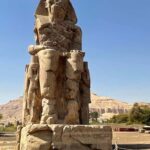
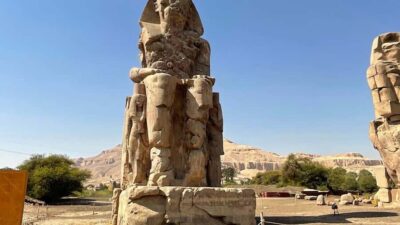
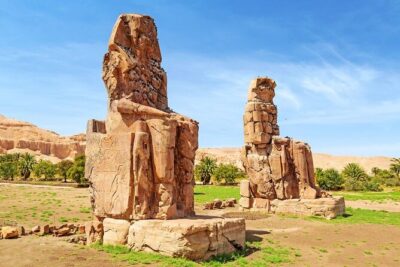
The last stop is the Colossi of Memnon, two colossal statues that once guarded the entrance to the mortuary temple of Amenhotep III. Even with a quick visit of about 30 minutes, these statues land emotionally because of their size and the fact that they are surviving pieces of a larger complex.
For photos, it’s an easy win. Stand back for the full height impact, then move closer for texture and the way the stones have worn over time. For meaning, the key is the context your guide provides: these were not random monuments. They were gatekeepers for a much bigger mortuary temple.
Because the stop is short, it works best if you come ready with a few photo goals and a couple questions. If you try to “do everything” here, you’ll end up spending too much time hovering and not enough time learning what you’re looking at.
West bank tombs, one by one
English-Speaking Guides, Licensed and In-the-Loop
The tour includes a qualified, fully licensed English-speaking guide. That matters more than people think. In Egypt, stone can look like stone until you’re given a framework. With a good guide, you learn how to read the place: where to look on tomb walls, what specific parts of a temple are meant to communicate, and how the sites relate to each other across time.
One practical point from an account tied to a guide named Manso: the explanation quality was praised, and the guide stayed with the group even when the tour ran about an hour longer than planned. That’s exactly the kind of service you want, especially on a day with multiple sites.
One possible caution: if you care about Spanish specifically, confirm language expectations before you go. There’s an example of a Spanish guide not being present at the last moment, which can affect what language you hear during the visit. The tour itself highlights English-speaking guides, so use that as your baseline, and verify any additional language requests well ahead.
Price and Value: Why $10 Makes This Worth a Look
Let’s talk value in real terms. At $10 per person, you’re not just paying for access. You’re also paying for:
- hotel pickup and drop-off
- a qualified English-speaking guide
- entrance fees for the listed archaeological stops
- a bottle of water during the trip
Most “cheap tours” in popular destinations end up charging you later for entrances or guide time. Here, the included entrance fees are a big part of what makes the price feel fair.
Also, the time is efficient. You’re getting a structured West Bank highlights route in about 5 hours 30 minutes. If you’re on a tight itinerary, that can save you money on separate drivers and tickets, and it reduces friction. Even if you do other activities in Luxor, this tour can be the anchor that gives your day meaning.
Pickup, Timing, and How to Make This Day Feel Easier
Hotel pickup and drop-off are included, which means you don’t waste your limited daylight arranging transport. That also helps you arrive at sites with less stress, and it usually means the schedule stays smoother than DIY planning.
Still, have one expectation: timing can shift. In one documented situation, the tour ran about an hour longer due to delays at some places. That doesn’t mean the tour is unreliable, but it does mean you should keep your next plans flexible. If you’re booking dinners or a second tour for later, give yourself some cushion.
Comfort tips that will help you enjoy the day more:
- wear breathable clothes and a hat or cap
- bring sun protection even if you think you’ll stay in shade
- use your time in tombs wisely by listening first, then looking, then asking
- keep your phone ready for photos, but don’t let it replace the guide’s explanations
What This Tour Feels Like Day-to-Day in Luxor
This is a West Bank day that moves through three distinct experiences:
1) tomb exploration in the Valley of the Kings
2) temple viewing and historical context at Deir el-Bahari
3) a scale-heavy photo and reflection moment at the Colossi of Memnon
That mix is why this works for many travelers. If you only visit tombs, you risk feeling like everything is the same “dark room with carvings.” If you only visit temples, you might miss the sense of urgency that burial sites carry. Here, the tour gives you both, then ends with something more open and photo-friendly.
It also helps that the tour is designed for “most travelers can participate,” so it isn’t positioned as an extreme hike style day. You still walk and move between stops, but it’s not presented as a stunt tour.
Who Should Book This Luxor Half-Day Tour
Book it if you want:
- a guided overview of West Bank highlights without doing logistics on your own
- a clear plan with included entrances, not constant add-ons
- a strong balance of tombs and temple storytelling
- a short enough day that you still enjoy Luxor afterward
It’s especially a good fit for first-time visitors to Luxor who want Tutankhamun’s tomb plus Hatshepsut’s temple in one tight window.
If you already know Egypt very deeply and prefer specialized, long-form tomb study, you might want a longer tour day. But for most people, this hits a sweet spot: enough time to learn, not so much time that you fade out.
Should You Book This Tour?
Yes, if you’re aiming for West Bank highlights with strong practical value. The biggest reasons are the included entrance fees, hotel pickup and drop-off, and a licensed English-speaking guide who can explain what you’re seeing. The structure also feels sensible: two hours tombs, two hours temple, then a short finale at the Colossi of Memnon.
The main “maybe” is timing and language expectations. If you want a specific language other than English, confirm ahead. And if you have tight plans later in the day, add buffer time in case the schedule runs long.
If that sounds like your style of travel, this is a smart, low-cost way to make your Luxor day feel purposeful.
FAQ
How long is the half-day tour?
The tour lasts about 5 hours 30 minutes.
What stops are included?
You visit the Valley of the Kings, the Temple of Hatshepsut at Deir el-Bahari, and the Colossi of Memnon.
Are entrance fees included?
Yes. Entrance fees for the archaeological sites on the itinerary are included.
Do they pick you up from your hotel?
Hotel pickup and return drop-off are included.
Is the tour guide English-speaking?
Yes. The tour includes an English-speaking guide who is qualified and fully licensed.
Is tipping included in the price?
No, tipping is not included.
What is the cancellation policy?
You can cancel up to 24 hours in advance for a full refund.
The West Bank, Tomb by Tomb
Down Into the Kings Valley

More of Luxor from our review pile
- Private Tour Nile Felucca Ride at Sunset in Luxor
★ 5.0 · 26 reviews - Private Full day East and West Bank, Luxor
★ 5.0 · 26 reviews - Luxor Day Tour: Kings Valley & Karnak & Luxor & Hatshepsut Temple
★ 5.0 · 26 reviews - Full-Day East and West Luxor Private Tour
★ 4.5 · 26 reviews - Day Trip to Edfu & Kom Ombo temples from Luxor and drop off in Aswan or Luxor
★ 5.0 · 26 reviews - 5 Days 4 Nights Nile Cruise Tour
★ 5.0 · 27 reviews
Luxor West Bank Temples & Tombs, compared.
 ★ 5.0Luxor Day Tour: Valley of Kings & Queens & Hatchepsut TemplesFrom $891,496 reviews
 ★ 5.0Full Day Tour to East and West Banks of LuxorFrom $151,449 reviews
 ★ 4.4Valley of the Kings and Hatshepsut Temple Day TourFrom $501,404 reviews
 ★ 5.0Valley of Kings, Hatchepsut Temple ,Karnak & Luxor-DayTourFrom $95735 reviews
 ★ 5.0Full Day Tour of Luxor West Bank Temples and Tombs (Private)From $20722 reviews
 ★ 5.0Private Full-Day Luxor Highlights East and West BanksFrom $65663 reviews
 ★ 4.5Guided Tour to East or West Banks with LunchFrom $64604 reviews
 ★ 5.0Luxor Private Full-Day Tour: Discover the East and West Banks of the NileFrom $90545 reviews
The lists this one sits on