
REVIEW · LUXOR WEST BANK TEMPLES & TOMBS
Full-Day Private Guided Tour in the West Bank of Luxor
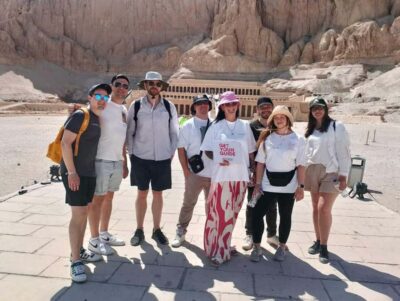
Your West Bank day reads like a time machine. You start early with Egyptologist Ahmad Salah-eldin Zaki, then spend the day on three of Luxor’s most famous ancient sites, including Hatshepsut’s cliff temple and the royal tombs. It is private, in an air-conditioned vehicle, and built for people who want meaning, not just photos.
I love the way the tour focuses on specific design details you can actually see, like Hatshepsut’s terrace layout and the holy-of-holies carved deeper into the mountain. I also like that the guide brings the stories to life, including Hatshepsut’s famed expedition imagery and how mummification fits into the Valley of the Kings.
One consideration: entrance tickets are not included, so plan on paying separately for each site. Also, it is a full day starting at 7:00 am, so you’ll want comfortable shoes and a bit of stamina.
In This Review
- Key highlights worth marking on your map
- A 7:00 am start that pays off on Luxor’s West Bank
- Ahmad Salah-eldin Zaki and the difference a great guide makes
- Deir el Bahari and Hatshepsut’s terraces: seeing the architecture do the storytelling
- The Valley of the Kings: royal tombs, Tutankhamun, and mummification context
- Medinet Habu (Ramesses III): one of Egypt’s best-preserved temple experiences
- How much will this day cost after the base price?
- What the timing and pacing feel like in real life
- Who this tour is best for
- Should you book this West Bank private guided tour?
- FAQ
- What sites are included on this West Bank private tour?
- How long is the tour?
- What time does the tour start?
- Is pickup offered?
- Is this tour private?
- Are entrance fees included in the price?
- What about lunch?
- What is included in the tour price?
- Do you get a mobile ticket?
- Is there free cancellation?
Key highlights worth marking on your map
- Private guide, private vehicle, with pickup offered and an 8-hour pace
- Hatshepsut at Deir el Bahari, including the terraces and the deeper sanctuary area
- Valley of the Kings, with the Tomb of Tut Ankh Amun and context on mummification
- Medinet Habu, one of the best-preserved temples, built by Ramesses III
- Guide support that feels practical, including fast help with questions during your day
West bank tombs, one by one
- Luxor Day Tour: Valley of Kings & Queens & Hatchepsut Temples★ 5.0 · 1,496 reviews
- Full Day Tour to East and West Banks of Luxor★ 5.0 · 1,449 reviews
- Luxor: Valley of the Kings and Hatshepsut Temple Day Tour★ 4.4 · 1,404 reviews
- Luxor: Valley of Kings, Hatchepsut Temple ,Karnak & Luxor-DayTour★ 5.0 · 735 reviews
A 7:00 am start that pays off on Luxor’s West Bank
Luxor’s West Bank is the kind of place where timing matters. Start at 7:00 am and you beat the heaviest crowds and heat, which makes it easier to slow down and take things in, instead of rushing from gate to gate. With an 8-hour schedule, you are getting more than a checklist. You are getting enough time to understand what you are looking at.
The tour is private for your group, and it uses air-conditioned transport, which is a real quality-of-life upgrade on a long day. You also get a mobile ticket, so you’re not scrambling for paperwork once you arrive.
If you are the type who likes structure, this tour helps you build a mental map. By the end, it’s easier to connect the dots between royal power, funerary beliefs, and the way temples communicate authority.
Ahmad Salah-eldin Zaki and the difference a great guide makes
This isn’t just someone who reads facts. The guide here brings a long track record in Egyptian tourism guidance, with more than 9 years of experience. That background matters because Luxor is full of moving parts: sites with different layouts, changing light, and lots of questions from first-timers.
What you’ll feel is a guide who keeps the day smooth. In the feedback, people consistently highlight how flexible Ahmad is, and how he adjusts to your questions and timing. It’s also described as caring and thoughtful, not the hard-sell style some destinations can attract.
You also benefit from his focus on clarity. Rather than dumping names and dates, he explains what you are seeing and why it matters. That’s especially helpful at Deir el Bahari, where the architecture itself tells a story, and at the Valley of the Kings, where every tomb feels like a separate world unless someone frames it for you.
Finally, there’s a practical layer: people note that the guide will help quickly if you want other trip planning support while you’re in Egypt. That can save you time, especially when you arrive with questions.
Deir el Bahari and Hatshepsut’s terraces: seeing the architecture do the storytelling
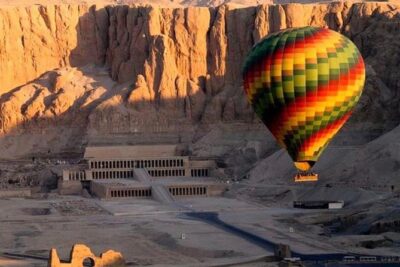
Stop one is the Temple of Hatshepsut at Deir el Bahari. This is one of Luxor’s most striking sites, not because it is the biggest, but because it is so deliberate. The temple is known for a unique terraced design, built to step up against the mountainside like a slow staircase into the sacred.
You’ll get around 2 hours here, which is a good amount of time for this location. Many people rush this temple because it looks photogenic. The smarter approach is to watch how the space is arranged. You’ll start with the main temple experience, then move deeper and deeper toward the sanctuary area, described as the holy-of-holies carved in the deepest part of the mountain rock.
Two details are especially worth your attention:
- The temple’s three-terrace design. Those levels aren’t just decoration. They create a journey from public to sacred.
- The way the sanctuary sits at the rock’s deepest point. That physical depth reinforces the idea that you are moving toward something profoundly protected.
You’ll also see scenes tied to Hatshepsut’s historical image-making, including the famous naval expedition sent by Queen Hatshepsut to the land of Somalia. That topic matters because it shows how rulers used art and monument building to project power far beyond their borders.
Possible drawback here: if you’re someone who hates stairs or uneven terrain, you might want to pace yourself. Deir el Bahari can be physically demanding, and the best results come from slowing down rather than sprinting between viewpoints.
The Valley of the Kings: royal tombs, Tutankhamun, and mummification context
Next up is the Valley of the Kings, with about 2 hours allotted. This is the stop most people have on their Luxor wishlist, mainly because it holds 62 royal tombs of different kings. Even if you only know a few names, the site has a strong gravitational pull.
The tour centers the big one: the Tomb of Tut Ankh Amun, discovered in 1922 by the British archaeologist Howard Carter. That discovery date is more than trivia. It’s a key part of why the Valley of the Kings became famous worldwide, and why you still see Tutankhamun referenced constantly in museums and pop culture.
But the tour also gives you a way to understand the Valley beyond one famous tomb. It connects what you see to ancient beliefs, including an explanation of the mummification process in ancient Egypt. When you have that context, the tombs feel less like random stone holes and more like parts of an intentional system.
Here’s one more useful historical anchor mentioned in the tour background: the Valley was first discovered in 1817 by Italian traveler Giovanni Battista Belzoni. Knowing that adds perspective. The Valley has been drawing attention for centuries, and modern archaeology sits on top of a long human curiosity.
One practical point: the Valley of the Kings is a place where light and shadows can change quickly depending on where you stand and how the day progresses. With a guide who knows the site flow, you can move in a way that keeps the visit coherent rather than chaotic.
Medinet Habu (Ramesses III): one of Egypt’s best-preserved temple experiences
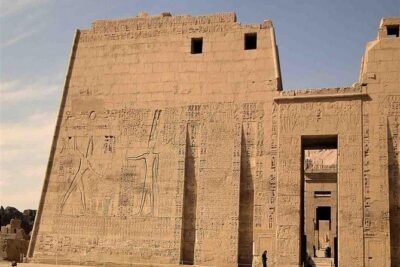
Your third stop is Temple of Medinat Habu, also known as Medinet Habu. You’ll spend about 1 hour here, which is shorter than the earlier stops, but enough time if your priority is to get the feel of the temple’s scale and preservation.
This temple is described as one of the most well-preserved in the world. Built by King Ramesses III, it carries a strong sense of ancient Egypt still looking back at you. In other words, the carvings aren’t just readable in theory, they feel physically present.
A few details worth watching for:
- Ramesses III’s name appears inside cartouches, including the oval form that frames a king’s name.
- The temple’s first gate is about 22 meters high, and the size of that entry sets expectations for the rest of the complex.
- The overall design gives you a distinct feeling compared with Deir el Bahari and the Valley. Here, it is about power, kingship, and monumental permanence.
This stop is a great final note to a West Bank day because it shifts you from royal tomb focus to royal temple authority. The day becomes a full circle of sorts: how kings were represented in life, and how their legacy was built to outlast them.
If you have energy left, I’d treat this as your moment to slow down and really look at inscriptions and carved shapes. Even if you don’t read the hieroglyphs, you’ll feel how intentional the layout is.
How much will this day cost after the base price?
The price is $200.00 per group, up to 15 people. Because it’s private transportation and guided services, the value depends on your group size. If you’re traveling as a small family or a couple, it can feel like a splurge, but you are also paying to have a tailored day rather than sharing with strangers and competing for attention.
What you should budget on top is entrance fees, since tickets are not included:
- Valley of the Kings: $16
- Temple of Hatshepsut at Deir el Bahari: $12
- Medinet Habu: $8
That adds up to $36 per person in entrance fees for these three sites. Lunch is not included, and souvenirs are, of course, optional.
So your realistic “all-in” number for the day is mainly the base tour price plus about $36 for admissions per person, plus food. If you compare that to the cost of a shared tour, this one starts making sense when you value control: private timing, a guide who answers your questions, and a route designed for the key West Bank highlights.
What the timing and pacing feel like in real life
The itinerary structure is simple: start with Hatshepsut, continue to the Valley of the Kings, then finish at Medinet Habu. The time splits are around 2 hours at Deir el Bahari, 2 hours at the Valley, and 1 hour at Medinet Habu, all wrapped into an 8-hour day.
That balance is smart. Deir el Bahari rewards careful looking, and the Valley of the Kings also benefits from explanation so you know what you are seeing. Medinet Habu is very rewarding too, but since it is shorter on purpose, it’s ideal as a finish that doesn’t feel rushed, just focused.
Also, private tours reduce a common problem on the West Bank. You are less likely to waste time waiting around for other people’s pace. Instead, you can keep momentum while still taking breaks when you need them.
Who this tour is best for
This day tour fits best if you want three major West Bank sites without the stress of arranging everything yourself. It also works well if you care about understanding symbolism and design, not just visiting locations.
I’d especially recommend it for:
- First-time Luxor visitors who want the most famous West Bank stops in one day
- Couples and small groups who want a guide who answers questions and adjusts to the rhythm of the group
- Anyone who appreciates a guide with both tourism experience and an Egypt-focused background, described as including archaeological expertise and strong communication
If you’re the kind of traveler who wants lots of extra stops or lots of unplanned wandering, you might prefer a longer West Bank plan. This tour is clearly built around three headline experiences.
Should you book this West Bank private guided tour?
If your goal is a focused West Bank day with Hatshepsut, the Valley of the Kings, and Medinet Habu all covered by a guide who can explain what you’re seeing and keep things smooth, I think you’ll like this tour. The private setup, the early start, and the attention to specific site details make it a strong value for the $200 base price.
I would only hesitate if you strongly dislike paying separate site entrance fees, because tickets are clearly an additional cost. Also, if you have limited mobility, you’ll want to consider the walking and uneven ground that comes with these West Bank locations.
Otherwise, this is the kind of day that helps you leave Luxor with more than screenshots. You come away with a clearer sense of how ancient rulers built power into stone, and how sacred spaces guided people toward belief. And with Ahmad Salah-eldin Zaki handling the flow, you get to spend your energy looking up and paying attention.
FAQ
What sites are included on this West Bank private tour?
You’ll visit the Temple of Hatshepsut at Deir el Bahari, the Valley of the Kings, and the Temple of Medinat Habu.
How long is the tour?
The tour is approximately 8 hours.
What time does the tour start?
The start time is 7:00 am.
Is pickup offered?
Yes, pickup is offered.
Is this tour private?
Yes. It is a private tour, and only your group participates.
Are entrance fees included in the price?
No. Entrance tickets are not included. The Valley of the Kings ticket is listed as $16, the Temple of Hatshepsut at Deir el Bahari as $12, and Medinat Habu as $8.
What about lunch?
Lunch is not included.
What is included in the tour price?
Included features are an air-conditioned vehicle, private transportation, and guiding services.
Do you get a mobile ticket?
Yes, the tour includes a mobile ticket.
Is there free cancellation?
Yes, free cancellation is available. You can cancel up to 24 hours in advance for a full refund. If you cancel less than 24 hours before the experience start time, the amount paid is not refunded.
The West Bank, Tomb by Tomb
More of Luxor from our review pile
- Hot Air Balloon Ride and Tour to Valley of Kings Luxor- Special Offer
★ 5.0 · 15 reviews - 4-Hours tour West Luxor bank :Hatshepsut Temple & Valley of the King with Lunch
★ 5.0 · 15 reviews - Tour From Luxor to Aswan Edfu, Kom Ombo, Philae and High Dam
★ 5.0 · 15 reviews - Private Half-day Dendera Temple
★ 5.0 · 15 reviews - Luxor Airport Departure: Convenient Private Hotel Transfer
★ 5.0 · 15 reviews - Dahabiya Nile Cruise From Luxor To Aswan 4 Nights 5 Days
★ 4.5 · 15 reviews
Luxor West Bank Temples & Tombs, compared.
 ★ 5.0Luxor Day Tour: Valley of Kings & Queens & Hatchepsut TemplesFrom $891,496 reviews
 ★ 5.0Full Day Tour to East and West Banks of LuxorFrom $151,449 reviews
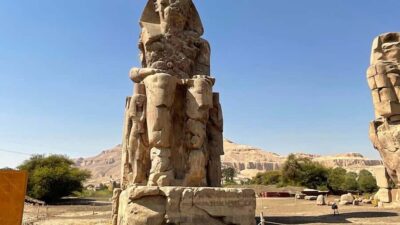 ★ 4.4Valley of the Kings and Hatshepsut Temple Day TourFrom $501,404 reviews
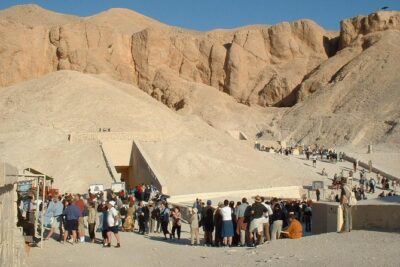 ★ 5.0Valley of Kings, Hatchepsut Temple ,Karnak & Luxor-DayTourFrom $95735 reviews
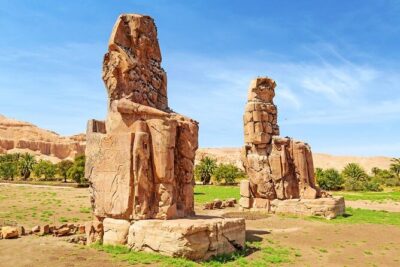 ★ 5.0Full Day Tour of Luxor West Bank Temples and Tombs (Private)From $20722 reviews
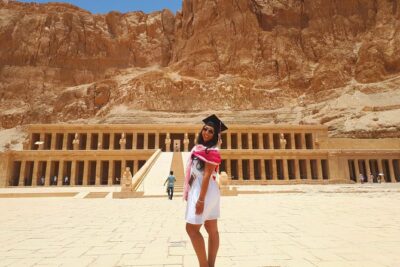 ★ 5.0Private Full-Day Luxor Highlights East and West BanksFrom $65663 reviews
 ★ 4.5Guided Tour to East or West Banks with LunchFrom $64604 reviews
 ★ 5.0Luxor Private Full-Day Tour: Discover the East and West Banks of the NileFrom $90545 reviews
The lists this one sits on