
REVIEW · VALLEY OF THE KINGS & KING TUT TOMBS
From Cairo: Trip to Luxor By Flight and King Tut Tomb Visit
Luxor in one day can feel unreal. I love the way this trip strings together the biggest sites in a tight loop, with Karnak Temple front and center and the Valley of the Kings right after. You get an Egyptologist guide, transport by air-conditioned vehicle, and enough time at each stop to actually look up, not just walk through.
The main tradeoff is that the day is time-boxed. If your flight times are early, you should expect a fast pace in the heat, and one review experience noted limited water during the day, so plan to protect yourself.
In This Review
- Key Highlights at a Glance
- Why a Luxor Day Trip From Cairo Actually Works
- Flights, Start Times, and How the Day Gets Set
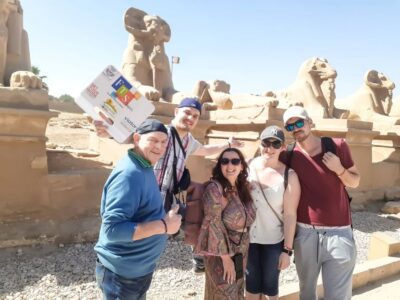
- Karnak Temple and the Avenue of Sphinxes, Where Scale Hits First
- The Hypostyle Hall: 134 Columns and the Feeling of Tiny Humanity
- Obelisks of Hatshepsut and Tutomosis III, Small Objects With Big Power
- Temple of Amon and the “Message” Behind the Carvings
- Valley of the Kings: Tomb Access and Why It Can Feel Like a Lottery
- Visiting Tombs: Expect a Quick Feel, and Ask How the Guide Handles It
- El Deir El Bahary and Hatshepsut’s Terraces: When the Story Turns Visual
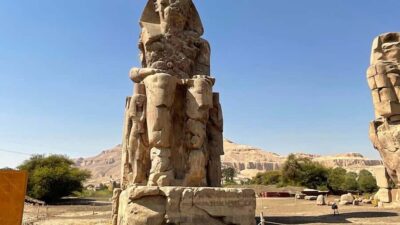
- Colossi of Memnon: A Short Stop That Still Feels Like Theater
- Price and Value: What $150 Per Person Really Buys
- Group Size and Guide Quality: Small Group Help, Big Day Management
- What to Pack and How to Survive the Heat
- Who This Luxor Flight Day Trip Is Best For
- Should You Book This Luxor Day Trip From Cairo?
- FAQ
- How long is the Luxor day trip from Cairo?
- What is included in the price?
- Are flights between Cairo and Luxor included?
- What tombs will I visit in the Valley of the Kings?
- Is there a guide during the tour?
- What languages are available for the live guide?
- How does pickup and drop-off work?
- Can I cancel if my plans change?
Key Highlights at a Glance
- Small group size (limited to 10) so you are not lost in a crowd.
- Karnak’s Hypostyle Hall (134 columns) plus the Avenue of Sphinxes, so you see scale fast.
- Valley of the Kings with rotated tomb access, including King Tut if you select that option.
- El Deir El Bahary and Hatshepsut’s terraced temple for one of Luxor’s most visually striking stories.
- Colossi of Memnon as a quick Nile-facing finale before your return flight.
Other tomb tickets in the valley
- Hurghada: Luxor Valley of the Kings & Tutankhamun Tomb Trip★ 4.7 · 13,208 reviews
- Luxor Day Trip from Hurghada Small Group & Tutankhamun Tomb★ 4.8 · 5,366 reviews
- Luxor Day Tour: Valley of Kings & Queens & Hatchepsut Temples★ 5.0 · 1,496 reviews
- Luxor: Valley of the Kings and Hatshepsut Temple Day Tour★ 4.4 · 1,404 reviews
Why a Luxor Day Trip From Cairo Actually Works
Flying is the whole point here. A Luxor day can be brutal if you try to do it overland from Cairo, so the domestic flight is what makes it realistic. The itinerary is built like a greatest-hits tour, but it does not feel like a drive-by. It feels like “see the key places in one go,” with a guide to connect the dots between temples, pharaohs, and the desert burial world.
Also, the tour is designed for comfort during a long day. You travel in an air-conditioned vehicle and you are guided from pickup through the airport transition and back to Cairo. That sounds basic, but when the day includes walking through temple courtyards and stone corridors, comfort matters.
One more detail I like: you get to choose the King Tutankhamun tomb option. Not everyone gets that chance on short itineraries, and it changes the value of the day.
Flights, Start Times, and How the Day Gets Set
This is an 8-hour experience, but the full-day rhythm depends on flight timing. The tour provider quotes typical domestic economy or business class options around Cairo to Luxor at about 5 am to 7 am, and the return around 6 pm or 11 pm (timings are approximate). That means your body clock might feel like it has been hijacked, especially if you are doing an early pickup.
Here is the practical bit: you need to send full names and passport details in advance because domestic flights require it. If you request specific flight times or change a reservation later, the price can change. So I treat flight planning like part of the trip, not just an administrative step.
If you are sensitive to airport waits, do not assume the day ends immediately after sightseeing. One review noted that the schedule wrapped earlier than expected, leaving a lot of time before the return flight. That can be good if you plan snacks and shade time, but annoying if you were hoping for a smooth handoff back to your hotel.
Karnak Temple and the Avenue of Sphinxes, Where Scale Hits First
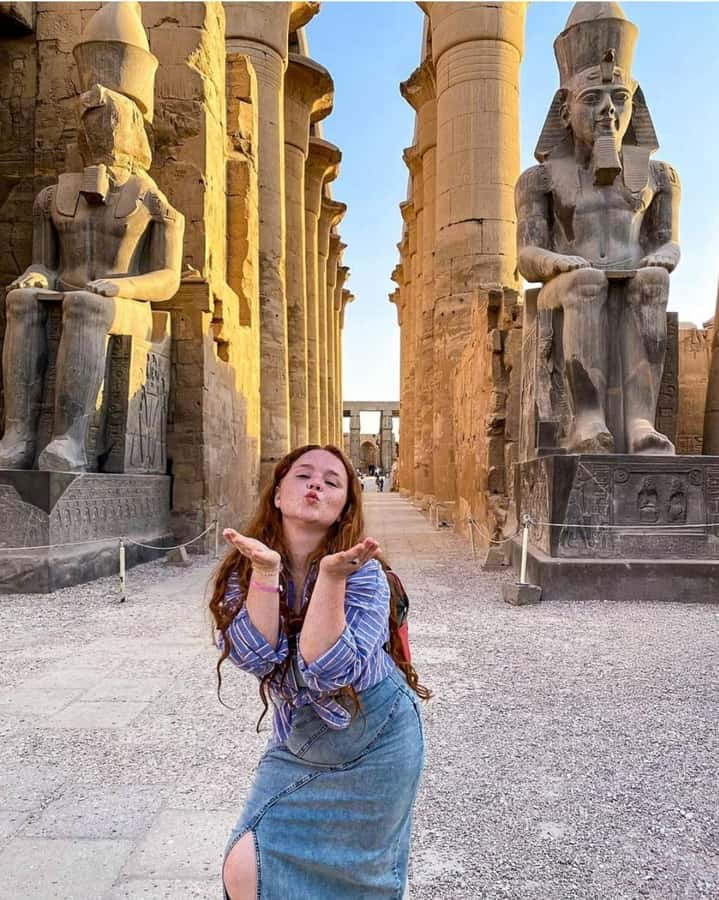
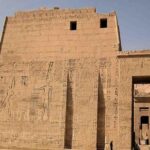
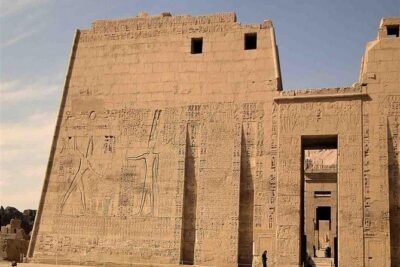
If Luxor is Egypt’s “temple city,” Karnak Temple is the big living example. This stop is not just about seeing walls with carvings. It is about experiencing the way the ancient Egyptians built in layers and then kept expanding the place across reigns.
You start with a guided focus on key elements:
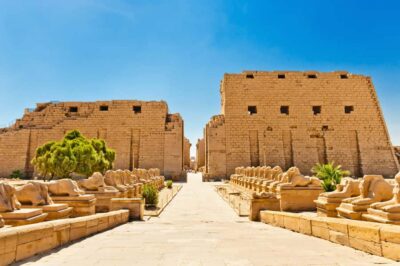
- The Avenue of the Sphinxes, a ceremonial walkway that helps you understand how people moved through sacred space.
- The route into Karnak that sets you up for the Hypostyle Hall.
The Avenue part is worth paying attention to. When you walk it, you get a sense of processional movement. You can practically feel how this was designed for eyes to be pulled forward toward the temple core.
In one review, the guide stood out as enthusiastic. That matters here because Karnak can become a blur of stone if the story is not being told in a helpful order. With the right pacing, you learn why specific pieces are where they are and what they were meant to accomplish.
The Hypostyle Hall: 134 Columns and the Feeling of Tiny Humanity
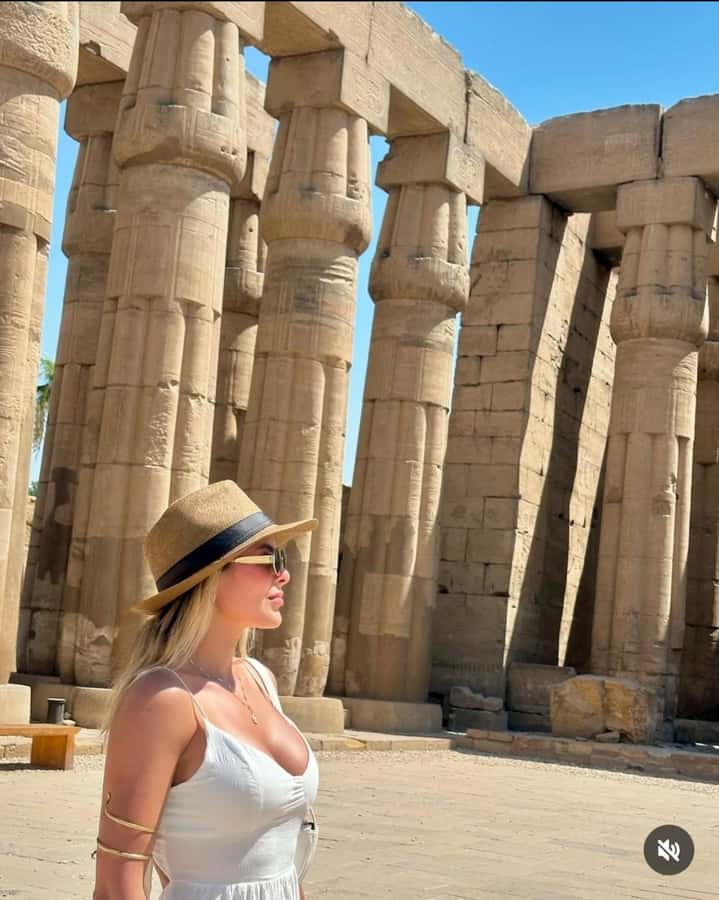
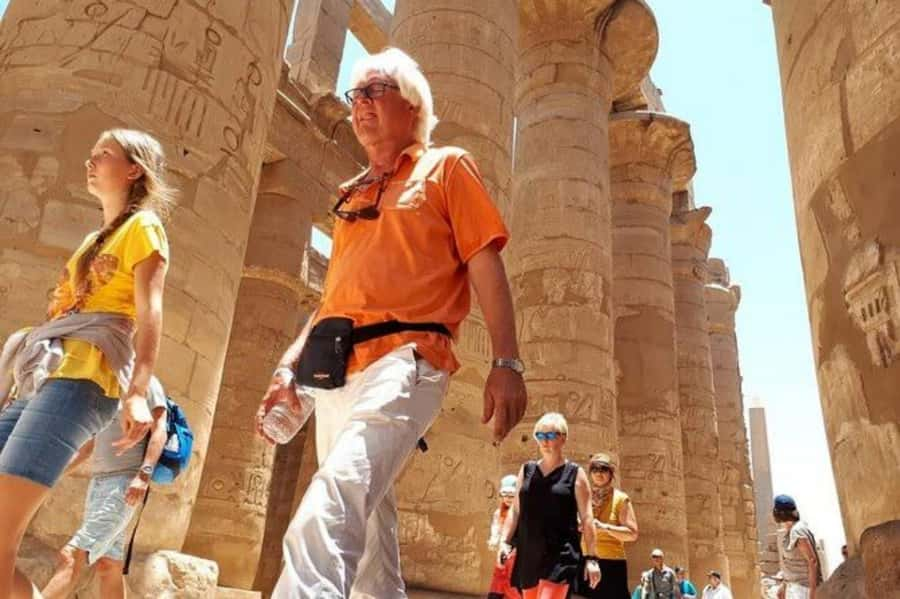
Then comes the Hypostyle Hall. You are looking at 134 gigantic columns, which is one of those numbers that does not mean much until you stand in the space. The hall is a lesson in scale and symmetry. It also changes how sound and light feel compared with open courtyards, so you end up noticing more than just the carvings.
At this stop, your best move is to slow down and alternate:
1) Look up to absorb the column density.
2) Then look to the reliefs to catch the specific scenes the guide is pointing out.
This is also the area where lotus and papyrus design details help you read the symbolism. The tour description specifically mentions the temple of Amon adorned with lotus and papyrus motifs. When you spot those plant forms, the place stops being only stone and becomes a message system.
One more practical note from the reviews: the tour can move quickly. So if you want deeper time inside the Hypostyle Hall, keep your camera ready but do not use every second to shoot. A few good photos plus a real minute of looking often beats a frantic photo sprint.
More one-day runs to the temples
Obelisks of Hatshepsut and Tutomosis III, Small Objects With Big Power
After Hypostyle Hall, you get the obelisks component, including those of Queen Hatshepsut and Tutomosis III. Obelisks feel like “vertical decoration” until you remember what they did in the wider temple ecosystem. They were statements, aimed at the sky, meant to mark presence and divine connection.
Hatshepsut is one of the most important figures you will hear about in this whole day. Even if you have never studied Egyptian history, Hatshepsut’s story is a strong anchor. That matters because you are visiting two sites linked to her reign: her obelisks here and then her terraced temple later.
So this stop is not random. It is building a narrative arc so that when you see El Deir El Bahary, it lands with context instead of confusion.
Temple of Amon and the “Message” Behind the Carvings
The tour description highlights the temple of Amon at Karnak, with designs featuring lotus and papyrus. I like this because it gives you something to look for beyond column geometry. A guide can help you connect motifs to the idea of rebirth, order, and religious authority.
If you only have one day, Karnak can be overwhelming. A guide who focuses on the right details makes it feel coherent. And based on reviews, the enthusiasm level can be high, with guides who try to keep the energy up even during a hot day.
Valley of the Kings: Tomb Access and Why It Can Feel Like a Lottery
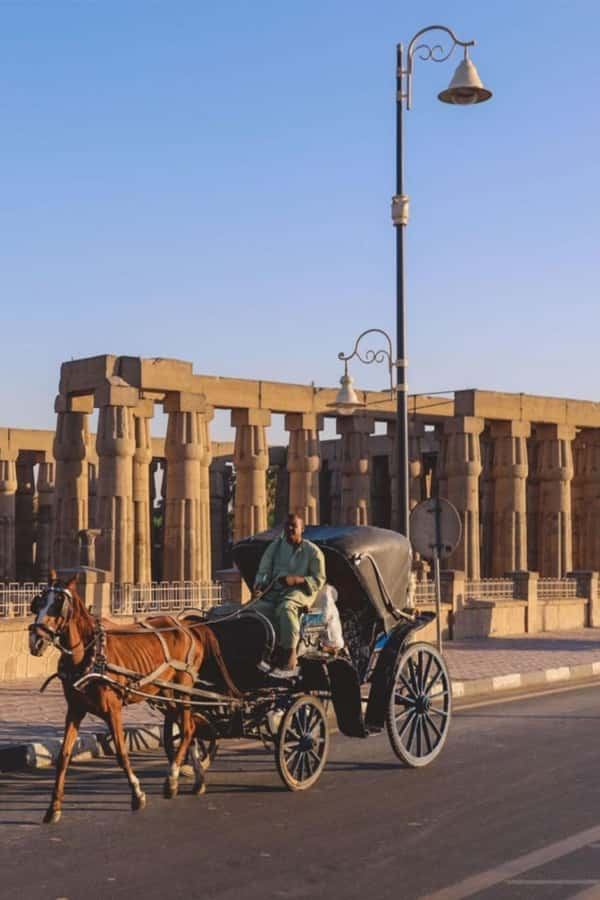
The Valley of the Kings is the emotional center of many Luxor trips, and it is also the most logistically tricky part. This is where you connect to the afterlife beliefs and the reality that tombs were built, used, and later rediscovered in modern times.
Your tour includes:
- The chance to visit three tombs.
- The specific tomb lineup is determined by the Egyptian Government and rotated to manage visitor flow, so you cannot confirm which tombs beforehand.
- King Tutankhamun’s tomb is included if you choose that option.
This is the honest planning reality you should respect. If you are booking because you want a specific tomb other than King Tut, you need flexibility. I recommend mentally shifting from “I will see exactly X” to “I will see incredible tomb art and learn how the system worked.”
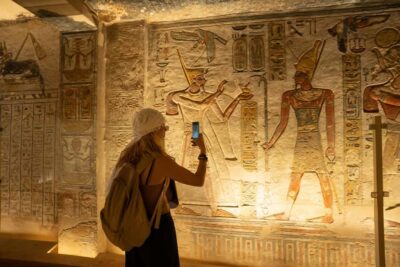
One review called the Valley of the Kings especially moving. I think that makes sense because these tombs are not about one building. They are about a whole world carved into rock, with the promise that life continues through the next realm.
Visiting Tombs: Expect a Quick Feel, and Ask How the Guide Handles It
The descriptions say you can have the opportunity to visit three tombs. One review also mentioned that the guide did not enter the tombs. That can happen depending on the format and rules in place.
What should you do with that? I suggest you go in with a mindset of self-guided observation inside the tombs, while using the guide for context at the entrances and between sites. If you want commentary inside, you might ask the guide where they can or cannot go. It is better to know upfront than to be frustrated when you want more interpretation but can only get it at the briefing spots.
Also, plan for heat and footing. The valley terrain can be uneven and the day can be far warmer than you expect, especially early starts that leave little time to acclimate.
El Deir El Bahary and Hatshepsut’s Terraces: When the Story Turns Visual
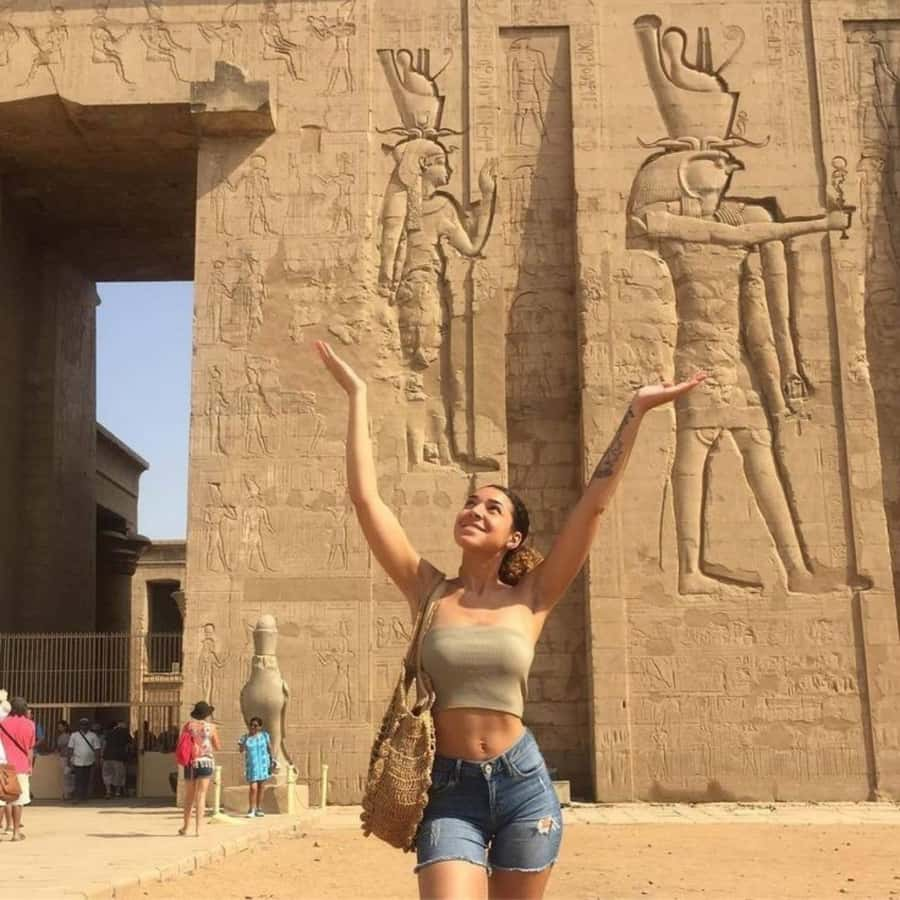
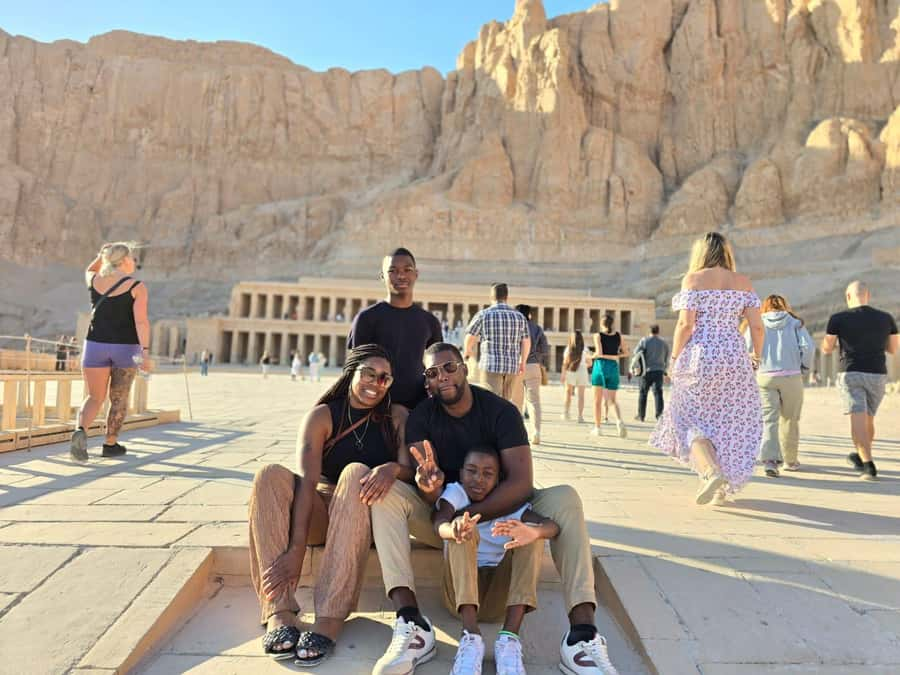
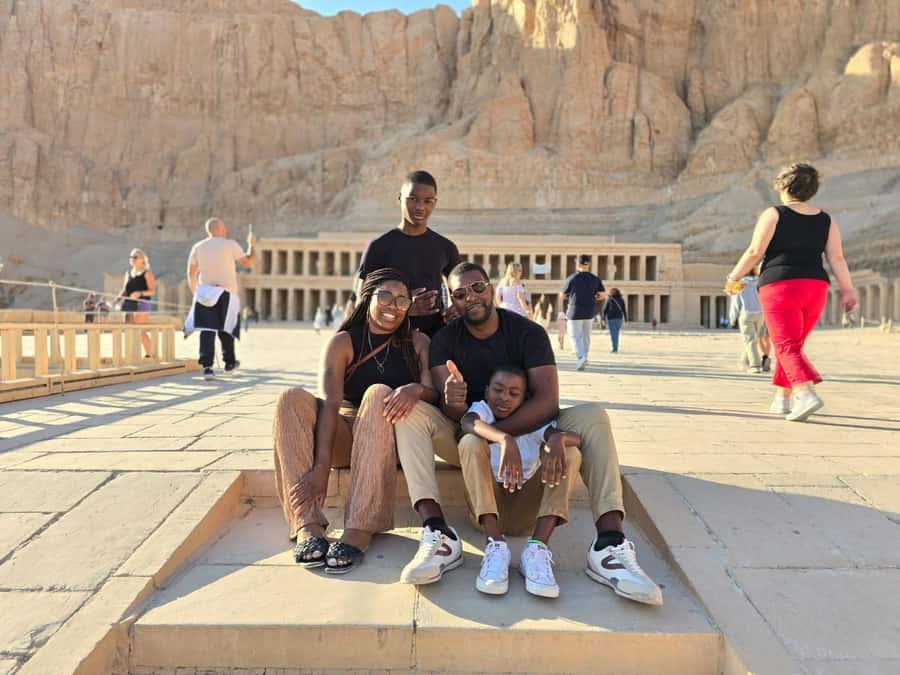
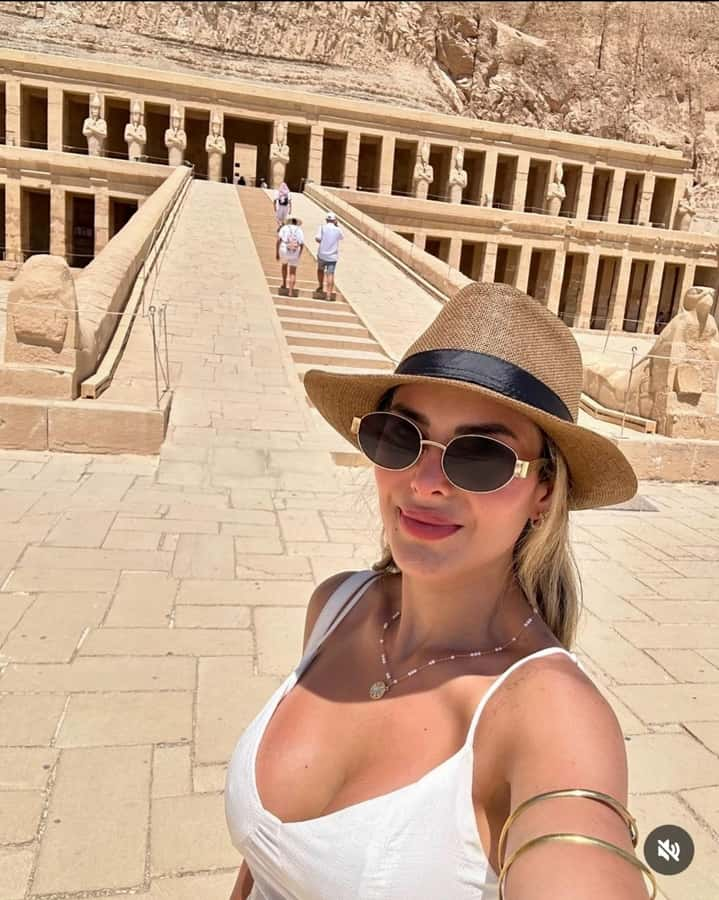
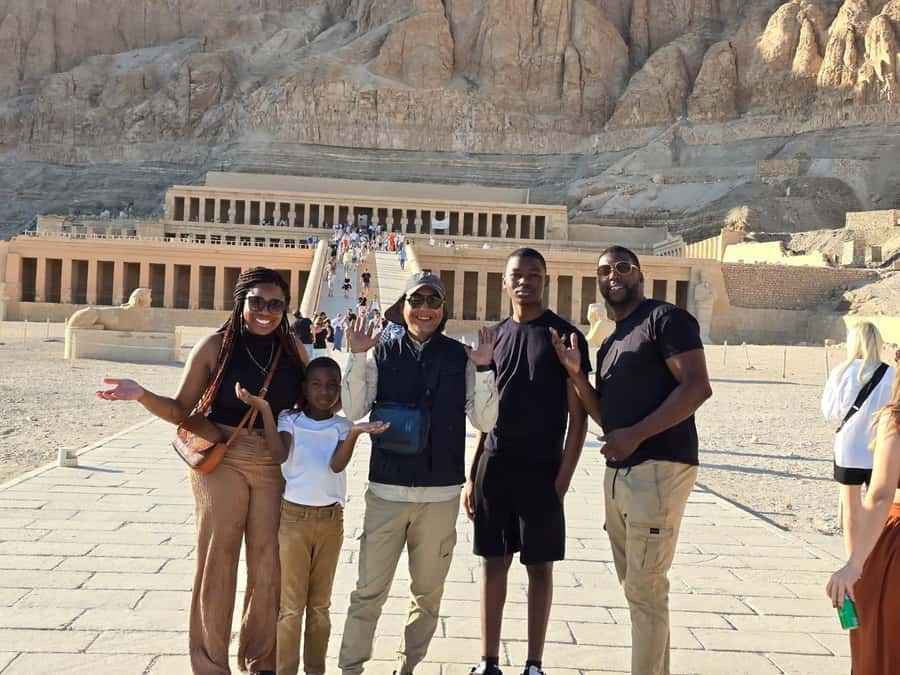
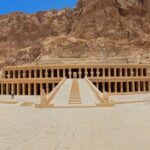
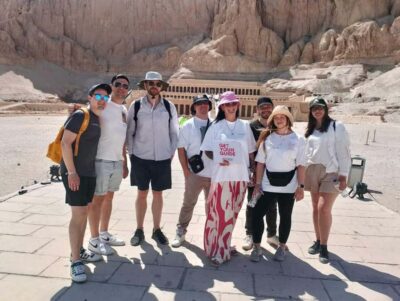
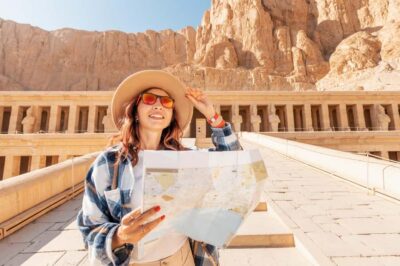
Next is Hatshepsut’s Temple at El Deir El Bahary. This is not just another temple stop. It is a big visual statement: a series of terraces rising out of the desert plain and blending into the limestone cliffs.
The tour description emphasizes that it was dedicated to Queen Hatshepsut, the only female Pharaoh, and that the temple merges with the rock face. I like this because it shows you how Egyptian design worked with the environment instead of fighting it. You can stand there and see why this place became iconic for travelers and for the people who first built it.
Since you already saw Hatshepsut-linked monuments at Karnak, this stop feels like the payoff. You go from obelisks and symbolism to a whole landscape-sized monument designed to honor her rule and legitimacy.
If you want photos, bring a bit of patience. Terraces and cliffs create lots of angles, but you will not get everything in a single minute. Aim for a few wide shots that show the temple structure, then a few closer frames for carvings and details.
Colossi of Memnon: A Short Stop That Still Feels Like Theater
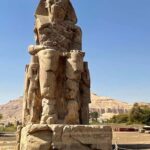
On the return journey, you stop at the Colossi of Memnon, two giant statues facing the Nile. These are famous because they are huge and striking, even when you only spend a short time there.
This is the kind of stop that works as a decompression point. After the tight sequence of Karnak and the Valley, Colossi of Memnon gives you open space and a horizon view. It also ties the story back to river life, because the Nile was the practical backbone of everything in ancient Egypt.
If you are short on time, do not waste it only looking at your feet. Turn toward the Nile-facing direction when you can. You will understand why those statues were meant to sit in a wider scene, not just be isolated objects.
Price and Value: What $150 Per Person Really Buys
The posted price is $150 per person, and the tour can include a lot for that price on paper: an Egyptologist guide, transfers from select areas, air-conditioned transport, select entry tickets like Karnak and El Deir El Bahary, and domestic economy or business class flights if you select that option. King Tut’s tomb entry is included only if that option is selected.
So the value question becomes: what is included for you personally?
- If your package includes the flight and core entry tickets, you are paying for a concentrated “Luxor day” rather than piecing everything together yourself.
- If you opt out of King Tut’s tomb ticket, the day still hits the big sites, but the emotional peak might be lower for people whose main goal is that specific tomb.
One negative review mentioned a much higher paid amount for a similar concept, so remember this is a variable market. Costs can swing based on flight class, timing, and what you select. My advice is simple: compare packages by what is guaranteed, not just by the headline price.
Also consider that you are buying time compression. This trip is built to fit a full sightseeing loop into a short window. That can be worth real money if you have limited days in Egypt.
Group Size and Guide Quality: Small Group Help, Big Day Management
This tour runs as a small group limited to 10 participants. That is a real advantage because temples are crowded and tomb entrances can bottleneck. A smaller group means you are less likely to get separated from the plan, and your guide can adjust the pace based on how people are handling the heat.
Guide quality is another variable you should take seriously. One review praised a guide as very enthusiastic, and another mentioned a guide who seemed to prioritize the program over weather and timing, leading to a stressful day. That tells me two things:
- Bring your patience muscle, because this is a structured schedule.
- Ask your guide early how they will handle heat breaks and tomb timing, and pay attention to whether the plan is flexible.
What to Pack and How to Survive the Heat
The itinerary includes a lot of outdoor walking, and one review specifically referenced walking in conditions that felt extremely hot. I would treat that as your cue to plan like it is going to be hotter than expected.
At minimum, I suggest:
- A refillable water bottle and backup small snacks
- Sun protection like a hat and sunscreen
- Comfortable walking shoes with grip
- Power bank for photos, because Egypt temples are photo magnets
One review noted the driver provided cold water, which is great. Another review said water was not provided and the traveler had to buy it. So don’t assume you will get it. If you have a small budget for bottled water, keep it handy, and if you do get offered water, take it and keep your bottle for later.
Who This Luxor Flight Day Trip Is Best For
This is a strong fit if you:
- Have limited time in Egypt and want the highlight temples in a single day
- Want an Egyptologist guide to connect Karnak, royal monuments, and burial culture
- Prefer a structured experience with airport transfers rather than DIY planning
It is less ideal if you:
- Hate early mornings and long airport sequences
- Want slow museum-style pacing and lots of downtime
- Get annoyed by schedule rotation, like tomb access being determined by authorities
Also, if you have mobility needs, the tour is listed as wheelchair accessible, which is worth noting when you are comparing options.
Should You Book This Luxor Day Trip From Cairo?
If your goal is a high-impact Luxor day, I think this is a good book. The combination of Karnak Temple, Valley of the Kings, and Hatshepsut’s terraced temple is exactly the kind of “Luxor essentials” trio that makes the flight worthwhile. The small group size helps keep the experience organized and manageable.
I would book it with two conditions in mind. First, be realistic about a fast day and possible heat stress. Second, treat tomb selection like a rotation, not a guarantee, unless you are specifically selecting King Tutankhamun’s tomb option.
If those fit your travel style, you will likely feel like you got your money’s worth in one packed, guided loop.
FAQ
How long is the Luxor day trip from Cairo?
The duration is listed as 8 hours.
What is included in the price?
Included items can include an Egyptologist guide, the tour itself, hotel pickup and drop-off from select areas, and domestic flights from Cairo to Luxor and back if you select that option. Entry tickets to Karnak Temple and Hatshepsut’s Temple are included if selected, and King Tutankhamun tomb entry is included if selected.
Are flights between Cairo and Luxor included?
Domestic economy or business class flights from/to Cairo-Luxor are included if the flight option is selected.
What tombs will I visit in the Valley of the Kings?
You have the opportunity to visit three tombs. The specific tombs are determined by the Egyptian Government and rotated throughout the year, so you cannot confirm which tombs in advance. King Tutankhamun’s tomb is included if you choose the option.
Is there a guide during the tour?
Yes. The tour includes a live tour guide, plus an audio guide in your desired language.
What languages are available for the live guide?
The live guide and audio guide are listed for many languages, including English and many others, depending on availability.
How does pickup and drop-off work?
Hotel pickup and drop-off are included from select areas. If pickup is from certain locations like Heliopolis (airport area) or 06th of October or similar areas, a supplement may apply.
Can I cancel if my plans change?
Free cancellation is offered up to 3 days in advance for a full refund.
Luxor Temples in a Day
Down Into the Kings Valley
More of Luxor from our review pile
- Hot Air Balloon Ride and Tour to Valley of Kings Luxor- Special Offer
★ 5.0 · 15 reviews - 4-Hours tour West Luxor bank :Hatshepsut Temple & Valley of the King with Lunch
★ 5.0 · 15 reviews - Tour From Luxor to Aswan Edfu, Kom Ombo, Philae and High Dam
★ 5.0 · 15 reviews - Private Half-day Dendera Temple
★ 5.0 · 15 reviews - Luxor Airport Departure: Convenient Private Hotel Transfer
★ 5.0 · 15 reviews - Dahabiya Nile Cruise From Luxor To Aswan 4 Nights 5 Days
★ 4.5 · 15 reviews
Valley of the Kings & King Tut Tombs, compared.
 ★ 4.7Luxor Valley of the Kings & Tutankhamun Tomb TripFrom $7613,208 reviews
 ★ 4.8Luxor Day Trip from Hurghada Small Group & Tutankhamun TombFrom $955,366 reviews
 ★ 4.5Small group Hurghada to Luxor, Valley of the Kings by VanFrom $352,470 reviews
 ★ 5.0Luxor Day Tour: Valley of Kings & Queens & Hatchepsut TemplesFrom $891,496 reviews
 ★ 4.4Valley of the Kings and Hatshepsut Temple Day TourFrom $501,404 reviews
 ★ 4.6Luxor Tour with Valley of Kings, Karnak & Tut TombFrom $1031,082 reviews
 ★ 4.6Small-Group Luxor Highlights & Tut Tomb Day TourFrom $105928 reviews
 ★ 4.7Luxor Highlights & King Tut Tomb Tour with LunchFrom $150902 reviews
The lists this one sits on