
REVIEW · LUXOR WEST BANK TEMPLES & TOMBS
Day Tour: East and West Banks of Luxor
Start with ancient tombs, then end at temple giants. This Luxor day tour packs east and west bank highlights into one well paced circuit, with a guide who helps you make sense of what you’re seeing. I particularly like the mix of royal tombs, big show temples, and the included lunch break that keeps the day from feeling nonstop.
The best part for me is the practical setup: pickup from your hotel area, a small max group size, and bottled water in the car. The other big win is that you’re not just watching ruins from a distance, you’re getting guided explanations at each stop, then you have time to look around yourself. One possible drawback, given how much gets covered, is that it can feel exhausting by the end if you expect a relaxed pace.
In This Review
- Key Things I’d Prioritize on This Luxor Tour
- How the East and West Banks Route Runs From Your Hotel
- Valley of the Kings Tombs: Choosing What to See and How Long It Takes
- Deir el Bahari and the Temple of Queen Hatshepsut
- Colossi of Memnon and Medinet Habu: The Stops That Add Context
- Lunch on the West Bank: Why a Real Break Changes the Day
- Karnak Temple: Avenue of the Sphinxes, Hypostyle Hall, and Sacred Lake
- Luxor Temple: From Amunhotep III to Ramses II
- Price and Value: What $29 Covers, Plus Entrance Fees You Must Budget
- Guide Quality, Pace, and the Reality of Tipping in Luxor
- What Kind of Traveler Should Choose This Tour?
- Should You Book This Luxor East and West Banks Tour?
- FAQ
- What time does pickup start for this Luxor tour?
- Is lunch included on this East and West Banks tour?
- Are entrance fees included in the tour price?
- What entrance fees should I budget for each site?
- Does the tour include hotel pickup and drop-off?
- Is there free cancellation?
Key Things I’d Prioritize on This Luxor Tour
- Valley of the Kings tomb visits plus clear guidance so you know what you’re looking at (and where to focus).
- Deir el Bahari and Hatshepsut for those dramatic terrace views and the story behind the queen-pharaoh.
- Karnak Temple’s scale at the Avenue of the Sphinxes, Hypostyle Hall, and Sacred Lake stops.
- Hotel pickup and bottled water so you start faster and stay comfortable.
- Lunch included, which matters on days when the East Bank temples take real walking.
- Small group cap (up to 15) for less chaos than the big bus tours.
West bank tombs, one by one
- Luxor Day Tour: Valley of Kings & Queens & Hatchepsut Temples★ 5.0 · 1,496 reviews
- Full Day Tour to East and West Banks of Luxor★ 5.0 · 1,449 reviews
- Luxor: Valley of the Kings and Hatshepsut Temple Day Tour★ 4.4 · 1,404 reviews
- Luxor: Valley of Kings, Hatchepsut Temple ,Karnak & Luxor-DayTour★ 5.0 · 735 reviews
How the East and West Banks Route Runs From Your Hotel
This tour is built around a simple idea: hit the West Bank early, then cross to the East Bank while you still have energy left. You start with pickup from central Luxor hotels, with an 8:00am departure being the target, so you’re not starting your day in the hottest light.
You travel in a private vehicle with your guide. That matters here because Luxor sites spread out, and waiting around would just eat into your viewing time. You’ll also finish with drop-off back at your hotel area.
If you like knowing the day’s rhythm ahead of time, you’ll appreciate that it has a clear sequence: Valley of the Kings, Hatshepsut area, then after lunch, Karnak and Luxor Temple. It’s also a good first Luxor tour if you only have a short visit and want the highlights without planning everything yourself.
Valley of the Kings Tombs: Choosing What to See and How Long It Takes
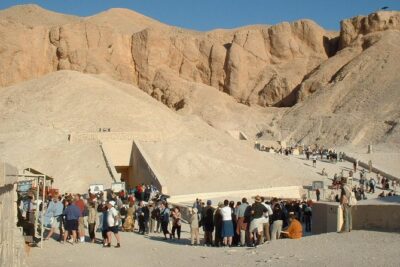
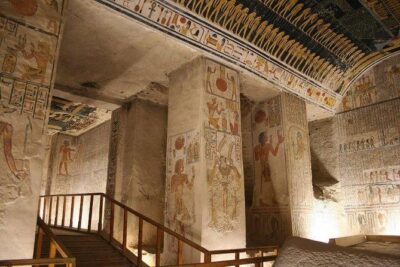
Your day starts on the West Bank with the Valley of the Kings (Necropolis of Thebes), where the mountain valleys contain more than 63 royal tombs tied to ancient pharaohs. You’ll spend focused time here, and you can even step inside select tombs rather than only looking from outside.
The tomb names you may see on this tour include famous royal burials such as Tutmosis I, Tutmosis III, Tut-Ankh-Amon, Ramses VI, Merneptah, and Amenhotep II. That list is a strong hint at what kind of experience you’ll get: not just a quick stop, but real attention to the pharaohs tied to major historical periods.
Practical tip: tomb interiors can feel dark and tight, and they’re not all equally impressive to every visitor. If you’re the type who wants to understand details, go slow in each chamber and listen to the guide’s key points. If you’re more about atmosphere, still pause, because the murals and carvings are what you came for.
One caution: there’s simply a lot packed into the West Bank portion. Even though the overall tour duration is listed as around 3 hours, the experience can still feel like a longer day once you add walking, tomb selection, and time between stops. Plan for that, especially if you’re easily tired.
Deir el Bahari and the Temple of Queen Hatshepsut
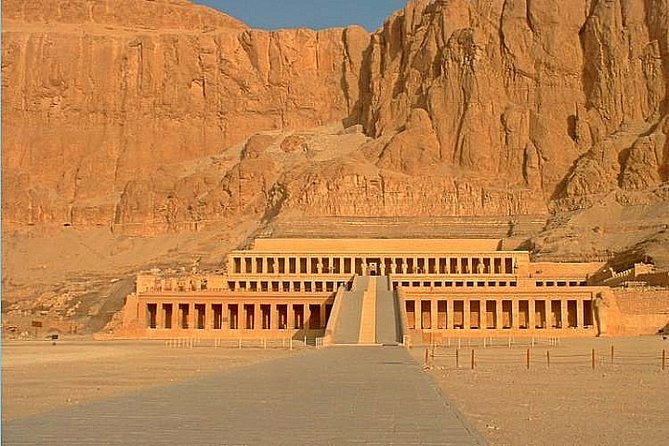
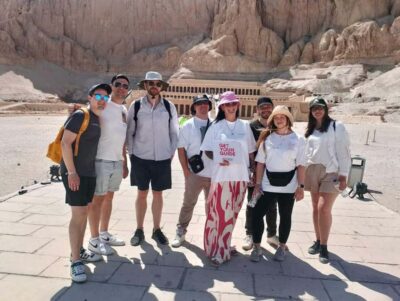
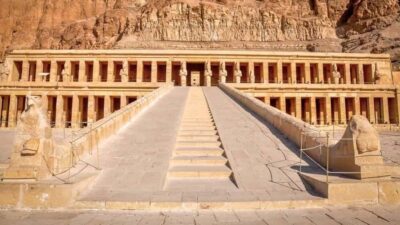
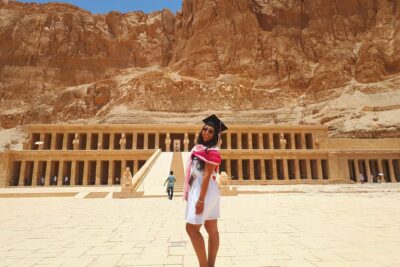
After the tomb valley, you head to Deir el Bahari, home to the Temple of Queen Hatshepsut. This is one of the places where Luxor feels less like a “site list” and more like a visual story. The temple’s setting on terraces gives you instant scale, and your guide helps connect the architectural design with Hatshepsut’s unique position in Egypt’s history.
This stop is also where you’ll likely notice how the guide approach affects the day. Some guides focus on the story behind Hatshepsut and how people used the temple space. Others keep it more practical, showing you where the important reliefs are and what each section was meant to communicate.
If you want your own photo time, this is usually a good spot for it because the terraces and angles give you many viewpoints. Just don’t spend all your time shooting, the reliefs are the payoff.
Colossi of Memnon and Medinet Habu: The Stops That Add Context
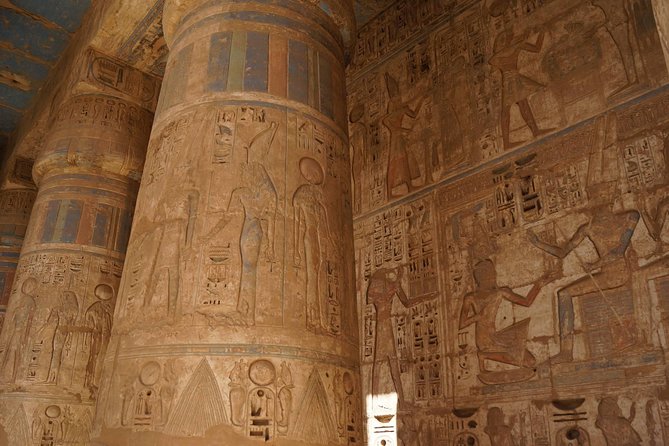
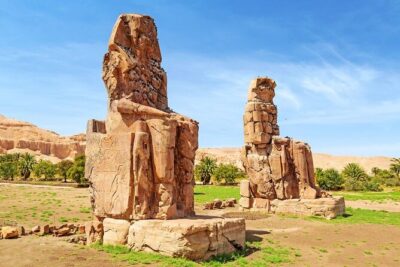
In between the big “must-see” sites, you’ll also visit the Colossi of Memnon. These massive statues are the kind of thing that looks impressive even before you understand why. With a guide, you’ll connect them to their original temple setting and the older building that once dominated this area.
Then comes Medinet Habu (Temple of Ramses III). This stop tends to work well for people who want a little variety. Karnak can feel like pure scale, Valley of the Kings is all about burial culture, and Medinet Habu gives you another kind of temple experience.
Here’s what to watch for: don’t treat these as quick photo breaks. Even with limited time, a short guide explanation can transform what you see from random stone to a specific snapshot of ancient royal power.
Lunch on the West Bank: Why a Real Break Changes the Day
Lunch is included, at a local restaurant, with bottled water provided by the tour. This is one of those unglamorous details that matters. When you’re walking through tombs and then temples, you need a reset that isn’t just standing in shade.
The tour route places lunch right before you cross to the East Bank. That timing is smart because Karnak and Luxor Temple require steadier walking and longer viewing. If you skip a break, the second half can feel like “survive and take photos.” With lunch in the middle, you’re more likely to actually understand what you’re seeing.
What to expect from the meal itself is described simply as a typical Egyptian lunch. You won’t need to second-guess it, just plan to eat at a comfortable pace so you can re-focus after the meal.
Karnak Temple: Avenue of the Sphinxes, Hypostyle Hall, and Sacred Lake
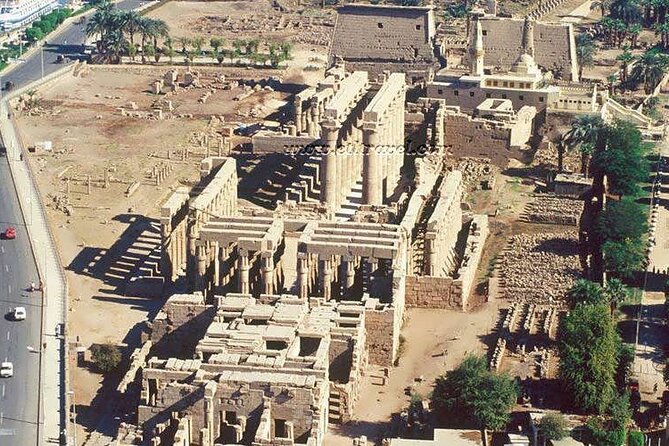
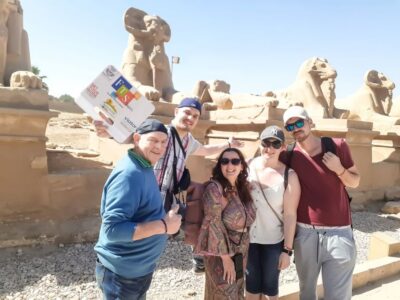
Once you cross to the East Bank, you go to Karnak Temple. This is one of the biggest ancient temple complexes in the world, and your guide’s job here is basically to help you not drown in size. You’ll be shown key landmarks that make the complex feel manageable.
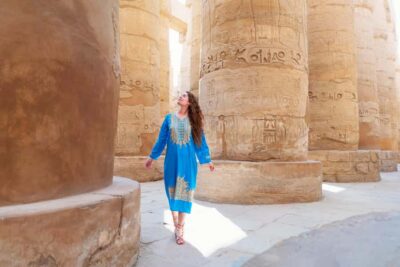
The stops include the Avenue of the Sphinxes, the Great Hypostyle Hall, and the Sacred Lake. The Avenue is your orientation moment, it helps you understand the temple’s ceremonial movement. Then the Hypostyle Hall is where the scale lands in your chest. The Sacred Lake is a quieter counterpoint that gives you a different angle on how temples worked.
Practical tip: Karnak can be your favorite even if you weren’t planning to be wowed. One of the common reactions here is that Karnak is the strongest single scene of the day, especially if you get enough time and you’re not rushed through the main areas.
Also, if your guide is the type who allows time to explore on your own after explaining the key points, Karnak is where that freedom pays off. You can return to details that caught your eye instead of only moving forward.
Luxor Temple: From Amunhotep III to Ramses II
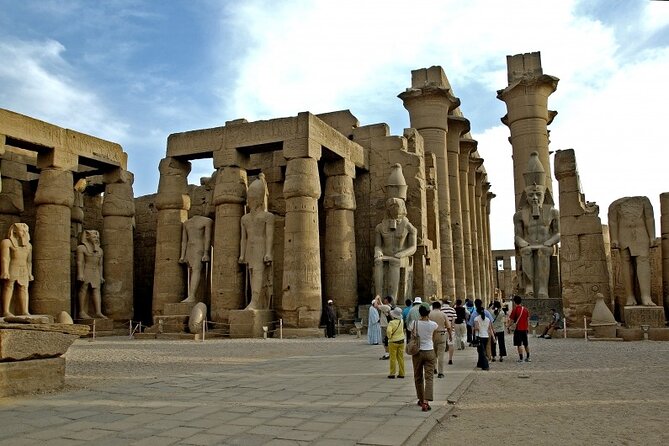
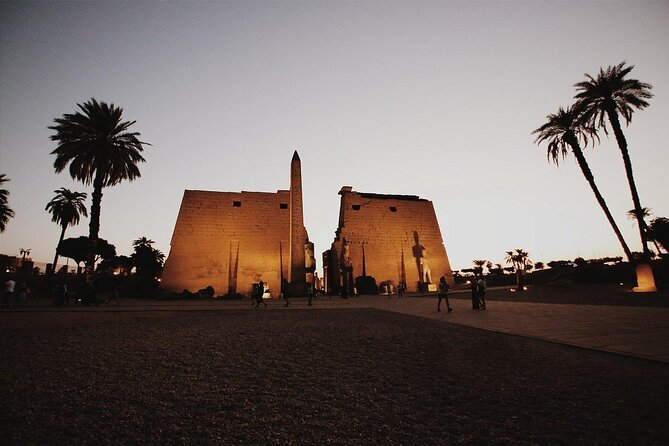
The final major stop is Temple of Luxor. It’s tied to Amunhotep III in the 18th Dynasty and completed under Ramses II in the 19th Dynasty. That time jump is interesting because it means you’re not seeing one single building era, you’re seeing layers of royal priorities.
Luxor Temple tends to feel a little different from Karnak. Karnak is huge and sprawling, while Luxor Temple gives you a more focused, dramatic ending. It’s a good way to close the day because it pulls your attention back to a temple experience you can absorb without sprinting through 20 different sections.
If you’re the type who likes to compare buildings, use this final stop to spot the style differences between what came before and what came later. Your guide can help connect those differences to who funded the work and what they wanted to project.
Price and Value: What $29 Covers, Plus Entrance Fees You Must Budget
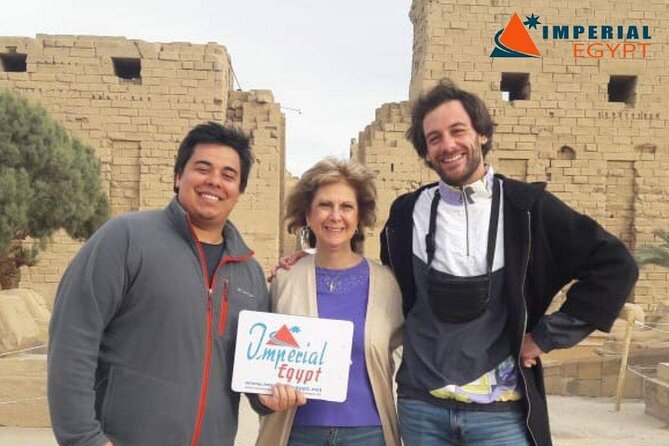
The headline price is $29 per person, and that sounds like a bargain if you only look at the figure. The value is strongest when you factor in what’s included: hotel pickup and drop-off (selected hotels), bottled water, and lunch, plus guided visits across both banks.
What isn’t included is where you’ll want to budget carefully. Entrance fees are listed separately for each main site:
- Valley of the Kings: 240 LE
- Hatshepsut Temple at Deir el Bahari: 140 LE
- Karnak Temple: 200 LE
- Luxor Temple: 160 LE
So the real value equation is: low tour fee plus site tickets. If you’re comparing to “all-in” deals, this one can still be good value, especially if you want lunch and pickup. But you should plan to have cash for the sites, and be ready for the day to feel longer once you add the ticket lines and walk time.
Also note a small detail that affects your day: drinks are not included. Water is covered, but you’ll still want to budget for other beverages if you drink more than average.
Guide Quality, Pace, and the Reality of Tipping in Luxor
This tour lives or dies by your guide. The strongest praise centers on guides who are friendly, patient, and able to connect what you see with why it mattered. Names that come up include Hany for booking help, Mido for fun and local recommendations, Ashraf for top-tier explanations, Amr for deep knowledge and helpful photography, Mohammed for detail-heavy guiding, Wael for an excellent national-level guide vibe, and Hady for high-energy, clear facts.
Even with strong guides, the day can still feel full. People who pack multiple tours in a single trip often say this one is the most tiring. That’s not a “bad” thing, it’s just the tradeoff for trying to cover both banks in one go. If you want breathing room, treat this as a major anchor activity, not a side quest.
Tipping is also part of the practical reality here. One experience flagged that the guide may communicate expectations around tips, and another described tip-related tension at the end of the day. My advice: if you take this tour, plan to tip fairly for the service you receive. Keep small cash ready, and try not to make it a last-minute negotiation.
Lastly, shop stops can be an issue with some tours. This experience tends to be praised for not pushing you into forced shopping. Still, Luxor is full of sales pressure, so if you want souvenirs, set a budget and negotiate calmly.
What Kind of Traveler Should Choose This Tour?
This tour fits best if you:
- have limited time in Luxor and want the big East and West Bank names
- prefer a guide who helps you understand tombs and temple symbolism
- want lunch included instead of searching for food mid-sightseeing
- like small group days rather than huge bus crowds, since the cap is up to 15
It may be less ideal if you:
- want a slow, unhurried pace with extra time inside many Valley of the Kings tombs
- are very sensitive to walking fatigue, because Karnak plus multiple West Bank stops can wear you out
- already know you want a deep focus on either the West Bank tombs or just the Karnak complex, since splitting could give you more time per area
If you’re the type who likes to compare, do this as your first Luxor day. It sets a baseline so you can judge what you want to return to on your own later.
Should You Book This Luxor East and West Banks Tour?
If you want a one-day plan that hits the headline monuments and keeps you moving without the headache of organizing transport and sites yourself, I’d say yes, book it. The included pickup, lunch, and bottled water make it a smoother day than doing it piece by piece, and the guide-focused approach is what turns these locations from stone piles into a story you can follow.
Just go in with two expectations: budget for entrance fees, and plan for a full-feeling day. If you want the most relaxed version of Luxor, you might instead split the banks across separate days. If you want the best one-day highlights package, this is a strong choice.
FAQ
What time does pickup start for this Luxor tour?
Pickup is scheduled from central Luxor hotels for an 8:00am departure, and the tour ends with drop-off back at your hotel.
Is lunch included on this East and West Banks tour?
Yes. Lunch is included, served at a local restaurant during the middle of the day before you cross to the East Bank.
Are entrance fees included in the tour price?
No. Entrance fees are not included and are listed separately for each site, including Valley of the Kings, Hatshepsut Temple at Deir el Bahari, Karnak Temple, and Luxor Temple.
What entrance fees should I budget for each site?
The listed entrance fees are: Valley of the Kings 240 LE, Hatsheput Temple 140 LE, Karnak Temple 200 LE, and Luxor Temple 160 LE.
Does the tour include hotel pickup and drop-off?
Yes, hotel pickup and drop-off are included for selected hotels.
Is there free cancellation?
Yes. You can cancel for a full refund if you cancel at least 24 hours in advance of the experience start time. If you cancel within 24 hours, the amount paid is not refunded.
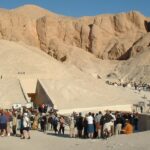
The West Bank, Tomb by Tomb
More of Luxor from our review pile
- Private Tour Nile Felucca Ride at Sunset in Luxor
★ 5.0 · 26 reviews - Private Full day East and West Bank, Luxor
★ 5.0 · 26 reviews - Luxor Day Tour: Kings Valley & Karnak & Luxor & Hatshepsut Temple
★ 5.0 · 26 reviews - Full-Day East and West Luxor Private Tour
★ 4.5 · 26 reviews - Day Trip to Edfu & Kom Ombo temples from Luxor and drop off in Aswan or Luxor
★ 5.0 · 26 reviews - 5 Days 4 Nights Nile Cruise Tour
★ 5.0 · 27 reviews
Luxor West Bank Temples & Tombs, compared.
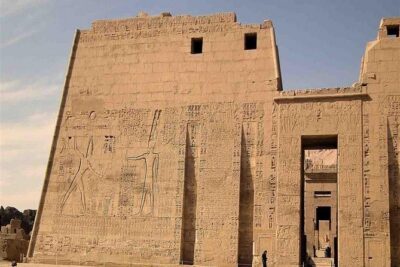 ★ 5.0Luxor Day Tour: Valley of Kings & Queens & Hatchepsut TemplesFrom $891,496 reviews
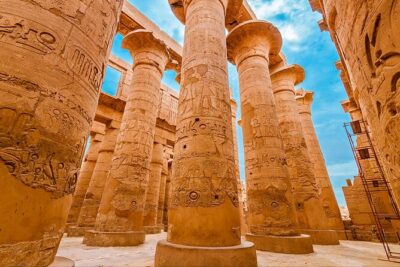 ★ 5.0Full Day Tour to East and West Banks of LuxorFrom $151,449 reviews
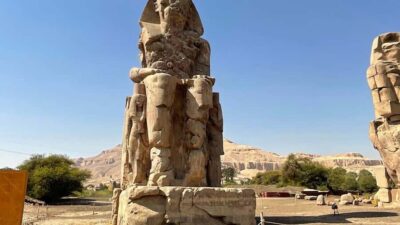 ★ 4.4Valley of the Kings and Hatshepsut Temple Day TourFrom $501,404 reviews
 ★ 5.0Valley of Kings, Hatchepsut Temple ,Karnak & Luxor-DayTourFrom $95735 reviews
 ★ 5.0Full Day Tour of Luxor West Bank Temples and Tombs (Private)From $20722 reviews
 ★ 5.0Private Full-Day Luxor Highlights East and West BanksFrom $65663 reviews
 ★ 4.5Guided Tour to East or West Banks with LunchFrom $64604 reviews
 ★ 5.0Luxor Private Full-Day Tour: Discover the East and West Banks of the NileFrom $90545 reviews
The lists this one sits on