
REVIEW · NILE CRUISES BETWEEN LUXOR AND ASWAN
5 Days 4 Nights from Luxor to Aswan on Gentle Breeze Dahabyia
Karnak and Luxor temples on a cruise ship is a rare combo. On this Luxor to Aswan trip aboard the Gentle Breeze Dahabyia, you get four nights on a 5-star Dahabiya plus guided stops at the region’s big hitters, with admissions and meals included. I love the hands-on feel of the itinerary, especially when your guide turns names like Amun and Mut into real places you can stand inside, and I also like the pace of fewer decisions because most costs are already handled. One drawback to consider: one guest reported serious cleanliness and odor problems on board, so it’s worth asking the operator what to expect for cabin condition and towel changes before you commit.
You’ll start with major temple sights right away, then roll through the West Bank, Edfu, Kom Ombo, and Aswan in a way that feels efficient without feeling rushed. A big plus is the private structure, so you’re not stuck competing for guide attention with a floating crowd. Still, because the experience depends on your ship and your specific guide, I’d treat this as a “great trip if the ship is up to standard” situation, and plan to ask questions if that matters to you.
In This Review
- Quick Key Points Before You Go
- Luxor To Aswan By Dahabiya, What You Really Get
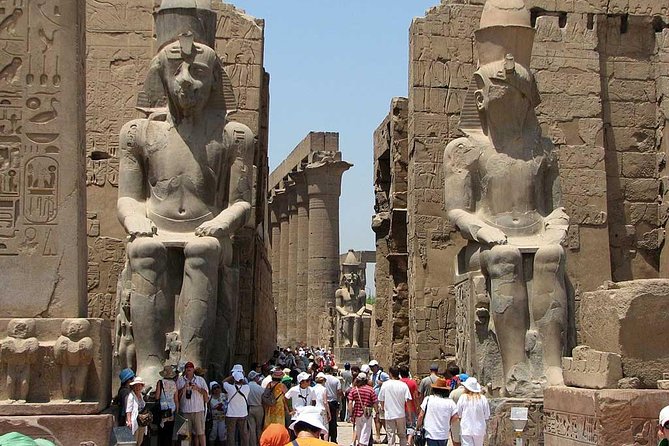
- Karnak And Luxor Temple On Day One: Amun, Mut, And Ramesses In Stone
- West Bank Highlights, Valley Of The Kings To Deir El Bahari
- Edfu And Kom Ombo, Horus And Sobek In Two Temples
- High Dam, Unfinished Obelisk, And Philae: Aswan Beyond The Postcard
- Aswan Market Morning And Your Optional Abu Simbel Or Nubian Village
- Ship, Cabin, Food, And The Reality Check On Cleanliness
- Price And Logistics: Why $1,300 Can Be A Good Deal Or A Bad Fit
- Who This Cruise Suits Best, And Who Should Reconsider
- Should You Book Gentle Breeze Dahabiya From Luxor To Aswan?
- FAQ
- What’s included in the tour price?
- Do you get a private guide for the excursions?
- Are pickup and transfers included?
- What are the main stops along the route?
- Are attraction admissions included?
- What optional tours are available on the last day in Aswan?
- Is tipping included?
- What’s the cancellation policy?
Quick Key Points Before You Go
- Temple admissions and meal costs are built in, so you avoid surprise add-ons during the days of sightseeing.
- Four nights on board means you’re not constantly moving hotels, and you wake up with Nile scenery for multiple days.
- The guided route is classic but smart, tying Karnak and Luxor into the Amun story, then Horus and Seth themes at Edfu.
- Aswan adds both engineering and ancient worship, with the High Dam plus Philae Temple, not just markets and views.
- If you’re assigned guide Rushdi, plan to lean in. One guest praised his promptness and clear explanations about the High Dam, Philae, and Nubian Village.
- Ship condition can make or break the mood, so confirm expectations around cleanliness and towel replacement.
More boats sailing the same stretch
- From Luxor: 3-Night Nile Cruise to Aswan and Hot Air Balloon★ 3.7 · 297 reviews
- 5 Days Private Guided Nile River Cruise Tour from Luxor to Aswan★ 5.0 · 229 reviews
- Historia Hotel Nile Cruise, Mon. from Luxor 4 nts inc. Excursions★ 5.0 · 185 reviews
- From Luxor: 5-Day Nile Cruise to Aswan with Balloon Ride★ 4.2 · 168 reviews
Luxor To Aswan By Dahabiya, What You Really Get
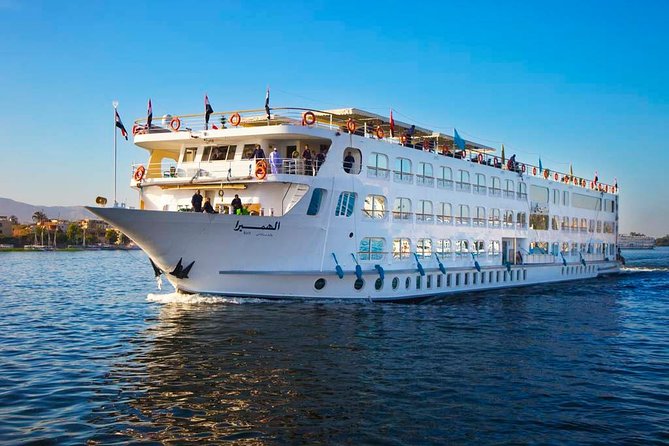
This is a 5-day, 4-night Nile cruise style trip, run from Luxor to Aswan, with daily excursions that hit the core ancient sites along the river. The Dahabiya format matters. You’re not just cruising past Egypt, you’re staying on the water while guides take you into temples and tombs that most people only ever see in quick day trips.
The tour includes attraction admissions, meals on board, and a private English-speaking Egyptologist guide. That sounds like a brochure promise, but the practical effect is simple: you spend less time budgeting and more time walking the sites. You also get private transfers by air-conditioned vehicle, which is a relief when you’re moving between Luxor, the temples, and your boat.
Price is $1,300 per person, which is not cheap. The value comes from the way costs stack up on this route. Temple tickets alone can add up fast, and so can meals when you’re doing full days of guided visits. If the ship is genuinely well kept, this can feel like a clean, organized way to see a lot of Egypt without turning every day into a logistics puzzle.
Karnak And Luxor Temple On Day One: Amun, Mut, And Ramesses In Stone
Day one starts with Karnak Temples, dedicated to Amun and his wife Mut. This is one of those places where names start to feel like you’re walking through a living map, not just reading plaques. You’ll spend about 3 hours here, long enough to get beyond the “wow” and start noticing how the temple complex builds the story.
A neat detail to look for: the site preserves an Egyptian version of a peace treaty on a wall in the Temple of Amun at Karnak. Whether you’re a history nerd or just someone who likes meaningful context, that kind of specific artifact detail turns a big temple into a focused experience.
Next up is Luxor Temple, about 2 hours. You’ll see it tied to Amunhotep III and later completed by Ramesses II. If you pay attention at the front, the Obelisk of Ramesses II stands in front of the first pylon, and it helps anchor the place in the rhythm of the dynasties that built and expanded it.
After Luxor Temple, you transfer to check into your Nile Cruise. That transition matters because you’re not trying to squeeze travel time between two major temple days. You can recover on board after the walking, then wake up ready for the West Bank tomorrow.
West Bank Highlights, Valley Of The Kings To Deir El Bahari
Day two is where the trip gets more cinematic. You head to the Valley of the Kings after breakfast, with about 3 hours for tomb exploration. This is where famous names like King Tutankhamun appear, along with Ramesses V1, King Tutmosis, and Amonhotep II. Even if you only see a few chambers, the valley layout helps you understand how kings were remembered in a place built for secrecy.
What I like about this stop is that you get the tomb experience in the right order: you start early, then you move on rather than trying to cram Deir el Bahari later when everyone is exhausted. The guide context also helps you see beyond the headlines. These tombs are less about treasure stories and more about how power wanted to be seen after death.
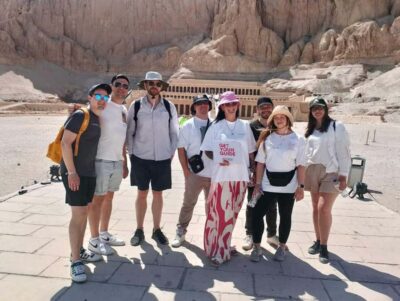
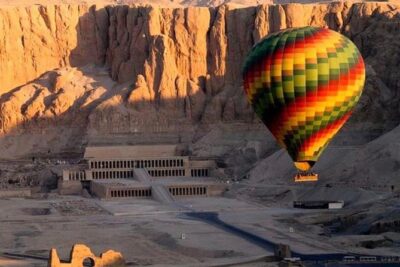
Then you visit Temple of Hatshepsut at Deir el Bahari, also called El Deir El Bahari, about 2 hours. This is a strong contrast to the Valley of the Kings. Where the valley feels hidden and sealed, Deir el Bahari feels monumental and public. You’ll hear that Hatshepsut was the first pharonic woman to rule Egypt and that she started trading routes. That matters because it reframes the temple. It’s not just a pretty terrace, it’s a statement of legitimacy and reach.
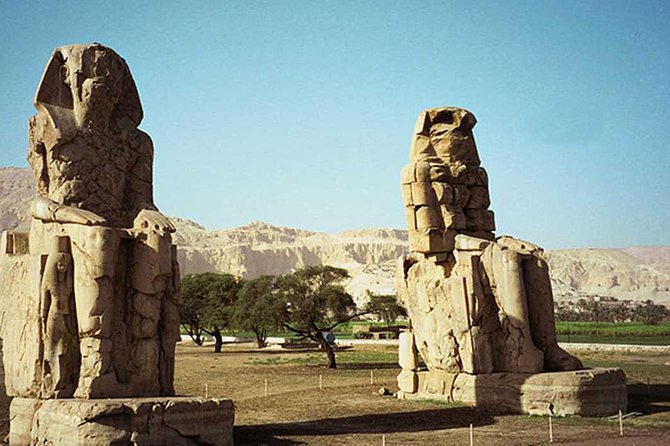
Finally, you stop at the Colossi of Memnon. The time here is short, around 20 minutes, but it’s a memorable one. You’ll see the twin statues of Amenhotep III facing the Nile, and you’ll hear the earthquake story about the northern colossus and the legend of the statue singing around sunrise. Short stop or not, this is one of the classic river moments that sticks in your memory because you can look across the water afterward.
Edfu And Kom Ombo, Horus And Sobek In Two Temples
On day three, you keep riding the river story forward with two temples that make sense together.
First is Temple of Horus in Edfu, about 2 hours. This temple centers on scenes and inscriptions related to the sacred drama about the conflict between Horus and Seth. That’s a big deal because it gives you a theme to follow while you’re walking. Instead of just staring at walls, you can try to trace the narrative the temple is staging in stone.
Then you sail to Kom Ombo and visit the Temple of Kom Ombo, about 2 hours. This temple is shared by two gods, Sobek and Horus. Sobek, called the crocodile, connects to the Nile and fertility, while Horus relates to sky and kingship. Having both gods in one place helps you understand how Egypt’s religious world wasn’t one straight line. It was a system where different powers and symbols could overlap in the same sacred space.
If you like “meaning first, then scenery,” day three is rewarding. If you’re mainly chasing photos, you’ll still get good moments, but the biggest payoff comes when you use the guide to connect what you see to the story the temple is telling.
High Dam, Unfinished Obelisk, And Philae: Aswan Beyond The Postcard
Day four is an Aswan day that goes beyond the typical, purely scenic approach.
You start at the Aswan High Dam, about 1 hour. This is practical history you can feel. The dam controls Egypt’s water supply, and you’ll hear that it stores enough Nile water for about 3 years. Even if you don’t usually care about engineering, it helps connect why the river is so important to Egypt, not just culturally but literally.
Next is the Unfinished Obelisk, about 2 hours. You’ll learn the obelisk weighs 1,168 tons, and the finished one would have been 1,200 tons. The quarry detail matters too, especially the note that many casing stones for the pyramids at Giza came from this quarry in Aswan. That kind of chain-from-material-to-monument connection makes Egypt’s scale click in a more concrete way.
Then you finish at Philae Temple, about 2 hours. Philae is dedicated to the goddess Isis, representing health, marriage, and wisdom. This stop works well after the dam and quarry because it flips from the modern management of resources back to how ancient Egyptians managed meaning. It also gives you another temple location to understand how Isis worship shaped the region’s religious identity.
When you’re done, you transfer back to the cruise. This pacing helps because day five is lighter and more optional.
Aswan Market Morning And Your Optional Abu Simbel Or Nubian Village
On day five, after breakfast, you disembark your Nile cruise. Then the schedule opens up with an Aswan Market stop plus optional time for either Abu Simbel or a Nubian Village, or simply staying in Aswan to enjoy the sights at your own pace.
The market part is good for real-world Egypt shopping energy. You can pick up small gifts, snacks, or just get a feel for how locals move through the day. If you’re trying to avoid turning your whole trip into temples only, this is your chance to breathe and let the city take over.
The optional tours are where you decide how far you want to push. Abu Simbel can be a major extra investment of time and effort, while a Nubian Village tends to offer a different kind of cultural context compared with the ancient temples. Your best choice depends on whether you want one more famous monument or more living culture.
Ship, Cabin, Food, And The Reality Check On Cleanliness
This is where you should pay attention, because the ship experience can be the difference between a smooth trip and an uncomfortable one.
On the positive side, there’s a strong theme of helpful staff and good onboard meals, with one guest praising that meals included new dishes each day. Another positive note: your room could be on the ground floor, and the upper floor may be used for larger tour groups. That’s practical because if you care about quiet and privacy, you’ll want to ask how cabins are assigned.
There’s also a specific compliment about the cruise atmosphere when someone noted the boat was nice and the overall experience was excellent. Still, one sharp warning also appears in the feedback: a guest described the ship as old, filthy, and smelling of diesel fumes, with standing water in the shower and dirty towels and sheets. They also said food was disgusting and that they tried to contact the local tour company.
So what do you do with that? I’d treat it as a prompt to ask questions before travel. Ask what cleanliness standards look like on this particular departure, and ask about towel replacement during the stay. If that sounds awkward, it’s not. On cruises, small upkeep details change your comfort fast.
Also remember that you can have two truths at once: many parts of the tour can be well run, while the ship condition on a specific trip can still be a problem. Your goal is to reduce the odds of the bad version landing on your week.
Price And Logistics: Why $1,300 Can Be A Good Deal Or A Bad Fit
At $1,300 per person, you’re paying for a bundle: private Egyptologist guide time, entrance fees, meals on board, and private air-conditioned transfers. The itinerary is also packed with high-cost attractions, so the “admissions included” part matters.
The value angle looks strongest if:
- You plan to eat on board rather than shop for meals every day.
- You want a guide to handle the temple context so you’re not reading alone.
- You prefer being moved between sites in private vehicles.
Where you can lose value is if you’re the kind of traveler who hates uncertainty about ship condition. If the boat turns out to be poorly maintained, that’s not a minor inconvenience. It can sour the entire mood of a cruise.
The tour also uses a mobile ticket and offers pickup, which reduces stress at the start. It’s private, meaning only your group participates, which typically means more guide attention and less waiting for larger crowds. That’s not a trivial perk on a schedule this full.
Who This Cruise Suits Best, And Who Should Reconsider
This trip is a good match if you want a guided, structured route through Luxor, Edfu, Kom Ombo, and Aswan without juggling separate bookings. You also get the advantage of “temple days” with admissions handled, plus meals and time on the water.
It’s especially suitable for:
- First-time Egypt visitors who want the classic temples and tombs in one sequence.
- People who like explanations, not just sightseeing.
- Travelers who want a private guide rather than a group scramble.
You might rethink it if:
- Cleanliness standards are a top priority for you.
- You dislike cruise-style living and prefer to stay in hotels where you control your environment.
- You’re very sensitive to smells or moisture issues, based on the reported concerns about ship condition.
If you’re flexible and you confirm ship expectations ahead of time, this cruise can be a strong way to do a lot of Egypt efficiently.
Should You Book Gentle Breeze Dahabiya From Luxor To Aswan?
I’d book this if you want a classic Luxor to Aswan route with included admissions, full onboard meals, and a private Egyptologist guide who helps you understand what you’re seeing. I also like that the day plan covers both ancient sacred sites and real-world Aswan geography and infrastructure, including the High Dam and the Unfinished Obelisk.
Before you pay, do one smart thing: ask the operator specific questions about cabin condition, towel changes, and what you should expect regarding cleanliness during your departure. That’s not paranoia, it’s practical insurance.
If the answers satisfy you, this is a great value way to see Karnak and Luxor, then fan out through the West Bank and finish with Aswan’s mix of engineering and temple worship.
FAQ
What’s included in the tour price?
Entrance fees to the sites, all meals served on board (breakfast, lunch, and dinner for four days each), accommodation on the 5-star Dahabiya for four nights, and a private English-speaking Egyptologist guide are included.
Do you get a private guide for the excursions?
Yes. The tour includes a private English-speaking Egyptologist guide, and it is described as a private tour/activity for only your group.
Are pickup and transfers included?
Pickup is offered, and all transfers are included by a private air-conditioned vehicle.
What are the main stops along the route?
You visit Karnak Temples and Luxor Temple in Luxor, then the Valley of the Kings, Temple of Hatshepsut at Deir el Bahari, and the Colossi of Memnon. Later you see Temple of Horus in Edfu and Temple of Kom Ombo, then the Aswan High Dam, Unfinished Obelisk, and Philae Temple. You end in Aswan with the market.
Are attraction admissions included?
Yes. The itinerary notes admission tickets included for each stop, and entrance fees are listed as included.
What optional tours are available on the last day in Aswan?
On day five, you can choose an optional tour to Abu Simbel or a Nubian Village, or spend time in Aswan enjoying the sights.
Is tipping included?
No. Tipping is listed as not included.
What’s the cancellation policy?
Free cancellation is offered. You can cancel up to 24 hours in advance for a full refund, and cancellations within 24 hours of the start time are not refunded.
Sailing Luxor to Aswan


More of Luxor from our review pile
- Hot Air Balloon Ride and Tour to Valley of Kings Luxor- Special Offer
★ 5.0 · 15 reviews - 4-Hours tour West Luxor bank :Hatshepsut Temple & Valley of the King with Lunch
★ 5.0 · 15 reviews - Tour From Luxor to Aswan Edfu, Kom Ombo, Philae and High Dam
★ 5.0 · 15 reviews - Private Half-day Dendera Temple
★ 5.0 · 15 reviews - Luxor Airport Departure: Convenient Private Hotel Transfer
★ 5.0 · 15 reviews - Dahabiya Nile Cruise From Luxor To Aswan 4 Nights 5 Days
★ 4.5 · 15 reviews
Nile Cruises Between Luxor and Aswan, compared.
 ★ 5.04-Days Nile Cruise From Aswan To Luxor including Abu Simbel and Hot Air BalloonFrom $3493,142 reviews
 ★ 4.54-Day 3-Night Nile Cruise from Aswan to Luxor including Abu Simbel, Air BalloonFrom $329612 reviews
 ★ 4.14-Day Nile Cruise from Aswan to Luxor with GuideFrom $830593 reviews
★ 4.54-Days Nile Cruise From Aswan To Luxor including Abu Simbel and Hot Air BalloonFrom $320509 reviews
 ★ 5.04-Day 3-Night Nile Cruise from Aswan to Luxor – Private TourFrom $504369 reviews
★ 4.54 Days Nile Cruise from Aswan to Luxor including Abu Simbel and Hot Air BalloonFrom $329356 reviews
 ★ 5.04-Day 3-Night Nile Cruise from Aswan to Luxor With Balloon and Abu SimbelFrom $311327 reviews
 ★ 5.04-Days Nile Cruise Aswan&Luxor,Hot Air Balloon&Abu Simbel.Hot dealFrom $524322 reviews
The lists this one sits on