
REVIEW · NILE CRUISES BETWEEN LUXOR AND ASWAN
4 Night Luxury Nile Cruise Egypt With Free Abu simbel
Four days of temples, one floating plan. You get four nights on a luxury Nile cruise with all meals included, plus guided stops like Karnak and the Valley of the Kings. One thing to watch: most major site entries are not included, so you’ll want to budget for tickets even though the Abu Simbel visit is built into the trip.
This is the kind of itinerary that saves you from constant hotel moves and long overland transfers, since the ship handles the travel piece. It’s also a smaller group setup, max 15 people, which usually means fewer headaches and better attention from the guide when you have questions.
You’ll start early most days, and you’ll do a lot of walking inside historic sites, so wear comfy shoes and plan to manage heat and sun. If you want a calmer pace with no early mornings, you might feel the schedule a bit more than you’d like.
In This Review
- Key highlights worth your attention
- Luxor to Aswan, four nights without hotel juggling
- Karnak and Luxor Temple: the opening punch of Egypt’s temple world
- Valley of the Kings, Hatshepsut at Deir el Bahari, and the Colossi of Memnon
- Temple of Horus and Kom Ombo: two different temple moods
- Abu Simbel at dawn: the day that people plan their whole trip around
- Philae and Aswan High Dam: closing strong in the river capital
- What’s actually included, and what you should budget for
- Food and onboard comfort: better than expected for a temple trip
- Price and value: is $660 fair for Luxor to Aswan luxury?
- How to plan your days and avoid the common Egypt-tiredness
- Should you book this Luxor to Aswan cruise?
- FAQ
- What is the route and duration of this cruise?
- Where do the tours take place?
- What time does the tour start?
- Are pickup and transfers included?
- Is there a guide? What languages are offered?
- Are meals included?
- Are admission tickets included for the temples?
- How big is the group?
- Is there a cancellation window?
Key highlights worth your attention
- Luxor to Aswan stays in one place, so you sleep onboard and just disembark for tours
- All breakfasts, lunches, and dinners are included, with decent vegetarian options reported
- Abu Simbel is a full dawn day, run as a group visit rather than a stressful self-arranged add-on
- Karnak, Valley of the Kings, Kom Ombo, and Philae cover the big-name hits of Upper Egypt
- Small group limit (15 travelers) helps tours feel more manageable and personal
More boats sailing the same stretch
- From Luxor: 3-Night Nile Cruise to Aswan and Hot Air Balloon★ 3.7 · 297 reviews
- 5 Days Private Guided Nile River Cruise Tour from Luxor to Aswan★ 5.0 · 229 reviews
- Historia Hotel Nile Cruise, Mon. from Luxor 4 nts inc. Excursions★ 5.0 · 185 reviews
- From Luxor: 5-Day Nile Cruise to Aswan with Balloon Ride★ 4.2 · 168 reviews
Luxor to Aswan, four nights without hotel juggling
The core value here is simple: you’re moving through Upper Egypt while living onboard. Instead of checking in and out of hotels, hauling bags, and changing transport every day, you get a ship that becomes your base.
Your route is Luxor downriver to Aswan, with guided visits each day. That means you spend your energy on temples, not on logistics. The cruise portion also adds downtime, which you’ll appreciate after long museum-and-temple walks.
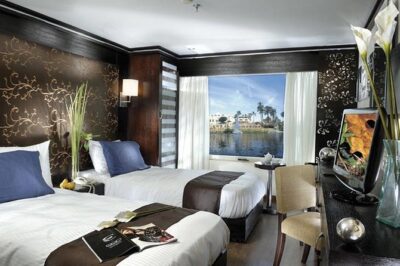
A real win from the onboard experience: the reviews point to clean, comfortable rooms and food that is more varied than you might expect on a cruise. I also like that the included meals take decision-making off your plate. You’re not hunting for restaurants with tired legs and heat in your face. You just eat, recover, and head out again.
Karnak and Luxor Temple: the opening punch of Egypt’s temple world
Day 1 is built for wow factor. You start at Karnak Open Air Museum, visiting the Great Court, the Hypostyle Hall, Queen Hatshepsut’s granite obelisks, and the Sacred Lake area guarded by a giant granite scarab. Even if you’ve seen photos, being inside this scale of stone is a different experience. Karnak has that effect where your brain keeps trying to zoom in on details, then realizes the structure is the whole point.
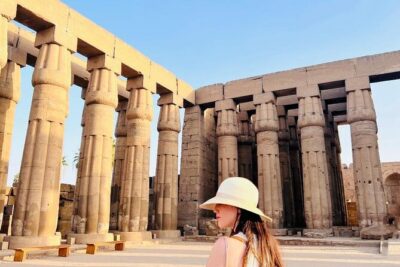
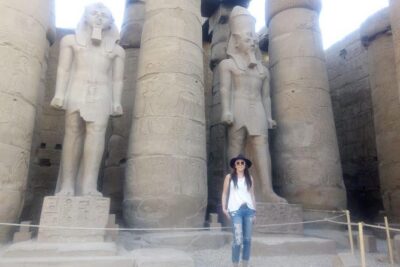
After Karnak, you head to Luxor Temple. You’ll tour the temple built by Amenophis III and spend time with the colonnade and its papyrus-headed columns. This stop feels more focused than Karnak, and it’s a nice way to balance “overwhelming size” with “readable structure.”
Practical note: the itinerary lists admission tickets as not included for both Karnak and Luxor Temple. So while the time with a multilingual guide is included, you should plan on paying entry separately at some sites.
That first day ends with dinner onboard and overnight on the ship. It’s a good setup, because you get a full evening in your own routine right after the sightseeing.
Valley of the Kings, Hatshepsut at Deir el Bahari, and the Colossi of Memnon
Day 2 is a classic Upper Egypt trio. Start with the Valley of the Kings for a visit of three real tombs. This is one of those moments where the “ancient” part stops being abstract. Wall scenes, ceilings, and tomb layouts make the history feel physical, even if you go in with just a basic sense of who lived here.
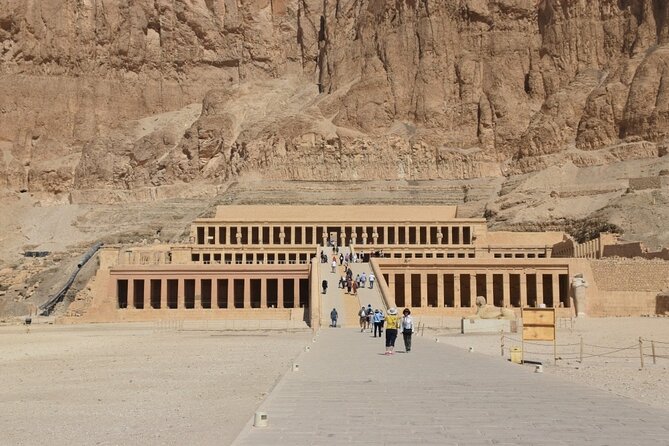
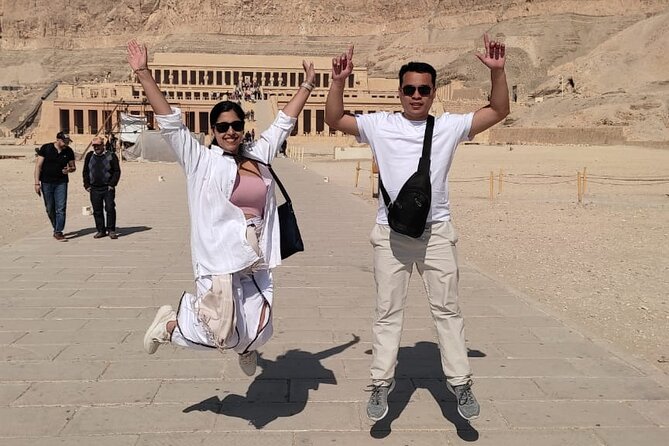
Then you go to Deir el Bahari, visiting the Temple of Hatshepsut. You’ll focus on bas-reliefs that describe her expedition to the land of Punt. I like this stop because it doesn’t just show power through architecture, it shows Hatshepsut telling a story through carved scenes. It’s easier to connect the monument to a person when the imagery has narrative.
Next are the Colossi of Memnon, the giant statues tied to the Memnon legend. The time listed is short, five minutes, which tells you this is more of a quick hit between bigger stops. Still, these statues are worth seeing even in a brief visit because they’re instantly recognizable in silhouette and scale.
After that, you return to the cruise and start sailing toward Edfu. In other words, the day is temple-heavy at first, then you get that “move while you rest” stretch in the afternoon.
Temple of Horus and Kom Ombo: two different temple moods
Day 3 keeps the variety coming. You begin with the Temple of Horus, described as the main temple conserved in Egypt, featuring the halcon Horus (Horus as a falcon). This stop is often easier to enjoy than you’d expect because it’s very temple-specific. You’re not trying to cover an entire complex at once, you’re getting a clear anchor.
Then you sail to Kom Ombo and visit the Temple of Kom Ombo, associated with Sobek, the crocodile. Kom Ombo is a great contrast to Horus because you’re looking at a different kind of religious emphasis. The crocodile connection alone helps your brain separate one temple story from the next.
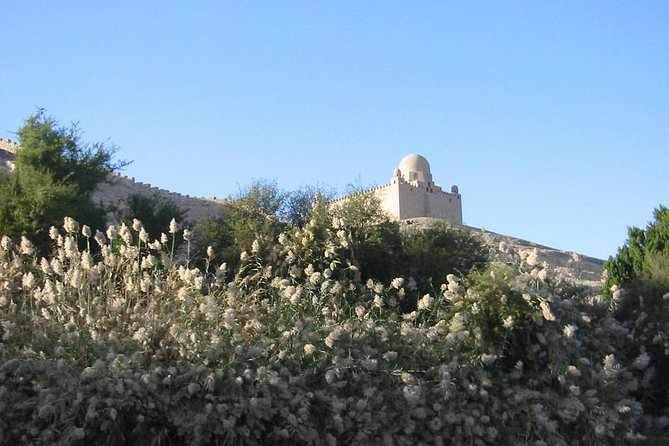
The day ends with sailing and a night in Aswan, so you’re stepping into the river city that brings a different feel than Luxor. You’re not just changing geography, you’re changing atmosphere.
Further south to Abu Simbel, other operators

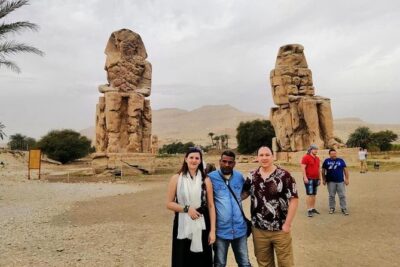
Abu Simbel at dawn: the day that people plan their whole trip around
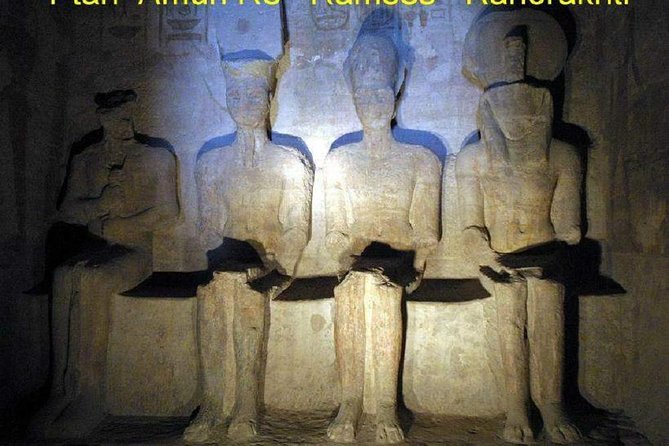
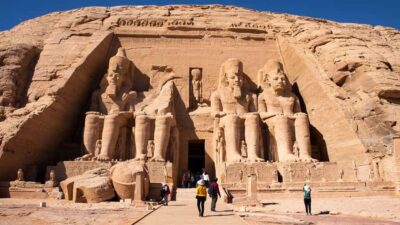
Abu Simbel is scheduled as a long day, listed as an 8-hour visit with a departure at dawn. That timing matters. In practical terms, dawn is when the heat is less punishing and when group visits often get smoother. In emotional terms, Abu Simbel tends to feel like the “big finish” in the middle of the trip, because it’s so dramatic.
You’ll visit the great temple complex attributed to Ramses II, and the day is run with the group. The itinerary includes lunch back on the boat and then you spend the night onboard again.
One important caution: the itinerary notes that admission tickets are not included. Even if the tour name says free Abu Simbel, the safest way to think about it is that the Abu Simbel day itself is included in your package flow, while site entry may still require separate payment. When you book, ask what is actually covered for the Abu Simbel entry fee.
Also, this is a long day with early wake-up energy. If you’re traveling with kids or anyone who doesn’t do mornings well, be ready for the schedule. The upside is that if you’re going to do Abu Simbel, doing it as a guided group day is typically far less stressful than DIY.
Philae and Aswan High Dam: closing strong in the river capital
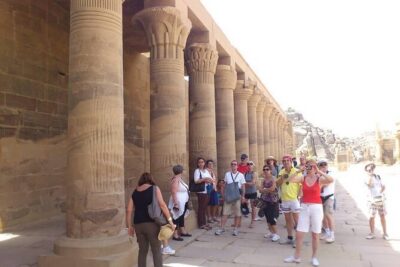
Day 5 wraps up with two stops that put Aswan into context. First is the Temple of Philae, visited after breakfast. This stop is listed as a 2-hour visit. Philae often feels more intimate than the giant Luxor temples, but it still delivers serious wow once you’re inside and looking at the carvings.
Then you visit the Aswan High Dam, inaugurated in 1971. This part is brief in your schedule, listed at about 30 minutes. It gives you a break from ancient architecture and a quick look at the modern engineering that shaped today’s Nile story.
After the dam visit, you transfer to the airport or station, and the service ends. This is one of those “nice to have” details that keeps your day from collapsing into last-minute transportation stress.
What’s actually included, and what you should budget for
The package includes air-conditioned vehicle support and an English and Spanish speaking tour guide. It also includes all meals while onboard: four breakfasts, four lunches, and four dinners. That’s big value in Egypt where prices can vary and where a day of sightseeing can make meals feel like a hassle.
The cruise also has clear comfort perks based on reviews. People highlighted a top-deck swimming pool, plus exercise machines up there too. That’s not trivia, it’s actually part of why you book a cruise instead of just a hotel tour. It gives you something to do when you’re not walking temples.
Now the part you should plan for: admission tickets are listed as not included for most major sites. Karnak, Luxor Temple, Valley of the Kings, Hatshepsut at Deir el Bahari, Temple of Horus, Kom Ombo, Abu Simbel, and Philae are all marked as not included. The Colossi of Memnon is listed as admission ticket free, but it’s a short stop anyway.
So, when you look at the price, treat it as a package that covers transport, guiding, onboard accommodation, and meals, while leaving site entries as a separate line item you handle as you go. If you like knowing costs upfront, ask the operator which sites you’ll pay for and how the group handles ticket distribution.
Also, tipping for guide and drivers is not included, so you’ll want to set some cash aside for that.
Food and onboard comfort: better than expected for a temple trip
You don’t go on a Nile cruise just for temples. You also go for the rhythm. The included meals do a lot of heavy lifting here because they keep you from “spending your day in search mode.”
Reviews mention buffet-style food with variety, and they specifically note decent vegetarian options. That matters on long sightseeing days. Even if you eat lightly in the morning, you’ll want reliable options at lunch and dinner without negotiating language or searching for familiar dishes.
Rooms are described as clean and tidy, which I take to mean you won’t feel like you’re living out of a suitcase on a floating bargain deal. Add the top-deck pool and exercise machines, and you have a real chance to recover in the afternoons.
One more onboard detail from reviews: there’s a show mentioned as something you’ll be able to see during the cruise. The itinerary provided doesn’t spell out when it happens, so treat it as an onboard program item rather than a temple stop. It’s still useful to know that not every evening is just sitting there waiting for tomorrow’s sunrise.
Price and value: is $660 fair for Luxor to Aswan luxury?
At $660 per person, this package is positioned as a strong deal compared with what you’d usually pay for a guided Luxor and Aswan temple circuit plus a multi-night Nile cruise. I like it because your money goes to the hard parts that cost time and stress: transport, a multilingual guide, and the included onboard meals.
Value shows up in three places:
- You avoid hotel changes and long overland legs by staying on the ship.
- You get guided visits daily, instead of treating each site like a self-guided scavenger hunt.
- You’re not paying for meals from day one, which adds up fast when you’re sightseeing.
The “not included” ticket fees are the main downside, but that’s normal for Egypt tours. The smart move is to treat the $660 as the cost of comfort plus guidance, then add a realistic ticket budget on top. If you do that math, the offer looks fair, especially since it’s a small group with a max of 15 travelers.
How to plan your days and avoid the common Egypt-tiredness
This itinerary has a lot of classics in a short span. Your success factor is how you prep your body and your expectations.
A few practical tips that match the schedule you’ll face:
- Start with good walking shoes. Valleys, temple floors, and stairs add up.
- Bring sun protection for daytime stops, and expect a cooler outfit for dawn Abu Simbel weather because early trips can feel different than midday.
- Carry water, even if the day includes onboard meals. You want it during site time.
- Keep your camera battery charged. You’ll want photos at Karnak courts, Hypostyle Hall areas, and the big statue moments.
- Plan to be flexible. You’re dealing with group pacing, and temple visits often run slightly differently depending on crowd flow.
If you’re hoping for a slow sightseeing experience with lots of free time, you might feel that the schedule is tighter than you’d like. If you prefer a smooth structure with a guide doing the navigation and interpretation, this setup fits nicely.
Should you book this Luxor to Aswan cruise?
If you want luxury-style comfort on the Nile, daily guided temple highlights, and you like the idea of sleeping onboard while someone else coordinates the route, I think this is a solid booking. The combination of included meals, small group size, and a true Abu Simbel day makes it especially attractive if you’re trying to keep the trip simple.
I’d hesitate only if you strongly dislike early mornings or you hate paying separate admission tickets at major sites. Also, if your ideal vacation is long unstructured time with no group schedule, then this is probably not your style.
If you fall somewhere in the middle, you’re exactly the target audience. This is a well-shaped Upper Egypt sampler with real guide time, and it saves you from the most annoying part of traveling in this region, the constant changing and coordination.
FAQ
What is the route and duration of this cruise?
It’s a 5-day experience in the Luxor to Aswan region, with four nights aboard the Nile cruise.
Where do the tours take place?
The guided stops include major sites around Luxor, Edfu (via the sailing route), Kom Ombo, and Aswan, plus the Abu Simbel visit.
What time does the tour start?
The start time is listed as 8:00 am.
Are pickup and transfers included?
Pickup is offered, and round-trip transfers to and from the cruise port are included. At the end, you’ll be transferred to the airport or station.
Is there a guide? What languages are offered?
Yes. An English and Spanish speaking tour guide is included.
Are meals included?
Yes. Breakfast, lunch, and dinner are included onboard (four of each during the trip).
Are admission tickets included for the temples?
Most site admission tickets are listed as not included. One listed exception is that admission for the Colossi of Memnon is marked as free, while other major stops are marked as not included.
How big is the group?
The maximum group size is 15 travelers.
Is there a cancellation window?
Yes, there is free cancellation. You can cancel up to 24 hours in advance for a full refund.
Further South: Abu Simbel

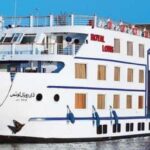
Sailing Luxor to Aswan


More of Luxor from our review pile
- Hot Air Balloon Ride and Tour to Valley of Kings Luxor- Special Offer
★ 5.0 · 15 reviews - 4-Hours tour West Luxor bank :Hatshepsut Temple & Valley of the King with Lunch
★ 5.0 · 15 reviews - Tour From Luxor to Aswan Edfu, Kom Ombo, Philae and High Dam
★ 5.0 · 15 reviews - Private Half-day Dendera Temple
★ 5.0 · 15 reviews - Luxor Airport Departure: Convenient Private Hotel Transfer
★ 5.0 · 15 reviews - Dahabiya Nile Cruise From Luxor To Aswan 4 Nights 5 Days
★ 4.5 · 15 reviews
Nile Cruises Between Luxor and Aswan, compared.
 ★ 5.04-Days Nile Cruise From Aswan To Luxor including Abu Simbel and Hot Air BalloonFrom $3493,142 reviews
 ★ 4.54-Day 3-Night Nile Cruise from Aswan to Luxor including Abu Simbel, Air BalloonFrom $329612 reviews
 ★ 4.14-Day Nile Cruise from Aswan to Luxor with GuideFrom $830593 reviews
★ 4.54-Days Nile Cruise From Aswan To Luxor including Abu Simbel and Hot Air BalloonFrom $320509 reviews
 ★ 5.04-Day 3-Night Nile Cruise from Aswan to Luxor – Private TourFrom $504369 reviews
★ 4.54 Days Nile Cruise from Aswan to Luxor including Abu Simbel and Hot Air BalloonFrom $329356 reviews
 ★ 5.04-Day 3-Night Nile Cruise from Aswan to Luxor With Balloon and Abu SimbelFrom $311327 reviews
 ★ 5.04-Days Nile Cruise Aswan&Luxor,Hot Air Balloon&Abu Simbel.Hot dealFrom $524322 reviews
The lists this one sits on