
REVIEW · NILE CRUISES BETWEEN LUXOR AND ASWAN
4-Night, 5-Star Nile Cruise from Luxor to Aswan
Four days on the Nile, paced right. This Luxor to Aswan cruise layers major temples with real sailing time, guided by an Egyptologist, plus included meals and entrance fees.
I especially like two things: the Egyptologist-led visits to Karnak, Luxor Temple, the Valley of the Kings, Edfu, Kom Ombo, and Philae, and the fact that entrance fees and full board meals are built into the trip. In the feedback I reviewed, guides like Emad and Mahmoud got praised for clear explanations and making the day feel welcoming, not rushed.
One consideration: the most famous tomb experiences can cost extra, because entry inside certain Valley of the Kings tombs (including Tutankhamun) and Abu Simbel are not included, and you’ll pay on the spot or choose the optional add-on.
In This Review
- Key things to know before you go
- The Luxor-to-Aswan rhythm that makes this cruise work
- Price and what $749 gets you in real terms
- Day 1 in Luxor: Karnak Temple plus Luxor Temple
- Day 2 on the West Bank: Memnon, the Valley of the Kings, and Hatshepsut
- Day 3: Edfu Temple by horse and carriage, then Kom Ombo
- Day 4 in Aswan: Unfinished Obelisk, High Dam, and Philae Island Temple
- Abu Simbel in Aswan: the optional add-on you should price in
- Guides, meals, and the ship experience you’re really paying for
- Entrance fees, tomb limits, and how to avoid surprise costs
- Who this Luxor-to-Aswan cruise is best for
- Should you book this cruise?
Key things to know before you go
- Egyptologist guide included, not just a driver, so you get context at every stop
- Entrance fees between Luxor and Aswan included, which removes a lot of guesswork
- Three meals a day on board, so you’re not hunting for food between sites
- West Bank highlights without the stress, including Valley of the Kings visits to multiple tombs
- Two-sided Temple of Kom Ombo, a rare design you’ll notice right away
- Optional Abu Simbel from Aswan, so you can decide based on time and budget
More boats sailing the same stretch
- From Luxor: 3-Night Nile Cruise to Aswan and Hot Air Balloon★ 3.7 · 297 reviews
- 5 Days Private Guided Nile River Cruise Tour from Luxor to Aswan★ 5.0 · 229 reviews
- Historia Hotel Nile Cruise, Mon. from Luxor 4 nts inc. Excursions★ 5.0 · 185 reviews
- From Luxor: 5-Day Nile Cruise to Aswan with Balloon Ride★ 4.2 · 168 reviews
The Luxor-to-Aswan rhythm that makes this cruise work
A Nile cruise only feels good when the schedule respects travel time. Here, your days are split between guided temple time and relaxed sailing, which lets you see the big hits without feeling like you’re sprinting from one gate to another.
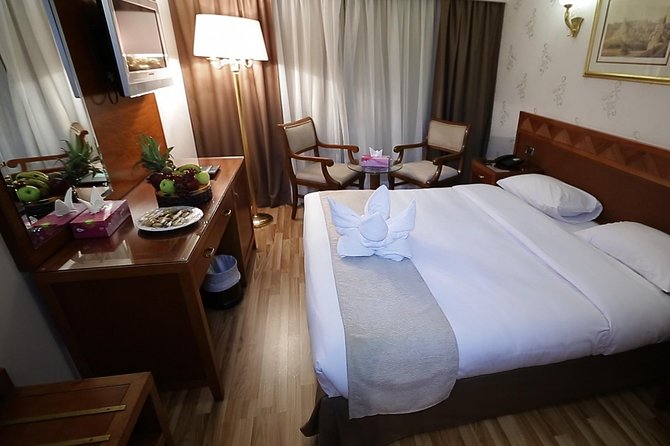
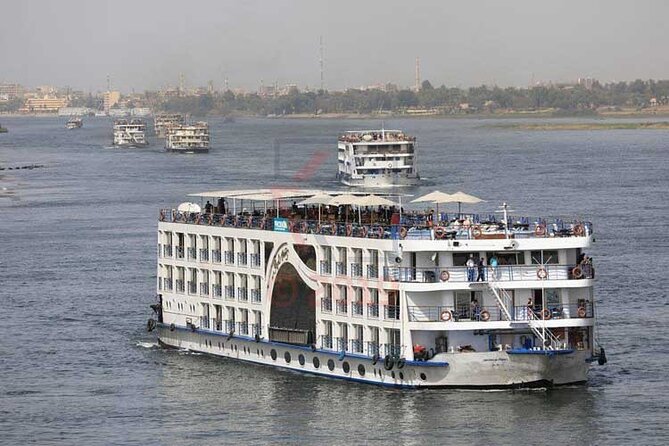
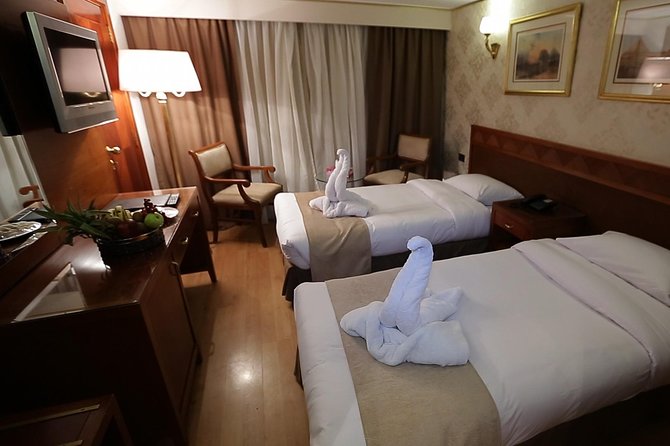
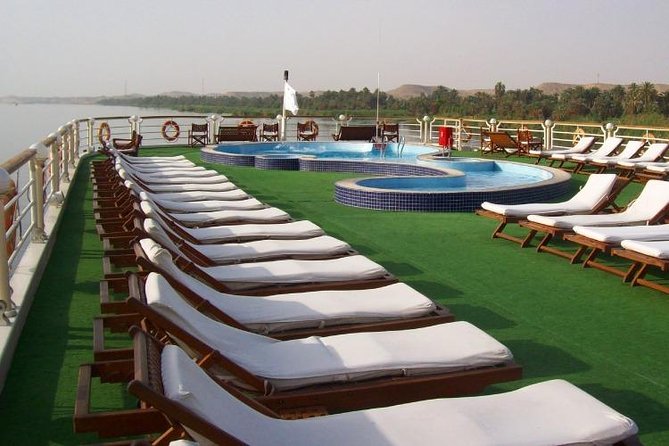
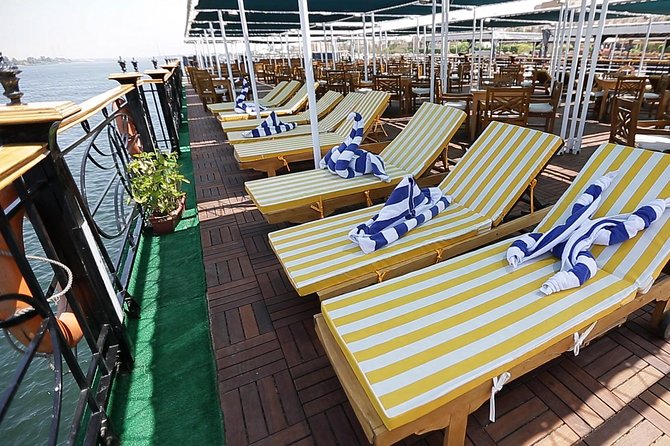
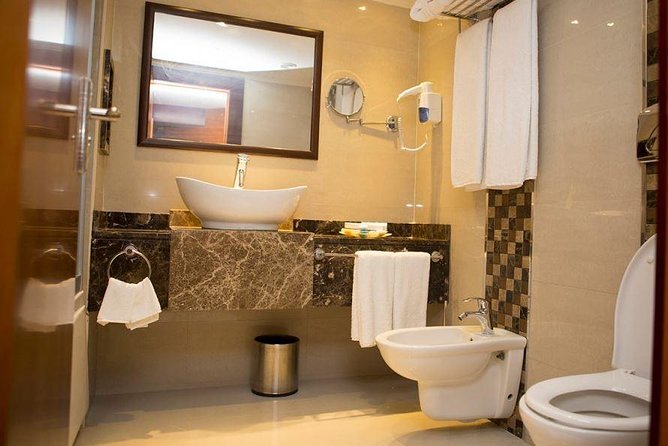
Your base is a 5-star Nile cruise ship for 4 nights, and you’re on full board. That matters because the best part of this itinerary is not only the monuments, it’s the slow-down, the chance to absorb what you just learned while the river carries you toward the next stop.
The route also keeps things logical. You start with the Luxor side temples, move across to the West Bank, then progress upstream through Edfu and Kom Ombo, finishing in Aswan with Philae and the dam.
Price and what $749 gets you in real terms
At $749 per person for a 5-day trip (about 4 nights on board), the value comes from what’s bundled. You’re paying for lodging on the ship, transfers, an Egyptologist guide, entrance fees for sights between Luxor and Aswan, and your meals.
That’s a big deal in Egypt, where entrance fees and private guiding can add up quickly if you piece it together yourself. You also avoid the day-to-day hassle of managing tickets while you’re in transit.
What’s not bundled is also clear. Extra costs can come from certain tomb entries in the Valley of the Kings and from choosing Abu Simbel at the end in Aswan. Also, tipping is not included, so you’ll want to plan for that.
Day 1 in Luxor: Karnak Temple plus Luxor Temple
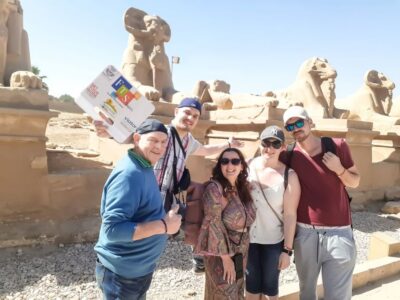
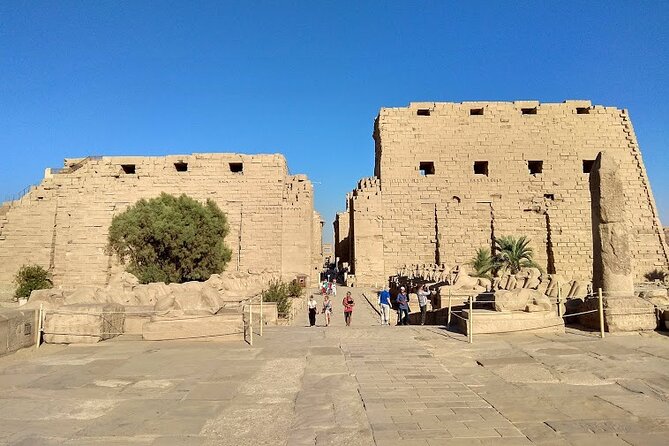
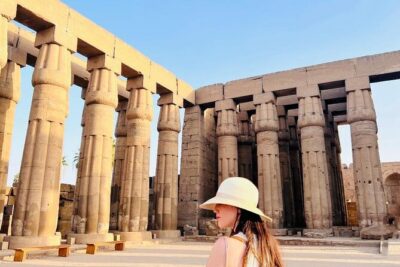
You’ll start with Karnak Temple, one of those places where scale hits you before you even understand the details. Walking into the Great Hypostyle Hall under towering columns feels like standing in an ancient stone forest, and your guide helps you make sense of what you’re seeing.
A nice detail here is the sacred lake behind the complex. Even if you only get a short stop, it gives you a sense of how this site functioned beyond sightseeing.
After Karnak, you go to Luxor Temple. It connects to Karnak through the famous Avenue of Sphinx, and parts of the entrance area are tied to Ramses II, with later additions linked to Tutankhamun, Amenhotep III, and Alexander the Great. It’s a different vibe than Karnak. Karnak is vast and overwhelming, Luxor Temple feels more purposeful, like a stage set for royal rituals.
Practical note: this day has guided walking plus a little free time. If you like photos, go easy on sprint mode early, because Karnak can easily overwhelm your sense of what to shoot first.
Day 2 on the West Bank: Memnon, the Valley of the Kings, and Hatshepsut
Day 2 takes you across the Nile to the West Bank, where the monuments shift from temple grandeur to royal legacy.
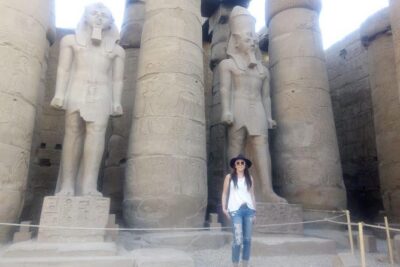
First up are the Colossi of Memnon, two massive statues associated with Amenhotep III. They’re carved from quartzite sandstone blocks, and they once belonged to a much larger colonnade. Seeing them helps you understand that what you’re looking at today is only a surviving slice of something bigger.
Then you head to the Valley of the Kings, where you’ll visit 3 tombs. Here’s the key operational detail: guides are not permitted inside the tombs, so you won’t get the full inside commentary. Still, your guide tells you what to look for, which is the smart workaround. You’ll get the stories and the visuals, even if you’re standing in the dark corridors for a limited time.
If you want the most famous option, you can choose to add King Tutankhamun, but entry is not included and you’d get extra tickets on the spot.
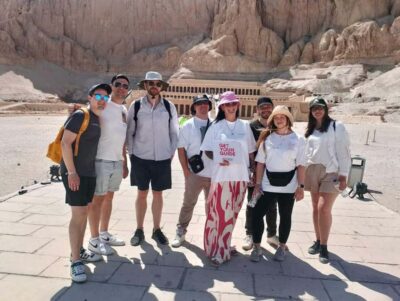
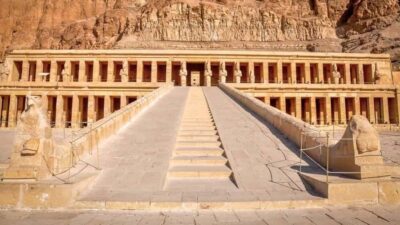
Next is the Temple of Hatshepsut at Deir el Bahari. This one is visually striking, set against cliffs like a natural amphitheater. Hatshepsut being Egypt’s only female ruler for nearly 22 years (1490 to 1468 BC) is a big part of why this temple lands. Even if you don’t memorize dates, the architecture does the teaching.
The day ends with returning to the ship for lunch and sailing onward via the Esna lock toward Edfu. That transition is one of the quiet wins of this cruise. You’ll get a break after the West Bank walking.
Day 3: Edfu Temple by horse and carriage, then Kom Ombo
Edfu is where the itinerary rewards you for moving on. After breakfast, you take a horse and carriage ride to visit the Temple of Horus. This temple is famous for being one of the best-preserved Egyptian temple complexes, and it was built during the Ptolemaic period, completed over about 180 years.
The timing matters too. By the time you reach Edfu, you’ve already seen Karnak and Luxor’s temple systems. So when you see Horus’s temple layout, you can start spotting patterns instead of treating every site as a one-off.
After Edfu, you return to the boat and cruise upriver with time on deck. This is a good moment to watch village life on the riverbanks as the scenery changes between stops. You’ll see fishermen casting nets and farmers at work, the kinds of everyday scenes that make the Nile feel lived-in, not staged.
In the afternoon, you arrive at Kom Ombo and visit the Temple of Kom Ombo, built on a high dune overlooking the Nile. The headline here is the design: it’s mirror-image, divided down the middle, with each side dedicated to different gods.
One half is associated with Sobek, the crocodile-headed god, tied to the Egyptian relationship with crocodiles. The other side honors Haroeris, also known as Horus the falcon god. If you like symbolism, this temple is a fun puzzle, because the reliefs reinforce how careful the Egyptians were about pairing gods, functions, and worship spaces.
Then it’s back to the ship to continue to Aswan. You’ll feel the rhythm shift as you approach the end of the cruise.
Day 4 in Aswan: Unfinished Obelisk, High Dam, and Philae Island Temple
Day 4 has three stops that fit together better than they may sound on paper.
First, you visit the Unfinished Obelisk in an ancient stone quarry. It gives a clear view of how the craft worked, because you’re seeing an obelisk in process rather than finished and polished. The text also says the finished version would have been about 42 meters tall and around 1,200 tons, so you get a sense of the scale of the engineering mindset, not just the aesthetics.
Next is Aswan High Dam, presented as a 1960s engineering milestone that ended the Nile’s devastating floods. This is where your cruise turns from pure archaeology to modern river management. It’s useful because the Nile’s story is both ancient and ongoing.
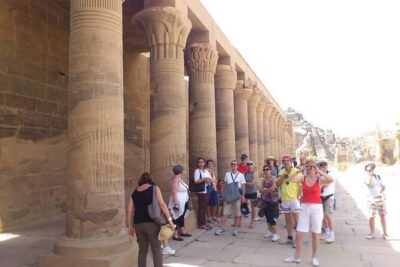
Finally, you boat to Philae Temple Island for a walking tour. Philae was sacred to Isis, mother of Horus and wife of Osiris. If you’ve already visited other temple sites, Philae adds a slightly different emotional tone. It feels ceremonial, and the island setting gives it a sense of separation from everyday life.
You return to the cruise for lunch and more time on board. This is your buffer day, the one that keeps the trip from feeling like nonstop touring.
Abu Simbel in Aswan: the optional add-on you should price in
After breakfast on Day 5, you disembark and transfer to your next destination in Aswan. This is also when the itinerary offers the optional Abu Simbel visit by car or plane.
Because Abu Simbel is an add-on, it’s the choice that most affects your final cost and timing. If Abu Simbel is on your must-see list, you should budget for it early, so you’re not making a last-minute decision with fewer options.
If you’re more temple-focused than icon-focused, you might prefer to keep your final morning easy. You’ll still end the cruise with Philae and an Aswan transfer, which is a solid way to wrap the trip.
Guides, meals, and the ship experience you’re really paying for
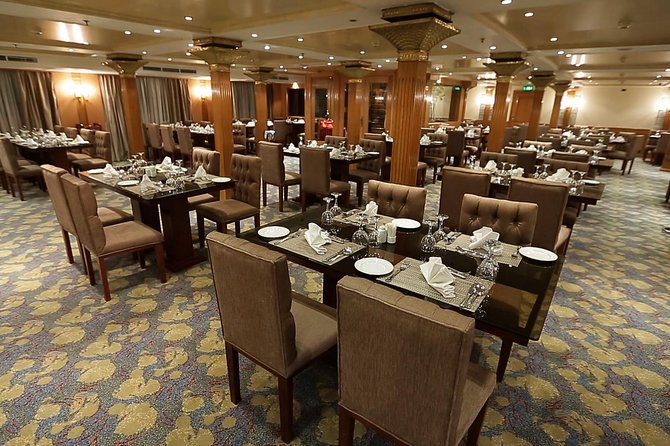
The itinerary is built around guidance and included meals, not just sightseeing. You’ll have an Egyptologist guide during excursions, and the ship runs on a full board basis with 4 breakfasts, 4 lunches, and 4 dinners included.
In the reviews I saw, staff and guides received strong praise for being helpful and respectful. Names that came up included Emad, Mahmoud, and Abdul, with comments emphasizing professionalism and clear explanations. One report also mentioned a comfortable boat and good food, with the guide’s explanations helping you connect the dots across sites.
A quick practical angle: temple days mean walking and looking closely. Your included meals make it easier to keep energy steady, which helps when you’re touring tombs and moving between riverbank areas.
One more note: this is a private tour/activity for your group. That usually means less waiting around with strangers, and more control over the day’s pacing through your own group dynamic.
Entrance fees, tomb limits, and how to avoid surprise costs
This trip includes entrance fees for sights between Luxor and Aswan, which is a huge convenience. But the Valley of the Kings has a key limitation that you should plan for.
The tour includes visiting 3 best preserved tombs. When it comes to the most sought-after tombs, like Tutankhamun, Ramses VI, Seti 1, and others, the entry inside those tombs is not included and you’ll pay on the spot if you choose them.
So you should think of the Valley experience as two layers. The base layer is covered, and it’s still excellent. The second layer is the special-ticket upgrades, and those are optional.
Tipping is also not included. Even if the major costs are covered, you’ll want cash ready for gratuities at your discretion.
Who this Luxor-to-Aswan cruise is best for
This cruise is a strong fit if you want a guided highlight circuit with less planning stress. The Egyptologist guide helps when you’re trying to make sense of temple symbolism, royal timelines, and the logic behind each site.
It’s also a good match if you like day structure. You get morning temple time, an afternoon monument, then a return to the ship and sailing. If you hate scrambling for logistics, you’ll likely feel calmer on this one.
If you’re the type who loves to linger, you might find the pace brisk in certain temples. But the itinerary still builds in some free time at key stops, like after Karnak and Luxor Temple.
Families can often handle this route because it offers both structured moments and onboard downtime. Still, any cruise day that includes tomb visits means you’ll want to consider comfort and walking tolerance for your group.
Should you book this cruise?
I’d book this Luxor to Aswan 4-night Nile cruise if you want value that feels practical: an Egyptologist guide, entrance fees included between Luxor and Aswan, and full board meals on a 5-star ship. For most first-time Egypt temple lovers, this is a smart way to see the headline sites without turning your trip into a ticket math exercise.
Skip it, or at least think twice, if your plan depends on every single tomb and Abu Simbel being included for free. Here, the biggest add-ons are clear, and you should decide those up front so the final bill stays predictable.
If you do book, your best move is simple: confirm what is covered versus what’s pay-on-spot for the Valley tomb upgrades, and budget for the optional Abu Simbel if it’s calling your name.
Sailing Luxor to Aswan



More of Luxor from our review pile
- Private Tour Nile Felucca Ride at Sunset in Luxor
★ 5.0 · 26 reviews - Private Full day East and West Bank, Luxor
★ 5.0 · 26 reviews - Luxor Day Tour: Kings Valley & Karnak & Luxor & Hatshepsut Temple
★ 5.0 · 26 reviews - Full-Day East and West Luxor Private Tour
★ 4.5 · 26 reviews - Day Trip to Edfu & Kom Ombo temples from Luxor and drop off in Aswan or Luxor
★ 5.0 · 26 reviews - 5 Days 4 Nights Nile Cruise Tour
★ 5.0 · 27 reviews
Nile Cruises Between Luxor and Aswan, compared.
 ★ 5.04-Days Nile Cruise From Aswan To Luxor including Abu Simbel and Hot Air BalloonFrom $3493,142 reviews
 ★ 4.54-Day 3-Night Nile Cruise from Aswan to Luxor including Abu Simbel, Air BalloonFrom $329612 reviews
 ★ 4.14-Day Nile Cruise from Aswan to Luxor with GuideFrom $830593 reviews
★ 4.54-Days Nile Cruise From Aswan To Luxor including Abu Simbel and Hot Air BalloonFrom $320509 reviews
★ 4.14-Day Nile Cruise from Aswan to Luxor with GuideFrom $830593 reviews
★ 4.54-Days Nile Cruise From Aswan To Luxor including Abu Simbel and Hot Air BalloonFrom $320509 reviews
 ★ 5.04-Day 3-Night Nile Cruise from Aswan to Luxor – Private TourFrom $504369 reviews
★ 4.54 Days Nile Cruise from Aswan to Luxor including Abu Simbel and Hot Air BalloonFrom $329356 reviews
★ 5.04-Day 3-Night Nile Cruise from Aswan to Luxor – Private TourFrom $504369 reviews
★ 4.54 Days Nile Cruise from Aswan to Luxor including Abu Simbel and Hot Air BalloonFrom $329356 reviews
 ★ 5.04-Day 3-Night Nile Cruise from Aswan to Luxor With Balloon and Abu SimbelFrom $311327 reviews
 ★ 5.04-Days Nile Cruise Aswan&Luxor,Hot Air Balloon&Abu Simbel.Hot dealFrom $524322 reviews
The lists this one sits on