
REVIEW · VALLEY OF THE KINGS & KING TUT TOMBS
Private Guided Tour to Valley of the Kings
A mountain of tombs, and you get your own guide. This private morning tour in Luxor focuses on three royal tombs, with an Egyptologist explaining what you’re actually looking at as you walk, descend, and peer into painted chambers. I especially like the hotel pickup that keeps things smooth, and the fact you get three tombs instead of rushing past a checklist. One thing to plan for, the entrance fees are not included in the base price, so your final budget depends on the tickets you choose.
You also get the best time of day for the West Bank, starting at 8:00 am. The Valley of the Kings can get crowded, but a private format helps you keep a calmer rhythm and spend time inside what matters most. If you’re aiming to see King Tutankhamun’s tomb specifically, treat it as an add-on since it’s optional and costs extra.
In This Review
- Key things to know before you go
- A private West Bank morning in Luxor, with the focus where it counts
- Hotel pickup and the air-conditioned ride to the Valley
- Tomb of Ramses III (KV 11): where the art tells on the power
- Valley of the Kings time: why the morning tour format matters
- Tomb of Merenptah (Tomb 8): corridors, room height, and a big discovery history
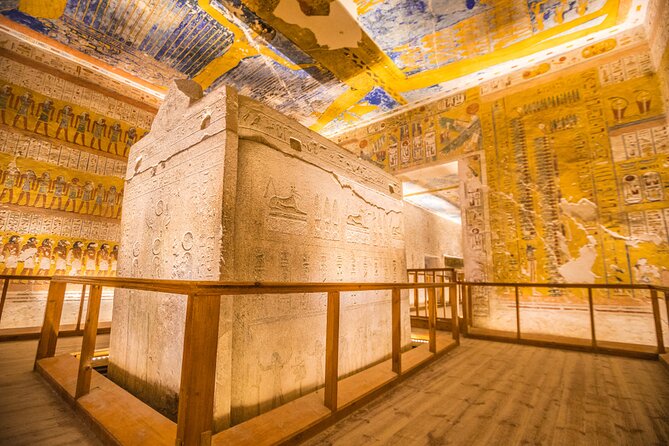
- Tomb of Ramses IV (KV 2): the most spectacular tomb, with a ceiling you can’t unsee
- Optional King Tutankhamun ticket: worth it if you care about the mummy moment
- The West Bank route beyond tombs: short stops that add texture
- Price and ticket math: what your $50 really turns into
- Guides, pace, and the biggest reason people love this tour
- Who this private Valley of the Kings tour suits best
- Should you book this tour?
- FAQ
- What time does the tour start?
- How long is the private guided tour?
- Is hotel pickup and drop-off included?
- Is the transportation air-conditioned?
- Is this a private tour or a group tour?
- How many tombs are included in the main tour?
- Are entrance fees included in the price?
- Is the Tomb of Tutankhamun included?
- What is the cancellation policy?
Key things to know before you go
- Private, Egyptologist-guided visits mean you’re not just reading wall art, you’re understanding it as you go
- Three tombs as the core plan, often including KV 11 (Ramses III), KV 2 (Ramses IV), and Tomb 8 (Merneptah)
- Underground walking is part of the experience, so you’ll want to take your time in the corridors and chambers
- Entrance fees are separate, with a listed total of 750 EGP per person for tomb access
- Tutankhamun’s tomb is optional, with an additional ticket fee if you want the mummy visit
- Air-conditioned private transport and pickup reduce the logistical stress on a long West Bank day
Other tomb tickets in the valley
- Hurghada: Luxor Valley of the Kings & Tutankhamun Tomb Trip★ 4.7 · 13,208 reviews
- Luxor Day Trip from Hurghada Small Group & Tutankhamun Tomb★ 4.8 · 5,366 reviews
- Luxor Day Tour: Valley of Kings & Queens & Hatchepsut Temples★ 5.0 · 1,496 reviews
- Luxor: Valley of the Kings and Hatshepsut Temple Day Tour★ 4.4 · 1,404 reviews
A private West Bank morning in Luxor, with the focus where it counts
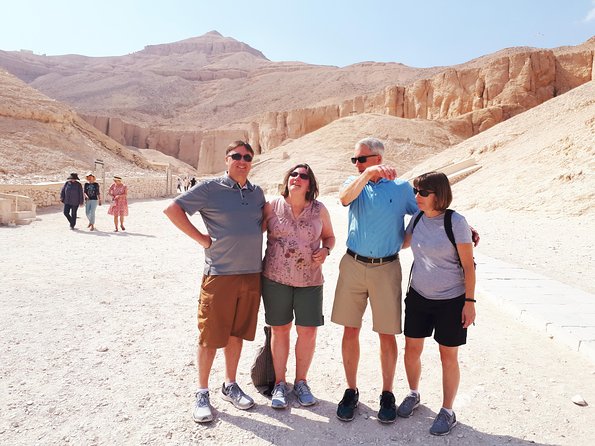
Luxor’s West Bank can feel like a lot, fast. You have temples, statues, ruins, and a whole underworld of tombs tucked into the hills. What I like about this private tour is that it keeps your attention on one job: learning the tombs deeply enough that the imagery stops being decoration and starts making sense.
The best part is the pacing. In about four hours, you travel by air-conditioned vehicle, visit multiple tombs, and still have time to move at an adult speed, not a herd speed. The private setup also tends to cut down on waiting, which matters when you want to get into the tunnel before the place feels like a moving walkway.
The only real tradeoff is money. The tour price covers the guide and transport, but not the tomb tickets. Once you add entrance fees, the total rises, especially if you choose to include Tutankhamun’s tomb.
Hotel pickup and the air-conditioned ride to the Valley
This is built for convenience. You start with hotel pickup and return to the same area after the tour, using a private air-conditioned vehicle. Starting at 8:00 am also helps you beat the heat and gives you a calmer start on the West Bank.
On a practical level, this matters because the West Bank is not right next door to the city. You don’t want your “Valley of the Kings time” eaten by finding parking, walking between sites, or getting stuck waiting for a public van.
If you’re coming from a cruise or a central hotel area, the pickup-and-dropoff setup is one less thing to manage. And if you do have questions as the morning goes, a private guide is easier to work with than trying to catch up to a group leader.
Tomb of Ramses III (KV 11): where the art tells on the power
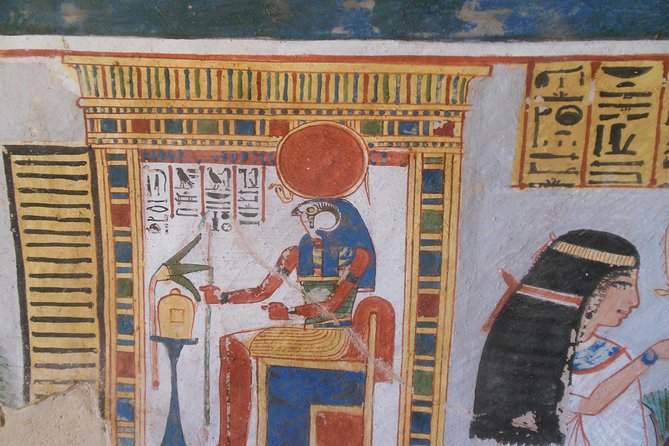
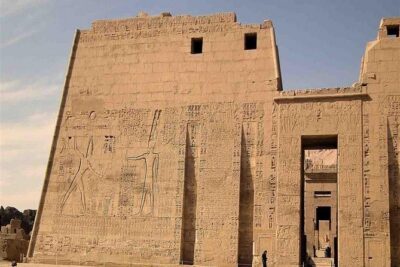
The Tomb of Ramses III, KV 11, is a standout because it’s not only religious, it’s also oddly human. The decoration includes colorful painted sunken reliefs with ritual texts and scenes of Ramses before the gods. That’s already impressive, but what makes KV 11 special is the mix of “official” and “everyday-ish” details you get in side spaces near the entrance.
You’ll see secular scenes in small side rooms, including foreign tributes. One of the most fascinating details is the mention of detailed pottery imported from the Aegean, along with royal armory scenes and boats. That blend of global contact themes with royal messaging gives you a clearer picture of how the state liked to present itself.
Then there’s the alternative nickname, Tomb of the Harpers. In the last of those side chambers, you can find the blind harpists, which is an unusual image for a royal burial site. It’s exactly the kind of detail your guide can help you interpret quickly, so you’re not just staring at figures wondering what role they play.
How to enjoy it: slow down for the side chambers. The deeper chamber drawings get attention, but these smaller spaces are where KV 11 gets memorable.
Valley of the Kings time: why the morning tour format matters
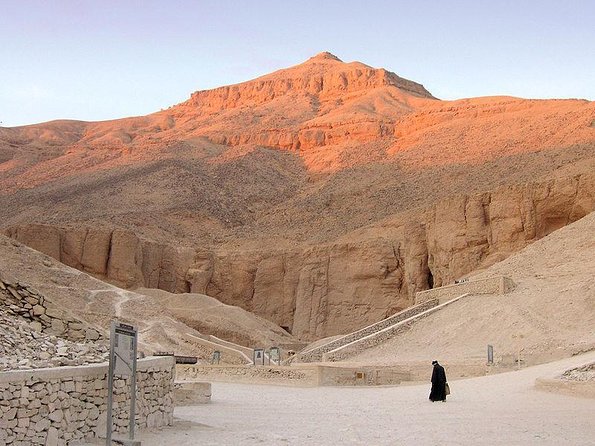
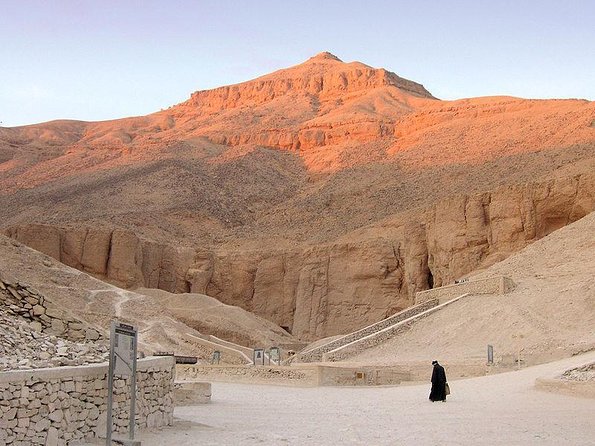
The Valley of the Kings is a necropolis on Luxor’s West Bank, and it’s busy enough to feel chaotic on some days. A private morning visit is one of the simplest ways to keep the experience more enjoyable.
You’re taken to the necropolis first, then guided through major tomb stops. The key is that your time is structured around tomb viewing, not a long series of back-and-forth drives. And since you have an Egyptologist explaining themes and pharaoh context, you don’t waste energy trying to map the names and scenes on your own.
Even if you know the broad story of Egypt’s New Kingdom rulers, the Valley hits harder when you can connect what’s painted to why it was placed where it is. That’s the advantage of a guide-led format here.
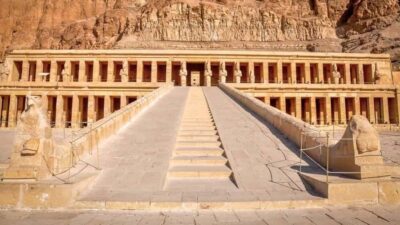
Tomb of Merenptah (Tomb 8): corridors, room height, and a big discovery history
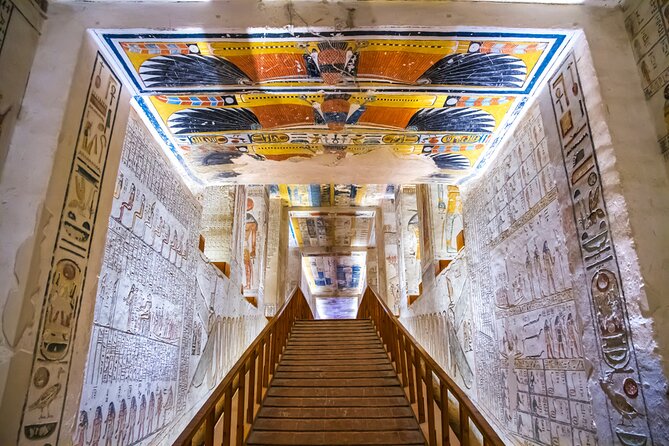
Tomb 8 belongs to Pharaoh Merneptah, and it’s another deep, satisfying visit because the structure shows how royal tomb design evolved. Your guide can walk you through the layout choices, including the shift described as a decrease in lateral rooms alongside a dramatic increase in the height of corridors and chambers.
That design change matters because it affects how you experience the tomb. Tall corridors make the walk feel more deliberate and theatrical, not like a narrow tunnel. Higher chambers also change how you notice ceilings and wall arrangement as you move deeper.
There’s also strong context around who Merneptah was. He is described as a son of Ramesses II and Queen Isis-Nofret, which helps anchor the tomb in the broader royal family story. And the tomb is linked to the discovery story of Howard Carter in 1903, which is a reminder that Egyptology has a modern chapter as well.
The tour details also bring in Ptah, the demiurge associated with craftsmen and architects. Even if you already know the big Egyptian gods, this kind of context can help you understand why certain images show up and what they were meant to do for the dead.
How to enjoy it: pay attention to how the tomb’s dimensions change as you move. The “feel” of the space is part of the design, not just a side effect.
Tomb of Ramses IV (KV 2): the most spectacular tomb, with a ceiling you can’t unsee
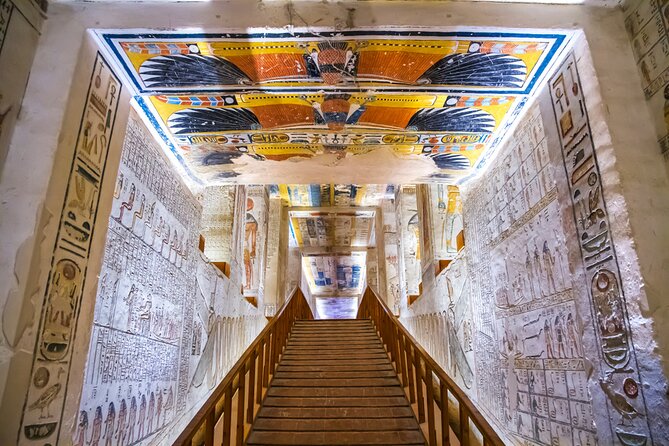
Ramses IV’s tomb, KV 2, is described as different from most other tombs in the Valley, and that’s a big clue for what to look for. This one is often the showpiece: hieroglyphic scenes and ritual texts covering multiple funerary works.
Inside, you’ll see depictions tied to the Litany of Ra, Book of the Dead, Book of Caverns, Book of the Heavens, Book of Amduat, and Book of the Night. That’s a lot of religious material in one place, and the value of a guide is that you can connect the themes instead of treating each panel like random wall writing.
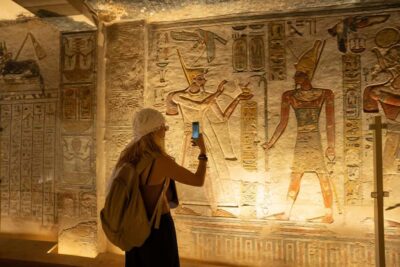
The color note is specific, too. The tour highlights blue and white colors inside the burial chamber, described as very strong, along with a king’s sarcophagus made of rose-colored granite. There’s also a notable ceiling scene of the goddess Nut swallowing the sun, giving it meaning as it travels through her stomach so Nut can give birth to the sun again.
That ceiling image is exactly the kind of art detail that tends to stick. It’s symbolic, dramatic, and it helps you understand how Egyptians used images to describe cosmic renewal, not only personal afterlife.
How to enjoy it: keep your head up when you’re in the chamber. This tomb’s ceiling isn’t background, it’s the message.
Optional King Tutankhamun ticket: worth it if you care about the mummy moment
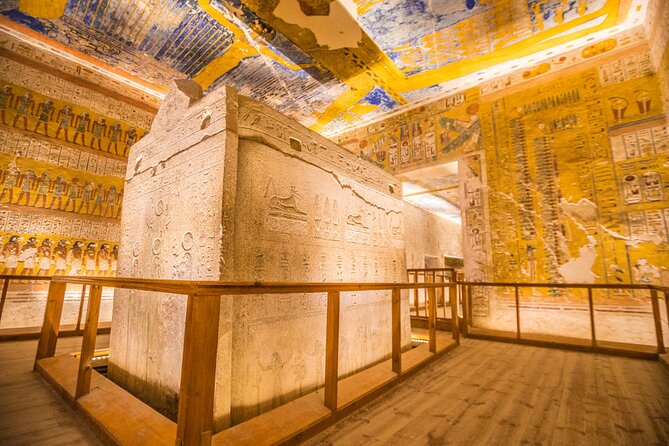
You can add Tomb of King Tutankhamun, but it comes with an optional ticket cost. The tour details list an admission fee of 450 EGP per person for this stop, and the point is simple: if you want the famous mummy visit, plan extra money.
Here’s what you’re signing up for based on the tour description. Tutankhamun is presented as a young king who ascended at about age 10 and died around 19. The big payoff is the chance to see his royal mummy up close in his tomb in the Valley.
This is the stop people talk about because it has global recognition. Even if you’re not a history fanatic, the chance to stand in front of the tomb connected to the most famous pharaoh in the modern world feels like a different category of experience.
How to decide: choose Tut if it’s on your personal must-see list. If you prefer more time with the less famous royal tombs and their murals, sticking to the three-tomb core is already a full and meaningful plan.
The West Bank route beyond tombs: short stops that add texture
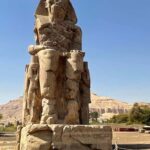
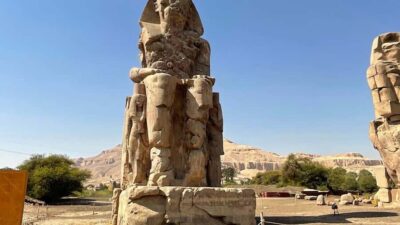
Even though the tombs are the main event, the drive can include a few additional West Bank sights as quick stops. These may include places like the Ramesseum (Mortuary Temple of Ramses II), the Valley of the Nobles near Gurna, the Howard Carter House near the Valley of the Kings, and Colossi of Memnon.
The Ramesseum is described in the tour details as part of the Ramses II world, with a focus on color and detail, including Nut stretching across above the sarcophagi area. Howard Carter House and the broader “Carter connection” matters because it ties the modern discovery story to the physical location.
Colossi of Memnon are listed as a short stop, and Temple of Seti I is also mentioned past the road to the Valley of the Kings. These aren’t always long visits, but they add context. You get a fuller feel for this West Bank as a zone of monuments, not a single tunnel system.
If you’re the type who likes to connect the dots across sites, these extra sights can make the morning feel more like a guided narrative.
Price and ticket math: what your $50 really turns into
The tour price is listed at $50.00 per person, and it includes a qualified Egyptologist, hotel pickup and drop-off, and transport by air-conditioned vehicle. That is a fair bundle for a private morning.
But don’t ignore the ticket line. Entrance fees are listed as 750 EGP per person and are not included. On top of that, Tutankhamun’s tomb has an additional optional ticket fee listed as 450 EGP per person.
So the real value question is not just the base price. It’s how many tombs you want to add. If you stick to the core three tomb plan, you may feel like you’re paying mostly for guide time and transport, which is exactly what you want. If you add Tutankhamun, you’re paying more, but you’re also checking off a globally famous mummy moment.
Practical tip: budget for tomb tickets before you commit. That avoids the most common frustration, surprise add-ons at the entrance.
Guides, pace, and the biggest reason people love this tour
The strongest praise in the material you shared is not about the vehicle or the route. It’s about the human factor, the guides and how smoothly they run the morning.
Names that show up with high marks include Rajab, Khalid, Hassan, Abdul, Ameen, Khaled, and Hamdy Had. The common thread is what you want from an Egyptologist on a tight schedule: clear explanations before you go in, solid English, good humor, and a relaxed pace that keeps the visit feeling personal.
One highlight that keeps coming up is the ability to keep things streamlined. The Valley of the Kings is crowded by nature, but a private guide can help you manage the flow so you’re not spending half your morning standing in lines.
A few details also point to flexibility. For families, the tour is described as good with kids. And for schedule changes, a guide made it happen on short notice. That kind of adaptability can matter if your day is moving around due to heat, boat timing, or just plain travel reality.
What you should expect: a smooth morning with a guide who has the story organized, so you can walk into the tombs with context already in your head.
Who this private Valley of the Kings tour suits best
This is a smart match for you if you want a focused, high-impact West Bank morning. It’s also ideal if you hate the idea of joining a large group and repeating the same questions in a line behind other people.
You’ll likely enjoy this most if you:
- want three tombs with guided context, not a rushed snapshot
- appreciate Egyptology explanations that connect pharaohs to what’s painted
- prefer private logistics, hotel pickup, and an air-conditioned ride
- care about seeing specific tombs like Ramses III, Ramses IV, and Merenptah
If you’re traveling with limited time in Luxor, the four-hour length is a workable window. And if you’re the type who wants the famous moment too, you can add Tutankhamun as an optional decision.
Should you book this tour?
Book it if your top priorities are a guided visit to the Valley of the Kings and a private, well-run morning. The base package is strong because it bundles a qualified guide plus hotel pickup and air-conditioned transport, and it centers on tombs rather than spreading your time thin across too many stops.
Don’t book it blindly if your budget is tight and you hate uncertainty. Entrance fees are separate, and the Tutankhamun stop costs extra. If you can handle ticket budgeting and you know which tombs you really want, this tour is one of the best ways to turn the Valley into an experience you understand, not just one you photograph.
If you want, tell me your travel dates and whether Tutankhamun is on your must-see list. I can help you plan a simple budget for the tickets and decide whether the three-tomb core is enough for your style.
FAQ
What time does the tour start?
The tour start time is 8:00 am.
How long is the private guided tour?
The duration is about 4 hours.
Is hotel pickup and drop-off included?
Yes, hotel pickup and drop-off are included.
Is the transportation air-conditioned?
Yes, transport is by air-conditioned vehicle.
Is this a private tour or a group tour?
It is a private tour, so only your group participates.
How many tombs are included in the main tour?
The tour highlights say you will explore three different tombs.
Are entrance fees included in the price?
No. Entrance fees are listed as 750 EGP per person and are not included.
Is the Tomb of Tutankhamun included?
It is optional. The tour details list an optional entrance fee of 450 EGP per person for the Tomb of Tutankhamun.
What is the cancellation policy?
Free cancellation is available up to 24 hours before the experience start time for a full refund.
Down Into the Kings Valley
More of Luxor from our review pile
- Private Tour Nile Felucca Ride at Sunset in Luxor
★ 5.0 · 26 reviews - Private Full day East and West Bank, Luxor
★ 5.0 · 26 reviews - Luxor Day Tour: Kings Valley & Karnak & Luxor & Hatshepsut Temple
★ 5.0 · 26 reviews - Full-Day East and West Luxor Private Tour
★ 4.5 · 26 reviews - Day Trip to Edfu & Kom Ombo temples from Luxor and drop off in Aswan or Luxor
★ 5.0 · 26 reviews - 5 Days 4 Nights Nile Cruise Tour
★ 5.0 · 27 reviews
Valley of the Kings & King Tut Tombs, compared.
 ★ 4.7Luxor Valley of the Kings & Tutankhamun Tomb TripFrom $7613,208 reviews
 ★ 4.8Luxor Day Trip from Hurghada Small Group & Tutankhamun TombFrom $955,366 reviews
 ★ 4.5Small group Hurghada to Luxor, Valley of the Kings by VanFrom $352,470 reviews
 ★ 5.0Luxor Day Tour: Valley of Kings & Queens & Hatchepsut TemplesFrom $891,496 reviews
 ★ 4.4Valley of the Kings and Hatshepsut Temple Day TourFrom $501,404 reviews
 ★ 4.6Luxor Tour with Valley of Kings, Karnak & Tut TombFrom $1031,082 reviews
 ★ 4.6Small-Group Luxor Highlights & Tut Tomb Day TourFrom $105928 reviews
 ★ 4.7Luxor Highlights & King Tut Tomb Tour with LunchFrom $150902 reviews
The lists this one sits on