
REVIEW · FULL-DAY
Luxor Full Day Tour
Luxor temples feel clearer when someone connects the dots. This is a private full-day circuit with an Egyptologist and an air-conditioned vehicle, built around the big Luxor hits. You’ll cover Valley of the Kings, Hatshepsut at Deir el Bahari, the Colossi of Memnon, plus Luxor and Karnak Temples in about 7 to 8 hours.
I love the way this tour is guided, not just transported. The Egyptologist approach matters most at places like the Valley of the Kings and Karnak, where the symbolism can be hard to read on your own. The name Daniel shows up in the guide feedback, and his English is described as exceptionally clear, which you’ll feel when the stories start to click.
One thing to watch is entrance fees. Valley of the Kings, Hatshepsut, and Luxor Temple do not include admission, while Karnak is included, and the Colossi of Memnon stop is listed as free. Also, the listed start time is 12:00 am, so I’d confirm the actual pickup time with the operator before you lock anything else in.
In This Review
- Key things that make this Luxor full day tour worth your time
- A Private Luxor Day Built Around Your Guide, Not a Hurry-Up Checklist
- Valley of the Kings (2 Hours): Tombs, Context, and Why Guidance Helps
- Temple of Hatshepsut at Deir el Bahari (1 Hour 30 Minutes): Photo Light Meets Real Power
- Colossi of Memnon (10 Minutes, Free): The Vocal Memnon Legend With Specifics
- Luxor Temple (1 Hour): Three Faiths, One Orientation, and the Triads of Thebes
- Karnak Temple (2 Hours): Admission Included and a Lot to See
- Price, Entrance Fees, and Whether $100 Is Fair for a Private Day
- Who This Tour Suits Best (and Who Might Prefer Another Plan)
- Should You Book This Luxor Full Day Tour?
- FAQ
- Is this a private tour?
- How long is the Luxor full day tour?
- Is pickup offered, and do I get a mobile ticket?
- Are entrance tickets included for every stop?
- What start time is listed for the tour?
- What if weather is bad or I need to cancel?
Key things that make this Luxor full day tour worth your time
- Private Egyptologist guidance that helps you make sense of what you’re seeing
- Air-conditioned vehicle comfort for a long day of site-hopping
- Valley of the Kings (2 hours) with guided time, not a rushed photo stop
- Hatshepsut at Deir el Bahari (1 hour 30 minutes) scheduled for strong photo light
- Colossi of Memnon (10 minutes, free) with vivid context about the Vocal Memnon legend
- Karnak Temple (2 hours) with admission included, so your day has one less ticket to manage
Trying to choose? These Luxor trips kept surfacing in our notes.
- Hurghada: Luxor Valley of the Kings & Tutankhamun Tomb Trip★ 4.7 · 13,208 reviews
- Luxor Day Trip from Hurghada Small Group & Tutankhamun Tomb★ 4.8 · 5,366 reviews
- Hot Air Balloon Ride in Luxor Egypt with Transfers Included★ 5.0 · 4,319 reviews
- Luxor: Shared Full-Day Tour to Luxor West and East Banks★ 4.5 · 1,812 reviews
A Private Luxor Day Built Around Your Guide, Not a Hurry-Up Checklist
A full-day Luxor plan only works if it’s paced well and explained well. This tour is private, so you get personal attention instead of trying to hear facts over a group shuffle. It also runs on an air-conditioned vehicle, which is a real quality-of-life upgrade when you’re bouncing between sites.
The itinerary is organized in a way that keeps you moving across the main highlights in one stretch. You get guided time at the major monuments, then short stops where the site is famous enough that you still get value without eating up the whole day. The total duration is about 7 to 8 hours, which is long enough for depth but not so long that you’re stuck in a constant travel blur.
One practical note: pickup is offered, but the meeting point is listed as near public transportation, and the start time is shown as 12:00 am. Egypt days run on logistics, so if you have an early flight, a dinner plan, or a tour after this, confirm the exact pickup time when you book.
Valley of the Kings (2 Hours): Tombs, Context, and Why Guidance Helps
Your first major stop is the Valley of the Kings, with about 2 hours on-site. The tour is guided, and admission tickets are not included. Even if you’ve read a bit about the Valley, it helps to have someone steer you toward what to notice, because the tombs are where the symbolism is easiest to miss.
This is the kind of place where timing and interpretation matter. You’re there to see the magnificent tombs of the pharaohs, but a good Egyptologist will help you connect the tomb setting to the larger beliefs about kingship and the afterlife. That’s what turns Valley of the Kings from a list of entrances into a story you can follow.
The drawback is simple: you’ll likely pay for your own site entry. Still, the guided time is part of the value. Two hours is enough to slow down, ask questions, and let the facts land.
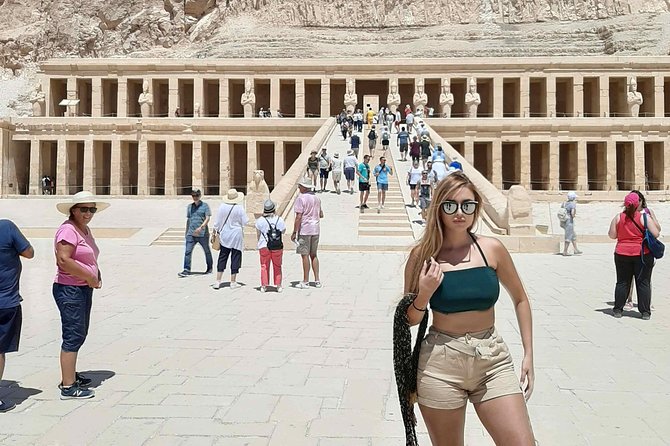
Temple of Hatshepsut at Deir el Bahari (1 Hour 30 Minutes): Photo Light Meets Real Power
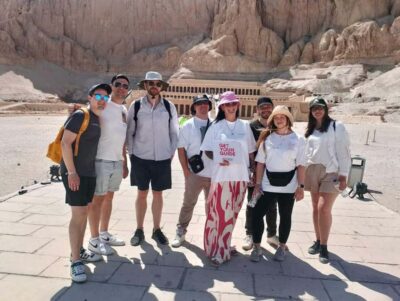
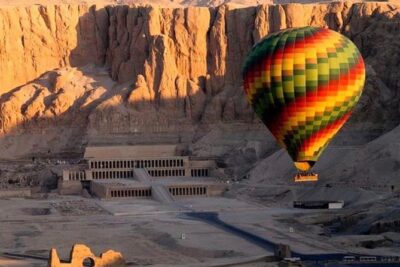
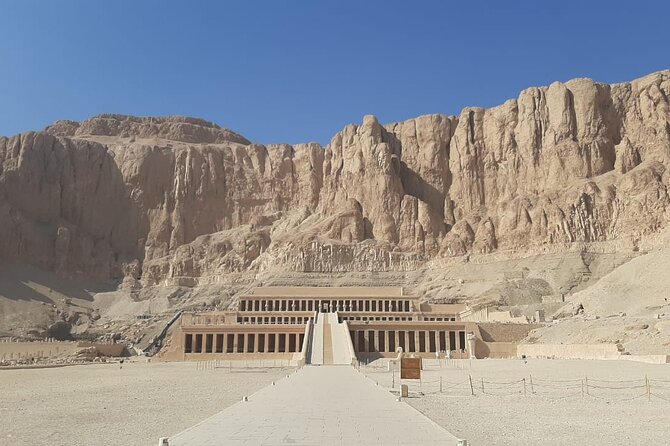
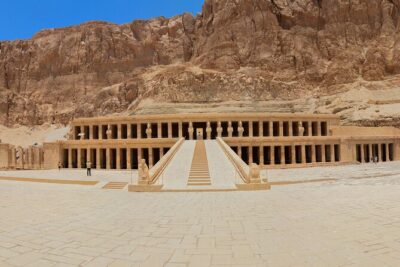
Next up is the Temple of Hatshepsut at Deir el Bahari, for about 1 hour 30 minutes. Admission is not included here either. The focus is on the queen Hatshepsut, and the timing is built around photos while the sun is shining, which is a smart move for both the look of the temple and how the details show up.
Hatshepsut’s story has a special “read the whole thing” feel, because the temple is not just architecture. It’s a statement, and your guide can help you see it that way instead of treating it like a pretty backdrop. If you like monuments with personality, this stop tends to deliver.
One consideration: because this is a photo-forward timing choice, you may be happiest if you’re willing to stand in the right spots for views and angles. If you prefer a very slow, quiet museum pace, you might feel a little pressure to capture your pictures. But the upside is obvious, strong light often makes the carvings and structure pop.
Colossi of Memnon (10 Minutes, Free): The Vocal Memnon Legend With Specifics
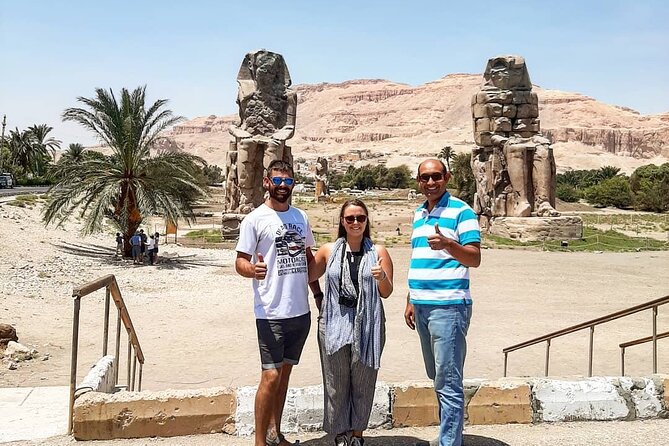
You’ll stop at the Colossi of Memnon for about 10 minutes, and it’s listed as admission free. This is short by design, but the site is famous enough that it works as a quick, high-impact story break.
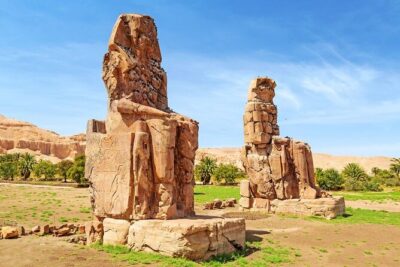
Here’s what makes the Colossi worth your attention. They’re two huge seated statues representing King Amenhotep III, carved from single blocks of sandstone. Each one is 18 meters high and weighs about 720 tons, which is so big it almost feels unreal until you’re there and you have scale in your head.
The legend attached to them is where your guide’s facts really matter. The statues were known as the singing statues, often called the Vocal Memnon. The story says their voices stopped due to renovation works carried out by Roman Emperor Septimius Severus, dated 193 to 211. Whether you treat the legend as history or folklore, it’s a great example of how later eras kept re-reading Egypt’s monuments.
You’ll also hear details about the imagery carved into the statues, including references to Amenhotep III’s mother, his wife, and the god Hapi. That level of specificity helps you look at the stone and actually spot the elements your guide points out, instead of just seeing two seats and moving on.
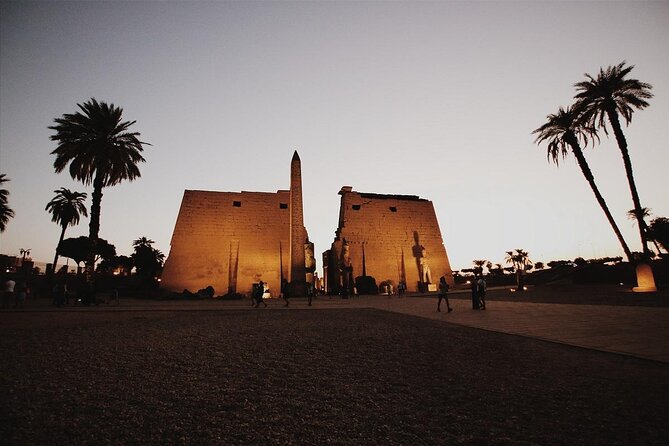
Luxor Temple (1 Hour): Three Faiths, One Orientation, and the Triads of Thebes
Luxor Temple is next, for about 1 hour, and admission is not included. The tour frames it as one of the most impressive temples in ancient Egypt because of its simplicity, and it also highlights the temple’s unique orientation. There’s also a fascinating modern layering here: the site is described as having enclosures connected to three religious traditions, ancient Egyptian religion, Christianity, and Islam.
Your guide can make this stop click because it’s not only about what the temple was, it’s about how people reused meaning. Luxor Temple is positioned on the east bank of the Nile, alongside and parallel to the river. That location connects it to the broader map of Thebes and the daily rhythm the Nile created.
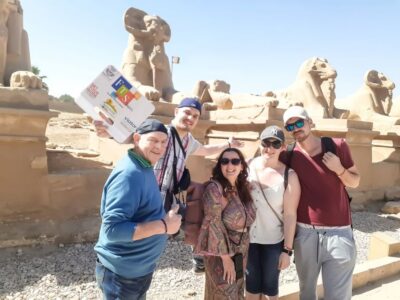
The temple is regarded as a cult temple dedicated mainly to the Triads of Thebes, Amon-re, Mut and Khonsu. It was founded by Amenhotep III, then expanded by successive kings, including Ramses II and Alexander the Great. Even in a one hour stop, those names are worth remembering, because they anchor Luxor Temple in multiple layers of time.
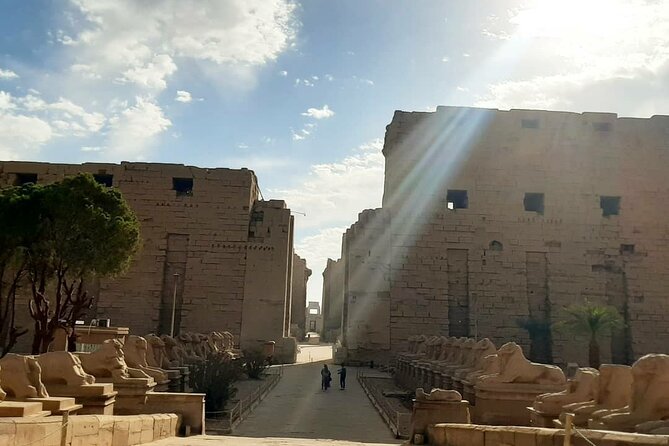
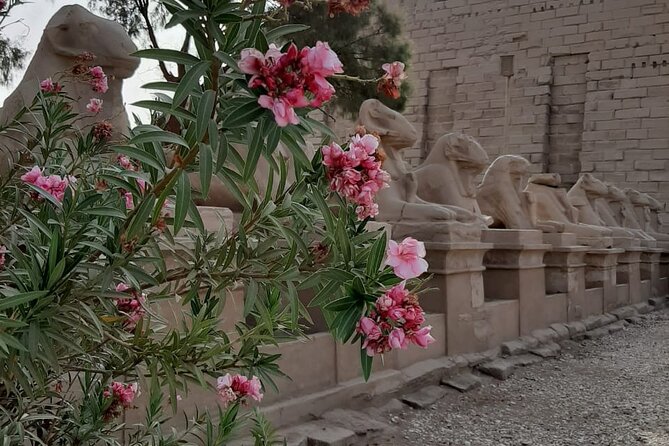
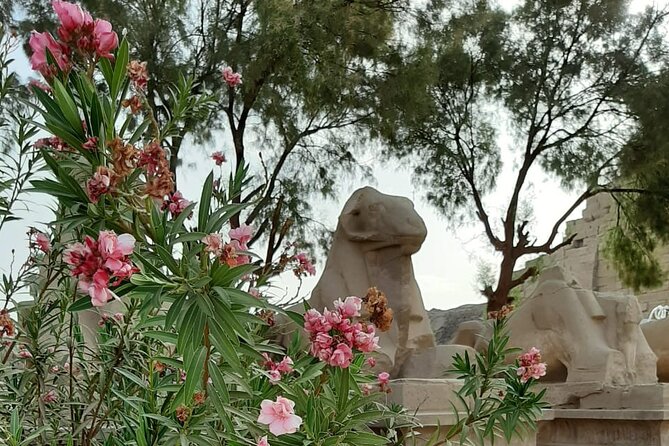
There’s also mention of the Sphinx Avenue between Karnak and Luxor. If you’re the type who likes to understand the layout and how routes were used, this is a good marker to keep in your mental map for the day’s last big stop.
Karnak Temple (2 Hours): Admission Included and a Lot to See
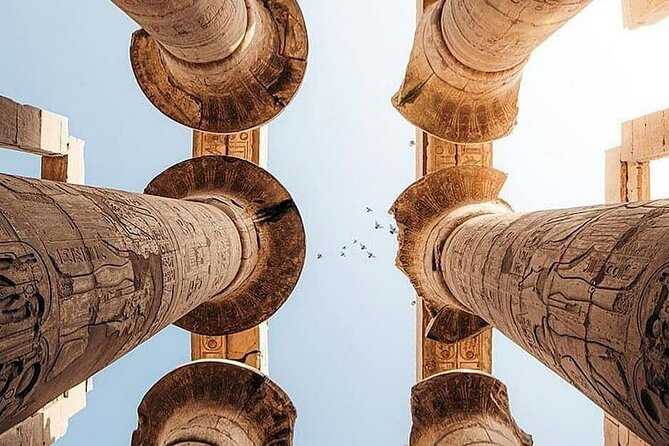
Karnak Temple takes about 2 hours, and admission is included. That one detail matters for value, because Karnak is one of the places where ticketing and entry can add friction if you’re already budgeting for several other sites.
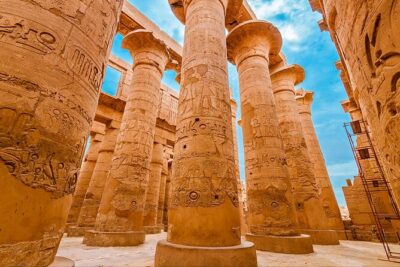
Karnak is also where the Egyptologist guidance pays off the most. Even if you’re not a hardcore hieroglyph fan, the scale is intimidating, and the symbols can feel repetitive until someone helps you notice the patterns. With the time allotted, you can actually slow down and connect sections of the complex to what your guide is explaining.
In a perfect world, you’d spend longer. But within a full-day itinerary, 2 hours is a practical length that still leaves room to absorb the temple’s themes. If you’re trying to choose between monuments, having Karnak as the one stop with included admission makes sense because it’s also the one that tends to be most visually and conceptually demanding.
Price, Entrance Fees, and Whether $100 Is Fair for a Private Day
The price is $100 per person for a private tour that runs about 7 to 8 hours. On paper, that’s a solid value when you consider what’s included: an Egyptologist guide, a private format, an air-conditioned vehicle, and a mobile ticket.
Where you need to be smart is entrance fees. Valley of the Kings, Hatshepsut, and Luxor Temple are listed as admission not included, while Karnak admission is included and Colossi of Memnon is free. So your true cost depends on what you pay at the sites you enter.
Still, the overall package tends to be worth it if you care about context. This itinerary is not just walking from one doorway to another. It’s built around guided explanation at the main attractions, which is exactly what turns expensive-entry sites into an experience you’ll remember for the right reasons.
If you’re the type who enjoys reading labels and making your own connections, you could go cheaper with a self-guided day. But if you want someone to connect the story of Hatshepsut, the meaning of the Triads of Thebes, and the legend of the Vocal Memnon in a way that feels coherent, the guide is the main reason the price works.
Who This Tour Suits Best (and Who Might Prefer Another Plan)
This is a great fit if you want ancient history in a structured day. The itinerary focuses on major names and core Luxor landmarks, and it does it with an Egyptologist guide and private attention.
It also suits people who dislike the stress of coordinating multiple sites on their own. You get an air-conditioned vehicle and a planned flow between monuments, so you’re not constantly recalculating routes or timing your arrivals.
If you only have limited interest in one or two sites, you might feel like the day is too packed. This is also not the best choice if entrance fees would be a dealbreaker, because several key stops list admission as not included.
Finally, the tour requires good weather, and that’s not a small detail. If conditions are poor, the operator may offer a different date or a full refund, so keep flexibility in your schedule.
Should You Book This Luxor Full Day Tour?
If you want a high-value Luxor day with less guesswork and more real interpretation, I’d book it. The private Egyptologist format is the core strength here, and the guide quality stands out in the feedback, especially with clear English and strong historical explanations from Daniel.
Just go in with two expectations. First, plan for entrance fees on several stops since admission is only included for Karnak (and free for the Colossi of Memnon). Second, double-check the start time shown as 12:00 am so you don’t end up chasing your pickup like it’s part of the plot.
If that works for your budget and schedule, this is the kind of day where Luxor feels like a connected story, not a random collection of monuments.
FAQ
Is this a private tour?
Yes. It’s a private tour/activity, so only your group participates.
How long is the Luxor full day tour?
It runs about 7 to 8 hours.
Is pickup offered, and do I get a mobile ticket?
Pickup is offered, and you receive a mobile ticket.
Are entrance tickets included for every stop?
No. Admission is not included for Valley of the Kings, Temple of Hatshepsut at Deir el Bahari, and Luxor Temple. Karnak Temple admission is included, and the Colossi of Memnon stop is listed as free.
What start time is listed for the tour?
The start time is listed as 12:00 am. You should confirm the exact pickup time when you book.
What if weather is bad or I need to cancel?
The experience requires good weather. If it’s canceled due to poor weather, you’ll be offered a different date or a full refund. You can also cancel for a full refund up to 24 hours in advance.
More of Luxor from our review pile
- Private Tour Luxor : Luxor Temple and Karnak Temple
★ 5.0 · 25 reviews - Private Day Trip to Dendara and Abydos Temples
★ 5.0 · 25 reviews - Luxor Airport Transfer
★ 5.0 · 25 reviews - Luxor Full Day Tour
★ 5.0 · 25 reviews - Hot Air balloon Trip in Luxor
★ 5.0 · 25 reviews - Full-Day Tour to East and West Banks of Luxor
★ 5.0 · 25 reviews
Full-Day, compared.
 ★ 4.5Cairo and Giza Highlights Full-Day TourFrom $766,014 reviews
 ★ 4.5Full-Day Trip to Cairo by PlaneFrom $2752,415 reviews
 ★ 4.5Shared Full-Day Tour to Luxor West and East BanksFrom $901,812 reviews
 ★ 5.0Full Day Tour to East and West Banks of LuxorFrom $151,449 reviews
 ★ 4.5Full-Day Trip to Cairo by PlaneFrom $2931,186 reviews
 ★ 4.1Private Full-Day Tour of Historical AlexandriaFrom $651,155 reviews
 ★ 5.0Full Day Tour to Luxor West and East Banks & LunchFrom $23870 reviews
 ★ 5.0Full Day Tour of Luxor West Bank Temples and Tombs (Private)From $20722 reviews