
REVIEW · GIZA PYRAMIDS & SPHINX TOURS
Giza Pyramids, the Sphinx, Islamic & Coptic Cairo Tour
Giza and Cairo in one day sounds impossible, until you see how it flows. This private tour pairs the Giza Pyramids and Great Sphinx with Coptic Cairo and key Islamic landmarks, guided by an Egyptologist. I like that hotel pickup and drop-off make the day feel organized, not stressful, and that you get a real tour rhythm rather than wandering alone. The main catch is that it packs a lot in, with limited time for long breaks, and you’ll still pay for entrances and lunch.
If you want the highlights of Egypt without needing multiple tickets and guides, this is a strong value play for first-time Cairo. You’ll move by air-conditioned vehicle, sip bottled water along the way, and get context for what you’re actually looking at, from royal pyramids to churches and mosques.
In This Review
- Key things I’d plan around
- How this one-day Giza plus Cairo combo actually feels
- Giza Pyramids and the Sphinx, with more than just the postcard view
- What to watch for during the camel ride
- Oil makers, quick stops, and how to avoid turning this into a shopping tour
- Coptic Cairo: Hanging Church and the feeling of layered time
- The most useful way to visit Coptic sites
- Old Cairo’s Islamic landmarks: mosques, madrasas, and gates that still carry drama
- A practical tip for Old Cairo stops
- Cairo Citadel and the Muhammad Ali Mosque: where the view does half the talking
- Price, what’s included, and what you must budget for
- Fit and pacing: who this tour suits best
- Should you book this Giza and Cairo tour?
- FAQ
- What time does the tour start?
- How long is the tour?
- Is hotel pickup and drop-off included?
- What is included in the tour price?
- What is not included?
- Does the tour include a lunch stop?
- Is there a camel ride?
- Is the tour private?
Key things I’d plan around
- Private pacing: only your group, with an Egyptologist guide who can slow down when questions pop up
- Giza plus desert-style views: panoramic point moments and a short camel ride to get you into the setting
- Two Cairo worlds: Coptic stops like the Hanging Church, plus Old Cairo Islamic sites and major mosques
- Citadel and Muhammad Ali Mosque: Ottoman-era architecture atop the hill, with big skyline energy
- Lunch is on you: the tour includes a lunch stop, but meals are not included, so budget time and money
- Entrance fees not included: plan on extra costs for sites you enter
Ways onto the Giza plateau, compared
- Private guided tour to Giza Pyramids, and Great Sphinx★ 5.0 · 1,755 reviews
- VIP Giza Pyramids,Sphinx,ATV bike,CamelRide,Shopping&DinnerCruise★ 5.0 · 704 reviews
- From Hurghada: Pyramids and Egyptian Museum Tour & Boat Ride★ 4.4 · 381 reviews
- Private Tour to explore Giza Pyramids – Saqqara -Memphis★ 5.0 · 294 reviews
How this one-day Giza plus Cairo combo actually feels
Cairo can be a lot, fast. You can stare at a map all day and still feel like you missed the point. This tour tries to solve that with a tight sequence: big-photo Giza first, then a careful switch into Old Cairo, where religious architecture tells part of the story of Egypt’s past.
What I like most is the way the guidance connects places. You’re not just collecting stamps. You’re hearing why these spots mattered, from ancient royal ambition at Giza to later layers of faith and learning in Cairo. The day is also set up to be physically manageable for many travelers: hotel pickup and return, plus a vehicle that handles the long stretches.
The downside is time. It’s an 8-hour day on paper, and it can feel more like a sprint if you’re the type who wants to linger in every room. If you want slow, museum-style wandering, you may want to supplement this tour with another time block after.
Giza Pyramids and the Sphinx, with more than just the postcard view
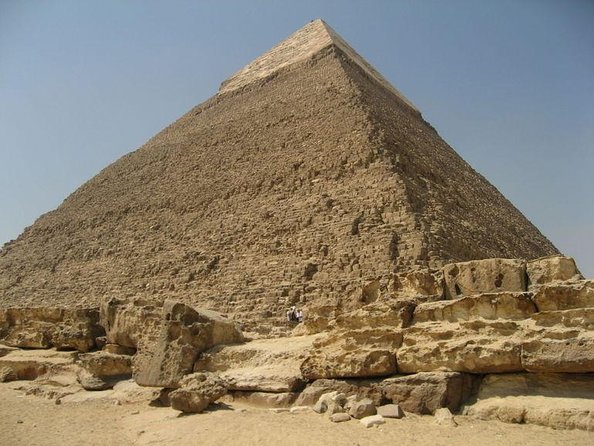
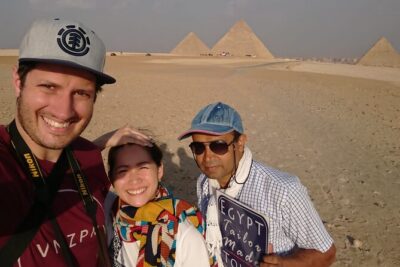
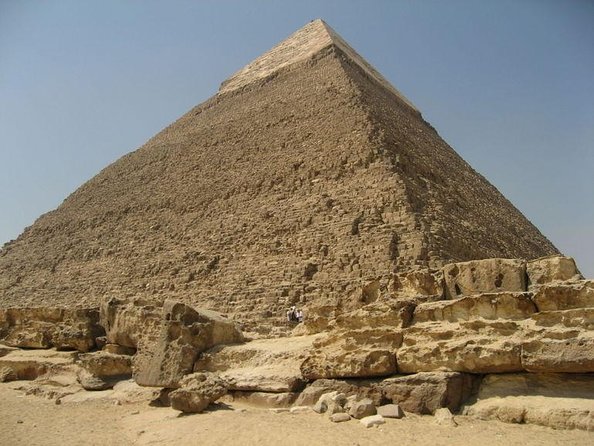
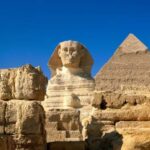
The morning begins at Giza with the Pyramids of Giza and the Great Sphinx. This is the kind of place where first impressions are loud, but details are where the experience gets real. The guide helps you orient fast, especially around the Great Pyramid of Cheops and the Sphinx at the foot of the pyramids.
You’ll also get time at the Panoramic Point and the Valley Temple. That matters because Giza isn’t one single view. From different angles, you understand the layout: temples and causeways, where the ancient world built for processions, not just tourists.
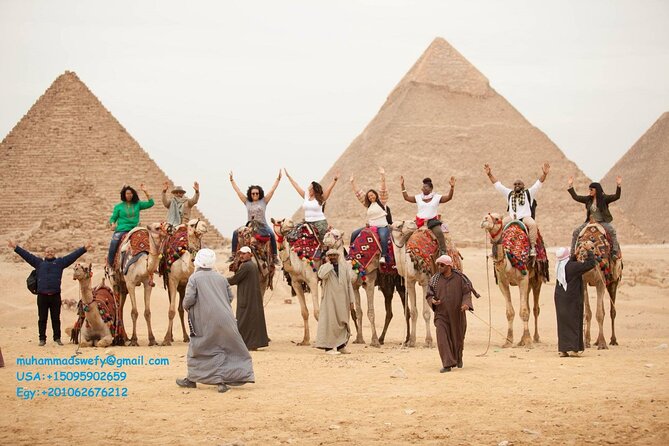
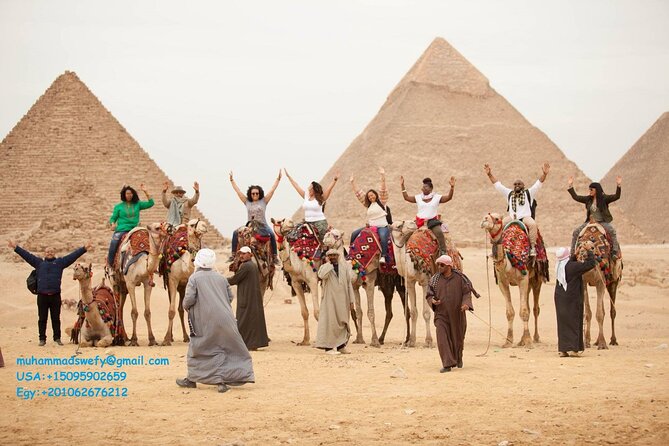
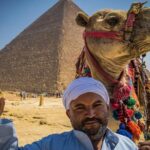
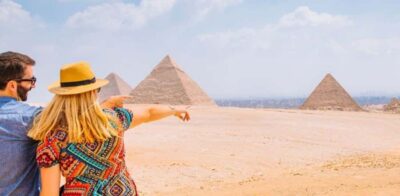
Then there’s the desert-side fun. The tour includes time for a short camel ride, with the goal of seeing multiple pyramids from the saddle view and getting memorable photos. If you’ve never done it, the camel ride can be the emotional highlight of the morning, because it feels like you’re moving through the landscape rather than standing next to it.
One extra detail I appreciate in this sort of tour is the way it handles expectations around photos. At Giza, the best shots are often from slightly different positions, and the guide’s job is to get you there without wasting your whole day walking in circles.
What to watch for during the camel ride
I’ll be practical here. Camel rides can be fun, but they can also be uncomfortable if you’re not used to sitting on a moving animal. Bring patience. Wear sun-protective clothing. If you’re sensitive to heat, plan to hydrate early since the dunes and stone surfaces can get intense.
Also, I like that guides in this setup often help first-timers. In past experiences shared by travelers, guides have assisted riders who weren’t horse people, even helping them decide on which camel felt right. That kind of small human support can make a big difference in how confident you feel.
Oil makers, quick stops, and how to avoid turning this into a shopping tour
Between major monuments, you’ll have a short stop connected to essential oil making. The idea is cultural, not just a sales pit. The oils connect back to what ancient Egyptians used for skin care and preservation practices, including the story of using oils to protect mummies and protect the body.
Still, keep your expectations clean. A short production stop is not the same thing as a deep workshop. If you’re not interested in buying, you can still treat it as a fast context window. Listen for the meaning, not the pitch.
If you want to maximize value, use these small stops as mental “rest points.” In a long day, 15 to 20 minutes of a seated or slower activity can save you from running out of energy before the Old Cairo segment.
More of Coptic Cairo, quietly walked
Coptic Cairo: Hanging Church and the feeling of layered time
After Giza, the day turns toward Coptic Cairo, where Christianity in Egypt is visible through churches and early religious sites. You’ll spend time in the area commonly linked with the Babylon Fortress and the Coptic Museum, and then focus on churches that have deep roots.
The highlight here is the Hanging Church, formally Saint Virgin Mary’s Coptic Orthodox Church. You’ll learn that the tradition ties the location to an early history, and that the current history of a church on this site dates to the third century. Whether you’re a church architecture fan or not, the Hanging Church is the kind of place that makes you slow down, because it feels built for worship across centuries.
You also get the broader picture of how Coptic Christianity shaped Old Cairo both before and during the Islamic era. That’s not just a trivia point. It affects the mood of the architecture and the way different communities lived near each other in the same city.
The most useful way to visit Coptic sites
Go in expecting to notice small things. Look at the church interiors, the layout, and how the space supports ceremony. Even if you don’t know every symbol, a good guide helps you translate what you’re seeing into something you can recognize.
Also, since this part of Cairo involves religious spaces, dress with respect. The tour notes that it runs in all weather and you should dress appropriately. In practice, that means bring clothing that covers shoulders and legs as needed for church visits, and be ready for heat or wind.
Old Cairo’s Islamic landmarks: mosques, madrasas, and gates that still carry drama
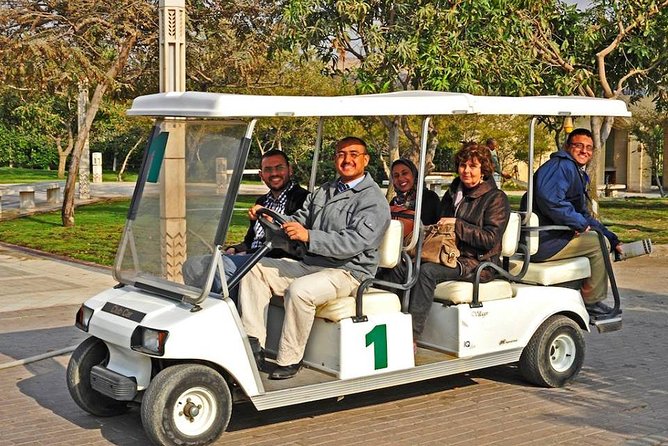
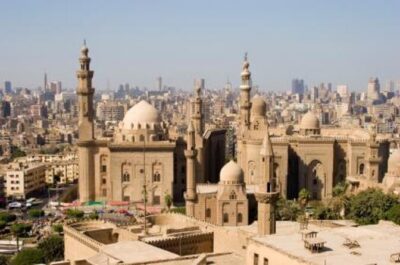
One of the smartest parts of the day is the switch from ancient stone to living faith spaces. You’ll move through Islamic Cairo with a focus on historic architecture and learning institutions.
You may encounter places tied to specific eras and architects of style, including references such as the Circassian Mamluk period at Al-Ishaqi mosque, the older-feeling lanes near Bab Zuweila, and the distinctive 12th-century architecture of Al-Salih Tala’I mosque. You can also see structures connected to education and funerary traditions, like Faraj ibn Barquq, which may have also served as a traditional madrasa.
The key to enjoying these stops is to remember that Old Cairo is not a single “attraction.” It’s a set of neighborhoods and buildings that evolved over time. You’ll see mosques, madrasas, and mausoleums close enough together that the city starts to read like a story instead of a list.
You may also stop at the Museum of Islamic Art, which is known for serious collections of art and artifacts from across the Islamic world. Even if your museum time is limited, you’ll come away with a sense of why Cairo has been a long-running center of craft, scholarship, and collecting.
And then there’s Al Azhar University, mentioned as one of the oldest continually operating universities in the world. Even if you just get a sense of the institutional presence, it gives you context for why learning and architecture often travel together in Cairo.
A practical tip for Old Cairo stops
This stretch can mean more walking on uneven ground and more time in sun or shade. Wear comfortable shoes with grip. If you get tired easily, tell your guide early. Private pacing is only useful if you communicate what your body needs.
Also, don’t treat every door as an invitation to go inside. Some sites are best enjoyed from outside or in short entry windows, depending on timing and access.
Cairo Citadel and the Muhammad Ali Mosque: where the view does half the talking
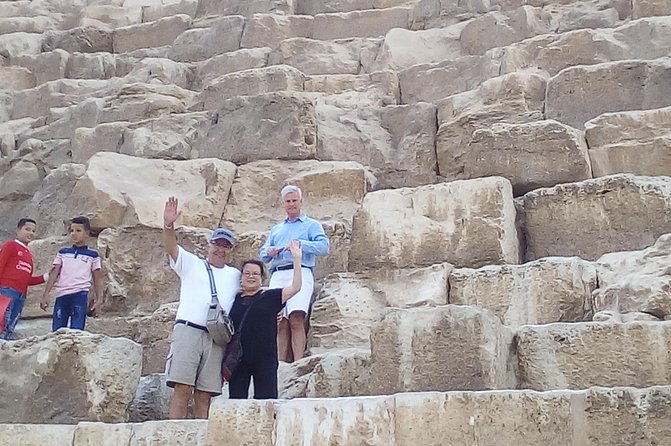
Later in the day, you’ll reach the Cairo Citadel, also called the Citadel of Saladin. It was a medieval Islamic-era fortification and served as the seat of government for centuries. That political function helps explain why this area still feels important even when you’re just standing around taking photos.
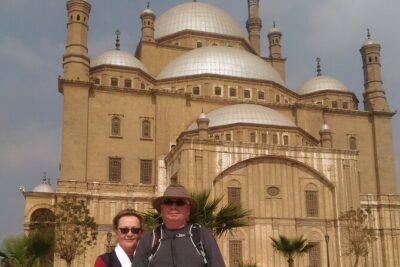
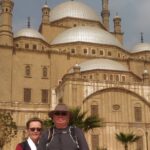
From the Citadel, the big visual payoff is the Mosque of Muhammad Ali, sometimes called the Alabaster Mosque. It was commissioned by Muhammad Ali Pasha and built between 1830 and 1848. The mosque is known for its Ottoman design and its visible silhouette with twin minarets.
You’ll also learn the memorial context tied to Tusun Pasha, Muhammad Ali’s oldest son. Again, that context matters. The building isn’t just pretty. It’s tied to power, memory, and identity.
If you’re a view person, this stop is worth it. The Citadel position gives you a sense of Cairo’s sprawl and how the city developed outward.
Price, what’s included, and what you must budget for
The tour price is listed at $43 per person, which is low for a private day in a major metro area, especially with a guided component and hotel pickup. The real value question isn’t just the sticker price. It’s what you get without paying extra for basic logistics.
Included:
- Private tour and private air-conditioned vehicle
- Hotel pickup and return from Cairo or Giza
- Qualified Egyptologist guide
- Mineral water on board
- Service charges and taxes
Not included:
- Food and drinks
- Gratuities
- Entrance fees
There’s also a lunch stop included at a deluxe Egyptian food court, with lunch itself paid by you. That’s a normal setup in this part of Egypt where entrance fees and meal choices vary. The good news is that you can plan your day around it. The bottled water helps you bridge the gaps.
My honest take: for the time you’re spending and the number of major landmarks, this is a budget-friendly way to do a lot in one shot. Just don’t show up thinking the $43 covers every single site cost.
Fit and pacing: who this tour suits best
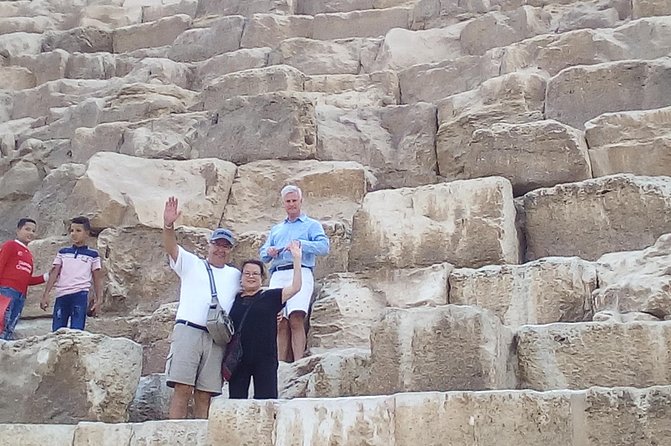
This is a private tour, so it works well if you like a guide who can match your pace. It also helps if you’re short on time and want a single plan that covers Giza plus two different Cairo religious eras.
This tour also mentions moderate physical fitness. That means you should expect some walking, including potentially uneven ground near historic areas. If you have mobility limitations, you’ll want to think carefully, because “private” does not automatically mean “no walking.”
It can also be a smart choice for first-time visitors because it includes the most in-demand monuments: pyramids, Sphinx, Hanging Church, Citadel, and Muhammad Ali Mosque. If you return to Cairo later, you’ll know what you loved and can build from there.
Should you book this Giza and Cairo tour?
If your goal is a one-day highlights plan that is guided, comfortable, and efficient, I’d say yes, this is a good booking. The combination of Giza monuments plus Coptic and Islamic Cairo is hard to pull off solo without wasting hours on routes and timing, and the private setup keeps it from feeling like cattle.
I’d hesitate only if you hate packed days or you need long breaks between stops. Also, budget entrance fees and meals in advance, so you do not get surprised halfway through the day.
If you book, do this: wear sun protection, bring water sense for the heat, and tell your guide what pace you want. In Cairo, that small request often decides whether the day feels like a win or a grind.
FAQ
What time does the tour start?
The start time is 9:00 am.
How long is the tour?
The duration is listed as about 8 hours.
Is hotel pickup and drop-off included?
Yes. Pickup and return are included from your Cairo or Giza hotel, with front-door service.
What is included in the tour price?
The tour includes a private tour, a private air-conditioned vehicle, a qualified Egyptologist guide, mineral water on board, and service charges and taxes.
What is not included?
Entrance fees, food and drinks, and gratuities are not included.
Does the tour include a lunch stop?
Yes, there is a lunch stop at a deluxe Egyptian food court, and lunch is at your own expense.
Is there a camel ride?
Yes, there is a short camel ride included in the Giza portion.
Is the tour private?
Yes. This is a private tour/activity, and only your group will participate. Children must be accompanied by an adult.
Mosques, Minarets and the Citadel

Coptic Cairo, Church by Church
Giza, A Few More Ways In


More of Giza from our review pile
- Sakkara, Memphis & Dahshur Tour
★ 5.0 · 26 reviews - Private Day to Giza Pyramids, Egyptian Museum and camel sunset
★ 5.0 · 26 reviews - Pyramid Duo Rooftop Capturing Elegance from the Rooftop
★ 5.0 · 26 reviews - Half Day Giza Pyramids and Sphinx
★ 5.0 · 26 reviews - Private Tour Giza Pyramids Wonders All inclusive
★ 5.0 · 26 reviews - Giza Pyramids, Sphinx & inside the Great Pyramid of Khufu
★ 5.0 · 27 reviews
Giza Pyramids & Sphinx Tours, compared.
 ★ 4.9Pyramids & Great Sphinx Private Tour with Camel RideFrom $486,335 reviews
 ★ 5.0Tour to Giza Pyramids and The Egyptian MuseumFrom $1556,016 reviews
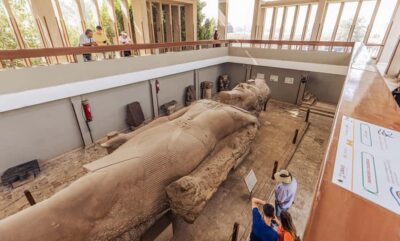 ★ 4.7Pyramids of Giza, Sphinx, Saqqara & Memphis TourFrom $903,110 reviews
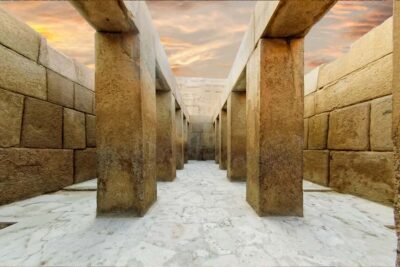 ★ 4.6Half-Day Tour to Pyramids of Giza and the SphinxFrom $502,891 reviews
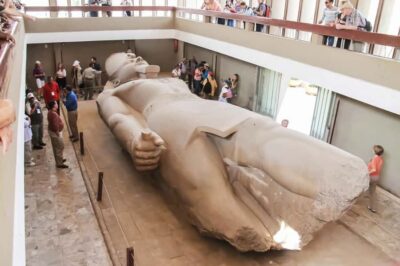 ★ 4.6Pyramids, Sakkara & Memphis Tour with LunchFrom $602,493 reviews
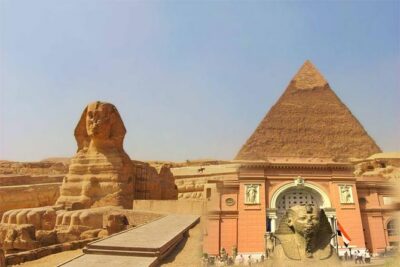 ★ 5.0Private ViP all-inclusive Giza Pyramids,Sphinx,Inside PyramidFrom $142,448 reviews
 ★ 4.7Grand Egyptian Museum, Pyramids, Sphinx Tour & LunchFrom $892,282 reviews
 ★ 4.7Cairo Pyramids, Sphinx & Egyptian Museum Day TripFrom $932,271 reviews
The lists this one sits on