
REVIEW · GIZA PYRAMIDS & SPHINX TOURS
Egypt 9 Days- Cairo Pyramids and Nile Cruise from Luxor to Aswan and Abu Simbel
Nine days, ancient Egypt with good structure. This tour strings together Cairo sights, a Luxor-to-Aswan Nile cruise, and the big-ticket detour to Abu Simbel. I like that it is built around Egyptologist guidance, not just ticket scanning.
Two things I really like: first, you get time at major sites with proper context, from pyramid building at Giza to temple symbolism in Luxor and Edfu. Second, logistics seem handled tightly, including hotel and port transfers, with a small group size (up to 15) that helps keep things calm. You may also see the names Mahmoud, Remon, and Mustafa tied to the kind of smooth, on-the-ground support this company is known for.
One drawback to consider is sheer pace. You pack Cairo, then jump into Luxor and the Nile route, and Abu Simbel is a long outing at 230 km southwest of Aswan, so you need decent energy and flexibility.
In This Review
- Key highlights that matter on the ground
- Cairo first, then the Nile, so you get your bearings fast
- Giza Plateau to Memphis, the pyramid arc you actually feel
- Egyptian Museum, Khan Al-Khalili, and Coptic Cairo, the city side done right
- Luxor Temple and Karnak, where scale stops being a word
- Valley of the Kings, Hatshepsut, and Colossi of Memnon, the West Bank drama
- Edfu and Kom Ombo, temples with stories that feel unusual
- Abu Simbel and Philae, the long day you will remember
- Nile cruise value: what’s included, and why it matters
- Price and logistics: is $2,895 worth it?
- Who this tour suits best
- Should you book this Egypt 9-day Cairo and Nile Cruise experience?
- FAQ
- What is included in the price?
- How long is the tour and when does it start?
- Is there a Nile cruise?
- Which major sights are covered?
- Does the tour include meals?
- Are airport transfers and a flight included?
- Do I need to worry about buying tickets on arrival?
- What is the cancellation window for a full refund?
Key highlights that matter on the ground
- On-the-ground reliability, with hotel/port pickup and drop-off built into the trip
- Admission access included at the sites listed, so you spend less time fussing and more time seeing
- Egyptologist-led interpretation, which makes temples and tombs easier to read (and less confusing)
- A real cruise segment, 4 nights on a luxury Nile cruise from Luxor to Aswan
- Balanced Cairo and Nile time, rather than only doing one side of Egypt
- Small group size (max 15), which tends to mean smoother timing at crowded places
Ways onto the Giza plateau, compared
- Cairo: Pyramids & Great Sphinx Private Tour with Camel Ride★ 4.9 · 6,335 reviews
- Tour to Giza Pyramids and The Egyptian Museum★ 5.0 · 6,016 reviews
- VIP All inclusive Best of the best Giza Pyramids,Sakkara,Memphis★ 5.0 · 3,164 reviews
- From Cairo: Pyramids of Giza, Sphinx, Saqqara & Memphis Tour★ 4.7 · 3,110 reviews
Cairo first, then the Nile, so you get your bearings fast
I like routes that move with the geography, and this one does. You start in Cairo for the heavy hitters, then you transition into Upper Egypt, where temples and tombs feel like they belong together. Instead of rushing through everything like a checklist, you get a rhythm: museums and old city streets in Cairo, then temple days along the Nile.
That sequencing is useful for your brain. Cairo gives you a lot of background, especially with the Egyptian Museum visit and Old Cairo stops. Then when you get to Karnak and Luxor Temple, the details start to click faster.
Also, this is not a huge group tour in the generic sense. With a maximum of 15 travelers, it is easier for guides to keep you on track during transfers and for everyone to stay aware of meeting points.
Giza Plateau to Memphis, the pyramid arc you actually feel
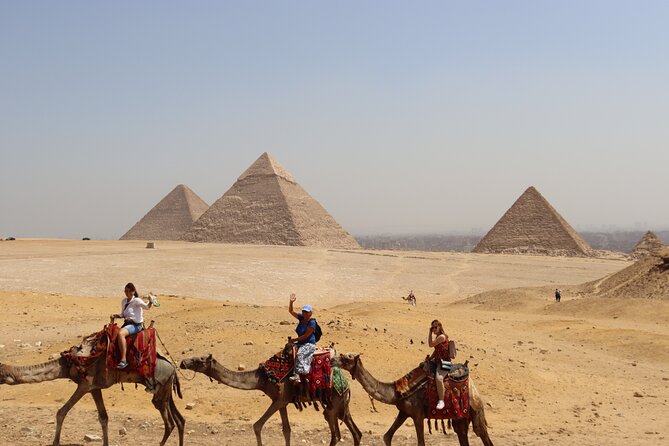
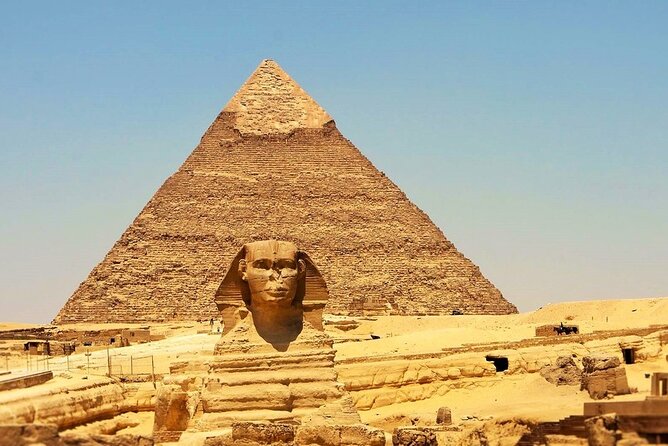
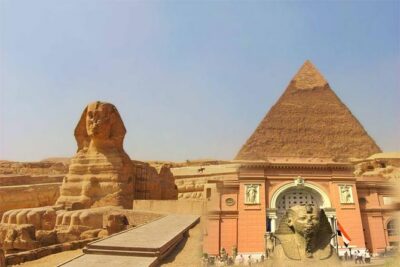
Your first big full day hits the Giza Plateau. Expect a guided look at the Pyramids of Giza and the Sphinx, with time for classic views and photos. This tour also includes a chance to get inside the Great Pyramid and to visit the Queen Pyramid, which changes the experience from viewing to understanding. Even if you only spend a short time inside, it helps you grasp the scale and the engineering in a way flat surfaces never do.
Then the day continues to Saqqara for the Step Pyramid of King Zoser. This is the kind of stop that makes Egypt feel less repetitive. At Giza you see the finished icons; at Saqqara you see an earlier step in how the pyramid idea evolved, with the six-step structure and its history as the oldest pyramid in Egypt.
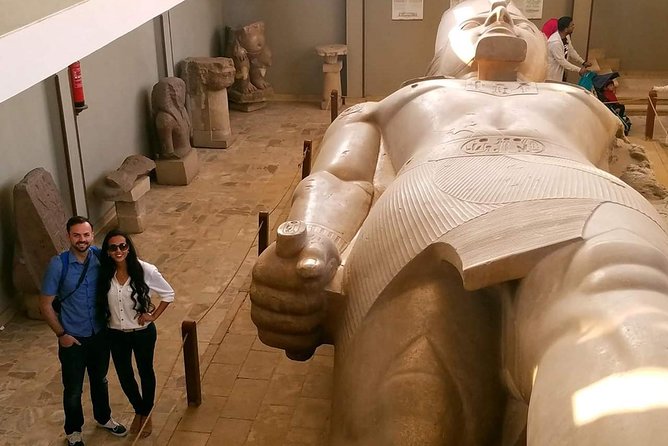
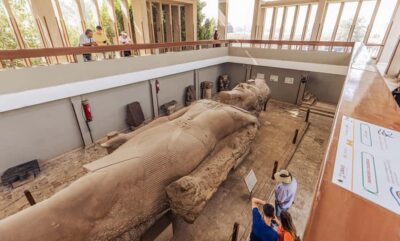
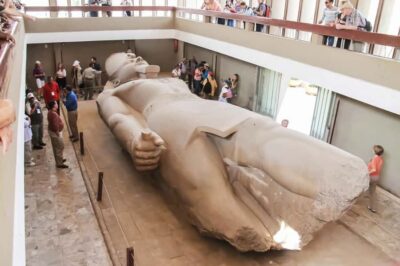
Next comes Memphis and Mit Rahina Museum. Even if you already know Memphis as a name, standing near the remains of an early capital makes it feel like the center of power was not just a rumor. The museum stop gives you a concrete way to connect the pyramids to the people and the administration around them.
Practical tip: wear shoes you can walk in all day. These sites involve uneven stone, long stretches of sand, and lots of time standing for views. Bring sunscreen and water, because shade can be scarce once you move beyond the main viewing areas.
Egyptian Museum, Khan Al-Khalili, and Coptic Cairo, the city side done right
Day 3 is where Cairo becomes more than monuments. You start at the Museum of Egyptian Antiquities, often called the Egyptian Museum. The scope is huge, with 120,000 items in the collection and only a representative number on display. A good guide matters here. Instead of wandering like you are in a warehouse, you get direction so you actually see key pieces and leave with a clearer mental map.
Then you head to Khan Al-Khalili, Cairo’s famous souk district in Islamic Cairo. Souks can feel chaotic, but that is part of the fun. You get an authentic taste of day-to-day life, with markets that tourists and locals both use. Just plan to move slowly. If you rush, you miss the best parts: the color, the craftsmanship, and the energy of bargaining.
Finally, you tour Coptic Cairo, which includes several major sites within Old Cairo such as the Babylon Fortress area, the Coptic Museum, and churches like the Hanging Church and St. George. The tour frames this as a strong Christian pocket that held significance until the Islamic era, and you will also hear about tradition tied to the Holy Family. Even if you are not religious, it helps to understand how layered Cairo is, with different eras leaving visible marks in the same neighborhoods.
Practical tip: Old Cairo walking can add up. If you are sensitive to crowds, go with a flexible pace and take short pauses when you need them.
Luxor Temple and Karnak, where scale stops being a word
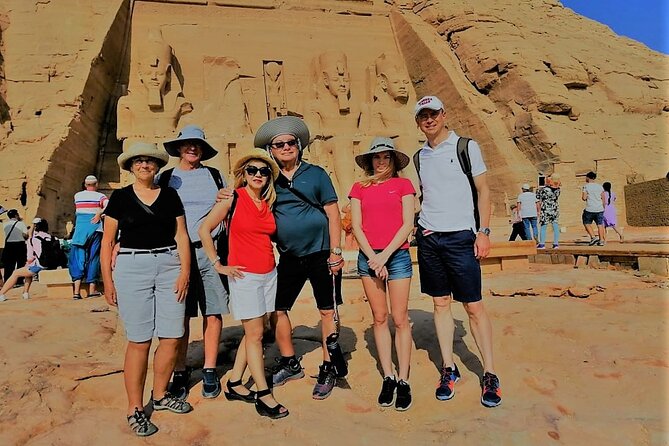
Once you leave Cairo, you shift to Luxor, and the temples feel different right away. The air changes from city museum energy to the slower, monumental rhythm of temple complexes.
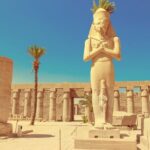
At Karnak Temple, you are looking at a massive temple complex dedicated primarily to Amun, with origins dating back as early as 2000 BC. Even when you think you know what a temple looks like, Karnak adjusts your expectations. It is huge, with structures and pylons that make you understand why people called it a power center.
Then you move to Luxor Temple, constructed around 1400 BCE on the east bank of the Nile. This is less of a maze than Karnak but still dramatic. You get the contrast: Karnak’s long, sprawling grandeur, then Luxor Temple’s more focused presence.
Practical tip: temple days often mean long sun hours. If your tour time starts in the morning, you get better light for photos and less heat stress later. Bring a hat or scarf and keep water handy.
More boats sailing the same stretch

Valley of the Kings, Hatshepsut, and Colossi of Memnon, the West Bank drama
The next cluster of stops brings you to the Nile’s west bank classics: tombs, mortuary temples, and massive statues.
At the Valley of the Kings, you get a guided look at a wadi set in the Theban Necropolis. You will likely spend about three hours here, which is enough time to understand the layout and not just race from one painted doorway to the next. This is where context turns into real value. The guide helps you connect what you are seeing to royal burials and the themes used inside.
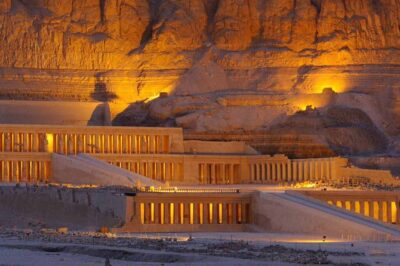
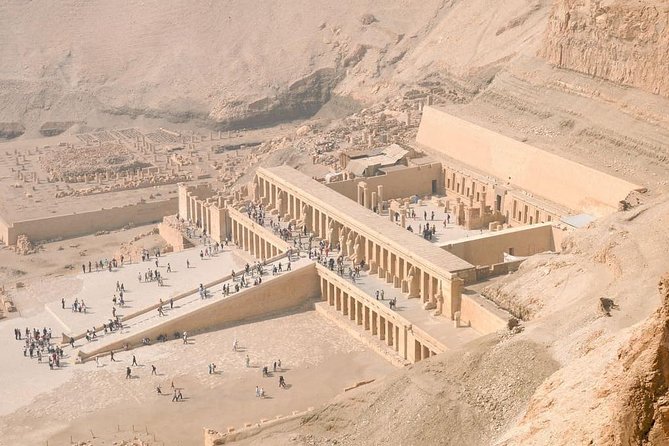
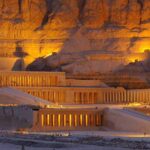
Next is Temple of Hatshepsut at Deir el Bahari. Hatshepsut’s mortuary temple sits under cliffs, and it has a distinct stepped look that feels sculpted into the landscape. This stop is one of the best reminders that Egypt was not a straight line of single rulers. It was constant power shifts, rival dynasties, and changing artistic messages.
Then you finish the trio with the Colossi of Memnon, two huge statues of Pharaoh Amenhotep III. Even with the passage of thousands of years, they remain big enough to make you feel small, which is exactly what they were designed to do.
Practical tip: the West Bank can be windy and hot, and the surfaces can be rough. Plan on steady walking pace and keep your camera strap secure in open areas.
Edfu and Kom Ombo, temples with stories that feel unusual
On the cruise route, you stop at Temple of Horus in Edfu. This is described as one of the most beautiful and preserved temples in Egypt, and it is tied to Ptolemaic time. The preservation matters. When carvings and structures survive well, you spend less energy guessing what you are looking at and more time reading the symbolism.
Then you move to Temple of Kom Ombo, a double temple. One side connects to the crocodile god Sobek, including associations with fertility and creation, and the other side connects to other gods. A double temple can sound like a “special case” on paper, but on site it makes a lot of sense. You get a physical way to see how Egyptian religion accommodated multiple divine roles in the same sacred space.
Practical tip: these stops often feel calmer than Cairo. That is a good thing. You can take more time, ask questions, and let the guide explain how the temple layout supports the story being told.
Abu Simbel and Philae, the long day you will remember
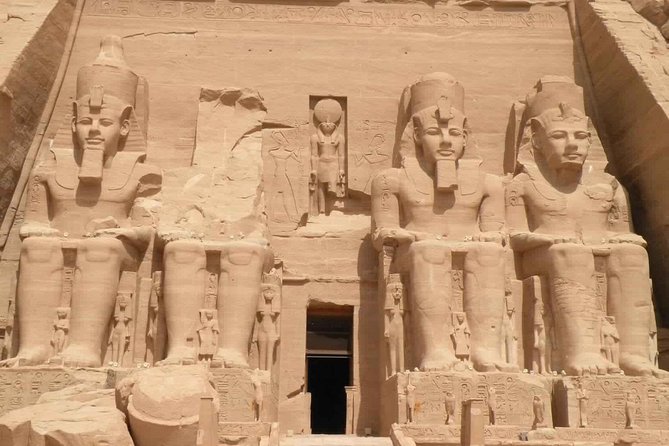
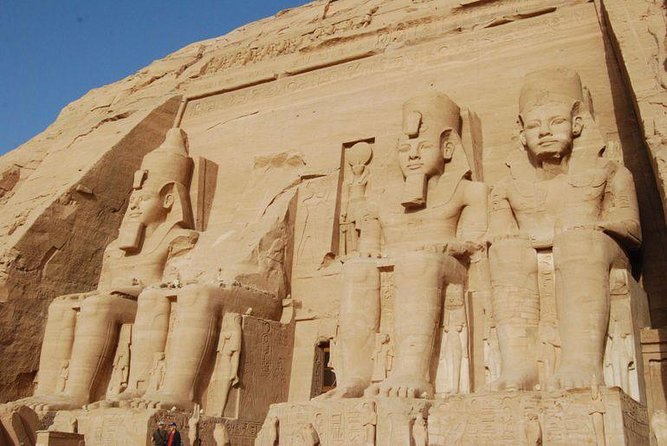
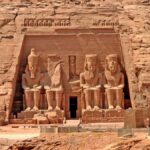
This is the portion of the trip most people think about. The Abu Simbel Temple Complex includes two massive rock temples at Abu Simbel near the border with Sudan. It is about 230 km southwest of Aswan, and the outing is listed at around five hours. Translation: it is a big time block, and you will want comfortable clothing and a real snack plan.
Then you continue to Philae, an island in the reservoir downstream of the Aswan Low Dam. Philae was originally located near the First Cataract area, and it is known for its temple complex. On a tour like this, Philae is a satisfying capstone to the Nile sequence, because it connects the river journey to a sacred landscape shaped by water and engineering.
Practical tip: Abu Simbel and Philae can be bright and hot. Bring sun protection you trust, and keep your water bottle available. If you are prone to headaches, consider taking breaks during the walkways rather than pushing straight through.
Nile cruise value: what’s included, and why it matters
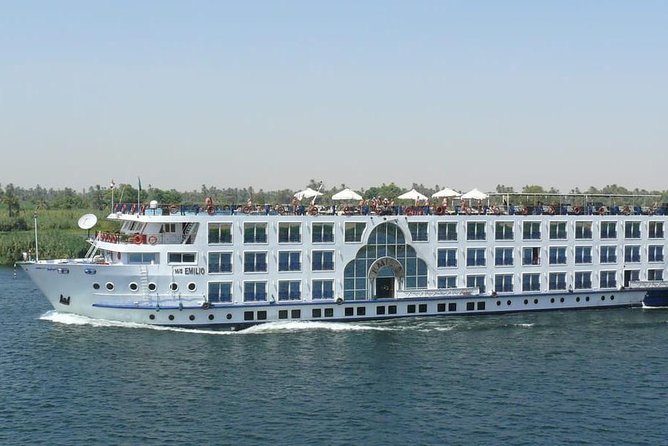
The package includes 4 nights on a luxury Nile cruise based on F&B. That matters for two reasons. First, it removes decision fatigue. You do not have to plan where to eat or how to get from one part of your day to the next. Second, it makes the in-between time useful. Even when you are not in a temple, you are moving through the Nile corridor with the same group, the same support team, and the same overall pacing.
On top of that, you get 4 nights at 5-star hotels in Cairo based on B&B. The split works well because it prevents you from living out of one room for the whole trip. You get a proper reset during your Cairo days and again after the cruise when you return.
Meals are also built in: breakfast (8), lunch (6), and dinner (4). Those numbers matter more than people think, especially on a tight cultural schedule. When meals are covered, you keep your energy stable, and that helps when you have long temple visits.
One thing to note: tipping for guides and drivers is not included. So if you are used to a fully turnkey price, factor that in before you go.
Price and logistics: is $2,895 worth it?
At $2,895 per person for roughly 9 days, this is not a budget trip. But it is also not just paying for a seat on a boat. You are paying for a bundle of expensive items and time-savers that add up quickly in Egypt: qualified Egyptologist guidance, hotel and port transfers, entry fees for the listed sights, and a mix of hotel and cruise nights.
The value question comes down to your stress level. If you want to see Giza, Saqqara, Memphis, Cairo’s museum and churches, then do Luxor, Edfu, Kom Ombo, Abu Simbel, and Philae, without building a private plan from scratch, this kind of all-in structure often feels fair.
You also get the small group cap of 15 travelers, which tends to reduce waiting and helps the guide keep the day flowing. In places like Cairo and the Nile route, time is part of the cost. This tour seems designed to protect it.
Also, you receive a mobile ticket. That is a small detail, but it can reduce last-minute friction when you are moving quickly from site to site.
Who this tour suits best
This tour is a good match if you:
- Want one guide to connect the story across pyramids, temples, and museums
- Prefer a structured plan over constant self-planning
- Like the idea of combining Cairo with a real Nile cruise segment
- Are okay with long days, especially with Abu Simbel on the schedule
It may not fit you as well if you:
- Want slow travel with lots of free time and few scheduled stops
- Get worn down easily by packed sightseeing days
- Are not comfortable with long transit blocks tied to major sites
Should you book this Egypt 9-day Cairo and Nile Cruise experience?
If you want to maximize Egypt while keeping logistics mostly handled for you, I think this is a strong choice. The biggest selling points are the coverage of key sites and the fact that entry fees and meals are included, which makes the whole trip feel more predictable.
My advice is simple: go in with realistic expectations about pace. You will see a lot, and Abu Simbel is a long day by design. If you accept that, and you are excited by temples, tombs, museums, and the Nile in between, you will likely find this format a satisfying way to experience Egypt without spending your trip wrestling with details.
If you hate tight schedules, consider trimming expectations and adding more quiet time on your own. But if you want the classic route, from pyramids to the Nile to Abu Simbel, this plan is built for that.
FAQ
What is included in the price?
The tour includes qualified Egyptologist guidance, hotel and port pickup and drop-off, 4 nights in 5-star hotels on a bed and breakfast basis, 4 nights on a luxury Nile cruise on a full board basis, entry fees for the listed sites, and meals (breakfast 8 times, lunch 6 times, dinner 4 times). Tipping for guides and drivers is not included.
How long is the tour and when does it start?
The tour runs for about 9 days, with a start time listed as 8:00 am.
Is there a Nile cruise?
Yes. The tour includes a Nile River cruise from Luxor to Aswan, with 4 nights on the luxury cruise.
Which major sights are covered?
Key included stops are the Pyramids of Giza and Sphinx, Saqqara including the Step Pyramid of Zoser, Memphis and Mit Rahina Museum, the Egyptian Museum, Khan Al-Khalili, Coptic Cairo, Karnak Temple, Luxor Temple, Valley of the Kings, Temple of Hatshepsut at Deir el Bahari, Colossi of Memnon, Temple of Horus, Temple of Kom Ombo, Abu Simbel Temple Complex, and Philae Temple.
Does the tour include meals?
Yes. Breakfast is included 8 times, lunch 6 times, and dinner 4 times, with hotels based on bed and breakfast and the cruise based on full board.
Are airport transfers and a flight included?
Yes. The itinerary includes a return fly back to Cairo from the cruise on Day 8, then a transfer to Cairo International Airport for final departure on Day 9.
Do I need to worry about buying tickets on arrival?
Entry fees are included for all the mentioned sites, and the tour lists a mobile ticket. The tour also includes admission tickets for the included stops in the itinerary.
What is the cancellation window for a full refund?
You can cancel up to 6 days in advance for a full refund, and changes within 6 days of the experience start time are not accepted.
Further South: Abu Simbel

Sailing Luxor to Aswan


Giza, A Few More Ways In


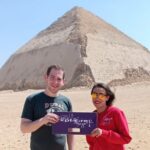
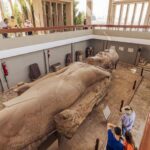
More of Cairo from our review pile
- Cairo Layover Tour to Giza Pyramids Egyptian Museum and Khan Khalili Bazaar
★ 5.0 · 25 reviews - Private Luxor Day tour from Cairo by Flight
★ 5.0 · 25 reviews - Private full day tour to Giza Pyramids, Sphinx, Sakkara and Dahshour with guided
★ 5.0 · 25 reviews - Nile Dinner Cruise in Cairo With Belly Dancing and Transfer
★ 5.0 · 25 reviews - Private Giza Pyramids,Sphinx,camel,lunch, 2 tombs,Great Pyramid
★ 5.0 · 25 reviews - All inclusive Giza Pyramids ,Sphinx ,Lunch ,Camel&Inside pyramid
★ 5.0 · 25 reviews
Giza Pyramids & Sphinx Tours, compared.
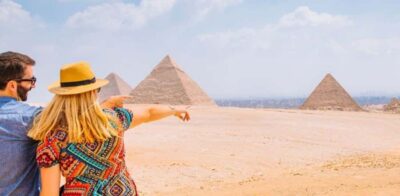 ★ 4.9Pyramids & Great Sphinx Private Tour with Camel RideFrom $486,335 reviews
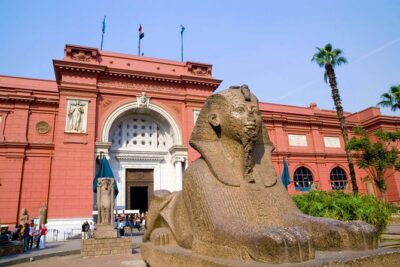 ★ 5.0Tour to Giza Pyramids and The Egyptian MuseumFrom $1556,016 reviews
 ★ 4.7Pyramids of Giza, Sphinx, Saqqara & Memphis TourFrom $903,110 reviews
 ★ 4.6Half-Day Tour to Pyramids of Giza and the SphinxFrom $502,891 reviews
 ★ 4.6Pyramids, Sakkara & Memphis Tour with LunchFrom $602,493 reviews
 ★ 5.0Private ViP all-inclusive Giza Pyramids,Sphinx,Inside PyramidFrom $142,448 reviews
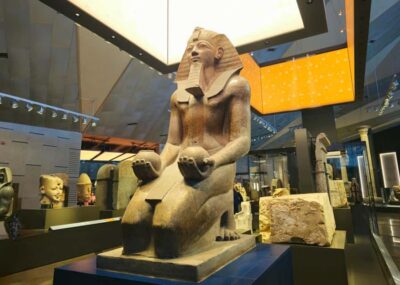 ★ 4.7Grand Egyptian Museum, Pyramids, Sphinx Tour & LunchFrom $892,282 reviews
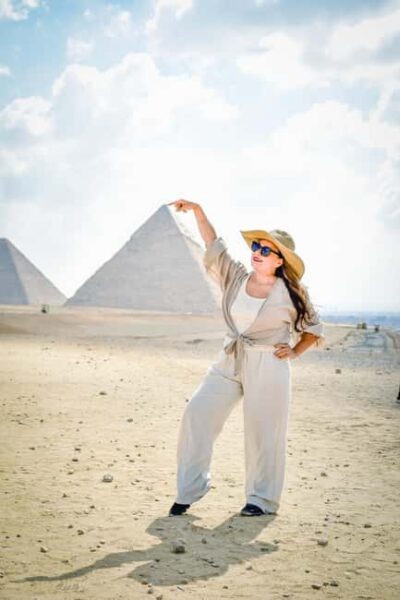 ★ 4.7Cairo Pyramids, Sphinx & Egyptian Museum Day TripFrom $932,271 reviews
The lists this one sits on