
REVIEW · ABU SIMBEL TEMPLE TRIPS
From Cairo: 2-Day Abu Simbel & Luxor Tour
Two ancient cities, packed into ten hours. This tour is interesting because it links Abu Simbel and Luxor with domestic flights, so you spend your time where the monuments are, not on long road transfers. You also get a multilingual Egyptologist guide and a smooth set of transfers that keeps the day moving.
I especially like the way the big sights come in a tight, logical order. Karnak Temple and its Hypostyle Hall with 134 columns is the kind of place where one good guide explanation changes everything.
The main drawback is the pace. Expect tight timing and early starts, and depending on your day and flight timing, you might not have the full luxury of a slow morning or a leisurely hotel breakfast.
In This Review
- Key points to know before you go
- Why Abu Simbel and Luxor make sense in one trip
- Cairo to Aswan: the fast start that sets the tone
- Philae Temple and the High Dam: Aswan’s modern and ancient landmarks
- Abu Simbel: Ramses II’s rock-cut masterpiece
- Small Temple of Nefertari: the Hathor stop that adds balance
- One night in Aswan: Pyramisa Isis Hotel and real-world timing
- West Bank classics: Valley of the Kings, Memnon, and Hatshepsut
- Luxor East Bank: Luxor Temple before Karnak
- Karnak Temple: Avenue of Sphinxes, Propylon, and the Hypostyle Hall
- The guide experience in a private group, and why names matter
- Price and value: what $815 buys in real terms
- Should you book this Abu Simbel and Luxor stop from Cairo?
- FAQ
- How long is the tour?
- What is included in the price?
- What sites are visited during the Aswan day?
- What sites are visited during the Luxor day?
- What languages are offered by the tour guide?
- What do I need to bring, and how does cancellation work?
Key points to know before you go
- Domestic flights save hours, letting you see Abu Simbel and Luxor without turning the trip into a sleep-on-the-road marathon.
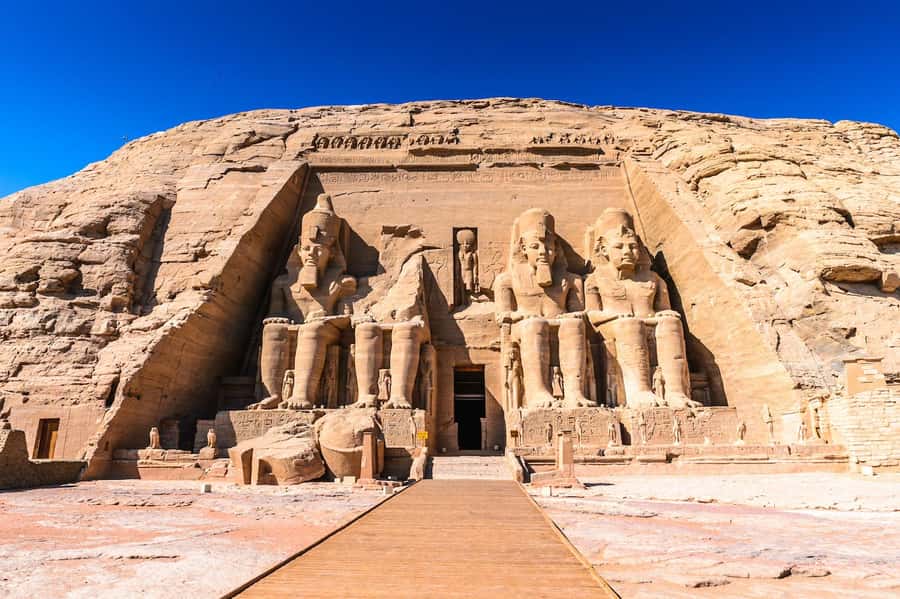
- Abu Simbel is the headline, built by Ramses II into a sandstone rock cliff, with huge carved deities across the façade.
- Nefertari’s Small Temple pairs perfectly with Abu Simbel, including a stop dedicated to Hathor.
- West Bank highlights are grouped into one efficient run: Valley of the Kings, Colossi of Memnon, and Hatshepsut’s temple.
- Karnak Temple is built for big wow moments, including the Avenue of Sphinxes, the unfinished Propylon, and the Hypostyle Hall’s 134 columns.
- Private group control helps, with a multilingual guide and transfers handled end to end, though the schedule is still intense.
Further south to Abu Simbel, other operators
- Our Exceptional 5 days Cairo, Luxor and Abu Simbel Tour Package★ 5.0 · 212 reviews
- From Cairo: 2-Day Abu Simbel & Luxor Tour★ 3.9 · 136 reviews
- 3 Night Luxor and Aswan Nile Cruise with Hot Air Balloon, Abu Simbel from Luxor★ 5.0 · 76 reviews
- Luxury Cruise from Aswan to Luxor 4 Days with Abu Simble Temple★ 5.0 · 60 reviews
Why Abu Simbel and Luxor make sense in one trip
If you’re doing southern Egypt for the first time, Abu Simbel and Luxor are the two heavyweights you want on the same itinerary. They’re far apart geographically, which makes a one-pass plan rare. This tour solves that with Cairo to Aswan and Luxor back to Cairo domestic flights, then adds car transfers between sites.
I like this format because it’s built for people who want maximum monument time without adding extra hotel nights or a Nile cruise. You also get a guide who can connect the dots between rulers, religious symbolism, and the layout of each temple complex. It helps when you go from one site to the next, instead of treating each stop like a standalone postcard.
The tradeoff is that it’s not a slow sightseeing day. It’s more like a curated museum day in real stone. If you get cranky with early mornings, you’ll still be fine, but you should plan your energy accordingly.
Cairo to Aswan: the fast start that sets the tone
Your day begins with pickup from your Cairo hotel, then you fly to Aswan. When you land, you’re met by tour staff, and then you move through the day in an air-conditioned car with transfers handled for you.
This is the part that matters for value. Domestic flights plus a private-group transfer plan means you’re not wrestling with buses, queues, and timing gaps. Even if you’re comfortable traveling on your own, the flight routing is usually the hardest piece to nail cleanly in Upper Egypt.
One practical tip: keep your travel day mindset flexible. This kind of itinerary runs on timetables, not vibes. You’ll want comfortable shoes, water, and a phone with offline maps just in case. You’re skipping the ticket line at the included sites, but you can still have to move quickly between locations.
Philae Temple and the High Dam: Aswan’s modern and ancient landmarks
On the Aswan portion of the day, you start with Philae Temple and the High Dam. Philae is one of those places where Egypt’s river story becomes visible in stone. The temple setting by the Nile gives you a strong sense of why these sites were built where they are.
You may also take a boat crossing to reach Philae, and one past guest called that boat ride smooth and easy. Either way, you’ll likely be working on a tight timeline, so don’t plan on wandering too far away from your group.
Then you get the High Dam, which shifts your perspective. It’s not an ancient monument, but it’s tied directly to how the Nile works now. It also helps you understand why major engineering projects were needed in this region.
This combination is smart because it gives you two timelines in one day: what people built to worship and what later generations built to control water and shape life along the river.
Abu Simbel: Ramses II’s rock-cut masterpiece
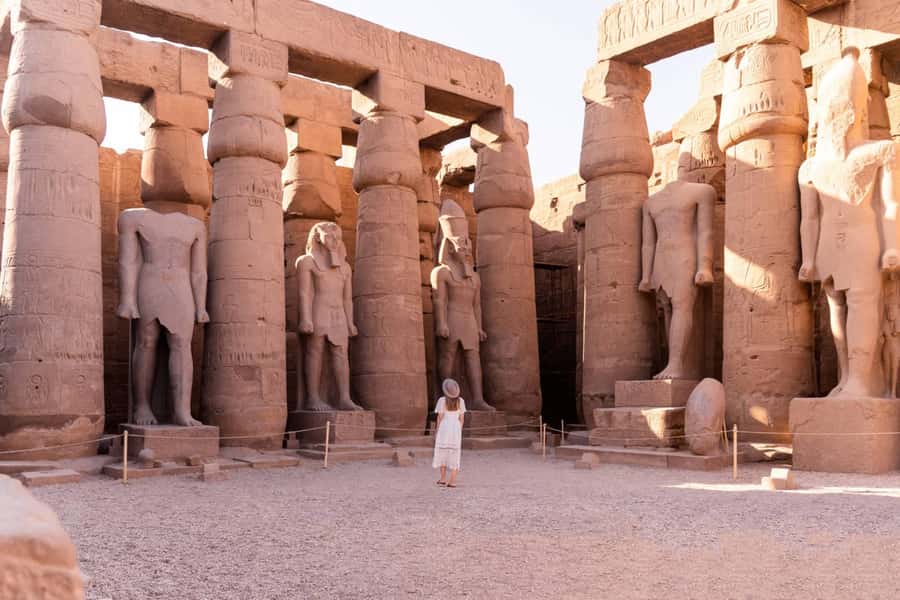
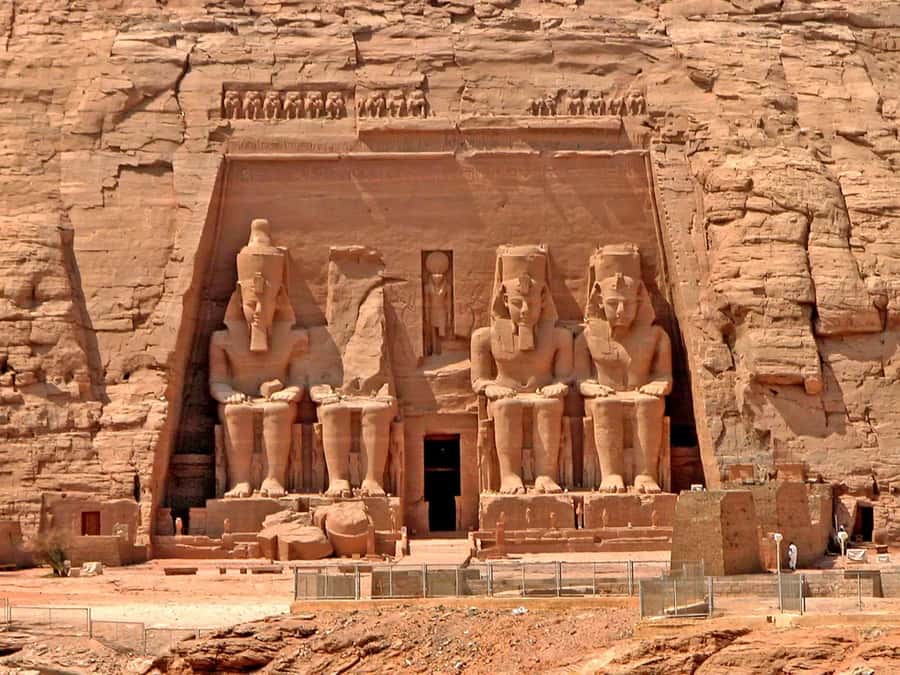
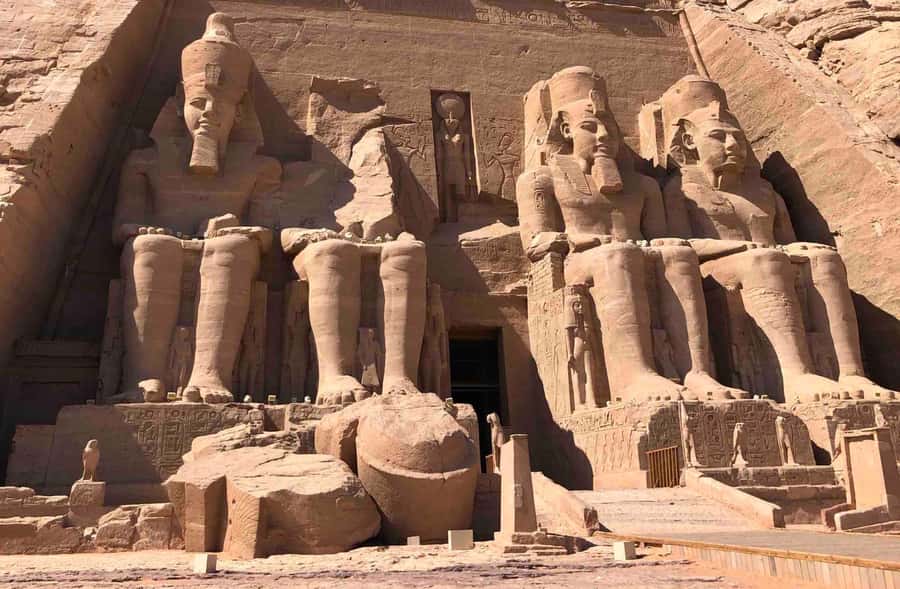
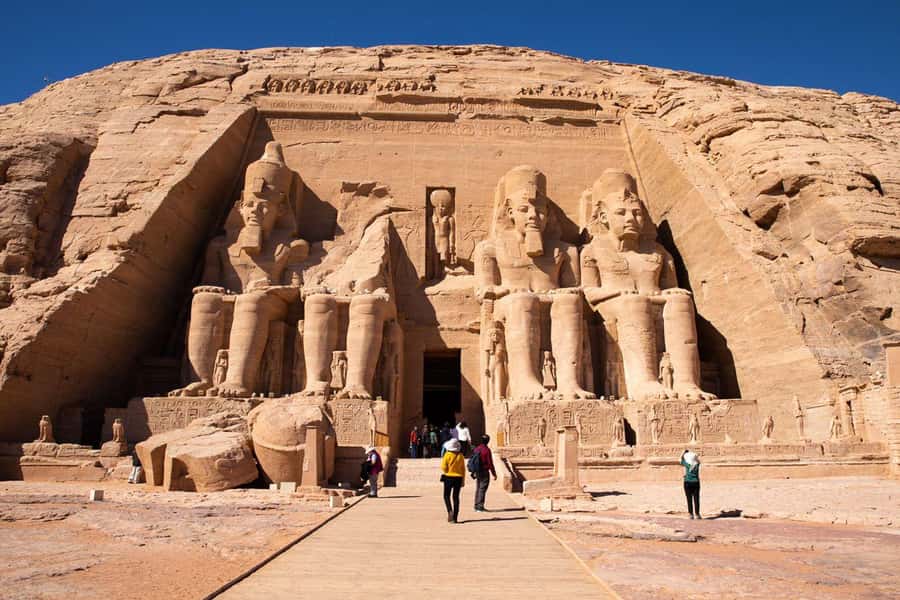
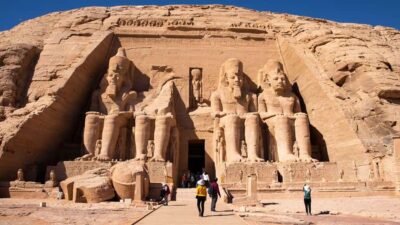
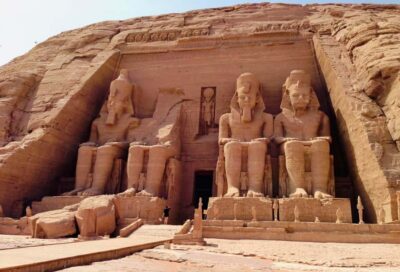
Then comes the real headline: Abu Simbel Temple. This site was built by Ramses II into a sandstone rock cliff, and that rock-cut setting is part of the power. You’re not just looking at statues on a wall, you’re facing a whole façade designed to read like a statement of rule.
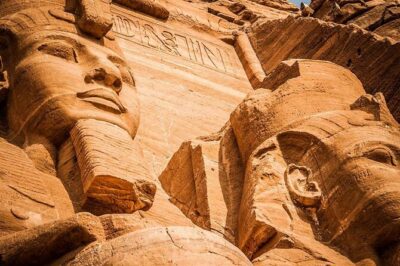
The façade is carved with representations of the deities, and it’s the kind of detail that becomes clearer when your guide points out the symbolism and the intent behind the design. One of the best parts of a guided stop at Abu Simbel is exactly that, turning the carvings from decorations into messages.
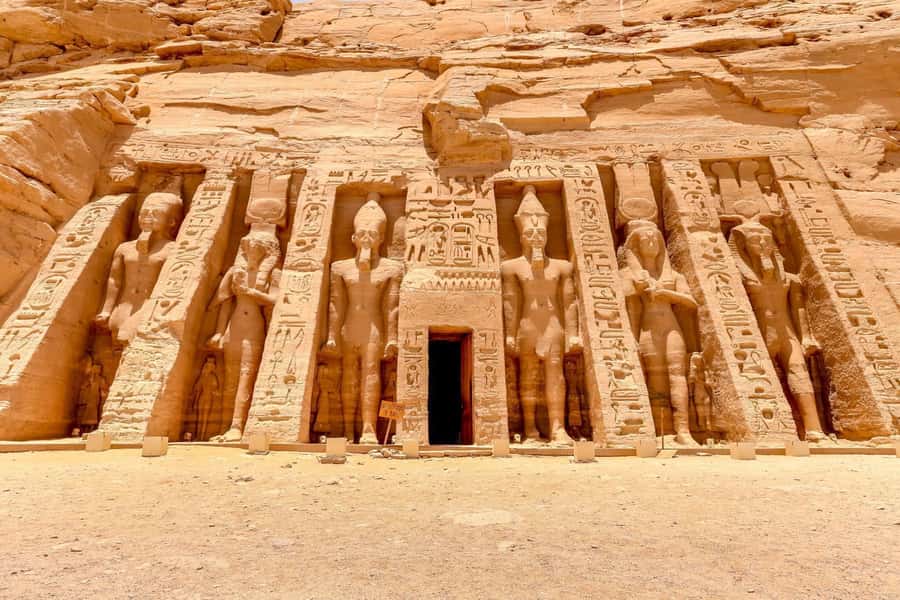
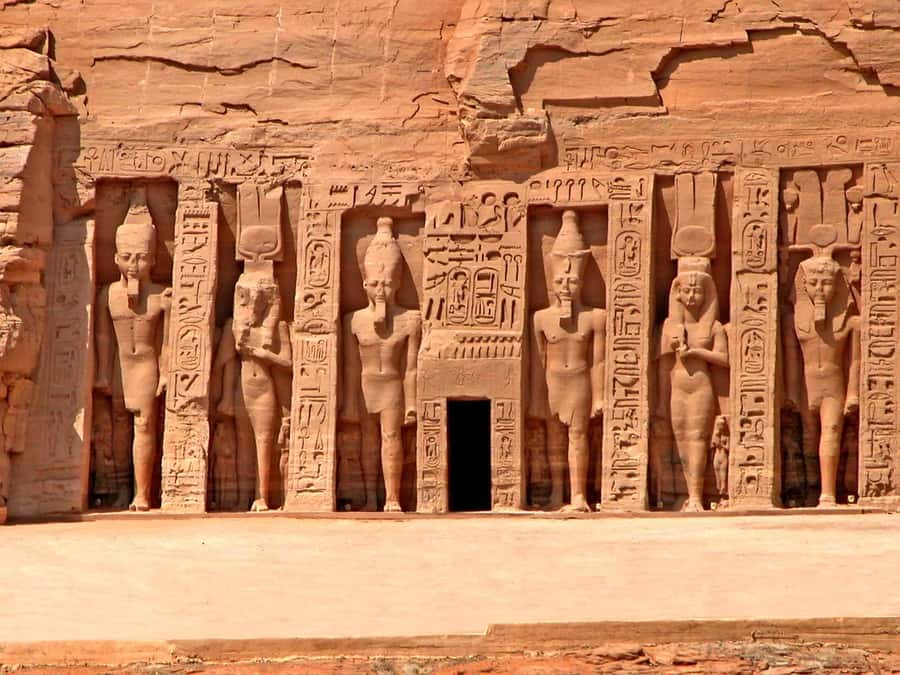
This day also includes the Small Temple of Nefertari, dedicated to Hathor. It’s a great pairing because Abu Simbel can feel monumental in the literal sense, while Nefertari’s temple gives you another angle on how royal ideology and divine worship were displayed.
A practical note: Abu Simbel is a long-distance outing. You’ll want to be comfortable in your seat and ready for structured timing. If you’re sensitive to motion or long drives, pack a light layer, because cars and waiting areas can swing between cool and warm.

Small Temple of Nefertari: the Hathor stop that adds balance
The Small Temple of Nefertari matters because it balances the day. Abu Simbel is about scale and authority, and Nefertari’s temple is about how devotion and status were braided together.
Hathor is the focus here, and the setting gives you a different kind of connection than the larger main temple. When you visit back to back, you also get a better feel for how ancient builders used space and façade design differently across related sites.
If you enjoy seeing a theme repeated with variations, this is one of those stops. It’s short compared to the main temple, but it can be the most satisfying because it changes the mood without breaking your schedule.
One night in Aswan: Pyramisa Isis Hotel and real-world timing
You’ll sleep in Aswan at Pyramisa Isis Hotel with breakfast included. For many people, that one-night reset is what makes this tour workable. You get a proper base instead of hopping back and forth in the same day.
That said, the pace can catch you. One past guest noted that the second day started very early, so there wasn’t time for the included breakfast. So if you’re the type who needs morning fuel, don’t assume the breakfast will always match your ideal schedule.
There’s also a reality check worth mentioning. While your package lists the Aswan hotel, some past guests reported issues like cleanliness concerns, drainage problems, or even confusion around hotel charges. You can’t control every hotel detail, but you can control your response. When you check in, confirm what’s already included and double-check any billing before you sign anything.
Think of this as: a good night of sleep is part of the value, but keep expectations flexible and handle check-in carefully.
West Bank classics: Valley of the Kings, Memnon, and Hatshepsut
After breakfast and a transfer to Luxor, you shift from Aswan’s southern tempo to Luxor’s monument rhythm. The first major stop is the Valley of the Kings on the West Bank, known for tombs of different dynasties.
This is a place where good pacing matters. You want enough time to notice the way the valley holds the tombs, then enough explanation to understand why each tomb is placed the way it is. The visit also includes Deir el-Bahari, which ties into the broader Hatshepsut story.
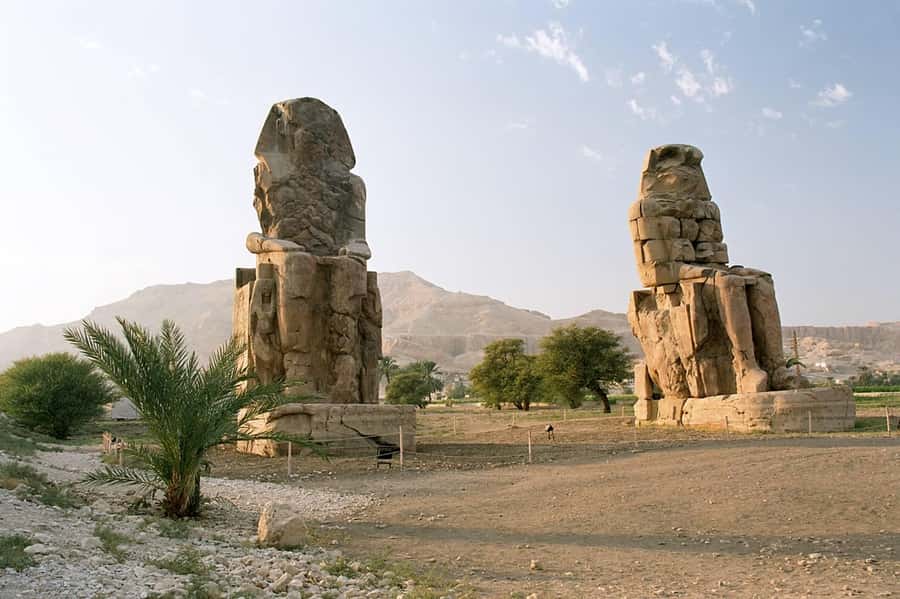
Next up are the Colossi of Memnon, two gigantic sitting statues facing the Nile. They’re simple in layout but powerful in presence. Even if you only have a short stop, they’re worth seeing because they anchor the Nile-side feeling of ancient Egypt.
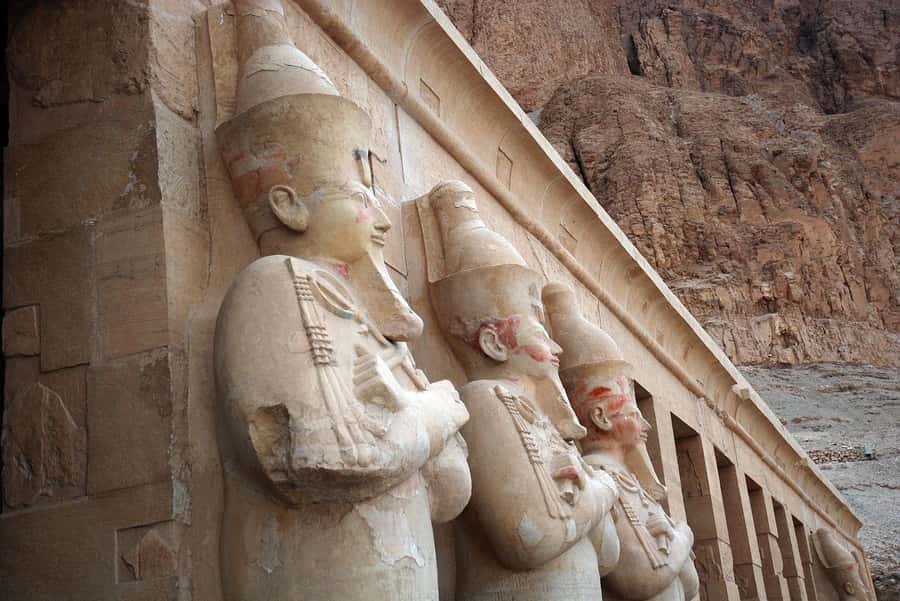
Then you visit the Temple of Queen Hatshepsut. This is one of Luxor’s most majestic temple experiences, and it works especially well in a sequence that also includes the Valley of the Kings. Together, they show you how the Egyptians built for the afterlife and for the living ruler’s image at the same time.
Practical note: West Bank walking can be uneven and sun can be strong. Bring sunscreen and wear shoes you can move in without thinking.
Luxor East Bank: Luxor Temple before Karnak
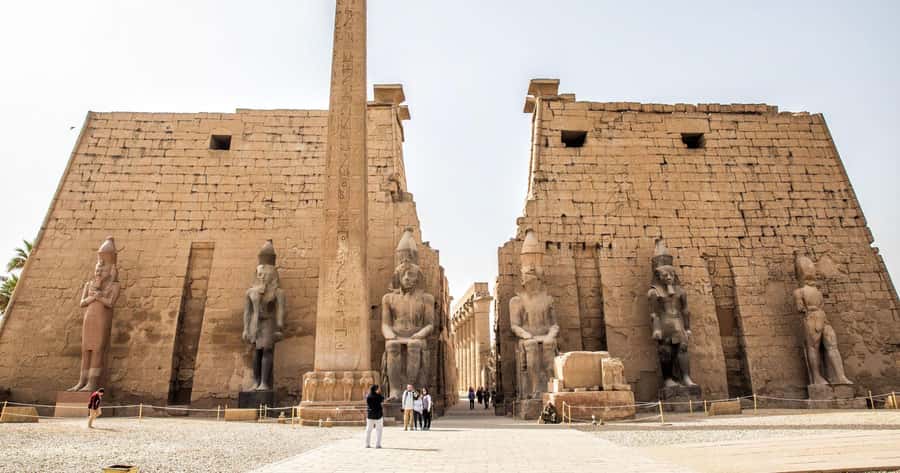
After the West Bank stops, you head to the East Bank. First is Luxor Temple, where you walk through the courtyard and admire granite statues of Ramses the Great.
Luxor Temple is a good warm-up for what’s coming next. It helps your brain transition from tomb thinking to temple thinking. You also get a feel for how the city’s religious focus played out along the Nile corridor.
Your schedule then brings you to Karnak Temple, which is the bigger, older complex where multiple reigns built and expanded over time. The tour uses a carriage or bus transfer, which can be helpful when you have limited time and lots of walking ahead.
If you like seeing the layers of change across rulers, Karnak is where you’ll feel it. When the guide points out features and explains how different parts were left unfinished or altered, Karnak starts to feel like an actual timeline you’re walking through.
Karnak Temple: Avenue of Sphinxes, Propylon, and the Hypostyle Hall
Karnak is the day’s main world-class structure moment, and this itinerary doesn’t hold back. You start along the Avenue of Sphinxes, then stop at the unfinished Propylon.
Then you hit the Hypostyle Hall, with 134 gigantic columns. This is the place where scale becomes a physical feeling. The columns shape the room, the light, and your sense of movement. A good guide helps you understand what you’re looking at beyond the wow.
You also see obelisks of Queen Hatshepsut, which adds a strong thread back to the West Bank. It’s a nice way to connect the two halves of Luxor, showing how her legacy shows up in different temple contexts.
One bonus detail that helps your day: the tour includes entry fees and skip-the-ticket-line. When you have a schedule like this, saving time on paperwork and queues is real value, not a small convenience.
The guide experience in a private group, and why names matter
This is a private group tour, and that changes how the day feels. You’re not stuck waiting for a large crowd to wander. The tour includes a multilingual expert Egyptologist guide in English, Spanish, German, and Arabic.
In past experiences, guide and coordinator roles have included names like Zach, Bahagat, Mohammad, Samir, Shireen, Salwa, Mostafa, Karim, Khaled, Ahmed Eid, and Ahmed Omar. Drivers reported in those same experiences included Hamood, Ali, Ahmed El Bob, and Shazle. The takeaway isn’t the names themselves. The takeaway is that you’ll likely get someone who explains details and adjusts to your questions and photo needs.
One past guest specifically praised guides for giving enough time and even helping with photos. That’s the kind of small service that makes a tight schedule feel human.
Now the balanced part: one past review raised a serious concern about driving safety, including speeding and unsafe driving manoeuvres, and noted seatbelts were not being used. The driver improved after the concern was raised. So my practical advice is simple: if driving style worries you, speak up early and directly. You’re paying for a smooth experience, and safe driving is non-negotiable.
Price and value: what $815 buys in real terms
At $815 per person for a 10-hour day experience structure (across two days), you’re paying for a bundle. The included items matter: domestic flights, transfers in air-conditioned car, entrance fees, lunch, and a 4-star hotel night with breakfast.
That total package is the value if you want to avoid the biggest headaches: booking flights that line up, coordinating transport between far-flung sites, and managing the ticketing and timing across multiple attractions.
Could you build a cheaper plan yourself? Probably, depending on your travel style and how much time you’re willing to spend. But for many people, the trade is worth it. When your schedule is tight, you’re not just buying monuments. You’re buying time, structure, and fewer problems.
My rule of thumb: if you’re the type who hates logistics, this price starts to look fair fast. If you’re okay juggling flights, taxis, and site entries on your own, you might shop around for a slower, cheaper approach.
Should you book this Abu Simbel and Luxor stop from Cairo?
Book it if you fit this profile:
- You want top Luxor sights plus Abu Simbel without doing a Nile cruise.
- You like having a guide to connect temple details and ruler stories.
- You can handle an organized schedule with early starts.
Skip it or reconsider if you want a slow travel pace, lots of free time, or lots of flexibility. This itinerary is built to hit the big names in a short window.
If you do book, here’s how you get the most out of it:
- Pack for early starts, even if you’re not sure what time breakfast will land on day two.
- Bring a passport or ID card, since that’s required.
- During check-in, confirm what’s included and keep an eye on hotel paperwork.
- If driving speed or safety feels off, say something right away.
FAQ
How long is the tour?
The tour duration is listed as 10 hours. You can check availability for starting times.
What is included in the price?
The package includes 1 full-day tour in Aswan, 1 full-day tour in Luxor, a 4-star hotel night with breakfast, domestic flights Cairo to Aswan to Luxor to Cairo, air-conditioned car transfers, a tour guide, entrance fees, and lunch.
What sites are visited during the Aswan day?
The Aswan day includes Philae Temple and the High Dam, Abu Simbel Temple, and the Small Temple of Nefertari.
What sites are visited during the Luxor day?
The Luxor day includes the Valley of the Kings, Colossi of Memnon, the Temple of Queen Hatshepsut, Luxor Temple, and Karnak Temple (including the Avenue of Sphinxes, the unfinished Propylon, and the Hypostyle Hall).
What languages are offered by the tour guide?
The live tour guide is offered in English, Spanish, German, and Arabic.
What do I need to bring, and how does cancellation work?
You should bring your passport or ID card. Free cancellation is available up to 3 days in advance for a full refund.
Further South: Abu Simbel
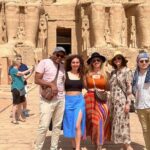



More of Cairo from our review pile
- Cairo Layover Tour to Giza Pyramids Egyptian Museum and Khan Khalili Bazaar
★ 5.0 · 25 reviews - Private Luxor Day tour from Cairo by Flight
★ 5.0 · 25 reviews - Private full day tour to Giza Pyramids, Sphinx, Sakkara and Dahshour with guided
★ 5.0 · 25 reviews - Nile Dinner Cruise in Cairo With Belly Dancing and Transfer
★ 5.0 · 25 reviews - Private Giza Pyramids,Sphinx,camel,lunch, 2 tombs,Great Pyramid
★ 5.0 · 25 reviews - All inclusive Giza Pyramids ,Sphinx ,Lunch ,Camel&Inside pyramid
★ 5.0 · 25 reviews
Abu Simbel Temple Trips, compared.
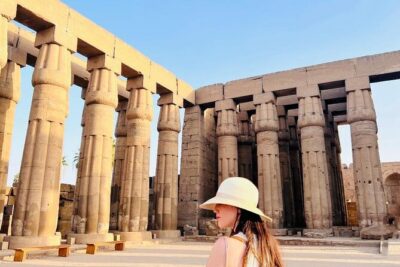 ★ 5.04-Days Nile Cruise From Aswan To Luxor including Abu Simbel and Hot Air BalloonFrom $3493,142 reviews
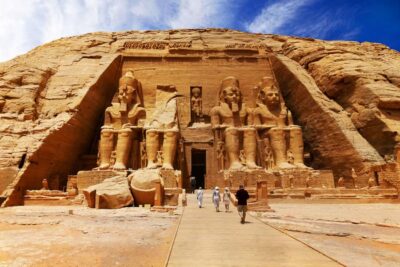 ★ 4.4Abu Simbel Temple Day Trip with Hotel PickupFrom $702,807 reviews
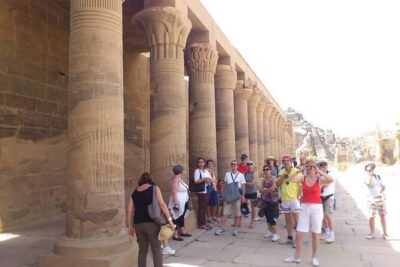 ★ 4.54-Day 3-Night Nile Cruise from Aswan to Luxor including Abu Simbel, Air BalloonFrom $329612 reviews
 ★ 4.6Abu Simbel Temple Private Guided Day Trip with LunchFrom $148546 reviews
★ 4.54-Days Nile Cruise From Aswan To Luxor including Abu Simbel and Hot Air BalloonFrom $320509 reviews
★ 4.6Abu Simbel Temple Private Guided Day Trip with LunchFrom $148546 reviews
★ 4.54-Days Nile Cruise From Aswan To Luxor including Abu Simbel and Hot Air BalloonFrom $320509 reviews
 ★ 4.5Private Day Tour to Abu Simbel Temples from AswanFrom $53507 reviews
★ 4.54 Days Nile Cruise from Aswan to Luxor including Abu Simbel and Hot Air BalloonFrom $329356 reviews
★ 4.5Private Day Tour to Abu Simbel Temples from AswanFrom $53507 reviews
★ 4.54 Days Nile Cruise from Aswan to Luxor including Abu Simbel and Hot Air BalloonFrom $329356 reviews
 ★ 4.3Abu Simbel Day Tour with Private Guide and CarFrom $95342 reviews
The lists this one sits on