
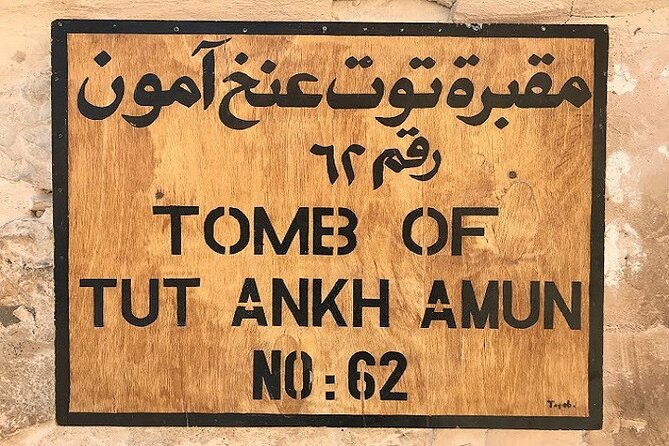
REVIEW · VALLEY OF THE KINGS & KING TUT TOMBS
Day Trip from Hurghada to Luxor Kings Valley Small Group
Waking up at 4:00 am is worth it for Luxor. This small-group day trip (max 8) pairs a certified archaeologist with the big hitters: Karnak Temple, the Valley of the Kings, and Deir el Bahari.
I also like the way the day mixes long monument stops with small breaks, like a 45-minute Nile motorboat ride, so you do not feel like you only sit and rush. One drawback to plan for: it is a long 12 to 14 hour day with a roughly 285 km drive each way, and road conditions can make the morning feel rough.
In This Review
- Key Highlights You Should Know Before You Go
- Why This Luxor Day Trip Starts So Early
- Price and Value: What $29.04 Buys You
- The 285 km Private Car Transfer: Comfort vs Road Reality
- Karnak Temple, the Pillared Hall, and the Power of Amun
- Nile Motorboat Break: A 45-minute Reset Between Worlds
- Al Mina Restaurant Lunch: What You Eat Matters Less Than the Timing
- Valley of the Kings: Three Tombs, Clear New Kingdom Context
- Deir el Bahari and the Temple of Hatshepsut at a Walkable Pace
- Colossi of Memnon: The Two Statues That Still Feel Loud
- Alabaster Craft Factory Stop: Practical Egypt You Can Actually Use
- Wrapping Up: The Return to Hurghada After a Long Day
- Who Should Book This Small Group Luxor Day Trip
- Should You Book This Hurghada to Luxor Day Trip?
- FAQ
- What time is pickup for the Hurghada to Luxor day trip?
- How many people are in the group?
- How long is the tour?
- What does the tour price include?
- Are entry tickets included for the main attractions?
- Is a felucca boat ride included?
Key Highlights You Should Know Before You Go
- Max 8 people means more back-and-forth with your Egyptologist and fewer awkward pauses.
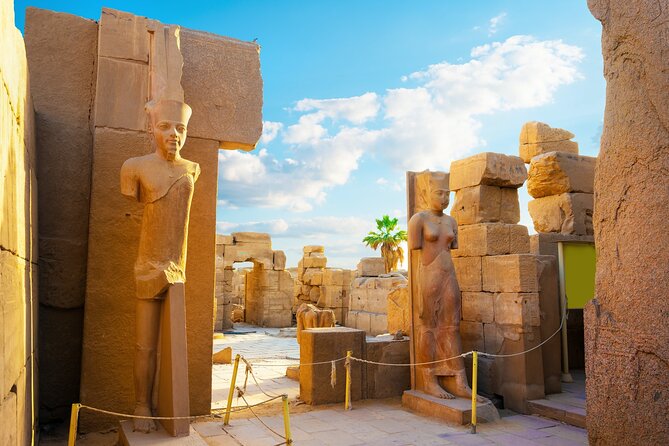
- Karnak Temple first gives you the scale of Luxor’s eastern bank right away, before you switch to the west.
- 45-minute Nile motorboat ride is a real reset, not just a transfer between sights.
- Three tombs in the Valley of the Kings is a focused plan, with the important New Kingdom context.
- Hatshepsut’s temple at Deir el Bahari is an architecture stop you will feel right away, even before you read the carvings.
- Alabaster craft factory stop adds a practical look at local production, with a free soft drink and bathroom use.
Other tomb tickets in the valley
- Small group Hurghada to Luxor, Valley of the Kings by Van★ 4.5 · 2,470 reviews
- Hurghada: Small-Group Luxor Highlights & Tut Tomb Day Tour★ 4.6 · 928 reviews
- Hurghada: Luxor Highlights & King Tut Tomb Tour with Lunch★ 4.7 · 902 reviews
- Small Group Excursion to Luxor Valley of the Kings from Hurghada★ 5.0 · 637 reviews
Why This Luxor Day Trip Starts So Early
A day trip like this lives and dies by timing. You pick up at 4:00 am and then head to Luxor by private car, which means you get some daylight on the way in and the best chance to see major sites without getting swallowed by crowds later.
Why that matters: Karnak Temple and the Valley of the Kings are not quick photo stops. You need time to understand what you are looking at, and you need enough daylight to appreciate how temples and statues sit in the open air. The plan here is built for a full sweep, with each big stop getting its own block of time.
The biggest practical consideration is the drive. Luxor is about 285 kilometers from Hurghada, and the round trip is roughly 6 hours of car time alone. If you are sensitive to rough roads, plan to travel with comfort in mind, because the long morning pickup can be tiring even when the vehicle is private and comfortable.
Price and Value: What $29.04 Buys You
At $29.04 per person, this sits in the budget-friendly range for a full Luxor day with a guide. The value is not just the price tag. It is what is included and what the schedule tries to do with that time.
What you get in the included list:
- Lunch during the day
- A professional English, Russian, or German guide (your exact language depends on the option you book)
- All taxes and fees and entry tickets if selected
That entry-ticket detail is important. The itinerary notes some stops as ticket included and others as free, which usually means the operator is handling specific admissions depending on your chosen package. Before you commit, double-check that your booking includes entry tickets, especially for major paid areas like Karnak and the Valley of the Kings.
In plain terms: you are paying for a guided, organized, no-surprises structure. That saves time and stress, which is often the real cost when you try to DIY Luxor from Hurghada.
The 285 km Private Car Transfer: Comfort vs Road Reality
This is a private car transfer both ways, and the driving time shown is about 3 hours each direction. That sounds straightforward, but here is the truth you need to plan for: you are doing a very long road day, and road conditions can make you feel the bumps more than you expect.
This is where small-group tours can help. With fewer people, you are less likely to spend time waiting on multiple pickups or dealing with split plans. You should also get a smoother start because pickup happens at a single 4:00 am time.
Practical advice so the drive does not ruin your day:
- Bring something for the early cold, even in Egypt mornings can feel chilly.
- Drink water, but do not overdo it before tomb visits, where breaks can be limited.
- Pack light layers. Your body will swing between cool car air and warm temple air.
If you are expecting a short, painless ride, you will be disappointed. If you expect a long but manageable day with a strong guide-led schedule, you will likely feel satisfied with the tradeoff.
Karnak Temple, the Pillared Hall, and the Power of Amun
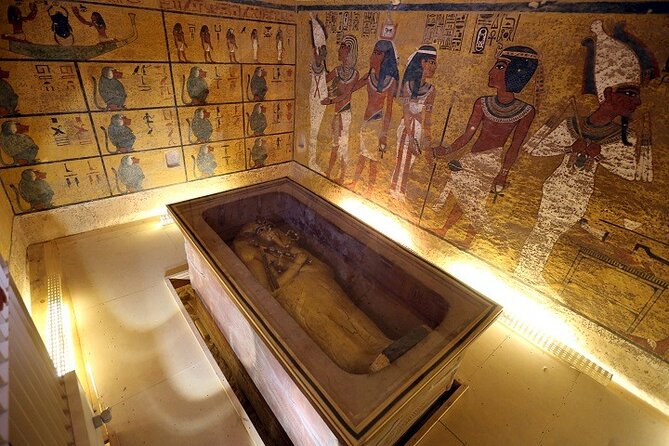
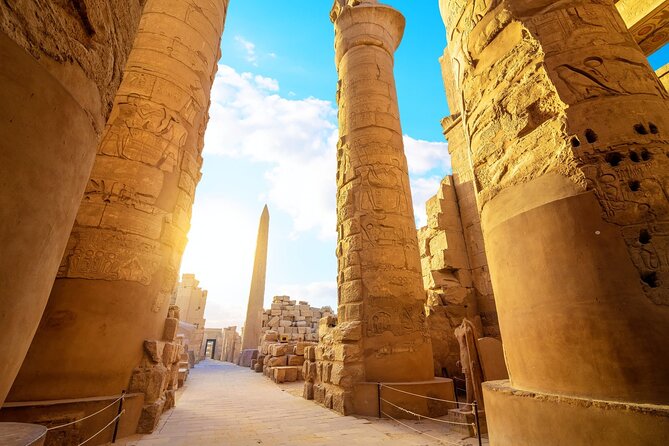
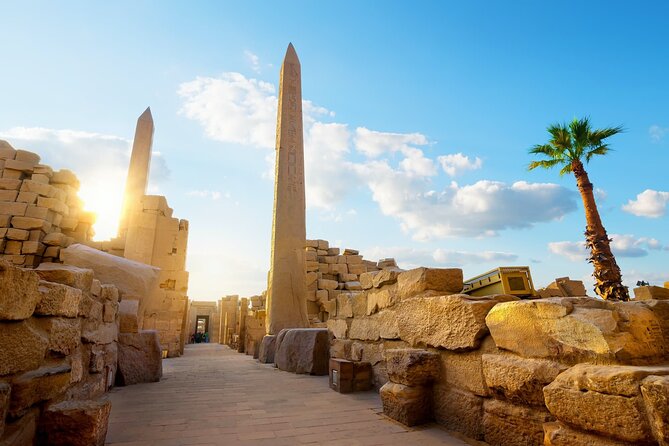
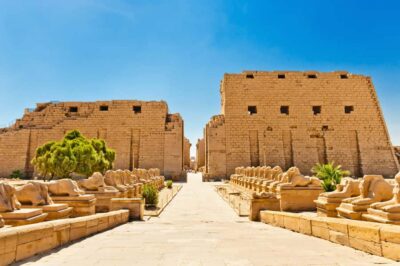
Karnak Temple is your first major stop on the eastern bank. It is described as the largest temple complex in Egypt, and once you step into the scale of it, you understand why people treat it as Luxor’s warm-up.
The plan sets you up to see more than random ruins. You start with the temple’s major architectural areas, including:
- A focus on the Amun area (linked with ancient Egyptian terms for a place of election)
- Other major sections tied to Month and Mut
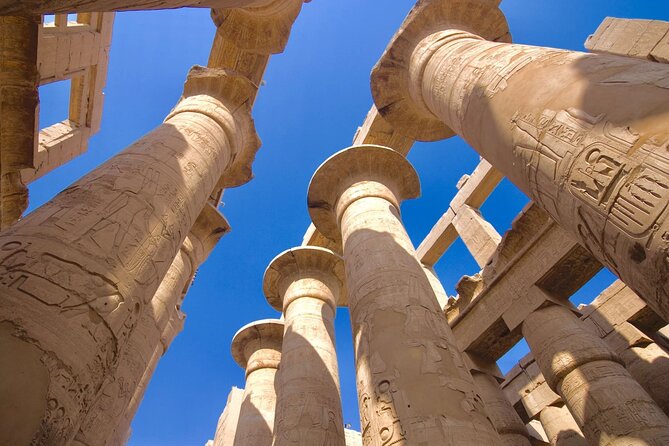
- The pillared hall as a standout architectural feature
You also get historical framing as you go. The oldest visible remains are noted as dating back to the 12th dynasty under Sesostris, and the complex was expanded and rebuilt over many periods, reaching up to the Roman Empire.
What this means for you: Karnak can feel overwhelming if you are just wandering. With a trained guide, you start connecting symbols and layout to the people who built and used these spaces. That is where a small group matters. When you have fewer people, your guide can answer your questions in the moment instead of saving them for the end.
If you care about photography, bring a plan. Karnak has big open areas and tall structures, and you will want to adjust your angles as the light changes.
More one-day runs to the temples


Nile Motorboat Break: A 45-minute Reset Between Worlds
After Karnak, you take a 45-minute Nile motorboat cruise. This is not filler time. It is a mental reset, and it also helps your day feel less like a relentless march.
Here is why it works: you go from dense stone and columns to open water and wider views. Your eyes get a break, and so does your body. Even if you are not a boat person, this short ride keeps the schedule humane.
You should also use this time to rehydrate and slow your breathing a notch. The next part of the day includes lunch and then a major west bank shift.
Al Mina Restaurant Lunch: What You Eat Matters Less Than the Timing
Your lunch stop is at Al Mina restaurant and it is described as offering Mediterranean and Egyptian cuisines. You get about 1 hour, which is enough time to eat without turning lunch into a long sit-down that steals time from the tombs and temples later.
What is included is lunch, while drinks during lunch are not included. So if you like water, juice, or other beverages with your meal, you will probably want to budget for that separately.
Timing tip: eat steadily. Do not go heavy if you know you will be walking in heat afterward. You are switching to the west bank next, including the Valley of the Kings, which is best approached with energy you can spend on your guide-led walkthrough.
Valley of the Kings: Three Tombs, Clear New Kingdom Context
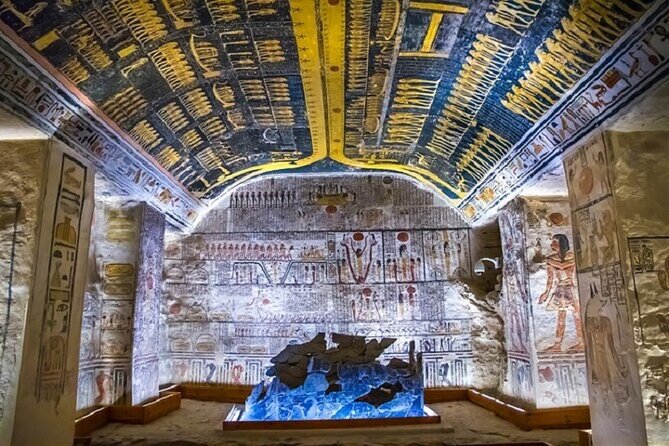
The Valley of the Kings is one of Luxor’s main draws, and this day trip handles it in a smart, focused way: you visit three graves. That matters because only a small portion of tombs are accessible to visitors at any time, and trying to cram too many can lead to burnout and missed details.
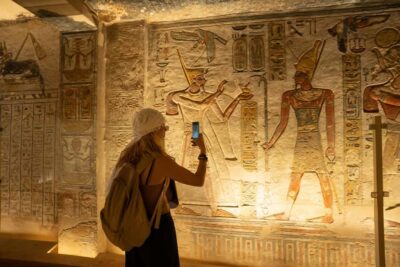
The tour frames the Valley in the New Kingdom period, roughly 1550 to 1069 BC, including rulers of the 18th to 20th dynasty. One landmark fact you will likely hear during your visit is that in 1922, the tomb of Tutankhamun was discovered largely intact.
Why this stop feels worth it even as a day trip: three tombs can still give you a strong sense of what these sites represent, as long as you go in with guidance and not just a checklist.
The tradeoff is typical for a tight schedule. You may not see every tomb you dream about. But if your goal is meaningful context and not just as many doors as possible, three guided tomb visits are a very workable plan.
Deir el Bahari and the Temple of Hatshepsut at a Walkable Pace
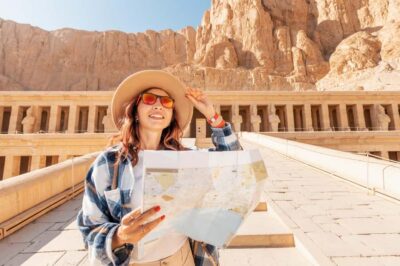
On the west bank, you visit the Temple of Hatshepsut at Deir el Bahari, also called Hatshepsut’s mortuary temple. This is described as dating from the 18th Dynasty, and it is highlighted as the best-preserved temple on the west bank in Thebes.
The architecture is a key part of why this stop lands. The temple’s idiosyncratic limestone design is described as striking, and it was constructed of limestone and built within 15 years.
This is a good stop for you if:
- You like when history is readable in the layout, not only in captions.
- You want a temple that feels less like fragmented stone and more like an intentional statement.
Timing note: this comes after lunch and before your return drive. Plan to see it at an unhurried pace even if you feel the day speeding up around you. The guide can help you look past the big photo angles to the structural logic of the terraces and halls.
Colossi of Memnon: The Two Statues That Still Feel Loud
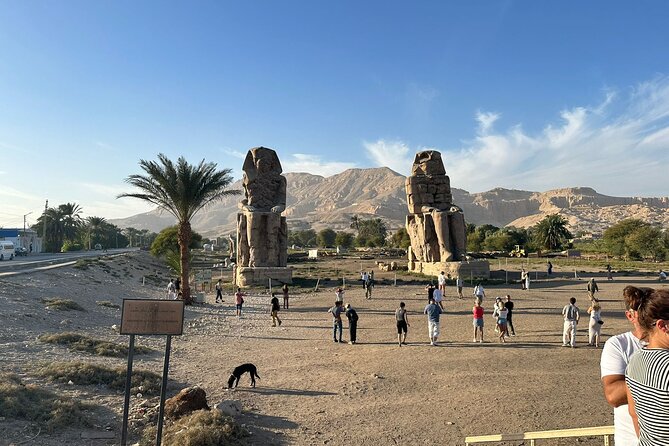
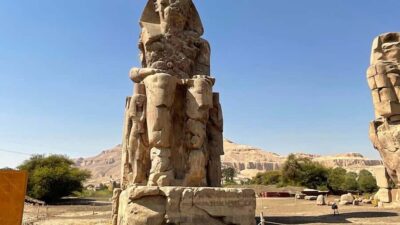
Next up are the Colossi of Memnon, two ancient Egyptian colossal statues standing next to each other, dated to the 14th century BC. They represent King Amenhotep III, and the statues are described as badly damaged quartzite figures.
It is also noted that they were erected in 1379 BC. Standing near them, you get why these were such major monuments in their original setting. Even damaged, they communicate power and scale.
This stop is short in the itinerary, about 10 minutes, so treat it like a quick but meaningful breather. You are not there to study every crack. You are there to see what a giant royal monument looks like in real space, then move on.
Alabaster Craft Factory Stop: Practical Egypt You Can Actually Use
After the west bank highlights, you stop at Thutmoses factory for alabaster stone. This is where you see how alabaster is produced and you can shop for souvenirs.
The itinerary includes a few small perks that make it worth paying attention to:
- You can use the bathroom for free
- You get a free soft drink
- You can browse for souvenirs and watch the process
In a day trip packed with ancient sites, this kind of stop does two useful things. It breaks up the temple rhythm, and it gives you a reminder that Egypt’s craft economy still exists beyond archaeology.
If you are not interested in shopping, you can treat it as a short cultural and practical pause. Watch a bit of the process, take advantage of the free drink, and then head back out without spending extra money.
Wrapping Up: The Return to Hurghada After a Long Day
Once the craft stop finishes, the schedule sends you back to Hurghada by the same private car transfer, about 3 hours. Then you are looking at a total day of roughly 12 to 14 hours, based on the plan.
This is where your comfort choices matter. After a long day outdoors, you want to end feeling like you got your money’s worth, not like you survived a bus ride.
If you can, keep your evening plans light back in Hurghada. Even with a good tour structure, this kind of day stacks up: early wake-up, long drive, multiple major stops, and another drive home.
Who Should Book This Small Group Luxor Day Trip
This is a strong fit if you:
- Want Luxor in one day from Hurghada without the stress of arranging everything yourself
- Appreciate a small group where your Egyptologist guide can talk and answer as you go
- Like guided context, especially for Karnak and the Valley of the Kings
- Prefer a day plan that balances monuments with short breaks, like the Nile motorboat ride
It might not be ideal if you:
- Have low tolerance for early mornings and long car rides
- Get easily uncomfortable in vehicles on rough roads
- Want lots of optional free time for wandering without structure
Language note: the guide can be English, Russian, or German depending on your booking, so pick the option that matches your comfort.
Should You Book This Hurghada to Luxor Day Trip?
If you want a guided Luxor hit with the major sites and you are okay with a full day, I think this is a smart way to spend your time in Egypt. The combination of small-group pacing, a guide who can explain what you see, and the clear stop-by-stop structure is the main reason it feels like more than just a long drive.
Just be honest with yourself about the tradeoff. You are choosing a 12 to 14 hour day with a 285 km road stretch each way. If that sounds doable, you will likely enjoy the way the day flows from Karnak to the Nile to the west bank icons.
FAQ
What time is pickup for the Hurghada to Luxor day trip?
The start time listed is 4:00 am, with pickup offered from Hurghada.
How many people are in the group?
This experience has a maximum of 8 travelers, which is meant to keep the day personal and easier to manage.
How long is the tour?
The duration is listed as 12 to 14 hours (approximately).
What does the tour price include?
The included items are lunch, a professional English, Russian, or German guide, and all taxes and fees plus entry tickets if selected.
Are entry tickets included for the main attractions?
Entry tickets are included if selected. In the itinerary outline, some stops show admission ticket included, while others are listed as admission ticket free.
Is a felucca boat ride included?
No. The itinerary includes a 45-minute Nile motorboat ride, but a Nile River felucca boat tour is listed as not included.
Luxor Temples in a Day


Down Into the Kings Valley

More of Hurghada from our review pile
- Orange Bay to Love 3 Reasons Snorkeling Crystal Waters Escape
★ 5.0 · 15 reviews - Trip on a glass bottom boat from Hurghada
★ 4.5 · 15 reviews - Hurghada :Day trip to Luxor:Balloon&West and East&Felucca& Dinner
★ 4.5 · 15 reviews - Orange Bay Island By Private Speedboat & snorkeling & Water Sport – Hurghada
★ 5.0 · 15 reviews - Private ALL INC Trip To Cairo From Hurghada with Camel Ride,( ATV ) & Felucca
★ 5.0 · 15 reviews - Full Day Snorkeling in Hurghada Dolphin House
★ 5.0 · 15 reviews
Valley of the Kings & King Tut Tombs, compared.
 ★ 4.7Luxor Valley of the Kings & Tutankhamun Tomb TripFrom $7613,208 reviews
 ★ 4.8Luxor Day Trip from Hurghada Small Group & Tutankhamun TombFrom $955,366 reviews
 ★ 4.5Small group Hurghada to Luxor, Valley of the Kings by VanFrom $352,470 reviews
 ★ 5.0Luxor Day Tour: Valley of Kings & Queens & Hatchepsut TemplesFrom $891,496 reviews
 ★ 4.4Valley of the Kings and Hatshepsut Temple Day TourFrom $501,404 reviews
 ★ 4.6Luxor Tour with Valley of Kings, Karnak & Tut TombFrom $1031,082 reviews
 ★ 4.6Small-Group Luxor Highlights & Tut Tomb Day TourFrom $105928 reviews
 ★ 4.7Luxor Highlights & King Tut Tomb Tour with LunchFrom $150902 reviews
The lists this one sits on