
REVIEW · ALEXANDRIA DAY TRIPS
3-Day Private Tour: Giza, Cairo, and Alexandria with free Airport Transfers
Ancient Egypt in three regions, in one plan. This private tour strings together Giza’s pyramids, Saqqara and Dahshur, plus Cairo and Alexandria stops, all with a qualified Egyptologist and door-to-door transfers. I like that you get lunch included every day at solid restaurants, and the pacing is built around private guide attention instead of herding. One thing to consider is that accommodation is not included, so you’ll need to add hotel costs on top.
You’ll also see a nice mix of Egypt’s eras: Pharaonic monuments, Islamic Cairo, Coptic Cairo, and Roman-era remains in Alexandria. The logistics are where this shines, with a climate-controlled private minivan and bottled water, snacks, parking fees, and entrance fees handled for you.
In This Review
- Key things I’d plan around before you go
- How this tour is set up, and why it works
- Arriving Day 1: airport pickup and getting settled
- Day 2: Giza pyramids, then Saqqara and Dahshur
- Pyramids of Giza: Cheops, Chephren, Mycerinus, plus Sphinx
- Lunch break, then Saqqara (Sakkara)
- Dahshur: Red Pyramid and the Bent Pyramid
- Day 3: Egyptian Museum, Muhammad Ali Mosque, Coptic Cairo, Khan Al-Khalili
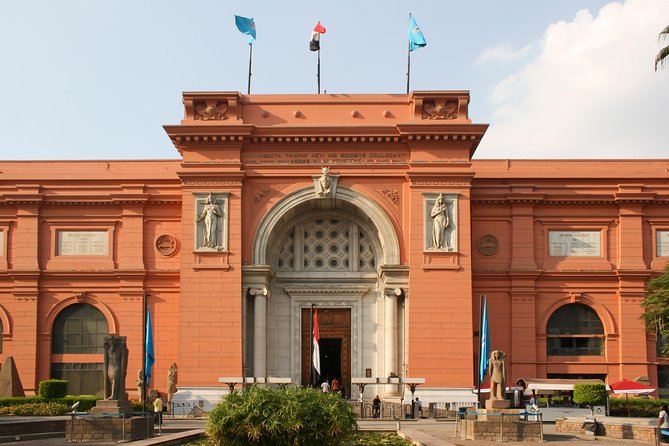
- Egyptian Museum of Egyptian Antiquities
- Mosque of Muhammad Ali
- Coptic Cairo
- Khan Al-Khalili
- Day 4: Alexandria day trip, catacombs to the New Library
- Catacombs of Kom el Shoqafa
- Bibliotheca Alexandrina
- Kayetbai fortress
- Pompey’s Pillar
- What makes the private guide matter (and what to expect)
- Logistics and inclusions: where your money actually goes
- Timing and pacing: what a typical day feels like
- Small notes that can save your comfort
- Who this tour fits best
- Should you book this tour?
- FAQ
- What time does the tour start?
- Is this tour private?
- Does the tour include airport transfers?
- What’s included for meals?
- Is accommodation included?
- Do you include tickets and entrance fees?
- Is a camel ride included?
- Can dietary needs be handled?
Key things I’d plan around before you go
- Private door-to-door transfers reduce stress on arrival and departure
- Egyptologist guidance keeps the pyramids, temples, and museums from feeling like random stops
- Included lunch each day makes long sightseeing days more manageable
- 30-minute camel ride at Giza adds a classic experience, without eating the whole morning
- 3 main sightseeing days across Cairo, Giza/Saqqara/Dahshur, and Alexandria
- Free airport transfers mean you do not have to figure out transport at the start and end
Up to the Mediterranean coast, other options
- From Cairo Alexandria Catacombs, Citadel Day Trip with Lunch★ 4.6 · 1,312 reviews
- From Cairo: Private Full-Day Tour of Historical Alexandria★ 4.1 · 1,155 reviews
- Alexandria Day Trip From Cairo★ 4.5 · 991 reviews
- Day-Trip to Alexandria from Cairo by Private Car★ 4.5 · 480 reviews
How this tour is set up, and why it works
This is a private, multi-day plan based out of Cairo. You meet at 9:00 am, then the trip is structured with airport transfer days around three core sightseeing days. Day 1 is mostly arrival and check-in help. Day 2 is Giza plus the pyramid complexes at Saqqara and Dahshur. Day 3 focuses on Cairo history. Day 4 is the big Alexandria day. Day 5 is departure, with transfer to Cairo International Airport.
For many people, Egypt tours fail at one of two points: time, or mental load. Time because Cairo traffic and long drives can eat your day, and mental load because you end up juggling tickets, cash, and directions. Here, you get a private climate-controlled minivan, bottled water and snacks, and entrance fees included, which means you spend your energy looking, not organizing.
The price is $340 per person. Whether that feels like good value depends on your priorities. If you want a private Egyptologist guide and a lot of major sites in one stretch, the included items matter: entrance fees, lunch (3 times), camel ride, and airport transfers are not small add-ons. The one cost you still have to plan for is accommodation, since it is not included.
Arriving Day 1: airport pickup and getting settled
Day 1 starts at Cairo International Airport. You’re met by a representative and transferred to your hotel with a modern private van, with time for check-in.
This matters more than it sounds. Egypt can be busy on arrival days. Even if you are an organized traveler, your first hours are when jet lag hits and directions can feel slippery. Door-to-door pickup helps you start the trip calm, not rushed.
You’ll also get a clear handoff to the rest of the schedule, so you are not trying to figure out where to meet the next morning. The itinerary notes the pickup is flexible within the overall trip window, which is useful if your flight times are not perfect.
Day 2: Giza pyramids, then Saqqara and Dahshur
Day 2 is the heaviest day of the Pharaonic highlights, built around three pyramid zones. It’s also where the guide’s storytelling really earns its keep, because these monuments can feel like a blur if you only get “here it is, take a photo” treatment.
Pyramids of Giza: Cheops, Chephren, Mycerinus, plus Sphinx
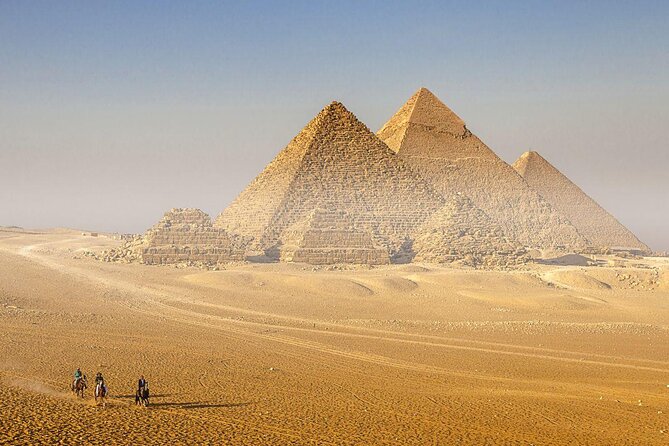
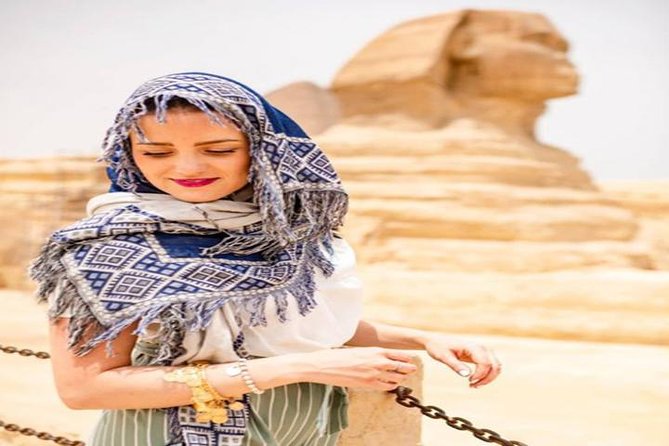
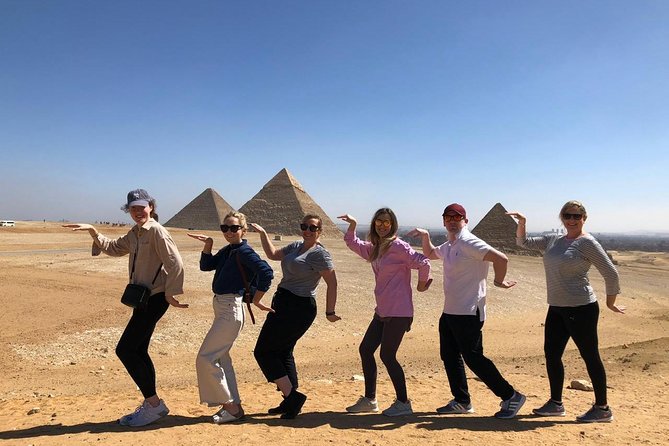
You start with the Pyramids of Giza. The plan calls for a guided visit of Cheops, Chephren, and Mycerinus, then you spend time at the Valley Temple and get a closer look at the Great Sphinx.
The route matters. Seeing the Valley Temple in the same day as the pyramids gives you a better sense of how the complex was designed for rituals and processions, not just as a sightseeing backdrop. And the Sphinx view changes as you move around it, so your best angles often come from pacing, not luck.
Then comes the included 30-minute camel ride around the Giza pyramids. It’s a classic bucket-list moment, and the time limit is smart. It gives you the experience without turning the rest of the day into a slow crawl.
A practical consideration: camel rides are physical and can feel uncomfortable if you’re not expecting the motion. If you’re sensitive to that, treat the camel ride as optional comfort rather than a must.

Lunch break, then Saqqara (Sakkara)
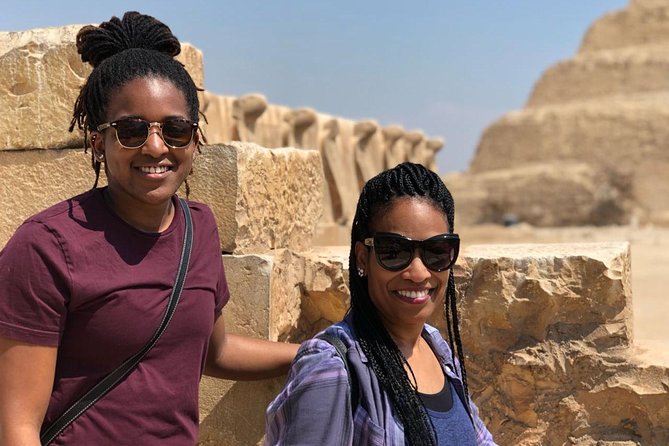
After lunch at a good-quality restaurant, you head to Saqqara. The centerpiece is the Step Pyramid complex of Zoser, plus time at the pyramid of Teti, including the interior where you can study the Pyramid Texts. The day also includes entering one of the nobles’ tombs.
Saqqara is often less crowded than Giza, and that is part of its charm. You can usually focus on details like how structures evolved over time. You’ll also get a clearer idea of how Egyptian writing and burial decoration connect to royal power, because you are not only seeing architecture, you’re stepping into spaces where inscriptions and tomb art shaped the story.
One caution for the tomb and interior parts: it can be tight and you may need to watch your footing. Wear shoes you’re comfortable moving in.
Dahshur: Red Pyramid and the Bent Pyramid
Next is Dahshur, including visits to the Red Pyramid and a chance to see the Bent Pyramid more closely.
This is a great addition to your day because it shows experimentation and evolution in how pyramids were built. If Giza feels like “the final form,” Dahshur is more like “how engineers worked through problems.” The Bent Pyramid is a good place to ask your guide why the shape changed.
Day 2 also includes entrance tickets across these sites, so you’re not spending time at counters. That saves energy for what you actually came for.
Day 3: Egyptian Museum, Muhammad Ali Mosque, Coptic Cairo, Khan Al-Khalili
Day 3 is where the trip shifts from Pharaonic monuments into Cairo’s layered religious and cultural history.
Egyptian Museum of Egyptian Antiquities
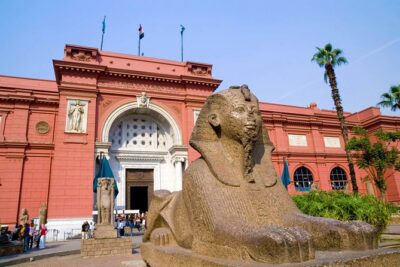
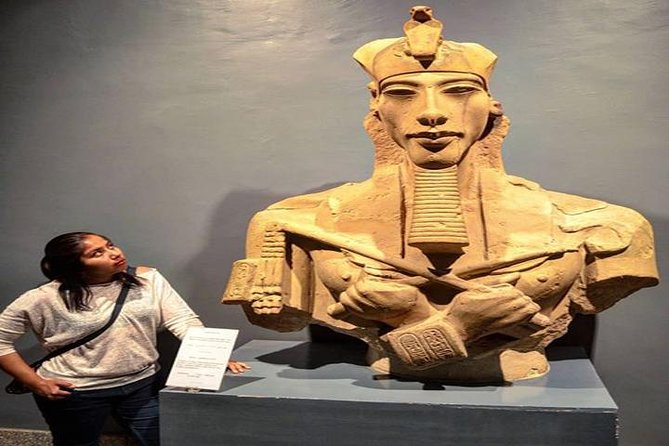
You start at the Museum of Egyptian Antiquities, with highlights including the collection connected to King Tut. The plan also mentions the Royal Mummy Room, but that part has extra fees.
Even if you’ve seen images online, an in-person museum visit gives you scale. It’s one thing to read about royal regalia and burial artifacts. It’s another to see them in a room where you can walk around and notice details.
A practical tip: museum floors can get tiring. If you move slowly, you’ll get more out of it. If you rush, you’ll just feel overwhelmed.
Mosque of Muhammad Ali
Next is the Mosque of Muhammad Ali, where you’ll discover Islamic arts in Cairo. This stop is worth it because the architecture and artistry are very different from what you saw in the pyramids and tombs. You’ll see a new kind of symbolism, expressed through design and craftsmanship.
If you plan to cover for a mosque visit, you’ll want to follow the dress expectations in a smart casual outfit. Comfortable layers help too.
Coptic Cairo
You then move to Coptic Cairo with your guide for about an hour. This is a compact block of time, so it’s best approached with curiosity. You are not getting a week-long Coptic history course, but you are getting enough context to understand Cairo as a city where different faiths left real physical marks.
Khan Al-Khalili
The day ends with Khan Al-Khalili, with time to look around and browse oriental souvenirs.
Khan Al-Khalili is a good spot for simple rewards after long days. You can pick up small gifts, snacks, or souvenirs without the trip feeling like it stopped being about history. Just keep your expectations realistic: it is a market environment, so it can be busy. Use your guide to help with navigation and to make sure your time is spent on what interests you most.
Day 4: Alexandria day trip, catacombs to the New Library
Day 4 takes you out of Cairo for Alexandria. It’s a long-drive day, but the itinerary is designed to keep you from feeling like you’re just transporting from one point to another. You’re hitting several major anchors, including Roman-era remains and modern landmarks.
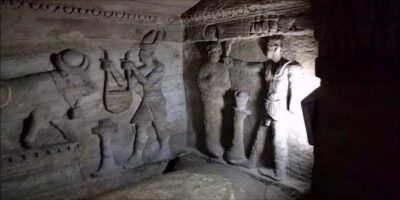
Catacombs of Kom el Shoqafa
You start at the Catacombs of Kom el Shoqafa, described as an old Roman tomb. Catacombs are always a little eerie, in a good way, because they turn history into a lived space. You get a sense of how people approached burial, power, and ritual.
This stop also pairs well with your earlier tomb experience from Saqqara, because you can compare burial ideas across different periods.
Bibliotheca Alexandrina
Next is the Bibliotheca Alexandrina, the New Library. The plan includes time to see what is inside.
This one is more than a photo stop. It’s a symbol of Alexandria’s identity as a place connected to learning and texts. If you’ve been thinking about written history since seeing Pyramid Texts at Saqqara, this library stop gives you another angle on how Egypt ties knowledge to culture.
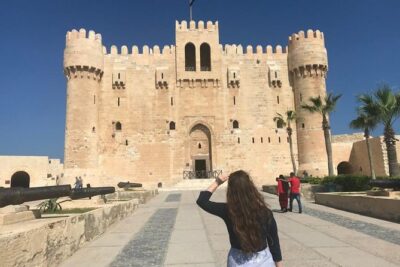
Kayetbai fortress
You also visit Kayetbai, described here as the biggest fortress. Fortresses help you understand the city’s defensive history, especially since Alexandria’s geography made it important across centuries.
Pompey’s Pillar
You finish with Pompey’s Pillar, one of the older pillars associated with Aswan in the itinerary description. The stop is short, but it’s a memorable capstone because it is pure stone and scale, and the kind of landmark that makes cities feel anchored in time.
What makes the private guide matter (and what to expect)
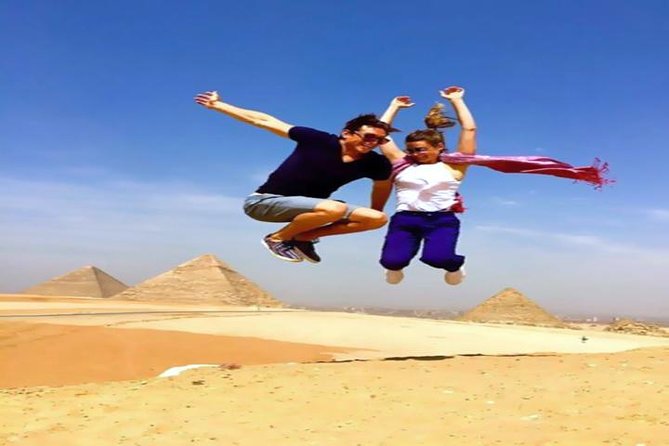
A private tour is only as good as the person guiding you through it. In the feedback tied to this experience, names like Mohamend and Marwa come up, and the common thread is clear: you’re not just getting facts, you’re getting a sense of how Egypt’s story connects across time.
Here’s what that looks like for you, practically:
- When you arrive at Giza, you’re guided through why each pyramid complex matters, not only where it is.
- In Cairo, you get context for Islamic and Coptic sites so they don’t feel like separate checkboxes.
- On the Alexandria day, you connect ancient remains to the city’s identity, instead of treating stops like random sightseeing.
The tour also notes that it may be operated by a multi-lingual guide. That’s helpful if you want a smoother experience with your language comfort level, though the exact language availability is something you should confirm at booking.
Logistics and inclusions: where your money actually goes
Let’s talk about value in plain terms. You’re paying for a package that includes:
- Qualified Egyptologist guide
- Transport by air-conditioned minivan, plus private vehicle time on your stops
- Entrance fees
- Lunch (3)
- Breakfast and snacks
- Bottled water
- Camel ride (30 minutes)
- Hotel pickup and drop-off
- Airport transfers
- Parking fees and local taxes
The biggest “nice” in that list is not just the guide. It’s that tickets and entrances are included, and you have meals and water handled. In Egypt, those add-ons can quietly multiply, especially when you’re trying to cover multiple provinces and sites.
The biggest “watch-out” is simple: accommodation isn’t included. So if your hotel budget is already tight, factor that in early. If you already have a hotel picked in Cairo, this tour’s inclusions can feel like a straightforward upgrade.
Timing and pacing: what a typical day feels like
Start time is 9:00 am, and each day has multiple stops with planned time blocks. Day 2 and Day 4 are especially stacked, because you’re covering several major sites plus drives.
Here’s how you can make the pacing work for you:
- Plan for some walking inside complexes and uneven surfaces at heritage sites.
- If you get tired easily, use your breaks between stops. The tour includes snacks and bottled water, which makes that easier.
- Keep your expectations realistic on day length. This is built to see a lot, not to linger for long stretches.
If you love slow travel, you might wish for more time per site. If you love hitting the big milestones without stress, this format is built for you.
Small notes that can save your comfort
A few details from the tour information are worth respecting:
- Dress code is smart casual. For mosque stops, comfortable modest layers help.
- Confirmation is received at booking time.
- Vegetarian option is available, but you need to request it in advance.
- Children must be accompanied by an adult.
- The tour includes “most travelers can participate,” so it sounds broadly accessible, but you should still plan for walking on heritage grounds.
One more practical angle: bring a bit of cash only for personal items. The tour handles entrances and planned meals, but you’ll likely want small purchases like souvenirs in Khan Al-Khalili.
Who this tour fits best
I think this works best if you:
- Want Cairo, Giza, and Alexandria in one trip without coordinating transport on your own
- Like a private Egyptologist who can connect monuments to stories
- Prefer included entrances and meals to reduce your daily planning
- Are okay with a packed, high-visibility schedule across several big sites
If your travel style is very slow, very independent, or very museum-only, you might prefer a lighter plan. And if you don’t want camel riding at all, that part could still affect how you feel about the Giza day, even if it’s only 30 minutes.
Should you book this tour?
If you want a stress-reduced way to see Egypt’s greatest hits, I’d lean yes. The blend of private transfers, an Egyptologist guide, included entrances, and lunches makes it feel like a real package, not just a list of stops. The airport handoff also helps a lot, especially if this is your first time in Cairo.
I’d hesitate only if you already planned to travel on your own to save money, or if you know you need extra time at each site. Since accommodation is not included, your final cost depends on where you stay.
Overall, this is a strong choice for travelers who want maximum clarity and minimal hassle, with enough guided context to make the pyramids, tombs, mosques, and Alexandria landmarks feel connected, not random.
FAQ
What time does the tour start?
The tour starts at 9:00 am.
Is this tour private?
Yes. It is a private tour/activity, and only your group participates.
Does the tour include airport transfers?
Yes. There are airport transfers, including pickup at Cairo International Airport and a transfer for departure on the final day. The airport transfer on departure is listed as free.
What’s included for meals?
You get breakfast plus snacks, and lunch is included 3 times.
Is accommodation included?
No. Accommodation is not included.
Do you include tickets and entrance fees?
Yes. Entrance fees are included, along with admission tickets for listed stops.
Is a camel ride included?
Yes. The tour includes a 30-minute camel ride around the Giza Pyramids.
Can dietary needs be handled?
Yes. Vegetarian options are available if you advise at booking. You can also advise specific dietary requirements at booking.
Alexandria, Up the Coast
More of Cairo from our review pile
- Cairo: Djoser Pyramid & Memphis Private tour with transfers.
★ 4.0 · 14 reviews - White Desert Overnight Camping Sharing Tour in Egypt
★ 5.0 · 15 reviews - Cairo Best 2Days tour Pyramids, Saqqara & Old Cairo
★ 5.0 · 15 reviews - Monastery St Simon with Cave Church and Garbage City Private Tour
★ 5.0 · 15 reviews - Full-Day Tour to Giza Pyramids, Egyptian Museum & Khan Al-Khalili
★ 5.0 · 15 reviews - Private Walking Tour in ElMoez Street & Khan Elkhalili Market
★ 5.0 · 15 reviews
Alexandria Day Trips, compared.
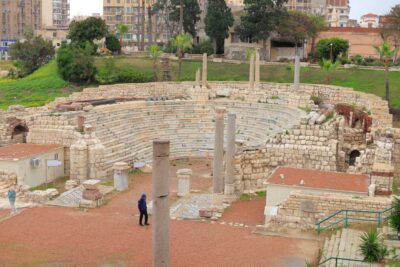 ★ 4.6From Cairo Alexandria Catacombs, Citadel Day Trip with LunchFrom $871,312 reviews
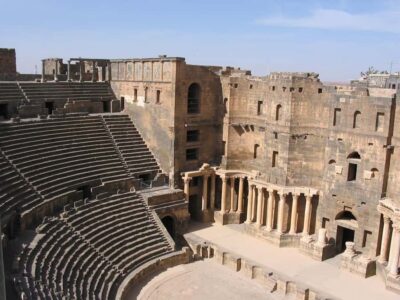 ★ 4.1Private Full-Day Tour of Historical AlexandriaFrom $651,155 reviews
 ★ 4.5Alexandria Day Trip From CairoFrom $20991 reviews
 ★ 4.5Alexandria Private Day Tour with Guide and LunchFrom $120334 reviews
 ★ 4.5Guided Tour To Alexandria From CairoFrom $30303 reviews
 ★ 4.1Alexandria Day Tour with LunchFrom $99300 reviews
 ★ 4.2Archeological Day-Trip to AlexandriaFrom $85272 reviews
 ★ 4.4Historical Alexandria Shared Day Tour with LunchFrom $77260 reviews
The lists this one sits on