
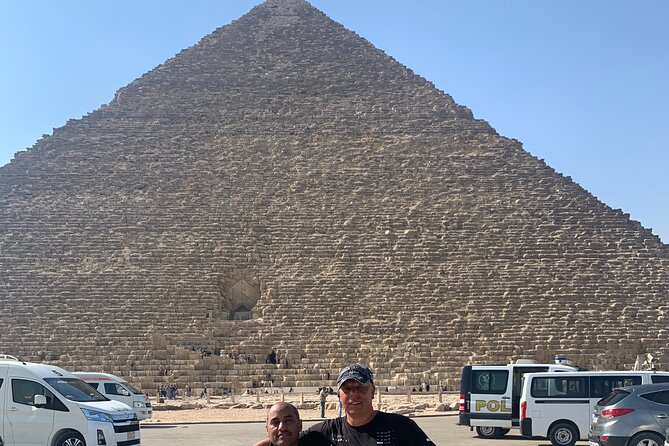
REVIEW · GIZA PYRAMIDS & SPHINX TOURS
Pyramids tour to Giza, Sakkara and Dahshur
Pyramids feel bigger up close. This long day route lines up the Step Pyramid at Saqqara, the bent pyramid story at Dahshur, and then the famous Giza trio. I like that the trip is built around the way Egyptian pyramid building evolved, not just photo stops, and the guide work tends to be a highlight, with names like Aladin and Markus showing up in feedback for clear explanations.
My second favorite part is how the logistics are handled for comfort, with friendly, careful drivers such as Rafik, Akram, Osman, Khalid, and Ali mentioned often. One thing to keep in mind: this is a long day (about 16 to 18 hours), so you should be ready for early mornings, lots of driving, and limited time at each site.
In This Review
- Key Takeaways
- A Long, Practical Pyramid Circuit You Can Actually Use
- Entering Saqqara’s Step Pyramid: Egypt’s First Big Stone Leap
- Dahshur’s Bent and Red Pyramids: When Plans Had to Change
- Giza’s Cheops, Chephren, and Mykerinos: The Icons That Earn the Hype
- The Guide’s Role: Construction Techniques and Sky Stories, Made Human
- Transportation, Timing, and What 16 to 18 Hours Really Means
- Lunch and Included Tickets: Where Your Money Actually Goes
- Who This Tour Fits Best
- Price and Value Check for $232.63
- A Quick Reality Check: Weather and the Long-Day Factor
- Should You Book This Pyramid Tour?
- FAQ
- What time does the pyramid tour start?
- How long is the tour?
- Are entrance tickets included for Saqqara, Dahshur, and Giza?
- Is lunch included?
- Is hotel pickup included?
- Is this a private tour?
- What is the cancellation and weather policy?
Key Takeaways
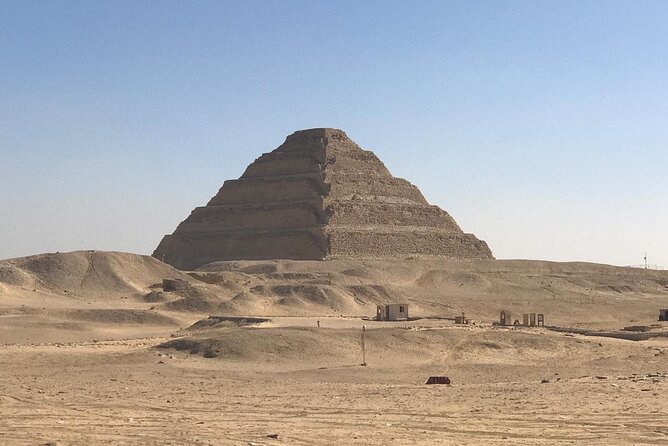
- Saqqara’s Step Pyramid: your first look at the early, staircase style, built for Djoser by Imhotep around 2650 BC.
- Dahshur’s “bent” problem-solving: you’ll learn why Snefru’s pyramid ended up with that famous bend.
- Giza’s core monuments: Cheops, Chephren, and Mykerinos are the final payoff, tied to over 4,500 years of history.
- More than pyramids: you get construction techniques, location, and even astronomy-linked facts about how pyramids connect to the sky.
- A team that keeps moving smoothly: feedback repeatedly highlights guides and drivers, including Aladin, Markus, Akram, and Khalid.
Ways onto the Giza plateau, compared
- Discover Cairo: Pyramids, Museum & Sphinx Tour from Hurghada★ 4.9 · 707 reviews
- Hurghada: Grand Egyptian Museum, Pyramids & Sphinx Day Tour★ 4.3 · 696 reviews
- Hurghada Cairo Pyramids day tour by plane – Small group★ 4.5 · 527 reviews
- Cairo By Big Bus full day From Hurghada (Pyramids-sphinx-Egyptian Museum-Lunch)★ 4.5 · 494 reviews
A Long, Practical Pyramid Circuit You Can Actually Use
This tour is designed as a full pyramid day, hitting three major zones: Saqqara, Dahshur, and Giza. It starts early, with pickup from your hotel and an itinerary that assumes you will spend most of the day on the road. Expect a day that feels full, not rushed in the sense of frantic stops, but definitely structured and time-packed.
At a price of about $232.63 per person, what you’re buying is the “route and pacing” experience. You’re not trying to coordinate tickets, transportation, and site-to-site navigation yourself. Instead, you get a planned circuit with admission tickets included at all the core stops and lunch plus bottled water included, which matters when you are out for 16 to 18 hours.
Also, this is set up for a private group where only your party participates. Even though there may be group discount options, the feel should be calmer than big-coach tours, since your time can be guided to your pace and questions.
Entering Saqqara’s Step Pyramid: Egypt’s First Big Stone Leap
Saqqara (spelled Sakkara in the tour wording) is where the pyramid story starts to make sense. The main star is the Step Pyramid of Djoser, built around 2650 BC and associated with Imhotep, often described as the architect behind the ruler’s tomb concept. This is not the smooth, classic pyramid shape. It’s a staircase design, sometimes described as an early stepped cubature style.
Two details you should care about while you’re standing there:
- It is the oldest stone structure in human history in the tour description, and that claim sets the right mindset. You are looking at an early stage in monumental building, not a final perfected design.
- It’s also 62.5 meters high, and it’s noted as the only one of the pyramids in this mix that does not have a square floor plan. That quirk is exactly the kind of thing a good guide explains, because it shows the builders experimenting.
The Step Pyramid is also the “why” stop. When your guide connects the staircase plan to an effort to create a tomb form that was meant to rise toward the heavens, you get more than a view. You get a design goal.
Practical note: your time here is about two hours, including admission. That’s enough to understand the shape, see major angles, and get the story without feeling like you are stuck in a museum line.
Dahshur’s Bent and Red Pyramids: When Plans Had to Change
After Saqqara, you move to Dahshur, a site that in this itinerary is treated like an insider chapter. The Dahshur pyramids are described as having been in a military restricted area for a long time, only opened to the public in the mid-1990s. That backstory is part of why this stop can feel less crowded than Giza, even though it is still famous in its own way.
Your highlight here is the Bent Pyramid, built during King Snefru’s time and described as the second attempt at building a real pyramid. The tour explicitly points you to the question: why did Snefru end up with a bent pyramid design? This is where the tour goes beyond the “big shape” and starts talking about construction technique and decision-making.
Here’s what makes Dahshur valuable in a route like this:
- You see a transition, not just a finished result. The bent shape is a visible clue that the builders were working through engineering and structural challenges.
- Dahshur is called out for being relatively unknown compared with other pyramid sites. For some people, that translates into a more relaxed feel, where your guide can spend a little more time explaining and showing how the site fits into the broader pyramid development timeline.
The itinerary indicates about two hours here with admission ticket included. If you’re hoping for inside access, one piece of feedback mentions seeing a red pyramid from inside. That doesn’t guarantee it for every departure, but it does suggest the day plan can include interior access when available.
Giza’s Cheops, Chephren, and Mykerinos: The Icons That Earn the Hype
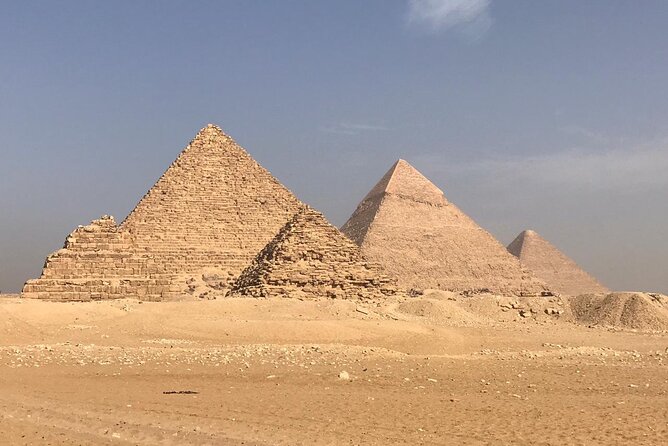
By the time you reach Giza, the day pays off with the biggest names: Cheops, Chephren, and Mykerinos (the tour wording uses Mekerinios for Mykerinos). These pyramids are described as among the seven wonders of the ancient world, and you’re looking at structures that are over 4,500 years old.
What makes Giza more than a postcard stop is the way this itinerary frames it. In addition to seeing the monuments, you are also learning the idea of how the pyramids’ locations relate to astronomical constellations, plus the tour promises facts about pyramid building development, possible construction techniques Egyptian builders used, and even enigmatic “secrets” tied to the monuments.
In plain terms: you’ll get help turning the view into a mental map. That’s important at Giza because it is easy to walk around and just feel overwhelmed by scale. With the right guide, you start to recognize patterns, alignments, and why the plateau matters.
The time at Giza is also about two hours with admission included. Two hours can sound short, but it usually works when you are not trying to “do everything,” and when your guide points you to the most meaningful angles first.
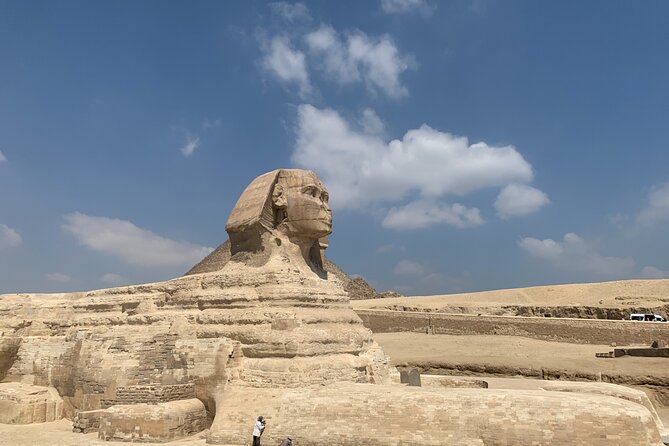
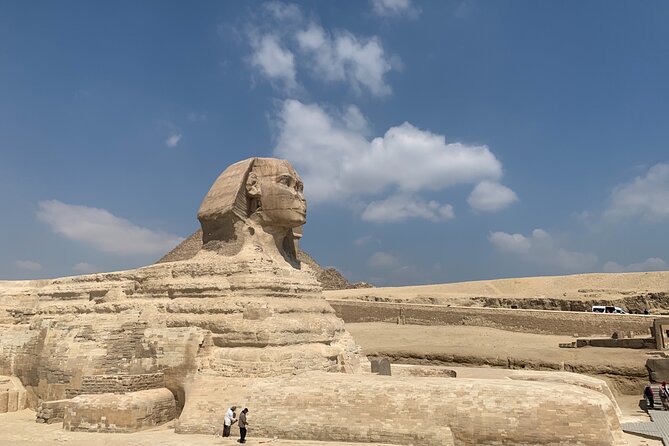
One extra detail: one feedback note specifically brings up a Sphinx look as part of the day’s experience. If that interests you, it’s worth asking when you confirm your departure, since some plans emphasize it and some stick closely to the pyramids.



The Guide’s Role: Construction Techniques and Sky Stories, Made Human
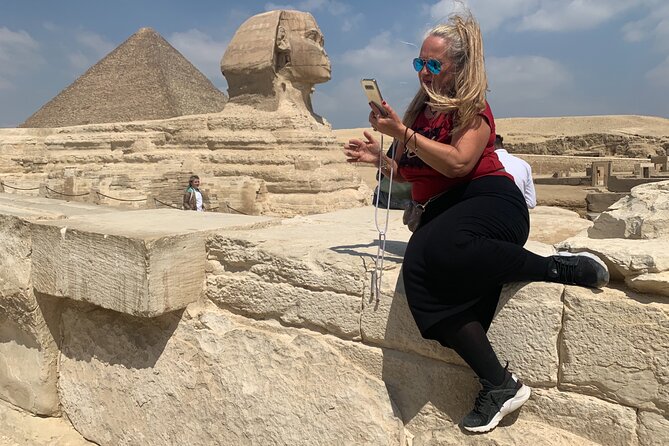
This tour is not only about walking between massive stones. It’s explicitly built around explaining:
- pyramid building development over time,
- building techniques Egyptian workers may have used,
- the relationship between pyramid locations and astronomical constellations,
- and the more mysterious, question-driven side of pyramid history.
The difference between a good day and a great day comes down to how the guide handles those topics. In the feedback tied to this operator’s pyramid tours, the guide quality shows up again and again, with names like Aladin and Markus appearing in standout comments. Drivers such as Akram, Khalid, Rafik, and Osman are also mentioned for friendly, careful driving, which matters when your day is long.
I like that this itinerary gives the guide permission to teach. You aren’t stuck with a script that only repeats basic facts. You should expect your guide to connect the stops into one story: early step design, the “real pyramid” attempts, then the final Giza icons, with a running theme of why things were built the way they were.
Transportation, Timing, and What 16 to 18 Hours Really Means
Even if the pace feels smooth, this is still a marathon day. The itinerary is listed at 16 to 18 hours, so plan your expectations around fatigue. You’ll be on the move, and you’ll want your body to feel okay, not just your camera to be ready.
Here’s the practical way I’d prepare:
- Wear comfortable shoes you can walk in for long stretches.
- Bring a hat and sun protection, because pyramid sites are open and bright.
- Keep water handy. Bottled water is included, but you will still want a little cushion.
- Consider a light layer. Early starts and long vehicle rides can swing in temperature.
Also, you’ll be doing a “route day,” which means the scenery between stops is part of the experience. The real value is that you arrive at each site ready, not stressed. Pickup and transportation are included through the tour’s structure, and the private group setup helps reduce waiting and mixed pacing.
Lunch and Included Tickets: Where Your Money Actually Goes
One of the best value signals in this tour is what’s included:
- Lunch
- Bottled water
- All fees and taxes
- Admission tickets for each stop (Saqqara Step Pyramid, Dahshur pyramids, and the Giza pyramids)
When you compare pyramid tours, entrance fees are often the hidden add-on that surprises people. Here, the tour spells out that admissions are included for the major pyramid stops. That means the $232.63 per person is more likely to cover what you expect, instead of turning into extra line items at each gate.
Lunch being included is another quality-of-life detail. With a day this long, having a planned meal helps you avoid the “grab something random at every stop” problem, which can turn your day into a snack parade.
Who This Tour Fits Best
This itinerary works well if you:
- want the classic pyramid trio plus the development story of how pyramid building evolved,
- prefer a planned route over DIY logistics,
- like explanations and context, not just sightseeing,
- and you want a private-group feel with only your group participating.
It may be less ideal if you:
- prefer very slow travel with long breaks at each monument,
- hate early starts or long driving days,
- or you want a more relaxed museum-style pacing.
For families, it also seems to work. One highlighted feedback includes three children and a guide described as especially accommodating and in-depth with knowledge. If you travel with kids, ask in advance how the guide typically structures explanations for younger ages.
Price and Value Check for $232.63
Is this worth it? In most cases, yes, if your priority is efficiency plus meaningful interpretation. Here’s why:
- You are paying for transportation and pickup, not just sites.
- You get admissions included, which is a big chunk of the real cost at Egypt’s major landmarks.
- Lunch and bottled water reduce the daily “expense friction.”
- The feedback patterns point to strong guide and driver quality, which directly affects whether your time feels worth it.
At the same time, it’s not the cheapest way to see pyramids. If you’re the type who enjoys DIY planning, you might find cheaper options. But if you want a single, organized plan that threads Saqqara, Dahshur, and Giza together into one coherent day, this price can feel fair.
A Quick Reality Check: Weather and the Long-Day Factor
This experience requires good weather, and if it gets canceled due to poor weather, you’ll be offered a different date or a full refund. Pyramid days are not always flexible once you are on the ground, so weather matters for a smooth visit.
Also, don’t underestimate the long duration. 16 to 18 hours means you should plan for some tiredness. Your best experience comes when you treat it like a full day mission, with rest, water, and patience.
Should You Book This Pyramid Tour?
I’d book it if you want the “pyramid origin to final icons” route in one shot, with Saqqara, Dahshur, and Giza tied together by explanations about construction choices and even how location ties into the sky. The included admissions, lunch, and bottled water also make it easier to budget, and the private-group setup makes the day feel more personal than a big bus shuffle.
Skip it or reconsider if you have low tolerance for long driving days, you want lots of free time to wander without guidance, or you’re traveling when weather reliability is an issue.
FAQ
What time does the pyramid tour start?
The start time is listed as 8:00 am.
How long is the tour?
It runs about 16 to 18 hours.
Are entrance tickets included for Saqqara, Dahshur, and Giza?
Yes. Admission tickets are included for Saqqara (the Step Pyramid), Dahshur, and the pyramids of Giza.
Is lunch included?
Yes. Lunch is included, along with bottled water.
Is hotel pickup included?
Pickup is offered, and the tour description includes pickup from your hotel.
Is this a private tour?
Yes. The tour is described as private, and only your group will participate.
What is the cancellation and weather policy?
You can cancel up to 24 hours in advance for a full refund. If the experience is canceled due to poor weather, you’ll be offered a different date or a full refund.
Giza, A Few More Ways In



More of Hurghada from our review pile
- From Hurghada: El Gouna Quad and MX Bike Safari Tour
★ 4.5 · 25 reviews - Super Safari ( Jeep – Quad- Buggy car-folklore-BBQ dinner)
★ 5.0 · 26 reviews - Private Tour: shopping Tour In Hurghada
★ 5.0 · 26 reviews - Private Speedboat Tour From Hurghada
★ 5.0 · 26 reviews - Orange Bay Island By Speedboat
★ 5.0 · 26 reviews - Orange Bay Island Boat Trip and Parasailing with Lunch – Hurghada
★ 5.0 · 26 reviews
Giza Pyramids & Sphinx Tours, compared.
 ★ 4.9Pyramids & Great Sphinx Private Tour with Camel RideFrom $486,335 reviews
 ★ 5.0Tour to Giza Pyramids and The Egyptian MuseumFrom $1556,016 reviews
 ★ 4.7Pyramids of Giza, Sphinx, Saqqara & Memphis TourFrom $903,110 reviews
 ★ 4.6Half-Day Tour to Pyramids of Giza and the SphinxFrom $502,891 reviews
 ★ 4.6Pyramids, Sakkara & Memphis Tour with LunchFrom $602,493 reviews
 ★ 5.0Private ViP all-inclusive Giza Pyramids,Sphinx,Inside PyramidFrom $142,448 reviews
 ★ 4.7Grand Egyptian Museum, Pyramids, Sphinx Tour & LunchFrom $892,282 reviews
 ★ 4.7Cairo Pyramids, Sphinx & Egyptian Museum Day TripFrom $932,271 reviews
The lists this one sits on