
REVIEW · GIZA PYRAMIDS & SPHINX TOURS
Private Tour To Giza Pyramids,Sphinx With Entry Inside The Great Pyramid
Walking inside Khufu changes your perspective. This private half-day trip in Cairo pairs the major Giza sights with the rare chance to go inside the Great Pyramid. You also get the Sphinx area and Valley Temple viewpoints, so you see more than just pyramids from the outside.
I like two things most. I love the private guide and hotel pickup that keep the day tight and simple. I also love that the standard plan includes entry inside the Great Pyramid of Giza.
One thing to consider: it is still a real sight-seeing walk in open sun. Expect a fast pace across the plateau, with limited shade and plenty of steps.
In This Review
- Key Things That Make This Tour Worth It
- Private Giza Tour Timing, Built for a Short Stay in Cairo
- Giza Necropolis First Stop: Great Pyramid Views Plus the Big Picture
- Khufu Pyramid Exterior, Then the Main Event
- Entering the Great Pyramid: What to Expect and How to Prepare
- Khafre’s Pyramid Area and Valley Temple: Where the Sphinx Theme Starts
- Menkaure’s Pyramid Complex: Finishing the Trio With Contrast
- Great Sphinx Stop: The Best Moment to Slow Down
- Panoramic View and the Gizeh Plateau: Where You Get Your Final Photo Stack
- Camel Ride and Lunch Upgrades: Fun Extras, With a Few Smart Questions
- Guides and Drivers: What Makes the Day Feel Smooth
- Price and Value: Why This One Can Feel Like a Deal
- Who This Tour Is Best For (And Who Should Rethink It)
- Should You Book This Private Giza Pyramids Tour?
- FAQ
- What is included in the tour price?
- How long is the private tour?
- Where does pickup and drop-off happen?
- Do I need to pay separately for entry inside the Great Pyramid?
- Is a camel ride included?
- Is lunch included?
- What is the cancellation policy?
Key Things That Make This Tour Worth It
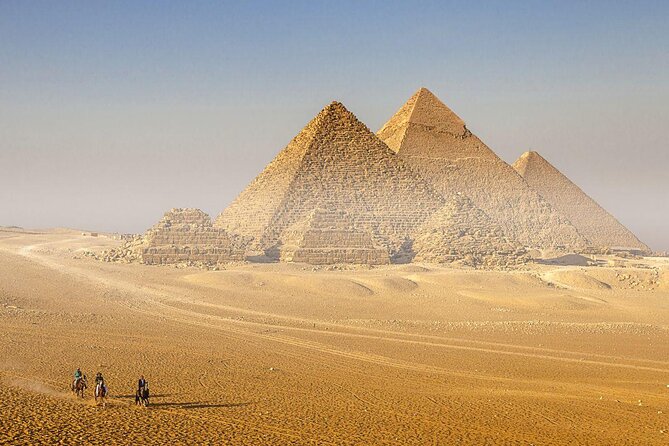
- Inside the Khufu (Cheops) Pyramid: the highlight access is built into the main experience
- Private, hotel-to-hotel transfers: you are not stuck figuring out timing or rides to Giza
- Stops grouped by how you actually want to photograph: Great Pyramid, Sphinx, Khafre, Menkaure, plus panoramic views
- Short day, big hits: you see multiple Fourth Dynasty sites in about 3 to 4 hours
- Optional add-ons that you control: camel ride and lunch can be added when they fit your energy level
Ways onto the Giza plateau, compared
- Cairo: Pyramids & Great Sphinx Private Tour with Camel Ride★ 4.9 · 6,335 reviews
- Tour to Giza Pyramids and The Egyptian Museum★ 5.0 · 6,016 reviews
- VIP All inclusive Best of the best Giza Pyramids,Sakkara,Memphis★ 5.0 · 3,164 reviews
- From Cairo: Pyramids of Giza, Sphinx, Saqqara & Memphis Tour★ 4.7 · 3,110 reviews
Private Giza Tour Timing, Built for a Short Stay in Cairo
If you only have a few hours in Cairo, this style of tour makes sense. You start with pickup from your Cairo or Giza address, then you head straight to the Giza Plateau and get to the good stuff without burning half a day on logistics.
This is a private tour, meaning your group stays together and you do not get stuck waiting on a big bus plan. You also get bottled water and tickets handled as part of the tour flow, which is one less headache in a place where entry lines and rules can shift by time and access.
The overall duration is listed as 3 to 4 hours. That matters because Giza is not a slow museum crawl. It is moving through outdoor spaces, and a half-day format helps you finish before the heat and fatigue turn sightseeing into survival.
Giza Necropolis First Stop: Great Pyramid Views Plus the Big Picture
Your tour typically begins at the Pyramids of Giza complex, also called the Giza Necropolis. Here you get oriented fast, because the site is a whole plateau world, not a single monument.
This complex includes the Great Pyramid of Giza (Khufu), plus the pyramids of Khafre and Menkaure, along with associated pyramid complexes. You also see the Great Sphinx of Giza, plus cemeteries and the remains of a workers village. That workers village piece is a detail many first-timers miss, but it helps you understand that Giza was a functioning project, not a lone stone sculpture.
The location is about 9 km west of the Nile, in Greater Cairo, and the plateau sits about 60 meters above sea level. That elevation does not mean cool air, but it does explain why the sun feels relentless and why you want a strategy for hydration and clothing.
At this stage, you are also set up for photos. The tour structure pushes you to capture the Great Pyramid, Sphinx, and Valley Temple areas in a sequence that keeps you from criss-crossing the site randomly.
Khufu Pyramid Exterior, Then the Main Event
After your first orientation stop, you move to the Great Pyramid of Cheops (Khufu). The tour notes it clearly: it is the oldest and largest of the three major Giza pyramids, and the one that still looks largely intact compared to its sisters.
This is the moment where the tour earns its keep. Many “pyramid tours” stop at the viewpoints only. Here, the experience includes ticketed entry inside the Great Pyramid as part of the plan, which is the part most people remember later.
Even if you have seen pyramid photos a hundred times, the scale hits differently once you are at the base. It is also where having a guide helps, because you can focus on what to look for instead of trying to decode the site alone.
One practical tip: keep your camera ready, but do not burn time hunting perfect shots. The tour schedule is tight, and the inside access is time-sensitive.
Entering the Great Pyramid: What to Expect and How to Prepare
The headline feature is going inside the Great Pyramid, following the route that brings you into the interior spaces. The listing describes it as eerie tunnels, and that matches what you should expect from a site built for a very different purpose than tourism.
Inside, you will be moving through enclosed passages and chambers. That usually means a few things you should plan for: tighter spacing than you may be used to, less time to linger, and a faster flow than a quiet cathedral.
Because the tour includes entry fees and the inside-pyramid ticket in the standard package, you should be set. Still, I recommend one small habit before you show up: confirm that your ticket includes the inside access for your option when you book. There is enough confusion in the world of timed entries that it is worth double-checking.
If you feel uneasy in enclosed spaces, the best “prep” is honest self-knowledge. If you know you get claustrophobic, this is where you make your call, not after you are already at the door.
Other tickets that go in, not just up

Khafre’s Pyramid Area and Valley Temple: Where the Sphinx Theme Starts
Next comes Khafre’s Pyramid and its surrounding complex. The itinerary notes that Khafre’s complex includes a valley temple and the Sphinx temple, along with a causeway, mortuary temple, and the king’s pyramid.
This is an important stop because it connects the Sphinx to the pyramid plan. The Great Sphinx is not just a random statue for selfies. It is part of the whole funerary landscape of the Fourth Dynasty, and the valley temple and causeway logic help you see how these elements were meant to work together.
Time here is listed as short, so the approach is efficient: see what matters, take key photos, then move on. If you are the type who likes to read plaques for 20 minutes, you may feel slightly rushed. If you like guided highlights, this pacing can actually be a relief.
Menkaure’s Pyramid Complex: Finishing the Trio With Contrast
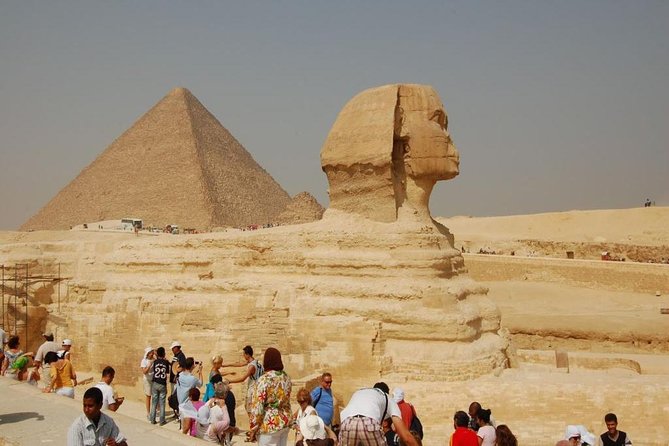
Then you visit the Pyramid of Menkaure area. The tour notes that Menkaure’s complex includes a valley temple, causeway, mortuary temple, and the king’s pyramid, similar in layout to Khafre’s complex.
If Khafre and Khufu are the biggest visual anchors in your mind, Menkaure gives you contrast. Even with limited time, seeing all three main pyramids helps you understand the Giza Plateau as a coordinated set rather than separate monuments.
This stop is also useful for photography. If the light shifts, you can grab angles that you did not get at the first pyramid exterior. Just remember: do not let your camera steal your inside-pyramid focus.
Great Sphinx Stop: The Best Moment to Slow Down
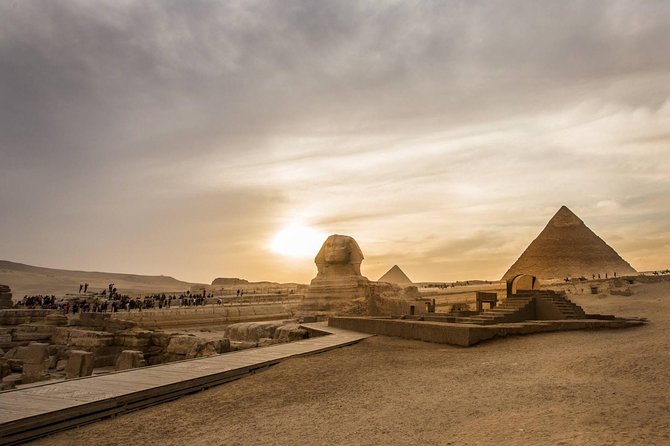
The tour includes a stop at the Great Sphinx. The info notes it dates from the reign of Khafre, and that later rulers added and dedicated related structures, including a temple dedicated during Amenhotep II’s time.
That background matters because it explains why the Sphinx area feels layered. Even if you only have a short visit, you can look at the Sphinx and think in terms of centuries of changes, restorations, and new religious uses.
One benefit of having a private guide is that you can ask simple questions while you stand there. You can also get quick advice about where to stand for photos so you do not waste your limited time on the wrong side of the walkway.
And yes, the Sphinx area can still be hot and bright. If you are aiming for close framing in photos, plan for the fact that you might need to keep moving to stay in the best spots.
Panoramic View and the Gizeh Plateau: Where You Get Your Final Photo Stack
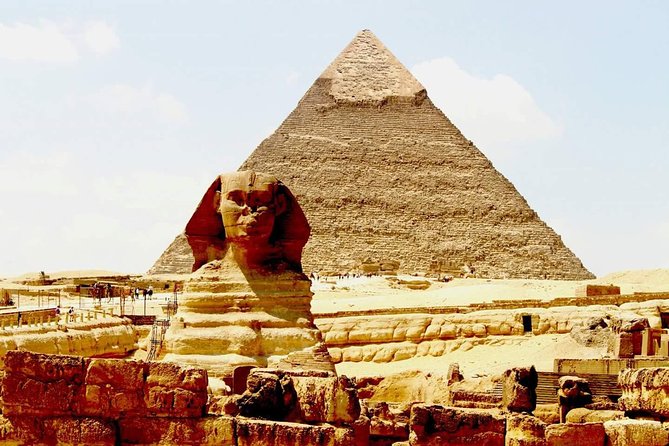
The itinerary includes additional plateau time and a panoramic view of the pyramids. This is not just filler. The plateau layout makes it easy to feel like everything is stacked right in front of you. A panoramic stop helps you step back and connect the pieces.
The tour also references the broader Giza Plateau as part of the UNESCO World Heritage site that includes Memphis and its necropolis. It is listed as part of the Pyramid Fields in the Western Desert edge of the Nile Valley, which is a useful reminder that you are inside one of the most studied ancient sites on earth.
Expect this segment to be more about photos and context than about new ticket entrances. If you have kids or you are managing energy, this stop can be a breather, especially if your guide paces transitions well.
Camel Ride and Lunch Upgrades: Fun Extras, With a Few Smart Questions
Optional upgrades can add a different flavor to the day. You can add a camel ride and/or a local restaurant lunch, depending on what your tour option includes.
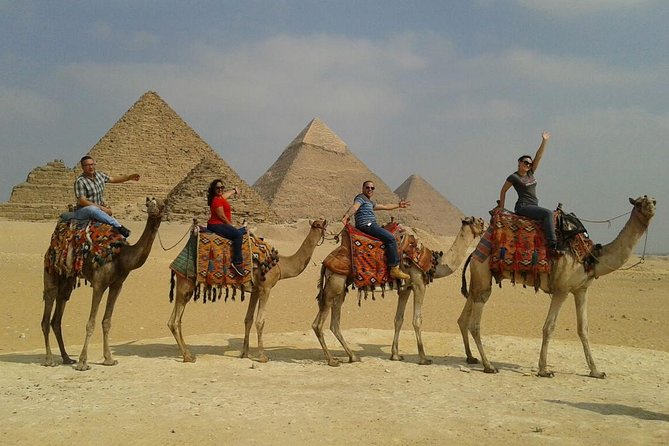
The camel ride is often the kind of activity people remember as the playful contrast to the stone monuments. The listing frames it as atmospheric, and it does fit the vibe of Giza. If you do it, wear sunscreen, and bring clothing that protects your shoulders and arms.
One strong practical takeaway from the experience details: the sun here can be brutal. I would treat Giza like a day for light long sleeves and comfortable, closed footwear. You are walking in open space, and shorts plus bare shoulders can become a fast regret.
Safety question to ask before you hop on a camel: who is managing the camels and how close is the handler to you? The tour data includes at least one negative account related to how a camel ride was managed, so it is smart to pay attention to supervision levels. If anything feels off, skip the ride. You will still have the pyramid highlight.
Lunch, if added, is a nice way to finish without scrambling to find food after you are done. Since the experience includes bottled water as standard, you can usually manage hydration well, then handle lunch when the day slows down.
Guides and Drivers: What Makes the Day Feel Smooth
In a place like Giza, the best tour guides do two things. They help you see, and they help you move.
The provided experience notes highlight that guides are often friendly and can be funny, with a strong focus on explaining what you are looking at. Names that came up include Mohammad, Islam, Osama, Tonsi, and Aladdin. Drivers also get mentioned, including Achmet and Yusuf, which tells me these trips often run smoothly when the guide and driver are in sync.
I also like the practical side of good guiding. Some guides share tips for what to do next, including pointers for visits like the Egyptian Museum. Even if you are not planning it immediately, having that kind of direction saves you time later.
One possible tradeoff to be aware of: a few accounts mention stops linked to shops, such as perfume stops. This is not unusual around major tourist sites, but you do not have to cooperate with a hard sell. If you want fewer distractions, make your preference clear at the start.
Price and Value: Why This One Can Feel Like a Deal
The price is listed at $53.00 per person, with booking often happening around 31 days in advance on average. That tells me this is a popular option, and it is the kind of tour where you should plan early if you can.
What makes this price feel more reasonable than expected is what is bundled in. You get hotel pickup and drop-off, a tour guide, bottle water, private tour, entry fees, and the ticket to go inside the Great Pyramid. That is a lot of moving parts for a half-day.
Also, upgrades are optional. If you do not want a camel ride, you can skip it and keep the day focused on the pyramids and Sphinx. If you want the full experience, you can add lunch and camel time.
One small note from the tour details: entry fees can depend on tour options, and the standard entry fees include the basic area only. The included plan also states that the inside Great Pyramid ticket is part of the experience. So in practice, you should confirm your specific option at booking so you know exactly what is covered for your date.
Who This Tour Is Best For (And Who Should Rethink It)
This tour is a strong fit if you want the top Giza sights in a short time and you specifically care about inside access to the Great Pyramid. It is also a good match for first-timers who do not want to guess their way through where to stand, where to enter, and how to keep the day from running long.
It is also a reasonable choice for families, with one note that heat and walking can be intense. The data includes an experience running in very hot conditions with kids, where the guide adjusted the plan to keep things workable. That flexibility can be a big deal.
Here is the main reason some people might hesitate: Giza involves lots of outdoor walking and limited shade. If you have limited mobility, you may find the half-day still too much. The tour says most travelers can participate, but you should still assume you will be walking between stops.
Also, if you hate tight indoor spaces, you should think carefully before choosing the inside-pyramid option.
Should You Book This Private Giza Pyramids Tour?
Book it if your priority list looks like this: see the Sphinx and Valley Temple, get photos across the plateau, and most importantly, experience the Great Pyramid interior without turning the day into a long haul.
I would not book it if your priority is slow, museum-style reading time, or if heat and walking are major issues for you. Also skip the camel ride if you cannot get comfortable with how it is supervised.
If you do book, go in with a simple game plan: wear light long sleeves, bring sunscreen, keep your camera handy but do not rush the inside entry process. And when you arrive, ask a quick question about how your guide wants to pace the stops. In a half-day format, a good flow makes the difference between seeing everything and feeling like you barely blinked.
FAQ
What is included in the tour price?
The tour includes hotel pickup and drop-off, a tour guide, bottled water, private tour access, entry fees, and a ticket for entry inside the Great Pyramid.
How long is the private tour?
The duration is listed as about 3 to 4 hours.
Where does pickup and drop-off happen?
Pickup and drop-off are offered from your hotel in Cairo or Giza, or another Cairo or Giza address you choose.
Do I need to pay separately for entry inside the Great Pyramid?
For the tour option described, the ticket of inside the Great Pyramid is included, along with entry fees.
Is a camel ride included?
A camel ride is optional. It is not included in the base price, but you can upgrade to add it.
Is lunch included?
Lunch is optional. It is not included in the base tour, but you can upgrade to include a local restaurant lunch.
What is the cancellation policy?
Free cancellation is offered up to 24 hours in advance for a full refund. If canceled less than 24 hours before the start time, the amount paid is not refunded. The experience also requires good weather and may be rescheduled or refunded if canceled due to poor weather.
Going Inside the Pyramid

Giza, A Few More Ways In
More of Cairo from our review pile
- Cairo Layover Tour to Giza Pyramids Egyptian Museum and Khan Khalili Bazaar
★ 5.0 · 25 reviews - Private Luxor Day tour from Cairo by Flight
★ 5.0 · 25 reviews - Private full day tour to Giza Pyramids, Sphinx, Sakkara and Dahshour with guided
★ 5.0 · 25 reviews - Nile Dinner Cruise in Cairo With Belly Dancing and Transfer
★ 5.0 · 25 reviews - Private Giza Pyramids,Sphinx,camel,lunch, 2 tombs,Great Pyramid
★ 5.0 · 25 reviews - All inclusive Giza Pyramids ,Sphinx ,Lunch ,Camel&Inside pyramid
★ 5.0 · 25 reviews
Giza Pyramids & Sphinx Tours, compared.
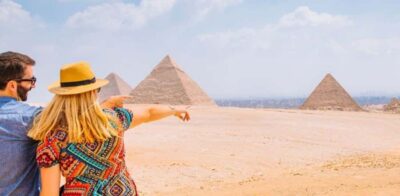 ★ 4.9Pyramids & Great Sphinx Private Tour with Camel RideFrom $486,335 reviews
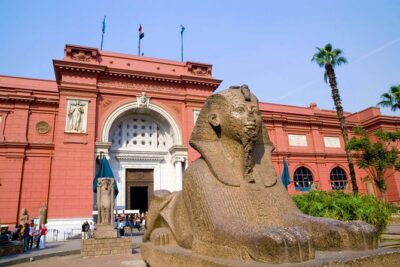 ★ 5.0Tour to Giza Pyramids and The Egyptian MuseumFrom $1556,016 reviews
 ★ 4.7Pyramids of Giza, Sphinx, Saqqara & Memphis TourFrom $903,110 reviews
 ★ 4.6Half-Day Tour to Pyramids of Giza and the SphinxFrom $502,891 reviews
 ★ 4.6Pyramids, Sakkara & Memphis Tour with LunchFrom $602,493 reviews
 ★ 5.0Private ViP all-inclusive Giza Pyramids,Sphinx,Inside PyramidFrom $142,448 reviews
 ★ 4.7Grand Egyptian Museum, Pyramids, Sphinx Tour & LunchFrom $892,282 reviews
 ★ 4.7Cairo Pyramids, Sphinx & Egyptian Museum Day TripFrom $932,271 reviews
The lists this one sits on