
REVIEW · ABU SIMBEL TEMPLE TRIPS
Private Tour: Abu Simbel by Minibus from Aswan
Abu Simbel is hard to believe until you see it. This private trip pairs air-conditioned minibus transport with a private Egyptologist who sets you up before you enter the temples, so you get more than quick sightseeing. The big tradeoff is simple, it is a long day with about three hours each way driving, and your time at the sites can feel compressed.
You get to choose your departure time, then roll out from your Aswan hotel or port for the ride to Lake Nasser. Along the way, your guide explains what you are about to see, including the UNESCO relocation project from 1968, which moved the temples to higher ground to protect them from flooding.
In This Review
- Key Things That Make This Tour Work
- Why Abu Simbel Feels Like a Real-Life Movie Set
- Private Minibus Pickup, Egyptologist Briefing, and Temple Rules
- UNESCO Relocation in 1968: The Context That Changes How You See the Temples
- Great Temple of Ramses II: What You Will See in the Main Hall
- Temple of Hathor and Nefertari: Murals and Pillars Up Close
- Timing and Crowds: Early Convoys vs Later Departures
- Price and Value: What $231.42 Buys You (and What Might Feel Off)
- Comfort Tips for a Long Desert Day That Actually Help
- Should You Book This Abu Simbel by Minibus Tour from Aswan?
- FAQ
- How long is the Abu Simbel private tour from Aswan?
- What temples are included?
- Is admission included?
- Will the Egyptologist guide go inside the temples with me?
- Do I get pickup and drop-off in Aswan?
- Can I choose my departure time?
- Is there a stop at the visitor center?
- What details do I need to provide for booking?
- Is there a mobile ticket?
- Is free cancellation available?
Key Things That Make This Tour Work
- Private Egyptologist briefing before you enter, since guides cannot go inside the temples
- Great Temple of Ramses II plus Temple of Hathor, both with time to explore interiors
- UNESCO relocation story, including how the temples were moved in 1968
- Convoy-style travel for the road, which can help safety but can also affect timing
- Hotel or port pickup and drop-off, so you are not coordinating taxis
Further south to Abu Simbel, other operators
- 4-Days Nile Cruise From Aswan To Luxor including Abu Simbel and Hot Air Balloon★ 5.0 · 3,142 reviews
- From Aswan: Abu Simbel Temple Day Trip with Hotel Pickup★ 4.4 · 2,807 reviews
- 4-Day 3-Night Nile Cruise from Aswan to Luxor&Abu Simbel+Balloon★ 5.0 · 2,023 reviews
- 4-Day 3-Night Nile Cruise from Aswan to Luxor including Abu Simbel, Air Balloon★ 4.5 · 612 reviews
Why Abu Simbel Feels Like a Real-Life Movie Set
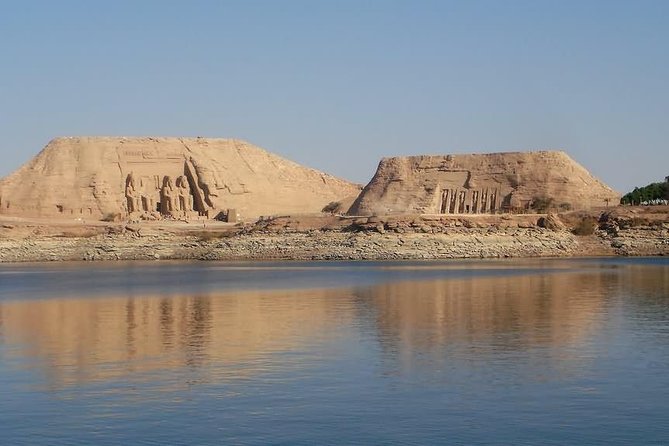
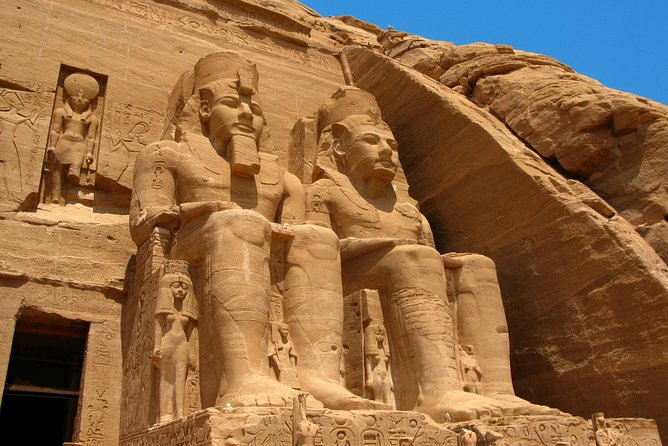
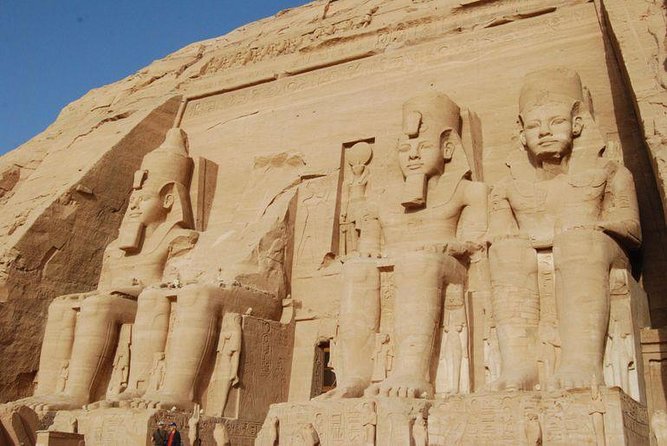
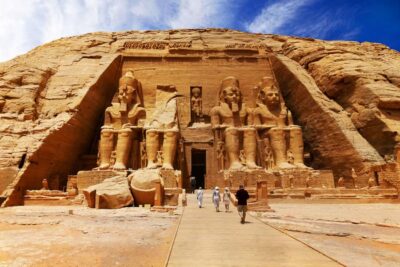
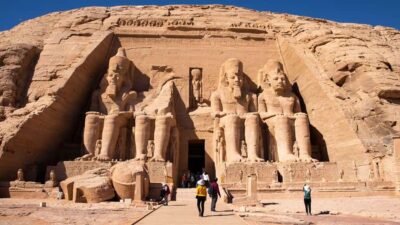
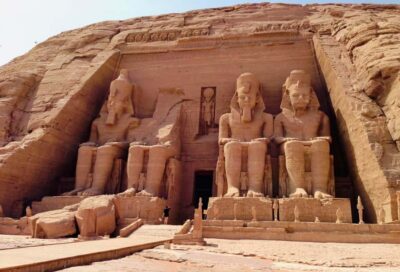
Abu Simbel is one of those places where the scale hits you before the details do. The temples are carved right into a cliff on the banks of Lake Nasser, and Ramses II and his wife Nefertari dominate the view with massive rock relief figures.
This is also one of Egypt’s most visited ancient sites after the Great Pyramids, so you will likely have crowds in the general area. The value of this day trip is that you are not just rushing from photo spot to photo spot. You get context first, then real time inside the temples, where the walls, pillars, and painted scenes make the story stick.
Private Minibus Pickup, Egyptologist Briefing, and Temple Rules
You start with private transportation in an air-conditioned minibus, picked up from your Aswan hotel or port and dropped back at the end. That matters more than it sounds. It reduces stress, especially for an 8-hour day where timing is everything.
The tour is led by a private, expert Egyptologist guide. Here is the key rule you should know: guides are not permitted inside either the Great Temple of Ramses II or the smaller Temple of Hathor due to visitor volume. Instead, your guide gives you a structured briefing using photos and illustrations before you step into the interiors.
That restriction is frustrating if you want a guide literally next to you for every question. But it can also be a smart way to travel, because you walk in with a mental map. Reviews included both cases where the briefing felt strong and cases where it felt brief, so your best move is to come with a few focused questions about what you see inside, not just the big headlines.
UNESCO Relocation in 1968: The Context That Changes How You See the Temples
What makes Abu Simbel especially fascinating is not only the carving, it is what happened to it later. The temples were relocated through a UNESCO project in 1968, driven by the creation of the Aswan High Dam and the risk of flooding.
On the short walk toward the entrances, your guide should explain the relocation story, including how the cliff face and temples were moved to higher ground and reassembled piece by piece. If you have time later, you can also visit the nearby visitor center that documents the relocation.
Seeing the temples after learning the relocation details adds a layer that most day-trips miss. You are not just looking at ancient monuments. You are witnessing a preserved rescue. Even if you are not an Egyptology nerd, that engineering story gives you something practical to hold onto while you are inside, because you start noticing how the site fits together.
Great Temple of Ramses II: What You Will See in the Main Hall
This is the big moment. The Great Temple of Ramses II is entered after you take in the outer rock reliefs and then get your briefing before you go inside.
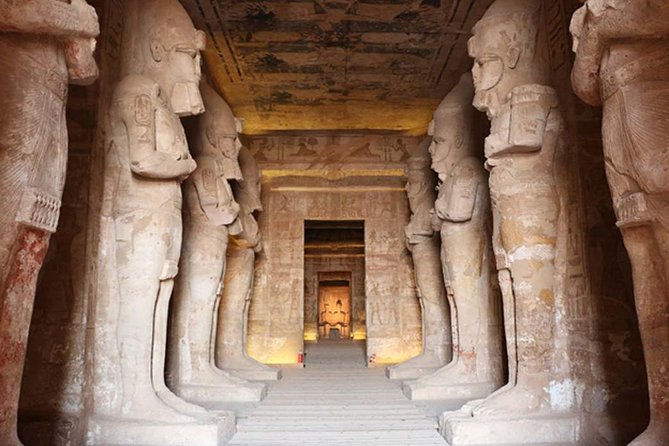
Once inside, you can expect towering and highly detailed interior spaces with painted battle scenes and huge sculptures of Ramses II lining the halls. The tour is designed to give you free time to explore at your own pace after the initial explanation.
That free time is where you will likely decide whether this day trip feels rushed or rewarding. Some people reported having only about an hour at the temples overall, even though they expected longer. If you like to go slow with photos and readings, aim to pick a departure time that gives you a comfortable schedule at the entrance, not one that forces you to sprint.
Temple of Hathor and Nefertari: Murals and Pillars Up Close
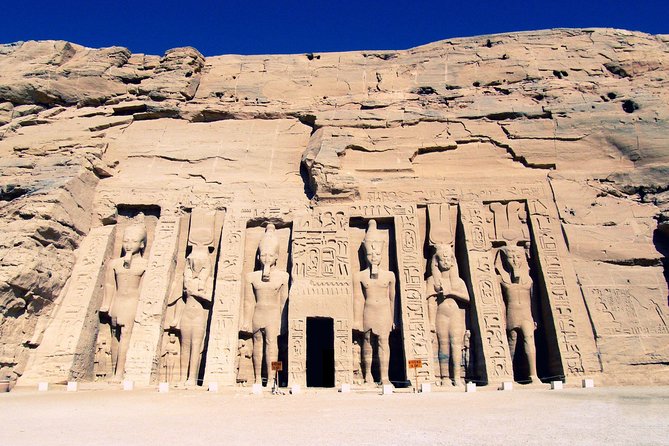
After Ramses II, you go to the smaller Temple of Hathor. It is smaller in size, not in impact. Many people expect the main temple to be the star and then feel surprised that the second temple lands just as strongly, especially once you see the artwork.
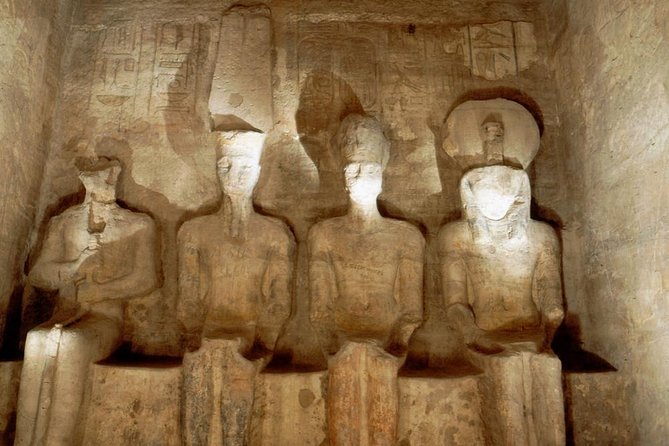
In the interior, you will find murals and pillars engraved with images connected to the goddess Hathor and Nefertari. Your exterior photo moment should include the rock relief figures of Ramses II and Nefertari, then you step into a quieter, more intimate experience inside.
If you are traveling with someone who gets bored by long museum-style explanations, this is a great structure for the day. The second temple gives you a reset. You still get interpretation, but you also get artwork that pulls you in immediately through repetition of figures and carved detail.
Timing and Crowds: Early Convoys vs Later Departures
The drive is roughly three hours each way, and it is usually done as part of a convoy for road safety. That detail affects everything from crowd levels to how tired you feel by the time you reach the temples.
One of the strongest themes in feedback was timing strategy. People who left early, including departures around 3:45am and 4:00am convoy schedules, tended to report fewer crowds. Other visitors argued the opposite, suggesting you should leave later if you can, to miss crowds and still enjoy the day.
What I’d do with your booking options:
- If you hate early starts, pick the latest departure that still leaves you enough daylight to enjoy the return comfortably.
- If you want the calmest temple experience, lean toward the early convoy.
- Pack for the heat either way. Even if you depart later, your time outside the temples can still be intense.
Also be aware that convoy logistics can be messy on the road. Some reviews described disorganization that wasted time, including convoy turnarounds that cut into temple time. You cannot control that part, but you can protect yourself by not planning a tight schedule right after the tour day.
Price and Value: What $231.42 Buys You (and What Might Feel Off)
At $231.42 per person, this is not a cheap way to do Abu Simbel. The value claim is clear: you get private minibus transport, private pickup and drop-off, admission that is included, plus a private Egyptologist guide.
So where does price pain show up? It shows up when the temple time feels short, when the briefing feels too quick, or when you do not feel you received the depth you expected for the cost. Some people also felt the trip was expensive compared with other Abu Simbel options they found, and some mentioned their guide did not answer questions well.
Here is how to judge value for yourself before you go:
- Ask what portion of your total day is actually spent at the temples, not just driving time.
- Expect that you will have free time inside, but understand that the guide will not be inside with you.
- If you care about a detailed explanation of the murals and pillars, ask for the most specific focus you want before you enter.
There is also the question of side stops. The tour description focuses on temples and the visitor center if time allows, but at least one review mentioned a stop involving papyrus shops. Another review said the papyrus stop was not pushed. If you are trying to keep the day tightly focused, tell the guide what you do and do not want to do before you arrive back on site.
Comfort Tips for a Long Desert Day That Actually Help
This is a long commute day. You are looking at around eight hours total, plus the three-hour desert drives each way. That means comfort is not a luxury, it is part of whether you enjoy the trip.
I strongly suggest you plan like it is a heat day:
- Bring water and drink regularly, especially while waiting outside and walking to the entrances.
- Wear sun protection and light layers you can adjust as conditions change.
- Bring a charged phone or camera battery since you will want photos at the temple facades and exterior reliefs.
On comfort details, some reviews were positive about vehicle comfort and even mentioned an ice-box onboard. Others described vans that felt less spacious. If you want the best odds, choose your departure time wisely, then go in expecting a straightforward, functional ride rather than a luxury coach.
If you start from a boat or have an early departure morning, you might have breakfast on hand. One early-day account mentioned a box breakfast and coffee or tea. That is not guaranteed by the tour description, but it is something you can ask about if you are departing from a port.
Should You Book This Abu Simbel by Minibus Tour from Aswan?
I’d book it if you want:
- a private Egyptologist guide to frame both temples with the UNESCO relocation context
- free time to explore the Great Temple of Ramses II and the Temple of Hathor
- hotel or port pickup and drop-off so you do not spend your day fighting logistics
I would think twice if:
- you are extremely sensitive to long drives and early mornings
- you expect a guide physically inside the temples with you, because that is not how this tour works
- you need lots of extra time at the temples, because the day can feel rushed if convoy timing runs long
One practical way to improve your odds of a great experience is to choose your departure time based on your crowd tolerance, then come prepared with specific questions for your guide during the briefing. Some groups reported excellent guides, including names like Michael, Mark, and Peter in driver roles, and others felt the briefing was too short. You cannot predict which guide you will get, but you can make sure your questions are ready, and you will get more out of the time you are allowed.
If Abu Simbel is on your Egypt list, this is still a solid way to do it: it saves you stress, adds context, and gets you into both temples without turning the day into a DIY scramble.
FAQ
How long is the Abu Simbel private tour from Aswan?
The duration is about 8 hours. The drive time is approximately three hours each way.
What temples are included?
You visit the Abu Simbel temple complex, including the Great Temple of Ramses II and the smaller Temple of Hathor.
Is admission included?
Yes. Admission tickets are included, and the tour notes about 2 hours for admission.
Will the Egyptologist guide go inside the temples with me?
No. Guides are not permitted inside the Great Temple of Ramses II or the Temple of Hathor, but your guide will brief you using photos and illustrations before you enter.
Do I get pickup and drop-off in Aswan?
Yes. Pickup from your Aswan hotel or port and drop-off back there are included.
Can I choose my departure time?
Yes. You choose your preferred departure time when booking.
Is there a stop at the visitor center?
If time allows after the temples, you can visit the nearby visitor center documenting how the temples were relocated in 1968.
What details do I need to provide for booking?
You need to provide your passport name, number, expiry date, and country for all participants.
Is there a mobile ticket?
Yes. The tour includes a mobile ticket.
Is free cancellation available?
Yes. You can cancel up to 24 hours in advance of the experience for a full refund, and cut-off times are based on local time.
Further South: Abu Simbel
- 4-Days Nile Cruise From Aswan To Luxor including Abu Simbel and Hot Air Balloon
★ 5.0 · 3,142 reviews

More of Aswan from our review pile
- Day Tour to Abu Simbel from Aswan by Bus
★ 4.5 · 25 reviews - 4 Day 3 Night Nile Cruise from Aswan with Abu simbel and Balloon
★ 5.0 · 25 reviews - 4-Days Nile Cruise sails Aswan to Luxor &Abu Simbel. Air Balloon
★ 5.0 · 26 reviews - 4 days 3 Nights Nile Cruise from Aswan to Luxor
★ 5.0 · 26 reviews - 4 Days 3 Nights from Aswan to Luxor Nile cruise+Abu simbel temple
★ 5.0 · 27 reviews - 4-Day 3-Night Nile Cruise from Aswan to Luxor – Luxury Tour
★ 4.5 · 27 reviews
Abu Simbel Temple Trips, compared.
 ★ 5.04-Days Nile Cruise From Aswan To Luxor including Abu Simbel and Hot Air BalloonFrom $3493,142 reviews
 ★ 4.4Abu Simbel Temple Day Trip with Hotel PickupFrom $702,807 reviews
 ★ 4.54-Day 3-Night Nile Cruise from Aswan to Luxor including Abu Simbel, Air BalloonFrom $329612 reviews
 ★ 4.6Abu Simbel Temple Private Guided Day Trip with LunchFrom $148546 reviews
★ 4.54-Days Nile Cruise From Aswan To Luxor including Abu Simbel and Hot Air BalloonFrom $320509 reviews
★ 4.6Abu Simbel Temple Private Guided Day Trip with LunchFrom $148546 reviews
★ 4.54-Days Nile Cruise From Aswan To Luxor including Abu Simbel and Hot Air BalloonFrom $320509 reviews
 ★ 4.5Private Day Tour to Abu Simbel Temples from AswanFrom $53507 reviews
★ 4.54 Days Nile Cruise from Aswan to Luxor including Abu Simbel and Hot Air BalloonFrom $329356 reviews
★ 4.5Private Day Tour to Abu Simbel Temples from AswanFrom $53507 reviews
★ 4.54 Days Nile Cruise from Aswan to Luxor including Abu Simbel and Hot Air BalloonFrom $329356 reviews
 ★ 4.3Abu Simbel Day Tour with Private Guide and CarFrom $95342 reviews
The lists this one sits on