
REVIEW · ISLAMIC CAIRO, MOSQUES & THE CITADEL
Private Half Day Tour to Islamic Cairo
Mosques, markets, and zero getting lost. I like the private A/C pickup that cuts through Cairo chaos, and I like how the stops let you compare famous domes and details across the hilltop Citadel and the Fatimid-era core. One thing to watch: entry fees can vary depending on which areas you’re trying to enter, so don’t assume everything is fully covered.
Guides are a big part of why this plan works, with names like Heba, Asmaa, Khalaf, Mahmoud Ismael, and Karim popping up often for clear explanations and good pacing. Drivers such as Entesar and Hossam are also repeatedly mentioned for keeping things calm, even when traffic gets hectic.
Time is tight in a good way, five hours moves from the high views to the old-market walk, so wear comfortable shoes and expect mosque rules to slow you down a little.
In This Review
- Key things I’d zero in on before you book
- How Private Pickup Fixes Cairo Traffic and Confusion
- Salah El Din Citadel: Hillside Views and Photo Stops
- Muhammad Ali Mosque, the Alabaster Mosque (What You Should Actually Notice)
- Al-Rifa’i Mosque: A Matching Partner Across from Sultan Hassan
- Sultan Hassan Mosque-Madrassa: Size, Design, and Four Schools in One Place
- Al-Azhar Mosque: Fatimid Origins and the City of Minarets
- El Hussein Mosque: A Sacred Tomb Belief You’ll Hear in Plain Terms
- Khan Al-Khalili: The Oldest Market Walk and How to Shop Without Stress
- Dress Rules for Mosque Entry, Bring Your Coverage
- Price and Entry Fees: What the $8 Private Tour Really Includes
- Lunch and Timing: Keep the Half-Day Feeling Easy
- Who This Half-Day Islamic Cairo Tour Fits Best
- Should You Book This Private Half Day Tour to Islamic Cairo?
- FAQ
- How long is the Private Half Day Tour to Islamic Cairo?
- Where does the tour start?
- Which sites are included?
- Is this a private tour or a group tour?
- Does the tour include hotel pickup and drop-off?
- Are entry fees included?
- What about lunch?
- Is a guide included?
- What should I wear to enter the mosques?
- What is the cancellation policy?
Key things I’d zero in on before you book
- Private hotel pickup and drop-off saves you from navigating Cairo on limited time
- A/C vehicle transfers mean you spend more energy looking, less energy figuring out roads
- Big-name stops in Islamic Cairo cover the Citadel, Muhammad Ali Mosque, Al-Rifa’i, Sultan Hassan, Al-Azhar, and El Hussein
- Khan el-Khalili market walk with a guide helps you shop smarter and not miss key lanes
- Dress rules are real at some mosque entrances, so bring coverage (long pants, head covering, arm coverage)
Other mosque and Citadel routes we read
- From Cairo Alexandria Catacombs, Citadel Day Trip with Lunch★ 4.6 · 1,312 reviews
- Cairo: Egyptian Museum, Citadel, and Old Cairo Guided Tour★ 4.7 · 853 reviews
- Cairo Citadel, Old Cairo and Khan El Khalili: Private Tour★ 4.6 · 741 reviews
- Old Cairo: Full-Day Islamic and Coptic Cairo Tour with Lunch★ 4.6 · 688 reviews
How Private Pickup Fixes Cairo Traffic and Confusion
Cairo traffic is not a minor detail. It’s the difference between enjoying your day and burning time at every red light. This tour’s biggest practical win is that you start with hotel pickup and drop-off, then move site-to-site by private A/C car, so you’re not trying to assemble rides, taxis, or buses between locations.
Because it’s private, the pace is easier to manage. You get a guide to point out what matters visually, then you can spend your limited time inside the buildings rather than wandering to find the right entrances. That matters most on a half-day schedule, where every stop has to count.
The tour also uses a simple “see it, then go” rhythm. Morning starts with the Citadel on the higher ground, then you work through the cluster of major mosques in Islamic Cairo, and you finish with Khan el-Khalili.
Salah El Din Citadel: Hillside Views and Photo Stops
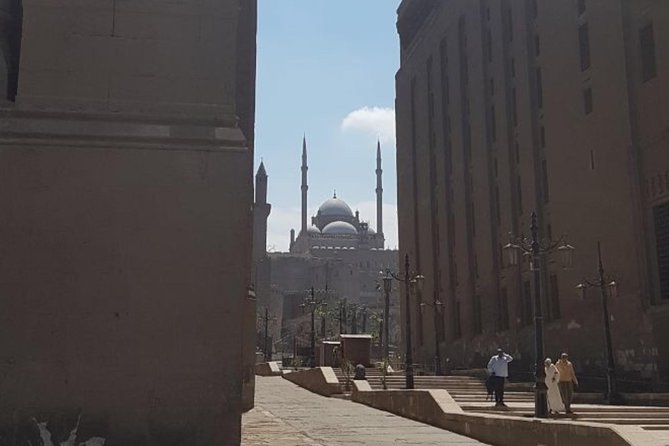
Your day begins with pickup around 8:00 AM and a first visit to the Citadel of Salah El Din. This is the kind of stop that pays off even if you’re not a hardcore architecture person, because the location alone gives you context for Cairo.
The Citadel sits up high, and the mosque within it gives you that classic Cairo photo angle from the elevated part of the city. You’ll also get a feel for how power and protection shaped the skyline, not just the buildings themselves. A one-hour visit is short, but it’s enough for the highlights, especially when you’re not also spending time figuring out logistics on your own.
A possible drawback is that the Citadel can feel like a lot of steps plus looking, in a short time. If you’re easily tired by stairs or uneven ground, plan to move slowly and take breaks. Comfortable shoes are not optional here.
Muhammad Ali Mosque, the Alabaster Mosque (What You Should Actually Notice)
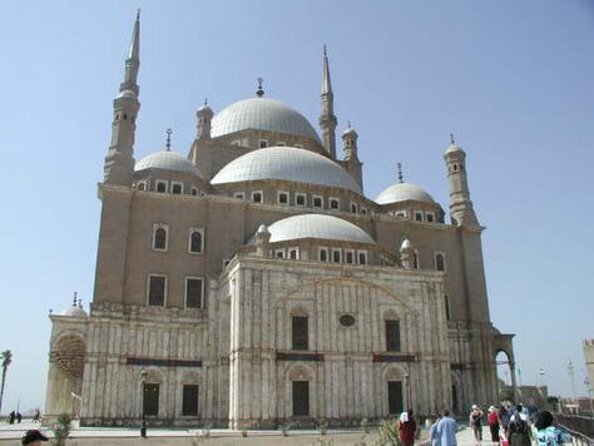
After the Citadel, the schedule moves you to the Muhammad Ali Mosque, starting at 10:00 AM in the tour flow. This mosque has a reputation for beauty, and you can see why quickly. It’s also known as the Alabaster Mosque because its outer walls are covered by alabaster stone.
What I like about this stop on a guided half-day is that it’s not only about admiring the big shape. A guide can help you notice the smaller surfaces and how the mosque’s materials and design create a distinct look compared to older stone-and-brick patterns you’ll see later.
The time on site is about 30 minutes. That’s not a “linger for hours” slot, so if you want extra time for photos, you’ll have to time your shots early. Another practical consideration is dress and entry rules. One common issue that came up is that some entrances can be strict about what you wear.
Al-Rifa’i Mosque: A Matching Partner Across from Sultan Hassan
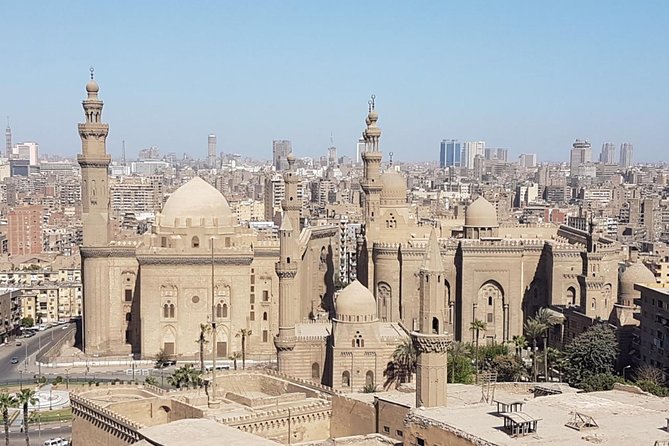
Next up is the Al-Rifa’i Mosque, a major stop that pairs nicely with what you’ll see at the Sultan Hassan complex right after. This mosque is located opposite the Mosque-Madrassa of Sultan Hassan, and it was designed as an architectural complement to the older structure.
That “built to talk to each other” idea is exactly what makes this sequence smart. You’re not just ticking off mosque names. You’re watching Islamic-era design choices line up across the street, and your brain starts connecting the dots.
You get about one hour here. If you enjoy details, this is a good one to slow down for. If you don’t, you’ll still get plenty from the overall design and the way it frames the view toward Sultan Hassan.


Sultan Hassan Mosque-Madrassa: Size, Design, and Four Schools in One Place
Then you move to one of the headline sites in the whole area, the Mosque and Madrasa of Sultan Hassan (often called El Sultan Hassan Mosque). It’s described as both a mosque and madrassa, and it’s located near the Citadel in Cairo.
You’ll likely hear the key date: construction began in 1356 A.D and the work finished three years later. This site is also tied to the Mamluk era and is famous for being massive, including architectural components that people still point out today.
One standout detail that makes this place more than a pretty backdrop is the educational design. The complex is described as including schools for all four Sunni schools of thought: Shafi’i, Maliki, Hanafi, and Hanbali. That’s the kind of fact that changes how you look at a madrassa. You stop thinking, this is just religious space, and start thinking, this is structured learning.
Time here is about 30 minutes, so you’ll want to pick one or two areas to focus on, not try to memorize every corner. The guided explanation is what turns quick entry into a real understanding.
Al-Azhar Mosque: Fatimid Origins and the City of Minarets
After the Sultan Hassan stop, the tour heads to Al-Azhar Mosque, which is one of the most famous places in Islamic Cairo. It was commissioned by the Fatimid Caliphate for their newly established capital city in 970.
This is where the story of Cairo expands past the Mamluk era and into the Fatimid period. Al-Azhar’s name is often connected to Fatimah, called az-Zahrā, meaning the shining or resplendent one, and the mosque is described as the first mosque established in Cairo. Cairo’s nickname as the City of a Thousand Minarets is also part of the wider context you’ll likely hear.
You’ll have around 30 minutes here. Because Al-Azhar is so well-known, you might feel the pressure to “see it all.” The better move is to focus on the big visual identity and let your guide fill in the historical timeline so it clicks.
El Hussein Mosque: A Sacred Tomb Belief You’ll Hear in Plain Terms
The next stop is Al Emam Al Hussein Mosque. It’s described as a hallowed mosque, believed to be the burial site of the head of the prophet Muhammad’s grandson.
This is a shorter 30-minute stop, so think of it as a spiritual and cultural punctuation mark between the grand architectural complexes and the lively market walk.
If you’re curious about Islamic traditions and how belief shapes visiting patterns, you’ll appreciate that this tour doesn’t keep everything purely architectural. It also includes a site tied to reverence and pilgrimage traditions.
Khan Al-Khalili: The Oldest Market Walk and How to Shop Without Stress
The tour ends with Khan Al-Khalili, described as the oldest market in Egypt. You’ll do a walking tour with your guide for about one hour, then you’ll be dropped back at the same pick-up point.
This is the part of the day that most people remember for atmosphere. You’ll see how a historic market works in real time: stalls, streets, and lots of choices. A guide helps in two practical ways.
First, they can steer you toward lanes and items you might actually want, not just the loudest souvenir tables. Second, they can help with bargaining strategies. One guide name that came up in the experience is Asmaa, and the shopping support described with patience and help finding what people wanted is the kind of benefit you can feel fast.
Quick heads-up: market time is also where you might get tired, because walking adds up after several mosque stops. Bring water if you’re prone to getting thirsty, even though bottle water is included.
Dress Rules for Mosque Entry, Bring Your Coverage
Mosques are not like churches where most casual clothing passes. One of the clearest pieces of advice from the experience is to dress for strict entry.
A common issue reported is that someone wasn’t allowed inside when elbows through wrists were showing. The fix was simple but important: wear long pants and cover more of your body. Also bring something to cover your head, and in that same story, a jacket with a hood was recommended to help cover arms and follow expectations. A scarf helped too.
So if you’re packing for this day, don’t rely on luck. Plan to arrive covered, especially if you’re booked on a tight schedule where changing clothes on the fly isn’t easy.
Price and Entry Fees: What the $8 Private Tour Really Includes
Let’s talk value honestly. The headline price shown is $8.00 per person for a roughly 5-hour private tour in central Islamic Cairo. That’s unusually low for a private car transfer plus multiple landmark stops, which is why this tour gets recommended so often.
But here’s the part you should check before you show up: the tour information indicates that entry fees are not universally included. The highlights mention entry fees at your own expense. At the same time, the additional info says entrance fees may depend on the tour option you choose, and that entry fees may cover the basic area only.
So how do you make sense of it? Think of the $8 as paying for the big bones: hotel pickup/drop-off, private A/C transport, private tour, and bottle water. Then treat entry fees as the likely add-on, depending on which areas you want to enter.
Also consider that the tour lists guide as optional in some options. In practice, many people get real value from having an expert explain what they’re seeing, especially for Sultan Hassan’s madrassa design and the way the mosques connect across the area. If you see a guide included in your chosen option, it’s likely worth it for turning quick visits into something you understand.
Lunch and Timing: Keep the Half-Day Feeling Easy
Lunch is listed as optional, and it’s not included by default. That’s not a dealbreaker, but it affects how you plan your energy.
Some people do add lunch and describe it as a buffet-style spread, with the detail that drinks were not included with lunch. So if you want coffee or juice with your meal, you may need to purchase it separately.
If you’re choosing not to add lunch, you’ll still likely want a light snack before pickup, because you’ll be moving from stop to stop on a tight timeline, and you’ll want your brain sharp for the historical and architectural explanations.
Who This Half-Day Islamic Cairo Tour Fits Best
This is a strong match if you:
- Want to see the big Islamic Cairo landmarks without managing transport between them
- Prefer a guided explanation that helps mosque names make sense in context
- Have limited time, and you want a structured route that finishes in the market
It may not be the perfect choice if you’re hoping for a very slow, sit-down, hours-long museum experience. The stops are mostly 30 minutes to one hour, and the day is designed to cover multiple sites in one run. You’ll leave with a clear overview, but not with the deep “stroll until sunset” vibe.
Should You Book This Private Half Day Tour to Islamic Cairo?
I’d book this if your goal is efficient, high-impact Islamic Cairo in one morning-to-midday window, with private A/C transport and help understanding what you’re looking at. The guide experience, with names like Heba, Asmaa, Khalaf, and Mahmoud Ismael frequently praised for making the details click, is a big part of the value.
I would pause before booking only if you hate spending time on dress and entry rules, or if you’re counting on all entry fees to be fully covered no matter what you choose. If you plan to dress appropriately and confirm your entry-fee option, this is a smart, budget-friendly way to get your bearings fast in Cairo’s Islamic core.
FAQ
How long is the Private Half Day Tour to Islamic Cairo?
It runs about 5 hours (approximately).
Where does the tour start?
The tour starts with hotel pickup in Cairo or Giza, with pickup typically around 8:00 AM.
Which sites are included?
You’ll visit the Cairo Citadel, Muhammad Ali Mosque, Al-Rifa’i Mosque, Mosque and Madrasa of Sultan Hassan, Al-Azhar Mosque, Al Emam Al Hussein Mosque, and Khan Al-Khalili.
Is this a private tour or a group tour?
It’s a private tour. Only your group participates.
Does the tour include hotel pickup and drop-off?
Yes. Hotel pickup and drop-off are included.
Are entry fees included?
Entry fees are not always included. The information says entry fees may depend on the tour option chosen, and entrance fees may include basic area only. Entry fees are also described as at your own expense in the highlights.
What about lunch?
Lunch is optional and not included.
Is a guide included?
The tour is described as having an expert guide. However, the information lists Guide (Optional), so it depends on the option you choose.
What should I wear to enter the mosques?
One practical tip from the experience: some entrances may reject visitors if elbows to wrists are showing. Plan for long pants and cover your head, and bring something like a scarf and a jacket with a hood for arm coverage.
What is the cancellation policy?
Cancellation is free if you cancel up to 24 hours in advance for a full refund. If you cancel less than 24 hours before the start time, the amount paid is not refunded.
Mosques, Minarets and the Citadel

More of Cairo from our review pile
- Cairo: Djoser Pyramid & Memphis Private tour with transfers.
★ 4.0 · 14 reviews - White Desert Overnight Camping Sharing Tour in Egypt
★ 5.0 · 15 reviews - Cairo Best 2Days tour Pyramids, Saqqara & Old Cairo
★ 5.0 · 15 reviews - Monastery St Simon with Cave Church and Garbage City Private Tour
★ 5.0 · 15 reviews - Full-Day Tour to Giza Pyramids, Egyptian Museum & Khan Al-Khalili
★ 5.0 · 15 reviews - Private Walking Tour in ElMoez Street & Khan Elkhalili Market
★ 5.0 · 15 reviews
Islamic Cairo, Mosques & the Citadel, compared.
 ★ 4.6From Cairo Alexandria Catacombs, Citadel Day Trip with LunchFrom $871,312 reviews
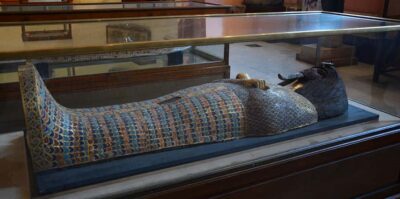 ★ 4.7Egyptian Museum, Citadel, and Old Cairo Guided TourFrom $36853 reviews
 ★ 4.6Cairo Citadel, Old Cairo and Khan El Khalili: Private TourFrom $85741 reviews
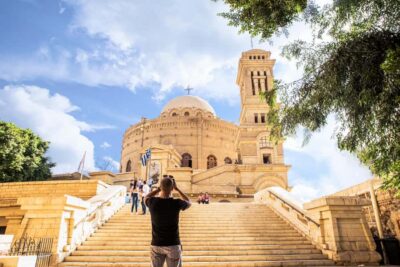 ★ 4.6Old Cairo: Full-Day Islamic and Coptic Cairo Tour with LunchFrom $76688 reviews
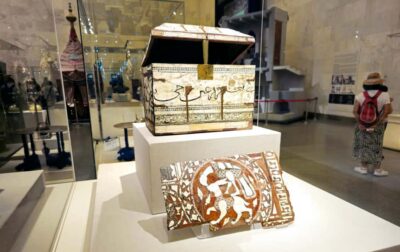 ★ 4.7Museum of Egyptian Civilization, Citadel & Old Cairo TourFrom $77530 reviews
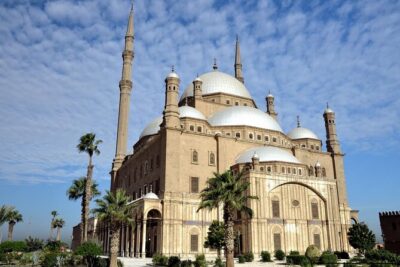 ★ 5.0The Egyptian Museum, the Citadel, Khan Khalil Bazaar & Old CairoFrom $3418 reviews
 ★ 4.4Sharm El Sheikh City Tour: Old Market, Mosque & Farsha CaféFrom $24313 reviews
 ★ 4.5Cairo Private Day Tours: Discover Islamic and Coptic CairoFrom $8231 reviews
The lists this one sits on