
REVIEW · GIZA PYRAMIDS & SPHINX TOURS
Private Day Trip To Giza Pyramids, Memphis City Dahshur & Saqqara Pyramids
Nine hours, and the desert has answers. This private pyramid marathon links four major sites around Cairo into one smooth day, with hotel pickup and a guide who keeps things moving. I love how easy the start and finish are, with hotel pickup and a private air-conditioned vehicle door to door.
I love that entry fees are included for the areas you visit, so you are not burning time at ticket counters. You also get enough time at each stop to actually look, not just pass through. One possible drawback is that a day this packed can feel long, and inside-the-pyramid access may cost extra depending on what you choose.
In This Review
- Key Highlights You Should Know Before You Go
- Private Transport From Your Hotel, With Fewer Cairo Headaches
- The 8:00 am Giza Plateau Block: Great Pyramids, Valley Temple, and Sphinx Time
- Cheops, Khafre, Menkaure: Short Stops That Still Teach You How the Complex Works
- Great Sphinx Photo Moments: Worth the Slow Walk
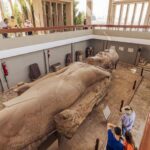
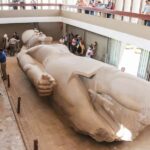
- Memphis City Stop: Ramses II and the Alabaster Sphinx in Plain View
- Dahshur Bent and Red Pyramids: The Surprise MVP of the Day
- Saqqara From Step Pyramid to Pyramid Text Sites: Evolution in Order
- Entry Fees, Pyramid Interiors, and the Hidden Costs You Should Budget
- Shopping Stops, Camel Rides, and How to Keep Control of Your Day
- Guide Quality Makes or Breaks the Explanation
- Driver Safety and Comfort: Usually Smooth, Still Use Your Common Sense
- Who This Tour Is Best For (and Who Should Choose Something Else)
- Should You Book This Private Pyramid Day Trip?
- FAQ
- How long is the private day trip?
- What sites are visited during the tour?
- Is hotel pickup and drop-off included?
- Are entry fees included?
- Are we allowed to go inside the pyramids?
- Is lunch included?
- What is the cancellation policy?
Key Highlights You Should Know Before You Go
- Private, door-to-door comfort with a modern AC vehicle and hotel pickup and drop-off
- A full pyramid circuit: Giza Plateau, Memphis, Dahshur, then Saqqara
- Time at the big-name spots (Giza gets several hours, Saqqara gets focused segments)
- Guide-led explanations that can make the stones make sense, with praised guides like Khadija, Mizo, Rio, Amira, Bibo, Essam, Fatma Salah, Mahmoud, Entissar, and Zaineb
- Plan for optional costs like pyramid interiors, camel rides, and shopping stops
Ways onto the Giza plateau, compared
- Cairo: Pyramids & Great Sphinx Private Tour with Camel Ride★ 4.9 · 6,335 reviews
- Tour to Giza Pyramids and The Egyptian Museum★ 5.0 · 6,016 reviews
- VIP All inclusive Best of the best Giza Pyramids,Sakkara,Memphis★ 5.0 · 3,164 reviews
- From Cairo: Pyramids of Giza, Sphinx, Saqqara & Memphis Tour★ 4.7 · 3,110 reviews
Private Transport From Your Hotel, With Fewer Cairo Headaches
The biggest value here is simple: you start at your hotel, then you are shuttled in an air-conditioned car all day. That matters in Cairo, where getting between sites on your own can turn into a time tax. You also get a private guide, so you are not stuck trying to hear history over a loud bus.
Your day is built around a start time of 8:00 am, and it runs about 9 hours. That timing is a practical trade-off. You will see a lot, but you should be ready for a long sit in the car and a long day of walking around desert sites.
The tour lists bottled water as included, which is helpful. Still, one important reality check from real experiences: water can run out or be overlooked. I would treat that as a baseline, not a guarantee, and bring your own extra water bottle if you tend to drink a lot.
The 8:00 am Giza Plateau Block: Great Pyramids, Valley Temple, and Sphinx Time
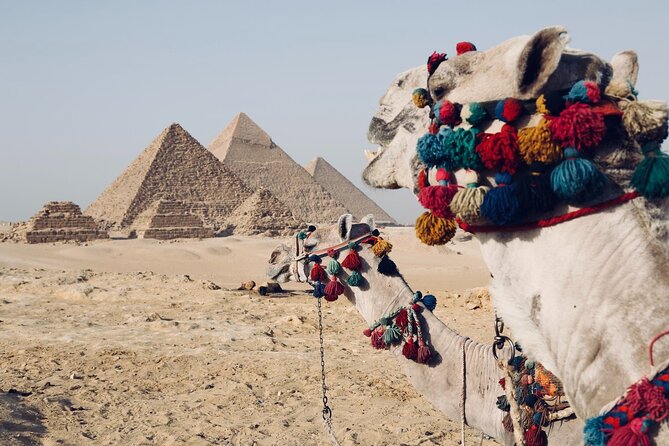
You begin at the Giza Plateau area, with about 3 hours scheduled. This is the heart of the classic Cairo pyramid view, and you get the full set of the big three: Cheops (Khufu), Chephren (Khafre), and Mykerinos (Menkaure).
Your guide focuses on the landmarks that help you understand the complex as a whole. At the Valley Temple, the tour frames the site around the burial process and connects it to the mummification of King Chephren. Even if you already know the basics, a guide usually helps you place what you are looking at into the bigger ritual picture.
Then comes the Sphinx, positioned like a guardian at the edge of the funerary world. One nice detail: you are given dedicated time to take it in, not just a quick stop. The energy here is different when you stand close enough to see how the Sphinx sits in relation to the temples and causeways.
What I like most: the timing gives you room to look at the pyramid shapes from multiple angles. That is how these sites start to feel real instead of postcard-flat.
What to watch: Giza can be physically intense. Even with a guide, you might do uneven footing, sun exposure, and stairs or slopes near certain viewpoints. Bring sun protection and plan for dust. If you want to add any activities like a camel ride, do it only if you are comfortable with the cost and logistics you are offered that day.
Cheops, Khafre, Menkaure: Short Stops That Still Teach You How the Complex Works
After the plateau overview, the tour shifts into tighter segments that still add up. You spend around 30 minutes at the Great Pyramid of Cheops (Khufu), then about 30 minutes at Khafre’s Pyramid, and another 30 minutes at the Pyramid of Menkaure.
Even though the time blocks are short, there are some specific nuggets built into the explanation style. For example, the Cheops stop includes details about what is known from inscriptions at Giza and later documents, plus the mention of a preserved ivory figurine portrait found at Abydos in 1903. That kind of detail turns a pyramid from a shape into a story with sources and clues.
For Khafre’s complex, the tour highlights the structure and what archaeologists found in the valley temple. It references excavations by people like Mariette in the 1860s and later work by Sieglin. You may not memorize dates, but hearing how statues and fragments turned up helps you understand why archaeologists care about each temple corner, not just the main pyramid.
For Menkaure, you get the idea that even smaller complexes evolved over time. The tour mentions the addition of a smaller ante-temple during the 5th Dynasty. In other words, these places were not frozen in time. They changed.
Pacing note: the stops are long enough to see and photograph, but not long enough to do everything. If you want to spend extra time inside or linger at one angle for perfect photos, you may feel the schedule tugging you along. The good news is a private guide can sometimes adjust micro-decisions on the day, within the overall plan.
Great Sphinx Photo Moments: Worth the Slow Walk
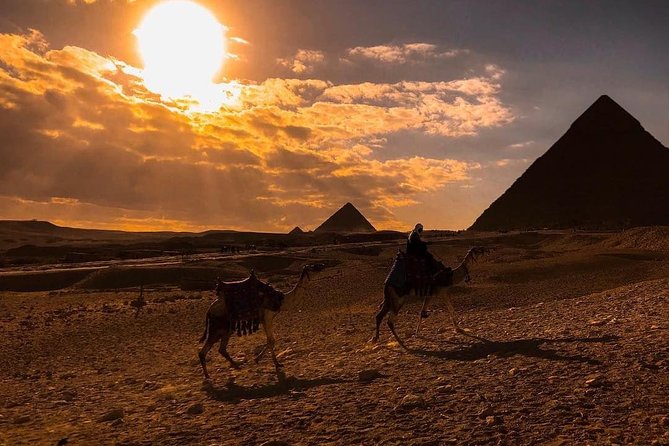
There is also a dedicated 30-minute segment for the Great Sphinx. This matters because the Sphinx reads differently depending on where you stand and how close you get. It is not just the face. It is the whole setting around it.
If you have seen photos of the Sphinx your whole life, this is still the kind of place where real scale hits you. The head feels huge from up close. The surrounding complex makes the Sphinx feel like a command post rather than a random statue.
One practical tip: bring your camera settings ready. Bright sun can flatten contrast in photos near midday. If you want a dramatic shot, ask your guide when to move position, not after you already took 30 washed-out images.
Necropolis stops south of the city
Memphis City Stop: Ramses II and the Alabaster Sphinx in Plain View
After Giza, you shift away from the pyramid core to Memphis City, with about 1 hour here. This is a smart inclusion, because many people rush straight from Giza and skip this side of ancient Egypt.
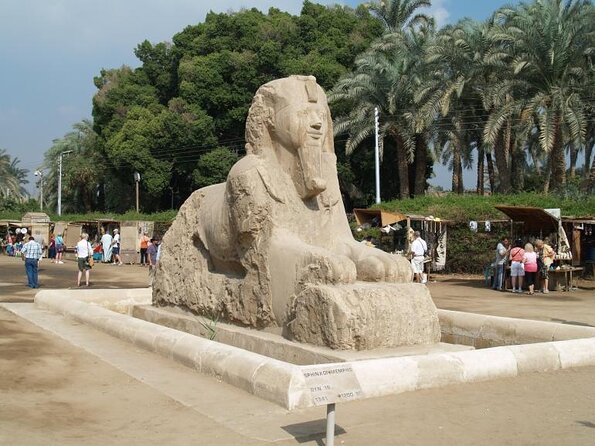
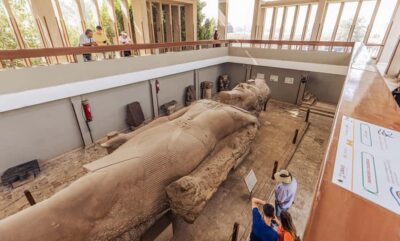
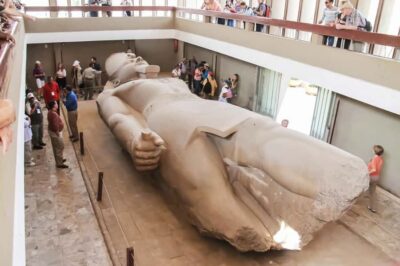
You are brought to two headline pieces: a colossal statue of Ramses II and the alabaster Sphinx. The stop is also framed as a city that dates back to around 3100 B.C. That helps you connect the pyramid era to the broader long arc of Egyptian civilization.
This is where the tour feels less like a checklist and more like an overview of how old Egypt looked at different times. And, bonus for your feet: it often feels easier than navigating multiple pyramid slopes.
Dahshur Bent and Red Pyramids: The Surprise MVP of the Day
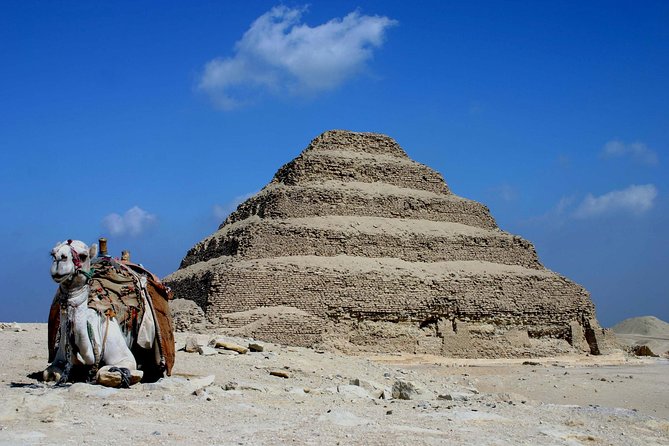
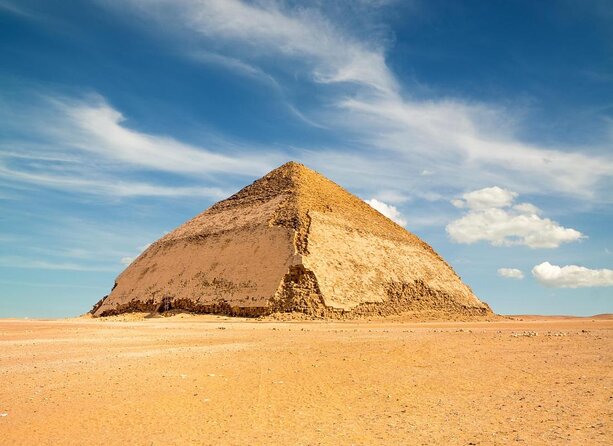
Next is Dahshur, scheduled for about 1 hour. You go to the Dahshur area to see the Bent Pyramid and the Red Pyramid. This is a royal necropolis on the west bank of the Nile, about 40 kilometers south of Cairo, and the tour frames it as some of the oldest and best-preserved pyramids in Egypt.
If you usually think pyramids all look the same, Dahshur corrects that fast. The Bent Pyramid’s shape is the kind of visual fact you do not fully appreciate until you are standing near it. The Red Pyramid also gives a different feel than the Giza giants, partly because the whole site can feel less crowded and more open.
Possible drawback: Dahshur is not a full-day stop. If you really want to linger or focus on one pyramid complex, you might wish you had more time. Still, for most first-time visitors, it is a great value use of limited daylight.
Saqqara From Step Pyramid to Pyramid Text Sites: Evolution in Order
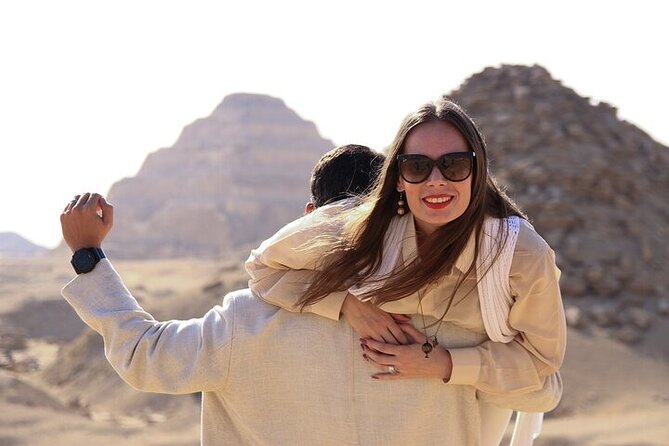
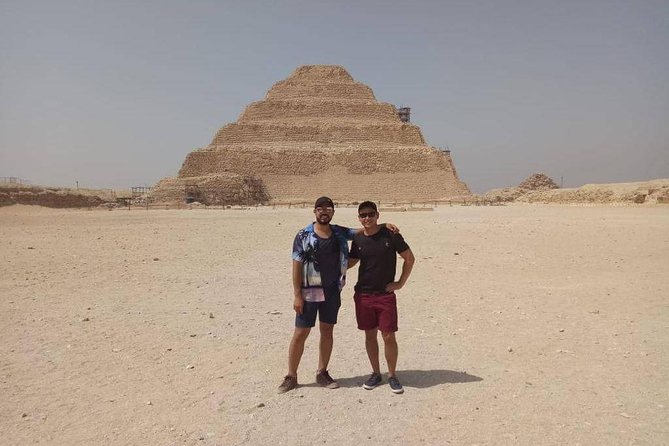
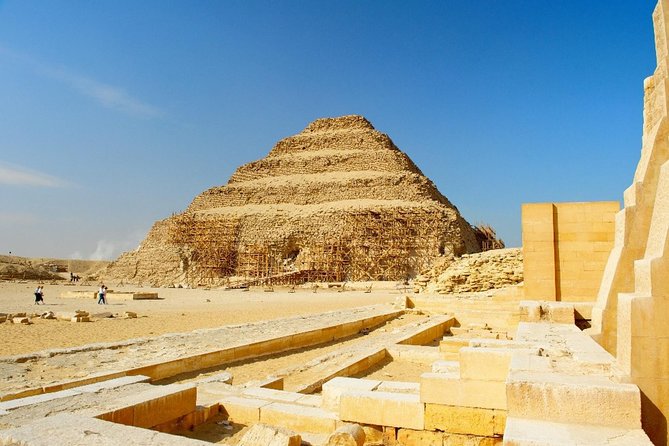
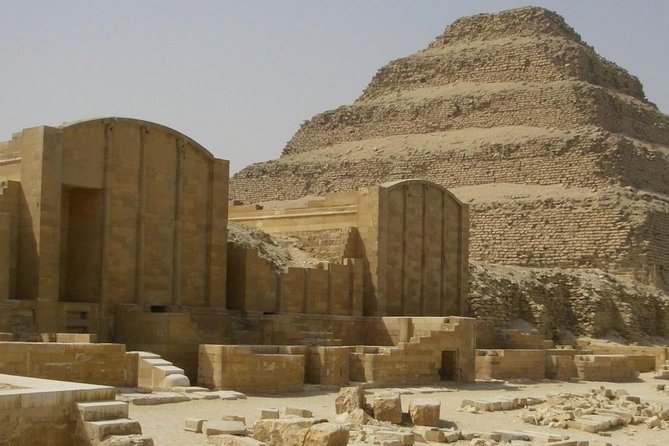
After Dahshur, you go to Saqqara, scheduled for about 1 hour at the main stop. Saqqara is about 27 km southwest of Cairo, and the tour highlights the Step Pyramid, built for King Zoser. The key idea is that this is an important piece in pyramid evolution, moving from earlier forms toward the classic pyramid style.
From there, the itinerary keeps going with smaller, focused pyramid segments:
- Pyramid of Unas (about 30 minutes)
- Pyramid of Teti (about 15 minutes)
- Mastaba of Ti (about 15 minutes)
The Unas stop is where you get one of the most interesting concepts in the whole day: the Pyramid Texts, spells carved into subterranean chambers for the afterlife. The tour also includes the idea that Unas’s pyramid is smooth-sided and is noted as the smallest Old Kingdom pyramid, but significant because of these inscriptions.
For Teti, the tour frames it as the final resting place for Pharaoh Teti and emphasizes exploring chambers and corridors, though the exact level of access depends on what is available and your ticket options that day.
For the Mastaba of Ti, you focus on the smaller-scale but very human side of archaeology. The tour notes that the mastaba contains two serdabs, and the walls show scenes of everyday life. It also credits Auguste Mariette with the discovery.
What makes Saqqara great: you get to see a sequence of how pyramid design and funerary beliefs developed. Even with limited time at each stop, the order helps you connect the dots.
Entry Fees, Pyramid Interiors, and the Hidden Costs You Should Budget
The tour includes entry fees with access to basic areas. It also lists that it does not include going inside pyramids. Still, real-world experiences can vary. For example, one experience notes being given the option to go inside a major pyramid with a separate ticket purchase. Another experience mentions being able to go inside the Red Pyramid as a recommendation for that departure.
So here is the practical approach: assume that exterior access is covered, and interior access is a separate decision. If you want to go inside, ask your guide early in the day how it works and what ticket you would need.
Also remember that ticket policies at the sites may be picky. One reported experience was that ticket booths accepted credit cards but not cash. If you want to avoid stress, bring a credit card just in case, even if your entry fees are included in the package.
Finally, bring patience for lines and check-in moments. Even with private transport, the sites run on their own schedules.
Shopping Stops, Camel Rides, and How to Keep Control of Your Day
You are scheduled to visit locations tied to Egyptian crafts and souvenirs, including places listed as a Paradise perfumes palace and Key of life Papyrus, plus a Flower cotton store and Memphis handmade carpets.
In practice, the tone of these stops can vary. One experience said perfume and cotton stops were never pushed and it felt easy to decline. Another experience described a children’s carpet making factory stop as interesting but slightly hard to refuse, with a private guide and refreshments making it feel more like an extended sales conversation.
My advice: decide in your head before you arrive. If you want souvenirs, browse with clear limits. If you do not, politely decline and move on quickly. Do not wait until you feel awkward.
Camel rides can also come up around Giza. One experience described confusion about price and payment handling, so be strict about the rules:
- confirm the price before you get on
- make sure you know who you pay and how
- if something feels off, skip it
You are doing enough walking already. A camel ride should add fun, not stress.
Guide Quality Makes or Breaks the Explanation
This is a private guided tour, so guide quality matters a lot. The positive experiences name specific guides, like Khadija, Mizo, Rio, Amira, Bibo, Essam, Fatma Salah, Mahmoud, Entissar, and Zaineb, often praising humor, organization, and strong explanations.
There is also at least one negative experience citing poor communication in English with a guide named Nasser, and another complaint about a guide called Assam promoting an extra tour at a higher price. I cannot predict which guide you will get. What you can do is set expectations early:
- ask your guide how much time they plan to spend explaining versus moving
- if English clarity is important to you, make sure your key questions are answered
If you love history, but you also want the day to feel calm, pick moments to ask. A good guide will slow down for your curiosity.
Driver Safety and Comfort: Usually Smooth, Still Use Your Common Sense
Most experiences mention clean, comfortable cars and professional drivers, including names like Mustafa, Tamer, and Hanni. One experience also praised feeling safe among fast-moving Cairo traffic.
Still, one negative experience complained about unsafe driving with close calls. That is not something you should ignore. Wear your seatbelt. If your driver style feels intense, speak up politely through your guide as soon as you can. You are paying for a private day. Comfort and safety should be part of the deal.
Who This Tour Is Best For (and Who Should Choose Something Else)
This tour is best for you if:
- you want to see Giza, Memphis, Dahshur, and Saqqara without planning the logistics yourself
- you like guided context, especially for Saqqara’s evolution and the Pyramid Text idea
- you want a private day at a price point that feels realistic, considering entry fees are included for basic areas
It may be less ideal if:
- you want a slow, museum-style pace with long stops in one place
- you only care about inside-pyramid access, since that can be extra and time-consuming
- you dislike shopping stops, even if they are easy to decline
Should You Book This Private Pyramid Day Trip?
If you want a high-value, one-day sampler of Cairo’s pyramid region, this is a strong bet. The private AC pickup and drop-off, plus the fact that you cover multiple major sites in a single plan, makes the $65 per person price feel sensible. The included entry fees for basic areas also help you avoid surprise costs.
My main caution is timing and expectations. It is a long day, and you may need to decide on the spot about interior tickets, camel rides, and shopping stops. If you go in with a clear plan, bring sun and a little extra water, and stay firm about optional extras, you will likely leave feeling like you actually understand how all these sites connect.
FAQ
How long is the private day trip?
It runs about 9 hours, starting around 8:00 am.
What sites are visited during the tour?
You visit the Giza Plateau area, then Memphis, Dahshur (Bent and Red Pyramids), and Saqqara, including stops at multiple pyramid and mastaba sites.
Is hotel pickup and drop-off included?
Yes. The tour includes hotel pickup and hotel drop-off.
Are entry fees included?
Yes, entry fees are included for the areas covered by the ticket.
Are we allowed to go inside the pyramids?
The tour data says inside-pyramid access is not included. You may have options to buy separate tickets depending on what is available and your choices on the day.
Is lunch included?
Lunch is listed as optional and not included, though some real experiences mention lunch being provided. Plan to budget for lunch unless you confirm what your specific booking includes.
What is the cancellation policy?
You can cancel up to 24 hours in advance for a full refund. If you cancel within 24 hours of the start time, the amount paid is not refunded.
South to Saqqara and Dahshur

Giza, A Few More Ways In


More of Cairo from our review pile
- Cairo Layover Tour to Giza Pyramids Egyptian Museum and Khan Khalili Bazaar
★ 5.0 · 25 reviews - Private Luxor Day tour from Cairo by Flight
★ 5.0 · 25 reviews - Private full day tour to Giza Pyramids, Sphinx, Sakkara and Dahshour with guided
★ 5.0 · 25 reviews - Nile Dinner Cruise in Cairo With Belly Dancing and Transfer
★ 5.0 · 25 reviews - Private Giza Pyramids,Sphinx,camel,lunch, 2 tombs,Great Pyramid
★ 5.0 · 25 reviews - All inclusive Giza Pyramids ,Sphinx ,Lunch ,Camel&Inside pyramid
★ 5.0 · 25 reviews
Giza Pyramids & Sphinx Tours, compared.
 ★ 4.9Pyramids & Great Sphinx Private Tour with Camel RideFrom $486,335 reviews
 ★ 5.0Tour to Giza Pyramids and The Egyptian MuseumFrom $1556,016 reviews
 ★ 4.7Pyramids of Giza, Sphinx, Saqqara & Memphis TourFrom $903,110 reviews
 ★ 4.6Half-Day Tour to Pyramids of Giza and the SphinxFrom $502,891 reviews
 ★ 4.6Pyramids, Sakkara & Memphis Tour with LunchFrom $602,493 reviews
 ★ 5.0Private ViP all-inclusive Giza Pyramids,Sphinx,Inside PyramidFrom $142,448 reviews
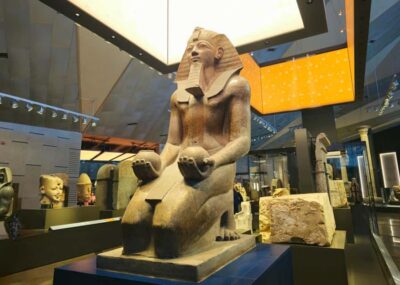 ★ 4.7Grand Egyptian Museum, Pyramids, Sphinx Tour & LunchFrom $892,282 reviews
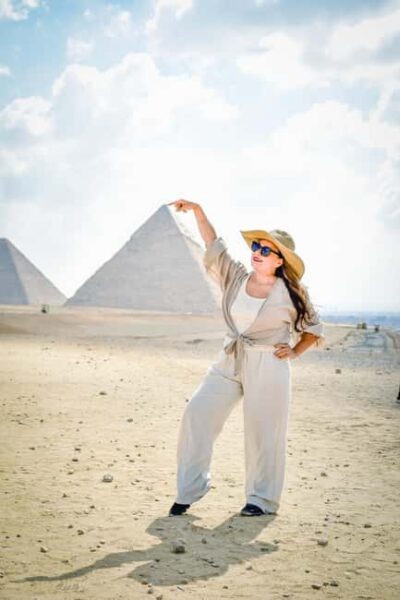 ★ 4.7Cairo Pyramids, Sphinx & Egyptian Museum Day TripFrom $932,271 reviews
The lists this one sits on